
This lesson focuses on the specific rules for driving on motorways in Denmark, a critical component of your Category B training. You will learn the correct procedures for entering, navigating, and exiting high-speed roads safely, ensuring you are fully prepared for both the theory test and practical real-world conditions.

Lesson content overview
Welcome to this comprehensive lesson on motorway driving and lane discipline, a crucial part of your Danish Driving License Theory Course: Category B Preparation. Motorways, known as motorveje in Danish, are designed for high-speed travel and efficient movement of traffic over long distances. While they offer faster journeys, they also demand a higher level of concentration, precise decision-making, and strict adherence to specific rules and etiquette. This lesson will equip you with the essential knowledge and skills to navigate these roads safely and confidently, from merging onto fast-moving traffic to maintaining proper lane discipline and executing safe overtaking manoeuvres. Understanding these principles is not just about passing your theory test; it's fundamental to becoming a responsible and safe driver on Denmark's high-speed road network.
Entering a motorway correctly is one of the most critical skills a driver must master. It involves seamlessly integrating your vehicle into a stream of fast-moving traffic, requiring accurate judgment of speed and distance. The primary tool for this is the acceleration lane.
The acceleration lane is a dedicated stretch of road preceding a motorway entrance. Its primary purpose is to allow vehicles to increase their speed to match that of the traffic already on the motorway. This design minimizes disruption to the existing flow and significantly reduces the risk of collisions at the merge point.
Drivers must utilize the full length of the acceleration lane to build up speed. The goal is to reach a speed that is as close as possible to the motorway traffic, enabling a smooth and controlled merge. Stopping on an acceleration lane is generally prohibited and extremely dangerous, as it creates an unexpected obstruction for following vehicles and makes merging into high-speed traffic much harder. Common mistakes include merging too slowly, forcing motorway traffic to brake, or stopping abruptly at the end of the lane because of a perceived lack of space. Instead, drivers should continuously assess the traffic flow and be prepared to adjust their speed to find a suitable gap.
Merging is a dynamic process that demands keen observation and decisive action. As you enter the acceleration lane, look well ahead and use your mirrors (side and rearview) to identify gaps in the motorway traffic. A head check (brief glance over your shoulder) is also essential to spot vehicles in your blind spots.
Observe and Accelerate: As you enter the acceleration lane, look for an appropriate gap in the motorway traffic. Begin to accelerate firmly to match the speed of the traffic you intend to merge with.
Signal Your Intention: Once you have identified a safe gap, activate your left indicator light to signal your intention to merge onto the motorway.
Check Blind Spots: Before steering into the motorway lane, perform a quick head check over your left shoulder to confirm no vehicles are in your blind spot.
Merge Smoothly: Steer gradually and smoothly into the chosen gap. Avoid sudden or sharp movements, which can destabilize your vehicle and surprise other drivers.
Adjust Speed and Cancel Signal: Once you are safely in the motorway lane, adjust your speed to the flow of traffic and cancel your indicator.
Remember that while you are expected to merge safely, motorway traffic also has a responsibility to facilitate your entry where possible, often by creating space or adjusting their speed. However, the primary responsibility for safe merging lies with the driver entering the motorway.
Lane discipline is the cornerstone of safe and efficient motorway driving. It dictates how drivers position their vehicles across multiple lanes, ensuring smooth traffic flow and minimizing hazards. In Denmark, like many other European countries, the general principle is to keep to the rightmost available lane unless actively overtaking or preparing to exit.
The "keep-right" rule is a fundamental legal requirement on multi-lane motorways. It means that drivers should always stay in the lane furthest to the right that is free and appropriate for their speed. This rule is in place to ensure that faster traffic can utilize the left lanes for overtaking, thereby maintaining an orderly flow and preventing unnecessary congestion.
Legal Requirement: Drivers must keep to the rightmost lane unless overtaking or preparing to exit. Failure to observe this rule, often referred to as 'lane hogging' (vognbane-snylteri), can impede traffic flow, cause frustration, and is considered a traffic offence.
This rule applies consistently, even if the right lane appears empty for extended periods. Only move into a left lane if you are actively overtaking another vehicle, or if the right lane is blocked or specifically designated for another purpose (e.g., an exit lane for which you are not intending to use).
On motorways with three or more lanes, the principles remain the same, but the application becomes more nuanced.
When selecting a lane, consider your speed, the speed of other traffic, and your intentions. If you are travelling at the speed limit and faster than traffic in the right lane, you may use a left lane to overtake, but you must move back to the right once it is safe to do so.
Overtaking is a common and necessary manoeuvre on motorways, allowing drivers to pass slower vehicles efficiently. However, it must be executed with utmost care, precision, and adherence to specific rules to prevent accidents.
In Denmark, and most of continental Europe, overtaking must always be done on the left. Overtaking on the right is generally prohibited and extremely dangerous, as other drivers do not expect vehicles to pass them on that side. It can lead to confusion, sudden lane changes, and a high risk of side-swipe collisions.
Before initiating an overtake, it is crucial to:
Signal Intention: Activate your left indicator light well in advance to signal your intention to change lanes and overtake.
Check Mirrors and Blind Spots: Thoroughly check your rearview and left side mirrors. Perform a head check over your left shoulder to ensure no vehicle is in your blind spot.
Move into Left Lane: When safe, steer smoothly into the left lane. Increase your speed to pass the slower vehicle efficiently.
Maintain Safe Distance: Ensure you maintain a safe lateral distance from the vehicle you are passing.
Signal Return to Right Lane: Once you have safely passed the vehicle and can see it clearly in your rearview mirror, activate your right indicator.
Check Mirrors and Blind Spots (Again): Check your rearview and right side mirrors, and perform a head check over your right shoulder.
Return to Right Lane: When safe, steer smoothly back into the right lane.
Cancel Signal: Cancel your indicator and adjust your speed to the flow of traffic, maintaining appropriate lane discipline.
Never cut in front of an overtaken vehicle too quickly. Ensure there is ample space between your vehicle and the one you have just passed before returning to the right lane.
Maintaining an adequate following distance is perhaps the single most important safety measure on motorways, where high speeds reduce reaction time and increase stopping distances dramatically. This safe gap provides you with enough time to react to sudden changes in traffic ahead, such as braking or unexpected lane changes, thus preventing rear-end collisions.
A widely accepted and effective method for gauging a safe following distance is the "2-second rule." This rule suggests that under normal driving conditions, you should maintain at least a 2-second gap between your vehicle and the one directly in front of you.
To apply the 2-second rule, choose a fixed point on the side of the road (e.g., a lamppost, bridge, or road sign). As the rear of the vehicle in front of you passes that point, start counting "one thousand one, one thousand two." If your front bumper reaches that same point before you finish counting, you are following too closely.
This 2-second interval accounts for your reaction time (the time it takes to perceive a hazard and initiate braking) and the initial part of your vehicle's braking distance. It is crucial to remember that this is a minimum guideline for ideal conditions. You must increase your following distance in adverse conditions such as:
Tailgating, or following too closely (klapvognskørsel), is a dangerous and aggressive driving behaviour that significantly increases the risk of a rear-end collision. At motorway speeds, even a slight delay in reaction time can be catastrophic. If the vehicle ahead suddenly brakes, a tailgating driver may have no time or space to react, leading to an unavoidable crash.
Beyond the immediate danger of collision, tailgating also creates a stressful and unsafe environment for other drivers. It can induce panic braking from the vehicle being tailgated, creating a ripple effect of unsafe driving throughout the traffic stream. Always prioritize safety over impatience.
Exiting a motorway safely requires as much planning and precision as entering it. Late decisions or sudden manoeuvres can be extremely hazardous to yourself and other road users.
The key to a safe exit is early planning and observation. Motorway exits are typically signposted well in advance, often with multiple signs indicating the distance to the upcoming exit (e.g., 2 km, 1 km, 500 metres).
Just as there are acceleration lanes for entering, there are deceleration lanes for exiting motorways. These lanes are designed to allow you to reduce your speed after you have left the main carriageway, not before.
Motorway driving can present different challenges depending on environmental factors and traffic situations. Adapting your driving style to these conditions is vital for safety.
Adverse weather conditions significantly impact grip, visibility, and overall road safety.
Driving at night on motorways presents its own set of challenges, even in clear weather. Reduced visibility means you rely more heavily on your headlights and are more prone to driver fatigue.
Understanding common mistakes and illegal actions on motorways can help you avoid them, ensuring your safety and compliance with traffic laws.
To deepen your understanding and prepare for the Danish driving theory test, explore related topics and test your knowledge with practice questions.
This lesson covers the essential procedures for safe motorway driving in Denmark, from using acceleration lanes to merge seamlessly into fast-moving traffic to maintaining proper lane discipline under the keep-right rule. Safe overtaking on Danish motorways must always be performed on the left, with drivers required to signal, check mirrors and blind spots, and return to the right lane promptly. The 2-second following distance rule provides a minimum safety buffer that must be increased in adverse weather conditions such as rain, fog, or ice. Exiting requires early planning and observation of exit signs, with drivers expected to maintain motorway speed until entering the deceleration lane, then gradually reducing speed in that dedicated lane.
A short set of high-value points that capture the most important learning from this lesson.
Always use the full acceleration lane to match motorway speed before merging, never stop on it
The keep-right rule is a legal requirement on Danish motorways - stay in the rightmost lane unless actively overtaking
Overtaking must always be done on the left; passing on the right is prohibited and dangerous
Maintain at least a 2-second following distance as your primary safety buffer at motorway speeds
Begin planning your motorway exit early and only begin slowing down after entering the deceleration lane
Explore all units and lessons included in this driving theory course.
Acceleration lanes are for gaining speed, not stopping - merge at motorway speed to match traffic flow
The leftmost lane is strictly for overtaking only - return to the right lane as soon as the manoeuvre is safely completed
Increase your following distance to 4+ seconds in wet conditions and 10+ seconds in snow or ice
Use dipped headlights in rain and fog lights only when visibility drops below 50 metres
Head checks are mandatory before any lane change to check blind spots, not just mirror checks
Merging too slowly from the acceleration lane, forcing motorway traffic to brake unexpectedly
Driving in the left lane without overtaking (lane hogging), which impedes traffic flow and is a traffic offence
Beginning to slow down on the main motorway carriageway before reaching the deceleration lane
Returning to the right lane too quickly after overtaking, cutting in front of the passed vehicle
Relying only on mirrors for lane changes and skipping the head check of blind spots
Lesson content overview
A short set of high-value points that capture the most important learning from this lesson.
Always use the full acceleration lane to match motorway speed before merging, never stop on it
The keep-right rule is a legal requirement on Danish motorways - stay in the rightmost lane unless actively overtaking
Overtaking must always be done on the left; passing on the right is prohibited and dangerous
Maintain at least a 2-second following distance as your primary safety buffer at motorway speeds
Begin planning your motorway exit early and only begin slowing down after entering the deceleration lane
Explore all units and lessons included in this driving theory course.
Acceleration lanes are for gaining speed, not stopping - merge at motorway speed to match traffic flow
The leftmost lane is strictly for overtaking only - return to the right lane as soon as the manoeuvre is safely completed
Increase your following distance to 4+ seconds in wet conditions and 10+ seconds in snow or ice
Use dipped headlights in rain and fog lights only when visibility drops below 50 metres
Head checks are mandatory before any lane change to check blind spots, not just mirror checks
Merging too slowly from the acceleration lane, forcing motorway traffic to brake unexpectedly
Driving in the left lane without overtaking (lane hogging), which impedes traffic flow and is a traffic offence
Beginning to slow down on the main motorway carriageway before reaching the deceleration lane
Returning to the right lane too quickly after overtaking, cutting in front of the passed vehicle
Relying only on mirrors for lane changes and skipping the head check of blind spots
Explore search topics learners often look for when studying Motorway Driving and Lane Discipline. These topics reflect common questions about road rules, driving situations, safety guidance, and lesson level theory preparation for learners in Denmark.
Browse additional driving theory lessons that cover connected traffic rules, road signs, and common driving situations related to this topic. Improve your understanding of how different rules interact across everyday traffic scenarios.
Explore complex scenarios and advanced rules for Danish motorways. Understand challenging merges, overtaking situations, and dealing with unexpected traffic conditions to enhance your high-speed driving confidence and theory knowledge.

This lesson focuses on the rules and best practices for operating heavy vehicles on motorways and interchanges. It details Danish regulations regarding lane usage and speed limits for lorries, and explains safe techniques for merging into and exiting high-speed traffic. Maintaining a safe and appropriate following distance to allow for longer stopping distances is a key focus of the content.

This lesson provides a guide to motorway riding, a high-speed and demanding environment. It details the process for using acceleration lanes to merge smoothly, maintaining proper lane discipline, and preparing for exits well in advance. Key safety principles like the two-second rule are reinforced for this context.

This lesson contrasts the driving techniques required for rural roads and motorways. It covers managing speed on narrow, winding lanes with potential hazards like farm machinery or animals. The content also explains the principles of safe motorway driving, including maintaining lane discipline, managing high-speed stability, and executing safe overtaking maneuvers.
This lesson focuses on interpreting the various markings painted on Danish road surfaces. It explains the rules associated with solid and broken lane lines, directional arrows, and special-purpose lanes for buses and cyclists. Understanding these markings is crucial for maintaining correct lane discipline and safely navigating complex road layouts.
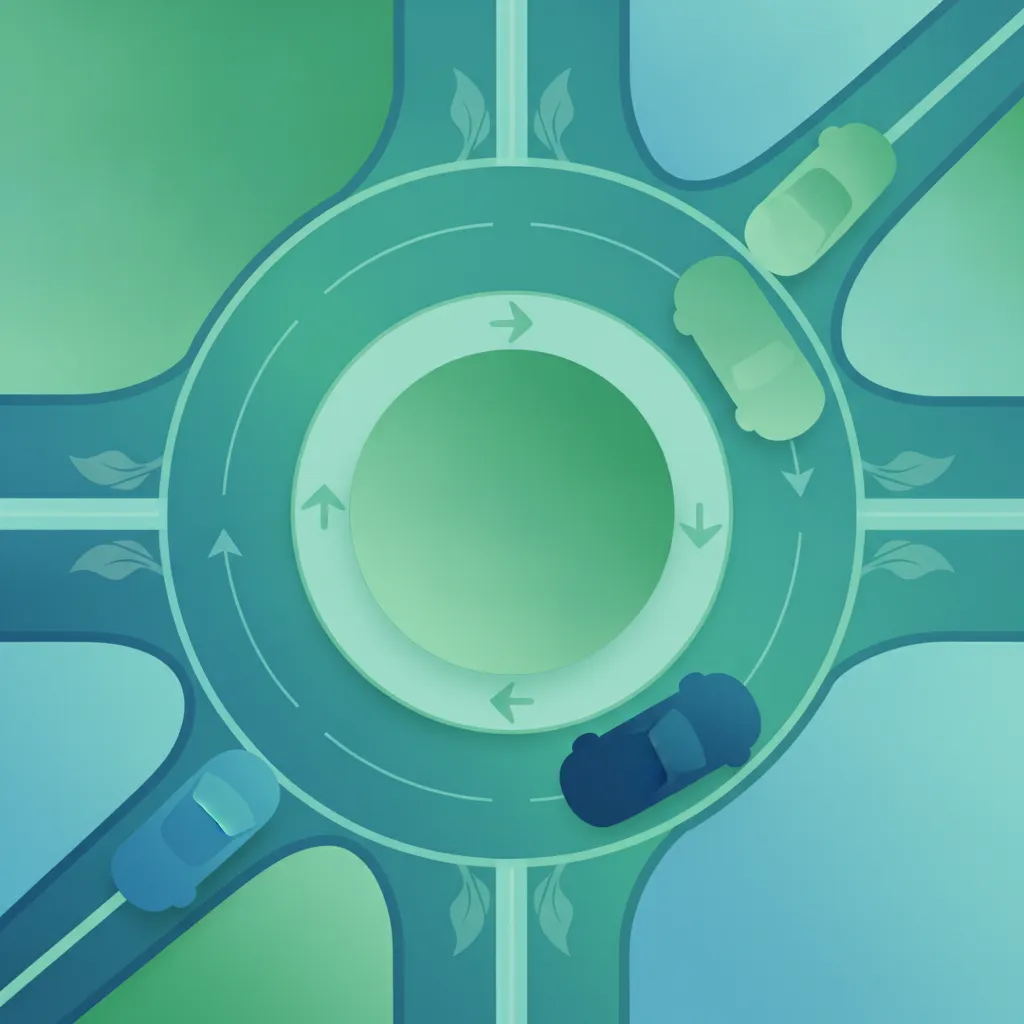
This lesson provides detailed instructions for navigating Danish roundabouts. It covers the rules for yielding upon entry, selecting the correct lane based on the intended exit, and signalling intentions clearly. The lesson also highlights the specific rules regarding priority for cyclists crossing entry and exit lanes.

This lesson details the function and meaning of traffic light signals in Denmark. It covers the standard red, amber, and green sequences, as well as special signals like flashing amber lights and green arrows for turning. The content also explains signals specific to cyclists and pedestrians that moped riders must observe at intersections.

This lesson covers the correct techniques for various turning manoeuvres, including how to signal, position your vehicle, and judge gaps in traffic. It also details the legal and safety protocols for overtaking, emphasizing the importance of assessing speed, distance, and oncoming traffic. A thorough understanding of these procedures is crucial for navigating intersections and two-lane roads safely.

This lesson provides an in-depth explanation of Denmark's priority rules, known as 'vigepligt.' It differentiates between unconditional priority ('ubetinget vigepligt'), often indicated by signs, and the default right-hand priority rule ('højre vigepligt'). Applying these rules correctly is essential for preventing collisions at junctions without traffic signals.

This lesson introduces the primary categories of Danish road signs and their legal implications. It covers regulatory signs that dictate mandatory actions or prohibitions, and warning signs that indicate upcoming hazards. Correct interpretation of these signs is fundamental for lawful and safe riding on Danish roads.
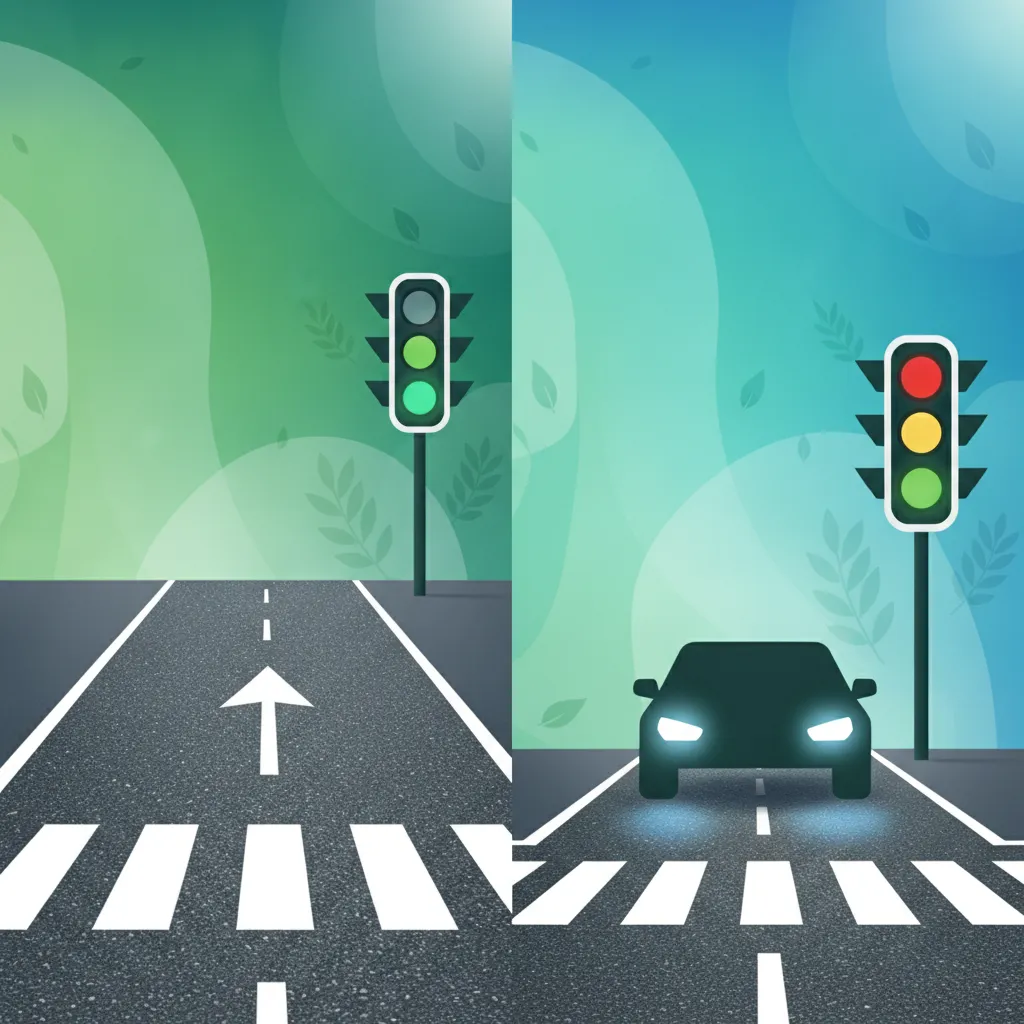
This lesson details the meaning and application of various road surface markings, including lane dividers, solid and broken lines, and directional arrows. You will also learn to interpret the full sequence of traffic light signals, including the specific rules for the amber (yellow) light phase. A proper understanding of these systems is vital for maintaining correct lane discipline and adhering to traffic controls.
Learn about frequent errors and essential etiquette for driving on Danish motorways. Understand how to avoid dangerous situations like tailgating or incorrect lane usage and ensure safe interactions with other road users.

This lesson introduces cooperative driving as a fundamental element of road safety in Denmark. It highlights the social responsibility of drivers to act predictably, anticipate the actions of others, and maintain courteous interactions with all road users. By fostering mutual respect and cooperation, you will learn how to reduce the potential for conflict and enhance overall traffic safety.
This lesson provides a guide to motorway riding, a high-speed and demanding environment. It details the process for using acceleration lanes to merge smoothly, maintaining proper lane discipline, and preparing for exits well in advance. Key safety principles like the two-second rule are reinforced for this context.

This lesson explores non-verbal communication techniques for safer road sharing. It discusses the importance of making eye contact with other drivers and pedestrians to confirm they have seen you. The content also explains the appropriate and legal use of the horn to alert others of your presence.
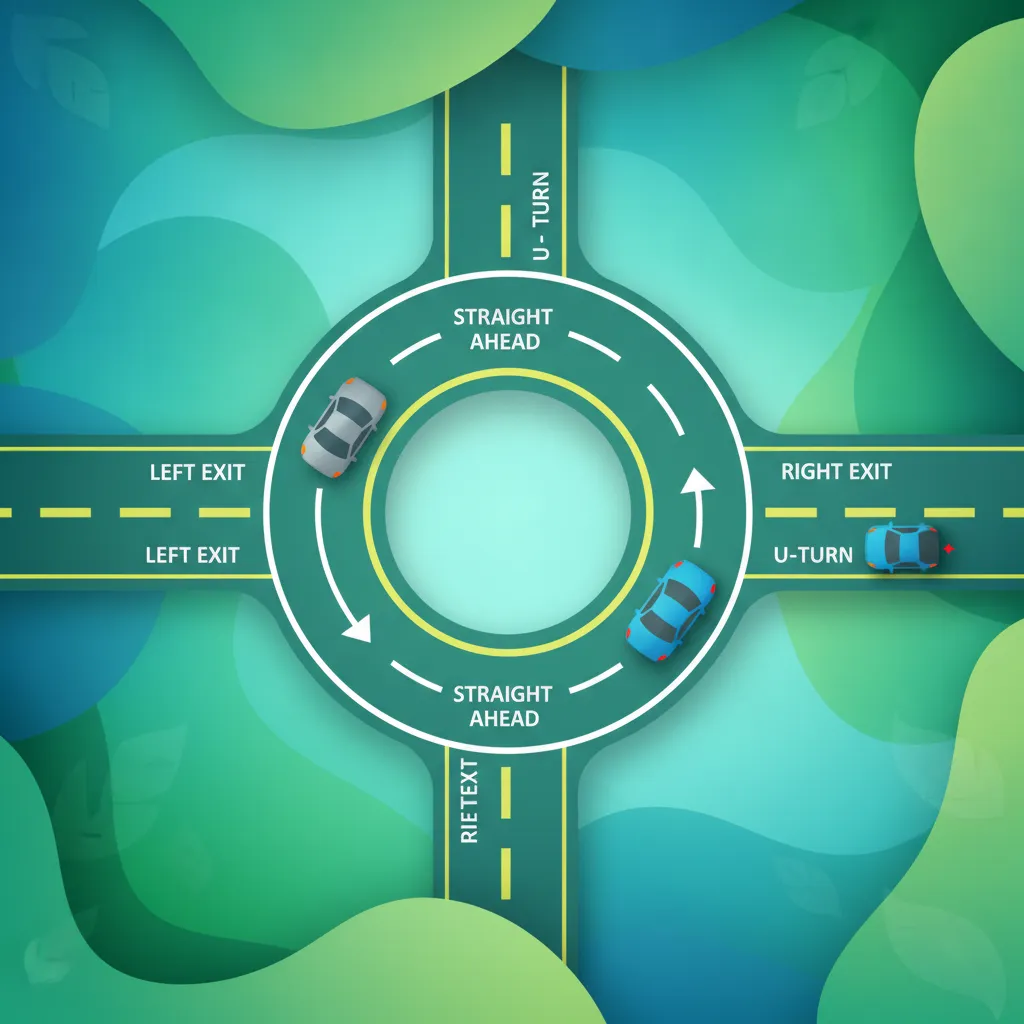
This lesson offers a step-by-step guide to navigating roundabouts in Denmark. You will learn how to approach and enter a roundabout, the requirement to yield to circulating traffic, and how to select the appropriate lane for your intended exit. Special attention is given to safely managing interactions with cyclists and pedestrians who may be present at roundabout entrances and exits.
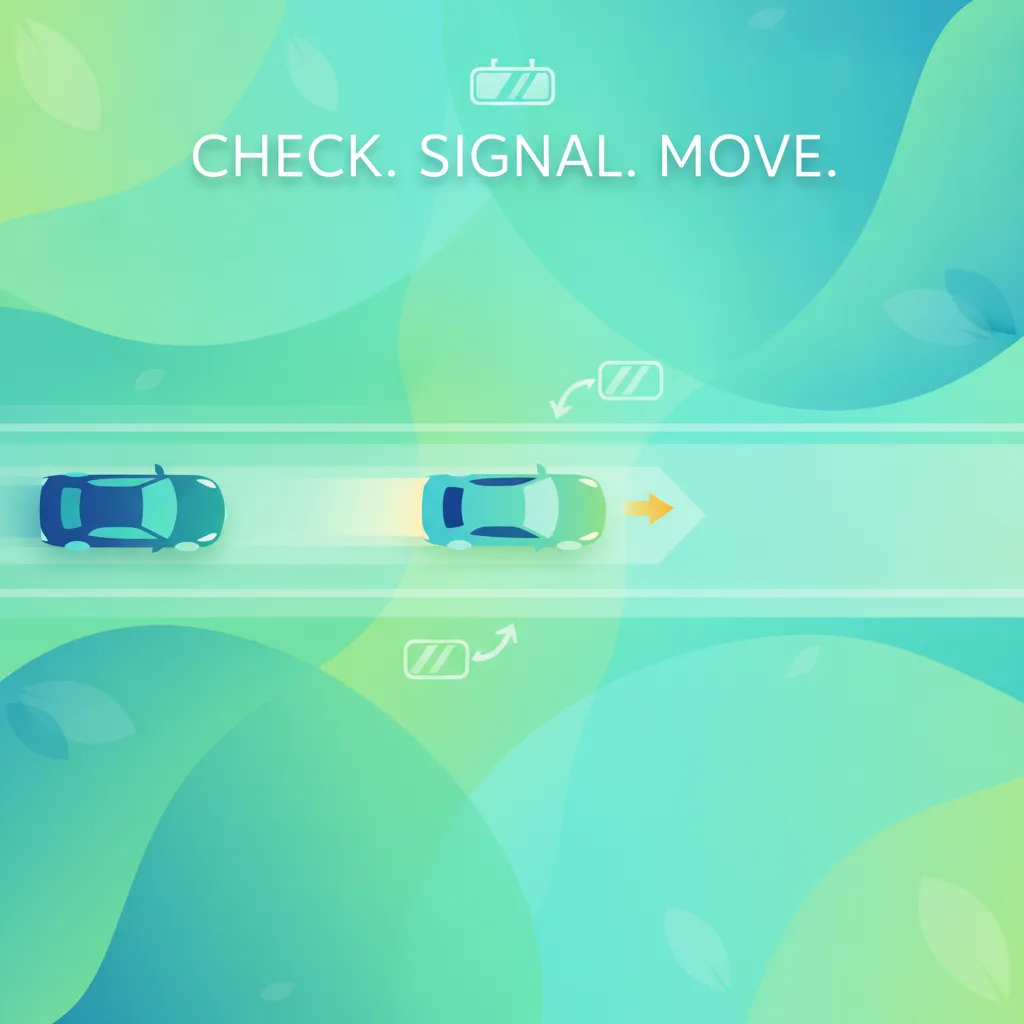
This lesson explains the principles of correct lane discipline, including proper positioning within your lane and adherence to road markings. It provides a clear, safe procedure for changing lanes, which includes signalling your intentions early, checking mirrors, and performing a final shoulder check for the blind spot. Mastering this process is essential for smooth and safe navigation in multi-lane traffic.
This lesson contrasts the driving techniques required for rural roads and motorways. It covers managing speed on narrow, winding lanes with potential hazards like farm machinery or animals. The content also explains the principles of safe motorway driving, including maintaining lane discipline, managing high-speed stability, and executing safe overtaking maneuvers.
This lesson provides detailed instructions for navigating Danish roundabouts. It covers the rules for yielding upon entry, selecting the correct lane based on the intended exit, and signalling intentions clearly. The lesson also highlights the specific rules regarding priority for cyclists crossing entry and exit lanes.
This lesson focuses on interpreting the various markings painted on Danish road surfaces. It explains the rules associated with solid and broken lane lines, directional arrows, and special-purpose lanes for buses and cyclists. Understanding these markings is crucial for maintaining correct lane discipline and safely navigating complex road layouts.
This lesson focuses on the rules and best practices for operating heavy vehicles on motorways and interchanges. It details Danish regulations regarding lane usage and speed limits for lorries, and explains safe techniques for merging into and exiting high-speed traffic. Maintaining a safe and appropriate following distance to allow for longer stopping distances is a key focus of the content.

This lesson provides a step-by-step guide for managing a vehicle breakdown safely. It instructs the rider on moving the vehicle to a safe location, making it visible to other traffic using hazard lights, and personal safety while waiting for assistance. The importance of staying away from active traffic lanes is a key point.
Find clear answers to common questions learners have about Motorway Driving and Lane Discipline. Learn how the lesson is structured, which driving theory objectives it supports, and how it fits into the overall learning path of units and curriculum progression in Denmark. These explanations help you understand key concepts, lesson flow, and exam focused study goals.
You must adapt your speed to the traffic flow already on the motorway while in the acceleration lane, then merge smoothly. The traffic already on the motorway does not have an unconditional obligation to move over, so you must find a safe gap to enter.
Generally, no. You must always overtake on the left. Overtaking on the right is only permitted in specific situations, such as when traffic is queuing in lanes or when the vehicle in front is clearly turning left.
You should signal well in advance of the exit to alert other drivers of your intention. Ensure you have positioned your vehicle in the correct lane before reaching the deceleration lane, typically indicated by road markings and signage.
It is strictly prohibited to reverse, make a U-turn, or stop on the motorway or its shoulder. You must continue to the next exit and find a safe, legal route to return to your original destination.
Use our powerful search tool to pinpoint specific Danish driving theory topics, road signs, or traffic situations you need to review. Start exploring relevant practice sets now to reinforce your knowledge and build confidence for your upcoming driving licence exam.