
This lesson details the legal spectrum of your responsibilities as a driver in Belgium, from maintaining your vehicle in a roadworthy state to fulfilling your duty of care on the road. Understanding these obligations is fundamental to your role as a licensed driver and forms a key part of the Category B theoretical exam requirements. Building upon the legal framework introduced in the first unit, this lesson ensures you are prepared to act safely and lawfully in every scenario.
Lesson content overview
Driving a vehicle on Belgian roads is a privilege that comes with a comprehensive set of obligations and responsibilities. These duties are not merely suggestions; they are enshrined in law and are critical for ensuring the safety of all road users, maintaining an orderly traffic flow, and protecting the environment. Understanding and adhering to these obligations is fundamental not only for passing your Belgian Category B theoretical exam but also for becoming a responsible and safe driver for life.
This lesson will detail the full spectrum of a driver's duties, ranging from strict legal compliance with traffic signs and regulations to the crucial responsibility of maintaining your vehicle's roadworthiness and responding ethically to various road situations. We will explore how these responsibilities contribute to personal safety, the safety of other road users, and overall legal compliance within the framework of the Belgian Road Code (Code de la Route / Wegcode).
At its core, responsible driving in Belgium encompasses several fundamental principles designed to prevent accidents, ensure vehicle reliability, and foster respectful interactions among all road users. These principles form the bedrock of safe driving practices and are legally mandated.
Driving is a privilege, not an inherent right. With this privilege comes a duty to act responsibly and adhere to all legal and ethical standards set forth by the Belgian Road Code.
Here are the overarching principles that guide driver obligations:
One of the most fundamental obligations for any driver is strict adherence to the Belgian Road Code. This involves understanding and obeying all traffic laws, road signs, and signals, which are designed to regulate traffic flow, prevent conflicts, and ensure safety.
Every road has a designated speed limit, which must be observed at all times, regardless of your perceived ability to drive faster. Speed limits are set based on road type, location (e.g., urban area, school zone), and potential hazards. Exceeding these limits is a serious offense that significantly increases accident risk and severity.
Traffic signs provide crucial information and instructions to drivers. They regulate priority, indicate hazards, provide directions, and prohibit certain actions. Misinterpreting or ignoring traffic signs can lead to dangerous situations and legal penalties. For instance, failing to stop at a red traffic light or a stop sign (sign B5) is a direct violation of a critical safety rule.
This requires a thorough understanding of the various categories of signs, including warning signs, priority signs, prohibition signs, and mandatory signs, as covered in detail in the "Belgian Road Signs and Traffic Signals" lesson.
Never assume a traffic sign is optional or that you understand its meaning without proper instruction. Always prioritize safety and legal compliance.
Priority rules dictate which vehicle or road user has the right to proceed first at intersections or specific road junctions. In Belgium, the general rule is "priority from the right," but this can be superseded by traffic signs, signals, or explicit road markings. Violating priority rules is a common cause of collisions and can have severe consequences. Understanding these rules is essential for navigating intersections safely and efficiently. This topic is extensively covered in the "Priority Rules, Priority from the Right, Intersections and Roundabouts" lesson.
Parking regulations are in place to ensure accessibility, safety, and proper traffic flow. Drivers are obligated to park their vehicles legally, considering factors such as time limits, designated parking zones, proximity to crossings or intersections, and access for emergency services. Incorrect parking can obstruct traffic, create hazards, and lead to fines or even vehicle towing.
A driver's responsibility extends beyond just their actions behind the wheel; it includes ensuring the vehicle itself is safe and fit for public roads. This is known as vehicle roadworthiness.
All vehicles registered in Belgium must undergo regular technical inspections (Contrôle Technique / Technische Keuring) to verify they meet safety and environmental standards. For most Category B vehicles, this is a biennial (every two years) inspection after an initial period, though annual inspections may apply to older vehicles or those used commercially. Driving a vehicle without a valid inspection certificate (keuringsbewijs / certificat de contrôle technique) is illegal.
Beyond mandatory inspections, drivers are responsible for the routine maintenance of their vehicle. This includes:
Regular vehicle maintenance not only ensures legal compliance but also significantly contributes to your safety and the longevity of your vehicle. Neglecting maintenance can lead to unexpected breakdowns and dangerous situations.
Drivers are responsible for ensuring that their vehicle is not overloaded and that any load is properly secured and distributed. Load limits (maximum permissible weight) are specified for each vehicle and can be found in the vehicle's registration documents. Overloading a vehicle impacts its handling, braking performance, and stability, making it significantly harder to control, especially during emergency manoeuvres. Improper load distribution can also lead to instability and increased accident risk.
Loading a vehicle beyond its maximum permissible weight, as specified by the manufacturer and legal regulations. This compromises vehicle stability, increases braking distances, and can damage the vehicle.
Your physical and mental state directly influences your ability to drive safely. Drivers have a continuous obligation to ensure they are fit to drive before getting behind the wheel.
Driving under the influence of alcohol or illicit drugs is strictly prohibited and carries severe penalties, including hefty fines, licence suspension, and even imprisonment. Belgium has strict legal blood alcohol limits, and even small amounts of alcohol can impair judgment and reaction time. Similarly, certain prescription or over-the-counter medications can cause drowsiness, dizziness, or other side effects that impair driving ability. Drivers must consult their doctor or pharmacist about any medication's potential impact on driving.
Never take risks with alcohol, drugs, or impairing medication. If in doubt, do not drive. Arrange for alternative transportation.
Fatigue is a significant factor in many road accidents. Drivers are obligated to ensure they are adequately rested before driving, especially on long journeys. Symptoms of fatigue include drowsiness, difficulty concentrating, frequent blinking, and yawning. If you feel tired, pull over in a safe location and rest or switch drivers. Ignoring fatigue dramatically increases the risk of falling asleep at the wheel or making critical errors.
Good vision is paramount for driving. Drivers must ensure their eyesight meets the legal standards and wear corrective lenses if required. Certain medical conditions, such as epilepsy, diabetes, or heart conditions, can also affect driving ability. It is the driver's responsibility to inform the relevant authorities (e.g., the local commune or medical certificate issuing body) about any medical condition that might impair their driving and obtain any necessary medical fitness certificates.
Modern vehicles are equipped with various safety features designed to protect occupants in the event of a collision. Drivers are legally obliged to ensure these devices are used correctly.
In Belgium, seatbelts (ceintures de sécurité) are mandatory for all drivers and passengers in vehicles equipped with them, both in the front and rear seats, whenever the vehicle is in motion. Seatbelts are scientifically proven to significantly reduce the risk of death and serious injury in a crash by preventing occupants from being ejected from the vehicle or colliding with interior surfaces. Airbags are supplementary restraint systems and do not replace the need for seatbelts.
Children are particularly vulnerable in vehicles. Drivers are legally obligated to ensure that children under a certain height (135 cm) or age (typically up to 12 years, whichever comes first) are secured in an appropriate child seat (siège enfant / kinderzitje) or booster seat that matches their size and weight. The child seat must be correctly installed according to the manufacturer's instructions and secured with the vehicle's seatbelts or ISOFIX system. Failure to use a proper child restraint system correctly exposes children to extreme danger in a collision.
Drivers are responsible for using their vehicle's lights correctly to ensure visibility and to communicate their presence to other road users, especially during periods of low visibility (night, fog, heavy rain, snow).
Drivers have specific legal duties regarding reporting incidents on the road.
In the event of an accident, drivers involved have several critical obligations:
If your vehicle breaks down on the road, you are obligated to:
Drivers are ultimately responsible for the safety of all occupants in their vehicle. This includes:
Beyond strict legal compliance, responsible driving includes demonstrating ethical conduct and road courtesy. This fosters a more pleasant and safer driving environment for everyone.
Courtesy often involves yielding to other road users even when not legally obliged to, such as allowing another driver to merge into traffic during heavy congestion, or giving way to pedestrians who might be hesitant to cross. Clearly signalling your intentions (e.g., indicating turns well in advance) is also crucial for preventing misunderstandings and conflicts.
Aggressive behaviours like tailgating, excessive horn use, weaving through traffic, or cutting off other drivers are dangerous and contribute to road rage. Ethical drivers practice patience, tolerance, and respect towards others, contributing to a calmer and safer road environment. This is further explored in the "Ethics and Road Courtesy" lesson.
A critical obligation is to be constantly aware of your surroundings and ready to react immediately to dangerous situations. This involves:
Quick and appropriate reactions can prevent an accident or significantly reduce its severity. Hesitation or misjudgment in a crisis can escalate a minor incident into a major collision. This skill is developed through practice and careful observation, drawing on knowledge from lessons on speed, following distance, and hazard perception.
To reiterate the fundamental responsibilities of drivers for a Belgian Category B licence:
Fulfilling these obligations is not only a legal necessity but a moral imperative for safe and responsible participation in road traffic.
This lesson covers the comprehensive legal and safety obligations for Belgian Category B drivers, encompassing vehicle maintenance requirements, mandatory safety equipment use, and proper conduct during accidents or breakdowns. Key topics include understanding the Belgian Road Code, maintaining roadworthiness through regular technical inspections, correctly using seatbelts and child restraints, appropriate vehicle lighting, and the legal duty to assist at accident scenes. Drivers must also ensure they are physically and mentally fit to drive, avoiding impairment from alcohol, drugs, or fatigue. The content prepares learners for both the theory exam and real-world responsible driving in Belgium.
A short set of high-value points that capture the most important learning from this lesson.
Drivers must maintain their vehicle in roadworthy condition and keep up with mandatory technical inspections (Contrôle Technique) at legally required intervals.
All occupants must wear seatbelts, and children under 135 cm must use appropriate child restraint systems correctly installed according to manufacturer instructions.
In case of an accident, drivers must stop safely, activate hazard lights, provide assistance to injured persons, exchange information, and report to police when required.
Vehicle lighting must be used appropriately: dipped beam for normal driving, full beam only on unlit roads without oncoming traffic, fog lights only when visibility is severely reduced.
Drivers are legally and ethically responsible for avoiding impairment from alcohol, drugs, medication, or fatigue before operating a vehicle.
Explore all units and lessons included in this driving theory course.
Tyre tread depth must be at least 1.6 mm by law; worn tyres significantly increase braking distances and skid risk.
Hazard lights (feux de détresse) may only be used when stationary and posing a hazard, never while driving except when part of an emergency convoy.
The duty to assist (aide aux personnes) requires providing first aid if trained and safe to do so when injuries occur.
Warning triangles must be placed at least 30 metres on normal roads and 100 metres on motorways behind a broken-down vehicle.
The Belgian Road Code (Code de la Route / Wegcode) is the primary legal framework governing all driver obligations.
Assuming hazard lights can be left on while driving in rain or poor visibility, which is incorrect and can confuse other road users.
Believing seatbelts are optional for rear passengers, when they are mandatory for all occupants regardless of seat position.
Neglecting to verify child seat installation, thinking that simply having a child seat is sufficient legal compliance.
Assuming the priority from the right rule always applies, without checking for overriding traffic signs or signals at intersections.
Underestimating the importance of regular vehicle maintenance between mandatory technical inspections, particularly for tyres, brakes, and lights.
Lesson content overview
A short set of high-value points that capture the most important learning from this lesson.
Drivers must maintain their vehicle in roadworthy condition and keep up with mandatory technical inspections (Contrôle Technique) at legally required intervals.
All occupants must wear seatbelts, and children under 135 cm must use appropriate child restraint systems correctly installed according to manufacturer instructions.
In case of an accident, drivers must stop safely, activate hazard lights, provide assistance to injured persons, exchange information, and report to police when required.
Vehicle lighting must be used appropriately: dipped beam for normal driving, full beam only on unlit roads without oncoming traffic, fog lights only when visibility is severely reduced.
Drivers are legally and ethically responsible for avoiding impairment from alcohol, drugs, medication, or fatigue before operating a vehicle.
Explore all units and lessons included in this driving theory course.
Tyre tread depth must be at least 1.6 mm by law; worn tyres significantly increase braking distances and skid risk.
Hazard lights (feux de détresse) may only be used when stationary and posing a hazard, never while driving except when part of an emergency convoy.
The duty to assist (aide aux personnes) requires providing first aid if trained and safe to do so when injuries occur.
Warning triangles must be placed at least 30 metres on normal roads and 100 metres on motorways behind a broken-down vehicle.
The Belgian Road Code (Code de la Route / Wegcode) is the primary legal framework governing all driver obligations.
Assuming hazard lights can be left on while driving in rain or poor visibility, which is incorrect and can confuse other road users.
Believing seatbelts are optional for rear passengers, when they are mandatory for all occupants regardless of seat position.
Neglecting to verify child seat installation, thinking that simply having a child seat is sufficient legal compliance.
Assuming the priority from the right rule always applies, without checking for overriding traffic signs or signals at intersections.
Underestimating the importance of regular vehicle maintenance between mandatory technical inspections, particularly for tyres, brakes, and lights.
Explore search topics learners often look for when studying Driver Obligations and Responsibilities. These topics reflect common questions about road rules, driving situations, safety guidance, and lesson level theory preparation for learners in Belgium.
Browse additional driving theory lessons that cover connected traffic rules, road signs, and common driving situations related to this topic. Improve your understanding of how different rules interact across everyday traffic scenarios.
Understand your legal duties regarding vehicle maintenance, technical inspections, and the correct use of safety equipment like seatbelts and child restraints according to Belgian traffic law. Essential theory for safe driving.
This lesson details the proper use of all vehicle lights and signaling devices. It explains when to use low and high beams, fog lights, hazard lights, and turn signals to communicate effectively with other road users. Correct lighting usage improves visibility and safety, especially in adverse weather conditions and during hours of darkness.

This lesson emphasizes the importance of regular vehicle maintenance and simple pre-drive inspections. Learners will understand how to check tyre pressure and tread depth, brake responsiveness, essential fluid levels, and the function of all lights. Performing these checks ensures vehicle reliability and contributes significantly to safety on the road.

This lesson provides a comprehensive overview of the mandatory lighting systems for all Category AM vehicles under Belgian law. It details the required functions of headlamps, rear lights, brake lights, and turn signals, explaining their importance for communication and visibility. Learners will understand the legal standards for this equipment and how to perform simple pre-ride checks to ensure all lights are functioning correctly.
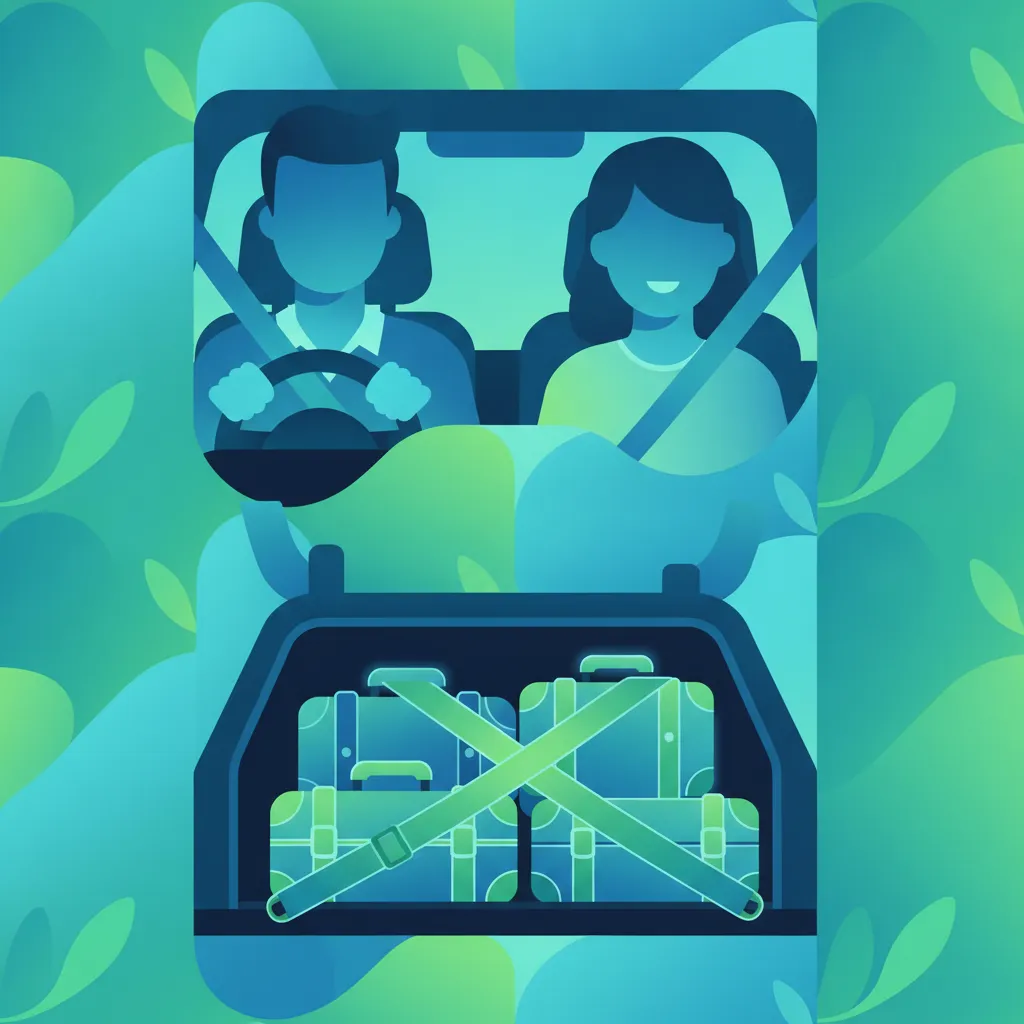
This lesson focuses on safely securing loads and ensuring passenger safety inside the vehicle. Learners will understand how to properly secure cargo to prevent it from shifting, and how to correctly use seatbelts and appropriate child restraint systems. The lesson also covers the impact of load and passenger weight on vehicle handling and stability.
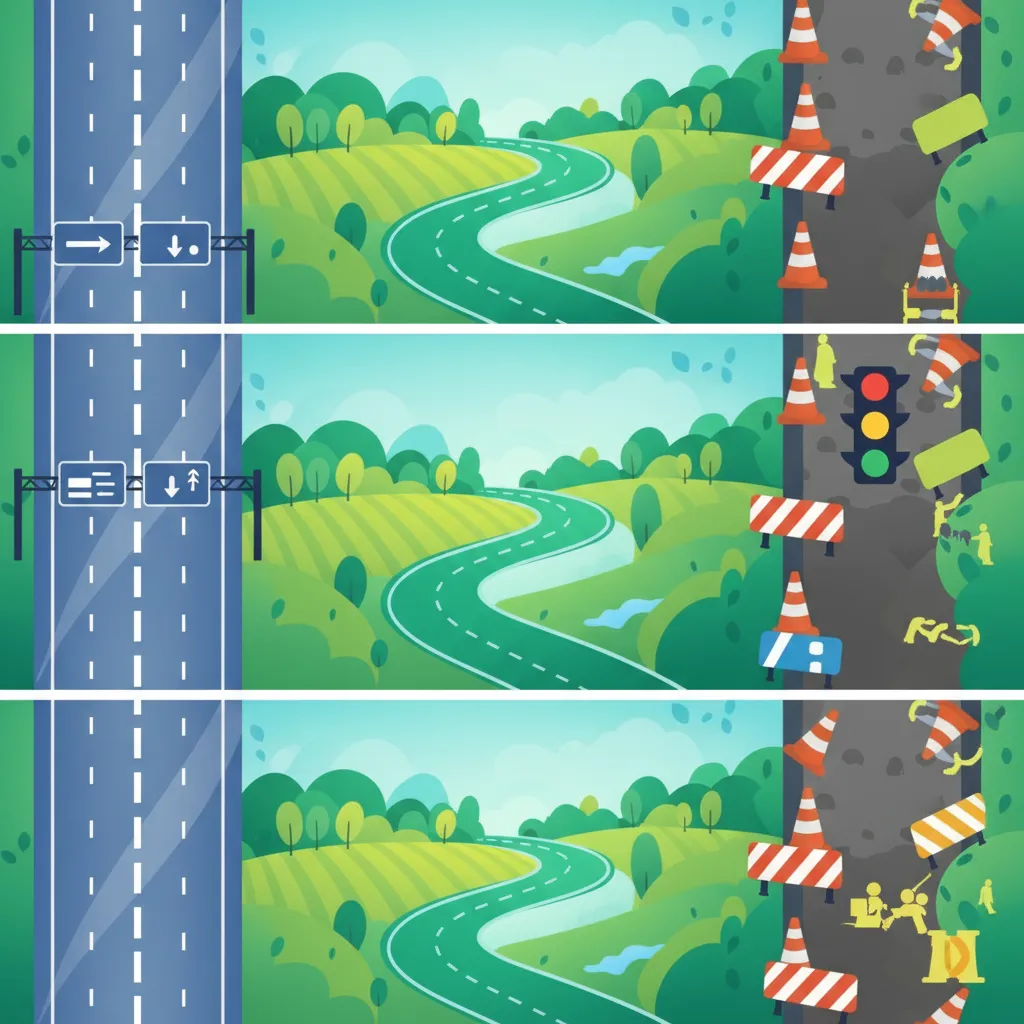
This lesson covers the specific challenges of driving on motorways, rural roads, and navigating roadworks. Learners will review lane discipline on high-speed roads and identify hazards common to rural roads, such as sharp bends and wildlife. It also explains the importance of adjusting speed and following temporary signage in construction zones.
This lesson focuses on driving safely in adverse weather like rain, fog, and low sun glare, which affects road friction and visibility. It provides guidelines on speed adaptation, maintaining a safe following distance, and the proper use of vehicle equipment like lights and wipers. Learners will understand how to reduce risks like hydroplaning and skidding.
This lesson focuses on techniques and equipment designed to enhance a rider's visibility on the road. It covers the effective use of reflective materials on clothing and the motorcycle itself, as well as the legal requirements for lighting under Belgian law. You will learn strategies to improve your conspicuity during the day, at night, and in adverse weather conditions.
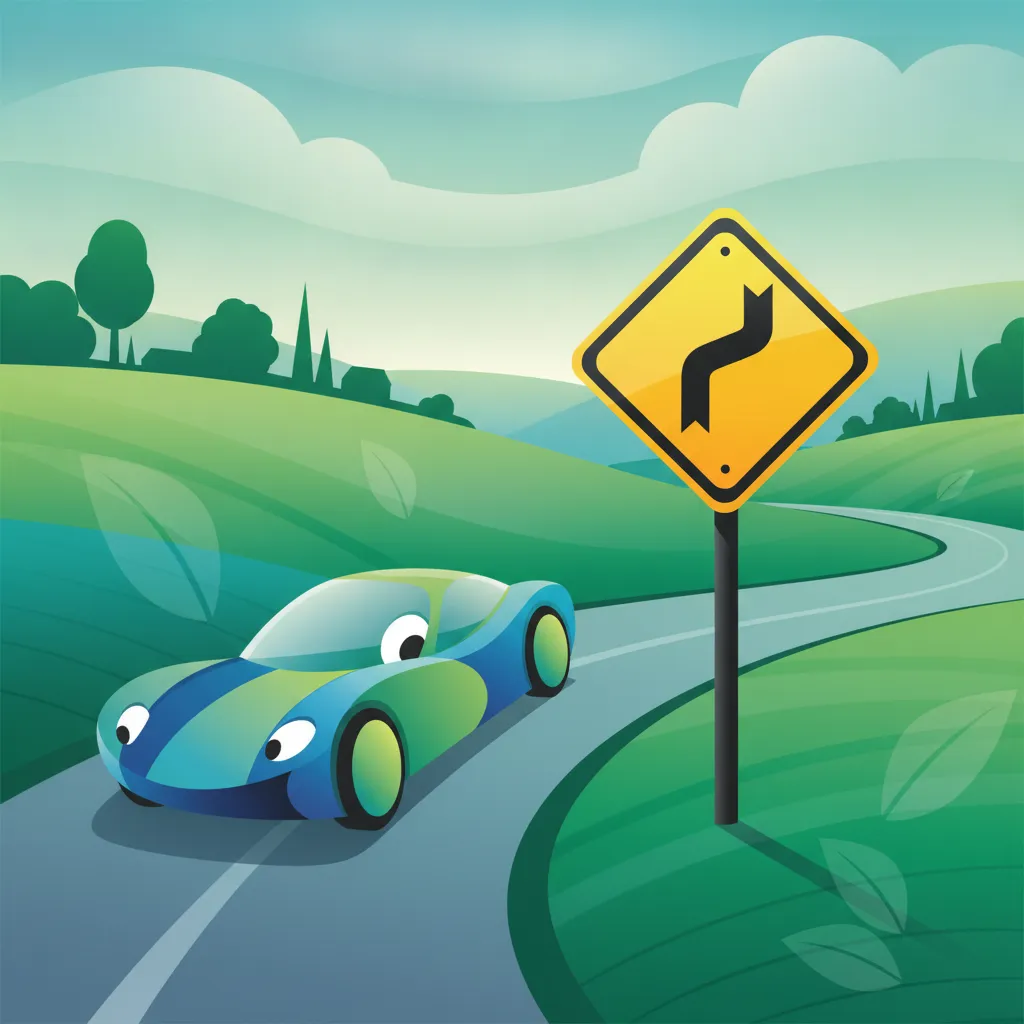
This lesson focuses on warning signs designed to alert drivers to potential hazards ahead. Topics include warnings for sharp curves, steep gradients, slippery surfaces, and zones with high pedestrian or wildlife activity. Learners will understand how to correctly interpret these signs and adjust their driving behavior to maintain safety on the road.
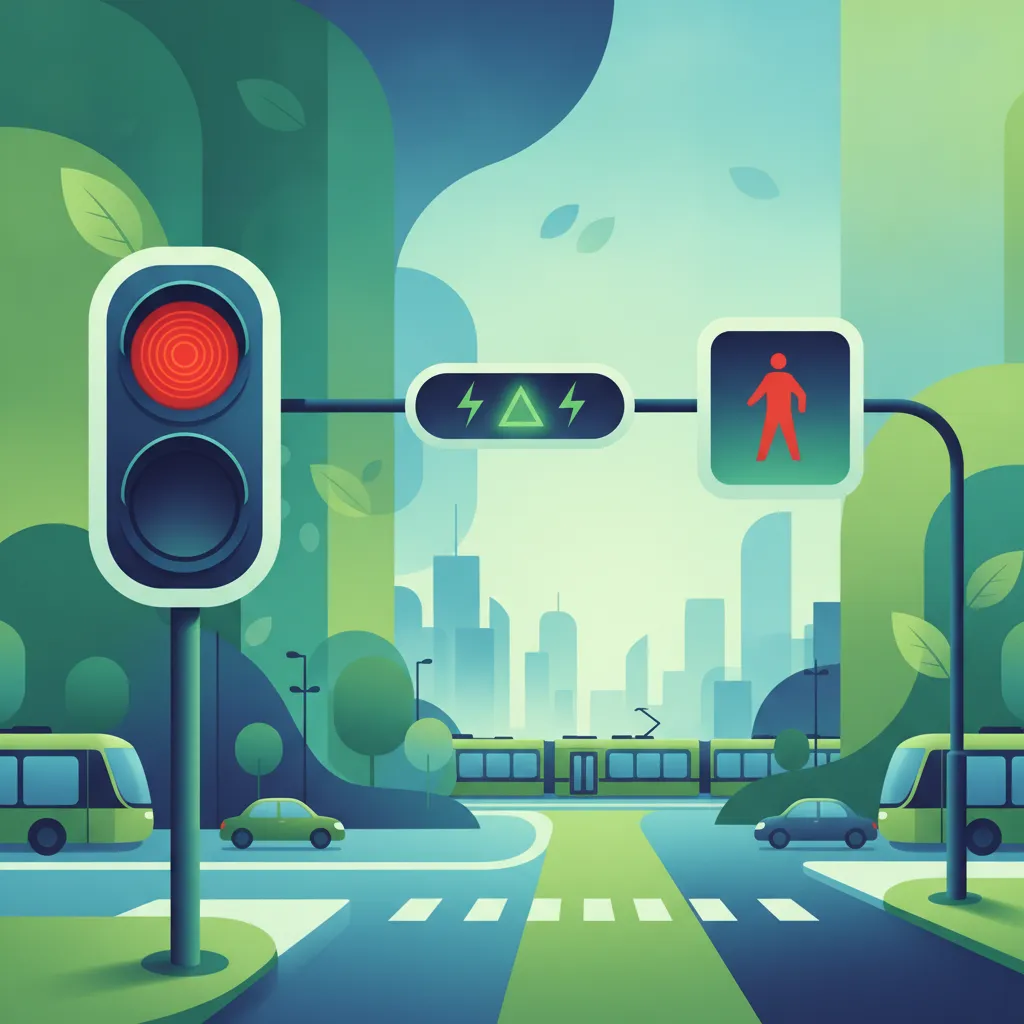
This lesson examines the operation of traffic light systems in Belgium, clarifying the meaning of red, amber, and green signals, including flashing lights and directional arrows. It details a motorcyclist's legal obligations when approaching and navigating signal-controlled intersections. The content also addresses specialized signals for pedestrians and trams that riders must recognize and respond to correctly.

This lesson focuses on the unique hazards associated with riding after dark. It emphasizes the importance of a fully functional lighting system and the use of reflective gear to be seen by others. The content explains how darkness affects depth perception and peripheral vision, requiring riders to reduce their speed to compensate for shorter sight distances and potential fatigue.
Learn the legal obligations for reporting accidents, providing assistance, and managing vehicle breakdowns in Belgium. Essential knowledge for responsible driver conduct and immediate response to incidents.
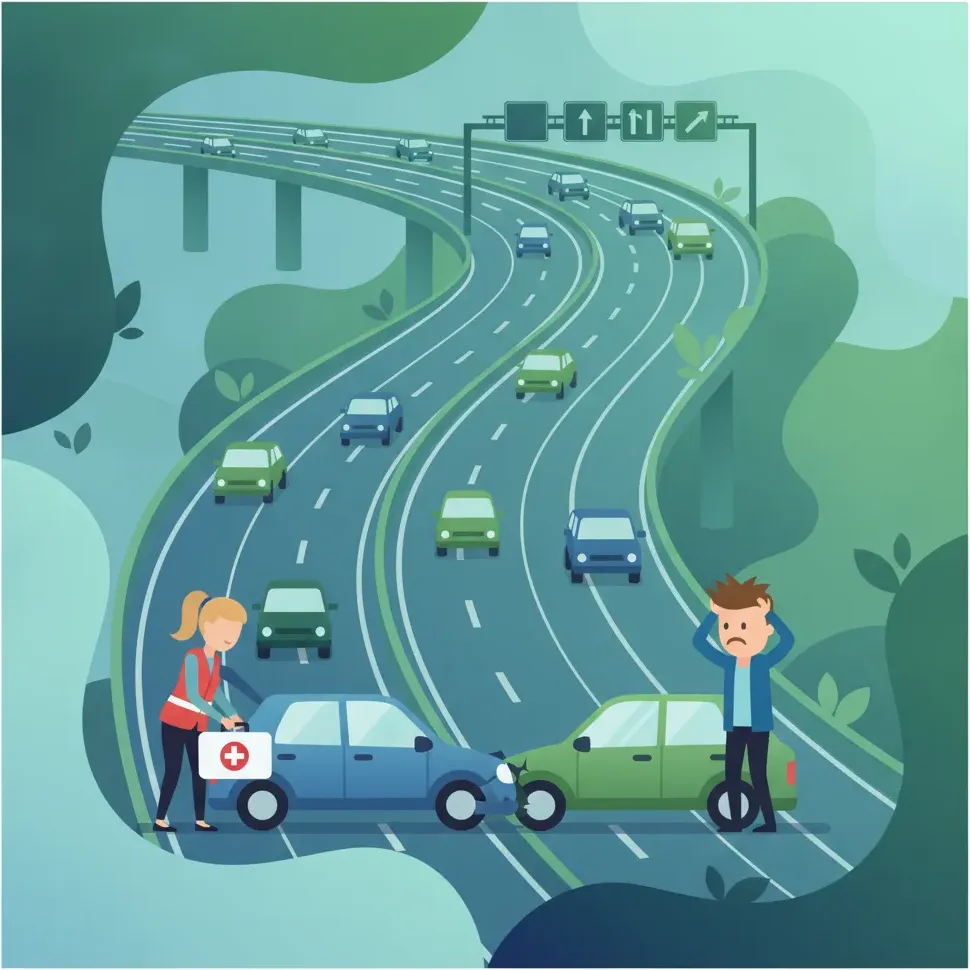
This lesson provides a clear and structured guide for responding to on-road emergencies such as a mechanical breakdown or a traffic accident. It details the steps for securing the scene safely, including the use of a warning triangle and high-visibility vest. Learners will understand how and when to contact emergency services via the 112 number and the basic principles of assisting anyone who may be injured.
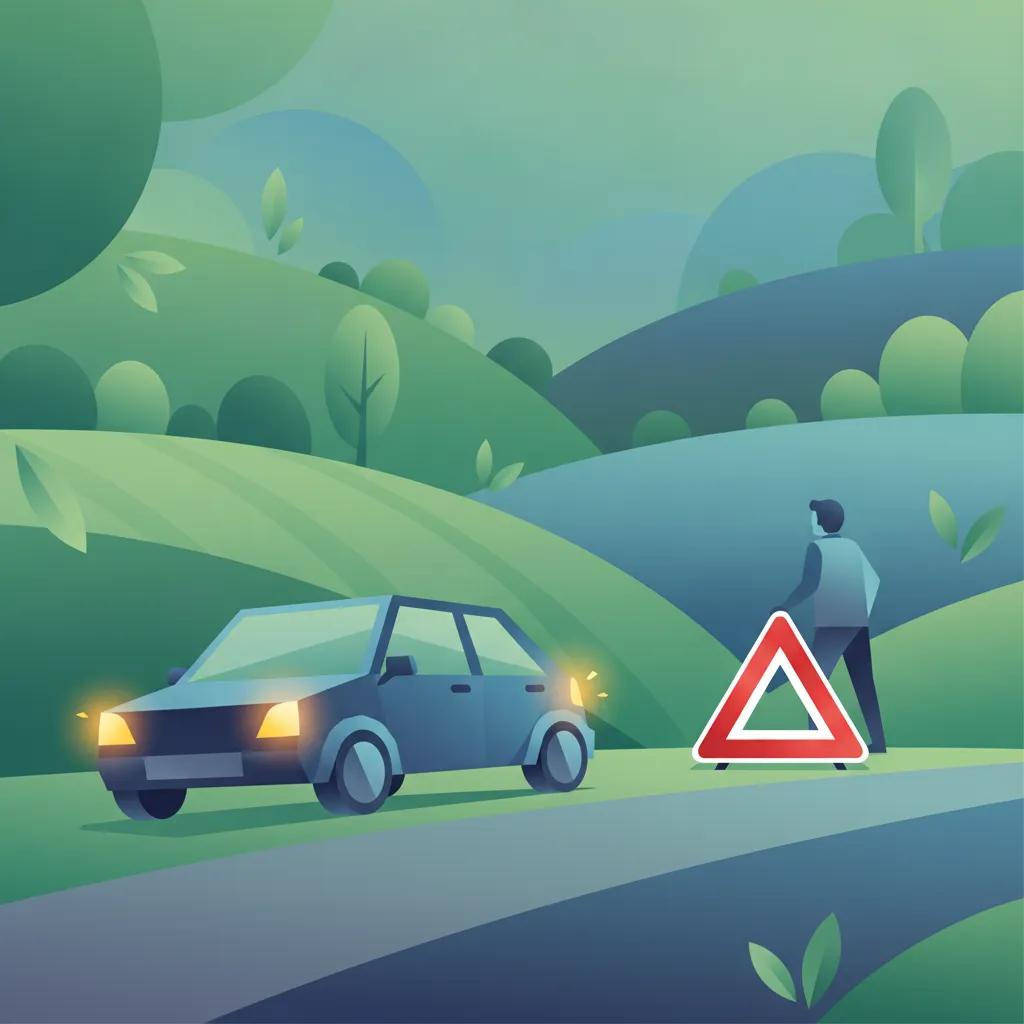
This lesson provides essential guidance on the correct procedures to follow in the event of a breakdown or a crash. It covers how to secure the scene to prevent further incidents, the legal obligations to assist if you are involved or witness an accident, and how to effectively contact emergency services. The content also reviews the legally required emergency equipment, such as a high-visibility vest.
This lesson outlines the legal penalties for traffic offences, including fines and potential licence suspension. It also covers correct emergency protocols, such as what to do at an accident scene, how to call 112, and the basics of first aid. The lesson concludes by emphasizing the importance of responsible driving to foster a safer road safety culture for everyone.
This lesson focuses on warning signs designed to alert drivers to potential hazards ahead. Topics include warnings for sharp curves, steep gradients, slippery surfaces, and zones with high pedestrian or wildlife activity. Learners will understand how to correctly interpret these signs and adjust their driving behavior to maintain safety on the road.
This lesson covers the specific challenges of driving on motorways, rural roads, and navigating roadworks. Learners will review lane discipline on high-speed roads and identify hazards common to rural roads, such as sharp bends and wildlife. It also explains the importance of adjusting speed and following temporary signage in construction zones.
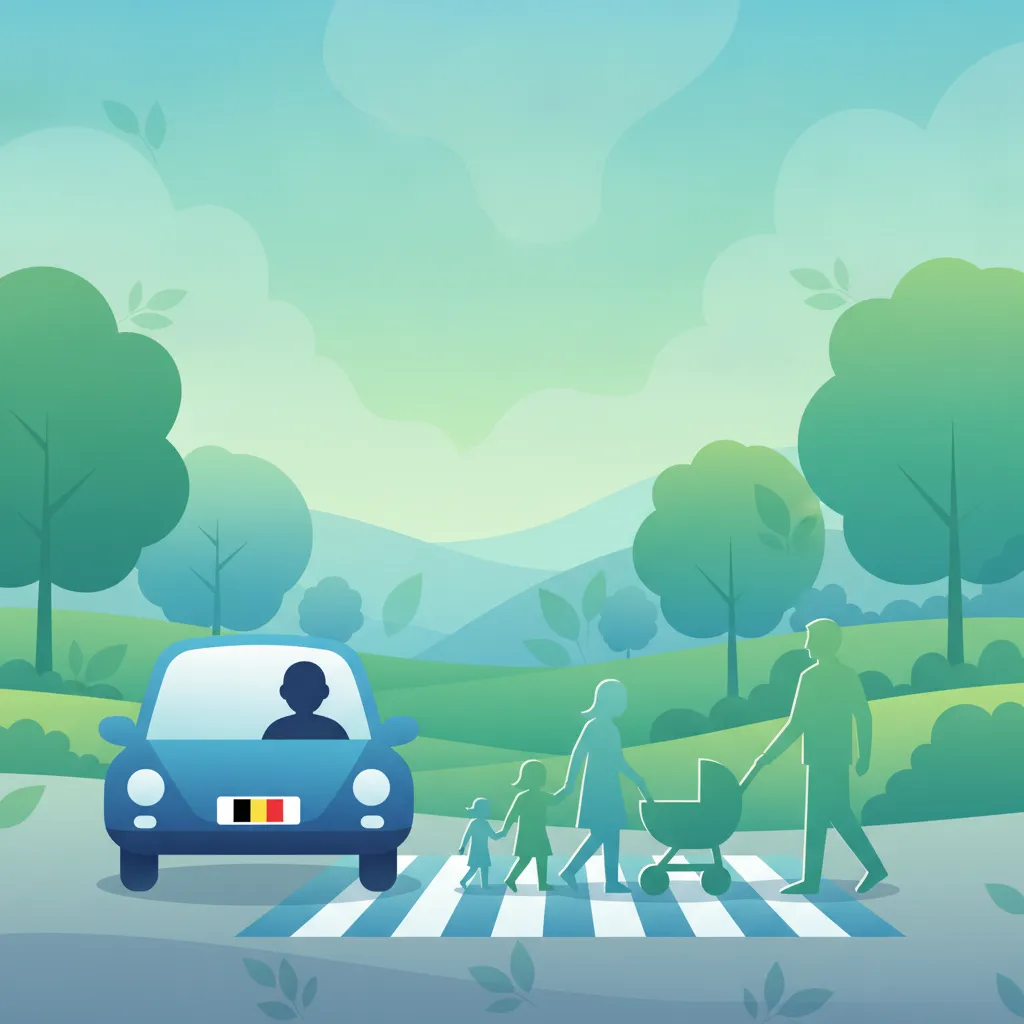
Beyond legal requirements, this lesson emphasizes the ethical dimension of driving, focusing on courtesy and cooperative behavior on Belgian roads. It introduces the social norms and etiquette expected of drivers, including respectful interactions with vulnerable road users. This ethical foundation fosters a responsible and harmonious traffic environment.
This lesson focuses on the legal responsibilities mandated for all motorcyclists in Belgium, emphasizing strict adherence to the traffic code. It details a rider's obligation to conduct risk assessments, comply with speed limits, and maintain high safety standards. The content also clarifies the legal liability associated with traffic infractions and the importance of carrying correct documentation at all times.
Find clear answers to common questions learners have about Driver Obligations and Responsibilities. Learn how the lesson is structured, which driving theory objectives it supports, and how it fits into the overall learning path of units and curriculum progression in Belgium. These explanations help you understand key concepts, lesson flow, and exam focused study goals.
You are required to have a warning triangle, a high-visibility safety vest, a first-aid kit, and a fire extinguisher. These items must be accessible and in good condition to comply with Belgian regulations.
Beyond your own regular pre-drive checks, vehicles must pass a mandatory technical inspection (keuring/contrôle technique) at specific intervals depending on the vehicle's age and type. Failure to have a valid inspection certificate can lead to heavy fines.
Your immediate priority is the safety of all parties. You must stop, secure the scene, assist those in need, and exchange insurance details. If there are injuries or significant damage, you must notify the police.
In Belgium, a driver is legally liable for the state of their vehicle. If a collision occurs due to a technical fault that could have been identified through basic maintenance, such as bald tyres or faulty brakes, you can be held criminally responsible.
Ready to focus your Belgian driving theory revision? Utilize our powerful search tool to pinpoint exact topics, road signs, or difficulty levels. Engage with practice questions that directly address your learning needs and solidify your understanding of Belgian traffic laws for your upcoming exam.