
This lesson explores the specific safety protocols and traffic rules for driving on bridges, through tunnels, and boarding ferries in Denmark. You will learn how to adapt your speed, maintain lane discipline, and follow crew instructions to ensure safe transit during your Category B driving journey.
Lesson content overview
As you prepare for your Danish Category B driving license, understanding how to safely navigate different road environments is crucial. This lesson focuses on the unique challenges and specific rules associated with driving on bridges, through tunnels, and when utilizing vehicle ferries. These environments demand heightened awareness, precise vehicle control, and strict adherence to established procedures to ensure the safety of all road users.
Driving in these specific conditions requires adapting your speed, adjusting to rapid changes in lighting, maintaining strict lane discipline, and following instructions from ferry personnel. Mastering these skills is essential for becoming a responsible and confident driver in Denmark.
Every driving environment presents its own set of challenges, and special structures like bridges, tunnels, and vehicle ferries are no exception. The core principle for safe driving in these areas is environmental adaptation. This means modifying your driving behavior, vehicle speed, and observation techniques based on the physical characteristics and specific rules of the environment you are entering or traversing.
Effective speed management is paramount. Your speed must always be suitable for the conditions, not just the posted limit. Confined spaces, sudden changes in light, and potential external forces like strong winds all necessitate careful speed adjustments. Alongside this, lane discipline becomes even more critical in areas where space is limited and overtaking opportunities are rare or prohibited.
For vehicles carrying heavy loads or those with a high center of gravity, such as vans or cars with roof racks, understanding the load and stability principle is vital. These vehicles can be particularly susceptible to wind on bridges or require longer stopping distances in tunnels. Finally, when dealing with vehicle ferries, procedure adherence is absolute; following crew instructions is not optional but mandatory for safety.
Bridges are elevated structures designed to carry roads over obstacles such as water bodies, valleys, or other roads. While they offer continuous traffic flow, they also introduce specific driving conditions that require careful attention.
In Denmark, you will encounter various types of bridges. Most are fixed bridges, meaning they have no movable parts. However, some areas may have drawbridges with sections that can open to allow maritime traffic to pass. These movable bridges will have specific traffic signals (often red lights) to indicate when they are opening or closing, and drivers must stop and wait.
The structural characteristics of bridges often include fixed lengths, and sometimes narrower lanes compared to open roads. This means that space for maneuvering is often limited, making lane discipline crucial.
When driving on a bridge, it is essential to maintain excellent lane discipline. You must stay within your designated lane and avoid drifting. On multi-lane bridges, overtaking should only be attempted if explicitly allowed by road markings or signage. In many cases, overtaking is prohibited on bridges due to limited visibility or width.
Always assume overtaking is prohibited on a bridge unless clearly indicated otherwise by signs or road markings.
One of the most significant environmental factors on bridges, especially longer or higher structures, is crosswind. This is wind blowing perpendicular to your direction of travel. Strong crosswinds can exert considerable force on your vehicle, potentially pushing it sideways. This effect is particularly pronounced for high-profile vehicles such as vans, SUVs, or vehicles towing trailers, due to their larger surface area.
When encountering strong winds on a bridge, it is imperative to:
Tunnels are enclosed road passages that lead beneath or within natural or artificial obstacles. Driving through a tunnel presents a unique set of challenges, primarily related to rapid changes in lighting, reduced visibility, and confined spaces.
A critical aspect of tunnel driving is the sudden transition from bright daylight to artificial tunnel lighting, or vice-versa. Your eyes need time to adjust to these changes. When entering a tunnel from bright daylight, the interior can initially appear very dark, significantly reducing your immediate visibility. Similarly, exiting a tunnel into bright daylight can cause temporary glare.
To mitigate this, drivers must reduce speed upon entry. This allows more time for your eyes to adapt and provides a larger safety margin in case of unforeseen obstacles or sudden braking by vehicles ahead. It also prepares you for the possibility of slower traffic inside the tunnel.
Proper headlight use is mandatory in tunnels in Denmark, regardless of the time of day. You must switch on your dipped beams (low beams) before entering the tunnel. Dipped beams illuminate the road ahead without dazzling oncoming drivers or drivers in front of you. Automatic headlight systems may not always react quickly enough to the sudden change in light, so it is safer to manually switch them on.
Never rely solely on automatic headlights when entering a tunnel. Manually switch to dipped beams to ensure you are visible and can see clearly.
Beyond the general requirement to reduce speed upon entry, specific speed limits are usually posted for tunnels. Adhere strictly to these limits. Due to the enclosed nature, any incident inside a tunnel can have more severe consequences and can be harder to manage for emergency services.
Maintain a larger than usual following distance in tunnels. This provides more time and space to react to sudden stops and reduces the risk of rear-end collisions. Be aware of limited overtaking opportunities, as tunnels generally prohibit overtaking unless specific lane markings and signs explicitly permit it, which is rare.
In the event of a breakdown or emergency within a tunnel, look for emergency exits, telephones, and fire extinguishers, which are typically marked with specific signs. Follow any instructions from tunnel management or emergency personnel.
Vehicle ferries are specialized watercraft designed to transport vehicles and passengers across bodies of water that are too wide or impractical for bridges or tunnels. Using a ferry involves a distinct set of procedures that require strict adherence to ensure safety for everyone onboard.
The process of boarding a ferry is highly coordinated and typically managed by the ferry crew. As you approach the ferry terminal, follow all road signs directing you to the correct lanes for your vehicle type or destination.
Stop before the ramp: Always stop your vehicle well short of the ferry ramp or entrance until you are clearly signaled by a crew member to proceed. Do not drive onto the ferry without explicit instruction.
Follow crew instructions: Ferry crew members will direct you to a specific parking lane and position on the vessel. Pay close attention to their hand signals and verbal instructions. They are responsible for ensuring the vessel is loaded safely and balanced.
Park as instructed: Drive slowly and carefully to your designated parking spot. Once parked, engage your handbrake, switch off your engine, and put your vehicle in gear (or P for automatic transmission). Some ferries may require you to leave your vehicle unlocked or leave the keys with a crew member in specific circumstances.
Stay seated or move to passenger areas: Depending on the ferry's size and duration of the crossing, you may be required to remain in your vehicle or proceed to designated passenger lounges. Always follow the crew's guidance.
While the ferry is in motion, standard road safety rules regarding seat belt use apply. It is mandatory to wear seat belts while in your vehicle if the ferry is moving, just as you would on a regular road. However, many passengers choose to leave their vehicles and enjoy the facilities. If you leave your vehicle, ensure it is properly secured.
Even though you are on water, the rules for wearing seat belts in a moving vehicle generally remain in effect while on a ferry.
Disembarking (leaving the ferry) is just as structured as boarding. Do not start your engine or attempt to move your vehicle until a crew member signals that it is safe to do so. Rushing to leave can create dangerous situations, especially if other vehicles are still maneuvering or if the ferry is not yet fully docked and stable.
Wait for the signal: Remain in your parked position with the engine off until a crew member gives you the signal to start your engine and move.
Start engine and prepare: Once signaled, start your engine, release the handbrake, and prepare to drive off.
Drive off carefully: Proceed slowly and cautiously, following any further instructions from the crew. Be mindful of other vehicles and pedestrians. The ramp can sometimes be steep or wet.
A common mistake is driving onto or off the ferry without stopping or ignoring crew directions. This can lead to loading imbalances, collisions with other vehicles or the ferry structure, and generally disrupts the safe operation of the vessel. Always prioritize following the crew's instructions precisely.
Understanding the specific regulations for bridges, tunnels, and ferries within the context of Danish traffic law (Færdselsloven) is critical. While many principles are universal, specific details can vary.
Danish regulations require drivers to reduce their speed to a safe level before entering a tunnel, considering factors like reduced visibility and potential for sudden stops. Dipped beams must be switched on when entering a tunnel, irrespective of the ambient lighting conditions outside. Failing to do so can lead to dangerous situations and potential penalties.
On multi-lane bridges in Denmark, drivers must maintain strict lane discipline. Overtaking is generally prohibited unless clearly indicated by specific road markings or signs that explicitly permit it. Violations can lead to fines and dangerous traffic situations.
The procedures for boarding and disembarking from ferries in Denmark are aligned with international best practices:
Any deviation from these instructions can be considered a violation of safety protocols and can lead to disruptions or accidents.
Navigating bridges, tunnels, and vehicle ferries successfully is a key component of safe and responsible driving, particularly in a country like Denmark with numerous waterways and intricate road infrastructure. These unique environments demand constant vigilance and adaptability.
Remember to:
By understanding and applying these principles, you will enhance your safety and the safety of others on Danish roads, demonstrating the competence required for your Category B driving license.
This lesson covers the specialized skills needed to safely navigate bridges, tunnels, and vehicle ferries in Denmark. On bridges, drivers must manage crosswind effects by reducing speed and maintaining lane discipline, with overtaking typically prohibited. Tunnels require mandatory use of dipped beams and careful speed adjustment to handle sudden lighting changes. Ferry operations follow strict boarding and disembarking procedures where drivers must follow crew instructions precisely, secure their vehicles properly, and wait for signals before moving. All these environments demand heightened environmental awareness and strict adherence to Danish traffic regulations for safe passage.
A short set of high-value points that capture the most important learning from this lesson.
Environmental adaptation is essential when driving on bridges, through tunnels, and on ferries - adjust speed, lane position, and observation based on the specific environment.
Dipped beams are mandatory in Danish tunnels regardless of ambient lighting conditions to ensure visibility and safety.
Strong crosswinds on bridges pose a significant stability risk, especially for high-profile vehicles, requiring reduced speed and firm steering control.
Ferry crew instructions are not optional - following their precise directions for boarding, parking, and disembarking is mandatory for safety.
Overtaking is generally prohibited on bridges and in tunnels due to confined spaces and limited maneuverability.
Explore all units and lessons included in this driving theory course.
Reduce speed upon entering tunnels to allow your eyes to adapt to changing light conditions and maintain a safe following distance.
On multi-lane bridges, stay within your designated lane and only overtake if road markings or signs explicitly permit it.
When boarding a ferry, stop well short of the ramp until signaled by crew, then park as instructed with handbrake engaged and engine off.
Even on a ferry, seat belt use remains mandatory while the vessel is moving.
Fixed bridges require no special signals, but drawbridges may show red lights indicating they are opening or closing.
Relying solely on automatic headlights when entering tunnels instead of manually switching to dipped beams for immediate visibility.
Attempting to drive onto or off a ferry without waiting for crew signals, which can create loading imbalances and dangerous situations.
Not reducing speed sufficiently for crosswinds on bridges, especially when driving high-profile vehicles like vans or SUVs.
Failing to increase following distance in tunnels, where sudden stops can have severe consequences due to confined space.
Leaving the vehicle engine running on the ferry instead of switching it off when parked in the designated spot.
Lesson content overview
A short set of high-value points that capture the most important learning from this lesson.
Environmental adaptation is essential when driving on bridges, through tunnels, and on ferries - adjust speed, lane position, and observation based on the specific environment.
Dipped beams are mandatory in Danish tunnels regardless of ambient lighting conditions to ensure visibility and safety.
Strong crosswinds on bridges pose a significant stability risk, especially for high-profile vehicles, requiring reduced speed and firm steering control.
Ferry crew instructions are not optional - following their precise directions for boarding, parking, and disembarking is mandatory for safety.
Overtaking is generally prohibited on bridges and in tunnels due to confined spaces and limited maneuverability.
Explore all units and lessons included in this driving theory course.
Reduce speed upon entering tunnels to allow your eyes to adapt to changing light conditions and maintain a safe following distance.
On multi-lane bridges, stay within your designated lane and only overtake if road markings or signs explicitly permit it.
When boarding a ferry, stop well short of the ramp until signaled by crew, then park as instructed with handbrake engaged and engine off.
Even on a ferry, seat belt use remains mandatory while the vessel is moving.
Fixed bridges require no special signals, but drawbridges may show red lights indicating they are opening or closing.
Relying solely on automatic headlights when entering tunnels instead of manually switching to dipped beams for immediate visibility.
Attempting to drive onto or off a ferry without waiting for crew signals, which can create loading imbalances and dangerous situations.
Not reducing speed sufficiently for crosswinds on bridges, especially when driving high-profile vehicles like vans or SUVs.
Failing to increase following distance in tunnels, where sudden stops can have severe consequences due to confined space.
Leaving the vehicle engine running on the ferry instead of switching it off when parked in the designated spot.
Explore search topics learners often look for when studying Bridges, Tunnels, and Ferry Operations. These topics reflect common questions about road rules, driving situations, safety guidance, and lesson level theory preparation for learners in Denmark.
Browse additional driving theory lessons that cover connected traffic rules, road signs, and common driving situations related to this topic. Improve your understanding of how different rules interact across everyday traffic scenarios.
Understand Danish traffic laws and safety procedures for navigating bridges, tunnels, and ferries. Learn about speed, lighting, wind effects, and essential ferry operations for your Category B license.
This lesson provides guidance for navigating special infrastructure like long bridges, tunnels, and ferries. It covers awareness of height and weight restrictions, managing the effects of strong crosswinds on bridges, and adapting to lighting changes in tunnels. The content also details the procedures for boarding ferries and correctly securing the vehicle for transit.

Crossing large bridges presents unique challenges, including strict weight restrictions and significant exposure to crosswinds. This lesson explains how to identify and respect these limits and teaches techniques for maintaining vehicle stability when hit by strong wind gusts. It covers the importance of reducing speed and making subtle steering corrections to counteract aerodynamic forces and stay safely in your lane.
This lesson focuses on interpreting the various markings painted on Danish road surfaces. It explains the rules associated with solid and broken lane lines, directional arrows, and special-purpose lanes for buses and cyclists. Understanding these markings is crucial for maintaining correct lane discipline and safely navigating complex road layouts.
This lesson details the meaning and application of various road surface markings, including lane dividers, solid and broken lines, and directional arrows. You will also learn to interpret the full sequence of traffic light signals, including the specific rules for the amber (yellow) light phase. A proper understanding of these systems is vital for maintaining correct lane discipline and adhering to traffic controls.

This lesson provides a comprehensive overview of a vehicle's lighting systems and their proper use. It covers the functions of low and high beams, fog lights, and all signal lights, emphasizing their importance for visibility and communication with other drivers. The material explains the legal requirements for using lights in various conditions, including daytime, darkness, and adverse weather, as specified by Danish regulations.
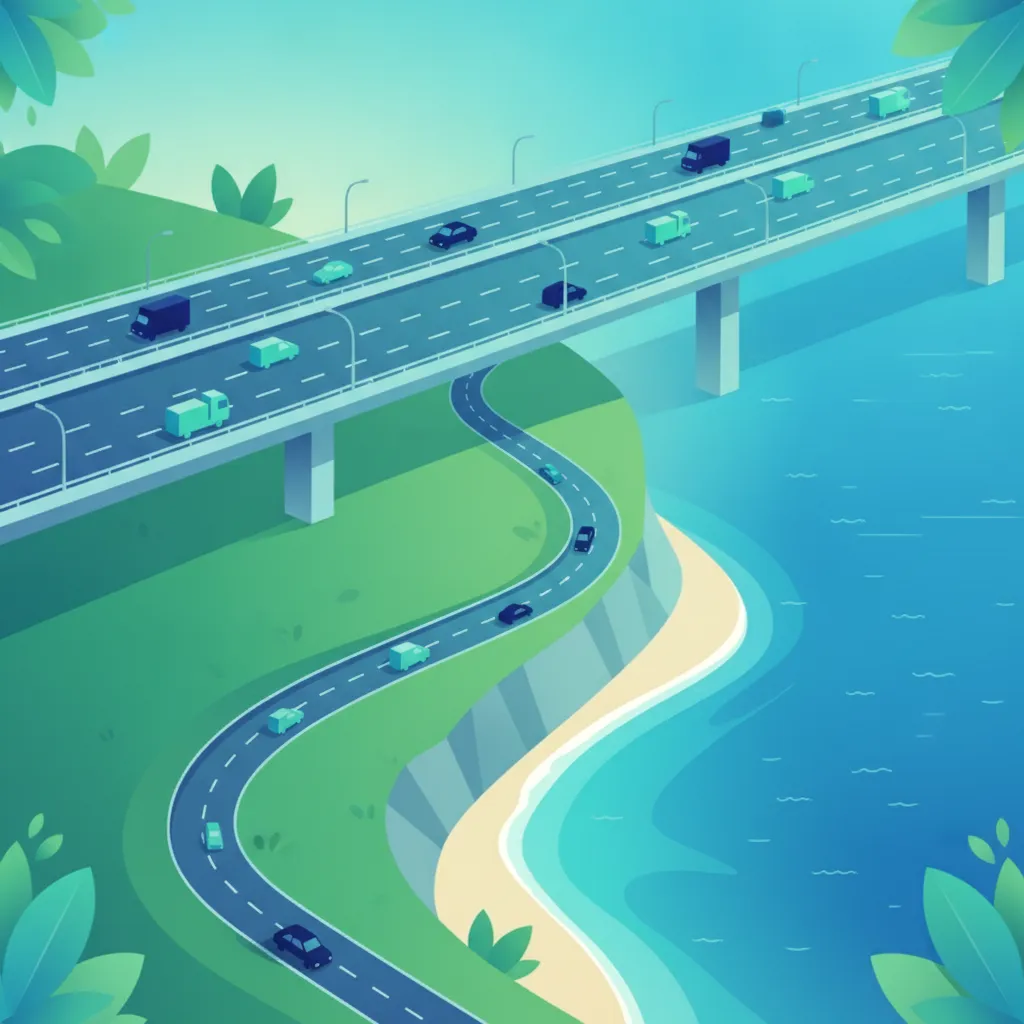
This lesson focuses on the unique environmental factors affecting bridges and coastal routes. It teaches riders how to anticipate and counteract the effects of strong crosswinds on stability. The content also addresses how to manage lane position and speed when transitioning between different road surfaces and structures.

This lesson equips you with the knowledge to drive safely in challenging weather conditions. It explains the risk of aquaplaning in heavy rain, how to counteract strong crosswinds, and the correct use of lights in darkness and fog. The core principle is adapting your speed and increasing your following distance to compensate for reduced visibility and traction.
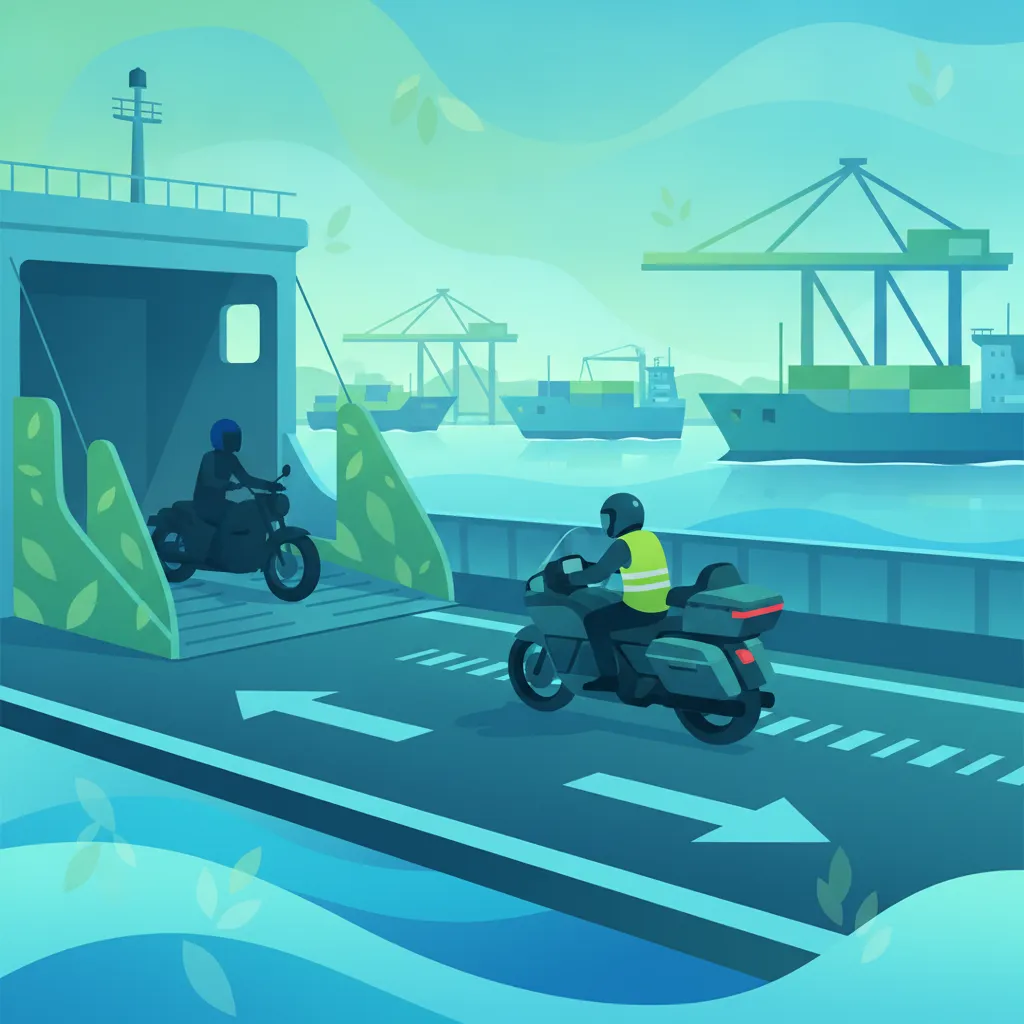
This lesson provides practical guidance for motorcyclists using ferries, a common mode of transport in Denmark. It covers the process of riding onto the ferry, securing the motorcycle with straps to prevent it from falling, and navigating potentially slippery decks. Safe procedures for disembarking into traffic are also explained.
This lesson focuses on the rules and best practices for operating heavy vehicles on motorways and interchanges. It details Danish regulations regarding lane usage and speed limits for lorries, and explains safe techniques for merging into and exiting high-speed traffic. Maintaining a safe and appropriate following distance to allow for longer stopping distances is a key focus of the content.
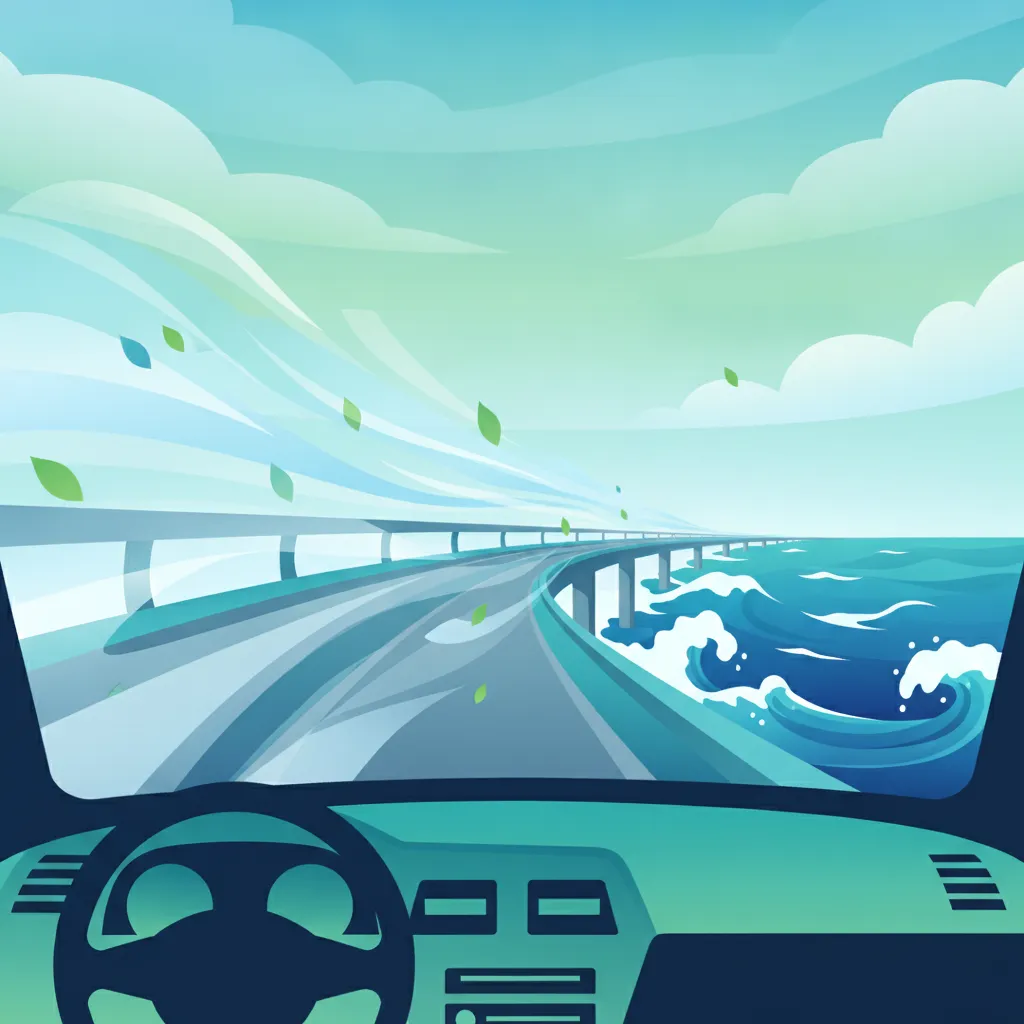
This lesson addresses the specific hazards found on exposed structures like bridges and open coastal roads. It teaches techniques for managing strong crosswinds and sudden gusts that can affect stability. Additionally, it covers how to handle potentially slippery surfaces like metal expansion joints often found on bridges.
Learn how to adapt your driving to specific risks on bridges, tunnels, and ferries in Denmark. Focus on speed management, wind effects, headlight use in tunnels, and ferry boarding and disembarking protocols.
This lesson provides guidance for navigating special infrastructure like long bridges, tunnels, and ferries. It covers awareness of height and weight restrictions, managing the effects of strong crosswinds on bridges, and adapting to lighting changes in tunnels. The content also details the procedures for boarding ferries and correctly securing the vehicle for transit.
This lesson equips you with the knowledge to drive safely in challenging weather conditions. It explains the risk of aquaplaning in heavy rain, how to counteract strong crosswinds, and the correct use of lights in darkness and fog. The core principle is adapting your speed and increasing your following distance to compensate for reduced visibility and traction.
Crossing large bridges presents unique challenges, including strict weight restrictions and significant exposure to crosswinds. This lesson explains how to identify and respect these limits and teaches techniques for maintaining vehicle stability when hit by strong wind gusts. It covers the importance of reducing speed and making subtle steering corrections to counteract aerodynamic forces and stay safely in your lane.
This lesson focuses on the unique environmental factors affecting bridges and coastal routes. It teaches riders how to anticipate and counteract the effects of strong crosswinds on stability. The content also addresses how to manage lane position and speed when transitioning between different road surfaces and structures.
This lesson addresses the specific hazards found on exposed structures like bridges and open coastal roads. It teaches techniques for managing strong crosswinds and sudden gusts that can affect stability. Additionally, it covers how to handle potentially slippery surfaces like metal expansion joints often found on bridges.
This lesson explains how to adjust driving techniques for adverse conditions. It covers the effects of rain, snow, ice, and fog on tire grip and visibility, emphasizing the need to increase following distances and reduce speed. The content also details the correct use of lights for night driving and in poor weather to ensure the bus is visible to others.
This lesson provides practical guidance for motorcyclists using ferries, a common mode of transport in Denmark. It covers the process of riding onto the ferry, securing the motorcycle with straps to prevent it from falling, and navigating potentially slippery decks. Safe procedures for disembarking into traffic are also explained.

This lesson addresses the combined challenges of navigating narrow rural roads and driving in adverse weather. It explains how to adapt speed and braking techniques for conditions like heavy rain, fog, or ice, which are common on rural routes. The content also integrates these factors into route planning, teaching drivers how to select the safest and most appropriate path while avoiding local weight or height restrictions.

This lesson contrasts the driving techniques required for rural roads and motorways. It covers managing speed on narrow, winding lanes with potential hazards like farm machinery or animals. The content also explains the principles of safe motorway driving, including maintaining lane discipline, managing high-speed stability, and executing safe overtaking maneuvers.
This lesson introduces cooperative driving as a fundamental element of road safety in Denmark. It highlights the social responsibility of drivers to act predictably, anticipate the actions of others, and maintain courteous interactions with all road users. By fostering mutual respect and cooperation, you will learn how to reduce the potential for conflict and enhance overall traffic safety.
Find clear answers to common questions learners have about Bridges, Tunnels, and Ferry Operations. Learn how the lesson is structured, which driving theory objectives it supports, and how it fits into the overall learning path of units and curriculum progression in Denmark. These explanations help you understand key concepts, lesson flow, and exam focused study goals.
You must ensure your low-beam headlights are switched on before entering a tunnel to ensure visibility. Follow any specific electronic signage inside the tunnel regarding lane closures or speed adjustments.
No, you must always follow the explicit hand signals and directions given by the ferry crew. They are responsible for the safe loading and weight distribution of the ship, which takes legal precedence over standard traffic priority rules.
Bridges are often exposed to high crosswinds and changing surface conditions. Reducing your speed and maintaining a firm grip on the steering wheel helps you stay stable, especially if the bridge spans open water.
Yes, on long bridges, lane discipline is critical. You must stay in your lane, avoid unnecessary lane changes, and keep a larger-than-normal following distance to account for potentially sudden changes in traffic flow or weather.
Use our powerful search tool to pinpoint specific Danish driving theory topics, road signs, or traffic situations you need to review. Start exploring relevant practice sets now to reinforce your knowledge and build confidence for your upcoming driving licence exam.