
This lesson provides essential strategies for operating large passenger vehicles safely during adverse weather and low-light conditions. You will learn how to adapt your driving techniques to changing visibility and road surfaces, ensuring passenger safety and confidence in any environment.
Lesson content overview
Operating a bus safely requires a driver to be highly adaptable, especially when facing challenging conditions such as adverse weather or darkness. For professionals seeking a Danish Category D Licence, mastering these techniques is not just about compliance; it's fundamental to ensuring passenger safety, comfort, and the longevity of the vehicle. This comprehensive lesson details how to adjust your driving strategies, utilize vehicle lighting effectively, and understand the critical impact of environmental factors on heavy passenger vehicles.
Weather and light conditions significantly alter the dynamics of driving. Rain, snow, ice, fog, and darkness don't just reduce visibility; they fundamentally change how a vehicle interacts with the road surface and how other road users perceive your presence. Recognizing these impacts is the first step towards safer driving.
One of the most critical effects of adverse weather is the reduced grip (or reduced friction) between the tires and the road surface. This phenomenon occurs when water, snow, or ice forms a layer that diminishes the direct contact of the tire tread with the asphalt.
As a driver of a heavy passenger transport vehicle, understanding these physical principles is paramount. The increased weight of a bus, especially when fully loaded with passengers, means it has significantly more momentum, which translates to longer stopping distances even under ideal conditions. When grip is reduced, these distances can become dangerously long, demanding proactive adjustments to your driving style.
Adverse weather and darkness also severely diminish visibility, impacting both your ability to see the road and hazards, and other road users' ability to see your bus.
When visibility is poor, your reaction time, which is the time it takes to perceive a hazard and initiate an action, naturally increases. This means you need more space and time to respond safely. Furthermore, other drivers, pedestrians, and cyclists also struggle to see your large vehicle, increasing the risk of being involved in an accident if your bus is not adequately lit.
Driving a bus in rain requires a heightened sense of caution and specific adjustments to your technique. Wet roads are a common hazard and contribute to a significant number of accidents if drivers do not adapt appropriately.
The primary adjustments for driving in rain are reducing your speed and significantly increasing your following distance.
When driving in rain, avoid sudden braking, acceleration, or steering inputs. Smooth, gentle maneuvers are essential to maintain traction and prevent skidding, especially with a heavy vehicle. Look further ahead than usual to anticipate potential hazards and allow more time for smooth adjustments.
Aquaplaning (or hydroplaning) occurs when a layer of water builds up between your tires and the road surface, causing the tires to lose contact with the road. This results in a complete loss of steering and braking control.
Ease off the accelerator: Do not brake suddenly.
Steer straight: Avoid sharp steering movements. Hold the steering wheel firmly in the direction you want to go.
Wait for grip to return: The vehicle will eventually regain traction as it slows down.
Snow and ice present the most hazardous driving conditions due to extremely low friction. Extra vigilance and a highly defensive driving style are indispensable for bus drivers in Denmark during winter months.
Driving a bus in snow requires extreme caution to maintain traction, which is the grip between the tires and the road.
Icy conditions, especially black ice, are particularly treacherous because they are often invisible until it's too late.
Fog significantly reduces your ability to see and be seen, making driving particularly challenging. For bus drivers, this means extra caution to protect passengers and other road users.
Proper lighting is crucial in fog to ensure your bus is visible and to help you see the road ahead.
Using fog lights on a clear day is prohibited in Denmark and can result in a fine. They are only for conditions of significantly reduced visibility.
When driving in fog, your sightlines are severely restricted. This demands a substantial reduction in speed and an increased awareness of your surroundings.
Driving a bus at night requires correct and considerate use of lighting to ensure you can see, and more importantly, be seen by others. Danish traffic laws are specific about lighting requirements.
Understanding the difference and proper application of your headlights is fundamental for safe night driving.
Beyond headlights, other lighting systems play a crucial role in specific conditions.
Danish traffic laws enforce strict rules regarding vehicle lighting to maximize road safety.
Beyond specific weather and lighting adaptations, professional bus drivers must integrate these techniques into a broader safety philosophy that prioritizes passengers and anticipates common pitfalls.
Operating a large passenger vehicle means your decisions directly impact the safety and comfort of many individuals. In adverse conditions, this responsibility is amplified.
Even experienced drivers can fall prey to common errors when conditions deteriorate. Being aware of these pitfalls can help you avoid them.
As a professional Category D driver in Denmark, adhering to traffic laws is not just about avoiding fines; it's a core part of your professional duty to ensure public safety.
Danish law is explicit about lighting requirements, particularly when natural light is insufficient or visibility is compromised.
While there isn't a specific "adverse weather speed limit" in Denmark, drivers are legally obliged to adjust their speed to match current road, weather, and traffic conditions.
Driving a bus in adverse weather and darkness demands a superior level of skill, judgment, and adherence to safety protocols. As a professional driver preparing for your Danish Category D Licence, you must internalize these principles to ensure the safety and comfort of your passengers and other road users.
By consistently reducing speed, increasing following distances, and meticulously using your vehicle's lighting systems, you mitigate the inherent risks of diminished grip and reduced visibility. Always remember that speed limits are maximums for ideal conditions, not targets for every situation. Your professional responsibility extends to anticipating hazards, adapting proactively, and prioritizing safe passage above all else. Mastering these techniques not only fulfills your legal obligations but also solidifies your reputation as a competent and responsible passenger transport professional.
This lesson covers the critical skills needed to operate a bus safely in rain, snow, fog, and darkness for Danish Category D licence holders. Adverse weather fundamentally changes vehicle dynamics by reducing tire grip and extending braking distances, while darkness and fog impair visibility for both the driver and other road users. Key adaptations include reducing speed significantly below limits, quadrupling following distances in poor visibility, using dipped beams and fog lights appropriately, and applying smooth, gentle maneuvers to maintain traction. Danish law requires dipped beams from sunset to sunrise and whenever visibility is reduced, with specific rules governing high beam use, fog lights, and hazard warning lights.
A short set of high-value points that capture the most important learning from this lesson.
Adverse weather reduces tire grip and dramatically increases stopping distances, requiring proactive speed reduction and increased following distances
Aquaplaning occurs when water separates tires from the road; ease off the accelerator and steer straight to regain control
Fog lights must be switched off once visibility improves, as misuse on clear days is prohibited and can result in fines
Speed limits are maximums for ideal conditions only; you must always drive at a speed allowing you to stop within the visible clear distance ahead
Heavy buses have more momentum than cars, making braking distances even longer in adverse conditions
Explore all units and lessons included in this driving theory course.
In moderate rain, reduce speed by at least 20-30% and double following distance to 4 seconds; in heavy rain or fog, increase further
Never use high beams in fog; the light reflects off fog droplets and reduces your visibility further
Black ice often appears as a wet-looking patch and is most common on bridges, overpasses, and shaded areas
Hazard warning lights are only for stationary vehicles; using them while driving is illegal and confusing to other road users
Use engine braking on snowy roads to slow without relying solely on wheel brakes, which reduces skid risk
Assuming posted speed limits are safe regardless of conditions; limits apply to ideal conditions only
Using high beams in fog or heavy rain because the driver thinks brighter lights will help visibility
Following too closely in wet or icy conditions, leaving insufficient time to react to sudden stops
Over-relying on ABS and driver assistance systems without adjusting driving technique for conditions
Failing to check that fog lights are switched off when visibility improves, risking fines and dazzling other drivers
Lesson content overview
A short set of high-value points that capture the most important learning from this lesson.
Adverse weather reduces tire grip and dramatically increases stopping distances, requiring proactive speed reduction and increased following distances
Aquaplaning occurs when water separates tires from the road; ease off the accelerator and steer straight to regain control
Fog lights must be switched off once visibility improves, as misuse on clear days is prohibited and can result in fines
Speed limits are maximums for ideal conditions only; you must always drive at a speed allowing you to stop within the visible clear distance ahead
Heavy buses have more momentum than cars, making braking distances even longer in adverse conditions
Explore all units and lessons included in this driving theory course.
In moderate rain, reduce speed by at least 20-30% and double following distance to 4 seconds; in heavy rain or fog, increase further
Never use high beams in fog; the light reflects off fog droplets and reduces your visibility further
Black ice often appears as a wet-looking patch and is most common on bridges, overpasses, and shaded areas
Hazard warning lights are only for stationary vehicles; using them while driving is illegal and confusing to other road users
Use engine braking on snowy roads to slow without relying solely on wheel brakes, which reduces skid risk
Assuming posted speed limits are safe regardless of conditions; limits apply to ideal conditions only
Using high beams in fog or heavy rain because the driver thinks brighter lights will help visibility
Following too closely in wet or icy conditions, leaving insufficient time to react to sudden stops
Over-relying on ABS and driver assistance systems without adjusting driving technique for conditions
Failing to check that fog lights are switched off when visibility improves, risking fines and dazzling other drivers
Explore search topics learners often look for when studying Driving in Adverse Weather and Darkness. These topics reflect common questions about road rules, driving situations, safety guidance, and lesson level theory preparation for learners in Denmark.
Browse additional driving theory lessons that cover connected traffic rules, road signs, and common driving situations related to this topic. Improve your understanding of how different rules interact across everyday traffic scenarios.
Learn essential techniques for adapting your bus driving to adverse weather. This lesson covers reduced grip, visibility challenges in fog, rain, and snow, and how to adjust speed and following distances to maintain safety in Denmark.

This lesson equips you with the knowledge to drive safely in challenging weather conditions. It explains the risk of aquaplaning in heavy rain, how to counteract strong crosswinds, and the correct use of lights in darkness and fog. The core principle is adapting your speed and increasing your following distance to compensate for reduced visibility and traction.
This lesson contrasts the driving techniques required for rural roads and motorways. It covers managing speed on narrow, winding lanes with potential hazards like farm machinery or animals. The content also explains the principles of safe motorway driving, including maintaining lane discipline, managing high-speed stability, and executing safe overtaking maneuvers.
This lesson addresses the combined challenges of navigating narrow rural roads and driving in adverse weather. It explains how to adapt speed and braking techniques for conditions like heavy rain, fog, or ice, which are common on rural routes. The content also integrates these factors into route planning, teaching drivers how to select the safest and most appropriate path while avoiding local weight or height restrictions.
This lesson explains the relationship between a bus's dimensions—length, width, and height—and its maneuverability. It covers key concepts such as turning radius, rear overhang, and swept path, which are critical for navigating turns and tight spaces safely. Learners will also understand how these physical characteristics create significant blind spots that require specific observation techniques to manage.
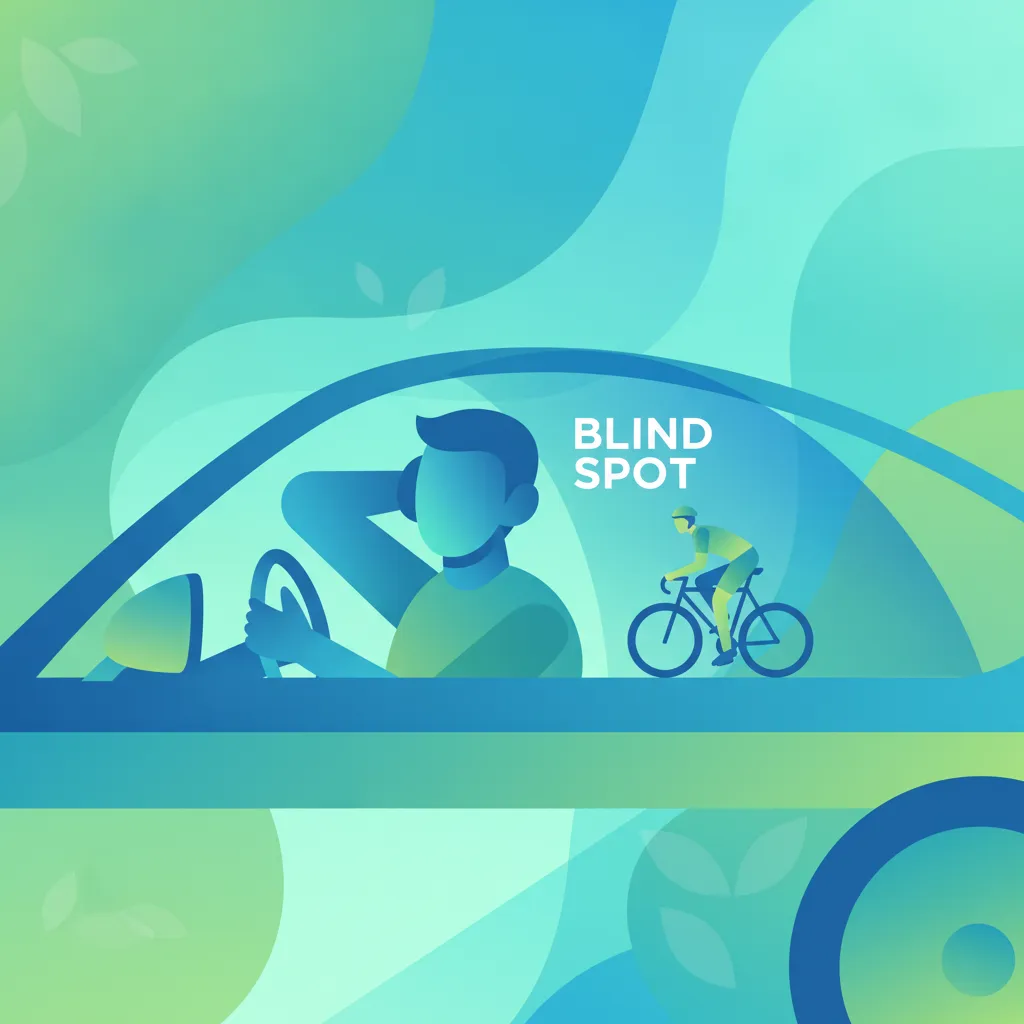
This lesson provides an in-depth analysis of the size and location of blind spots around a typical passenger bus. It teaches systematic scanning patterns that incorporate all mirrors, cameras, and direct head checks to maintain situational awareness. The content highlights high-risk areas where cyclists, pedestrians, or small vehicles can become hidden from view, especially during turns.

This lesson covers the core principles of defensive driving in an urban context. It teaches drivers how to anticipate the actions of other road users, maintain safe following distances in dense traffic, and navigate complex intersections with multiple signals. The content emphasizes heightened awareness of pedestrians, cyclists, and unexpected events common in Danish city environments.
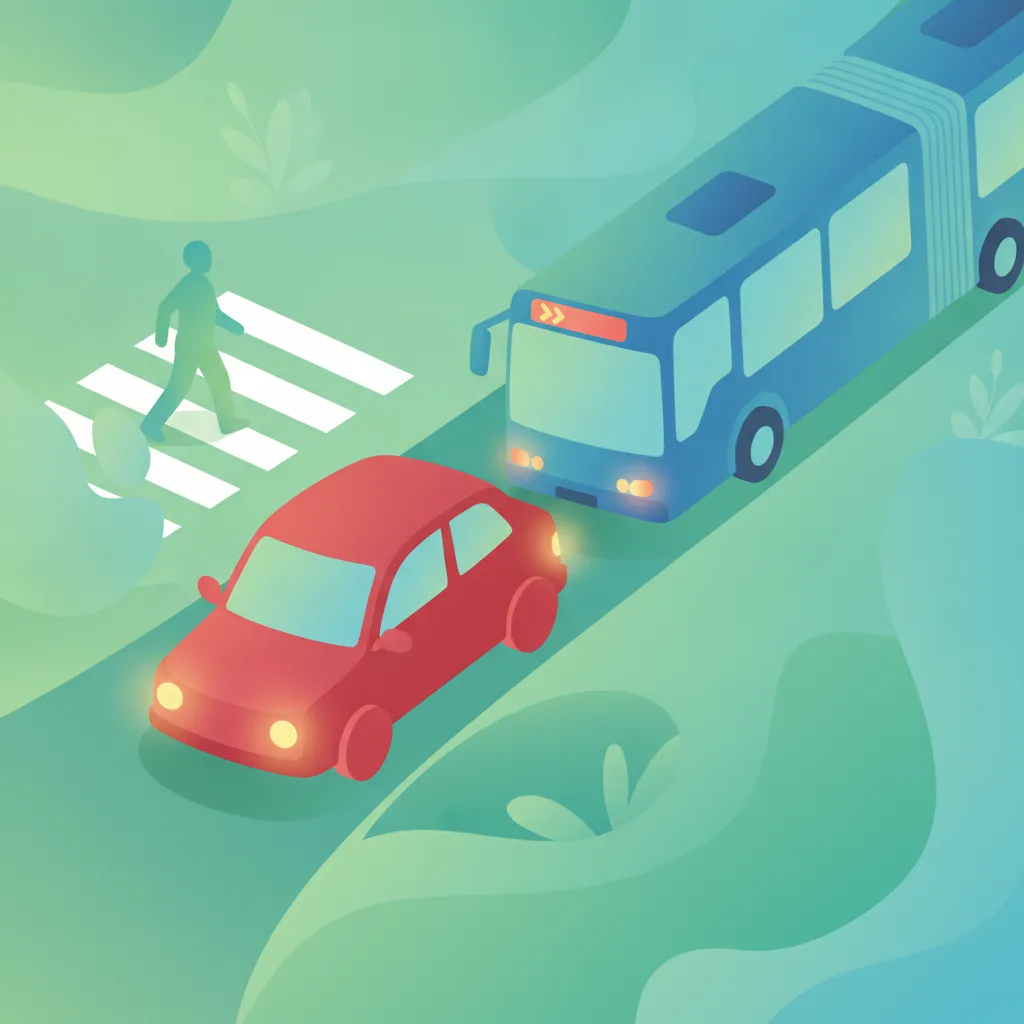
This lesson addresses the specific skills required to navigate around public transport and heavy goods vehicles safely. You will learn the rules for bus lanes, recognize when buses have priority at stops, and understand the unique challenges posed by large vehicles, such as wider turning circles and larger blind spots. The material also provides clear protocols for overtaking these vehicles while maintaining adequate safety margins.
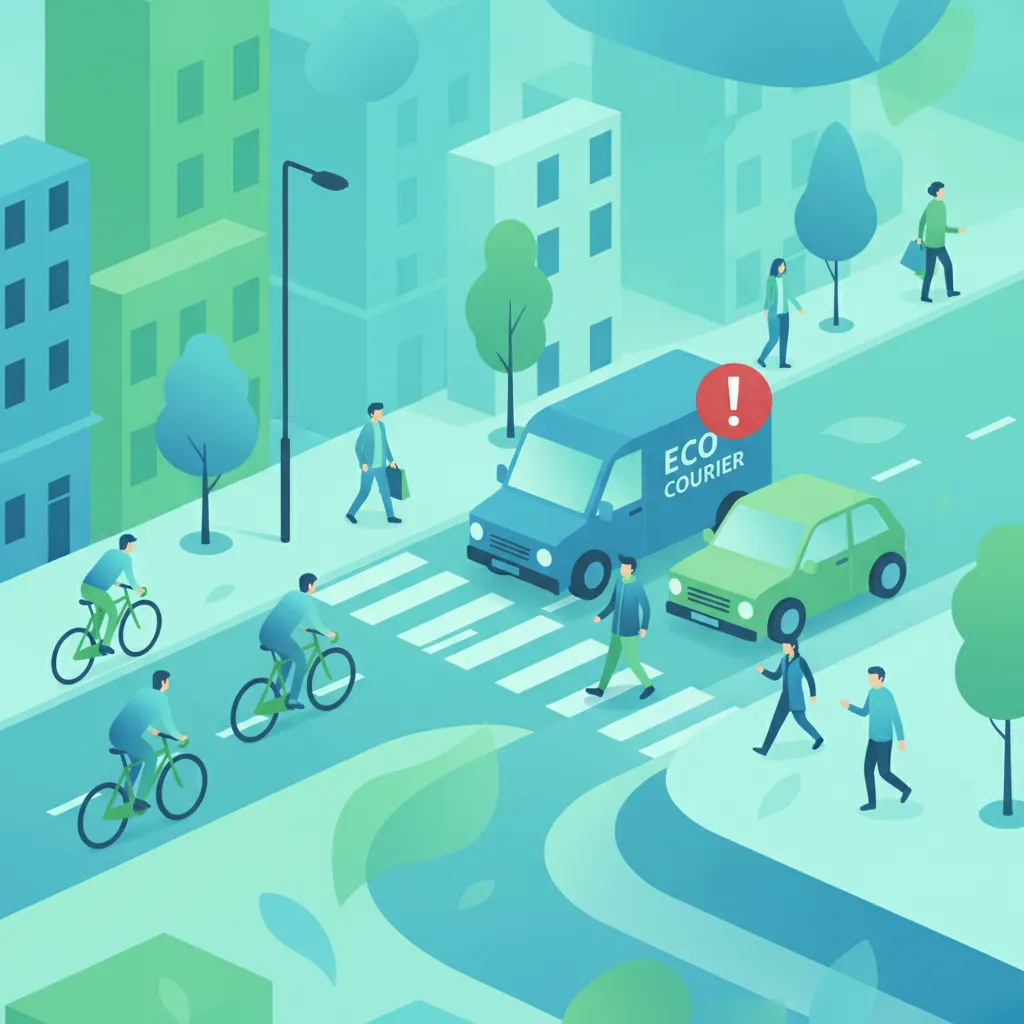
This lesson trains drivers to perform a risk assessment of bus stops along their route. It explains how to identify hazards such as poor visibility, proximity to busy intersections, or obstructed pedestrian access. The content provides proactive strategies for positioning the bus and managing passenger boarding and alighting to mitigate the identified risks effectively.
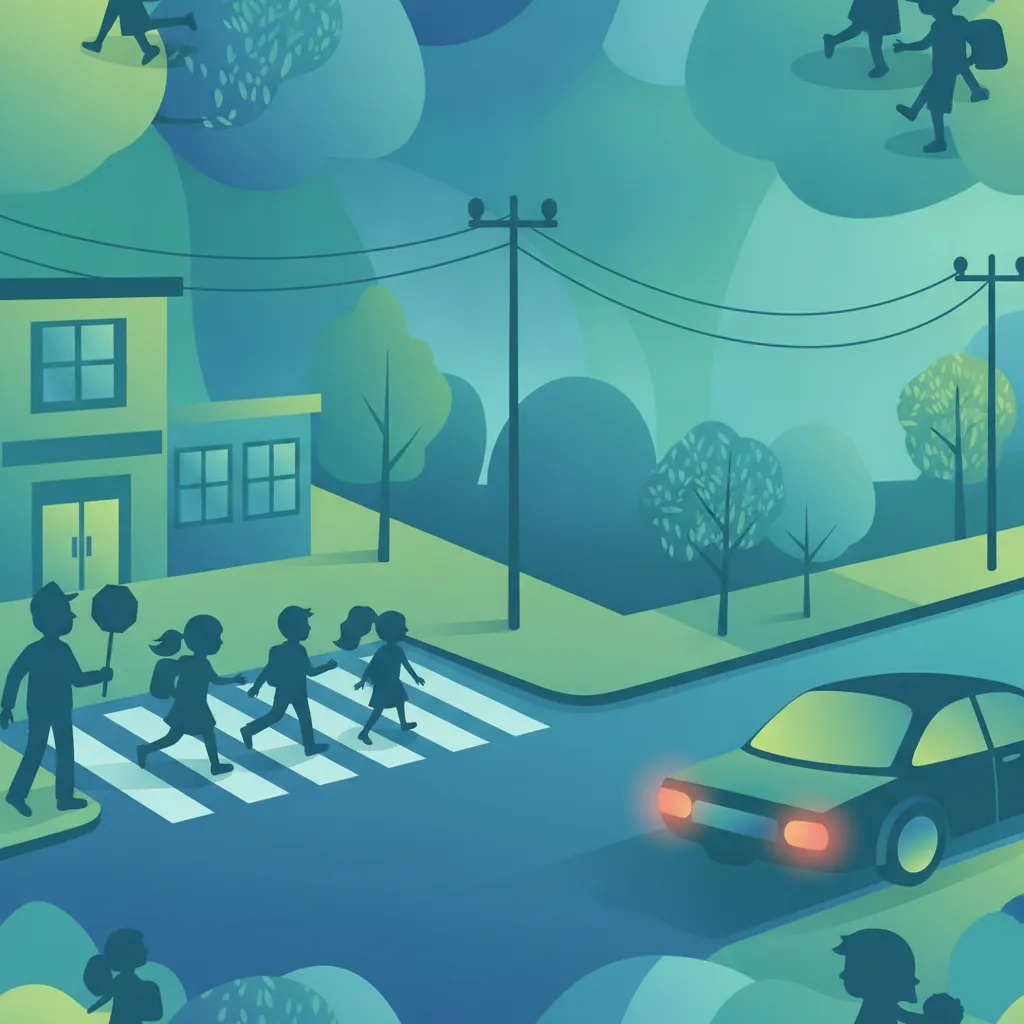
This lesson details the legal requirements and safety protocols for operating a bus near schools and pedestrian crossings. It covers mandatory speed reductions, the rules for yielding to pedestrians, and techniques for anticipating the sudden movements of children. The content emphasizes the importance of constant visual scanning and maintaining a high state of alert in these sensitive areas.
This lesson focuses on techniques for riding when visibility and traction are compromised by weather. It explains how to adjust speed, increase following distance, and use lights to see and be seen in rain or fog. Understanding the risk of hydroplaning and making smooth control inputs are key takeaways.
Master the correct use of headlights, fog lights, and hazard warning lights for buses in Denmark. This lesson explains legal requirements and practical tips for safe night driving and visibility in darkness and poor light.

This lesson provides a comprehensive overview of a vehicle's lighting systems and their proper use. It covers the functions of low and high beams, fog lights, and all signal lights, emphasizing their importance for visibility and communication with other drivers. The material explains the legal requirements for using lights in various conditions, including daytime, darkness, and adverse weather, as specified by Danish regulations.
Properly functioning lighting and signaling systems are fundamental for safe communication on the road. This lesson details the purpose and correct use of all exterior lights, including headlights, brake lights, turn signals, and hazard lights, according to Danish law. It emphasizes the driver's responsibility to ensure these systems are clean and operational to maintain visibility and clearly signal maneuvers to other road users.
This lesson provides an in-depth analysis of the size and location of blind spots around a typical passenger bus. It teaches systematic scanning patterns that incorporate all mirrors, cameras, and direct head checks to maintain situational awareness. The content highlights high-risk areas where cyclists, pedestrians, or small vehicles can become hidden from view, especially during turns.
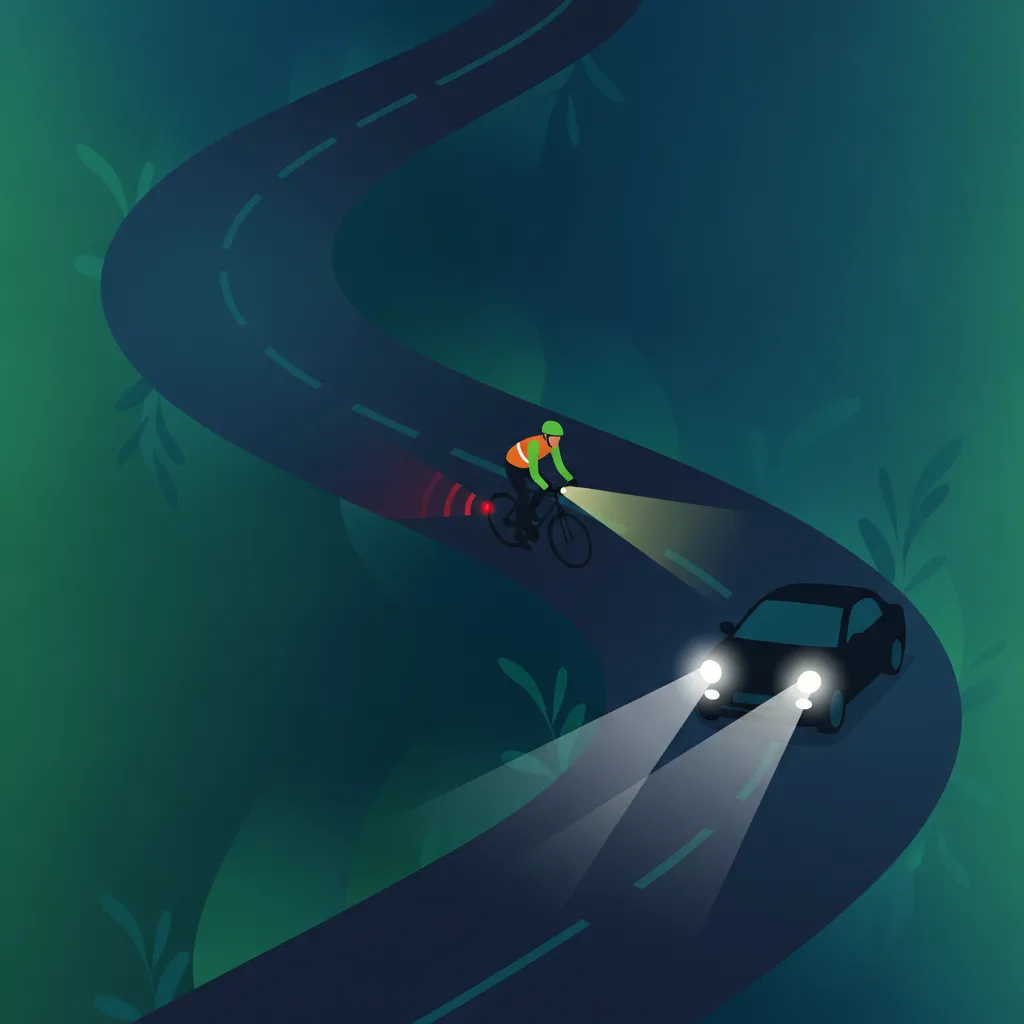
This lesson focuses on the specific challenges of riding in darkness. It explains the legal requirements and proper use of high and low beam headlights to see and be seen. The importance of wearing reflective clothing and ensuring all vehicle lights and reflectors are functioning is strongly emphasized.
This lesson explains the relationship between a bus's dimensions—length, width, and height—and its maneuverability. It covers key concepts such as turning radius, rear overhang, and swept path, which are critical for navigating turns and tight spaces safely. Learners will also understand how these physical characteristics create significant blind spots that require specific observation techniques to manage.
This lesson contrasts the driving techniques required for rural roads and motorways. It covers managing speed on narrow, winding lanes with potential hazards like farm machinery or animals. The content also explains the principles of safe motorway driving, including maintaining lane discipline, managing high-speed stability, and executing safe overtaking maneuvers.
This lesson provides strategies for safe riding after dark, when visibility is significantly reduced. It explains how to use high and low beams effectively, avoid being dazzled by other vehicles' lights, and look for road markings to guide your path. The importance of wearing reflective clothing to be seen is strongly emphasized.
This lesson explains the regulations governing the use of dedicated bus lanes in Denmark. It covers when it is permissible to enter and exit these lanes, how to merge safely with general traffic, and the meaning of specific road markings. The content also details how public transport priority systems at traffic lights work and how drivers should respond to them.
Find clear answers to common questions learners have about Driving in Adverse Weather and Darkness. Learn how the lesson is structured, which driving theory objectives it supports, and how it fits into the overall learning path of units and curriculum progression in Denmark. These explanations help you understand key concepts, lesson flow, and exam focused study goals.
Large passenger vehicles have significant mass, resulting in longer braking distances on wet roads. Increased following distance provides the necessary reaction time and physical space to stop safely if the vehicle ahead brakes suddenly, preventing skidding and passenger injury.
In Denmark, you must use dipped headlights at night and whenever visibility is reduced due to rain, snow, or fog. During your theory test, always select the option that ensures your vehicle is clearly visible to others without dazzling oncoming traffic.
High-sided vehicles are prone to buffeting in high winds, especially on bridges or open roads. You must reduce speed and steer with care, being prepared for sudden gusts that could push the vehicle out of its lane.
Reduce your speed immediately to match the distance you can see clearly ahead. Use your fog lights if necessary, but remember to switch them off when visibility improves to avoid dazzling other drivers.
Use our powerful search tool to pinpoint specific Danish driving theory topics, road signs, or traffic situations you need to review. Start exploring relevant practice sets now to reinforce your knowledge and build confidence for your upcoming driving licence exam.