
This lesson guides you through the essential safety standards for motorcycle protective equipment in Denmark. You will learn to identify gear that offers adequate protection and understand how CE-certified clothing fits into the broader context of rider responsibility and safety as you prepare for your A1, A2, or A license theory test.
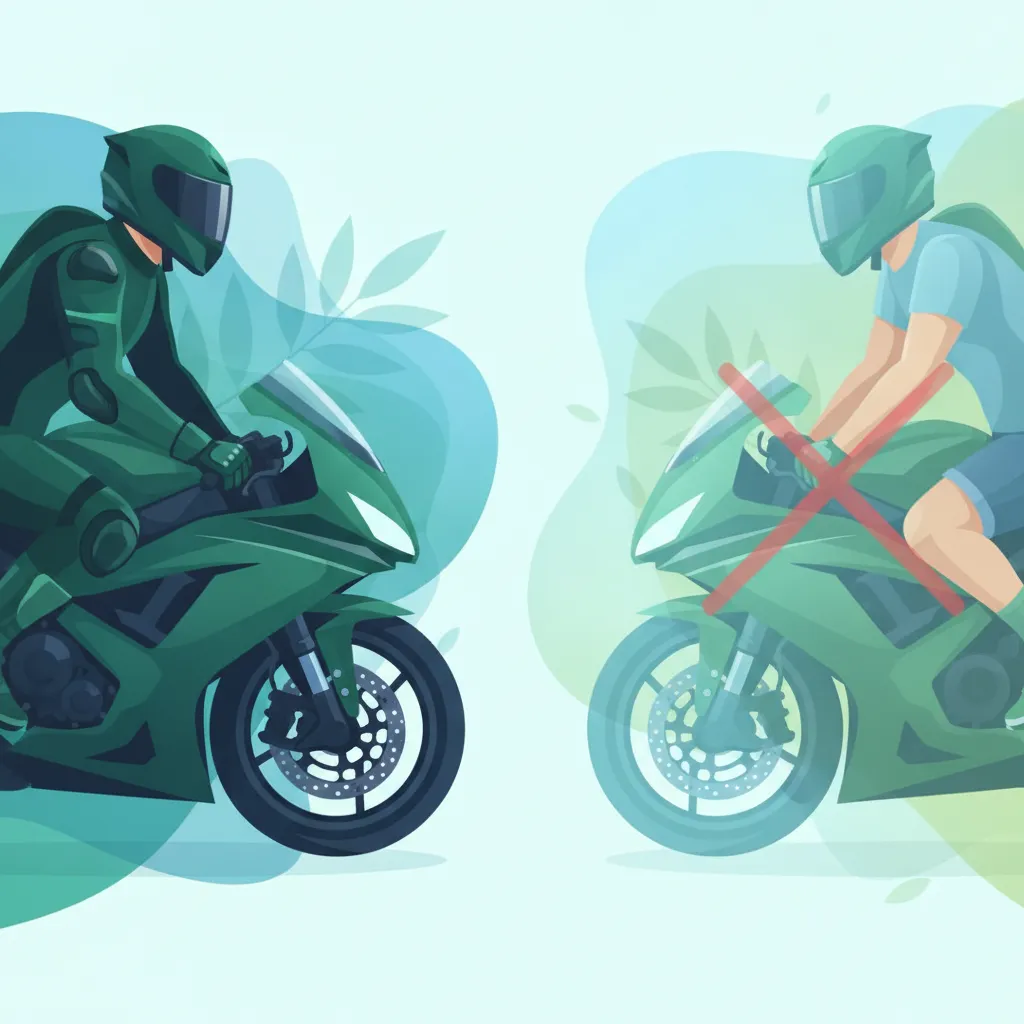
Lesson content overview
Riding a motorcycle offers a unique sense of freedom and exhilaration, but it also comes with inherent risks. To mitigate these risks and ensure maximum safety, motorcyclists in Denmark, as part of their Danish Motorcycle Theory curriculum, must understand and adhere to strict standards regarding protective clothing and gear. This lesson will delve into the critical aspects of specialized protective equipment, explaining its vital role in preventing injuries and outlining the mandatory CE certification that ensures your gear meets the required safety benchmarks.
Protective clothing is not merely an accessory; it is an essential component of a rider's safety system, designed to reduce the severity of injuries during falls or collisions. When an accident occurs, a rider's body is vulnerable to two primary types of injury: abrasion from sliding on rough surfaces like asphalt, and impact trauma from hitting objects or the ground. Specialized motorcycle gear addresses both these threats through advanced materials and integrated protection features.
Abrasion resistance refers to the material's ability to withstand friction and wear without tearing when sliding across abrasive surfaces. During a motorcycle fall, a rider can slide several metres, and ordinary clothing offers virtually no protection against the rapid and severe friction burns (often called "road rash") that can occur.
Specialized motorcycle jackets, pants, and gloves are constructed from materials specifically engineered for high abrasion resistance. Common examples include thick, high-quality leather (typically 1.2-1.4mm thick) and advanced textiles like Cordura, Kevlar, or other synthetic blends. These textiles often incorporate special weaves or coatings that enhance their durability significantly beyond standard fabrics. The practical meaning of this feature is straightforward: it creates a robust barrier between your skin and the road, preventing debilitating skin injuries during a skid. It is a common misunderstanding to assume that any thick leather jacket or denim jeans offer sufficient protection; only gear explicitly designed and certified for motorcycle use can provide adequate abrasion resistance.
While abrasion resistance protects against sliding injuries, impact protection is crucial for absorbing and dissipating kinetic energy during a direct collision or impact. This can occur when a rider hits the ground, another vehicle, or an obstacle. Impact protection features are designed to reduce the force transmitted to the body, thereby minimizing the risk of fractures, dislocations, and internal injuries.
This protection typically comes in the form of CE-approved padding, strategically placed at vulnerable points such as the elbows, shoulders, back, hips, knees, and shins. These protectors are often made from specialized foam or composite materials that harden upon impact, effectively spreading and absorbing the force. Some advanced systems also include adjustable airbag technology, which inflates rapidly upon detecting an imminent crash, offering comprehensive protection to the torso and neck. It is crucial that these pads are CE-approved, as visual bulk alone does not guarantee effective impact absorption. Only certified protectors have undergone rigorous testing to prove their effectiveness.
The "CE" mark is a mandatory conformity mark for many products sold within the European Economic Area (EEA), including personal protective equipment (PPE) like motorcycle gear. For motorcyclists, CE certification is not merely a recommendation; it is a legal requirement for protective clothing in Denmark.
The CE 22.05 standard specifically refers to the European standard for motorcycle helmets, but similar CE EN standards apply to other motorcycle protective gear (e.g., EN 17092 for protective garments, EN 13634 for boots, EN 13594 for gloves). The presence of a CE mark signifies that the manufacturer has declared the product meets all relevant EU safety standards, covering both abrasion resistance and impact absorption. This means the gear has undergone specific laboratory tests to ensure it performs as expected in a crash scenario.
In Denmark, as part of the legal framework surrounding motorcycle operation, riders are obligated to wear protective clothing that meets these CE certification standards. This legal requirement exists for a compelling reason: to significantly reduce the potential for severe injuries and fatalities in the event of an accident. Gear without a CE marking has not been tested to the same rigorous standards and therefore cannot guarantee the same level of protection.
Ignoring this requirement has serious implications beyond just safety. Failure to comply with mandatory protective gear regulations can lead to fines and, critically, may invalidate insurance claims following an accident. Insurance companies may argue that the rider did not take reasonable steps to protect themselves, thereby affecting compensation for injuries or damages. Therefore, verifying the CE label and certification information directly from the manufacturer is not just a recommendation; it is a crucial step for every responsible motorcyclist.
Always verify the presence of a CE mark on all your motorcycle protective gear. Gear without this certification may not offer adequate protection and could lead to legal and insurance complications.
A complete set of protective gear covers all major parts of the body, creating a "layered protection" system. Each piece is designed with specific features to address the vulnerabilities of different body areas.
A protective motorcycle jacket is an upper-body garment specifically designed to shield the torso, arms, and shoulders. These areas are highly susceptible to injury in a fall, making robust protection essential.
Key features include:
Protective motorcycle pants are lower-body garments engineered to safeguard the hips, thighs, knees, and shins. These areas are highly vulnerable to both abrasion and impact injuries in a crash.
Key features include:
Protective gloves are crucial handwear that shields against both abrasion and impact, as hands are often the first point of contact with the ground in a fall.
Key features include:
Motorcycle boots are specialized footwear designed to protect the feet, ankles, and shins. Regular shoes or trainers offer virtually no protection against the twisting, crushing, and abrasion injuries common in motorcycle accidents.
Key features include:
Beyond direct physical protection, enhancing a rider's visibility to other road users is a crucial aspect of safety. Many pieces of protective gear incorporate reflective elements or are available in high-visibility colors.
Purpose and Practical Meaning:
When choosing gear, prioritize items with integrated reflective elements and consider adding a reflective vest or choosing high-visibility colors, especially if you frequently ride in low-light conditions or bad weather.
In Denmark, the regulations concerning motorcycle protective gear are clear and legally binding. They are designed to ensure a minimum standard of safety for all riders on public roads.
Motorcyclists are legally obligated to wear protective clothing that meets CE certification standards for safety. This obligation covers a comprehensive range of gear, including a jacket, pants, gloves, and boots. The rationale behind this mandate is to reduce the severity of injuries in the event of an accident, safeguarding the rider's life and long-term health. This means that merely wearing a fashionable leather jacket or sturdy work boots is not enough unless they carry the official CE mark, confirming they meet specific protective standards for motorcycle use.
Failure to comply with these mandatory regulations can lead to several severe consequences:
Despite the clear regulations and benefits, some riders still make common mistakes when it comes to protective gear. Awareness of these pitfalls can help ensure your safety.
Common Violations:
Best Practices for Maximizing Protection:
The effectiveness of protective gear lies in its dual function: reducing friction during skids (abrasion resistance) and dissipating energy during impacts (impact protection). By providing these layers of defense, the gear acts as an external skeleton and skin, absorbing the brunt of the forces that would otherwise be directly transferred to the rider's body.
Studies consistently show that proper, CE-certified protective gear can significantly reduce the risk and severity of injuries in motorcycle accidents. Depending on the type of accident and gear worn, it can lower the risk of severe injuries by a substantial margin, often cited between 30-40% or even higher for specific injury types. This translates to fewer fractures, less severe road rash, and a greater chance of walking away from an incident with minor injuries rather than life-altering ones. The investment in quality protective gear is an investment in your personal safety and well-being.
This lesson covers Danish motorcycle protective gear standards, emphasizing that CE certification is mandatory for legal operation and adequate safety. The content explains how specialized gear protects riders through two mechanisms: abrasion-resistant materials prevent road rash during slides, while CE-certified impact protectors absorb kinetic energy during collisions. Key standards include EN 17092 for garments, EN 13634 for boots, and EN 13594 for gloves. Each gear category—jackets, pants, gloves, and boots—has specific protective features targeting vulnerable body areas. The lesson also covers legal consequences of non-compliance, common mistakes like omitting gloves or wearing non-certified clothing, and best practices including proper fit verification and regular gear maintenance.
A short set of high-value points that capture the most important learning from this lesson.
CE certification is a legal requirement for all motorcycle protective gear in Denmark, not just a recommendation
Protective gear addresses two primary injury types: abrasion from sliding and impact trauma from collisions
Gear must feature both abrasion-resistant materials (like leather or Cordura) and CE-certified impact protectors at vulnerable joints
Each piece of gear serves a specific protective function: jackets shield torso/arms, pants protect hips/knees/shins, gloves safeguard hands, boots shield feet/ankles
Non-compliant gear can result in fines, insurance complications, and dramatically increased injury severity
Explore all units and lessons included in this driving theory course.
CE standards include EN 17092 for garments, EN 13634 for boots, EN 13594 for gloves, and CE 22.05 specifically for helmets
Abrasion resistance requires materials specifically engineered for motorcycle use; ordinary leather or denim is insufficient
Impact protectors must be CE-approved; visual bulk alone does not guarantee effective energy absorption
Reflective elements and high-visibility colors significantly reduce collision risk by improving rider conspicuity
Full CE-certified gear (jacket, pants, gloves, boots) must be worn on every ride regardless of distance or speed
Skipping gloves leaves hands extremely vulnerable since hands instinctively break falls and are first contact with ground
Wearing non-certified fashionable clothing believing thick or sturdy materials offer adequate protection
Choosing improperly fitted gear: loose pads shift during impact rendering them ineffective; tight gear restricts movement and circulation
Using regular shoes or trainers instead of high-top protective boots, exposing ankles to twisting and crushing injuries
Ignoring reflective elements and low-visibility clothing, especially during poor conditions or at night
Lesson content overview
A short set of high-value points that capture the most important learning from this lesson.
CE certification is a legal requirement for all motorcycle protective gear in Denmark, not just a recommendation
Protective gear addresses two primary injury types: abrasion from sliding and impact trauma from collisions
Gear must feature both abrasion-resistant materials (like leather or Cordura) and CE-certified impact protectors at vulnerable joints
Each piece of gear serves a specific protective function: jackets shield torso/arms, pants protect hips/knees/shins, gloves safeguard hands, boots shield feet/ankles
Non-compliant gear can result in fines, insurance complications, and dramatically increased injury severity
Explore all units and lessons included in this driving theory course.
CE standards include EN 17092 for garments, EN 13634 for boots, EN 13594 for gloves, and CE 22.05 specifically for helmets
Abrasion resistance requires materials specifically engineered for motorcycle use; ordinary leather or denim is insufficient
Impact protectors must be CE-approved; visual bulk alone does not guarantee effective energy absorption
Reflective elements and high-visibility colors significantly reduce collision risk by improving rider conspicuity
Full CE-certified gear (jacket, pants, gloves, boots) must be worn on every ride regardless of distance or speed
Skipping gloves leaves hands extremely vulnerable since hands instinctively break falls and are first contact with ground
Wearing non-certified fashionable clothing believing thick or sturdy materials offer adequate protection
Choosing improperly fitted gear: loose pads shift during impact rendering them ineffective; tight gear restricts movement and circulation
Using regular shoes or trainers instead of high-top protective boots, exposing ankles to twisting and crushing injuries
Ignoring reflective elements and low-visibility clothing, especially during poor conditions or at night
Explore search topics learners often look for when studying Protective Clothing and Gear Standards. These topics reflect common questions about road rules, driving situations, safety guidance, and lesson level theory preparation for learners in Denmark.
Browse additional driving theory lessons that cover connected traffic rules, road signs, and common driving situations related to this topic. Improve your understanding of how different rules interact across everyday traffic scenarios.
Understand the essential CE certification standards for motorcycle protective clothing in Denmark. Learn about abrasion resistance and impact protection features required for jackets, pants, gloves, and boots to ensure rider safety.

This lesson examines the specific risks inherent to motorcycling, emphasizing a rider's vulnerability due to reduced physical protection compared to other vehicles. It covers the heightened severity of injuries in accidents and the critical role of protective gear in mitigating harm. Learners will understand how to adopt defensive strategies, such as proper road positioning, to counteract these risks.

This lesson focuses on the single most important piece of safety equipment: the helmet. It provides guidance on selecting a helmet with the proper fit, fastening it securely, and understanding different types like full-face and modular. The content also covers maintenance and knowing when a helmet needs to be replaced to ensure its protective integrity.

This lesson focuses on the core safety duties of a stor knallert rider. It explains the legal requirement for wearing a helmet and the benefits of other protective gear. The content also covers essential pre-ride checks, including brakes, tyres, and lights, to ensure the vehicle is in safe operating condition.
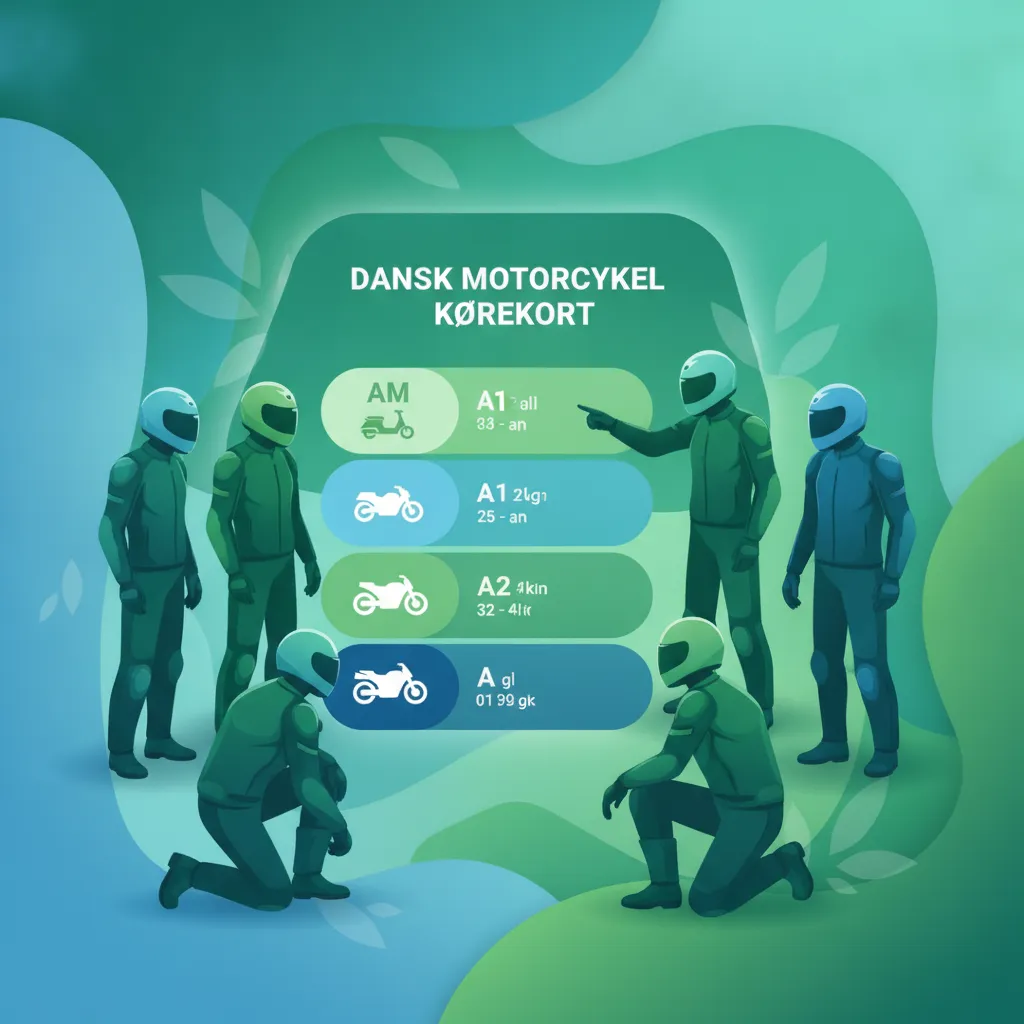
This lesson details the structure of the Danish motorcycle licensing system, covering categories A1, A2, and A. It outlines the specific age limits, engine displacement restrictions, and power-to-weight ratios for each category. Understanding these requirements provides a clear pathway for progressive skill development and legal operation.

This lesson details the systematic pre-ride inspection process that all motorcyclists must perform. It covers critical safety checks, including verifying correct tyre pressure, assessing brake pad wear, and ensuring all lights are functional. Regular completion of these checks is essential for preventing mechanical failures and ensuring rider safety.

This lesson defines the fundamental responsibilities of a motorcyclist, which extend beyond simple rule-following. It emphasizes the duty of care required to operate safely, including practicing defensive riding techniques and proactively identifying potential hazards. The content focuses on the importance of maintaining visibility and communicating intentions clearly to ensure safe interactions in traffic.

This lesson explores the critical relationship between tyres, road surface, and grip. It explains how rain, ice, gravel, and even painted road markings can reduce traction and increase risk. Learners will understand the importance of having correct tyre pressure and adequate tread depth to maintain control.

This lesson focuses on techniques for riding when visibility and traction are compromised by weather. It explains how to adjust speed, increase following distance, and use lights to see and be seen in rain or fog. Understanding the risk of hydroplaning and making smooth control inputs are key takeaways.

This lesson explains the critical importance of being visible to other road users. It details the proper use of headlights and daytime running lights as required by Danish law. The content also covers the effectiveness of wearing reflective clothing and ensuring the vehicle's reflectors are clean and functional.

This lesson explains the strategic importance of lane positioning for a motorcyclist. It teaches how to select a position within the lane that makes you most visible to other road users and provides an escape route from potential hazards. The content covers how to adjust your position based on traffic, road conditions, and to avoid being in another vehicle's blind spot.
Learn best practices for choosing and wearing motorcycle protective gear, including jackets, pants, gloves, and boots. This lesson covers common mistakes and ensures you understand how to maximize safety with CE-certified equipment.
This lesson focuses on the single most important piece of safety equipment: the helmet. It provides guidance on selecting a helmet with the proper fit, fastening it securely, and understanding different types like full-face and modular. The content also covers maintenance and knowing when a helmet needs to be replaced to ensure its protective integrity.
This lesson examines the specific risks inherent to motorcycling, emphasizing a rider's vulnerability due to reduced physical protection compared to other vehicles. It covers the heightened severity of injuries in accidents and the critical role of protective gear in mitigating harm. Learners will understand how to adopt defensive strategies, such as proper road positioning, to counteract these risks.
This lesson details the systematic pre-ride inspection process that all motorcyclists must perform. It covers critical safety checks, including verifying correct tyre pressure, assessing brake pad wear, and ensuring all lights are functional. Regular completion of these checks is essential for preventing mechanical failures and ensuring rider safety.
This lesson explains the strategic importance of lane positioning for a motorcyclist. It teaches how to select a position within the lane that makes you most visible to other road users and provides an escape route from potential hazards. The content covers how to adjust your position based on traffic, road conditions, and to avoid being in another vehicle's blind spot.
This lesson focuses on the core safety duties of a stor knallert rider. It explains the legal requirement for wearing a helmet and the benefits of other protective gear. The content also covers essential pre-ride checks, including brakes, tyres, and lights, to ensure the vehicle is in safe operating condition.

This lesson addresses how to safely carry luggage or a passenger on a motorcycle. It explains the effects of added weight on the vehicle's balance, steering, and braking performance. Learners will understand correct procedures for securing loads and adjusting their riding technique to maintain control and stability.

This lesson prepares riders for the unfortunate event of a crash. It covers the crucial first steps to take, including ensuring personal safety, making the accident scene visible to prevent further collisions, and assessing for injuries. Understanding these immediate priorities can significantly impact the outcome of an emergency situation.
This lesson focuses on the critical connection between the motorcycle and the road: the tyres. It explains how to check for proper inflation, inspect tread depth, and recognize signs of wear. Understanding how different tyre compounds and patterns perform in various conditions is key to managing traction.

This lesson outlines a step-by-step procedure for managing a mechanical breakdown on the road. It covers moving the motorcycle to a safe location, using hazard lights, and wearing high-visibility clothing. The goal is to ensure personal safety while minimizing disruption and danger to other traffic.
This lesson introduces the essential controls required to operate a motorcycle, such as the throttle, clutch lever, and brake controls. It explains the purpose and correct use of each function for smooth and safe maneuvering. Learners will also understand the importance of proper ergonomics and riding posture for effective control.
Find clear answers to common questions learners have about Protective Clothing and Gear Standards. Learn how the lesson is structured, which driving theory objectives it supports, and how it fits into the overall learning path of units and curriculum progression in Denmark. These explanations help you understand key concepts, lesson flow, and exam focused study goals.
No. For official safety standards and exam purposes, you should prioritize gear that carries CE certification labels. This indicates the equipment has been tested for impact and abrasion resistance.
The theory exam often tests your knowledge of safety standards. Understanding that CE certification is the benchmark for protection helps you answer questions correctly about road safety and equipment compliance.
Yes. Proper gear for hands and feet is crucial. Exam-relevant knowledge includes recognizing that gear must provide adequate coverage and protection for extremities to minimize injury in the event of an accident.
In dense traffic, even minor falls can lead to significant injury. Wearing certified protective gear increases your safety margins by providing a crucial buffer against road surfaces, which is a key concept in defensive riding.
Use our powerful search tool to pinpoint specific Danish driving theory topics, road signs, or traffic situations you need to review. Start exploring relevant practice sets now to reinforce your knowledge and build confidence for your upcoming driving licence exam.