
This lesson breaks down the critical relationship between speed, reaction time, and vehicle braking capacity. It is a fundamental part of the Danish Category B theory curriculum, designed to help you anticipate hazards and maintain safe driving distances in various road conditions.
Lesson content overview
Driving safely requires a deep understanding of how quickly a vehicle can come to a complete stop and the many factors that influence this process. For aspiring drivers in the Danish Driving License Theory Course: Category B Preparation, mastering the concepts of stopping distances and effective braking is fundamental to preventing collisions and maintaining control on the road. This lesson delves into the physics and practical aspects of stopping, providing you with the knowledge to make informed decisions behind the wheel.
The journey from perceiving a hazard to bringing your vehicle to a standstill is not instantaneous. It comprises distinct phases, each contributing to what is known as the total stopping distance. Understanding these individual components is crucial for assessing safe driving distances and anticipating potential risks.
The complete distance a vehicle travels from the precise moment a driver identifies a hazard until the vehicle comes to a full and complete stop.
This critical metric is the sum of three distinct distances: perception distance, reaction distance, and braking distance. Each element is influenced by a unique set of factors, from the driver's alertness to the condition of the vehicle and the road surface. Drivers must always consider the total stopping distance when judging safe following distances and adjusting their speed.
The distance your vehicle travels during the time it takes for you, the driver, to first perceive a potential hazard on the road.
Before you can even begin to react, your brain must register that there is a problem. This initial phase, the perception distance, accounts for the time it takes for your eyes to see the hazard and for your brain to process that visual information. Factors influencing perception distance include:
Even under ideal conditions, it takes a fraction of a second to simply see and understand a developing situation.
The distance your vehicle travels from the moment you consciously recognize a hazard to the moment you physically begin to apply the brakes or take other evasive action.
Once a hazard is perceived, your brain then needs to decide on an appropriate response (e.g., brake, steer) and send signals to your muscles to execute that action. The reaction distance covers this mental processing and physical response time. On average, a driver's reaction time is approximately 1.5 seconds under good conditions, but this can vary widely.
Key factors affecting reaction distance include:
Both perception and reaction distances are largely dependent on the driver's mental and physical state.
The distance your vehicle travels from the moment the brakes are fully applied until the vehicle comes to a complete stop.
This is the physical distance required for the vehicle to decelerate to zero speed. Unlike perception and reaction distances, which are primarily driver-dependent, braking distance is heavily influenced by the laws of physics and the condition of the vehicle and road.
Factors directly impacting braking distance include:
The interaction of these elements determines how effectively your vehicle can shed its kinetic energy and come to a halt.
While the basic components of stopping distance remain constant, their magnitude changes dramatically based on a few critical variables. Understanding these influences is paramount for adapting your driving to Danish road conditions and traffic laws.
Speed is arguably the most dominant factor in determining total stopping distance. As mentioned, the relationship between speed and braking distance is exponential: doubling your speed quadruples your braking distance. This is because kinetic energy, the energy of motion, increases with the square of the speed. More kinetic energy requires more work (and thus more distance) to dissipate.
Consider these implications:
Always remember: doubling your speed does not double your stopping distance, it at least quadruples your braking distance and significantly increases total stopping distance.
Your vehicle's tyres are the only points of contact with the road, making their condition critical for braking efficiency. Tyres provide the necessary friction to grip the road surface and allow the braking system to slow the vehicle down effectively.
Important aspects of tyre condition include:
Regular checks of your tyre pressure and tread depth are not just good practice but a legal requirement for road safety in Denmark.
The quality of the road surface and prevailing weather conditions have a profound effect on the available friction between tyres and the road, directly influencing braking distance.
Drivers must constantly assess road conditions and adjust their speed and following distance accordingly. Reducing speed is the most effective way to compensate for reduced friction.
The specific characteristics of your vehicle can also impact its stopping ability.
Understanding stopping distances directly translates into the crucial practice of maintaining a safe following distance. This is your primary defense against rear-end collisions and a cornerstone of defensive driving.
A widely accepted guideline for determining a safe following distance is the two-second rule.
A guideline stating that a driver should maintain at least a two-second gap between their vehicle and the vehicle directly in front under ideal driving conditions.
How to apply the two-second rule:
This rule provides a minimum buffer for perception, reaction, and initial braking under good conditions (dry roads, good visibility, alert driver, well-maintained vehicle).
The two-second rule is a minimum for ideal conditions. In many situations, you need to increase your following distance significantly.
When conditions are less than ideal, extend your following distance. A good rule of thumb is to add at least one second for each adverse factor.
Increase your following distance to three, four, or even more seconds when:
Maintaining an adequate following distance is a continuous process of assessment and adjustment. It provides you with the time and space needed to react safely to unforeseen events.
Danish traffic laws (Færdselsloven) underpin the principles of safe stopping distances by regulating speed, vehicle maintenance, and driver conduct.
The Færdselsloven (Road Traffic Act) mandates that drivers must always adjust their speed to ensure they can stop safely within the visible distance ahead and maintain control of their vehicle. This is a fundamental principle that applies irrespective of posted speed limits.
These regulations emphasize personal responsibility, requiring drivers to constantly evaluate their environment and adapt their driving behavior to prevent dangerous situations.
As tyre condition is critical for stopping performance, Danish law sets minimum standards for tyre maintenance.
Drivers are responsible for regularly inspecting their tyres to ensure they meet these legal and safety standards.
Several common driving errors are directly related to a misunderstanding or disregard for stopping distances. Recognizing these can help you avoid dangerous situations.
Applying the concepts of stopping distances to real-world driving scenarios is key to becoming a safe driver.
When approaching an urban intersection with traffic lights, a driver must constantly evaluate the situation. If the light turns yellow, you must quickly decide whether it's safe to stop before the intersection or proceed. This decision involves:
Driving on a Danish motorway (motorvej) at 110 or 130 km/h, the total stopping distance required is considerably longer than at lower speeds. If you encounter a sudden slowdown or obstruction far ahead, your ability to stop safely depends entirely on maintaining a sufficiently long following distance. Even a slight delay in perception or reaction can significantly reduce your safety margin. The physics dictate that a vehicle traveling at 130 km/h needs a vastly greater distance to stop compared to one at 80 km/h.
On rural roads, conditions can change rapidly. If a dry road suddenly becomes wet or icy, perhaps due to a localized rain shower or patches of black ice, your braking distance will increase dramatically. You must instinctively reduce your speed and increase your following distance. Failure to account for the reduced road friction in these conditions can lead to skidding, loss of control, and an inability to stop in time for unexpected hazards like wildlife or slow-moving agricultural vehicles.
Mastering the art of safe stopping is a fundamental aspect of responsible driving. The Danish Category B driving license theory course emphasizes that understanding these principles is not just about passing a test, but about ensuring your safety and the safety of others on the road.
Always remember:
By integrating these principles into your driving habits, you will be better prepared to anticipate and react safely to any situation on Danish roads.
This lesson covers the three components of total stopping distance—perception, reaction, and braking—and explains how each is influenced by driver factors, vehicle condition, and road environment. The most critical concept is that braking distance increases with the square of speed, meaning small speed increases create disproportionately longer stopping distances. Factors such as tyre condition, road surface friction (dry, wet, icy), vehicle weight, and braking system efficiency all significantly impact how quickly you can stop. The two-second rule provides a practical minimum following distance that must be extended in adverse conditions, when towing loads, or at higher speeds. Danish law requires drivers to maintain speed that allows stopping within the visible distance ahead, making understanding stopping distances essential for both exam success and safe driving.
A short set of high-value points that capture the most important learning from this lesson.
Total stopping distance is the sum of three components: perception distance, reaction distance, and braking distance
Doubling your speed quadruples your braking distance due to the physics of kinetic energy
Tyre condition (tread depth, pressure, and type) critically affects braking efficiency and grip on the road
The two-second rule provides a minimum safe following distance under ideal conditions
You must always be able to stop within the visible distance ahead and adjust speed for conditions
Explore all units and lessons included in this driving theory course.
Perception distance covers recognizing a hazard; reaction distance covers deciding and initiating braking; braking distance covers physical deceleration to stop
Wet, icy, or loose road surfaces dramatically reduce friction and increase braking distances
Heavily loaded vehicles and those towing trailers require longer stopping distances due to greater momentum
In Denmark, drivers must adjust speed to ensure they can stop safely within the visible distance regardless of posted limits
Add at least one second to your following distance for each adverse condition present
Tailgating eliminates your perception and reaction buffer, leaving no room to avoid a collision if the vehicle ahead brakes suddenly
Driving at speed limit speeds during adverse weather conditions when reduced speed is required for safety
Neglecting tyre maintenance, including tread depth below legal minimums and incorrect tyre pressure
Failing to adjust following distance when towing a trailer or carrying a heavy load, underestimating increased stopping distance
Misjudging stopping ability on changing road surfaces, such as dry asphalt suddenly becoming wet or icy
Lesson content overview
A short set of high-value points that capture the most important learning from this lesson.
Total stopping distance is the sum of three components: perception distance, reaction distance, and braking distance
Doubling your speed quadruples your braking distance due to the physics of kinetic energy
Tyre condition (tread depth, pressure, and type) critically affects braking efficiency and grip on the road
The two-second rule provides a minimum safe following distance under ideal conditions
You must always be able to stop within the visible distance ahead and adjust speed for conditions
Explore all units and lessons included in this driving theory course.
Perception distance covers recognizing a hazard; reaction distance covers deciding and initiating braking; braking distance covers physical deceleration to stop
Wet, icy, or loose road surfaces dramatically reduce friction and increase braking distances
Heavily loaded vehicles and those towing trailers require longer stopping distances due to greater momentum
In Denmark, drivers must adjust speed to ensure they can stop safely within the visible distance regardless of posted limits
Add at least one second to your following distance for each adverse condition present
Tailgating eliminates your perception and reaction buffer, leaving no room to avoid a collision if the vehicle ahead brakes suddenly
Driving at speed limit speeds during adverse weather conditions when reduced speed is required for safety
Neglecting tyre maintenance, including tread depth below legal minimums and incorrect tyre pressure
Failing to adjust following distance when towing a trailer or carrying a heavy load, underestimating increased stopping distance
Misjudging stopping ability on changing road surfaces, such as dry asphalt suddenly becoming wet or icy
Explore search topics learners often look for when studying Understanding Stopping Distances and Braking. These topics reflect common questions about road rules, driving situations, safety guidance, and lesson level theory preparation for learners in Denmark.
Browse additional driving theory lessons that cover connected traffic rules, road signs, and common driving situations related to this topic. Improve your understanding of how different rules interact across everyday traffic scenarios.
Explore how speed, road surface, tyre condition, and weather impact your vehicle's stopping distance. Learn to calculate and maintain safe following distances in Denmark according to traffic laws.

This lesson explains the components of total stopping distance: reaction distance and braking distance. It provides instruction on how to use both front and rear brakes effectively for a controlled and efficient stop. The content also highlights how factors like speed, road condition, and tyre quality influence how quickly you can stop.
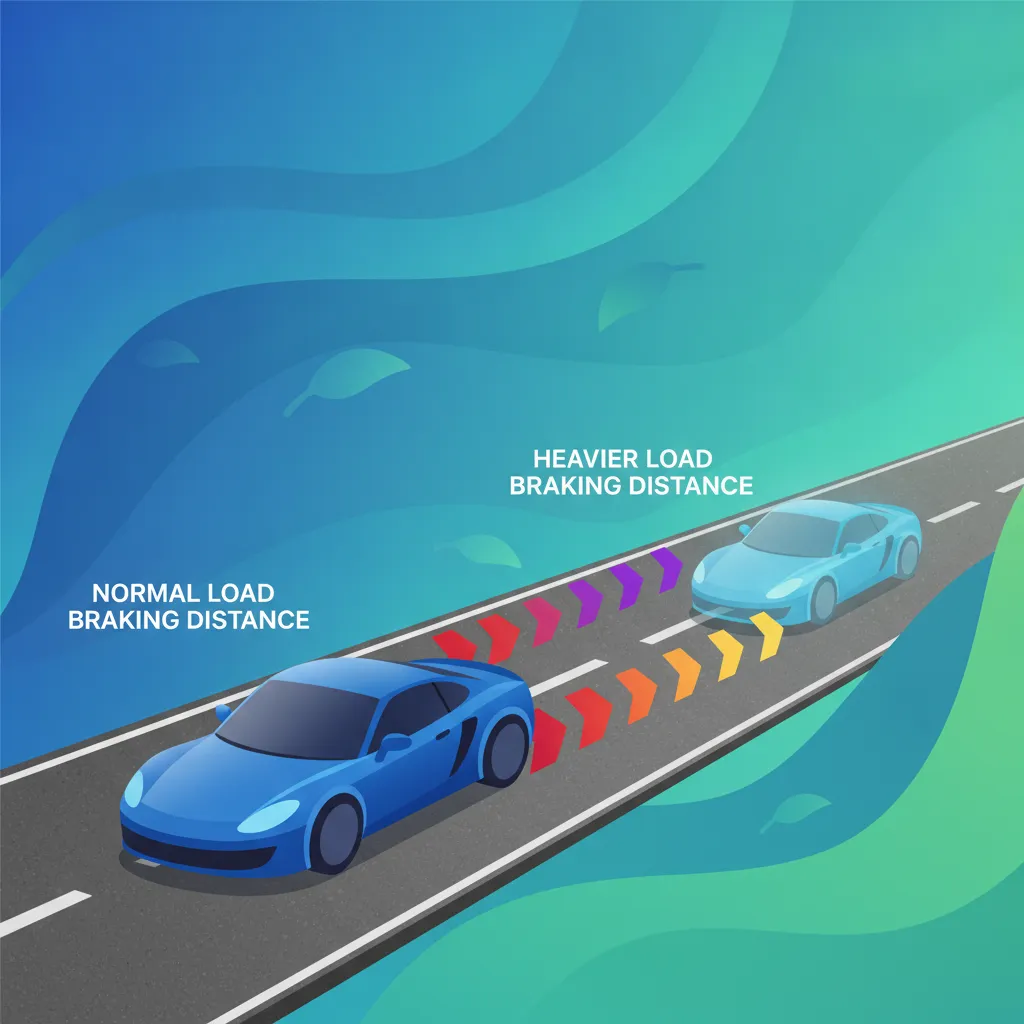
This lesson explores the direct relationship between a vehicle's mass, its speed, and the distance required to stop. It explains how increased load significantly lengthens the braking distance and details how road conditions like gradient and surface friction further affect this calculation. Learners will understand the importance of anticipating stops and maintaining a greater following distance to ensure safety.

This lesson introduces cooperative driving as a fundamental element of road safety in Denmark. It highlights the social responsibility of drivers to act predictably, anticipate the actions of others, and maintain courteous interactions with all road users. By fostering mutual respect and cooperation, you will learn how to reduce the potential for conflict and enhance overall traffic safety.

This lesson teaches the importance of adapting your speed to prevailing conditions, rather than simply adhering to the posted limit. It explains how factors like traffic density, road surface quality, visibility, and adverse weather should influence your speed choice. Developing this risk-aware approach is crucial for maintaining vehicle control and ensuring safety in all driving environments.
This lesson introduces the essential principles of defensive driving, shifting the focus from reacting to hazards to proactively anticipating them. You will learn techniques for systematic scanning of the driving environment, maintaining a safety cushion around your vehicle, and identifying potential risks before they develop. These proactive strategies are fundamental to becoming a safer, more confident driver.

This lesson equips you with the knowledge to drive safely in challenging weather conditions. It explains the risk of aquaplaning in heavy rain, how to counteract strong crosswinds, and the correct use of lights in darkness and fog. The core principle is adapting your speed and increasing your following distance to compensate for reduced visibility and traction.
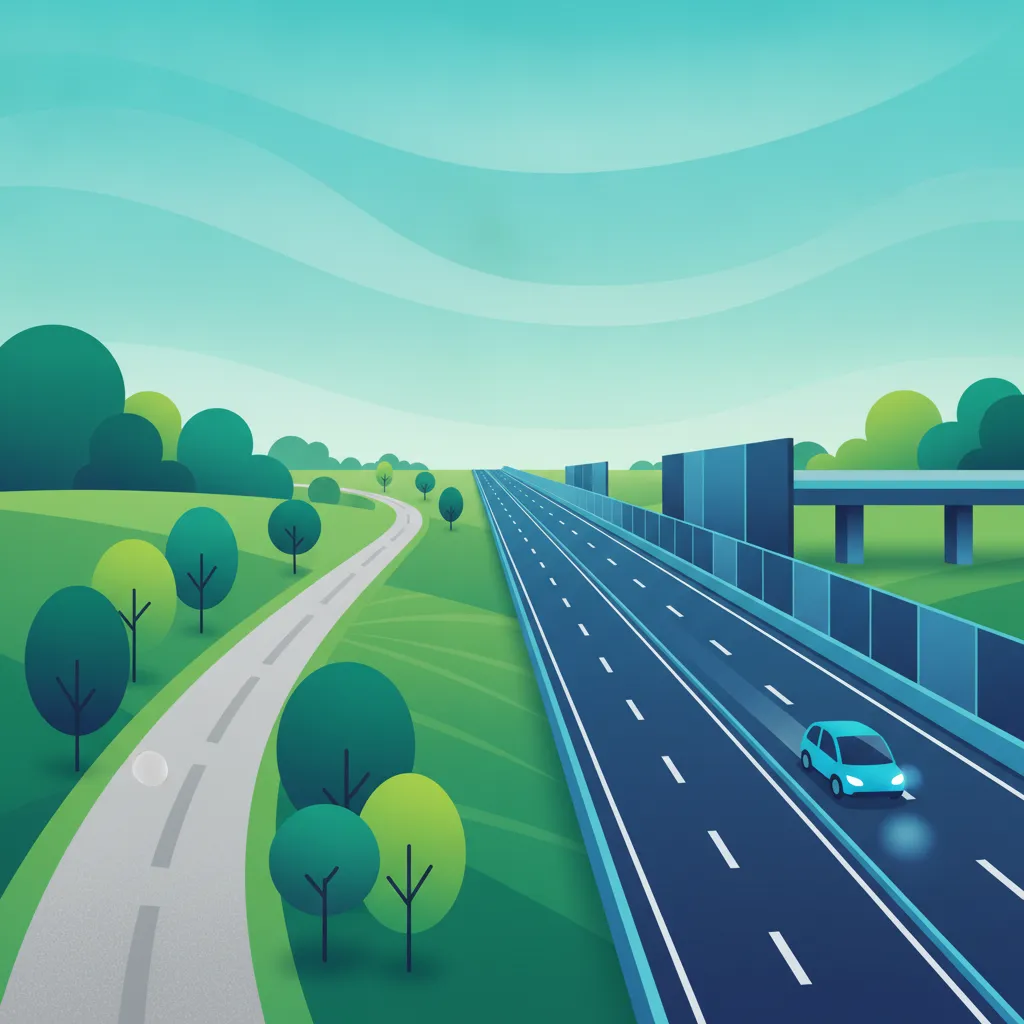
This lesson contrasts the driving techniques required for rural roads and motorways. It covers managing speed on narrow, winding lanes with potential hazards like farm machinery or animals. The content also explains the principles of safe motorway driving, including maintaining lane discipline, managing high-speed stability, and executing safe overtaking maneuvers.
This lesson covers the correct techniques for various turning manoeuvres, including how to signal, position your vehicle, and judge gaps in traffic. It also details the legal and safety protocols for overtaking, emphasizing the importance of assessing speed, distance, and oncoming traffic. A thorough understanding of these procedures is crucial for navigating intersections and two-lane roads safely.
This lesson focuses on the precise maneuvers required for approaching and stopping at bus stops. It covers how to manage vehicle speed, align the bus parallel to the curb for safe access, and correctly position it relative to stop lines and shelters. The content also explains how to interpret Danish road signs and markings specific to public transport stops.
This lesson provides critical guidance for driving in environments with heavy cycle traffic, typical of Danish cities. It focuses on identifying and yielding to cyclists in dedicated bike lanes, especially when turning right across their path. The content emphasizes advanced observation skills to detect cyclists in blind spots and the importance of giving adequate space.
Understand the distinct parts of total stopping distance: perception, reaction, and braking. Learn about common errors drivers make and how to avoid them for safer driving in Denmark.
This lesson explains the components of total stopping distance: reaction distance and braking distance. It provides instruction on how to use both front and rear brakes effectively for a controlled and efficient stop. The content also highlights how factors like speed, road condition, and tyre quality influence how quickly you can stop.
This lesson introduces the essential principles of defensive driving, shifting the focus from reacting to hazards to proactively anticipating them. You will learn techniques for systematic scanning of the driving environment, maintaining a safety cushion around your vehicle, and identifying potential risks before they develop. These proactive strategies are fundamental to becoming a safer, more confident driver.
This lesson explores the direct relationship between a vehicle's mass, its speed, and the distance required to stop. It explains how increased load significantly lengthens the braking distance and details how road conditions like gradient and surface friction further affect this calculation. Learners will understand the importance of anticipating stops and maintaining a greater following distance to ensure safety.
This lesson introduces cooperative driving as a fundamental element of road safety in Denmark. It highlights the social responsibility of drivers to act predictably, anticipate the actions of others, and maintain courteous interactions with all road users. By fostering mutual respect and cooperation, you will learn how to reduce the potential for conflict and enhance overall traffic safety.
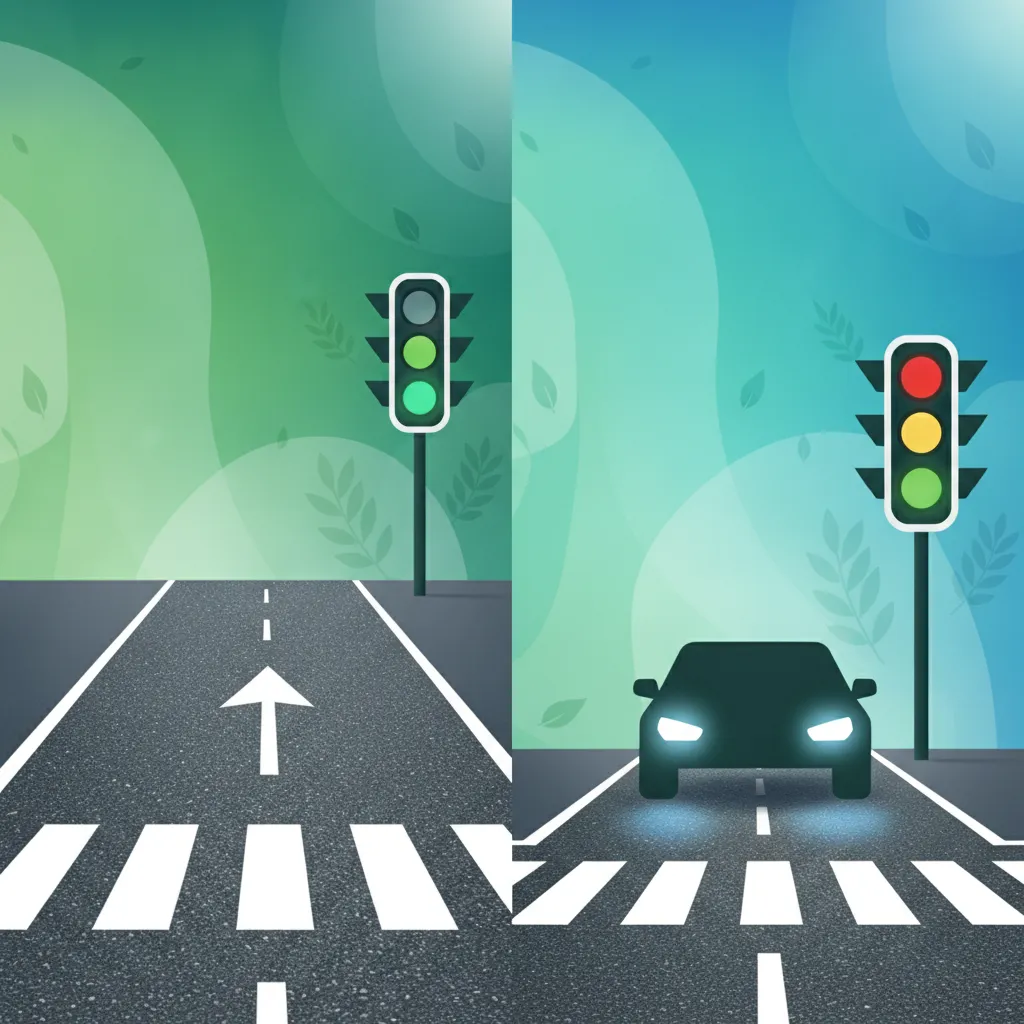
This lesson details the meaning and application of various road surface markings, including lane dividers, solid and broken lines, and directional arrows. You will also learn to interpret the full sequence of traffic light signals, including the specific rules for the amber (yellow) light phase. A proper understanding of these systems is vital for maintaining correct lane discipline and adhering to traffic controls.
This lesson contrasts the driving techniques required for rural roads and motorways. It covers managing speed on narrow, winding lanes with potential hazards like farm machinery or animals. The content also explains the principles of safe motorway driving, including maintaining lane discipline, managing high-speed stability, and executing safe overtaking maneuvers.

This lesson covers the core principles of defensive driving in an urban context. It teaches drivers how to anticipate the actions of other road users, maintain safe following distances in dense traffic, and navigate complex intersections with multiple signals. The content emphasizes heightened awareness of pedestrians, cyclists, and unexpected events common in Danish city environments.
This lesson teaches the importance of adapting your speed to prevailing conditions, rather than simply adhering to the posted limit. It explains how factors like traffic density, road surface quality, visibility, and adverse weather should influence your speed choice. Developing this risk-aware approach is crucial for maintaining vehicle control and ensuring safety in all driving environments.
This lesson reinforces the driver's responsibility to protect pedestrians, particularly in busy urban areas and near schools. It details the procedures for approaching pedestrian crossings, the legal requirement to reduce speed significantly in marked school zones, and how to anticipate the unpredictable actions of pedestrians. The content covers traffic calming measures and the legal rights of pedestrians in various settings.
This lesson explains the relationship between a bus's dimensions—length, width, and height—and its maneuverability. It covers key concepts such as turning radius, rear overhang, and swept path, which are critical for navigating turns and tight spaces safely. Learners will also understand how these physical characteristics create significant blind spots that require specific observation techniques to manage.
Find clear answers to common questions learners have about Understanding Stopping Distances and Braking. Learn how the lesson is structured, which driving theory objectives it supports, and how it fits into the overall learning path of units and curriculum progression in Denmark. These explanations help you understand key concepts, lesson flow, and exam focused study goals.
Braking distance is related to the square of the speed. When you double your speed, the kinetic energy of the vehicle increases fourfold, meaning your brakes must dissipate significantly more energy to bring the vehicle to a complete stop.
The test often presents scenarios where you must estimate the correct stopping distance based on speed and road conditions. While you may not need to perform complex physics, you must understand the proportions of reaction distance versus braking distance.
Wet, icy, or snow-covered roads drastically reduce the friction coefficient between your tyres and the road. This significantly extends your braking distance, requiring you to increase your following distance to compensate for the reduced grip.
Reaction distance is the distance your vehicle travels from the moment you identify a hazard to the moment you physically apply the brake pedal. It is primarily influenced by your physical alertness and speed.
Use our powerful search tool to pinpoint specific Danish driving theory topics, road signs, or traffic situations you need to review. Start exploring relevant practice sets now to reinforce your knowledge and build confidence for your upcoming driving licence exam.