
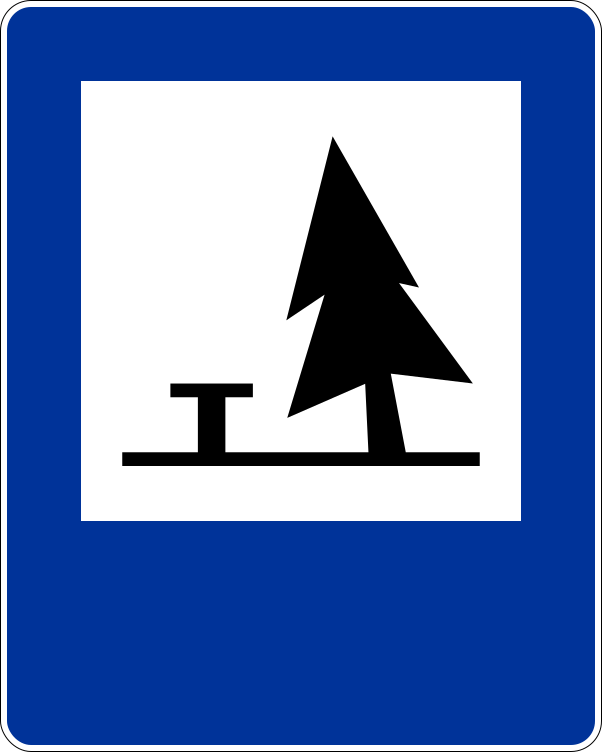
The D-32 sign, depicting a pine tree and picnic table, indicates a 'Pole Biwakowe' or Bivouac Site in Poland. This is a simple, designated area for short-term camping, often found in natural settings like forests or along waterways. Unlike full campsites, these spots usually offer minimal facilities, perhaps just a fire pit and bin, focusing on a basic, 'leave no trace' experience. You should use these areas responsibly, adhering to specific rules, especially those set by State Forests.
The D-32 Bivouac Site sign helps drivers locate designated areas for short, basic overnight stays in nature, which is crucial for trip planning in Poland. Understanding this road sign meaning is vital for safely identifying legal rest spots and for successful Polish driving theory test revision.
The D-32 sign features a black pine tree and a picnic table silhouette. A 'Pole Biwakowe' is usually more basic than a standard 'Camping' (D-30). It might just be a designated clearing with a trash bin and a fire pit, lacking advanced facilities like showers or power. These are common in forests and along kayak routes, providing a legal way to stay overnight in nature with minimal environmental impact.
Informs you of a simple, often rustic area for short-term camping.
Get clear, practical answers to the most common questions about the D-32 - Bivouac Site (Pole Biwakowe) road sign. Learn how the sign works, what rules it represents, and how it affects real driving situations. This FAQ strengthens your understanding and supports accurate decision making for the Polish driving theory exam in Poland.
The D-32 sign means you are approaching a designated 'Pole Biwakowe', which is a basic area for short-term camping. It's a legal spot to spend one or two nights in nature, typically with minimal facilities like a fire pit and bin, emphasizing responsible outdoor enjoyment.
A D-32 Bivouac Site is much more basic than a standard campsite (D-30). You won't find amenities like showers, toilets, or electricity hook-ups. A bivouac site is essentially a designated natural spot for minimal impact overnight stays, often just a clearing with a fire pit.
When using a D-32 bivouac site, you must not leave any trash behind – the 'leave no trace' principle is crucial. Do not cut down live trees for firewood. If there's a designated gravel area for parking, avoid parking your car directly on the grass.
You are allowed to stay for one or two nights in a natural setting. If a fire pit is available and there are no high fire risk warnings, you can typically use it. The main purpose is to enjoy the outdoors in a legally sanctioned area while minimizing your environmental impact.
Yes, in Poland, bivouacking is often managed by the State Forests (Lasy Państwowe). It's important to be aware of and follow any specific rules they have in place for these designated areas. Always check local regulations or signage for specific requirements.
A clear reference image of the D-32 - Bivouac Site (Pole Biwakowe) road sign used in Poland.
The D-32 - Bivouac Site (Pole Biwakowe) road sign may also be known by these alternative names or terms.
The D-32 - Bivouac Site (Pole Biwakowe) road sign is part of the Information Signs (D) category, which groups together signs with similar rules and functions.
Comparing signs like the Bivouac Site (D-32) with other information signs aids in precise identification and reduces confusion. Master similar road signs through targeted traffic sign comparison to improve your sign recognition for the theory test revision.
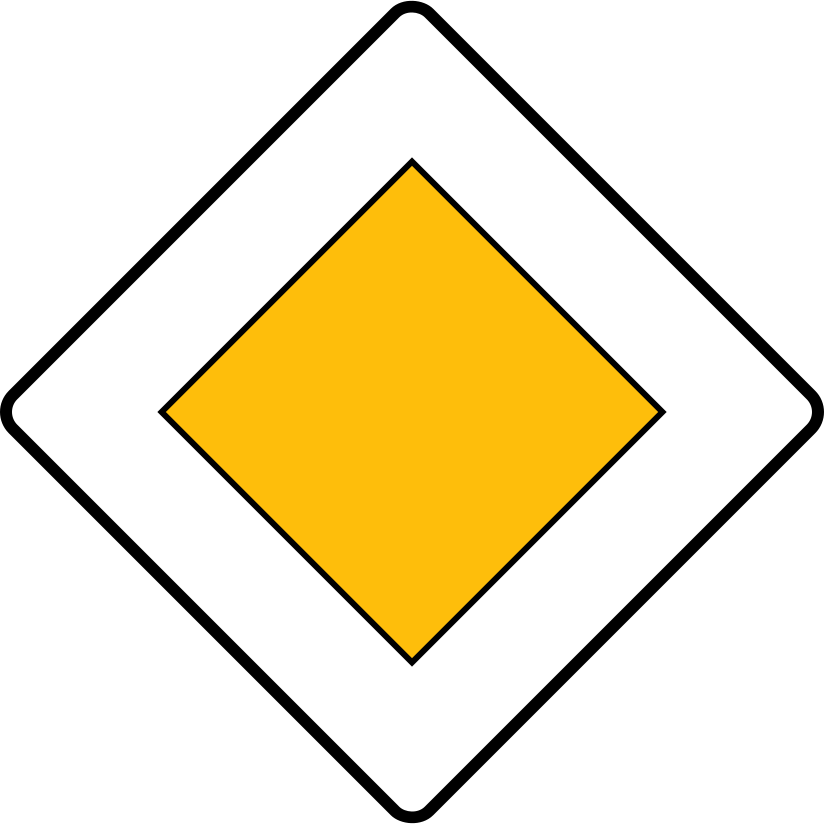
The D-1 Priority Road sign means you have the right of way.
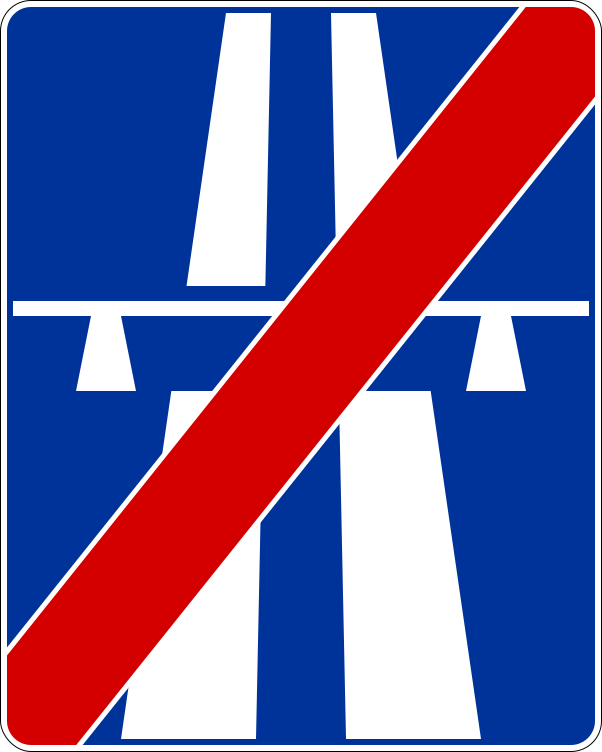
Prepare for the End of the Motorway with the D-10 Sign
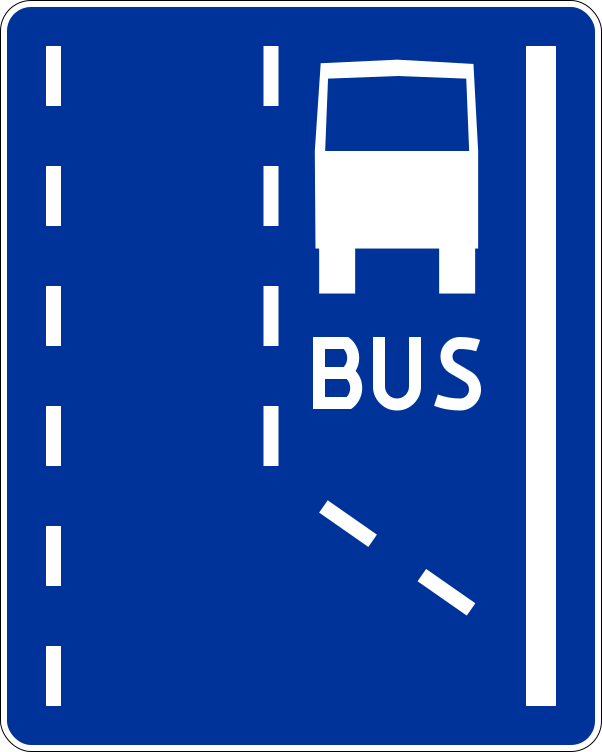
D-11 Road Sign: You're Approaching the Start of a Bus Lane
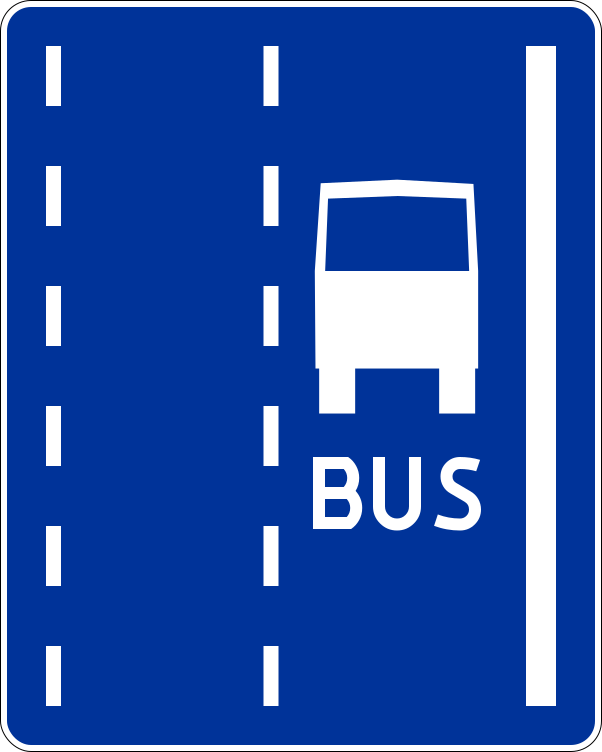
The D-12 'Bus Lane' sign confirms the lane remains exclusively for buses and authorized vehicles.
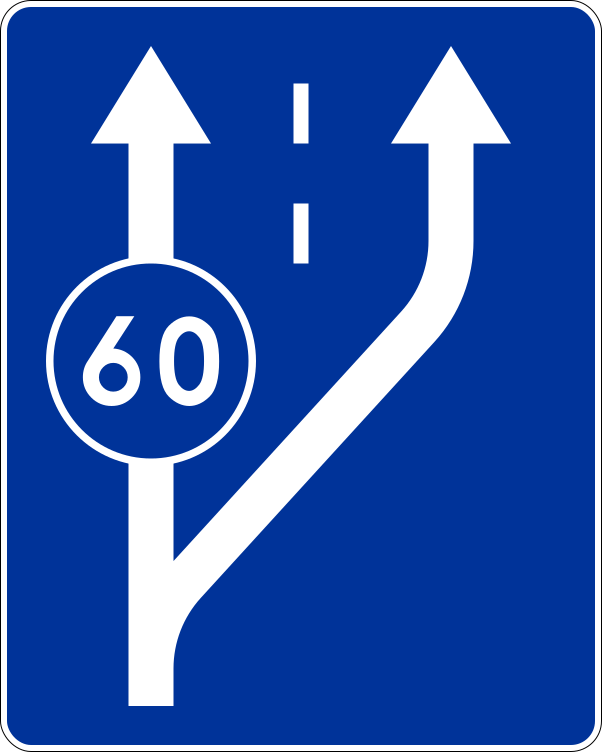
D-13 Sign: Prepare for the Start of a Slow-Moving Traffic Lane
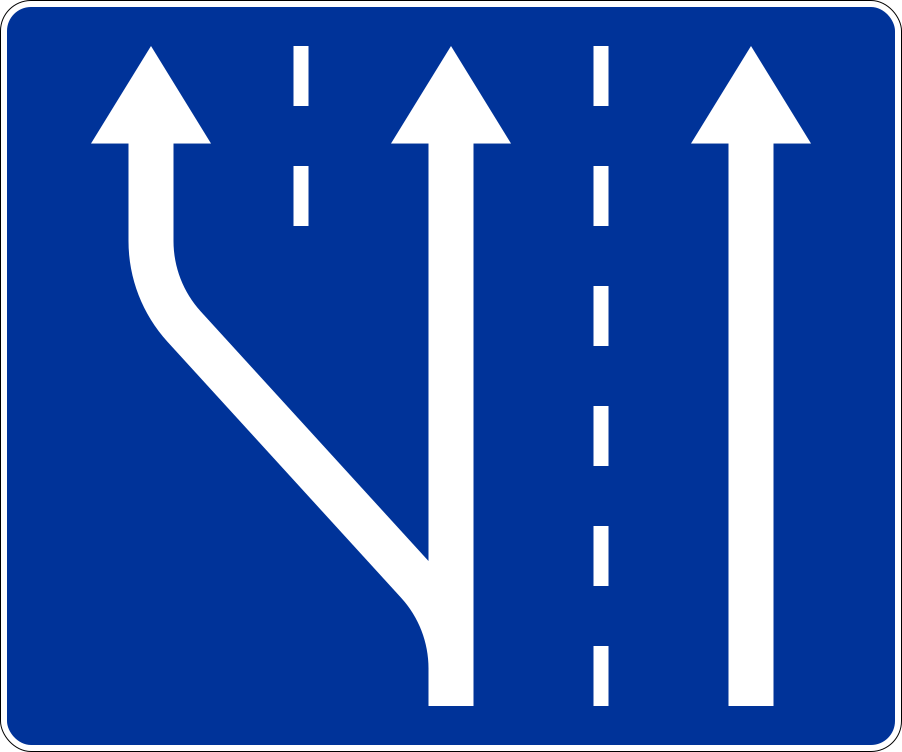
The D-13a 'Start of Lane' sign means a new lane is opening up ahead.
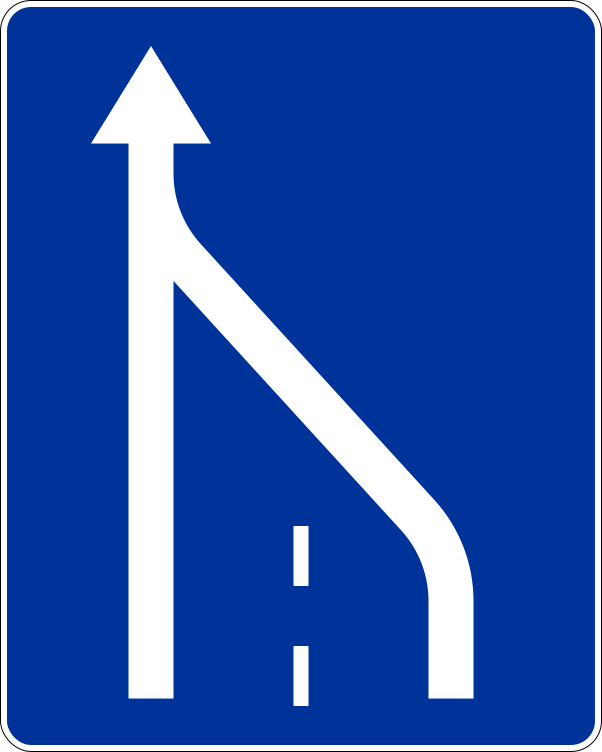
D-14 End of Lane: Know When and How to Merge Safely
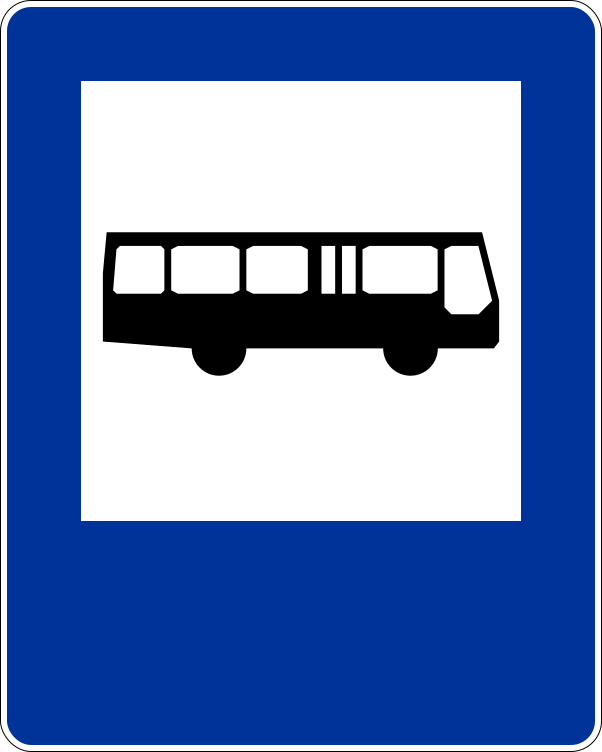
The D-15 'Bus Stop' Sign: Understanding and Reacting to Public Transport Stops
Deepen your understanding of specific road signs by reviewing official Polish traffic rules and associated real-world driving scenarios. These expert-led resources help you bridge the gap between visual recognition and practical exam application.
Don't Be a Road Block: Master Minimum Speeds and Smooth Traffic Flow for Your Polish Exam!
Learning how to interact with law enforcement is a crucial part of your driver training in Poland, as it helps you understand the legal procedures governing roadside controls. This guide clarifies how officers identify themselves, what behaviors are expected of you as a driver, and how traffic enforcement impacts your penalty points and record. Mastery of these rules ensures you remain compliant with the law and prepared for any roadside situation you may encounter.
Even a Second Can Be Fatal: Understand Microsleep to Drive Safely in Poland.
When selling a car in Poland, you have specific legal duties regarding insurance and registration that must be met promptly. This article clarifies these seller obligations, including the crucial 14-day window to inform your insurer and the 30-day deadline to notify the relevant communication department, ensuring a smooth and compliant transfer of ownership for both parties.
The A-17 sign indicates locations where children between the ages of 7 and 15 are likely to be present. Unlike adults, children can be unpredictable and may suddenly run into the street without looking. This sign is a signal to slow down significantly and be extra alert. It is common near primary schools, daycare centers, and organized sports fields.
The D-40 sign marks the entrance to a 'Strefa Zamieszkania'. Inside this zone, pedestrians are allowed to use the entire width of the road and have absolute priority over vehicles. The speed limit is strictly 20 km/h. Drivers must be extremely vigilant as children are legally allowed to play on the street without adult supervision. Additionally, parking is only permitted in designated spaces, and all speed bumps are considered 'marked' by this entry sign.
After reviewing the full list of Polish road signs, explore specific sign categories for in-depth understanding. Challenge your knowledge with practice questions focused on sign recognition and interpretation to solidify your preparation for the driving theory exam.
Browse All Polish Road Signs