
The BT-4 sign indicates a tram switch that requires manual operation. When you encounter this sign, you must bring the tram to a complete stop and visually verify that the switch is correctly positioned for your intended track. This is crucial for safety, as proceeding with a misaligned switch can cause derailment. This sign is typically found at less-used track splits or in tram depots, emphasizing the need for careful driver intervention.
This BT-4 sign mandates a complete stop for tram drivers before manually operated switches. Proper interpretation is critical for safe passage and avoiding derailment, making it a key area for theory test preparation.
The BT-4 sign is placed before switches that are only operated from one side or are not fully automated. It requires the tram driver to come to a complete stop. The driver must then check (and if necessary, manually adjust) the switch point (iglica) to ensure it is flush against the rail and set for the correct track. Entering a poorly set switch can lead to immediate derailment.
Requires the tram to stop and the driver to verify the switch position before proceeding.
Get clear, practical answers to the most common questions about the BT-4 - Stop - Manually Operated Switch road sign. Learn how the sign works, what rules it represents, and how it affects real driving situations. This FAQ strengthens your understanding and supports accurate decision making for the Polish driving theory exam in Poland.
The BT-4 sign's main purpose is to alert the tram driver to a switch that is not fully automated. It mandates a complete stop before the switch and requires the driver to manually check and ensure the switch is properly set for the correct track to prevent derailment.
Upon seeing the BT-4 sign, the driver must stop the tram completely. They then need to visually inspect the switch, specifically the 'iglica' (point), to confirm it's flush against the rail and aligned for the path the tram will take. If necessary, the driver must manually adjust it using a 'przekładka' (switch iron).
Entering a tram switch that is not perfectly aligned can lead to immediate derailment, causing severe damage and potential injury. The BT-4 sign is a critical safety measure to ensure the driver actively confirms the switch position before proceeding, rather than assuming it's correct.
BT-4 signs are usually found in specific locations where switches are manually operated, such as less frequently used track splits in the network or within tram depots. Their presence signals a need for heightened driver awareness and manual intervention.
A common exam trap is not fully understanding that an absolute stop is required, not just slowing down. Learners might also forget the importance of visual confirmation; you cannot simply guess the switch's position from the driver's cab. Always ensure the switch is perfectly aligned before moving.
A clear reference image of the BT-4 - Stop - Manually Operated Switch road sign used in Poland.

The BT-4 - Stop - Manually Operated Switch road sign may also be known by these alternative names or terms.
The BT-4 - Stop - Manually Operated Switch road sign is part of the Additional Railway Crossing Signs (G) category, which groups together signs with similar rules and functions.
Comparing signs like the 'Stop - Manually Operated Switch' with others in its group aids recognition and reduces errors. This focused revision helps solidify your understanding for the theory test, improving your ability to distinguish similar traffic signs.

Prepare for tram signals ahead with the AT-1 warning sign.

Understand the AT-2 Tram-Activated Signal: Know when trams are coming!
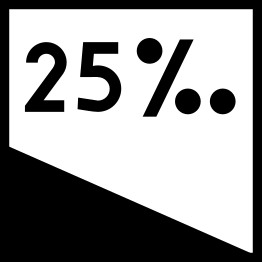
Understand the AT-3 Dangerous Tram Descent warning sign for trams.
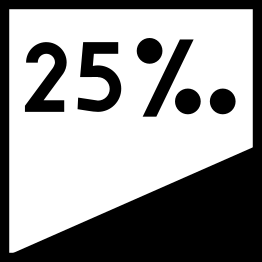
Warning: Steep Tram Ascent Ahead (AT-4)

Understand the AT-5 sign: Tram Collision Movement Warning for Turning Trams
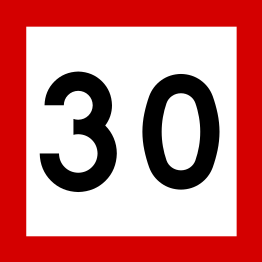
What the BT-1 Tram Speed Limit sign means and how to obey it.

BT-2: Tram Speed Limit Restriction Ends Here

BT-3 Tram Switch Lock: Don't Enter Until Clear!
Deepen your understanding of specific road signs by reviewing official Polish traffic rules and associated real-world driving scenarios. These expert-led resources help you bridge the gap between visual recognition and practical exam application.
Navigating Polish roads requires a precise understanding of rules for overtaking slow-moving vehicles, especially on continuous solid lines. This article will detail when such maneuvers are legal, the legal obligations of tractor drivers, and the consequences of violations according to Polish traffic law. Mastering this topic is essential for safe driving and succeeding in your theory exam.
Learning to assess the state of your transmission fluid is a vital skill for every driver, helping you identify early warning signs of mechanical wear or contamination. By understanding what constitutes healthy fluid versus signs of potential damage, you can take proactive steps to protect your vehicle and improve driving safety. This guide focuses on observation and basic checks, aligning with the technical knowledge required for responsible vehicle ownership.
Even a Second Can Be Fatal: Understand Microsleep to Drive Safely in Poland.
Master Your Rights and Obligations During a Polish Roadside Inspection
The A-24 sign is used before bicycle crossings on high-speed roads or where a cycle path ends and joins the main road. Cyclists are vulnerable road users and can be harder to see than cars. This sign is a reminder to check your mirrors and blind spots carefully. In many cases, cyclists on a designated crossing have priority, similar to pedestrians on a zebra crossing.
The A-33 sign is used to prevent rear-end collisions. It is placed before locations where traffic frequently backs up—such as near major intersections, tunnel entrances, or after a blind curve. It warns the driver that they might suddenly come upon a line of stationary vehicles. This gives the driver time to slow down gradually rather than having to slam on the brakes.
After reviewing the full list of Polish road signs, explore specific sign categories for in-depth understanding. Challenge your knowledge with practice questions focused on sign recognition and interpretation to solidify your preparation for the driving theory exam.
Browse All Polish Road Signs