
The T-21 road sign is a crucial advance warning, informing you that a specific traffic prohibition will begin at a designated distance ahead, such as 200 meters or 500 meters. This 'pre-warning' plate, often used with signs like 'No Entry', gives drivers ample time to adjust their route or speed before reaching the actual restriction. Understanding this sign is vital for safe navigation and passing your Polish driving theory exam.
The T-21 supplementary plate provides essential advance warning of an upcoming traffic prohibition, giving Polish drivers crucial time to prepare and adjust their route. Mastering this road sign's meaning is vital for safe navigation and exam success, ensuring you correctly interpret legal restrictions during your driving theory test.
The T-21 plate is a 'pre-warning' for a prohibition. It doesn't have arrows, just a distance like '200 m'. It is used when a driver needs time to react—for example, a 'No Entry for Trucks' sign placed 500m before the actual street so the truck driver has a chance to turn around or choose a different route. It gives the driver a 'heads-up' about an upcoming legal restriction.
Warns that a specific restriction will begin after the indicated distance.
Get clear, practical answers to the most common questions about the T-21 - Distance to Prohibition road sign. Learn how the sign works, what rules it represents, and how it affects real driving situations. This FAQ strengthens your understanding and supports accurate decision making for the Polish driving theory exam in Poland.
The T-21 sign is a supplementary plate that indicates the distance to an upcoming prohibition. For example, if you see a 'No Entry for Trucks' sign with a T-21 plate showing '500 m', it means the truck prohibition starts 500 meters further down the road.
When you see the T-21 sign, note the distance indicated and anticipate the prohibition that will follow. If the prohibition applies to your vehicle, start planning your detour or alternative route. If it's a speed limit reduction, begin to gradually reduce your speed.
The T-21 sign is an advance warning; it tells you a restriction is coming. The actual prohibition sign, often identical to the one warned about but without the distance plate, is placed at the exact point where the restriction begins. You must comply with the prohibition at that point.
A common trap is thinking the T-21 sign itself imposes the prohibition immediately. Remember, it only warns you about a restriction starting at a specified distance. Learners might also forget to plan their route early enough, leading to potentially dangerous last-minute manoeuvres near the actual prohibition sign.
Yes, the T-21 sign can be used to warn of upcoming reductions in speed limits. For example, it might indicate that a lower speed limit zone begins in 300 meters. This gives you time to adjust your speed smoothly rather than braking abruptly.
A clear reference image of the T-21 - Distance to Prohibition road sign used in Poland.

The T-21 - Distance to Prohibition road sign may also be known by these alternative names or terms.
The T-21 - Distance to Prohibition road sign is part of the Supplementary Plates (T) category, which groups together signs with similar rules and functions.
Reviewing related signs like the T-21 distance plate alongside other prohibition warnings strengthens your recognition skills. Comparing similar road signs aids theory test revision and ensures accurate understanding of upcoming restrictions.
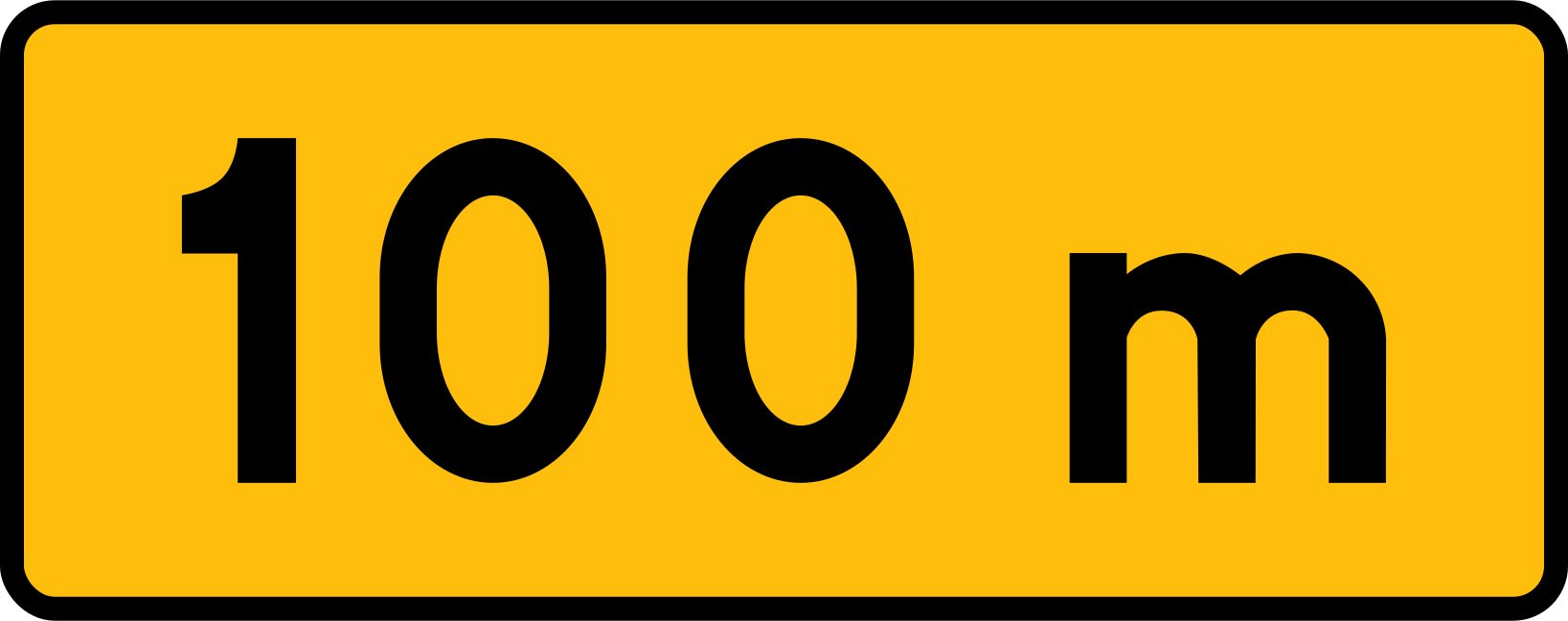
Understand the T-1 'Distance to Hazard' Plate for Safe Driving
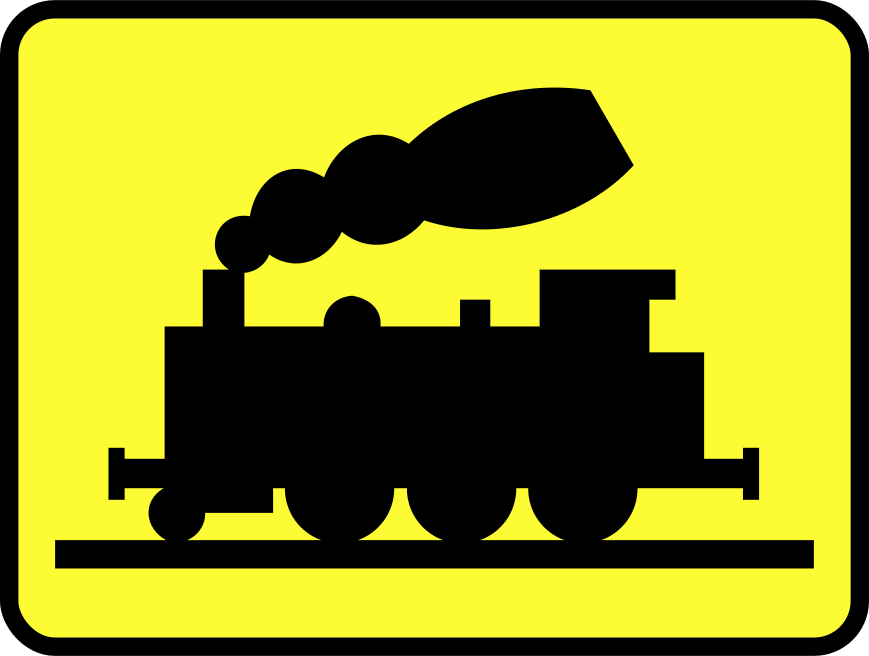
Beware of the T-10 sign: Industrial Railway Siding Ahead
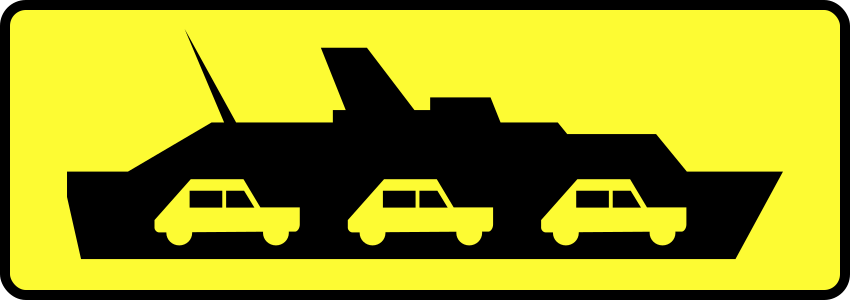
Prepare for a Ferry Crossing with the T-11 Warning Sign
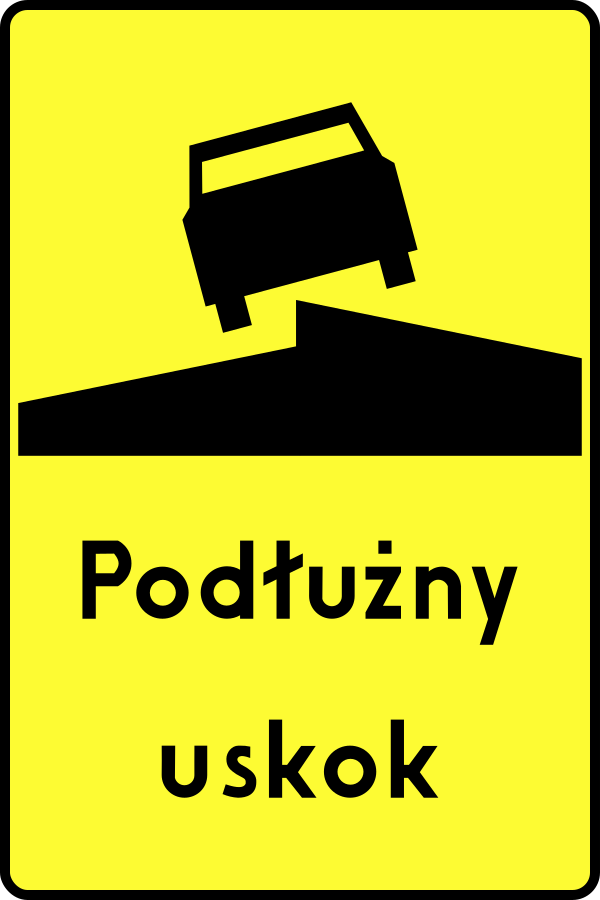
Watch out for the T-12 sign warning of a longitudinal step in the road surface!
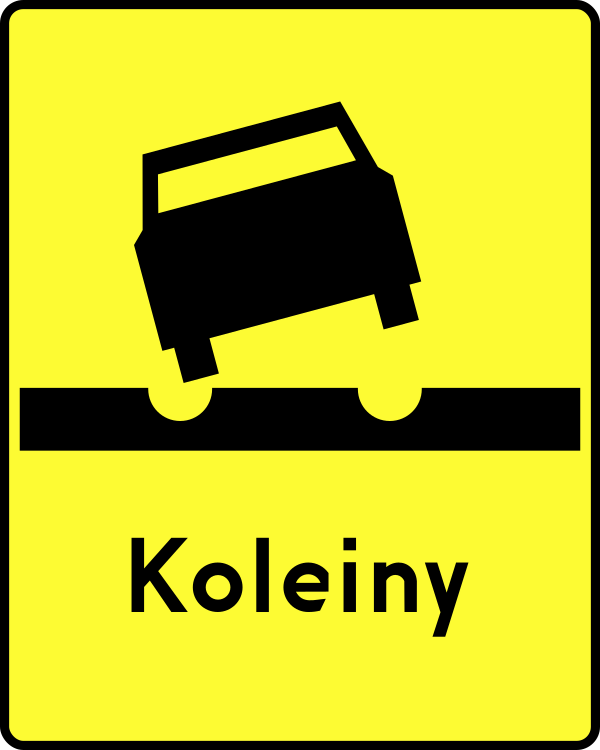
Warning: Deep Road Surface Ruts Ahead (T-13)
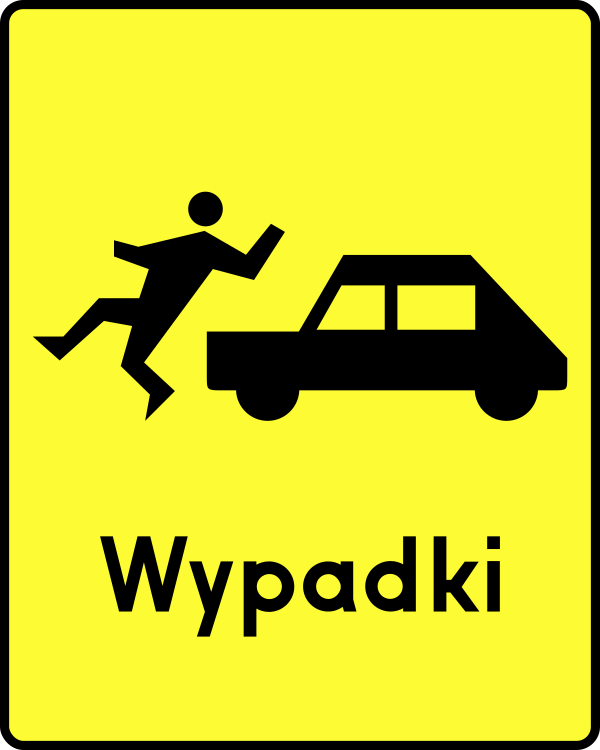
T-14: Beware of Frequent Pedestrian Accidents Ahead!
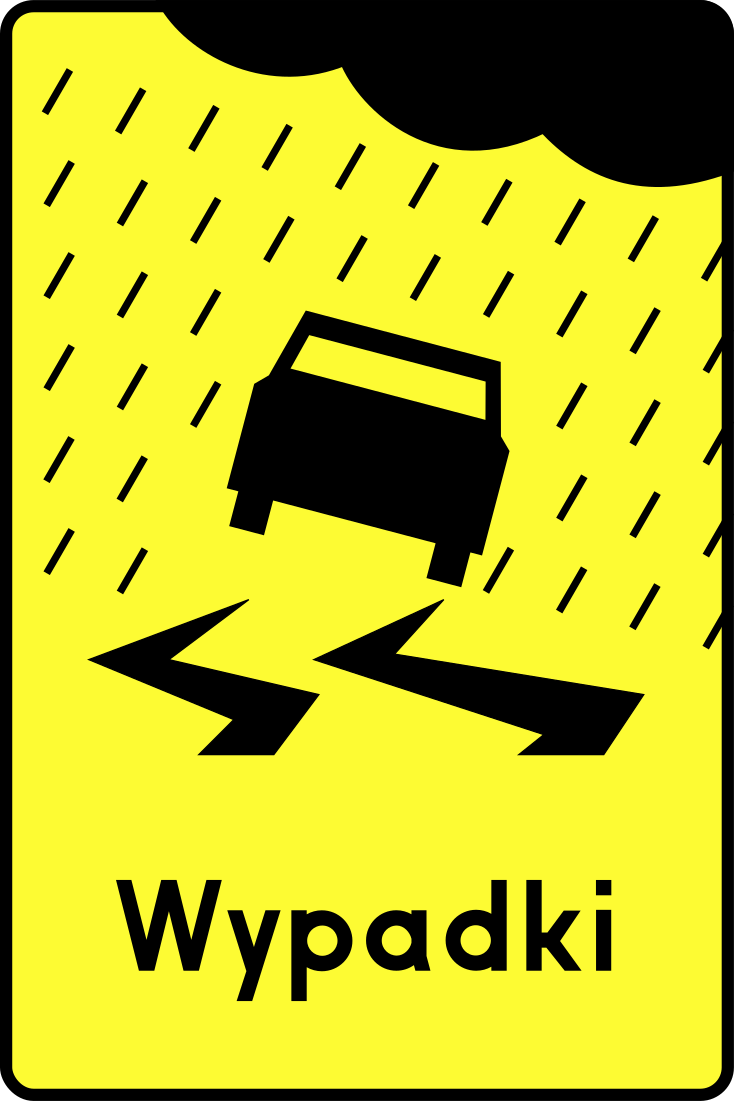
Beware: This Road Can Become Extremely Slippery When Wet!
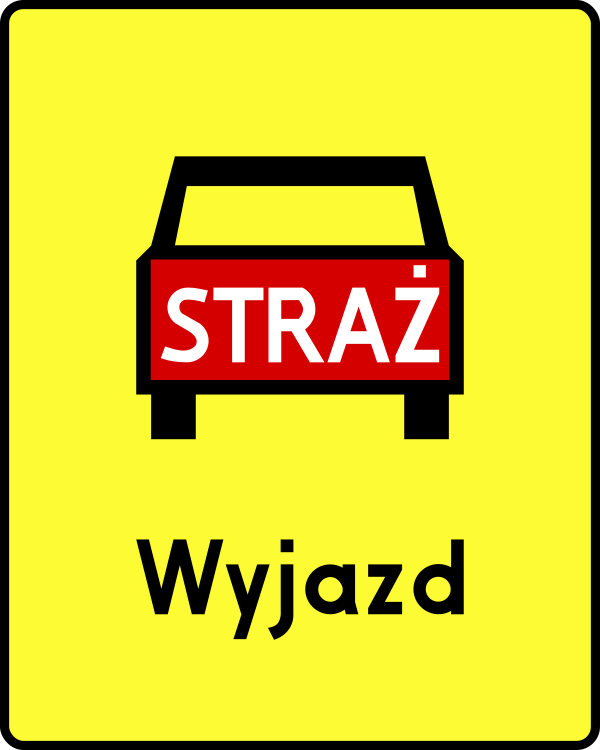
Prepare for sudden fire truck departures with the T-16 Fire Engine Exit sign.
Deepen your understanding of specific road signs by reviewing official Polish traffic rules and associated real-world driving scenarios. These expert-led resources help you bridge the gap between visual recognition and practical exam application.
Your Essential Guide to First Aid After an Accident – Pass Your Polish Theory Exam!
Master Your Duties: Avoid Severe Penalties for Leaving an Accident Scene in Poland.
When you purchase a used car in Poland, understanding your ongoing insurance obligations is paramount. This article clarifies that the mandatory OC (third-party liability) insurance does not automatically renew after the existing policy expires. Learn why maintaining continuous coverage is vital to prevent substantial penalties from the Ubezpieczeniowy Fundusz Gwarancyjny (UFG) and what steps you must take to remain compliant.
When you start your car in Poland, you might notice the engine running at higher revolutions per minute (RPM). This article explains that while elevated RPMs are often a normal part of the engine's automated warm-up process, they can also signal underlying faults. Understanding this distinction is essential for safe driving and for preparing effectively for the Polish driving theory exam.
The F-6 sign is placed before an intersection to inform drivers that a specific hazard or legal restriction (indicated by a miniature symbol) is located on one of the branching roads. This prevents drivers from making a turn into a street that they cannot navigate (e.g., due to a low bridge or a 'no entry' for their vehicle type). It is a crucial planning tool for drivers of large or specialized vehicles.
The F-5 sign is an essential tool for preventing drivers from entering a section of road where they would be legally prohibited. It features a miniature version of the upcoming prohibition sign (e.g., 'No Trucks' or 'Weight Limit') along with a distance in meters or kilometers. This gives drivers of restricted vehicles enough time to find an alternative route or a place to turn around safely before they actually reach the restricted zone.
After reviewing the full list of Polish road signs, explore specific sign categories for in-depth understanding. Challenge your knowledge with practice questions focused on sign recognition and interpretation to solidify your preparation for the driving theory exam.
Browse All Polish Road Signs