
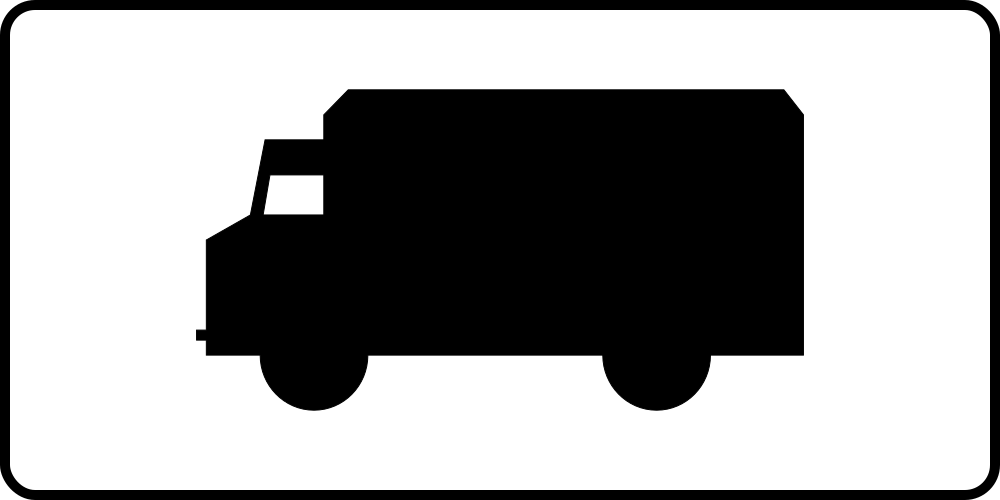
The T-23b auxiliary plate, featuring a truck silhouette, is used with other signs to indicate that they specifically apply to trucks, special vehicles, and tractors weighing over 3.5 tonnes. You'll often see it paired with prohibition signs like 'No Entry' or 'No Stopping' to guide heavy vehicles away from certain areas or to designated routes. Standard passenger cars and lighter vehicles are not affected by signs accompanied by this plate.
Master the meaning of the T-23b sign to understand restrictions for vehicles over 3.5 tonnes. This detailed explanation is crucial for passing your Polish theory test and navigating road signs effectively.
The T-23b plate shows a truck silhouette. It covers a broad range of heavy vehicles: trucks, specialized heavy machinery, and road tractors with a GVW (DMC) exceeding 3.5 tonnes. It is commonly used to restrict these large vehicles from entering narrow city streets or weak bridges, or to direct them to specific parking areas designed for their size and weight.
Indicates that the sign applies to trucks, special vehicles, and tractors over 3.5 tons.
Get clear, practical answers to the most common questions about the T-23b - Trucks and Heavy Vehicles road sign. Learn how the sign works, what rules it represents, and how it affects real driving situations. This FAQ strengthens your understanding and supports accurate decision making for the Polish driving theory exam in Poland.
The T-23b plate is an auxiliary sign that modifies the meaning of other traffic signs. Its primary purpose is to specify that a particular restriction or direction applies only to trucks, special vehicles, and tractors that have a Gross Vehicle Weight (DMC) exceeding 3.5 tonnes. It ensures that drivers of lighter vehicles understand they are exempt from the main sign's requirement.
If you see a 'No Entry' sign (B-2) accompanied by the T-23b plate, it means that entry is prohibited specifically for trucks, special vehicles, and tractors over 3.5 tonnes. Standard passenger cars, motorcycles, and vans under 3.5 tonnes are permitted to enter that road or area unless otherwise indicated by another sign.
No, the T-23b sign exclusively affects vehicles with a Gross Vehicle Weight (DMC) exceeding 3.5 tonnes. Smaller vans, pickups, and standard passenger cars weighing less than 3.5 tonnes are not subject to the restrictions or directions indicated by the main sign when it is displayed with the T-23b plate.
Yes, the T-23b plate is often used in urban areas with narrow streets, on bridges with weight limitations, or near construction sites where access is restricted for larger vehicles. It's also used to direct heavy goods vehicles to specific parking areas or loading zones designed for their size and weight, helping to manage traffic flow and prevent congestion.
A common trap in the theory exam is assuming that a sign accompanied by the T-23b plate applies to all vehicles. Learners often forget to check the weight limit (over 3.5 tonnes) and incorrectly apply restrictions meant only for heavy goods vehicles to their passenger cars. Always remember that this plate explicitly excludes lighter vehicles.
A clear reference image of the T-23b - Trucks and Heavy Vehicles road sign used in Poland.
The T-23b - Trucks and Heavy Vehicles road sign may also be known by these alternative names or terms.
The T-23b - Trucks and Heavy Vehicles road sign is part of the Supplementary Plates (T) category, which groups together signs with similar rules and functions.
Comparing signs like 'Trucks and Heavy Vehicles' with others helps solidify your understanding and recognition skills, crucial for passing your Polish theory test. Use this comparison to improve your traffic sign recognition and prepare effectively for your driving licence exam.
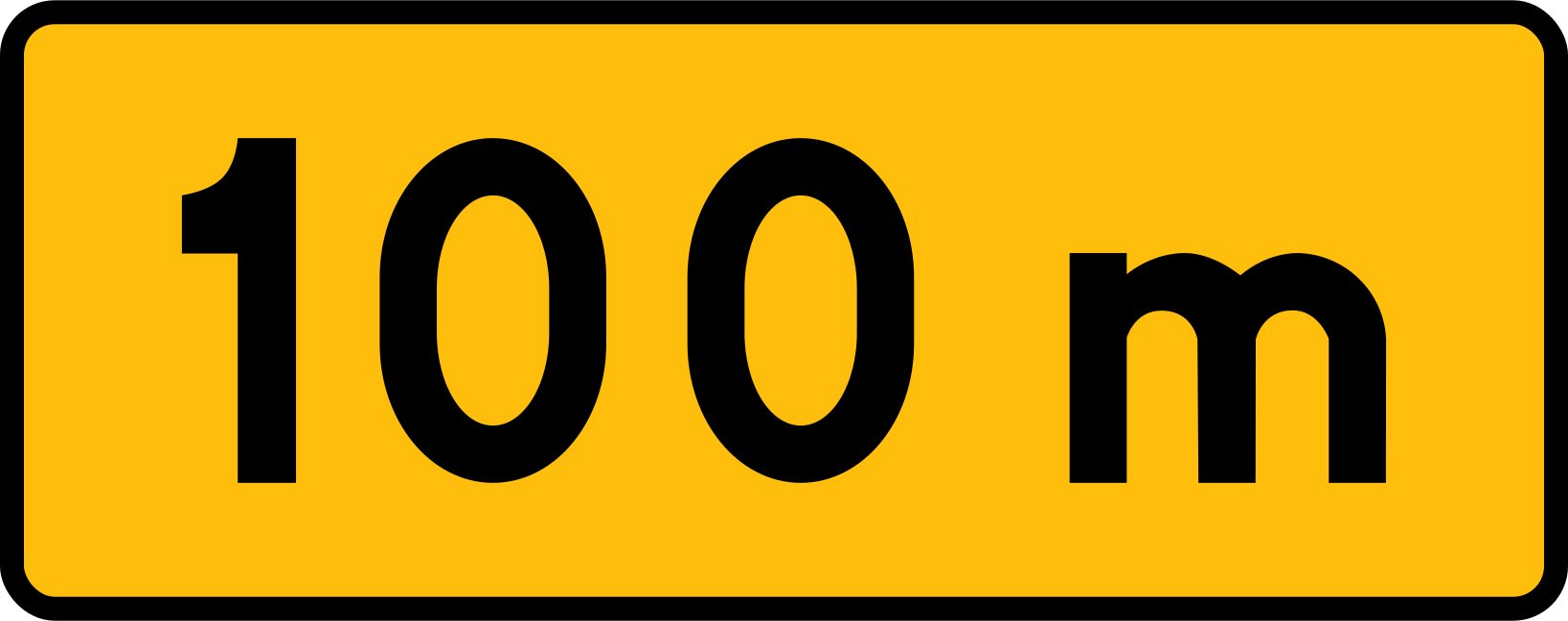
Understand the T-1 'Distance to Hazard' Plate for Safe Driving
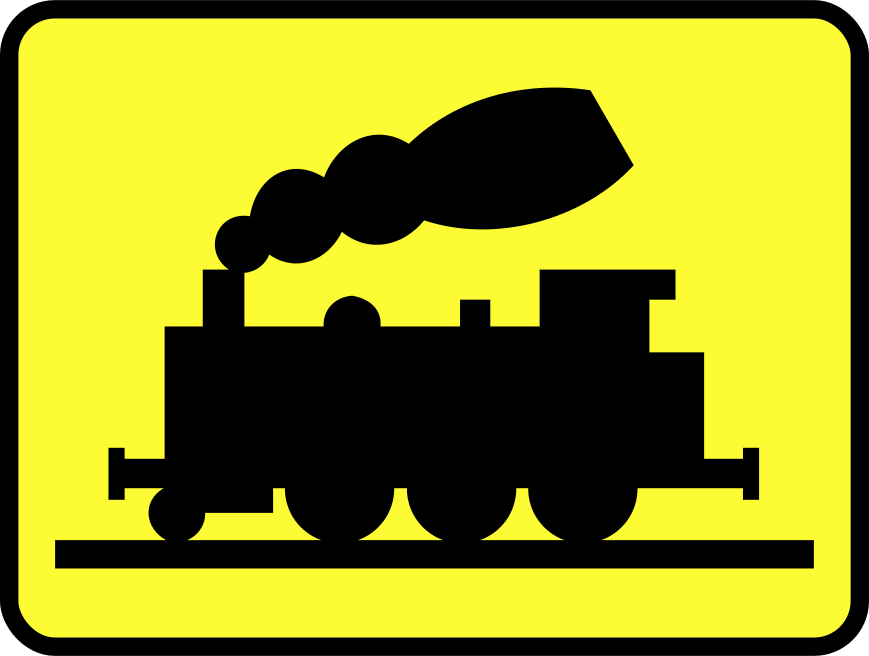
Beware of the T-10 sign: Industrial Railway Siding Ahead
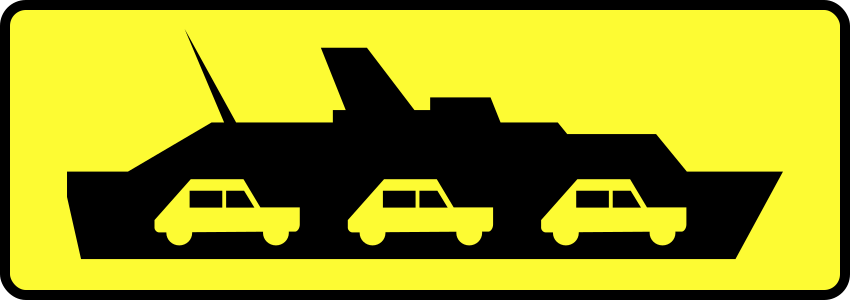
Prepare for a Ferry Crossing with the T-11 Warning Sign
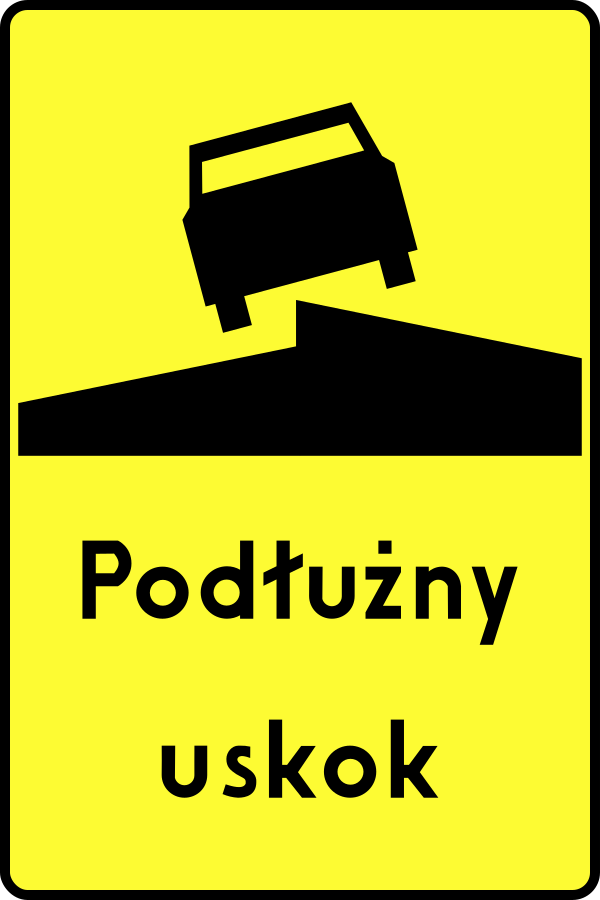
Watch out for the T-12 sign warning of a longitudinal step in the road surface!
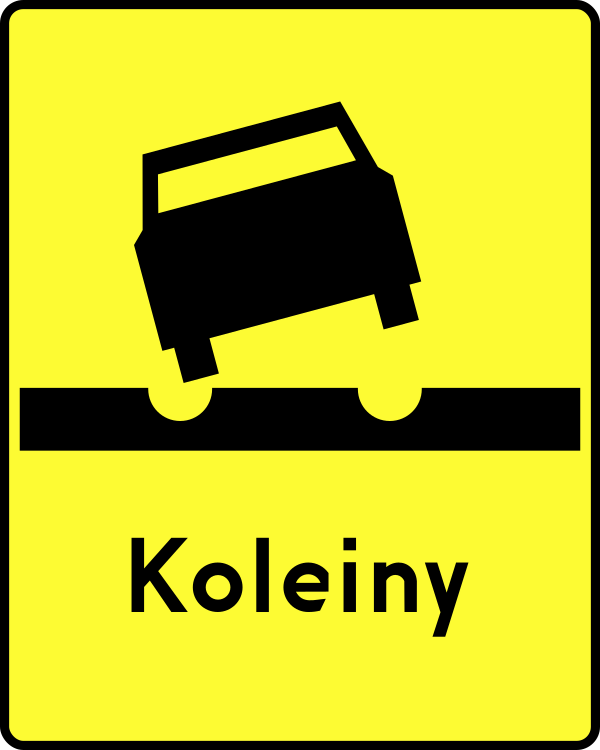
Warning: Deep Road Surface Ruts Ahead (T-13)
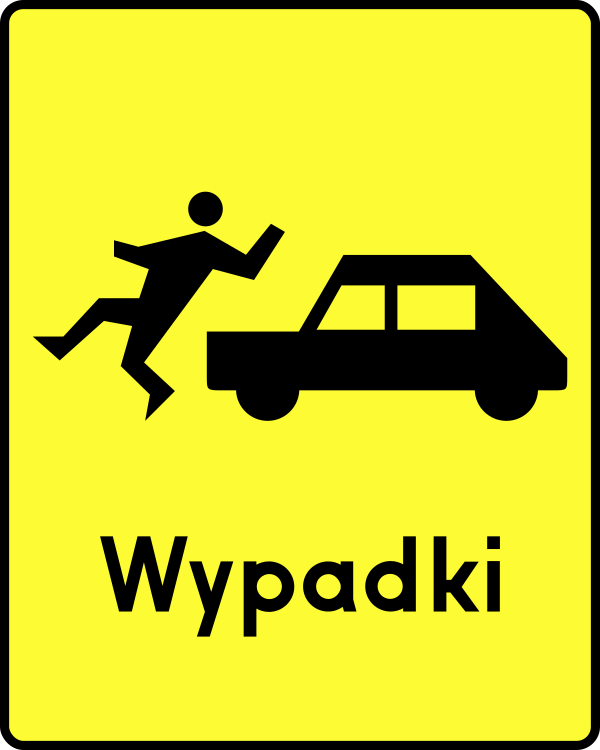
T-14: Beware of Frequent Pedestrian Accidents Ahead!
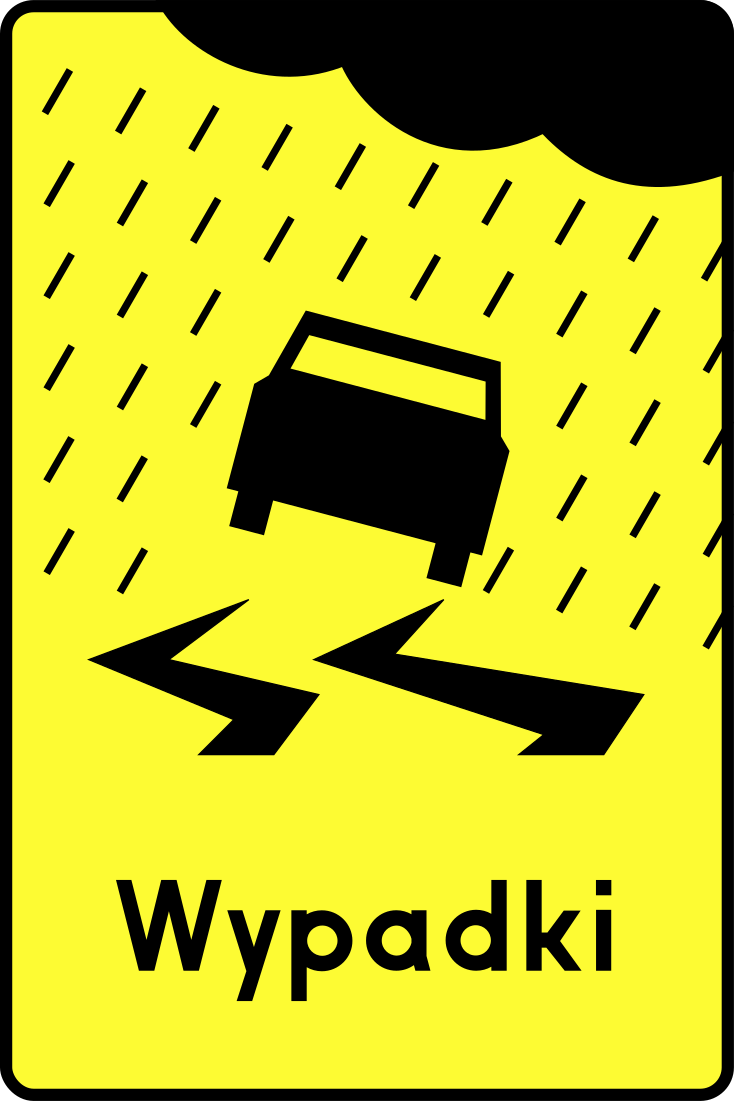
Beware: This Road Can Become Extremely Slippery When Wet!
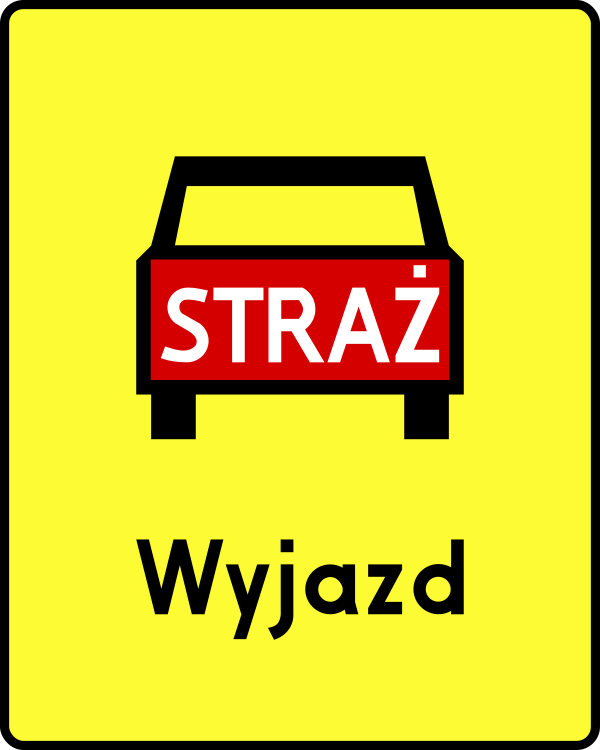
Prepare for sudden fire truck departures with the T-16 Fire Engine Exit sign.
Deepen your understanding of specific road signs by reviewing official Polish traffic rules and associated real-world driving scenarios. These expert-led resources help you bridge the gap between visual recognition and practical exam application.
Master Roadworks: Prioritize Temporary Markings for a Safer Drive and Exam Pass.
Navigate Polish City Streets with Confidence: Master Urban Speed Limits.
Learn the critical distinctions between the Polish A-16 warning sign and the D-6 pedestrian crossing sign. This guide explains your legal responsibilities when approaching these areas, including the mandatory speed reduction and yielding requirements. Understand the significant penalties, such as hefty fines and accumulating penalty points, especially the 'recydywa' (repeat offender) system in Poland, which can lead to immediate license suspension.
Learn how higher speed limits outside Polish built-up areas must be balanced with awareness of constant hazards. This article delves into risks like poor visibility due to inadequate lighting and unpredictable road conditions, emphasizing that actual driving circumstances, not just posted signs, determine a safe speed. Mastering this interplay is essential for both passing your theory exam and ensuring your safety on Polish roads.
The B-5 sign is designed to keep heavy traffic out of residential areas, city centers, or off roads with limited load-bearing capacity. It applies to trucks, special vehicles, and tractors over 3.5t. If the prohibition is meant for a different weight (e.g., 5t or 10t), that number will be written directly on the truck symbol or a plate below.
The B-3a sign is used to exclude buses from areas where their size or weight would cause traffic congestion or damage to the road infrastructure. This is common in narrow city centers, residential estates, or on roads with low-hanging trees or weak bridges. It applies to all vehicles designed to carry more than 9 people, including the driver, regardless of whether they are currently carrying passengers.
After reviewing the full list of Polish road signs, explore specific sign categories for in-depth understanding. Challenge your knowledge with practice questions focused on sign recognition and interpretation to solidify your preparation for the driving theory exam.
Browse All Polish Road Signs