
This unit is crucial for mastering safe moped operation in Spain's urban environments. We'll cover essential speed management techniques and effective braking strategies, vital for passing your AM category theory exam and ensuring your safety on the road. Learn to adapt your speed to traffic, calculate safe distances, and apply brakes correctly in all conditions.
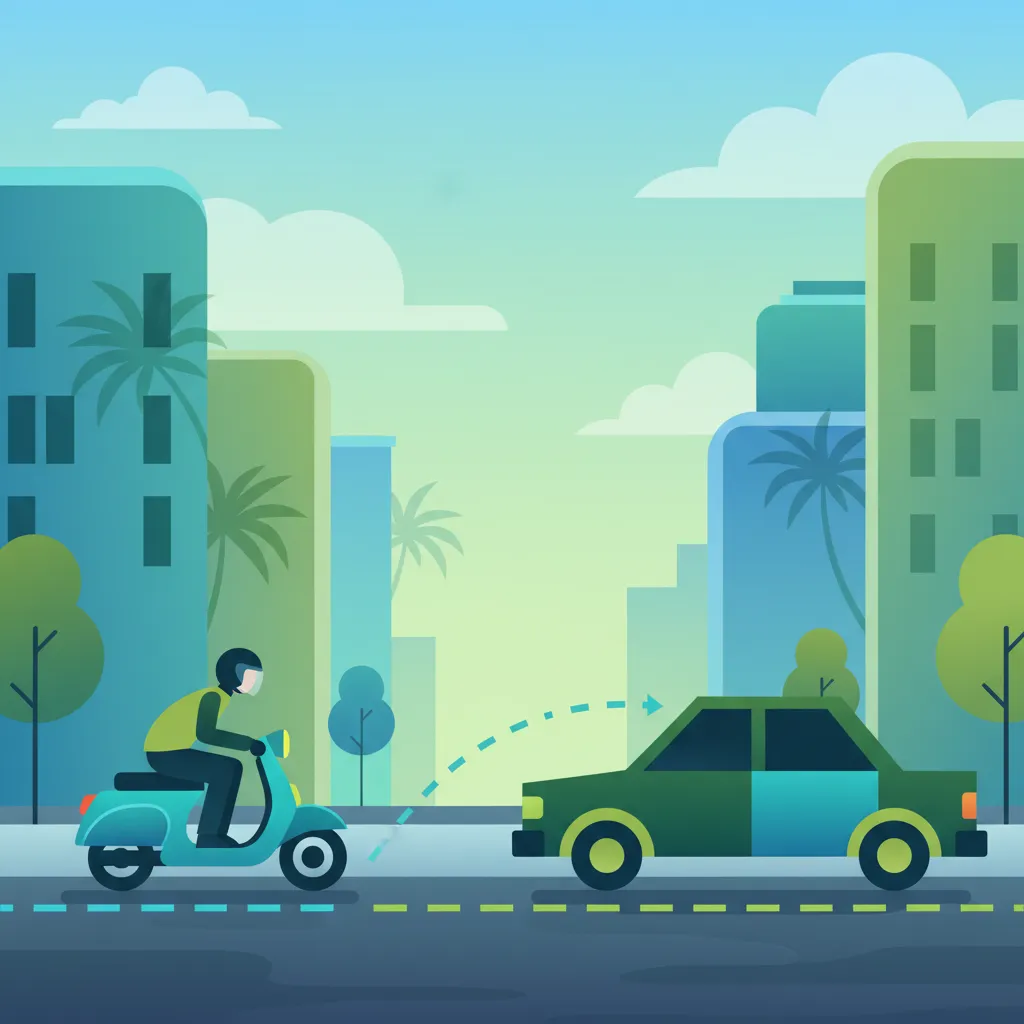
Browse all lessons that make up Speed Management & Braking. Each lesson focuses on specific topics, learning objectives, and core concepts, helping you build essential knowledge and follow a clear, structured progression toward your study goals in Spain.
This lesson details the specific speed limits applicable to mopeds within Spanish urban areas, such as the 30 km/h limit on single-lane roads and the 50 km/h limit on roads with two or more lanes per direction. It teaches learners to identify speed zone signage and understand the legal rationale behind these restrictions. Adhering to these DGT-mandated limits is crucial for safety and avoiding penalties.
This lesson teaches riders the critical importance of maintaining a safe following distance to allow for adequate reaction and braking time. It explains practical methods for judging this distance, such as the 'two-second rule,' and how this gap must be increased in adverse weather or poor visibility. Understanding this principle is fundamental to preventing rear-end collisions, one of the most common types of traffic accidents.
This lesson focuses on the correct application of a moped's brakes for effective and stable deceleration. It explains the concept of balanced braking, using both front and rear brakes simultaneously for maximum stopping power without losing traction. Learners will understand how factors like speed, road surface, and weather dramatically affect total stopping distance, and will learn techniques for emergency braking.
Explore high-intent keywords and long-tail search topics learners use when researching Speed Management & Braking. These terms reflect how people search for reliable study materials, structured explanations, and unit-level theory preparation support in Spain.
Find clear answers to the most common questions learners ask about Speed Management & Braking. Understand how the unit is organized, what learning goals it supports, and how it contributes to your study progression with structured explanations and practical guidance tailored for learners in Spain.
For Category AM mopeds in Spain, the maximum speed limit on conventional roads is typically 50 km/h. On motorways (autovías and autopistas), mopeds are generally not permitted. However, always pay close attention to specific signage, as local regulations or road conditions may impose lower limits, especially in urban areas or near schools and pedestrian zones. Incorrectly exceeding speed limits can lead to penalties and affect your theory test performance.
A common method is the 'two-second rule'. Choose a fixed point (like a sign or shadow) that the vehicle ahead passes. Start counting 'one-thousand-one, one-thousand-two'. If you reach the point before you finish counting, you are too close. Adjust your following distance based on your speed, road conditions (wet, gravelly), and visibility. Maintaining this distance gives you time to react and brake safely.
Yes, you should always aim to use both brakes simultaneously for maximum stopping power and stability. The front brake provides the majority of the stopping force (around 70%), while the rear brake helps to stabilise the moped and control speed. Apply them smoothly and progressively, with slightly more pressure on the front brake. Avoid locking up either wheel, especially the front, which can lead to a skid.
An emergency stop is a rapid deceleration used when immediate danger requires you to stop as quickly as possible. On a moped, this involves applying both brakes firmly and simultaneously, without locking the wheels. Look ahead at where you want to stop, not at the obstacle. Keep your body position stable, and be prepared to slightly adjust pressure on the brakes if you feel the wheels starting to lock. This technique is critical for avoiding collisions.
On wet or slippery surfaces, braking distances increase significantly, and the risk of locking the wheels or skidding is much higher. You must brake earlier and much more gently. Use both brakes, but apply significantly less pressure than on dry roads. Avoid sudden braking or sharp steering inputs. If your moped has ABS, it will help prevent wheel lock-up, but you still need to adjust your speed and braking technique for the conditions.
Absolutely. The Spanish DGT theory exam for Category AM includes questions covering speed limits, safe following distances, braking techniques, stopping distances, and how to react in emergency situations. Understanding these principles thoroughly is essential for passing the exam and for safe riding practice.
All included lessons
Lessons in Speed Management & Braking
See who benefits most from studying Speed Management & Braking. This overview explains how the unit supports different learning needs, what level of knowledge is helpful before starting, and how it fits into the overall study path in Spain.
This unit is designed for all aspiring moped riders preparing for the Spanish Category AM theory exam. It's particularly beneficial for learners who want to build a strong foundation in safe riding practices, focusing on the critical skills of speed control and braking, which are frequently tested and vital for real-world safety.

Begin your preparation for the Spanish DGT driving licence exam today. Browse our full curriculum to find guided courses, detailed lessons on traffic legislation, road signs, and essential driving practices. Start learning systematically and confidently.
Explore DGT Theory Courses & CurriculumExplore all units and lessons included in this driving theory course.
Begin your preparation for the Spanish DGT driving licence exam today. Browse our full curriculum to find guided courses, detailed lessons on traffic legislation, road signs, and essential driving practices. Start learning systematically and confidently.
Explore DGT Theory Courses & Curriculum