
Maintaining a safe distance from the vehicle ahead is crucial for preventing accidents, especially on a moped. This lesson, part of the 'Speed Management & Braking' unit for the Spanish AM licence, will teach you how to judge and maintain adequate space, ensuring you have enough time to react and brake safely in various urban traffic conditions. This knowledge is vital for passing your DGT theory exam and riding confidently.
Lesson content overview
Maintaining a safe following distance is one of the most fundamental principles of defensive driving and is especially critical for moped riders (Category AM) on Spanish roads. This principle dictates the necessary space between your moped and the vehicle directly ahead, allowing you sufficient time to react to unexpected events and safely bring your moped to a stop, if required, without collision. Understanding and consistently applying this rule is crucial for preventing rear-end collisions, which are among the most common types of traffic accidents.
A sufficient gap between vehicles serves as your primary safety buffer. It provides a vital margin of error, giving you the necessary time to perceive a hazard, decide on an action, and execute that action—such as braking or swerving—before an incident occurs. For moped riders, this buffer is even more critical due to the vehicle's smaller size and vulnerability in traffic.
Rear-end collisions often occur because the following driver misjudges the stopping capability of the vehicle ahead or their own reaction time. By maintaining an appropriate following distance, you significantly reduce the risk of crashing into the vehicle in front of you if it suddenly brakes or stops. This proactive approach to safety helps protect not only yourself but also other road users.
The total distance your moped travels from the moment you perceive a hazard to the moment it comes to a complete stop is called the total stopping distance. This distance is comprised of two main components:
Both these distances are directly influenced by your speed. As your speed increases, both your reaction distance and your braking distance increase significantly, leading to a much longer total stopping distance. A safe following distance must always exceed this total stopping distance to ensure you can stop safely.
The most effective way to measure a safe following distance is by using time-based rules, rather than relying on a fixed distance in meters. This is because a time-based gap automatically adjusts for your speed: the faster you go, the greater the physical distance covered in the same amount of time.
The Two-Second Rule is a widely recommended method for estimating a safe following distance under normal, dry driving conditions. This rule advises that you should pass a fixed point on the road at least two seconds after the vehicle ahead of you has passed that same point.
To apply the two-second rule:
Choose a Fixed Reference Point: As the vehicle ahead of you passes a stationary object on the side of the road (e.g., a sign, a lamppost, a shadow), note that point.
Start Counting: Immediately begin counting "one-thousand-one, one-thousand-two."
Check Your Position: If the front of your moped reaches the chosen reference point before you finish counting "two," you are following too closely.
Increase Your Distance: Slow down slightly to increase your gap, and then repeat the process until you can comfortably count "one-thousand-one, one-thousand-two" before reaching the reference point.
For instance, at a typical urban speed for mopeds of 30 km/h (approximately 8.33 meters per second), a two-second gap translates to roughly 16.7 meters. It's crucial not to treat this meter distance as a fixed rule, but rather to understand that the time-based rule accounts for the varying physical distance at different speeds.
Your reaction time is the critical interval between perceiving a hazard and beginning to act (e.g., applying the brakes). For the average rider, this time is approximately 1.5 seconds, though it can vary significantly depending on factors like fatigue, distraction, age, and individual alertness. During this 1.5-second delay, your moped continues to travel at its current speed, covering what is known as the reaction distance.
Even with excellent reflexes, you will always travel some distance before you can physically react. Always factor this unseen distance into your perceived safe gap.
At 30 km/h, a 1.5-second reaction time means your moped will travel about 12.5 meters before your brakes even engage. This emphasizes why simply having good brakes is not enough; anticipating hazards and maintaining adequate space is paramount.
Braking distance is the physical distance your moped needs to come to a complete stop once the brakes are applied. Unlike reaction time, which is primarily human-dependent, braking distance is influenced by a combination of factors:
For example, a moped traveling at 30 km/h on a dry road might have a braking distance of around 9 meters. However, on a wet road, this could easily increase to 15 meters or more. Regularly inspecting your moped's brakes and tires, as required by DGT regulations, is vital for safety.
The two-second rule serves as a minimum guideline for ideal conditions. However, responsible moped riders must be prepared to increase their following distance significantly when faced with less-than-ideal circumstances.
When conditions are poor, the Three-Second Rule (or even longer gaps) becomes a mandatory safety measure. You should increase your following distance to at least three seconds in situations such as:
To apply the three-second rule, simply extend your count to "one-thousand-one, one-thousand-two, one-thousand-three" using the same reference point method.
Beyond just wet weather, different road surfaces demand adjustments to your following distance. Gravel, dirt, or cobblestone roads offer less traction than asphalt. Freshly paved roads can sometimes be slick, as can roads covered in leaves or sand. Always observe the road ahead for changes in surface type and adjust your speed and following distance accordingly.
The weight carried by your moped directly impacts its braking performance. If you are carrying a passenger or heavy items, your moped will require a longer distance to stop. It's crucial to proportionally increase your following distance to compensate for this added load. Additionally, ensure your moped's tires have adequate tread depth (the DGT mandates a minimum of 1.6 mm) and that your brakes are well-maintained to perform effectively.
When riding behind vulnerable road users such as cyclists or pedestrians, it is particularly important to maintain an even greater following distance. These users can be unpredictable in their movements, swerving or stopping suddenly. A larger gap provides them with space and gives you more time to react to their actions, enhancing safety for everyone.
The Dirección General de Tráfico (DGT) in Spain strongly emphasizes the importance of maintaining a safe following distance as a core element of road safety. While specific numerical distances are often recommendations rather than strict laws, the overarching principle is legally binding.
Spanish traffic regulations (Reglamento General de Circulación) mandate that all drivers, including moped riders, must maintain a safe distance from the vehicle ahead, sufficient to stop without collision in case of sudden braking. This is not typically quantified as a "two-second rule" in law, but rather as a general duty of care. Failing to maintain this safe distance can be considered "dangerous driving" and may result in penalties.
Specifically, DGT guidelines highlight the need for adequate distance in particular scenarios:
To ensure that mopeds are physically capable of achieving necessary braking distances, Spanish law also sets requirements for vehicle condition. All mopeds must have a braking system in good working order, capable of stopping the vehicle within manufacturer-specified distances. Furthermore, tires must meet minimum tread depth requirements (1.6 mm) and be free from significant damage. Regular technical inspections (ITV) help enforce these critical safety standards.
Many rear-end collisions stem from common errors in judging or maintaining safe following distances. Being aware of these pitfalls can help you avoid them.
Never assume that because the vehicle ahead is also a moped or a small car, you can follow more closely. Their stopping capabilities may differ from yours, and their actions can still create a hazard.
Let's look at how the principles of safe following distance apply in various common riding situations for mopeds.
Urban Dry Morning:
Rainy Evening:
Approaching an Intersection:
Overloaded Moped:
Following a Delivery Van:
Understanding safe following distances is an integral part of becoming a responsible and safe moped rider. To deepen your knowledge and practice these concepts, consider exploring these related topics:
You can also test your understanding with practice questions designed to reinforce these critical safety principles.
Maintaining a safe following distance is essential for preventing rear-end collisions, one of the most common traffic accidents for moped riders. The Two-Second Rule provides a time-based method that automatically adjusts for speed: choose a fixed reference point and count 'one-thousand-one, one-thousand-two' after the vehicle ahead passes it. This gap must be extended to at least three seconds in adverse conditions such as rain, fog, night driving, heavy traffic, or when carrying extra load. Total stopping distance comprises reaction distance (distance traveled during your ~1.5 second reaction time) plus braking distance, both of which increase significantly with speed and are affected by road surface, tire condition, and vehicle load. Under Spanish DGT regulations, drivers must maintain sufficient distance to stop without collision, and failing this general duty of care may result in penalties for dangerous driving.
A short set of high-value points that capture the most important learning from this lesson.
The Two-Second Rule is the baseline method for estimating safe following distance in dry conditions, requiring at least two seconds to elapse after the lead vehicle passes a fixed reference point.
Total stopping distance equals reaction distance plus braking distance, both of which increase significantly with speed.
Braking distance increases exponentially with speed (doubling speed roughly quadruples braking distance) and is affected by road surface, tire condition, and vehicle load.
In adverse conditions (rain, fog, night, heavy traffic), extend your gap to at least three seconds to compensate for reduced traction and visibility.
DGT regulations mandate that all drivers maintain a safe following distance sufficient to stop without collision, and failing this duty of care may constitute dangerous driving.
Explore all units and lessons included in this driving theory course.
At 30 km/h, a 1.5-second reaction time means your moped travels approximately 12.5 meters before brakes even engage.
On dry asphalt at 30 km/h, braking distance is roughly 9 meters; on wet roads it can easily increase to 15 meters or more.
Increase following distance when carrying passengers or heavy cargo, on slippery surfaces, at night, in fog, or when following large vehicles that obstruct your view.
DGT requires minimum tire tread depth of 1.6 mm, and brakes must be in good working order—vehicle condition directly affects your ability to maintain safe distances.
Riders must return to their lane after overtaking only once they have established a full safe gap, not immediately after passing the other vehicle.
Applying the standard two-second rule on wet or slippery roads without accounting for the significantly increased braking distance required.
Merging back into lane too soon after overtaking, immediately reducing following distance to an unsafe gap.
Following too closely in stop-and-go urban traffic where sudden braking is common, leaving no margin for reaction.
Neglecting to increase following distance when carrying a passenger or heavy cargo, despite the added weight extending braking distance.
Assuming you can follow more closely behind smaller vehicles; their stopping capabilities may differ and their actions can still create hazards.
Lesson content overview
A short set of high-value points that capture the most important learning from this lesson.
The Two-Second Rule is the baseline method for estimating safe following distance in dry conditions, requiring at least two seconds to elapse after the lead vehicle passes a fixed reference point.
Total stopping distance equals reaction distance plus braking distance, both of which increase significantly with speed.
Braking distance increases exponentially with speed (doubling speed roughly quadruples braking distance) and is affected by road surface, tire condition, and vehicle load.
In adverse conditions (rain, fog, night, heavy traffic), extend your gap to at least three seconds to compensate for reduced traction and visibility.
DGT regulations mandate that all drivers maintain a safe following distance sufficient to stop without collision, and failing this duty of care may constitute dangerous driving.
Explore all units and lessons included in this driving theory course.
At 30 km/h, a 1.5-second reaction time means your moped travels approximately 12.5 meters before brakes even engage.
On dry asphalt at 30 km/h, braking distance is roughly 9 meters; on wet roads it can easily increase to 15 meters or more.
Increase following distance when carrying passengers or heavy cargo, on slippery surfaces, at night, in fog, or when following large vehicles that obstruct your view.
DGT requires minimum tire tread depth of 1.6 mm, and brakes must be in good working order—vehicle condition directly affects your ability to maintain safe distances.
Riders must return to their lane after overtaking only once they have established a full safe gap, not immediately after passing the other vehicle.
Applying the standard two-second rule on wet or slippery roads without accounting for the significantly increased braking distance required.
Merging back into lane too soon after overtaking, immediately reducing following distance to an unsafe gap.
Following too closely in stop-and-go urban traffic where sudden braking is common, leaving no margin for reaction.
Neglecting to increase following distance when carrying a passenger or heavy cargo, despite the added weight extending braking distance.
Assuming you can follow more closely behind smaller vehicles; their stopping capabilities may differ and their actions can still create hazards.
Explore search topics learners often look for when studying Safe Following Distances. These topics reflect common questions about road rules, driving situations, safety guidance, and lesson level theory preparation for learners in Spain.
Browse additional driving theory lessons that cover connected traffic rules, road signs, and common driving situations related to this topic. Improve your understanding of how different rules interact across everyday traffic scenarios.
Explore the critical components of total stopping distance for mopeds in Spain. This lesson details the physics behind reaction time, reaction distance, and braking distance, explaining how each impacts safe following distances and accident prevention under DGT regulations.
This lesson provides a detailed examination of the components that determine a vehicle’s stopping distance: perception time, reaction time, and braking distance. It outlines how to calculate safe stopping distances under various speeds and road conditions like wet or dry surfaces. Learners will be equipped to compute appropriate safety margins and understand the physics of emergency braking.
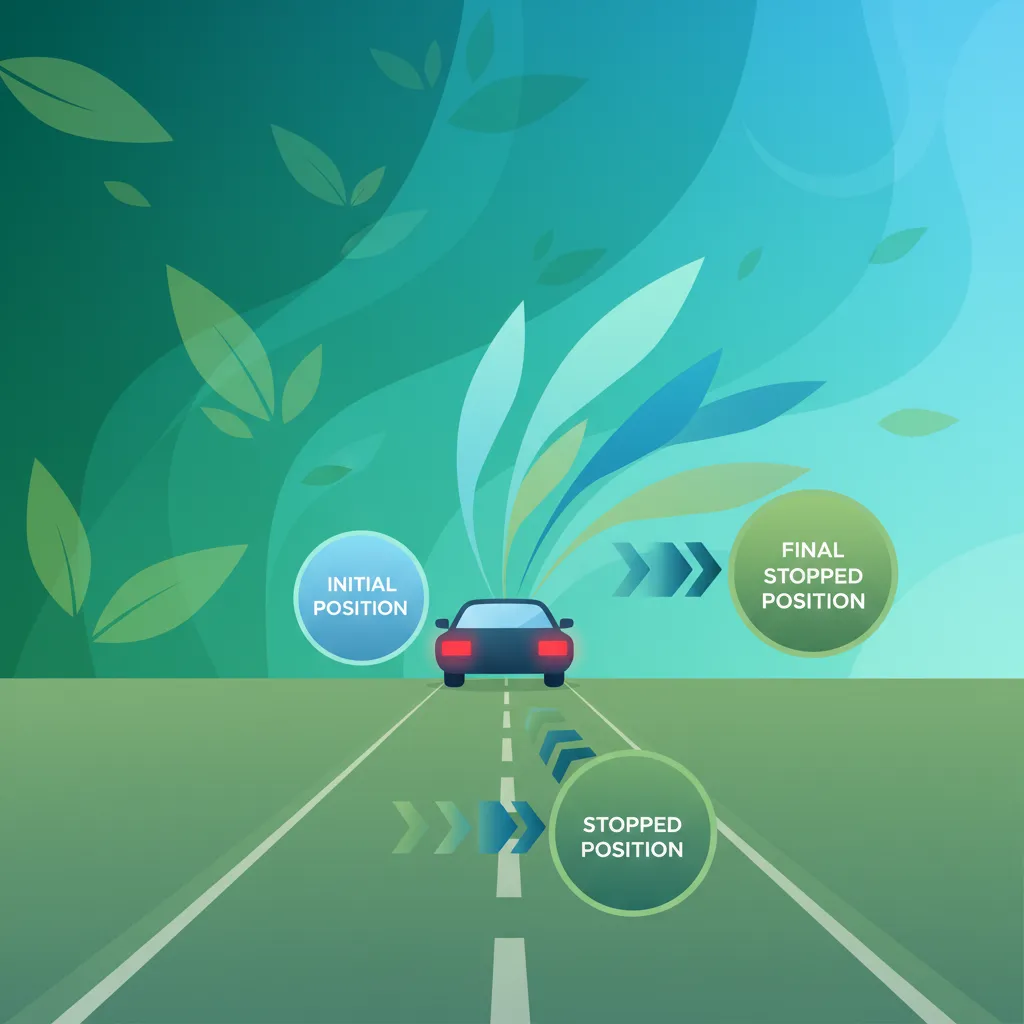
This lesson focuses on the correct application of a moped's brakes for effective and stable deceleration. It explains the concept of balanced braking, using both front and rear brakes simultaneously for maximum stopping power without losing traction. Learners will understand how factors like speed, road surface, and weather dramatically affect total stopping distance, and will learn techniques for emergency braking.
This lesson teaches riders how to react effectively in a sudden, critical situation. It explains the technique for applying maximum braking force without locking the wheels, ensuring the shortest possible stopping distance while maintaining stability. The content also covers how to perform a swift and controlled swerve to avoid an obstacle when stopping is not possible, emphasizing the importance of looking where you want to go.

This lesson provides a detailed guide to safely starting a moped, from the ignition sequence to the coordinated use of the throttle and brakes. It explains the importance of a pre-ride checklist to verify lights and controls are functional. The content also covers techniques for achieving smooth acceleration from a standstill and performing controlled stops, which is crucial for managing stop-and-go urban traffic conditions.

This lesson focuses on mastering acceleration and deceleration to integrate smoothly with traffic. It teaches how to apply the throttle gradually for steady speed control and how to use front and rear brakes in a balanced manner to slow down without destabilizing the moped. Learners will understand how to adjust their speed in response to changing traffic conditions, ensuring safe following distances and predictable movements for other road users.

This lesson details the protocol for performing an emergency stop, emphasizing full-force application of both front and rear brakes while maintaining optimal rider posture. It covers the importance of visual fixation and the role of ABS in stabilizing the bike under panic conditions. Learners also study the calculation of stopping distances based on speed and road conditions.
This lesson focuses on the coordination of acceleration and deceleration to maintain vehicle stability. It explains how to modulate the accelerator pedal for smooth acceleration and how to apply the brake pedal for controlled deceleration. The content covers the role of the ABS system, the calculation of stopping distances, and the importance of maintaining stability during speed changes.
This lesson provides a clear and serious overview of the laws concerning driving under the influence of alcohol or drugs. It specifies the legal blood alcohol concentration (BAC) limits for moped riders and explains the zero-tolerance policy for illicit substances. The content details the severe consequences of impairment, which include heavy fines, license suspension, and potential criminal charges, reinforcing the absolute necessity of riding sober.
This lesson teaches the crucial skill of adapting speed to match prevailing environmental conditions. It explains that the posted speed limit is a maximum for ideal conditions and that riders must slow down significantly in rain, fog, or darkness. The content emphasizes maintaining a larger safety margin to account for reduced visibility and longer stopping distances, ensuring the rider can always stop within the distance they can see clearly.
This lesson outlines the mandatory lighting and visibility equipment as per DGT regulations. It covers the correct use of headlights (low and high beams), taillights, and turn signals, ensuring the moped is visible to others, especially at night or in poor weather. The importance of wearing high-visibility or reflective clothing is also emphasized as a critical measure to enhance personal safety by making the rider more conspicuous.
Learn how to adapt safe following distances for your Spanish AM licence theory. This lesson covers essential adjustments for rain, fog, night driving, and heavy traffic, building upon the two-second rule to ensure safety in challenging scenarios.
This lesson addresses the specific challenges posed by rain and fog, focusing on reduced visibility and loss of traction. It explains the proper use of windshield wipers and fog lights, and the need to adjust speed and increase following distance. The content covers how to prevent and react to hydroplaning (aquaplaning) to maintain vehicle control.
This lesson covers how environmental conditions such as rain, fog, and darkness affect driving safety. It instructs drivers on adjusting speed, using appropriate lighting, and increasing following distance to compensate for reduced visibility and traction. The lesson incorporates DGT safety recommendations for handling adverse weather to mitigate risk and maintain control.
This lesson teaches the crucial skill of adapting speed to match prevailing environmental conditions. It explains that the posted speed limit is a maximum for ideal conditions and that riders must slow down significantly in rain, fog, or darkness. The content emphasizes maintaining a larger safety margin to account for reduced visibility and longer stopping distances, ensuring the rider can always stop within the distance they can see clearly.
This lesson examines the significant impact of various weather conditions on driving safety, including rain, fog, snow, ice, and high winds. Learners will understand how each condition can affect vehicle traction, reduce visibility, and alter driver perception, learning the appropriate adjustments to speed, following distance, and braking. The module also covers the use of vehicle safety features to mitigate risks in adverse weather.
This lesson examines the principles of maintaining a safe following distance, including the 'two-second rule' and its adjustments for speed and weather. It focuses on effective blind-spot management, teaching drivers how to use mirrors and head checks. The content integrates DGT guidelines on creating a safety buffer around the vehicle to allow time to react to unexpected events.

This lesson teaches drivers how to proactively identify potential road hazards, from potholes and debris to unpredictable driver behavior. It provides specific guidance on how to adjust driving techniques to cope with adverse weather conditions such as heavy rain, fog, high winds, and icy roads. The content focuses on managing reduced visibility and traction to maintain vehicle control and safety.
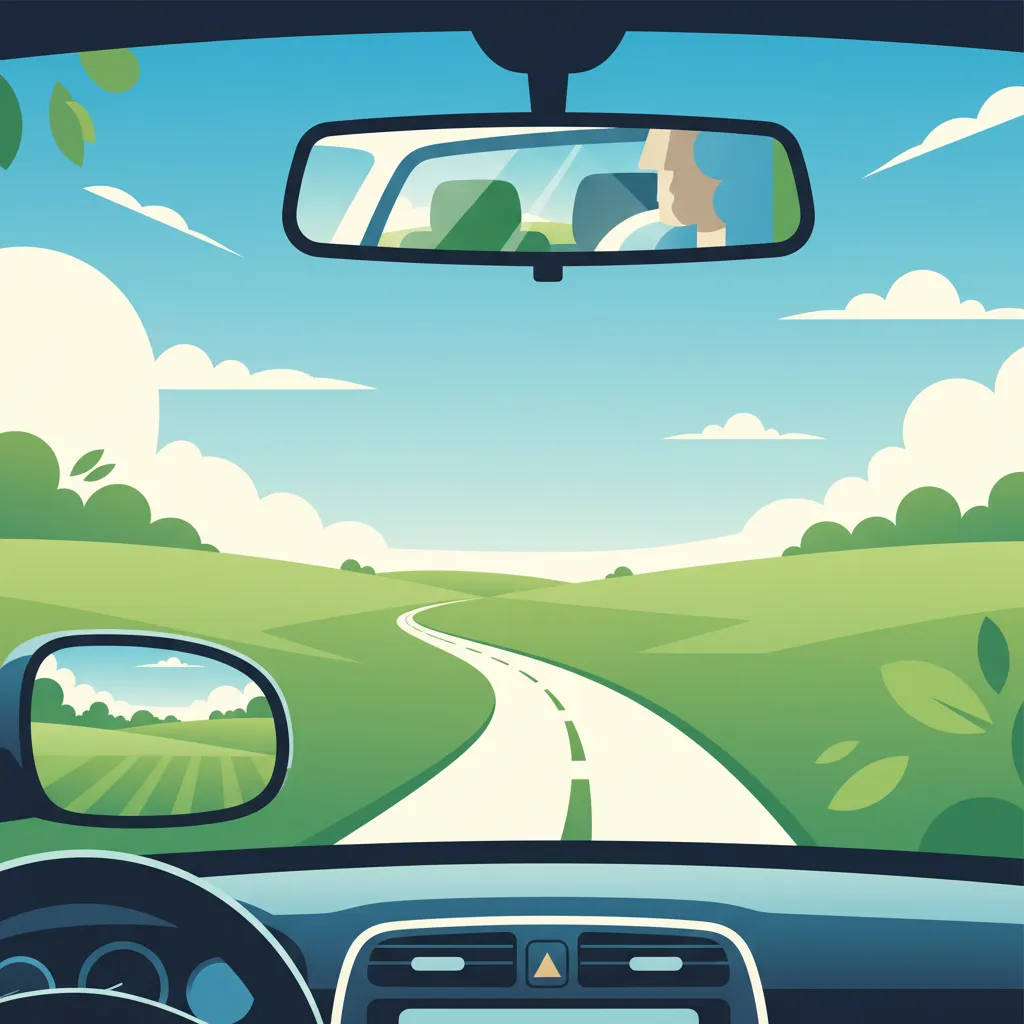
This lesson outlines the proper use and legal requirements of vehicle lighting and mirror systems. It covers headlamps, fog lights, turn signals, and brake lights, clarifying when each must be used according to DGT regulations. The lesson also explains the correct adjustment of rearview and side mirrors and strategies for effective blind-spot monitoring.
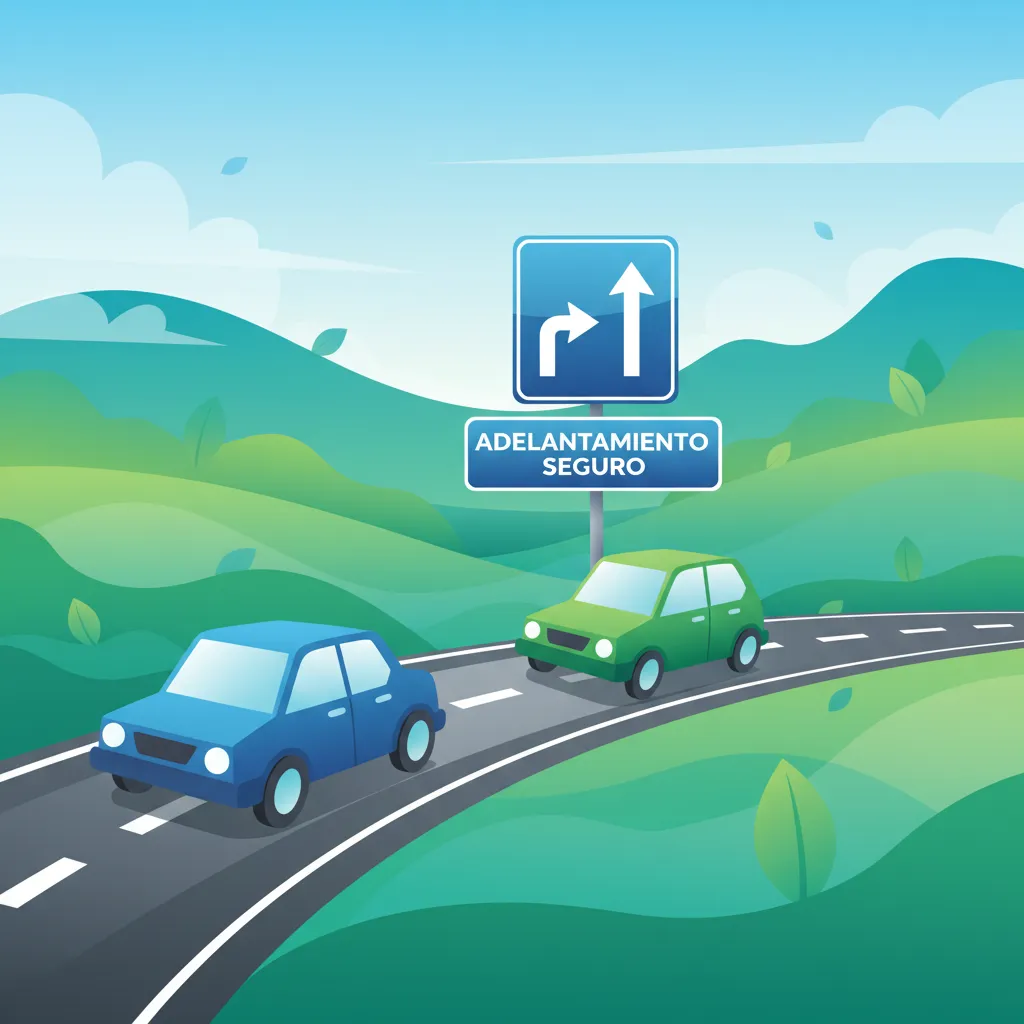
This lesson covers the legal overtaking procedures applicable on different road types, focusing on identifying safe passing zones and executing maneuvers correctly. Learners will be taught how to maintain adequate safety distances before, during, and after overtaking. The content includes DGT regulations for overtaking, appropriate signaling, and visibility checks to ensure safe completion of the maneuver.
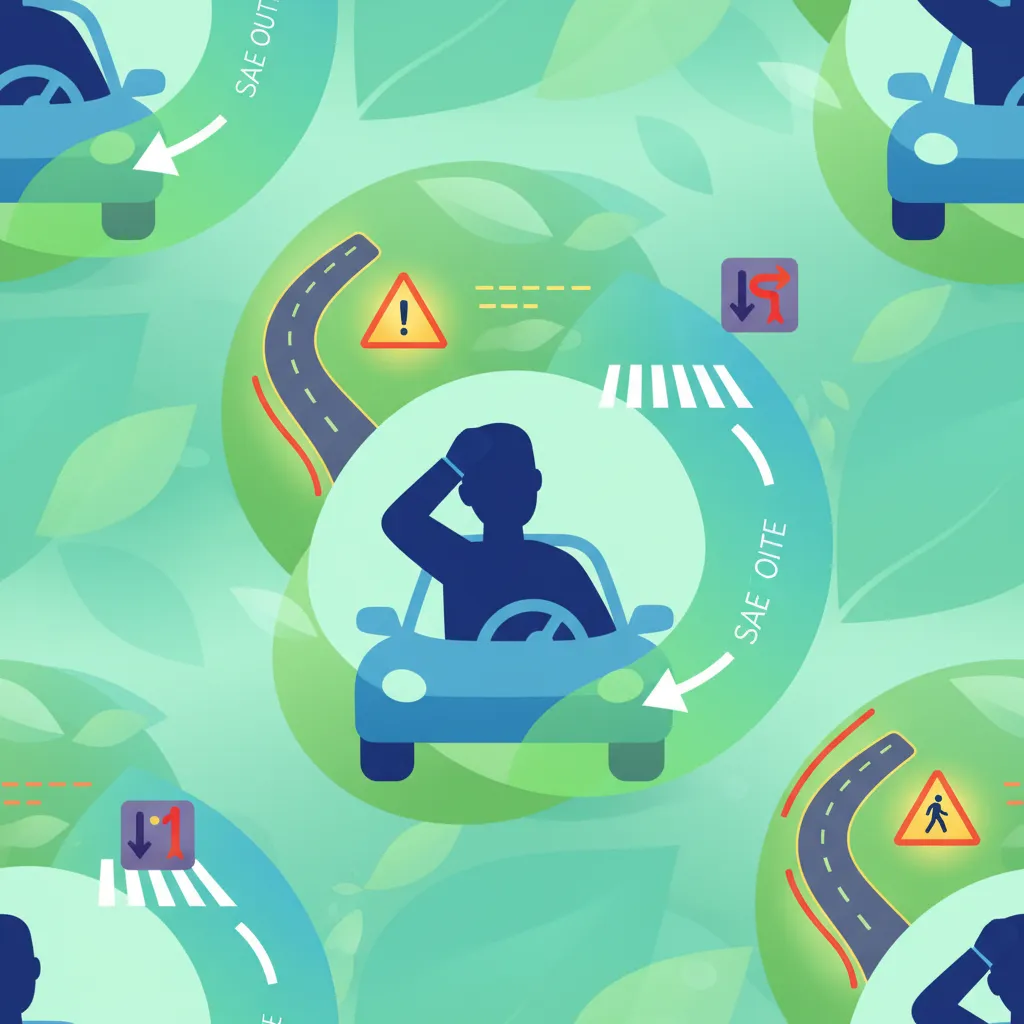
In this lesson, drivers learn how to identify risk zones where potential hazards are likely to develop. The content explains the use of proactive observation and scanning techniques to detect evolving dangers in the driving environment. Learners will practice anticipating the actions of other road users based on traffic patterns and context, adjusting their speed and position accordingly.
This lesson provides a detailed examination of the components that determine a vehicle’s stopping distance: perception time, reaction time, and braking distance. It outlines how to calculate safe stopping distances under various speeds and road conditions like wet or dry surfaces. Learners will be equipped to compute appropriate safety margins and understand the physics of emergency braking.
Find clear answers to common questions learners have about Safe Following Distances. Learn how the lesson is structured, which driving theory objectives it supports, and how it fits into the overall learning path of units and curriculum progression in Spain. These explanations help you understand key concepts, lesson flow, and exam focused study goals.
The 'two-second rule' is a guideline for maintaining a safe following distance. Pick a fixed point (like a sign or lamppost) that the vehicle ahead passes. Start counting 'one thousand one, one thousand two'. If you pass the same point before you finish counting, you are following too closely. This rule applies to mopeds and all other vehicles in Spain, helping ensure adequate reaction time.
You must increase your following distance in adverse conditions. This includes heavy rain, fog, snow, icy roads, or when you are following a large vehicle that might obscure your view. Also, increase it if you are towing something, if your brakes are not working well, or if the road surface is poor. The DGT expects you to adapt your distance to the conditions.
Mopeds generally have smaller wheels and less powerful brakes than cars, meaning they may take longer to stop. Riders are also more exposed and less protected. Maintaining a larger gap provides crucial extra time to react to sudden braking by the vehicle ahead, significantly reducing the risk of a collision and potential injury.
Yes, the DGT theory exam for the AM licence frequently includes questions about maintaining safe distances. These questions often test your understanding of the 'two-second rule', how to adapt it for different conditions, and the consequences of tailgating. Mastering this topic is essential for passing.
A poor road surface, such as gravel, wet leaves, or oil spills, significantly reduces tyre grip. This means your moped will take longer to stop. You must therefore increase your following distance considerably on such surfaces to compensate for the reduced braking efficiency and the increased risk of skidding.
Use our powerful search functionality to pinpoint specific Spanish DGT driving theory practice sets. Filter by road sign categories, traffic law topics, or question difficulty to build custom study sessions and reinforce your knowledge precisely where it matters for your official exam.