
In Spain, all drivers must yield immediate priority to emergency vehicles, known as 'vehículos prioritarios', when they are operating in an urgent service. This means responding promptly and safely to their flashing blue lights and special acoustic signals (sirens). Your actions should always aim to create a clear and unobstructed path, ensuring these essential services can reach their destination without delay.
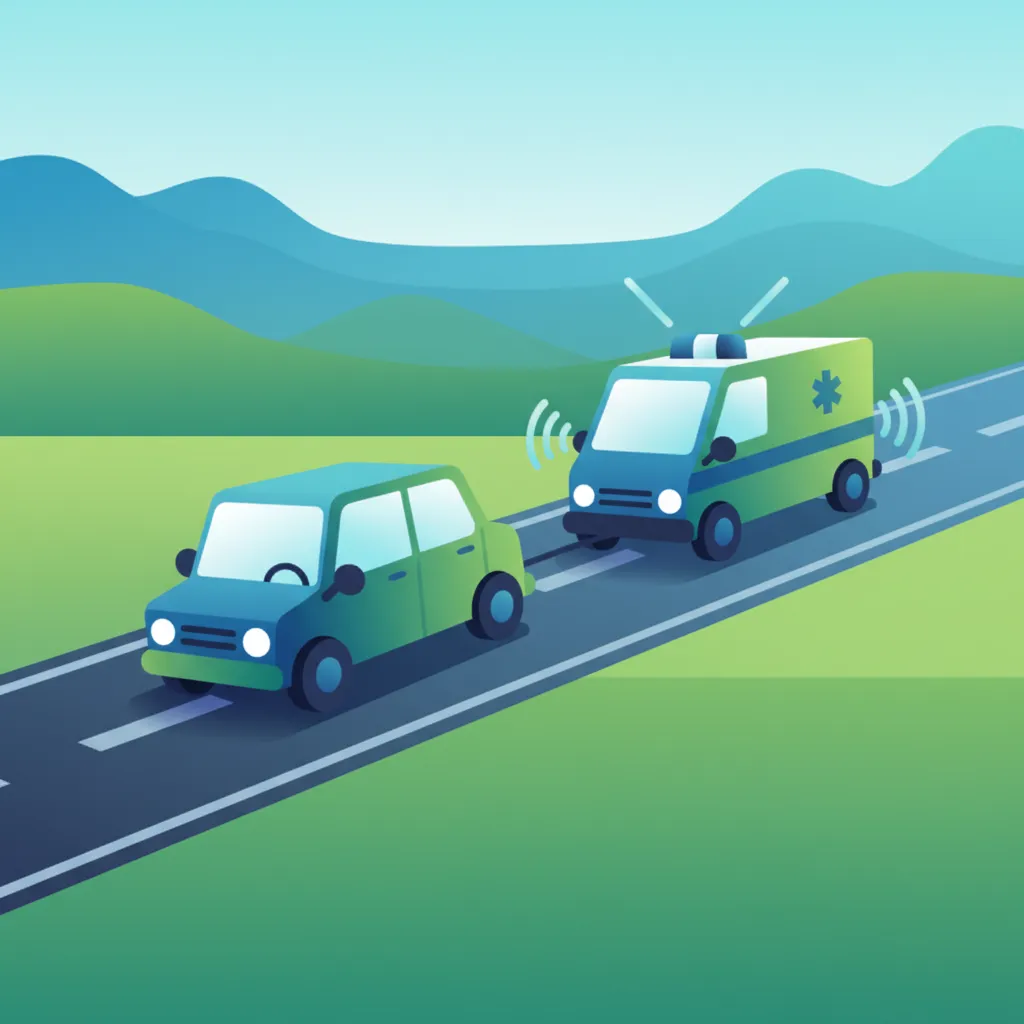
Theory topic content overview
Read the full theory topic guide for Emergency Vehicle Priority with structured, easy-to-scan content built for learners in Spain. This detailed section explains the exact rule, meaning, traffic context, comparison points, and exam logic behind this Spanish driving theory topic so you can study faster, understand the concept more clearly, and avoid common interpretation mistakes on the theory test.
Vehículos Prioritarios in SpainIn Spain, the term vehículos prioritarios refers specifically to vehicles engaged in an urgent service for public safety or assistance. These are typically:
policía)bomberos)protección civil y salvamento)asistencia sanitaria o ambulancias)When these vehicles are on an urgent call (en servicio urgente), they are granted special priority on the road. This means all other road users, including drivers and pedestrians, have a legal obligation to facilitate their passage immediately and safely. They signal their urgent service by using flashing blue lights (señales luminosas) and/or special acoustic signals (sirens, señales acústicas).
Understanding and correctly applying the rules for emergency vehicle priority in Spain is crucial for several reasons:
vehículos prioritarios are common in the Spanish driving theory exam, testing your knowledge of both identification and correct response.When you perceive the flashing blue lights or hear the siren of a vehículo prioritario approaching in Spain, your actions must be immediate, predictable, and safe:
Vehículos Prioritarios vs. Vehículos No Prioritarios en Servicio de UrgenciaThis is a critical distinction in Spanish driving law and a frequent point of confusion for learners.
Vehículos Prioritarios (Official Emergency Vehicles)luces luminosas) and/or special acoustic signals (señales acústicas).Vehículos No Prioritarios en Servicio de Urgencia (Private Vehicles in an Emergency)luces de emergencia).tocando el claxon de forma intermitente).vehículos prioritarios.This distinction is vital for the Spanish driving theory exam as questions often revolve around these scenarios.
Autovía or Autopista): An ambulance approaches rapidly from behind with lights and siren. All vehicles in the left lanes should safely move to the right-most lane or hard shoulder to create an "emergency corridor" (though not explicitly legislated as in some other countries, the principle of creating a clear path is paramount).Glorieta): You are entering a busy roundabout when a fire truck approaches with its signals on. You must yield, even if you normally have priority. Wait outside the roundabout or move to the side if already inside, allowing the fire truck to proceed directly through.Poblado): You are stopped at a red light. A police car with lights and siren approaches from behind. Even though you have a red light, you should assess if moving forward slightly into the intersection, or to the right, can create space for the police vehicle to pass without endangering pedestrians or cross-traffic. Once it passes, return to your original position if safe, or proceed when the light turns green.Learners and even experienced drivers sometimes make mistakes that can be dangerous or lead to penalties:
vehículo prioritario. Remember, private cars in an emergency must still obey all traffic laws.When you encounter an emergency vehicle using its flashing blue lights and/or siren in Spain, remember your core responsibility: facilitate their passage safely and immediately. This means moving to the right, stopping if necessary, and always providing a clear path. Distinguish clearly between official vehículos prioritarios and private vehicles in an emergency to ensure you react lawfully and effectively, contributing to road safety for everyone.
In Spain, all drivers must yield immediate priority to official emergency vehicles (vehículos prioritarios) such as police, fire services, and ambulances when they display flashing blue lights or use sirens. Your primary obligation is to create a clear path by moving safely to the right or stopping entirely, even at a green light or inside a roundabout. A critical distinction for the exam is that private vehicles carrying someone in medical emergency have no special privileges and must still obey all traffic rules, though they may use hazard lights or sound their horn to signal urgency. Failing to give way to official emergency vehicles is a serious traffic offence with potential fines and licence penalty points.
A short set of high-value points that capture the most important ideas from this theory explanation.
Vehículos prioritarios include police, fire, civil protection, and ambulance services operating with flashing blue lights and/or sirens.
When an emergency vehicle approaches, you must immediately facilitate passage by moving to the right or stopping if necessary.
Official emergency vehicles in urgent service may exceed speed limits and ignore certain traffic rules, but private vehicles cannot claim the same privileges.
At an intersection with a green light, you may still need to stop or move aside to allow an emergency vehicle to pass.
You are legally obligated to give way to official emergency vehicles but not required to break traffic rules for private vehicles in emergencies.
Private vehicles in an emergency cannot use blue lights or sirens and must still obey all traffic laws.
If you are already inside a roundabout and a fire truck approaches with signals on, yield and let it pass through.
Never follow closely behind an emergency vehicle or try to draft through traffic behind it.
Emergency vehicles in urgent service are identified by flashing blue lights (señales luminosas) and/or special acoustic signals (sirenas).
Moving to the right-hand side of the road is the general rule when an emergency vehicle approaches.
Panicking and making sudden, uncontrolled stops that could cause rear-end collisions.
Assuming a private car using hazard lights or sounding its horn intermittently has the same priority as an official emergency vehicle.
Blocking pedestrian crossings or intersections while trying to get out of the way.
Failing to check mirrors and blind spots before moving aside, potentially cutting off other road users.
Entering a roundabout when an emergency vehicle is already approaching, blocking its path.
Start with a short, direct summary of Emergency Vehicle Priority before reading the full explanation below.
When you encounter an emergency vehicle in urgent service using its distinctive flashing blue lights and/or siren in Spain, you must immediately take appropriate measures to facilitate its passage. This typically involves moving safely to the right side of the road or, if necessary, stopping your vehicle. The primary goal is to provide a clear path and avoid any obstruction, ensuring the emergency responders can proceed quickly and safely.
Review the most important terms, rule signals, and traffic concepts linked to Emergency Vehicle Priority.
Explore related theory topic pages connected to Emergency Vehicle Priority and continue with the next useful rule explanation.
See the common search queries learners use when trying to understand Emergency Vehicle Priority in Spain.

Continue your preparation by exploring specific Spanish driving theory topics in depth. Review road signs, understand priority rules, and master DGT traffic laws. This section provides the essential knowledge to pass your exam and drive safely across Spain.
Explore Spanish Driving Theory TopicsTheory topic content overview
A short set of high-value points that capture the most important ideas from this theory explanation.
Vehículos prioritarios include police, fire, civil protection, and ambulance services operating with flashing blue lights and/or sirens.
When an emergency vehicle approaches, you must immediately facilitate passage by moving to the right or stopping if necessary.
Official emergency vehicles in urgent service may exceed speed limits and ignore certain traffic rules, but private vehicles cannot claim the same privileges.
At an intersection with a green light, you may still need to stop or move aside to allow an emergency vehicle to pass.
You are legally obligated to give way to official emergency vehicles but not required to break traffic rules for private vehicles in emergencies.
Private vehicles in an emergency cannot use blue lights or sirens and must still obey all traffic laws.
If you are already inside a roundabout and a fire truck approaches with signals on, yield and let it pass through.
Never follow closely behind an emergency vehicle or try to draft through traffic behind it.
Emergency vehicles in urgent service are identified by flashing blue lights (señales luminosas) and/or special acoustic signals (sirenas).
Moving to the right-hand side of the road is the general rule when an emergency vehicle approaches.
Panicking and making sudden, uncontrolled stops that could cause rear-end collisions.
Assuming a private car using hazard lights or sounding its horn intermittently has the same priority as an official emergency vehicle.
Blocking pedestrian crossings or intersections while trying to get out of the way.
Failing to check mirrors and blind spots before moving aside, potentially cutting off other road users.
Entering a roundabout when an emergency vehicle is already approaching, blocking its path.
Start with a short, direct summary of Emergency Vehicle Priority before reading the full explanation below.
When you encounter an emergency vehicle in urgent service using its distinctive flashing blue lights and/or siren in Spain, you must immediately take appropriate measures to facilitate its passage. This typically involves moving safely to the right side of the road or, if necessary, stopping your vehicle. The primary goal is to provide a clear path and avoid any obstruction, ensuring the emergency responders can proceed quickly and safely.
Review the most important terms, rule signals, and traffic concepts linked to Emergency Vehicle Priority.
Explore related theory topic pages connected to Emergency Vehicle Priority and continue with the next useful rule explanation.
See the common search queries learners use when trying to understand Emergency Vehicle Priority in Spain.
Continue your preparation by exploring specific Spanish driving theory topics in depth. Review road signs, understand priority rules, and master DGT traffic laws. This section provides the essential knowledge to pass your exam and drive safely across Spain.
Explore Spanish Driving Theory TopicsUse this exam-focused revision tip to understand how Emergency Vehicle Priority is likely to appear in theory questions for learners in Spain. This section helps you identify the most testable part of the rule, avoid common traps, and remember the concept more effectively during Spanish driving theory exam preparation.
In the Spanish driving theory exam, pay close attention to questions involving emergency vehicles. The key is to always prioritize their urgent passage safely, even if it means momentarily disregarding a standard traffic rule like a green light or normal lane position. Remember that private vehicles in an emergency cannot claim priority in the same way; they must still respect all traffic laws.
Read direct answers to the most common learner questions about Emergency Vehicle Priority in Spain. This FAQ focuses on rule confusion, practical meaning, comparison with similar concepts, and the exact uncertainties that appear most often in Spanish driving theory revision and exam preparation.
In Spain, 'vehículos prioritarios' refers to emergency vehicles like police cars, ambulances (asistencia sanitaria), fire trucks (extinción de incendios), and civil protection/rescue vehicles (protección civil y salvamento). They have priority when in urgent service and displaying their special light and sound signals.
Emergency vehicles in urgent service use distinctive blue flashing lights (señales luminosas) and special acoustic signals (sirens or 'señales acústicas'). They must use both simultaneously to claim priority, though they may sometimes use only the lights under certain circumstances.
As soon as you perceive the signals, you must safely move your vehicle to the right side of the road, or to the nearest safe point, and stop if necessary, to create an unobstructed path. Avoid sudden braking or swerving, and check your mirrors before changing position.
Yes. If an emergency vehicle approaches an intersection with its signals active, you must facilitate its passage, even if you have a green light. You should remain stopped or move aside safely to let them pass, regardless of the traffic signal.
In genuinely exceptional circumstances (e.g., transporting a severely ill person), a private vehicle may signal an emergency by sounding the horn intermittently and flashing headlights. However, the driver must still obey all traffic rules and cannot claim the same exemptions as official emergency vehicles. Priority must be requested from other drivers, not demanded.
Obstructing an emergency vehicle in urgent service is a serious offense under DGT regulations. It can lead to fines and, in some cases, points on your license. Always ensure you provide a clear path and avoid any actions that could delay their response.
On motorways (autovías/autopistas), drivers should create an 'emergency corridor' (pasillo de emergencia) by moving to the sides. In tunnels, maintaining a clear path is crucial, and drivers should not stop in the tunnel unless absolutely necessary, and then activate emergency lights.
Use our powerful search functionality to pinpoint specific Spanish DGT driving theory practice sets. Filter by road sign categories, traffic law topics, or question difficulty to build custom study sessions and reinforce your knowledge precisely where it matters for your official exam.