
In Spain, a priority road, or "Calzada con prioridad", is designed to maintain continuous traffic flow by granting precedence to vehicles traveling on it. Drivers approaching from intersecting roads must understand the obligation to yield. This page explains how to recognize these roads via specific DGT traffic signs and the critical right-of-way rules that apply at their intersections, preventing common mistakes.
Theory topic content overview
Read the full theory topic guide for Priority Road Rules with structured, easy-to-scan content built for learners in Spain. This detailed section explains the exact rule, meaning, traffic context, comparison points, and exam logic behind this Spanish driving theory topic so you can study faster, understand the concept more clearly, and avoid common interpretation mistakes on the theory test.
In Spain, understanding the concept of a priority road, known as Calzada con prioridad, is fundamental for safe driving and passing your DGT theory exam. This designation clarifies right-of-way at numerous intersections, streamlining traffic flow on main routes. Essentially, a priority road grants precedence to vehicles travelling on it over those entering or crossing from intersecting roads.
A Calzada con prioridad is a road specifically designated by the Dirección General de Tráfico (DGT) where traffic has the right of way over vehicles approaching from junctions, minor roads, or private entrances. This means drivers on such a road can generally proceed through intersections without needing to yield, unless other overriding signals or circumstances are present. The primary purpose is to ensure continuous and efficient traffic movement on important arteries.
For Spanish learners, grasping priority road rules is critical due to several reasons:
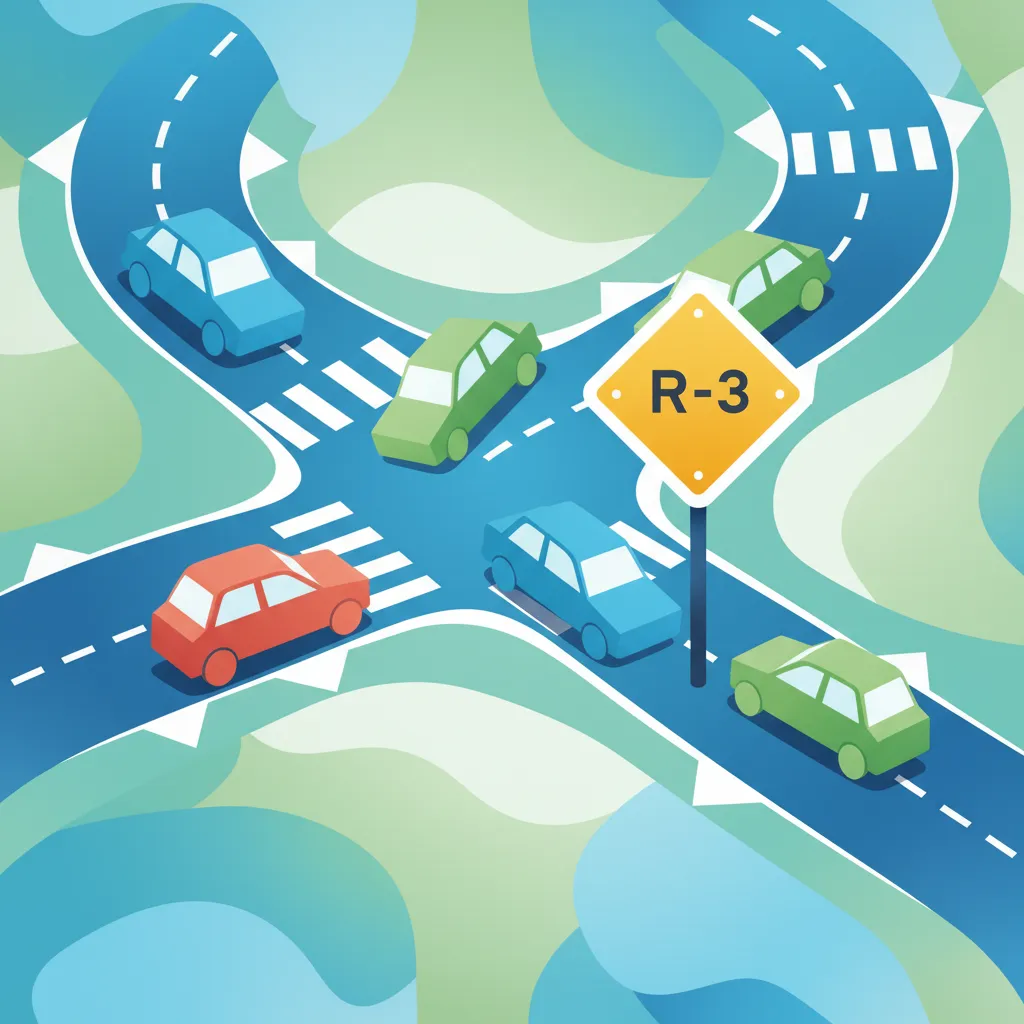
carreteras nacionales (national roads).avenidas to major interurban routes (carreteras convencionales).The most important traffic sign indicating a priority road in Spain is the R-3 "Calzada con prioridad" sign.
X) symbol in the center. Its unique shape sets it apart from other warning or regulatory signs.Remember: Drivers on side roads intersecting a priority road will typically encounter R-1 "Ceda el paso" (Give Way) or R-2 "Detención obligatoria o Stop" (Stop) signs, explicitly instructing them to yield to traffic on the priority road.
When approaching an intersection in Spain, your actions depend on whether you are on the priority road or an intersecting road:
If you are on the Calzada con prioridad (indicated by R-3):
If you are approaching a Calzada con prioridad (from a road with R-1 or R-2):
Ceda el paso) sign, slow down and stop if necessary to allow priority traffic to pass safely.Stop) sign, you must stop completely at the stop line, or at the edge of the intersection if no line is present, before proceeding only when the priority road is clear.While priority road signs are powerful, they are not the highest authority in Spain's hierarchy of traffic signals. This is a crucial point for the DGT exam:
Hierarchy of Signals: DGT rules establish a clear order of precedence for traffic signals:
Calzada con prioridad, R-1 Ceda el paso, R-2 Stop).This means if you are on a priority road (R-3) but encounter a red traffic light, you must obey the traffic light. Similarly, a traffic officer directing you to stop overrides any road sign.
General Right-of-Way vs. Priority Roads: The fundamental Spanish rule at unmarked intersections is to give way to vehicles approaching from your right (regla de la derecha). Priority roads (with the R-3 sign) override this general rule. If you are on a priority road, vehicles from your right on intersecting roads must yield to you (provided there are no higher-priority signals).
"Having Priority" vs. "Forcing Priority": Even when you have priority, you are not exempt from exercising caution. Never force your way through an intersection if it risks a collision or puts other road users in danger. Always be prepared to stop or slow down.
avenida in Madrid, seeing R-3 signs posted after each major intersection. As you approach a side street, you notice a car waiting at a Ceda el paso sign. You maintain your speed, scanning for pedestrians, confident that the car will yield to your priority.Carretera Nacional: Driving on a carretera nacional (national road) through a small town, you see an R-3 sign. A tractor is slowly emerging from an unpaved camino (track) to your left. The tractor must wait for you to pass because you are on the priority road.ceda el paso if indicated by road markings) might temporarily apply. If the light is completely out, treat it as an unmarked intersection, but the priority road sign would still apply.To master Calzada con prioridad rules for your Spanish driving license, remember this:
The distinctive yellow diamond R-3 sign tells you you have priority. This helps maintain smooth traffic flow on main roads. However, your priority is not absolute. Always remain alert and be prepared to yield to higher-priority signals (police, temporary signs, traffic lights) or if a situation demands it for safety. If you are not on the priority road, expect to see Ceda el paso or Stop signs and be ready to yield. This diligent approach is key to both passing your DGT theory test and driving safely on Spanish roads.
In Spanish driving theory, a Calzada con prioridad is designated by the distinctive yellow diamond R-3 sign with a black X, granting vehicles on that road precedence over traffic entering from intersecting roads. Side roads typically display R-1 Ceda el paso or R-2 Stop signs instructing drivers to yield. However, the R-3 sign is not absolute—it ranks below traffic lights, police signals, and temporary signs in the signal hierarchy. The R-4 sign marks where priority ends. Understanding these rules, their exceptions, and the signal hierarchy is essential for both safe driving and passing the DGT theory exam.
A short set of high-value points that capture the most important ideas from this theory explanation.
The R-3 yellow diamond sign with a black X marks a Calzada con prioridad where your traffic has precedence at intersecting roads
Drivers entering from side roads will typically face R-1 Ceda el paso or R-2 Stop signs and must yield to you
Traffic lights, police signals, and temporary signs always override the R-3 priority road sign
Even when you have priority, you must remain alert and cannot force your way through if it causes danger
The R-4 sign ends the priority road designation, after which normal right-of-way rules apply
R-3: Yellow diamond with black X = you have priority at upcoming intersections
R-4: Same yellow diamond with diagonal line through it = end of priority road
Signal hierarchy: Police orders > Traffic lights > Vertical signs (R-3) > Road markings > General yield-to-right rule
Priority roads override the basic rule of yielding to traffic from your right
Having priority is a right, not a command—always exercise caution and be prepared to yield
Assuming the R-3 sign grants absolute right to proceed without checking for overriding signals like traffic lights
Forgetting that traffic lights take precedence over the R-3 priority road sign (exam trap)
Not recognizing the R-4 Fin de calzada con prioridad sign and incorrectly assuming priority continues
Hesitating excessively when you legitimately have priority, disrupting traffic flow
Confusing priority road rules with the general yield-to-right rule at unmarked intersections
Start with a short, direct summary of Priority Road Rules before reading the full explanation below.
A priority road in Spain is a designated route where traffic has precedence over vehicles joining or crossing from other roads. This means if you are on a priority road, you generally have the right of way at intersections unless other signs or signals dictate otherwise. Drivers entering from non-priority roads must stop or slow down to yield. Recognition often relies on the distinctive yellow diamond R-3 sign, "Calzada con prioridad".
Review the most important terms, rule signals, and traffic concepts linked to Priority Road Rules.
Explore related theory topic pages connected to Priority Road Rules and continue with the next useful rule explanation.
See the common search queries learners use when trying to understand Priority Road Rules in Spain.

Continue your preparation by exploring specific Spanish driving theory topics in depth. Review road signs, understand priority rules, and master DGT traffic laws. This section provides the essential knowledge to pass your exam and drive safely across Spain.
Explore Spanish Driving Theory TopicsTheory topic content overview
A short set of high-value points that capture the most important ideas from this theory explanation.
The R-3 yellow diamond sign with a black X marks a Calzada con prioridad where your traffic has precedence at intersecting roads
Drivers entering from side roads will typically face R-1 Ceda el paso or R-2 Stop signs and must yield to you
Traffic lights, police signals, and temporary signs always override the R-3 priority road sign
Even when you have priority, you must remain alert and cannot force your way through if it causes danger
The R-4 sign ends the priority road designation, after which normal right-of-way rules apply
R-3: Yellow diamond with black X = you have priority at upcoming intersections
R-4: Same yellow diamond with diagonal line through it = end of priority road
Signal hierarchy: Police orders > Traffic lights > Vertical signs (R-3) > Road markings > General yield-to-right rule
Priority roads override the basic rule of yielding to traffic from your right
Having priority is a right, not a command—always exercise caution and be prepared to yield
Assuming the R-3 sign grants absolute right to proceed without checking for overriding signals like traffic lights
Forgetting that traffic lights take precedence over the R-3 priority road sign (exam trap)
Not recognizing the R-4 Fin de calzada con prioridad sign and incorrectly assuming priority continues
Hesitating excessively when you legitimately have priority, disrupting traffic flow
Confusing priority road rules with the general yield-to-right rule at unmarked intersections
Start with a short, direct summary of Priority Road Rules before reading the full explanation below.
A priority road in Spain is a designated route where traffic has precedence over vehicles joining or crossing from other roads. This means if you are on a priority road, you generally have the right of way at intersections unless other signs or signals dictate otherwise. Drivers entering from non-priority roads must stop or slow down to yield. Recognition often relies on the distinctive yellow diamond R-3 sign, "Calzada con prioridad".
Review the most important terms, rule signals, and traffic concepts linked to Priority Road Rules.
Explore related theory topic pages connected to Priority Road Rules and continue with the next useful rule explanation.
See the common search queries learners use when trying to understand Priority Road Rules in Spain.
Continue your preparation by exploring specific Spanish driving theory topics in depth. Review road signs, understand priority rules, and master DGT traffic laws. This section provides the essential knowledge to pass your exam and drive safely across Spain.
Explore Spanish Driving Theory TopicsUse this exam-focused revision tip to understand how Priority Road Rules is likely to appear in theory questions for learners in Spain. This section helps you identify the most testable part of the rule, avoid common traps, and remember the concept more effectively during Spanish driving theory exam preparation.
Pay close attention to scenarios involving priority roads in DGT exam questions, especially where the yellow diamond (R-3) sign is present. Remember that even on a priority road, you must remain alert and cannot force your right of way if it causes danger. Look for contradicting signals like traffic lights or police instructions, which always override road signs.
Read direct answers to the most common learner questions about Priority Road Rules in Spain. This FAQ focuses on rule confusion, practical meaning, comparison with similar concepts, and the exact uncertainties that appear most often in Spanish driving theory revision and exam preparation.
In Spain, a priority road (Calzada con prioridad) is a road where traffic traveling on it has the right of way over vehicles approaching from intersecting roads, ensuring smoother flow on main routes.
Priority roads are indicated by specific DGT traffic signs, most notably the R-3 sign, which is a yellow diamond with a white border. You may also see supplementary signs indicating the direction of priority or the end of priority.
Vehicles traveling on the priority road typically have the right of way. Drivers approaching from roads that intersect or merge with a priority road must yield to traffic already on it, unless overridden by other signals like traffic lights or police instructions.
'Calzada con prioridad' is the Spanish term for a priority road. The corresponding DGT sign is the R-3, a yellow diamond with a white border, indicating that the road you are on has priority.
While you generally have priority, it does not exempt you from exercising caution. You must still be attentive to traffic conditions and prepared to react to unexpected hazards. Additionally, traffic lights, police signals, or specific road markings can override the priority road sign.
When entering a priority road from a side road, you must slow down, give way to all traffic already on the priority road, and only proceed when it is safe to do so without forcing other drivers to change their speed or direction.
Yes, questions about priority roads, their signs, and the associated right-of-way rules are very common in the DGT theory exam. It's crucial to understand how to interpret these situations correctly.
Use our powerful search functionality to pinpoint specific Spanish DGT driving theory practice sets. Filter by road sign categories, traffic law topics, or question difficulty to build custom study sessions and reinforce your knowledge precisely where it matters for your official exam.