
This lesson explores critical techniques for operating your moped or e-bike safely during adverse weather conditions. By understanding how rain and fog impact vehicle control and visibility, you will be better prepared for both the Swiss theory exam and real-world riding situations.
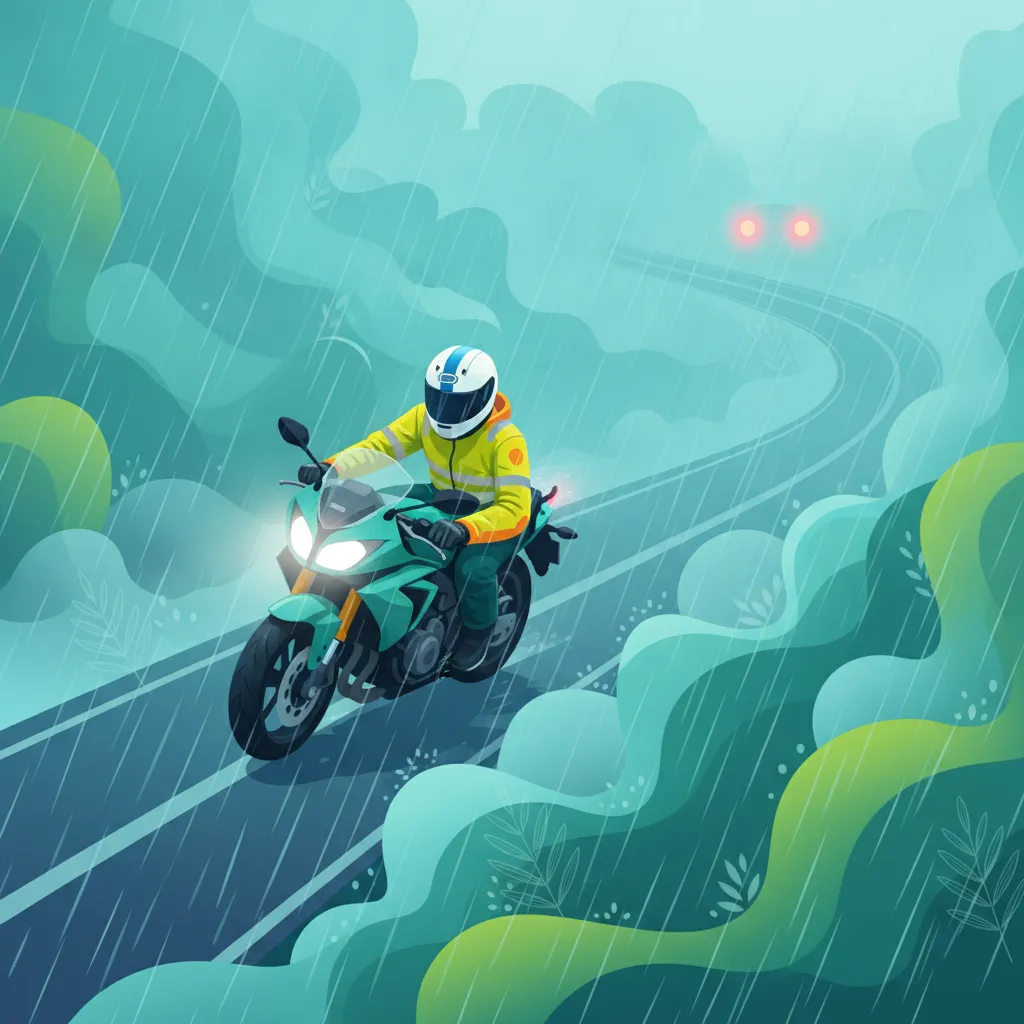
Lesson content overview
Riding a moped in adverse weather conditions presents unique challenges and significantly increases the risk of accidents. Rain, fog, and generally poor visibility dramatically affect how you perceive the road, how other drivers perceive you, and most critically, your moped's interaction with the road surface. This lesson, part of the Swiss Driving License Theory Course for Category M (Mopeds), will equip you with the essential strategies and knowledge to ride safely and confidently when conditions are less than ideal.
Understanding how to adapt your riding behavior to diminished traction and reduced visibility is not just a matter of safety; it is a legal requirement. By mastering these techniques, you will be better prepared to react to hazards, maintain control, and ensure your own safety as well as that of other road users.
Mopeds, due to their lighter weight and two-wheel design, are particularly vulnerable to the effects of adverse weather. Unlike cars, mopeds offer minimal protection from the elements, and their smaller tire contact patches are more susceptible to losing grip on wet or slippery surfaces.
Adverse weather conditions affect riding safety in several critical ways:
In Switzerland, the law places a clear responsibility on drivers to adjust their behavior to prevailing conditions. This applies rigorously to moped riders. Failing to adapt your speed, maintain a safe following distance, or use appropriate lighting in adverse weather can lead to accidents and legal consequences, including fines and potential license penalties. Riders must not only understand how to ride safely in challenging conditions but also recognize their legal duty to do so.
Wet roads demand a significant change in riding technique. The fundamental goal is to minimize the risk of losing traction and maximize your ability to react safely.
Reducing your speed is the single most important adjustment you can make when riding in rain or on wet surfaces. The faster you go, the longer it takes to stop, and the greater the forces involved in braking and steering. On wet roads, these forces are much more likely to overcome the available traction, leading to a skid or loss of control.
Operating at a velocity lower than the legal limit, and often significantly lower than normal dry-weather speed, to account for adverse conditions such as rain, fog, or low visibility.
The standard two-second rule for following distance applies to dry conditions. In rain or on wet roads, your stopping distance can double, or even triple, requiring a much larger safety margin.
The space interval between two vehicles, typically expressed as a time gap, which allows the trailing driver sufficient time to react and stop safely if the vehicle ahead suddenly brakes.
Abrupt actions are a recipe for disaster on wet roads. Any sudden change in speed or direction can momentarily overload the available traction, causing your tires to slip.
Gradual, progressive application of throttle, brakes, and steering movements to avoid sudden shifts in weight or sudden demands on tire traction, particularly important on slippery surfaces.
Traction management is about understanding how your tires grip the road and proactively taking steps to maintain that grip. Water on the road surface is the primary enemy of traction.
The grip or friction between a vehicle's tires and the road surface, which allows for acceleration, braking, and steering. This grip is significantly reduced on wet, icy, or otherwise low-adhesion surfaces.
Fog, mist, and other forms of reduced visibility require specific strategies to ensure you can see hazards and, crucially, that other road users can see you.
Correct use of your moped's lighting system is paramount in low visibility. The goal is to maximize your visible range without blinding others or causing glare.
Being seen is just as important as seeing in low visibility conditions. Mopeds are smaller than cars and can be easily overlooked, especially when weather conditions make detection difficult.
The active process of ensuring both the rider's clear vision ahead and the rider's conspicuity (being easily seen) by other road users, especially critical in adverse weather or low light.
Just as with rain, dense fog demands an increased following distance. The reduced visibility makes it harder to judge distances and react to sudden stops.
Adhering to Swiss traffic regulations is not just about avoiding fines; it's about following established safety guidelines that are legally binding.
Legal Mandate: Drivers must always adjust their speed to the prevailing road, traffic, and weather conditions. Failure to do so is a direct violation of safety and law.
This article emphasizes that posted speed limits are maximums under ideal conditions. In rain, fog, or low visibility, your safe speed will almost always be lower than the posted limit. The responsibility lies entirely with the rider to make this judgment call.
Safety Principle: Maintaining a safe distance is critical to prevent rear-end collisions, especially when braking distances are extended due to adverse conditions.
Article 36 requires all drivers to maintain a sufficient distance from the vehicle ahead. This distance must be increased significantly in conditions that reduce traction or visibility, such as heavy rain or fog. The "three-second rule" is a practical application of this legal requirement in less-than-ideal conditions.
Visibility First: Your lights serve two purposes: allowing you to see and ensuring you are seen by others. Correct use is non-negotiable in reduced visibility.
This ordinance explicitly dictates the use of vehicle lighting. It makes the use of dipped headlights (Abblendlicht) mandatory when visibility is reduced by fog, rain, snow, or at dusk/night. It also prohibits the use of high beams (Fernlicht) in conditions where it would cause glare, which includes fog and heavy rain. Fog lights, if equipped, should be used specifically when visibility drops below 50 metres.
Even experienced riders can make mistakes in challenging conditions. Being aware of these common pitfalls can help you avoid them.
The general principles remain the same, but their application can vary depending on the specific context of your ride.
Combining darkness with rain or fog creates the most challenging riding conditions.
In adverse weather, pedestrians and cyclists are even more vulnerable. They are harder to see, may be distracted by umbrellas or hoods, and might be less predictable.
Riding a moped in rain, fog, or low visibility is undeniably more challenging than riding in clear, dry conditions. However, by understanding the risks and proactively applying the strategies discussed in this lesson, you can significantly mitigate these dangers. Remember, the core principles revolve around:
These practices, combined with an understanding of Swiss traffic laws, form the foundation for safe and responsible moped riding in any weather. Always prioritize safety over speed, and be prepared to adapt your riding style to whatever conditions the road presents.
This lesson covers essential strategies for riding mopeds safely in rain, fog, and low visibility conditions specific to Swiss Category M learners. Key principles include significantly reducing speed, extending following distances using the three-second rule, and using correct lighting (dipped beam mandatory, fog lights only below 50m visibility, high beams never in fog). Smooth, progressive control inputs are critical to maintain traction, and riders must actively avoid hydroplaning by steering clear of standing water. Swiss traffic law explicitly requires speed adaptation to conditions (Article 42) and safe following distances (Article 36), making these not just safety recommendations but legal obligations.
A short set of high-value points that capture the most important learning from this lesson.
Reduce speed by at least 20-30% in rain, with further reductions as conditions worsen, to maintain traction and stopping control.
Use the three-second rule (minimum) for following distance in wet or foggy conditions, as stopping distances can double or triple.
Always use dipped beam (Abblendlicht) in reduced visibility; fog lights are only for visibility below 50 metres; never use high beams in fog or heavy rain.
Apply smooth, progressive control inputs for braking, acceleration, and steering to prevent wheel lock-up and loss of traction on wet surfaces.
Actively avoid standing water and puddles to prevent hydroplaning, which can occur at speeds above 50 km/h on wet roads.
Explore all units and lessons included in this driving theory course.
Swiss law (Article 42) requires speed adaptation to conditions; posted limits are maximums under ideal conditions, not targets in bad weather.
Headlights are mandatory in reduced visibility (Road Traffic Ordinance Article 33) and serve dual purpose: seeing and being seen.
Hydroplaning causes complete loss of steering and braking control; it is more likely with worn tires and on roads with ruts or grooves.
Tram tracks become extremely slippery in rain; cross them at near-90 degrees, at slow speed, without braking or accelerating on them.
In dense fog, extend following distance to at least four seconds and listen for vehicle sounds while scanning for faint outlines of objects.
Using high beam in fog or heavy rain creates backscatter, actually reducing your own visibility and blinding oncoming traffic.
Maintaining normal dry-weather speed in heavy rain, which dramatically increases hydroplaning risk and stopping distance.
Following too closely on wet roads underestimating how much longer it takes to stop when traction is reduced.
Sudden braking or sharp steering inputs that overload traction and cause skidding or wheel lock-up, especially dangerous without ABS.
Neglecting to clean helmet visor, mirrors, and light lenses before riding, allowing water and dirt to further obscure vision and visibility.
Lesson content overview
A short set of high-value points that capture the most important learning from this lesson.
Reduce speed by at least 20-30% in rain, with further reductions as conditions worsen, to maintain traction and stopping control.
Use the three-second rule (minimum) for following distance in wet or foggy conditions, as stopping distances can double or triple.
Always use dipped beam (Abblendlicht) in reduced visibility; fog lights are only for visibility below 50 metres; never use high beams in fog or heavy rain.
Apply smooth, progressive control inputs for braking, acceleration, and steering to prevent wheel lock-up and loss of traction on wet surfaces.
Actively avoid standing water and puddles to prevent hydroplaning, which can occur at speeds above 50 km/h on wet roads.
Explore all units and lessons included in this driving theory course.
Swiss law (Article 42) requires speed adaptation to conditions; posted limits are maximums under ideal conditions, not targets in bad weather.
Headlights are mandatory in reduced visibility (Road Traffic Ordinance Article 33) and serve dual purpose: seeing and being seen.
Hydroplaning causes complete loss of steering and braking control; it is more likely with worn tires and on roads with ruts or grooves.
Tram tracks become extremely slippery in rain; cross them at near-90 degrees, at slow speed, without braking or accelerating on them.
In dense fog, extend following distance to at least four seconds and listen for vehicle sounds while scanning for faint outlines of objects.
Using high beam in fog or heavy rain creates backscatter, actually reducing your own visibility and blinding oncoming traffic.
Maintaining normal dry-weather speed in heavy rain, which dramatically increases hydroplaning risk and stopping distance.
Following too closely on wet roads underestimating how much longer it takes to stop when traction is reduced.
Sudden braking or sharp steering inputs that overload traction and cause skidding or wheel lock-up, especially dangerous without ABS.
Neglecting to clean helmet visor, mirrors, and light lenses before riding, allowing water and dirt to further obscure vision and visibility.
Explore search topics learners often look for when studying Riding in Rain, Fog, and Low Visibility Conditions. These topics reflect common questions about road rules, driving situations, safety guidance, and lesson level theory preparation for learners in Switzerland.
Browse additional driving theory lessons that cover connected traffic rules, road signs, and common driving situations related to this topic. Improve your understanding of how different rules interact across everyday traffic scenarios.
Learn about frequent errors moped riders make in adverse weather conditions like rain and fog. Understand how to avoid critical mistakes related to speed, braking, visibility, and control to improve your safety and adherence to Swiss traffic laws.
This lesson details how adverse weather conditions like rain, fog, and snow affect motorcycle safety. It explains how wet surfaces reduce tyre grip, requiring smoother control inputs and longer braking distances. Strategies for managing reduced visibility in fog and the extreme hazards of riding on snow and ice are also covered.
This lesson explains the strategic importance of road positioning. It details how to select a lane position that makes you most visible to drivers ahead and behind, and helps you avoid the blind spots of larger vehicles. Proper positioning also allows for an escape route and a better line of sight through turns.
This lesson focuses on the concept of conspicuity, or how easily a rider can be seen by others. It explains the legal requirements for vehicle lights and reflectors in Switzerland and the benefits of wearing bright or reflective clothing. Learners will understand how to maximize their visibility during the day, at night, and in poor weather conditions.
This lesson examines the impact of weather and visibility on driving safety and speed selection. It covers how fog, rain, snow, and darkness affect visibility and reaction times, providing guidelines on adjusting speed. It also includes strategies for improving visibility, such as proper headlamp use, to ensure you can adapt to varying weather conditions.

This lesson examines the different lighting systems on a vehicle, including headlamps, fog lights, and turn signals. It explains the appropriate use of low-beam and high-beam headlights and the conditions for activating fog lights. Understanding proper lighting usage improves visibility and safety, especially in low-light or adverse weather conditions.
This lesson teaches riders how to establish and maintain a safe following distance from the vehicle ahead. It introduces the 'two-second rule' as a simple and effective method for gauging a safe gap in ideal conditions. The content also explains why this distance must be increased in wet weather, at night, or when visibility is poor.
This lesson focuses on the significant risks of riding in winter conditions. It explains how to spot potential icy patches, such as black ice, and the need for extremely gentle and deliberate control inputs. The importance of proper winter tyres and dressing warmly to prevent distraction and fatigue from the cold is also emphasized.

This lesson examines the impact of various weather conditions on driving safety. It explains how to adjust speed in low visibility and the risks of aquaplaning in heavy rain. The content also covers using snow chains in snowy conditions, handling icy surfaces, and dealing with strong winds, particularly on bridges and open roads.
This lesson focuses on techniques and equipment designed to increase a motorcyclist's visibility to others. It explains the strategic use of reflective materials, high-visibility clothing, and the mandatory use of daytime running lights. Understanding how to enhance conspicuity is a critical component of proactive self-protection on the road.

This lesson emphasizes the rider's responsibility for ensuring their vehicle is in safe, roadworthy condition. It outlines a simple pre-ride inspection routine covering key safety components like tyres, brakes, lights, and controls. Regular maintenance is presented as a critical component of overall rider safety.
Discover how to adjust your moped riding techniques for adverse weather conditions such as rain and fog. This lesson focuses on the specific challenges and strategies for navigating urban environments and rural roads safely in Switzerland.
This lesson details how adverse weather conditions like rain, fog, and snow affect motorcycle safety. It explains how wet surfaces reduce tyre grip, requiring smoother control inputs and longer braking distances. Strategies for managing reduced visibility in fog and the extreme hazards of riding on snow and ice are also covered.
This lesson focuses on the significant risks of riding in winter conditions. It explains how to spot potential icy patches, such as black ice, and the need for extremely gentle and deliberate control inputs. The importance of proper winter tyres and dressing warmly to prevent distraction and fatigue from the cold is also emphasized.
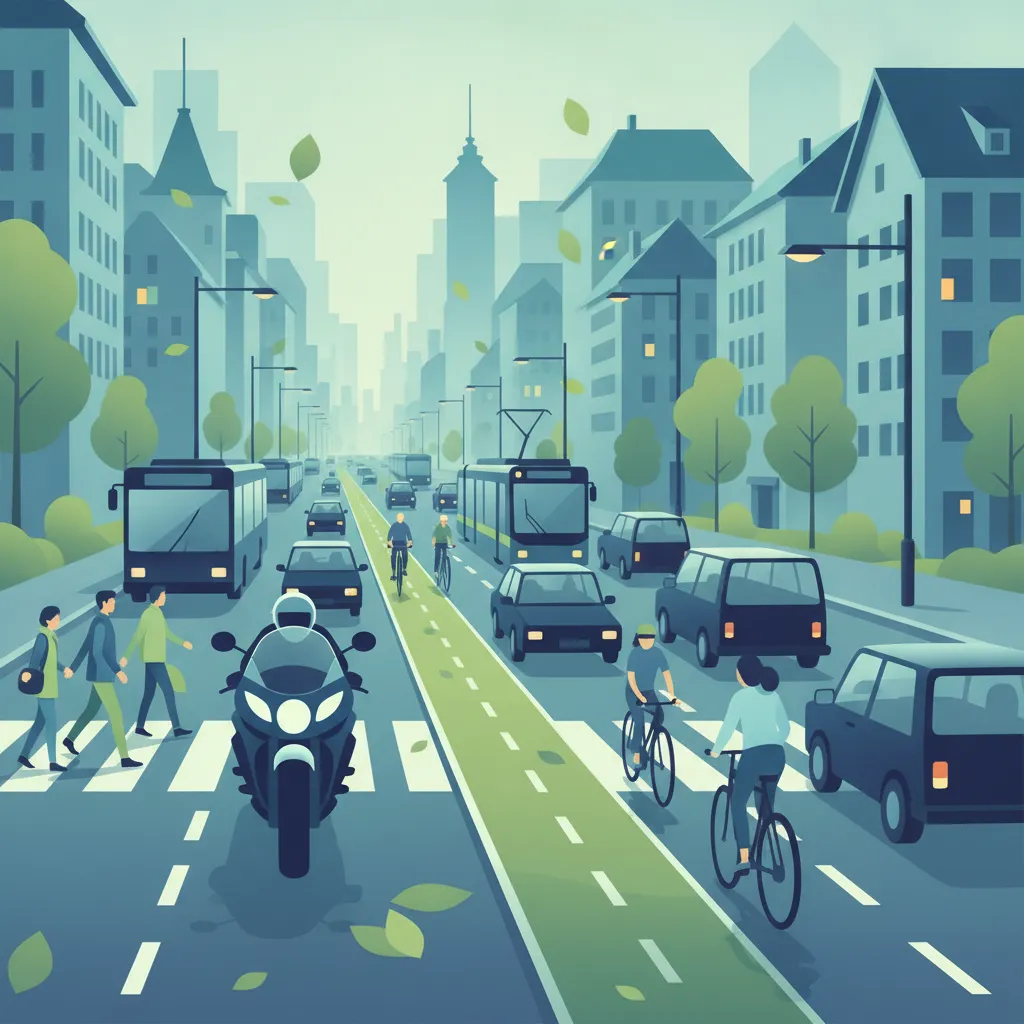
This lesson explores the complexities of riding in busy urban areas with a mix of traffic types. It covers strategies for safely navigating alongside buses, trams, cyclists, and pedestrians. Key topics include respecting designated lanes, anticipating the movements of vulnerable road users, and maintaining heightened situational awareness.
This lesson explains the strategic importance of road positioning. It details how to select a lane position that makes you most visible to drivers ahead and behind, and helps you avoid the blind spots of larger vehicles. Proper positioning also allows for an escape route and a better line of sight through turns.

This lesson explores the typical features of rural and alpine roads, such as narrow lanes, sharp bends, and significant elevation changes. It discusses the need for heightened awareness due to limited sight distances and the potential for unexpected hazards like wildlife or agricultural vehicles. Riders will learn to adapt their speed and positioning for these challenging conditions.
This lesson teaches riders how to establish and maintain a safe following distance from the vehicle ahead. It introduces the 'two-second rule' as a simple and effective method for gauging a safe gap in ideal conditions. The content also explains why this distance must be increased in wet weather, at night, or when visibility is poor.
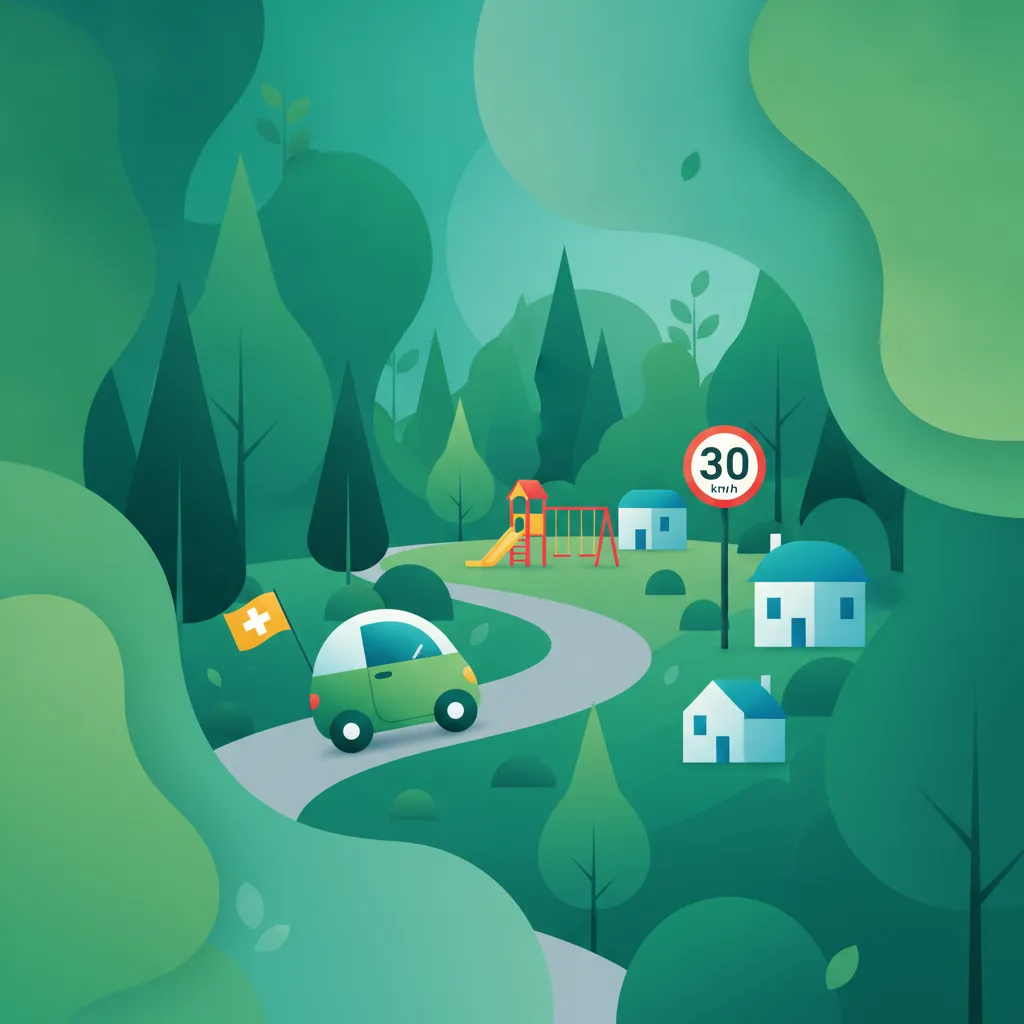
This lesson details the maximum legal speed limits applicable to Category M vehicles in Switzerland. It explains how to identify speed limits through signage and differentiates between built-up areas, rural roads, and motorways where permitted. The content stresses that the legal limit is a maximum, and riders must always adapt their speed to traffic, weather, and road conditions.

This lesson teaches riders how to adapt their technique for a variety of challenging road surfaces. It explains how loose surfaces like gravel reduce grip and require smoother steering and braking inputs. The content also covers the hazards of slippery surfaces like wet cobblestones, manhole covers, and fallen leaves.
This lesson emphasizes the rider's responsibility for ensuring their vehicle is in safe, roadworthy condition. It outlines a simple pre-ride inspection routine covering key safety components like tyres, brakes, lights, and controls. Regular maintenance is presented as a critical component of overall rider safety.
This lesson focuses on the concept of conspicuity, or how easily a rider can be seen by others. It explains the legal requirements for vehicle lights and reflectors in Switzerland and the benefits of wearing bright or reflective clothing. Learners will understand how to maximize their visibility during the day, at night, and in poor weather conditions.
Find clear answers to common questions learners have about Riding in Rain, Fog, and Low Visibility Conditions. Learn how the lesson is structured, which driving theory objectives it supports, and how it fits into the overall learning path of units and curriculum progression in Switzerland. These explanations help you understand key concepts, lesson flow, and exam focused study goals.
On wet roads, your tyres have less grip, which significantly increases your stopping distance. Increasing your following distance provides you with more time to react and space to brake gradually without locking your wheels.
Avoid sudden braking, accelerating, or sharp steering while your wheels are on painted road markings, as they become extremely slippery when wet. Maintain a steady speed and aim to cross them at a perpendicular angle whenever possible.
Yes. In Switzerland, using your lights in low visibility conditions is crucial for being seen by other road users. Even during the day, fog or heavy rain requires the use of your dipped headlights to ensure your moped or e-bike is clearly visible.
While not a specific sign-based rule, Swiss theory emphasizes that these surfaces have reduced friction. You should always ride with extra caution, reduce your speed significantly, and avoid sudden movements that could compromise your balance.
Pinpoint specific Swiss traffic rules, road signs, or driving situations you need to master. Use the practice search to start a focused revision session now and build confidence for your official driving theory exam.