
This lesson guides you through the complexities of sharing the road with large vehicles like buses, trams, and trucks in Switzerland. Understanding their movement patterns and limitations is a vital safety skill for any Category M rider, helping you anticipate hazards and navigate busy urban environments with confidence.
Lesson content overview
Riding a moped in Switzerland involves sharing the road with a diverse range of vehicles, including large buses, trams, and heavy goods vehicles like trucks and articulated trailers. Due to their significant size difference, interacting with these larger vehicles presents unique challenges and requires specific knowledge and defensive riding techniques. This lesson, part of your Swiss Driving License Theory Course for Category M, will equip you with the understanding needed to anticipate their movements, remain visible, and ensure your safety in mixed traffic environments.
Mopeds, being smaller and more agile, can often be overlooked by drivers of larger vehicles. These larger vehicles have inherent characteristics—such as extensive blind spots, wide turning circles, and longer braking distances—that fundamentally impact how Category M riders must interact with them. Recognizing these challenges is the first step towards safe road sharing. It's crucial for moped riders to actively account for these differences to prevent collisions and navigate confidently.
Every vehicle has blind spots, but for large vehicles like buses, trams, and trucks, these areas are significantly larger and pose a greater risk to smaller road users. These zones, often called 'no-zones,' are areas around the vehicle where the driver's view is obstructed by the vehicle's structure, cargo, or bodywork, even with the aid of mirrors.
Understanding the common locations of blind zones is paramount for moped riders:
As a moped rider, your primary strategy is to avoid lingering in these no-zones. Always assume the driver of the large vehicle cannot see you unless you have made eye contact or are certain of your visibility. When riding near large vehicles:
Being in a large vehicle's blind spot means you are invisible to the driver. This significantly increases the risk of a collision if the driver changes lanes, turns, or makes any unexpected manoeuvre.
Large vehicles, by their very design, require considerably more space to execute turns than mopeds or cars. This is due to their longer wheelbase, overall length, and in the case of articulated vehicles (like some buses or trucks with trailers), multiple pivot points. This wider turning path is known as their turning radius.
The minimum circular path a vehicle can follow while making a turn. Larger vehicles, due to their length, have a significantly larger turning radius and often need to swing wide to complete a turn.
When a large vehicle, such as a bus or a truck, prepares to turn, its front wheels may initially swing in the opposite direction of the turn to allow the rear wheels to clear the corner. This is particularly true for right turns where the front of the vehicle might swing left, or for left turns where the front might swing right.
To avoid being caught in a large vehicle's turning path:
Never assume a large vehicle will stay within a single lane while turning. Its wide turning radius often requires it to use parts of adjacent lanes or shoulders. Give them ample space.
Overtaking a large vehicle requires careful judgment, precise execution, and an understanding of the associated risks. For moped riders, the decision to overtake should always prioritize safety over speed.
At Passenger Stops: It is strictly prohibited to overtake a bus or tram that is stopped or slowing down at a designated passenger stop to board or alight passengers. This rule protects both passengers and other road users.
Overtaking a bus or tram that is about to board or alight passengers is prohibited. This applies when the vehicle is stopped at a marked stop or signalling passenger activity.
The rationale is to reduce the risk of collisions with opening doors or pedestrians entering/exiting the vehicle, especially considering mopeds are quieter and less noticeable.
Tram Tracks: Overtaking is generally prohibited on road sections that have tram tracks, unless specifically indicated otherwise by signage or road markings.
Understanding priority rules (right-of-way) is critical at intersections and conflict points involving buses and trams. While general priority rules apply, specific considerations exist for public transport vehicles.
The legal precedence that dictates which road user proceeds first at conflict points, such as intersections or shared lanes.
Trams, due to their inability to steer or stop quickly, almost always have priority over other road traffic, unless explicitly stated otherwise by traffic signals or specific signage. This is a fundamental rule in Swiss traffic law.
At Crossings: Even if a traffic light is green for general road traffic, you must always yield to a tram that is approaching or already moving through a crossing, especially if its own tram signal indicates it has priority (e.g., a flashing yellow light or specific tram signal).
Trams have priority over road traffic on their tracks unless traffic signals specifically indicate otherwise. This applies at all tram crossings and intersections.
The rationale is that trams have long braking distances and limited maneuverability, requiring a clear path for safety and efficiency.
In certain situations, buses may also have priority:
While the blueprint did not specify a Swiss code, this is a common concept.
Many urban areas feature lanes reserved exclusively for public transport (buses and trams) to ensure smooth and efficient operation. Moped riders must be aware of the rules regarding these lanes.
Prohibition: Generally, dedicated bus or tram lanes are strictly off-limits to other motorized traffic, including mopeds, unless specific signage explicitly permits their use.
Usage of dedicated bus or tram lanes is only allowed for vehicles explicitly permitted by road signs. This applies throughout the route where such lanes are indicated.
The rationale is to maintain the flow and punctuality of public transport services.
Time-Based Restrictions: Some bus lanes may only be restricted during peak hours, with general traffic allowed outside these times. Always observe the accompanying signage carefully.
These lanes are typically marked with specific road markings (e.g., the word "BUS" or "TAXI" painted on the lane) and signage. They may also be physically separated from other traffic lanes.
Trams, as rail-bound vehicles, require unique considerations beyond those for buses or trucks. Their tracks present specific hazards for two-wheeled vehicles.
Adhering to specific rules ensures safer interactions with larger vehicles and contributes to overall road safety.
Being aware of frequent errors can help you actively prevent dangerous situations.
Safe interaction with large vehicles is not static; it must adapt to varying conditions.
The rules and recommendations for interacting with buses, trams, and larger vehicles are rooted in fundamental principles of physics, human perception, and accident prevention.
By internalizing these insights, Category M riders can move beyond simply following rules to truly understanding the rationale behind them, fostering safer and more confident riding habits.
This lesson teaches Swiss Category M riders how to safely interact with large vehicles by understanding their extensive blind spots (no-zones) on all sides, with the far-side blind spot being particularly dangerous as it extends many metres behind the vehicle. Key safety strategies include positioning yourself to maintain mirror visibility, never overtaking stopped buses or trams at passenger stops, and yielding to trams which have priority on their tracks due to their inability to stop quickly. Large vehicles also require significantly wider turning paths than cars, with their front swinging opposite before the rear follows a much wider arc - this means staying well back at intersections and never squeezing alongside. Additionally, riders must cross tram tracks at near 90-degree angles to prevent wheels from catching in the rails, and avoid riding on tracks unless explicitly permitted by signage.
A short set of high-value points that capture the most important learning from this lesson.
Large vehicles have blind spots (no-zones) on all sides - front, rear, near side, and far side - with the far-side blind spot extending many metres along the vehicle's length
Position yourself where you can see the driver's side mirror - if you can see them in the mirror, they can likely see you
Never overtake a bus or tram that is stopped at a passenger stop to board or alight passengers
Trams have priority over road traffic on their tracks because they cannot stop quickly or deviate from their rails
Large vehicles require significantly more space to turn - their front swings opposite the intended direction before the rear wheels follow a much wider path
Explore all units and lessons included in this driving theory course.
When crossing tram tracks, always do so at nearly 90 degrees to prevent your wheels from catching in the grooves
Maintain enough following distance behind large vehicles that you can see their side mirrors and the road surface beneath their rear bumper
Dedicated bus and tram lanes are restricted - only use them if signage explicitly permits mopeds
In rain, fog, or low light, blind spots become even more dangerous as visibility for all drivers is reduced
Heavily loaded trucks and full buses have longer braking distances - adjust your following distance accordingly
Overtaking a bus on the left near a passenger stop, placing yourself in the driver's blind spot and endangering boarding passengers
Riding in a large vehicle's rear blind zone without maintaining visual contact with the side mirrors
Entering dedicated bus or tram lanes without checking if signage explicitly permits mopeds
Proceeding on a green light when a tram is approaching or has priority at a crossing
Riding directly on tram tracks where prohibited, risking loss of control, skidding, or conflict with actual trams
Lesson content overview
A short set of high-value points that capture the most important learning from this lesson.
Large vehicles have blind spots (no-zones) on all sides - front, rear, near side, and far side - with the far-side blind spot extending many metres along the vehicle's length
Position yourself where you can see the driver's side mirror - if you can see them in the mirror, they can likely see you
Never overtake a bus or tram that is stopped at a passenger stop to board or alight passengers
Trams have priority over road traffic on their tracks because they cannot stop quickly or deviate from their rails
Large vehicles require significantly more space to turn - their front swings opposite the intended direction before the rear wheels follow a much wider path
Explore all units and lessons included in this driving theory course.
When crossing tram tracks, always do so at nearly 90 degrees to prevent your wheels from catching in the grooves
Maintain enough following distance behind large vehicles that you can see their side mirrors and the road surface beneath their rear bumper
Dedicated bus and tram lanes are restricted - only use them if signage explicitly permits mopeds
In rain, fog, or low light, blind spots become even more dangerous as visibility for all drivers is reduced
Heavily loaded trucks and full buses have longer braking distances - adjust your following distance accordingly
Overtaking a bus on the left near a passenger stop, placing yourself in the driver's blind spot and endangering boarding passengers
Riding in a large vehicle's rear blind zone without maintaining visual contact with the side mirrors
Entering dedicated bus or tram lanes without checking if signage explicitly permits mopeds
Proceeding on a green light when a tram is approaching or has priority at a crossing
Riding directly on tram tracks where prohibited, risking loss of control, skidding, or conflict with actual trams
Explore search topics learners often look for when studying Interacting with Buses, Trams, and Larger Vehicles. These topics reflect common questions about road rules, driving situations, safety guidance, and lesson level theory preparation for learners in Switzerland.
Browse additional driving theory lessons that cover connected traffic rules, road signs, and common driving situations related to this topic. Improve your understanding of how different rules interact across everyday traffic scenarios.
Explore advanced strategies for safe interaction with large vehicles in Switzerland. Understand complex blind spot dynamics, wide turning radii, and specific rules for trams and buses to enhance your Category M riding safety.
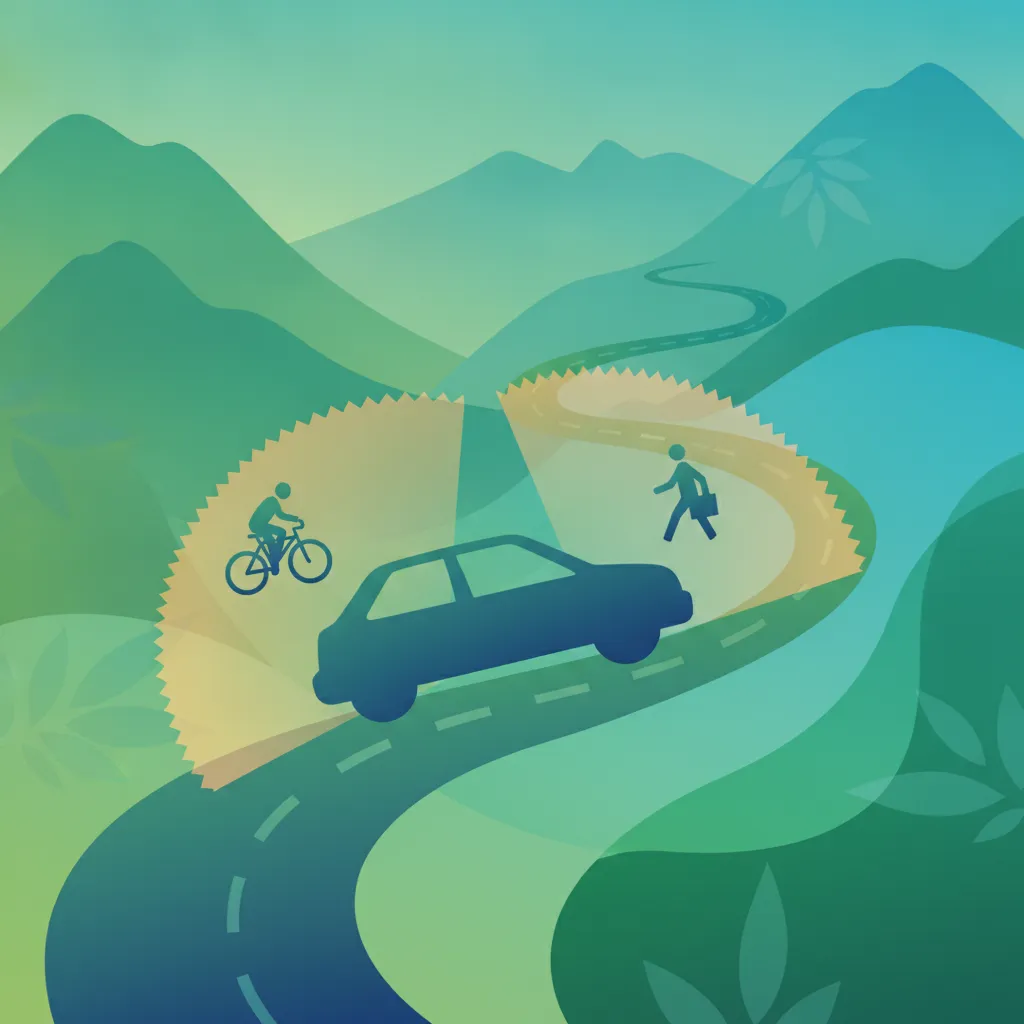
Buses and coaches have significant blind spots to the front, sides, and rear. This lesson maps out these 'no-zones' and teaches a continuous and active scanning process using all available mirrors and direct vision. The goal is to minimize the time any other road user spends undetected in a blind spot.
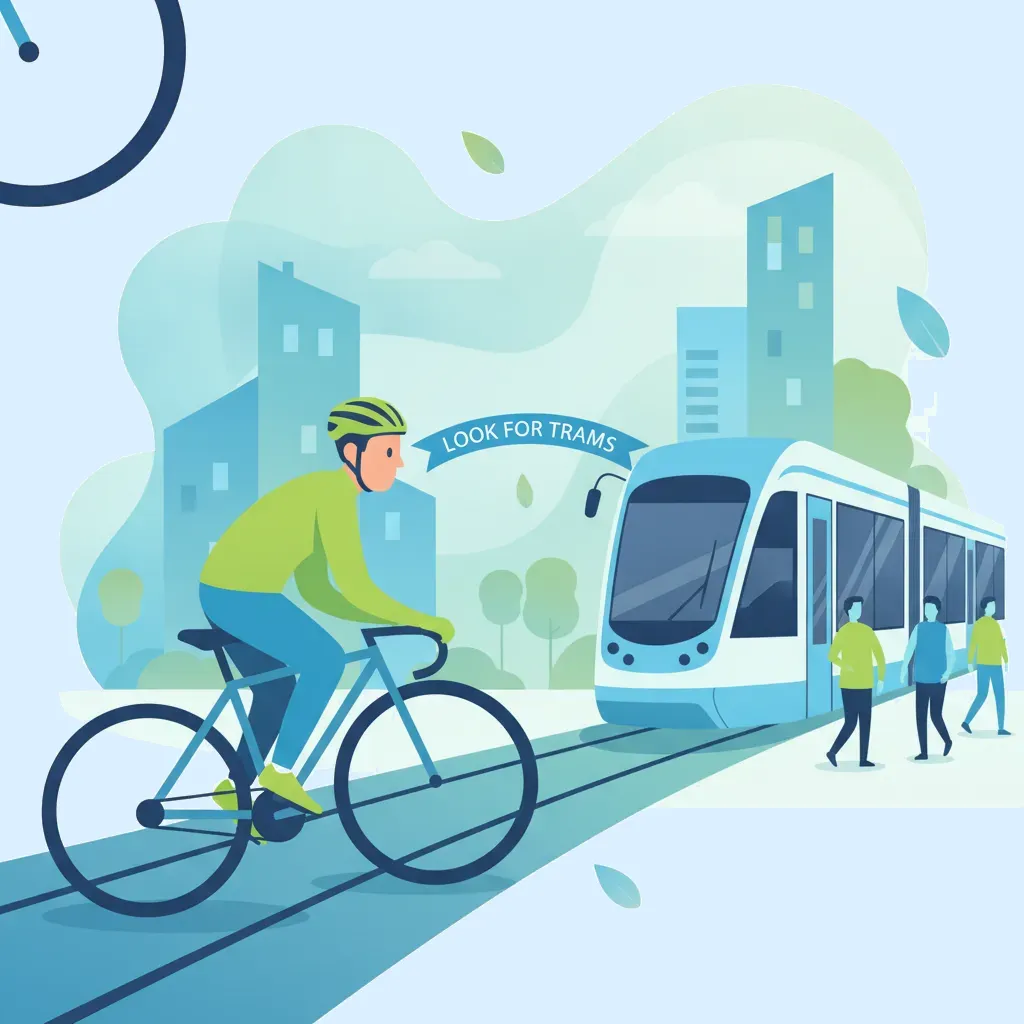
Sharing road space with trams presents unique challenges, including different priority rules and physical hazards like tracks. This lesson covers the Swiss regulations regarding tram priority at junctions and stops. It also provides practical advice on crossing tram tracks safely and maintaining awareness of tram movements.
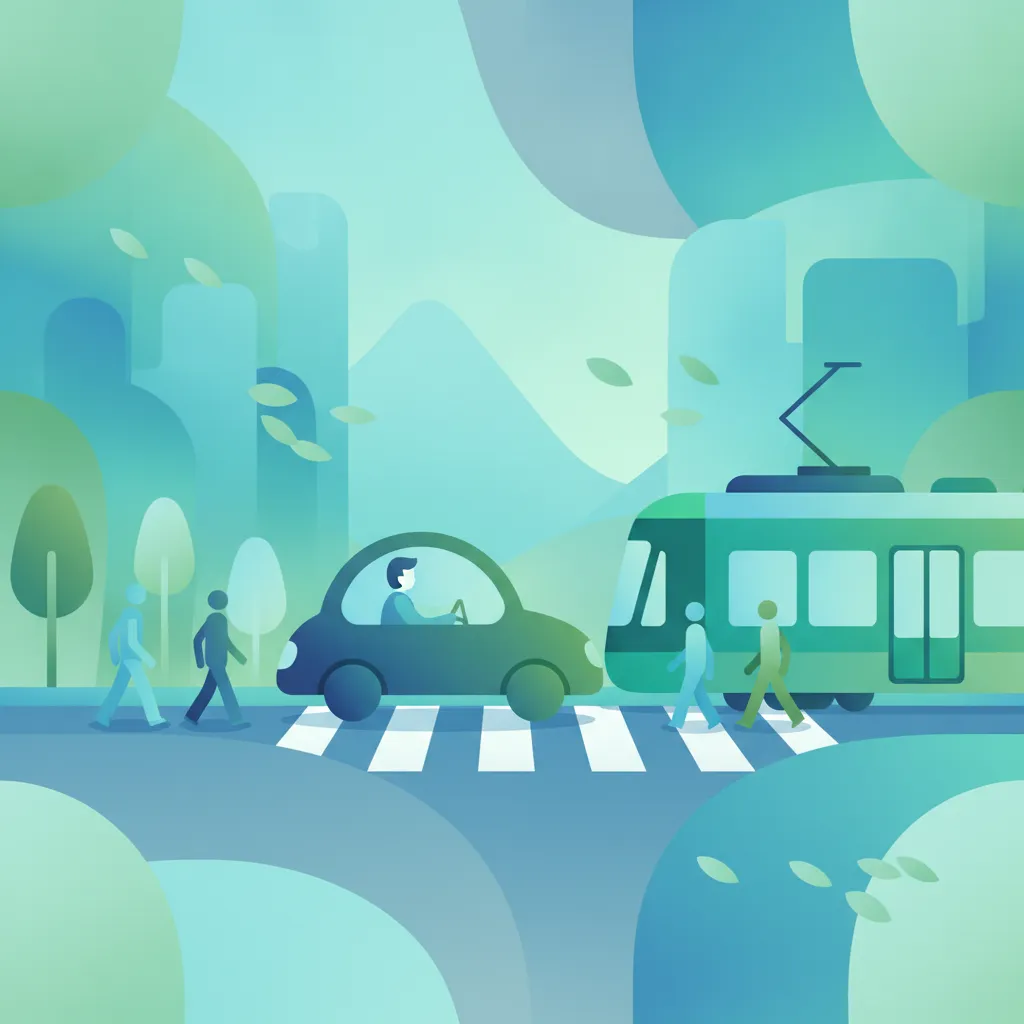
This lesson focuses on the rules governing interactions with public transport vehicles like buses and trams. It explains the priority given to these vehicles at stops and the use of dedicated lanes. Additionally, the content covers tram track crossing procedures and correct vehicle positioning near public transport stops to ensure safety.
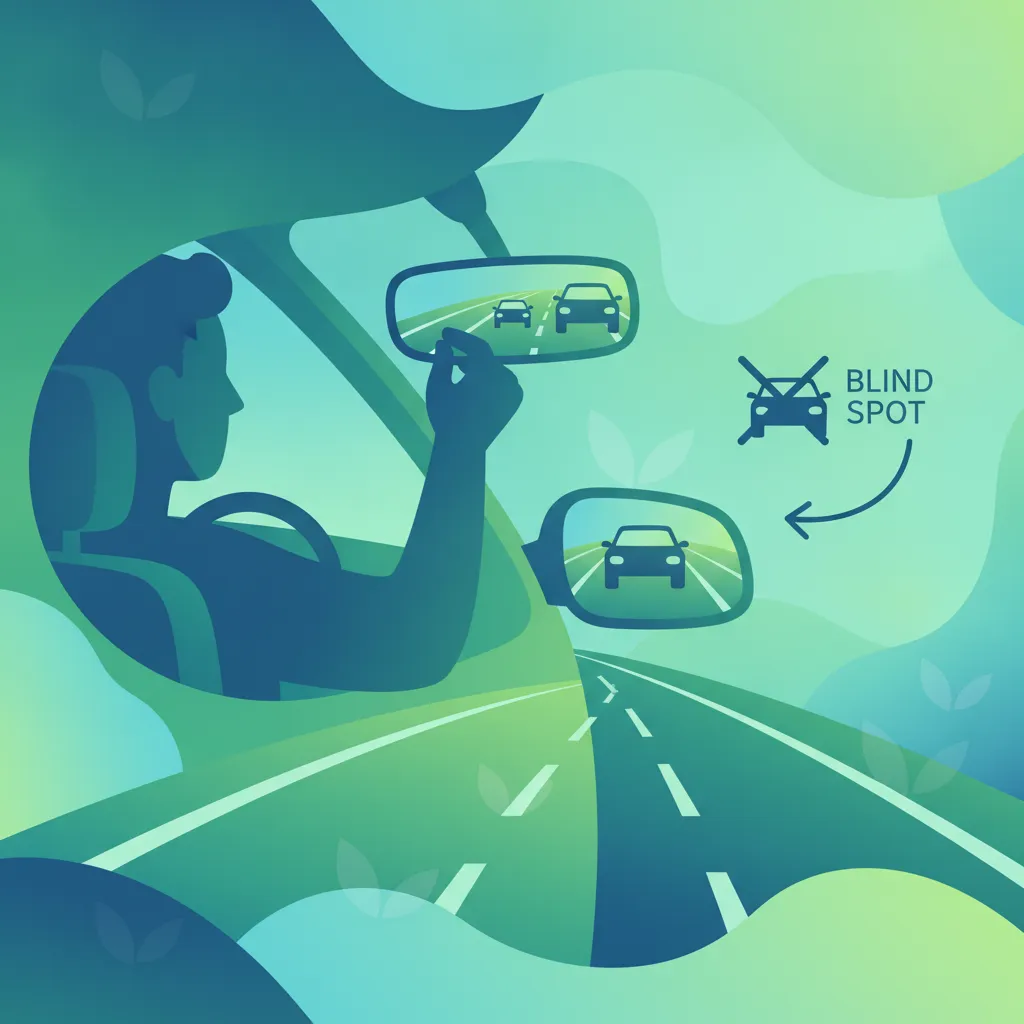
Despite the complex mirror systems, large areas around a truck remain hidden from the driver's view. This lesson maps out these significant blind spots: directly in front, behind, and along both sides of the vehicle. It teaches drivers to be constantly aware of these 'no-zones' and to anticipate that smaller vehicles, cyclists, or pedestrians may be hidden within them, especially before changing lanes or turning.
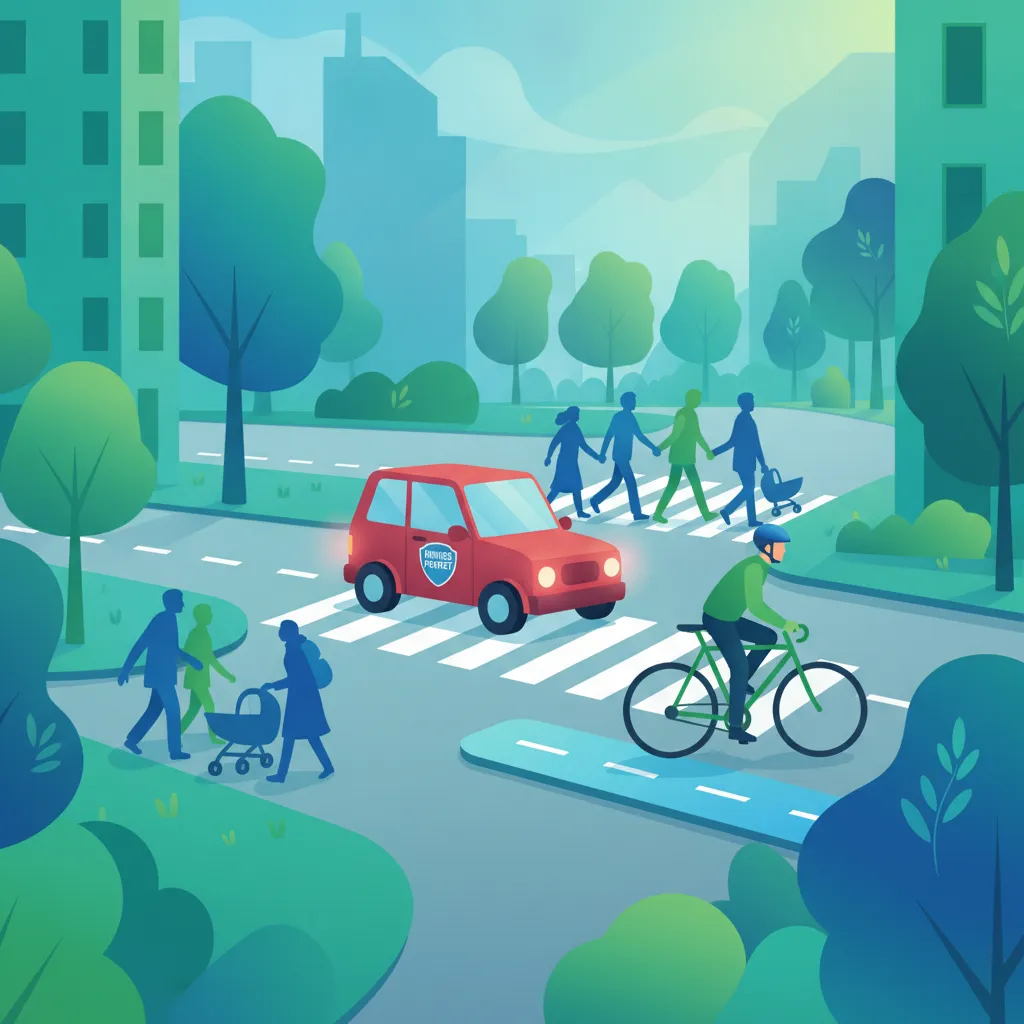
Pedestrians, cyclists, motorcyclists, and e-scooter riders are extremely vulnerable in any interaction with a heavy vehicle. This lesson instills a defensive mindset, teaching drivers to be hyper-aware of VRUs, especially near junctions, crossings, and cycle lanes. It focuses on anticipation and giving VRUs extra space, as they can be unpredictable and are often hidden in blind spots.
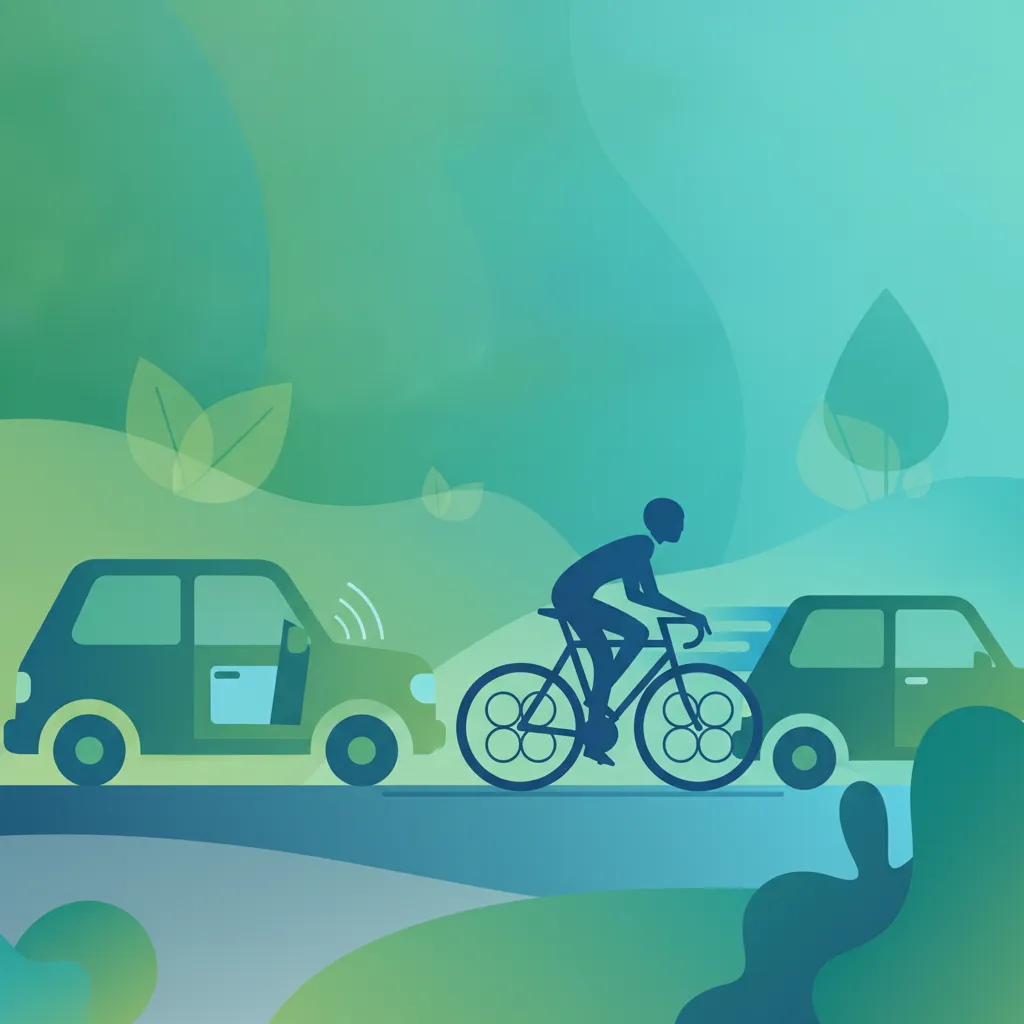
Departing from a bus stop is a high-risk manoeuvre. This lesson details the critical sequence of actions: checking all passengers are clear of the doors, performing a comprehensive mirror and blind spot check, signalling, and waiting for a safe gap in traffic. This systematic approach is essential for preventing collisions with overtaking vehicles, cyclists, or pedestrians.
Motorway driving involves high speeds and requires constant concentration. This lesson covers correct lane discipline, safe procedures for joining and leaving the motorway, and techniques for overtaking other large vehicles. Maintaining appropriate speed and a safe following distance is emphasized throughout.
Driving a bus in older parts of a city requires exceptional spatial awareness and precise control. This lesson focuses on assessing clearances, managing front and rear overhang, and negotiating tight turns around parked cars and buildings. A key theme is slow, careful, and deliberate manoeuvring to avoid contact.
This lesson trains drivers to look beyond other vehicles and actively search for pedestrians, cyclists, and motorcyclists, especially those who may be distracted or unaware. It covers common behavioral patterns of different VRU groups. The goal is to see potential hazards developing early and create time and space to react safely.
Reversing is the most dangerous manoeuvre a large vehicle can perform and should be avoided whenever possible. This lesson details a safe system of work for when reversing is unavoidable. It covers the importance of a 360-degree check before starting, the use of a banksman, and how to interpret standard hand signals.
Learn from typical errors Category M riders make around buses, trams, and trucks in Switzerland. This lesson focuses on real-world scenarios to help you avoid dangerous situations related to blind spots, overtaking, and priority rules.
This lesson focuses on the rules governing interactions with public transport vehicles like buses and trams. It explains the priority given to these vehicles at stops and the use of dedicated lanes. Additionally, the content covers tram track crossing procedures and correct vehicle positioning near public transport stops to ensure safety.
Sharing road space with trams presents unique challenges, including different priority rules and physical hazards like tracks. This lesson covers the Swiss regulations regarding tram priority at junctions and stops. It also provides practical advice on crossing tram tracks safely and maintaining awareness of tram movements.
A stopped bus creates a significant visual obstruction for other road users. This lesson focuses on the risk of pedestrians stepping out from in front of the bus and cyclists passing unexpectedly on either side. It reinforces the need for exhaustive mirror and blind spot checks before moving off to prevent tragic 'pull-away' accidents.
Pedestrians, cyclists, motorcyclists, and e-scooter riders are extremely vulnerable in any interaction with a heavy vehicle. This lesson instills a defensive mindset, teaching drivers to be hyper-aware of VRUs, especially near junctions, crossings, and cycle lanes. It focuses on anticipation and giving VRUs extra space, as they can be unpredictable and are often hidden in blind spots.
Driving a bus in older parts of a city requires exceptional spatial awareness and precise control. This lesson focuses on assessing clearances, managing front and rear overhang, and negotiating tight turns around parked cars and buildings. A key theme is slow, careful, and deliberate manoeuvring to avoid contact.
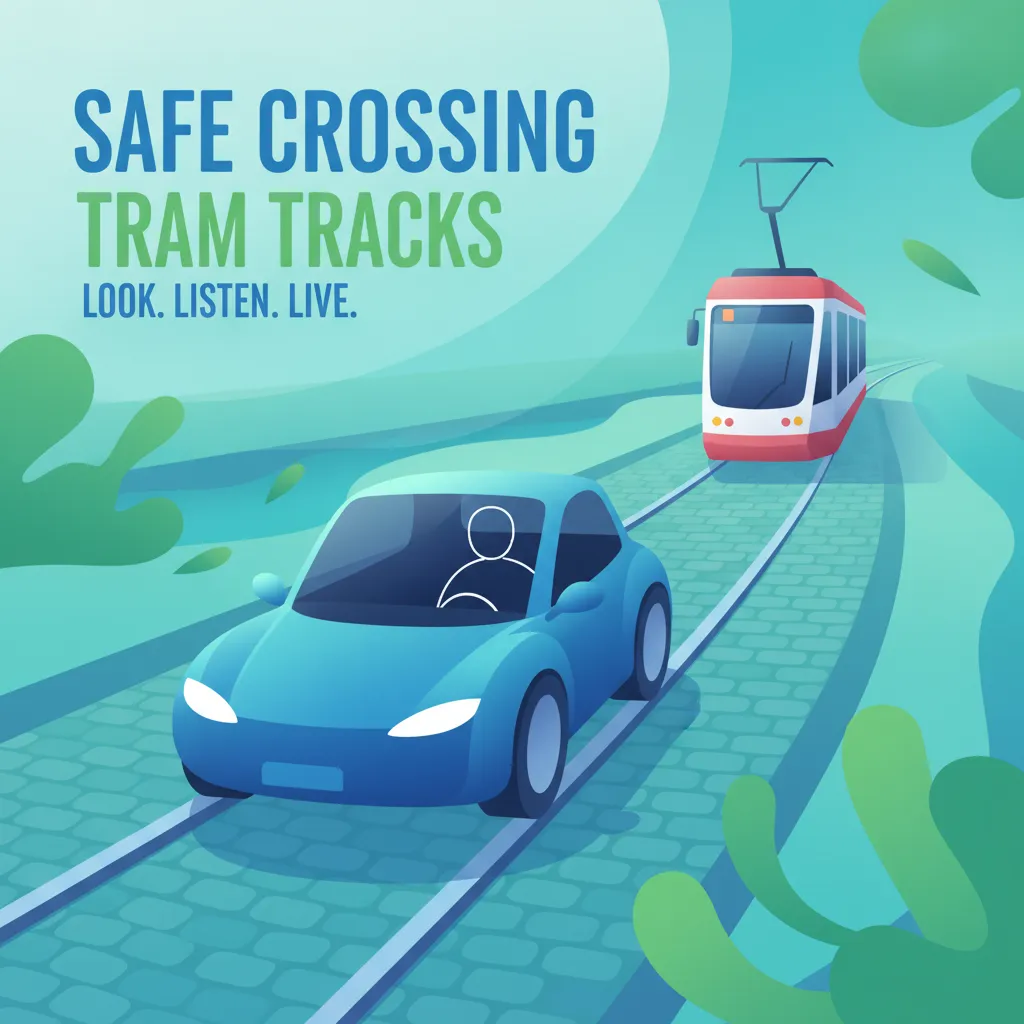
This lesson addresses the unique challenges posed by tram tracks, especially for two-wheeled vehicles. It explains the importance of crossing tracks at as close to a right angle as possible to avoid tyres getting caught, particularly in wet conditions. The lesson also covers the priority rules that often favor trams and how to interpret tram-specific signals.
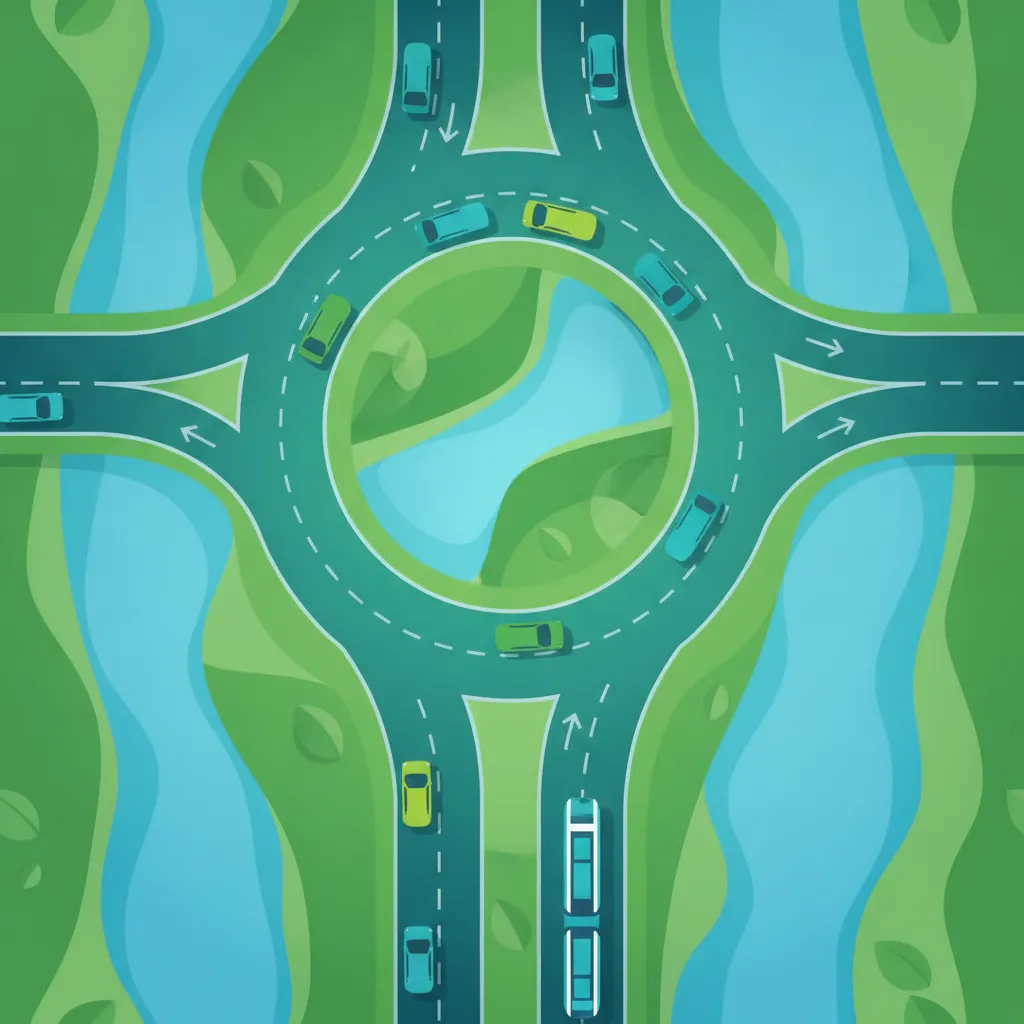
The size of a bus requires careful planning when negotiating complex intersections. This lesson teaches the importance of early lane selection, clear signalling, and comprehensive observation. It provides specific techniques for managing the vehicle's swept path through multi-lane roundabouts and other challenging urban junctions.
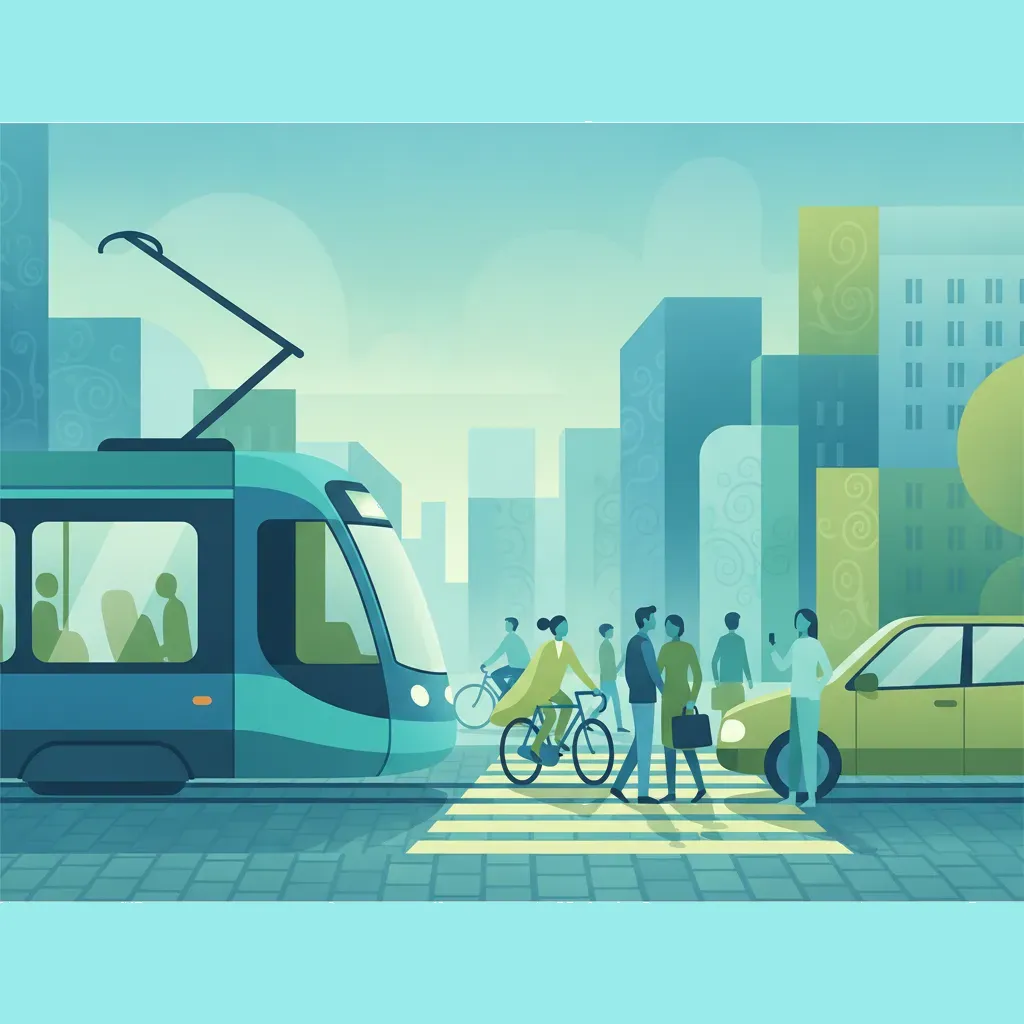
This lesson explores the priority given to public transport vehicles, especially trams and buses, in Swiss traffic. It explains how to recognize dedicated public transport lanes and the requirement to yield to trams at intersections. The content also covers procedures when a bus is stopping for passengers and how to ensure safe interactions.
Terminals and depots are busy environments with other large vehicles, maintenance staff, and cleaning crews. This lesson focuses on the specific hazards present in these off-road locations. It emphasizes adherence to site-specific rules, maintaining low speeds, and being highly aware of people working around vehicles.
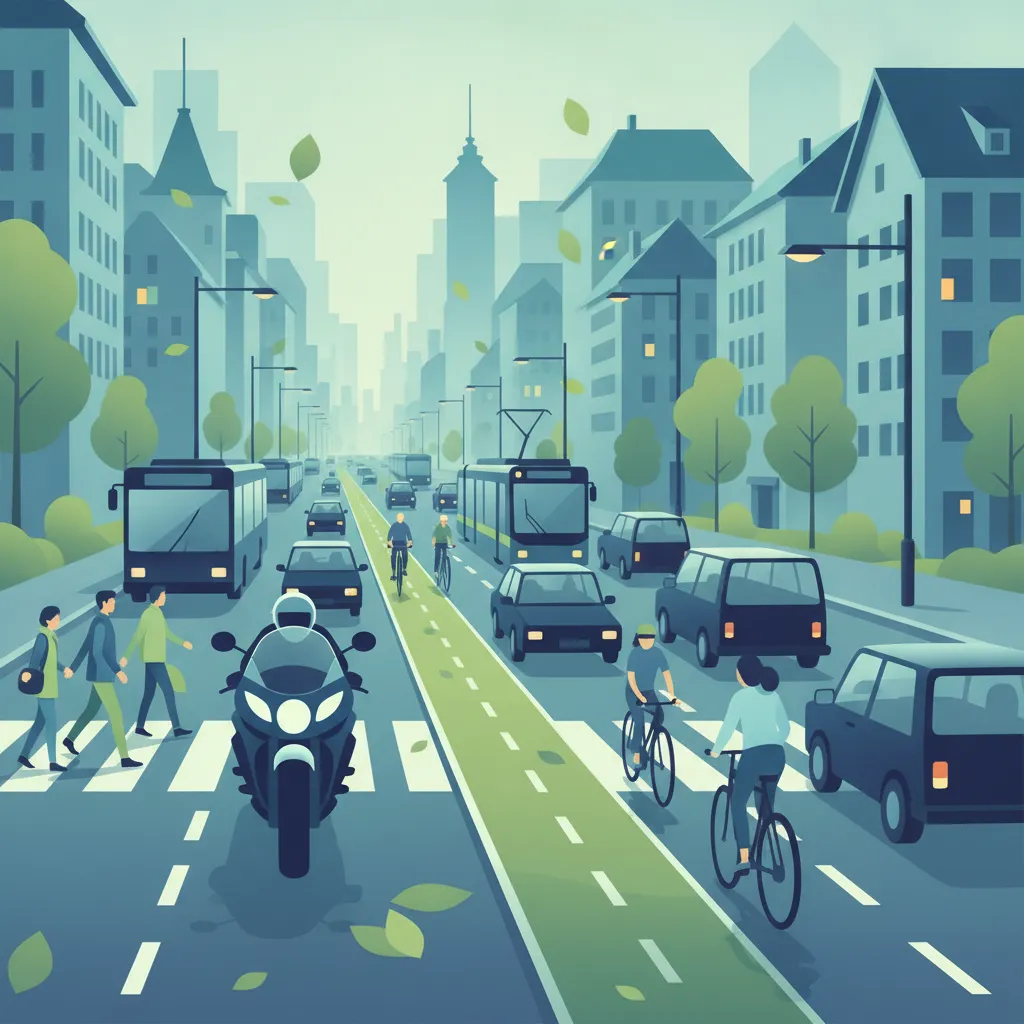
This lesson explores the complexities of riding in busy urban areas with a mix of traffic types. It covers strategies for safely navigating alongside buses, trams, cyclists, and pedestrians. Key topics include respecting designated lanes, anticipating the movements of vulnerable road users, and maintaining heightened situational awareness.
Find clear answers to common questions learners have about Interacting with Buses, Trams, and Larger Vehicles. Learn how the lesson is structured, which driving theory objectives it supports, and how it fits into the overall learning path of units and curriculum progression in Switzerland. These explanations help you understand key concepts, lesson flow, and exam focused study goals.
Large vehicles, especially trucks and buses, require a much wider path to turn than a moped. Their rear wheels often follow a tighter radius, meaning the trailer or back end can 'cut the corner' and sweep into areas where you might be waiting, leading to a high risk of a collision.
When behind a tram, you must maintain a safe distance and be prepared for frequent stops at tram stations. Never overtake a tram on the side where passengers board or exit if there is no safety island, and always be cautious of tracks that can cause your wheels to slip.
Yes, in Switzerland, you must allow buses to pull out from a stop if they have signaled their intent, provided you can do so without creating a dangerous situation. Being patient and allowing them to merge helps keep traffic flowing smoothly.
As a Category M rider, the best rule is to avoid lingering alongside large vehicles entirely. If you cannot see the driver's side mirror, they almost certainly cannot see you. Position yourself clearly in front of or well behind them.
Pinpoint specific Swiss traffic rules, road signs, or driving situations you need to master. Use the practice search to start a focused revision session now and build confidence for your official driving theory exam.