
This lesson details the critical safety procedures required when a heavy vehicle breaks down, a core topic within our professional vehicle maintenance and emergency unit. By mastering these protocols, you ensure compliance with German road safety regulations and prepare for essential questions on the C1, C1E, C, and CE theory exams. Building on basic road safety knowledge, this lesson provides the exact steps needed to protect yourself and other road users in emergency situations.
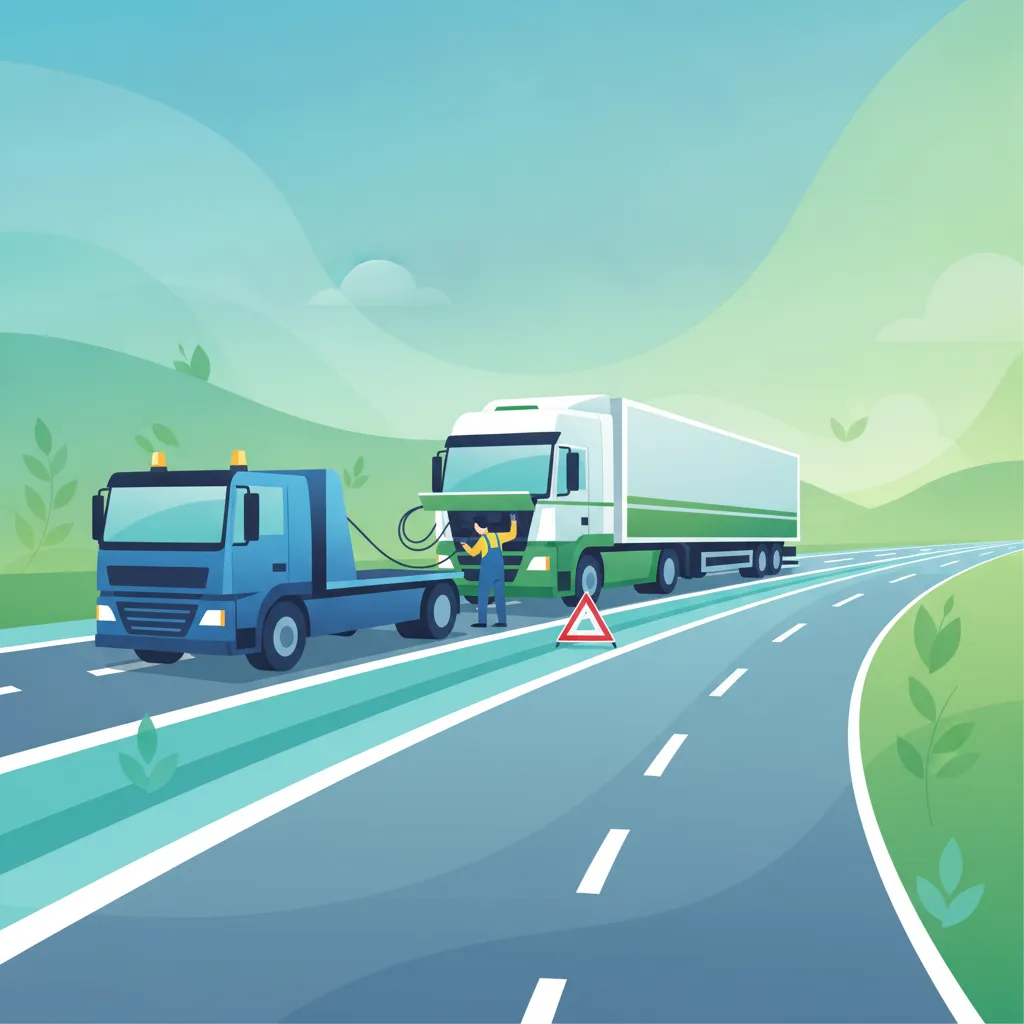
Lesson content overview
Navigating the roads as a professional heavy vehicle driver means being prepared for all eventualities, including vehicle breakdowns. A breakdown, especially with a large vehicle like a truck or bus, presents unique challenges and potential hazards. Understanding and rigorously following established breakdown procedures is not just a matter of operational efficiency; it is critical for ensuring the safety of yourself, your passengers, other road users, and for complying with legal requirements in Germany. This lesson provides a comprehensive guide to safely managing a vehicle breakdown, emphasizing the systematic approach required by professional drivers holding C1, C1E, C, and CE driving licenses.
For drivers of heavy goods vehicles (HGVs) and passenger vehicles, a breakdown can quickly escalate into a dangerous situation if not managed correctly. Unlike smaller vehicles, the sheer size and weight of commercial vehicles mean they pose a greater obstruction and hazard when stationary on the road. Proper breakdown procedures are designed to mitigate these risks, prevent secondary accidents, and ensure a swift resolution. Adhering to these protocols is a core responsibility for professional drivers and is enshrined in German traffic law, specifically the Straßenverkehrs-Ordnung (StVO).
The procedures discussed here are grounded in several core principles: safety first, prioritizing the well-being of all individuals; visibility, ensuring the stationary vehicle is clearly seen by approaching traffic; legal compliance, adhering to mandated signaling and reporting; and prompt assistance, securing help to minimize disruption.
An emergency stop due to a mechanical failure or a sudden hazardous situation requires a controlled and safe execution. The primary goal is to bring the heavy vehicle to a complete halt without causing further danger or obstruction.
When an emergency necessitates an immediate stop, the driver must activate the vehicle's braking system and manage gear selection appropriately to maintain control. Avoid sudden, harsh braking unless absolutely unavoidable, as this can lead to loss of control, especially with a heavy or loaded vehicle. Engage the service brake smoothly yet firmly, and if equipped, utilize auxiliary braking systems like the engine brake or retarder to assist in slowing down. Simultaneously, prepare to steer the vehicle towards the safest possible location.
The ideal scenario for a breakdown is to move the vehicle completely off the main carriageway. If possible, steer the heavy vehicle to the nearest hard shoulder (Standstreifen), emergency lane, or a designated turnout. This minimizes obstruction to traffic flow and provides a safer space for the driver and any passengers. If moving the vehicle is not immediately possible or safe, the driver must stop the vehicle in the current lane, ensuring all immediate warning signals are activated. This includes a careful check of mirrors before any lateral movement to ensure no other vehicles are in the blind spot.
Once the heavy vehicle has come to a stop, the immediate activation of hazard lights (Warnblinkanlage) is paramount. These flashing lights serve as a crucial visual signal to other road users, indicating that the vehicle is stationary due to an emergency and may pose an obstruction.
As soon as the vehicle stops due to a breakdown, whether on the hard shoulder or in a traffic lane, the hazard warning lights must be switched on. They should remain active for the entire duration the vehicle is stationary and presents a hazard. This continuous flashing alerts drivers approaching from both directions, providing them with early notice of a potential obstacle and allowing them to adjust their speed and position accordingly.
Under German traffic law (StVO), the use of hazard lights is mandatory whenever a vehicle is stopped in a way that could endanger or impede traffic, particularly in the event of a breakdown. Failing to activate hazard lights can result in fines and significantly increases the risk of a secondary collision. It is a fundamental legal obligation for all drivers, especially those of large commercial vehicles.
In addition to hazard lights, a warning triangle (Warndreieck) is an indispensable piece of emergency equipment that must be deployed. This reflective device provides a clear, static warning sign to approaching traffic, especially when visibility is poor or on high-speed roads where drivers need maximum reaction time.
On German motorways (Autobahnen) and other high-speed roads, the warning triangle must be placed at a minimum distance of 100 meters behind the stationary heavy vehicle. This substantial distance is crucial because of the high speeds at which traffic travels on motorways, allowing drivers ample time to perceive the warning, react, and safely maneuver around the obstruction. The triangle should be positioned on the edge of the travel lane, on the same side as the broken-down vehicle, facing approaching traffic.
When deploying a warning triangle on a motorway, prioritize personal safety. Walk carefully along the hard shoulder, facing oncoming traffic, to place the triangle. Wear a high-visibility vest.
On all other types of roads, such as rural roads (Landstraßen) and within urban areas (Innerorts), the warning triangle must be placed at a minimum distance of 30 meters behind the broken-down vehicle. While speeds are generally lower on these roads compared to motorways, the principle remains the same: provide sufficient warning time for other drivers. In urban areas, where traffic density is high and turns are frequent, ensure the triangle is clearly visible around any bends or crests.
Common mistakes include placing the warning triangle too close to the vehicle, which diminishes its effectiveness by not providing adequate warning time. Another error is placing it on the wrong side of the road or in a position where it is obscured by obstacles. Always ensure the triangle is stable and clearly visible to approaching traffic, even in adverse weather conditions.
Once the vehicle is safely stopped and warning signals are deployed, the next critical step is to contact assistance. This involves a systematic approach to ensure the right help arrives promptly.
As a professional driver, your first point of contact might be your company's dispatch or fleet management. Provide them with your exact location, the nature of the breakdown, and any immediate hazards. They will likely guide you on the next steps, including contacting your contracted roadside assistance (Pannendienst) or towing service. Many heavy vehicles are equipped with in-built telematics systems that can automatically alert your company or assistance providers in the event of a breakdown.
While roadside assistance handles mechanical issues, there are specific situations where contacting the police (Polizei) or emergency services (Notruf, e.g., 112) is mandatory:
Always provide precise location details (e.g., motorway name and kilometer marker, street address, notable landmarks) to help assistance find you quickly.
German traffic law (StVO) imposes specific legal obligations on drivers in the event of a breakdown. These rules are designed to ensure safety and maintain order on public roads.
Paragraph 15 of the StVO, among others, addresses the duties of a driver in the event of an obstruction or breakdown. It mandates the use of hazard lights and the deployment of a warning triangle in specified distances. These are not merely recommendations but legal requirements, and non-compliance can lead to fines and points on your driving license. The intent is to make the stationary vehicle visible as early as possible to prevent collisions.
Beyond signaling, certain breakdowns trigger a mandatory reporting obligation to traffic authorities or the police. This is particularly true when the broken-down vehicle poses a significant danger to other road users or creates a severe traffic obstruction. For instance, a heavy vehicle stalled in a tunnel or on a railway crossing must be reported immediately, as these situations carry extreme risks. Failure to report such incidents can result in severe legal consequences, including fines and liability for any resulting damages.
Understanding the specific regulations is crucial for professional drivers operating in Germany. These rules define the precise actions to be taken during a heavy vehicle breakdown.
A system of flashing indicator lights on all corners of a vehicle, used to signal to other road users that the vehicle is stationary due to an emergency or is posing a hazard.
Statement: Hazard lights must be activated immediately when a heavy vehicle stops unexpectedly on the roadway or hard shoulder due to a breakdown or any other emergency that causes an obstruction or danger. Applicability: Applies to all heavy vehicles (C1, C1E, C, CE categories) stopped on public roads in Germany. Legal Status: Mandatory under StVO. Rationale: To provide an immediate visual warning to approaching traffic, significantly reducing the risk of a secondary collision.
A portable, reflective triangular device required by law to be carried in vehicles and placed at a specified distance behind a broken-down vehicle to warn approaching traffic.
Statement: A warning triangle must be placed at a minimum distance of 100 meters behind a stationary heavy vehicle on motorways (Autobahnen) and at least 30 meters on other roads (e.g., Landstraßen, Innerorts). Applicability: Mandatory for all heavy vehicles when stopped on the roadway due to a breakdown or emergency. Legal Status: Mandatory under StVO. Rationale: To give drivers sufficient time and distance to react to the stationary vehicle, especially at higher speeds or in low visibility.
Statement: If safe stopping is not possible due to a sudden mechanical failure or an unmanageable hazard, drivers must utilize the vehicle's emergency brake systems (e.g., parking brake, auxiliary braking systems if applicable) and attempt to steer the vehicle to the safest possible location, such as the hard shoulder, if feasible. The vehicle must be secured against rolling away. Applicability: In emergencies where maintaining control and securing the vehicle is critical. Legal Status: Mandatory for safety. Rationale: To prevent loss of control, secondary accidents, and ensure the vehicle remains static once stopped.
Statement: In the event of a heavy vehicle breakdown that causes a significant traffic obstruction or poses a direct danger to other road users, the driver must report the incident immediately to traffic authorities (police: 110) or other relevant emergency services (e.g., general emergency: 112). Applicability: When the vehicle's position poses a danger or severely obstructs traffic flow. Legal Status: Mandatory. Rationale: To enable authorities to manage traffic, deploy resources, and ensure the safety of all road users.
Even experienced drivers can make mistakes under the stress of a breakdown. Awareness of common pitfalls can help ensure a safer and more efficient resolution.
One of the most dangerous errors is failing to activate hazard lights immediately or improperly placing the warning triangle. This dramatically increases the risk of other vehicles colliding with your stationary heavy vehicle. Always prioritize getting those warning signals out as quickly and correctly as possible.
Stopping in a blind spot, on a high-speed lane, or too close to a bend or crest significantly amplifies the danger. While sometimes unavoidable, always strive to reach the safest possible location, even if it means driving a short distance further with a minor issue. If you must stop in a dangerous spot, enhance warning signals and immediately report to the police.
Delaying the call for roadside assistance or, crucially, for emergency services when required, can prolong the hazardous situation and potentially lead to further incidents. Have emergency numbers readily available and be prepared to provide precise location details.
Exiting the vehicle without wearing a high-visibility vest (Warnweste) or moving around the vehicle unnecessarily are common oversights. Always prioritize your personal safety; stay inside the vehicle if it's safer, or wear appropriate reflective clothing when outside, especially at night or in poor visibility.
Never stand between your heavy vehicle and approaching traffic when deploying a warning triangle. Walk facing traffic on the hard shoulder or verge.
Breakdown procedures are not static; they must be adapted to the prevailing environmental and road conditions to maximize safety and effectiveness.
Adverse weather conditions significantly reduce visibility and increase stopping distances for other drivers. In heavy rain, dense fog, or during nighttime, it is imperative to enhance all visibility measures. This may include using additional reflective vests, ensuring all vehicle lights are operational, and potentially placing additional warning devices if available and safe to do so. The warning triangle becomes even more critical in such conditions, as hazard lights might be less effective from a distance.
The type of road dictates warning triangle placement distances, but traffic density also plays a role. On busy motorways or multi-lane roads, the speed and volume of traffic necessitate maximum warning distances and vigilance. In urban areas with lower speeds but complex traffic patterns (e.g., pedestrians, cyclists, frequent turns), ensuring the vehicle is moved out of the main flow and that the warning triangle is visible around any potential blind spots is crucial.
A fully loaded heavy vehicle has a much greater mass and inertia, affecting its stopping distance and stability during an emergency stop. If a breakdown occurs while carrying a heavy or unstable load, extreme caution is necessary. Ensure the vehicle is secured against rolling and that the load does not shift further, which could create additional hazards. This might involve setting the parking brake firmly and, if possible, chocking the wheels.
The overarching goal of all breakdown procedures is safety, primarily preventing secondary accidents. These insights underscore the reasoning behind the rules.
Every second counts when a heavy vehicle is stationary on the road. Hazard lights and warning triangles provide crucial early warning signals. This allows other drivers more time to perceive the hazard, understand its nature, and take evasive action, such as changing lanes or reducing speed. Without these warnings, the risk of a rear-end collision, which can be catastrophic with a heavy vehicle, increases dramatically.
Your safety, and that of any passengers, is paramount. If remaining in the vehicle is safer (e.g., on a busy motorway hard shoulder), stay inside, wearing your seatbelt. If you must exit, do so carefully, wearing high-visibility clothing, and move to a safe area away from moving traffic, ideally behind a barrier. Never attempt repairs or inspections on the side of a busy road.
Adhering to legal obligations for signaling and reporting is not just about avoiding penalties; it's about actively mitigating risks. Proper reporting allows authorities to manage traffic, dispatch emergency services, and clear the obstruction efficiently, further reducing the potential for accidents and minimizing overall disruption. Professional drivers are expected to uphold these standards.
Explore all units and lessons included in this driving theory course.
Lesson content overview
Explore all units and lessons included in this driving theory course.
Explore search topics learners often look for when studying Breakdown Procedures for Heavy Vehicles. These topics reflect common questions about road rules, driving situations, safety guidance, and lesson level theory preparation for learners in Germany.
Browse additional driving theory lessons that cover connected traffic rules, road signs, and common driving situations related to this topic. Improve your understanding of how different rules interact across everyday traffic scenarios.
Understand the procedures for obtaining breakdown assistance for heavy vehicles in Germany. This lesson covers legal obligations, communication protocols, and the use of warning devices during a roadside emergency. Essential theory for C1-CE license holders.

This lesson outlines a clear, systematic procedure for managing a vehicle breakdown safely and efficiently. It covers immediate actions such as activating hazard lights, placing a warning triangle, and moving the vehicle to a safe location if possible. Learners will understand how to communicate the situation to passengers, decide if an evacuation is necessary, and contact the appropriate breakdown services for assistance.
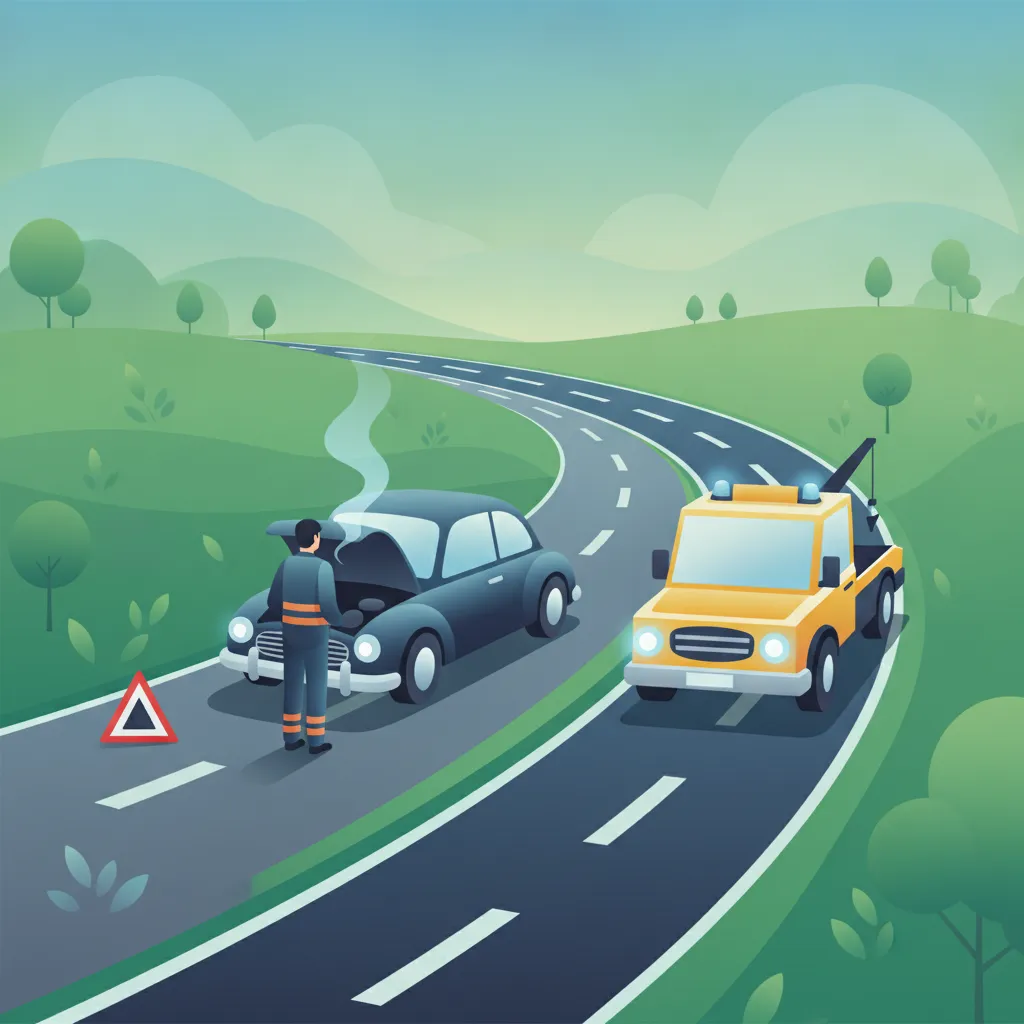
This lesson provides clear, actionable steps for managing a breakdown or being involved in an accident. It covers how to safely move the vehicle off the road, use warning signals, and secure the area. The procedure for contacting roadside assistance and the authorities is also explained in detail.
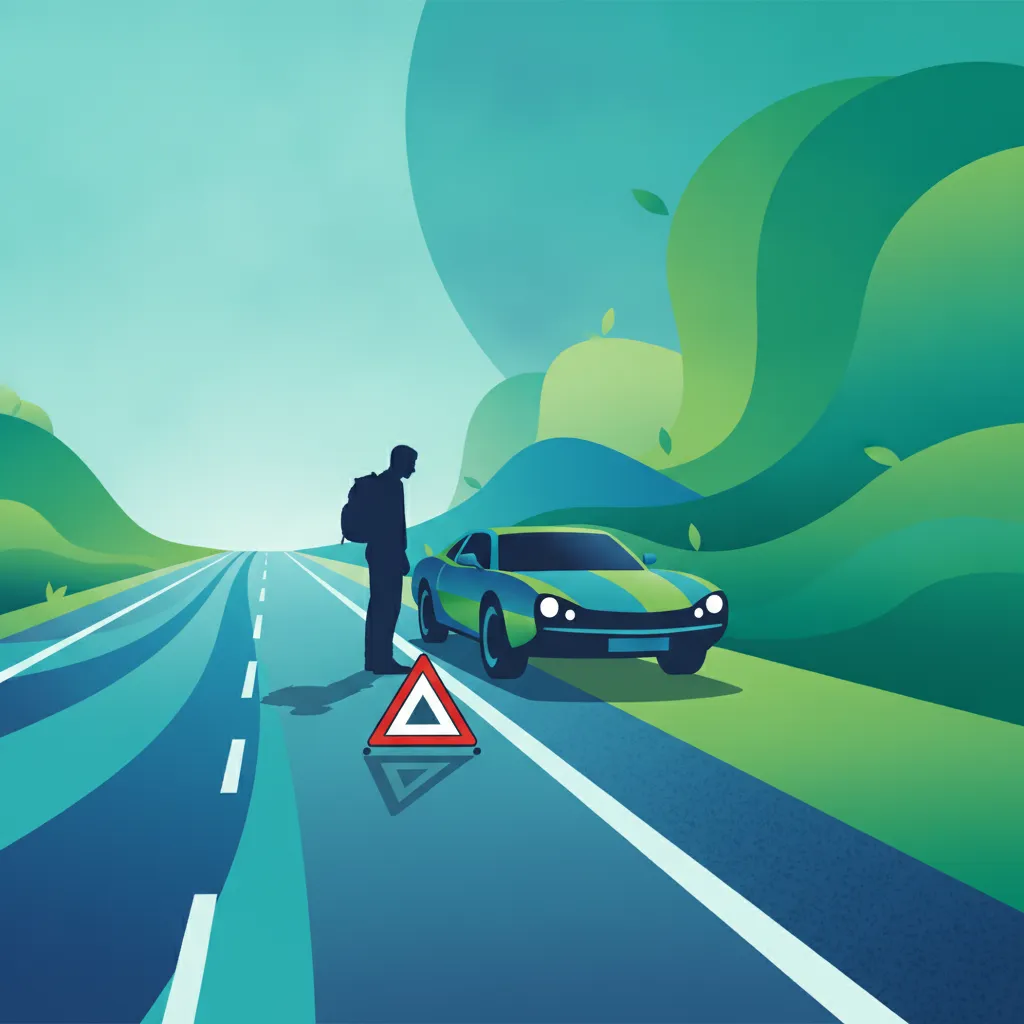
This lesson covers the appropriate steps to take in the event of a vehicle breakdown or an accident. It details procedures for safely moving the motorcycle out of traffic, making the area visible with hazard warnings, and contacting emergency services. The content emphasizes personal safety and the correct protocol for managing the scene until professional help arrives.

This lesson outlines the legal requirements for vehicle roadworthiness, including mandatory periodic inspections (TÜV) and the issuance of safety certificates. It explains the standards for emissions, safety devices, and the proper documentation of defects. The content underscores the importance of complying with inspection intervals and addressing repair obligations promptly.
This lesson outlines the proper response to an accident involving a heavy vehicle, including immediate actions and contacting emergency services. It details the legal obligations for reporting accidents and cooperating with police investigations. The content also covers documentation requirements for insurance claims and the importance of preserving the accident scene.

This lesson provides clear, step-by-step instructions on what to do at the scene of a traffic accident. It covers the immediate priorities: stopping, securing the area with a warning triangle, and putting on a high-visibility vest. The lesson details how to make an effective emergency call to '112' and what information to provide, as well as the procedure for exchanging insurance details with other parties involved.

This lesson covers the dimensional limits for heavy vehicles, focusing on height, width, and length restrictions. It explains how to interpret clearance signage for bridges, tunnels, and overhead obstacles, and discusses the implications for route planning. The content also addresses the importance of understanding turning radii and swept paths to avoid collisions.

This lesson explores the legal framework governing heavy vehicle operation in Germany, focusing on the Straßenverkehrs-Ordnung (StVO) and specific commercial transport regulations. It details the professional duty of care required from drivers, including responsibilities for vehicle inspection and documentation. You will understand the enforcement mechanisms and potential penalties for non-compliance.
This lesson covers safe interaction with special vehicles. It details the challenges of driving near large trucks (LKW), including their extensive blind spots, longer stopping distances, and the effects of wind turbulence when overtaking them. A critical part of the lesson is explaining the correct procedure for reacting to emergency vehicles by creating an emergency corridor ('Rettungsgasse') on multi-lane roads.
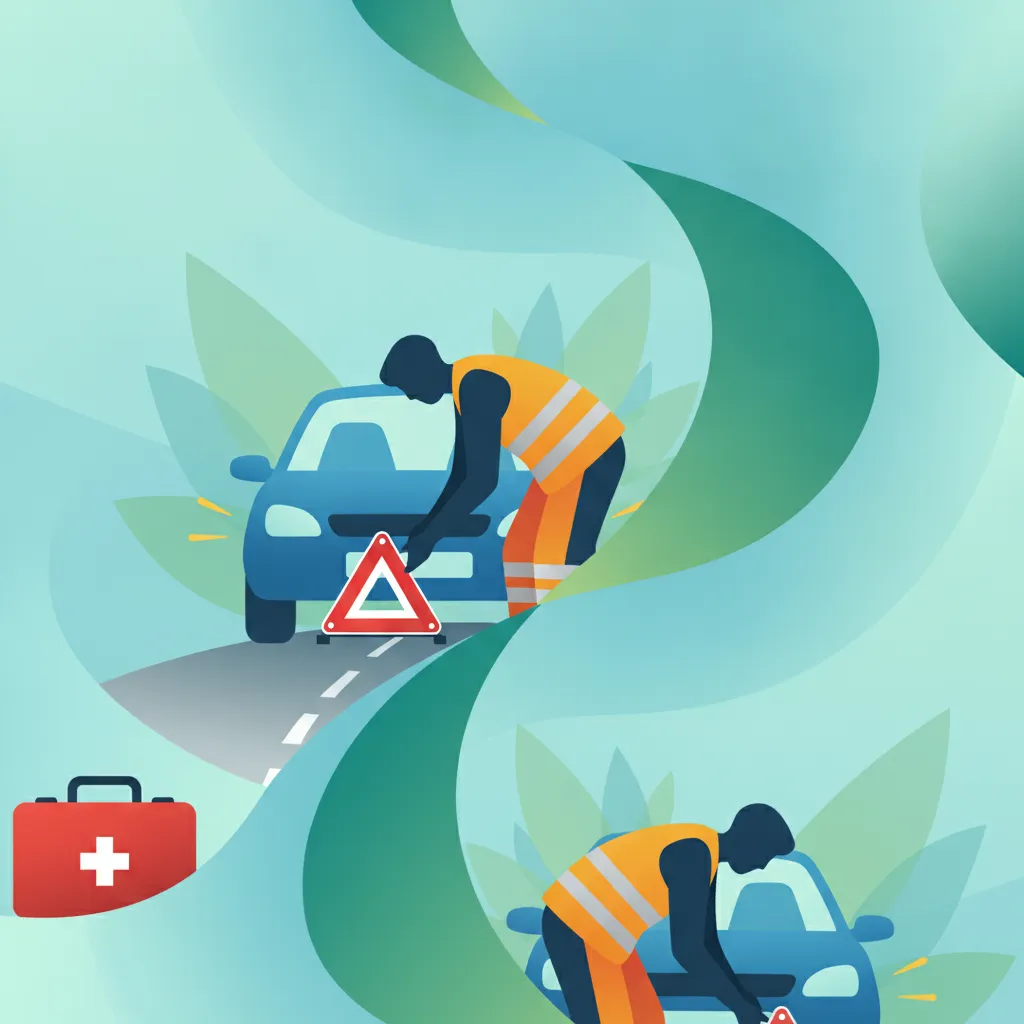
This lesson covers the legal and moral obligation to provide first aid at an accident scene. It outlines basic, life-saving measures such as assessing an injured person's condition, placing them in the recovery position, and the principles of controlling bleeding. The lesson also explains the correct placement of the warning triangle ('Warndreieck') to effectively warn oncoming traffic of the hazard ahead.
Explore essential knowledge for managing various heavy vehicle emergencies beyond basic breakdowns. This includes understanding fire risks, accident response procedures, and dealing with load-related incidents. Crucial theory for safe driving and compliance.
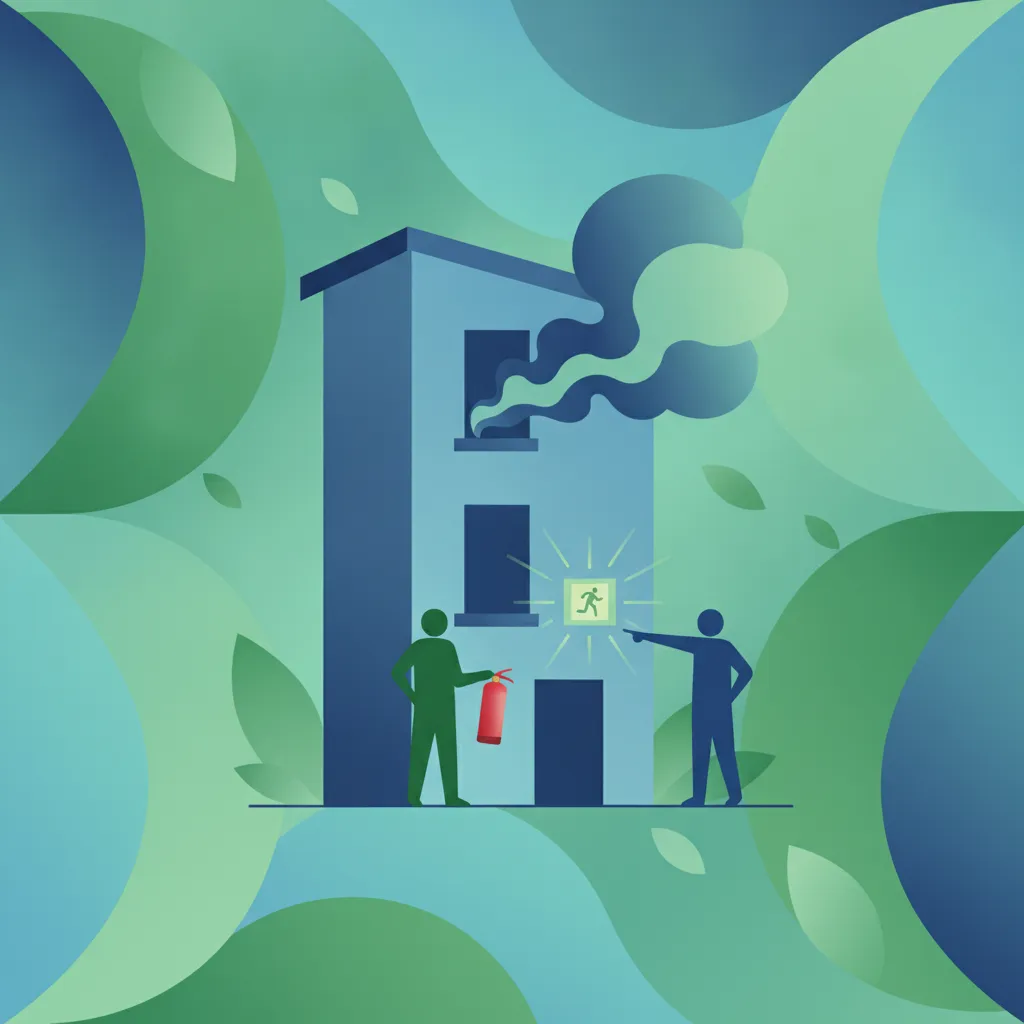
This lesson focuses on fire risks associated with heavy vehicles, the correct use of fire extinguishers, and emergency evacuation procedures. It reviews different types of fire extinguishers and appropriate extinguishing techniques. The content also covers the steps to safely evacuate the vehicle in case of a fire.
This lesson covers safe interaction with special vehicles. It details the challenges of driving near large trucks (LKW), including their extensive blind spots, longer stopping distances, and the effects of wind turbulence when overtaking them. A critical part of the lesson is explaining the correct procedure for reacting to emergency vehicles by creating an emergency corridor ('Rettungsgasse') on multi-lane roads.
This lesson outlines the proper response to an accident involving a heavy vehicle, including immediate actions and contacting emergency services. It details the legal obligations for reporting accidents and cooperating with police investigations. The content also covers documentation requirements for insurance claims and the importance of preserving the accident scene.

This lesson focuses on the interaction between heavy vehicles and vulnerable road users at crossings, particularly when turning right. It covers the need for heightened vigilance, the importance of properly using mirrors, and correct signaling to alert others. The content highlights legal responsibilities and safe distance requirements to prevent accidents.
This lesson outlines a clear, systematic procedure for managing a vehicle breakdown safely and efficiently. It covers immediate actions such as activating hazard lights, placing a warning triangle, and moving the vehicle to a safe location if possible. Learners will understand how to communicate the situation to passengers, decide if an evacuation is necessary, and contact the appropriate breakdown services for assistance.

This lesson examines the risks associated with load shifting during braking and cornering maneuvers. It explains how inertia and weight transfer can cause cargo to move, potentially leading to instability or loss of control. The content emphasizes the importance of proper load securing to mitigate these risks and maintain vehicle stability.

This lesson examines the concepts of turning radius and swept path, explaining how a heavy vehicle's size influences the space required for a turn. It highlights the importance of maintaining proper lane positioning to accommodate the vehicle's dimensions. The content provides guidance on planning maneuvers and accounting for off-tracking during cornering.

This lesson focuses on fire safety protocols for passenger vehicles, covering both prevention and response. It teaches the location and proper use of fire extinguishers and the importance of recognizing potential fire hazards during pre-trip inspections. A primary focus is on the procedure for a calm and orderly evacuation, including how to operate emergency exits and guide all passengers, including those with mobility issues, to a safe location.

This lesson examines best practices for loading and unloading heavy vehicles at delivery points, including proper vehicle positioning and coordination with ground personnel. It emphasizes the importance of verifying load stability during unloading to prevent accidents. The content also discusses time-window management and safety protocols for loading docks.

This lesson addresses the challenges of maneuvering heavy vehicles in confined spaces such as loading bays and narrow streets. It provides strategies for planning the maneuver, accounting for vehicle dimensions, turning radius, and blind spots. The content emphasizes slow, controlled movements and the need for high situational awareness.
Find clear answers to common questions learners have about Breakdown Procedures for Heavy Vehicles. Learn how the lesson is structured, which driving theory objectives it supports, and how it fits into the overall learning path of units and curriculum progression in Germany. These explanations help you understand key concepts, lesson flow, and exam focused study goals.
The distance depends on the road type and speed limit. On motorways, it must be placed significantly further back (typically 150-400 meters) to give other drivers adequate time to react, as heavy vehicles pose a larger obstacle.
Yes, German regulations require you to wear a high-visibility vest when exiting the vehicle in an emergency situation on the road to ensure you are clearly visible to other traffic, especially in poor light or weather.
Safety first: activate hazard lights immediately, steer the vehicle onto the hard shoulder if possible, and ensure all occupants exit from the passenger side, away from the flow of traffic, before attempting to secure the scene.
Because of their size and mass, heavy vehicles often require greater warning distances to ensure approaching traffic has sufficient time to slow down or change lanes, preventing high-speed rear-end collisions.
Begin your targeted revision now. Use our practice search to quickly find specific German driving theory questions. Filter by StVO rules, road signs, or hazard perception to create your focused study plan. Master challenging areas and prepare confidently for your theoretical driving test.