
This lesson guides you through the technical and safety demands of riding in mountainous terrain, a critical skill for any rider in Italy. You will learn to manage engine performance at varying altitudes and master descent techniques to maintain vehicle control. This knowledge is essential for both your theory exam and real-world safety on challenging Alpine and Apennine roads.
Lesson content overview
Riding a motorcycle through mountainous terrain offers exhilarating experiences, but it also presents unique challenges that demand advanced skills, heightened awareness, and strategic planning. This lesson, designed for the Italian Driving License Theory Course for Motorcycle Categories A1, A2, & A, delves into the specific techniques and considerations required to safely navigate mountain roads. From managing steep gradients to understanding the effects of altitude on your motorcycle's performance, mastering these strategies is crucial for every rider.
Mountain roads are characterized by their constantly changing gradients, sharp curves, and often unpredictable weather. These elements combine to create a dynamic riding environment that tests a rider's ability to control speed, manage braking, adapt to conditions, and maintain optimal road positioning. A deep understanding of these factors not only enhances safety but also reduces mechanical strain on your motorcycle and ensures compliance with traffic regulations.
Mountain roads are inherently different from urban streets or flat rural routes. Their topography introduces steep inclines and declines (gradients), tight hairpin bends, and often narrow carriageways. These physical characteristics are compounded by atmospheric variables such as fluctuating temperatures, strong winds, and sudden fog banks, all more common at higher elevations. Riders must develop a proactive approach, constantly assessing the road ahead and adapting their riding style accordingly.
The steepness of a road, known as its gradient, directly impacts how your motorcycle performs. On steep uphill sections, your engine requires more power to maintain momentum, often necessitating lower gear selections. Conversely, on steep downhill sections, gravity accelerates your motorcycle, requiring careful speed management to prevent excessive acceleration and maintain control.
Curves on mountain roads are often sharper and tighter than those found elsewhere, demanding precise cornering techniques. The combination of steep gradients and tight curves requires riders to adjust their speed well in advance, select the correct gear for both the gradient and the curve, and maintain a stable lean angle. Misjudging speed or gear choice can lead to loss of control, especially when traction is compromised by loose surfaces or adverse weather.
Effective speed management is paramount on mountain roads. On descents, gravity will naturally increase your speed. Without proper control, this can quickly lead to dangerous situations, making it difficult to negotiate curves or stop safely. On ascents, selecting too high a gear can cause the engine to struggle or even stall, leading to a loss of momentum and potential hazard.
Always reduce your speed significantly when approaching steep inclines or declines, especially if a curve immediately follows a steep segment. This provides ample time to select the appropriate gear and maintain stable control.
Maintaining a safe following distance is equally critical. In mountainous terrain, where road conditions can change rapidly and unexpected hazards might appear, a larger gap to the vehicle ahead provides more time to react. This distance should be further increased in poor weather or on particularly steep grades.
One of the most critical aspects of mountain riding is managing descents. Prolonged or improper use of friction brakes (front and rear brakes) on long, steep downhill stretches can lead to a dangerous condition known as brake fade. This occurs when the brake components overheat, reducing their efficiency and increasing the effort required to slow down, potentially leading to a complete loss of braking power.
Engine braking is a fundamental technique for safe mountain riding, particularly on descents. It involves using the engine's compression resistance to slow the motorcycle down by reducing throttle input and downshifting through the gears. When you downshift, the engine's RPM increases, and the engine acts as a retarder, effectively slowing the motorcycle without relying heavily on the friction brakes.
Deceleration achieved by closing the throttle and downshifting, using the engine's internal compression resistance to slow the motorcycle.
This technique significantly reduces the heat buildup in your brake pads and discs, preserving their effectiveness for when you truly need them, such as for emergency stops or tighter corners. Smooth and progressive downshifting is key to avoid sudden deceleration that could destabilize the motorcycle or cause wheel lock-up, especially on wet or slippery surfaces.
Anticipate descents: As you approach a downhill section, assess its length and steepness.
Close the throttle: Gradually release the throttle to reduce engine power.
Downshift progressively: Shift down one gear at a time, matching engine RPMs with a brief blip of the throttle if needed for smoother engagement (rev-matching).
Maintain appropriate RPM: Keep the engine within its optimal RPM range (power band) to ensure effective engine braking without over-revving.
Combine with intermittent braking: Use light, intermittent touches on your friction brakes as needed for fine-tuning speed, allowing them to cool between applications.
Preventing brake fade is crucial for safety on mountain descents. Continuous application of the brakes generates immense heat. When the brake fluid boils or the pads and discs become excessively hot, their friction properties diminish, leading to a spongy lever/pedal feel and drastically reduced stopping power.
To manage brake temperature:
Higher altitudes introduce another layer of complexity for motorcyclists. As you ascend, the air density decreases, meaning there's less oxygen available for combustion in your engine. This phenomenon, known as the altitude effect, directly impacts your motorcycle's engine performance.
At higher elevations, a motorcycle's engine will typically produce less power. For every 300 meters (approximately 1,000 feet) of altitude increase, an engine can lose around 3% of its power output. This reduction in horsepower means your motorcycle will feel less responsive, especially during acceleration or when attempting to climb steep gradients.
The decrease in engine power caused by lower air density at higher elevations, impacting combustion efficiency.
Modern fuel-injected motorcycles with sophisticated engine management systems often compensate for these changes automatically to some extent. However, older carbureted models may require manual adjustments to the fuel mixture for optimal performance at very high altitudes, though this is less common for typical road riding. Regardless of your motorcycle's technology, you will likely notice a difference in its performance.
To compensate for altitude-induced power loss:
When riding at altitudes above 1,500 meters, be extra mindful of your engine's reduced power. This is particularly important when fully loaded with a passenger and luggage, as the combined weight will exacerbate the effect.
Mountain weather is notoriously fickle and can change dramatically within a short distance or time frame. Riders must be prepared for everything from clear skies to sudden fog, strong winds, rain, or even snow, often accompanied by significant temperature drops. These rapid changes demand constant vigilance and quick adaptation.
Fog is a common occurrence in mountainous regions, especially in valleys or at higher elevations, and can drastically reduce visibility to mere metres. Riding in fog requires immediate adjustments to your speed and lighting.
Mountain passes and exposed ridges are often subject to strong, unpredictable wind gusts. These sudden bursts of wind can significantly destabilize a motorcycle, pushing it across the lane or making it difficult to maintain a straight line.
Rain, snow, and sudden drops in temperature are all common in the mountains and can severely affect road conditions and rider comfort.
Lane positioning is always important, but on narrow, curvy mountain roads, it becomes even more critical for safety and visibility. Optimal positioning enhances your ability to see ahead, be seen by others, and allows for safer navigation of bends and potential hazards.
On two-way mountain roads in Italy, where traffic flows in both directions within a single lane per direction, motorcyclists are generally advised to keep slightly towards the left side of their lane (while still staying within their lane markings). This position offers several advantages:
Mountain roads often have blind corners and limited sightlines. Your lane positioning should always be dynamic, adapting to the specific circumstances of each curve and straight section.
Adherence to the Codice della Strada (Italian Highway Code) is always mandatory. While specific articles might not exclusively target mountain roads, the general principles of safe driving apply with increased importance in these challenging environments.
The Italian Highway Code mandates that drivers must always reduce their speed to maintain control of the vehicle, particularly when approaching steep inclines or declines and especially when these are combined with curves. This is not just a recommendation; it is a legal requirement.
In conditions of reduced visibility, such as fog, heavy rain, or even dust clouds (which can occur on dry, unpaved mountain sections), proper lighting is not merely a courtesy—it's a legal obligation.
The requirement to maintain a safe following distance is amplified on mountain roads due to their variable gradients, unpredictable conditions, and potentially higher accident risk.
Being aware of common pitfalls can significantly improve your safety and enjoyment of mountain riding.
A frequent mistake is to continuously apply the front and/or rear brakes on long descents. This leads to brake fade, where braking efficiency severely diminishes, increasing stopping distances and potentially causing a loss of control.
Failing to account for the altitude effect can lead to sluggish performance, difficulty in maintaining momentum on climbs, or even stalling.
Ignoring or underestimating the rapid and dramatic changes in mountain weather is dangerous. Sudden fog, strong winds, rain, or unexpected drops in temperature can catch riders off guard.
Using too high a gear on steep uphill sections can cause the engine to struggle, lose power, and potentially stall, especially with a heavy load.
An improperly secured or unbalanced load (including luggage or a passenger) can drastically alter your motorcycle's handling, especially on winding roads or during sudden maneuvers.
Riding too far to the right, too close to the edge of the road, or too centrally without awareness of conditions can reduce visibility, increase collision risk, or lead to encounters with road debris.
Successfully navigating mountain roads requires a holistic approach that integrates knowledge of vehicle mechanics, environmental awareness, and adherence to traffic laws. Every decision, from gear selection to lane positioning, has a direct impact on your safety and the safety of others.
By internalizing these strategies, you will transform the challenges of mountain roads into opportunities for exhilarating and safe riding experiences, ready to tackle the varied landscapes of Italy with confidence and skill.
This lesson covers the essential techniques for safely navigating Italian mountain roads on a motorcycle, including managing steep gradients through proper gear selection and engine braking to prevent brake fade. It explains how higher altitudes reduce engine power due to lower air density, requiring riders to downshift earlier and plan maneuvers with more time. The content addresses dynamic mountain weather conditions—fog, wind, and rain—and emphasizes proper lighting, speed reduction, and following distance adjustments. It also covers optimal lane positioning on narrow mountain passes and cites specific Codice della Strada requirements for speed management and visibility in adverse conditions. Practical strategies for anticipating hazards, securing loads, and maintaining constant vigilance complete the comprehensive safety guidance.
A short set of high-value points that capture the most important learning from this lesson.
Engine braking is the primary method for controlling speed on descents, using engine compression to slow the motorcycle without overheating friction brakes.
Altitude reduces air density, causing engines to lose approximately 3% power per 300 meters, requiring earlier downshifts and adjusted expectations for acceleration.
Mountain weather changes rapidly—fog, wind, rain, and temperature drops demand constant vigilance and immediate riding adjustments.
Proper lane positioning on Italian two-way mountain roads means staying slightly to the left for better visibility around right-hand bends.
The Italian Highway Code legally requires speed reduction on steep gradients and use of dipped beams when visibility drops below 150 meters.
Explore all units and lessons included in this driving theory course.
Gradient is the steepness of a road; positive values indicate uphill, negative values indicate downhill sections.
Brake fade occurs when continuous friction braking overheats brake components, drastically reducing stopping power—prevent it by prioritizing engine braking.
The power band is the RPM range where the engine produces optimal torque; stay within it on climbs by downshifting earlier at altitude.
Use dipped beams (and fog lights if equipped) immediately upon encountering reduced visibility from fog, heavy rain, or dust.
Maintain a significantly increased following distance on mountain roads, especially in adverse weather or on steep grades.
Over-relying on friction brakes during long descents causes brake fade and dangerous loss of stopping power.
Failing to downshift early enough on steep uphill climbs can stall the engine or cause dangerous loss of momentum.
Not adjusting riding style for altitude, leading to sluggish acceleration and misjudged overtaking opportunities.
Underestimating rapid weather changes in mountains—sudden fog or temperature drops catch unprepared riders off guard.
Riding too far to the right edge of the lane on two-way mountain roads reduces visibility around bends and increases collision risk.
Lesson content overview
A short set of high-value points that capture the most important learning from this lesson.
Engine braking is the primary method for controlling speed on descents, using engine compression to slow the motorcycle without overheating friction brakes.
Altitude reduces air density, causing engines to lose approximately 3% power per 300 meters, requiring earlier downshifts and adjusted expectations for acceleration.
Mountain weather changes rapidly—fog, wind, rain, and temperature drops demand constant vigilance and immediate riding adjustments.
Proper lane positioning on Italian two-way mountain roads means staying slightly to the left for better visibility around right-hand bends.
The Italian Highway Code legally requires speed reduction on steep gradients and use of dipped beams when visibility drops below 150 meters.
Explore all units and lessons included in this driving theory course.
Gradient is the steepness of a road; positive values indicate uphill, negative values indicate downhill sections.
Brake fade occurs when continuous friction braking overheats brake components, drastically reducing stopping power—prevent it by prioritizing engine braking.
The power band is the RPM range where the engine produces optimal torque; stay within it on climbs by downshifting earlier at altitude.
Use dipped beams (and fog lights if equipped) immediately upon encountering reduced visibility from fog, heavy rain, or dust.
Maintain a significantly increased following distance on mountain roads, especially in adverse weather or on steep grades.
Over-relying on friction brakes during long descents causes brake fade and dangerous loss of stopping power.
Failing to downshift early enough on steep uphill climbs can stall the engine or cause dangerous loss of momentum.
Not adjusting riding style for altitude, leading to sluggish acceleration and misjudged overtaking opportunities.
Underestimating rapid weather changes in mountains—sudden fog or temperature drops catch unprepared riders off guard.
Riding too far to the right edge of the lane on two-way mountain roads reduces visibility around bends and increases collision risk.
Explore search topics learners often look for when studying Strategies for Mountain Roads and Altitude Effects. These topics reflect common questions about road rules, driving situations, safety guidance, and lesson level theory preparation for learners in Italy.
Browse additional driving theory lessons that cover connected traffic rules, road signs, and common driving situations related to this topic. Improve your understanding of how different rules interact across everyday traffic scenarios.
Understand how higher elevations impact your motorcycle's engine power and responsiveness on mountain roads. Learn essential adjustments for optimal performance and safety in Italy's mountainous terrain.
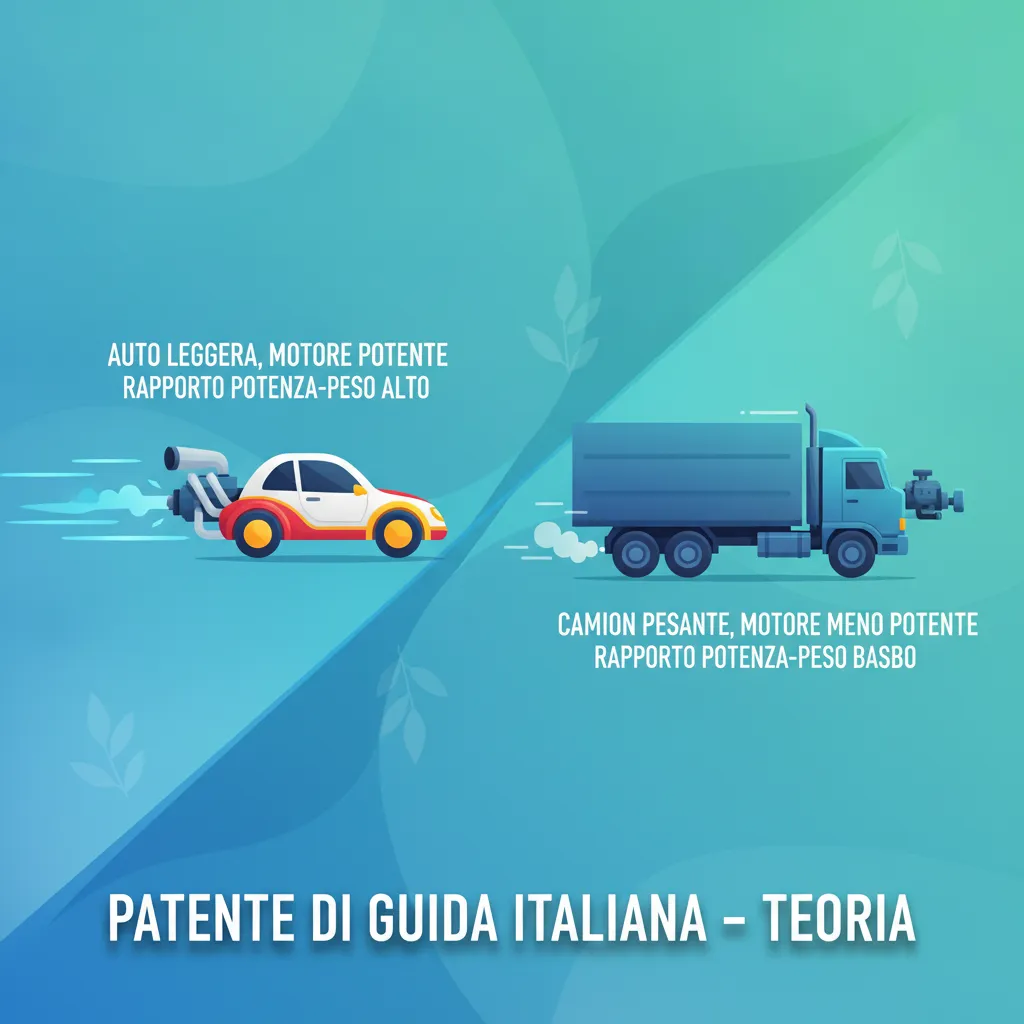
This lesson explains the core principles of motorcycle engines, focusing on key metrics like displacement, power, and the power-to-weight ratio. It details how these characteristics influence a motorcycle's acceleration, handling, and adherence to the specific limits of each license category. The content also covers different engine types and cooling systems, relating them to overall performance and reliability.
This lesson provides specialized instruction for driving in mountainous terrain. It teaches drivers how to select the correct gear for both climbing steep inclines to prevent engine strain and descending to maintain control without overheating the brakes. Techniques for navigating sharp hairpin bends, using passing places on narrow roads, and anticipating the effects of altitude on vehicle performance are also covered.

This lesson explores the practical, on-road consequences of the different motorcycle license categories. It analyzes how power and weight restrictions directly affect a motorcycle's handling, acceleration, and braking capabilities. Learners will understand how these factors shape riding strategies and safety considerations, highlighting the competency development needed for each successive license level.
This lesson provides a comprehensive guide to riding on high-speed motorways, or autostrade. It details the correct procedures for safely merging into traffic from an entry ramp and exiting via a deceleration lane. The content reinforces strict lane discipline, rules for overtaking, and the importance of maintaining a significantly larger following distance to compensate for higher speeds and potential wind gusts.
This lesson provides specific strategies for riding on narrow rural roads, which often feature poor surfaces and limited sightlines. It details the techniques for approaching and navigating hairpin bends, including selecting the correct line, managing speed before entry, and using appropriate gear selection. The content emphasizes anticipating oncoming traffic and potential hazards hidden around blind corners for enhanced safety.

This lesson focuses on the unique characteristics and challenges of driving on rural and mountain roads. It covers how to safely navigate sharp curves, steep inclines, and narrow lanes with limited visibility, often requiring the use of the horn to signal presence. The content also prepares drivers for potential hazards such as slow-moving agricultural vehicles, unexpected animal crossings, and variable road surface quality.
This lesson provides a detailed breakdown of the Italian motorcycle licence categories: A1, A2, and the unrestricted A. It explains the specific technical limits for engine displacement, power output in kW, and the power-to-weight ratio that define each category. Understanding these distinctions is fundamental for selecting a compliant vehicle and recognizing the legal scope of each license.

This lesson explains the physical effects of different weather conditions on motorcycle safety. It details how rain reduces tyre adhesion and increases the risk of hydroplaning, while fog severely limits visibility, requiring a significant reduction in speed. The content also covers how extreme heat and cold can affect tyre pressure and compound performance, necessitating adjustments from the rider.

This lesson provides a thorough examination of the Italian motorcycle theory test's structure and content. It details the number of questions, the multiple-choice format, and the minimum score required to pass for the A1, A2, and A license categories. The content is designed to prepare learners for the specific knowledge areas and administrative procedures involved in taking the official exam.

This lesson provides essential strategies for safely navigating long, steep downgrades. It teaches the principle of selecting a low gear before starting the descent, allowing the engine's natural resistance to help control the vehicle's speed. Learners will understand how to combine correct gear selection with the judicious use of engine brakes and retarders to maintain a steady, safe speed and keep the service brakes cool and ready for emergency use.
Master techniques for controlling speed on steep mountain descents. Learn how to use engine braking effectively and prevent dangerous brake fade to ensure safety on Italian roads.
This lesson provides essential strategies for safely navigating long, steep downgrades. It teaches the principle of selecting a low gear before starting the descent, allowing the engine's natural resistance to help control the vehicle's speed. Learners will understand how to combine correct gear selection with the judicious use of engine brakes and retarders to maintain a steady, safe speed and keep the service brakes cool and ready for emergency use.
This lesson teaches the critical skill of executing a rapid and controlled stop in an emergency. It covers the technique of applying firm, progressive pressure to the brakes to achieve maximum deceleration without locking the wheels, both in a straight line and while cornering. The content also explains how Anti-lock Braking Systems (ABS) function in these scenarios and the correct body posture to maintain stability.
This lesson provides specialized instruction for driving in mountainous terrain. It teaches drivers how to select the correct gear for both climbing steep inclines to prevent engine strain and descending to maintain control without overheating the brakes. Techniques for navigating sharp hairpin bends, using passing places on narrow roads, and anticipating the effects of altitude on vehicle performance are also covered.

This lesson provides an in-depth analysis of motorcycle braking systems, clearly defining the distinct roles of the front and rear brakes. It covers the mechanics of hydraulic disc brakes and explains the function and benefits of an Anti-lock Braking System (ABS). Learners will understand the principles of brake balance for achieving maximum stopping power and the importance of routine maintenance on pads, discs, and fluid.
This lesson focuses on the factors that determine a motorcycle's total stopping distance: perception time, reaction time, and braking distance. It provides a clear understanding of how speed exponentially increases the distance required to come to a complete stop. Learners will be able to apply principles like the two-second rule to maintain a safe and appropriate following distance in various traffic situations.

This lesson focuses on auxiliary or 'endurance' braking systems designed to manage vehicle speed on long downgrades, reducing the risk of service brake overheating. It explains the operating principles of engine brakes (compression release brakes), hydrodynamic retarders, and exhaust brakes. Learners will understand when and how to use these powerful tools to maintain a safe, controlled speed and preserve the service brakes for when they are most needed.
This lesson provides specific strategies for riding on narrow rural roads, which often feature poor surfaces and limited sightlines. It details the techniques for approaching and navigating hairpin bends, including selecting the correct line, managing speed before entry, and using appropriate gear selection. The content emphasizes anticipating oncoming traffic and potential hazards hidden around blind corners for enhanced safety.
This lesson details correct braking techniques, emphasizing progressive application of both front and rear brakes for optimal stopping power. It explains the function of ABS in preventing wheel lock-up on slippery surfaces like wet roads or gravel. You will learn how different surfaces affect braking distance and how to adjust braking force to maintain control.
This lesson demystifies the essential riding technique of countersteering, explaining how a gentle push on the handlebar initiates a lean and directs the motorcycle into a turn. It covers the physical principles at play, including gyroscopic forces, that contribute to the bike's stability at speed. Understanding this concept is crucial for smooth, controlled, and intuitive steering, especially when making quick directional changes.
This lesson focuses on how to adapt riding techniques to maintain traction on compromised surfaces. It identifies common hazards such as wet leaves, manhole covers, gravel, and painted lines that can reduce the tyre's grip. Learners will understand how to use smooth and gentle throttle, brake, and steering inputs to prevent traction loss and maintain control in these challenging situations.
Find clear answers to common questions learners have about Strategies for Mountain Roads and Altitude Effects. Learn how the lesson is structured, which driving theory objectives it supports, and how it fits into the overall learning path of units and curriculum progression in Italy. These explanations help you understand key concepts, lesson flow, and exam focused study goals.
On long descents, constant use of your hand and foot brakes can cause them to overheat, leading to brake fade and reduced stopping power. Using engine braking allows you to control your speed safely while keeping your main braking system ready for an emergency stop.
As altitude increases, the air becomes thinner (less dense). This changes the air-fuel mixture in your engine, often resulting in a noticeable loss of power, especially in smaller displacement motorcycles like those in the A1 category.
While standard right-of-way rules apply, you must always be visible to oncoming traffic. It is crucial to position yourself correctly on your side of the lane, avoid cutting corners, and always use your horn to signal your presence on narrow, blind bends.
Reduce your speed immediately, turn on your low-beam headlights or fog lights if equipped, and increase your following distance. If visibility becomes too poor to proceed safely, find a designated pull-off area and wait for conditions to improve.
Start searching now to pinpoint exactly which Italian driving theory topics, road signs, or traffic rules you need to master. Use our advanced filters to build a custom practice session and ensure you're fully prepared for every aspect of your official driving licence exam.