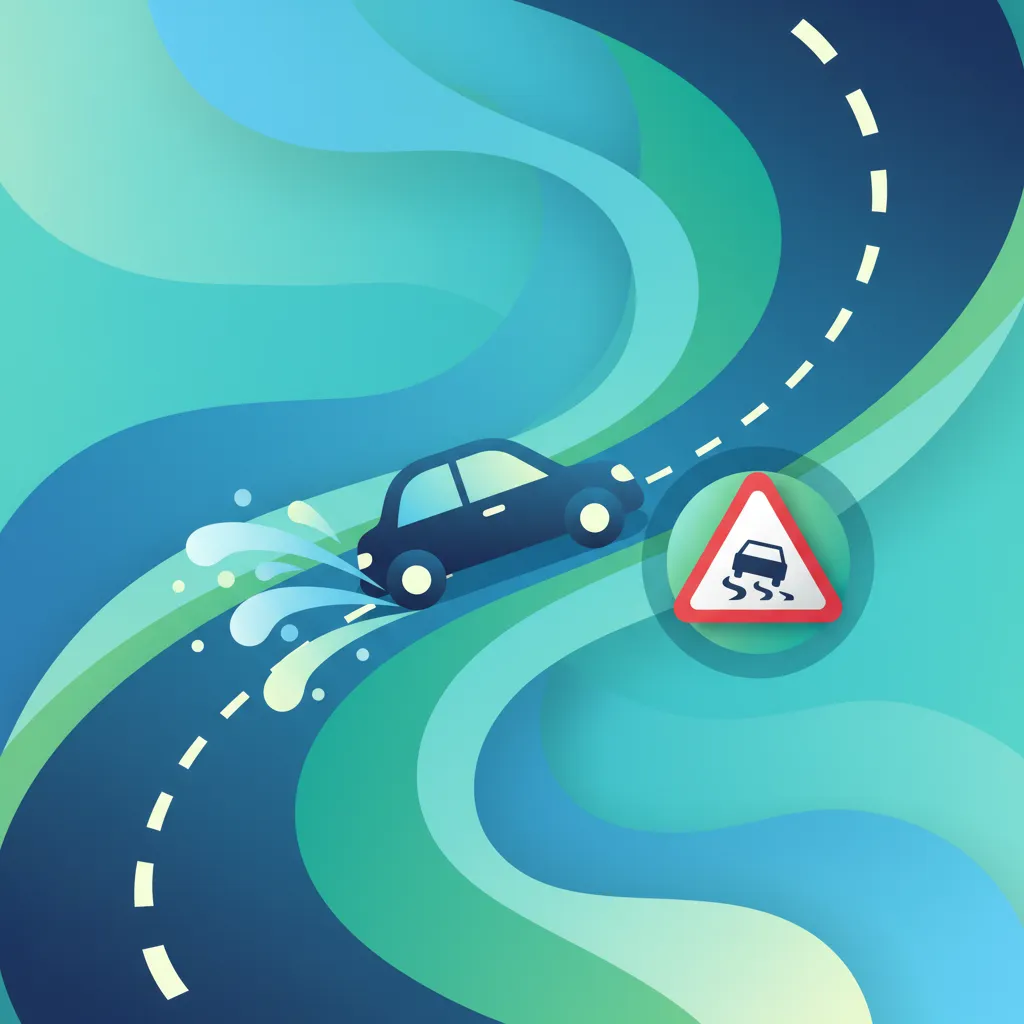
Slippery road conditions significantly increase driving risk by reducing the friction between your vehicle's tires and the road surface. This loss of traction impacts your ability to accelerate, steer, and brake effectively. This page explains common causes of slippery roads in Spain, such as rain, ice, and snow, and outlines the critical adjustments every driver must make to prevent skidding and maintain control.
Theory topic content overview
Read the full theory topic guide for Slippery Roads & Traction with structured, easy-to-scan content built for learners in Spain. This detailed section explains the exact rule, meaning, traffic context, comparison points, and exam logic behind this Spanish driving theory topic so you can study faster, understand the concept more clearly, and avoid common interpretation mistakes on the theory test.
Slippery roads, known as calzadas deslizantes in Spanish driving theory, occur when the essential friction between your vehicle's tires and the road surface is significantly reduced. This reduction in friction, or loss of traction, compromises your ability to control the vehicle, affecting how effectively you can accelerate, steer, and brake. Maintaining optimal tire grip is fundamental to road safety.
When the road becomes slippery, your tires struggle to find the necessary purchase on the pavement. This leads to a higher risk of skidding, particularly during sudden maneuvers, making controlled driving much more challenging and increasing the likelihood of an accident.
Understanding how to react to slippery road conditions is not just a theoretical exercise; it's a critical safety skill and a frequently tested topic in the DGT driving theory exam in Spain. The diverse climate across Spain, from heavy rain in the north and along the coasts to snow and ice in mountainous regions and during winter, means drivers frequently encounter these challenging conditions.
The DGT places strong emphasis on adaptive driving techniques and the drastic impact of reduced traction on key safety metrics like braking distance. Misinterpreting road conditions or failing to adjust your driving can lead to severe consequences, making this a high-priority area for all learner drivers in Spain.
Several environmental and road conditions can lead to slippery surfaces:
aquaplaning (hydroplaning), where a layer of water builds up between tires and the road, causing a complete loss of grip.pasos de cebra) and arrows, can be significantly more slippery than asphalt when wet, particularly for two-wheeled vehicles.Safe driving on slippery roads in Spain demands a significant adjustment in driving style. The core principle is smoothness and anticipation.
distancia de frenado (braking distance).marcha corta) to engage engine braking (freno motor). This helps control speed without relying heavily on the foot brake, which can easily cause a skid. This is a common DGT exam question.Neumáticos): Ensure your tires have adequate tread depth and are correctly inflated. Worn tires are far more prone to losing grip and aquaplaning.One of the most vital distinctions when driving on slippery roads is the dramatic increase in braking distance (distancia de frenado). The DGT theory exam frequently highlights these figures:
This means if you normally stop in 20 meters on a dry road, you might need 40 meters in rain and a full 200 meters on ice. This knowledge directly translates to the need for drastically increased following distances and significantly reduced speeds to ensure your stopping distance (distancia de detención) remains safe.
Anticipation is key. Look for these signs to identify slippery roads ahead:
Learners and even experienced drivers often make mistakes that lead to loss of control:
neumáticos desgastados) or incorrect tire pressure, which severely compromises grip.To safely navigate slippery roads in Spain and excel in your DGT theory exam, remember these practical takeaways:
By internalizing these principles, you will be well-prepared to handle adverse condiciones adversas and drive safely across Spain.
Slippery roads in Spain occur when rain, ice, snow, or loose materials reduce the friction between your tyres and the road surface, making it harder to control your vehicle. The DGT emphasises that braking distances can double in rain and increase up to ten times on ice, meaning drivers must significantly reduce speed, increase following distance, and execute all maneuvers smoothly. Key techniques include using engine braking on slippery descents, selecting appropriate gears, and anticipating hazards through visual and sensory cues. tyre condition and smooth, anticipatory driving are essential for safely navigating adverse conditions and passing the DGT theory exam.
A short set of high-value points that capture the most important ideas from this theory explanation.
Slippery roads drastically reduce tire traction, compromising your ability to accelerate, steer, and brake effectively.
Braking distance doubles on wet roads and can increase tenfold on ice compared to dry conditions.
All driving inputs—steering, braking, and acceleration—must be smooth and gradual to maintain available grip.
On slippery descents, use a lower gear to engage engine braking instead of relying on foot brakes, which can easily cause a skid.
The first raindrops after a dry spell are the most dangerous because they mix with accumulated dust, oil, and rubber to create a highly slick film.
Black ice forms as a nearly invisible thin layer, especially on bridges, overpasses, tunnels, and shaded road sections.
The P-34 'Calzada Deslizante' warning sign indicates areas prone to slippery conditions—reduce speed and increase caution here.
In icy conditions, stopping distances can reach 200 metres from what would normally be a 20-metre stop on dry roads.
Worn or underinflated tyres dramatically reduce grip and make aquaplaning much more likely in wet conditions.
Posted speed limits apply to ideal conditions—reduce speed whenever road surfaces are wet, icy, or otherwise compromised.
Using sudden or harsh inputs (braking, steering, or accelerating), which instantly breaks the limited traction available on slippery surfaces.
Underestimating black ice, particularly in shaded areas, early mornings, and on bridges where temperature drops first.
Driving at the posted speed limit assuming it is safe, even when road conditions are visibly poor or deteriorating.
Following the vehicle ahead too closely, not accounting for the drastically increased braking and stopping distances.
Failing to check tyre condition before driving—worn treads or incorrect pressure severely compromise grip on low-traction surfaces.
Start with a short, direct summary of Slippery Roads & Traction before reading the full explanation below.
Slippery roads occur when factors like rain, ice, snow, or loose gravel reduce tire traction, making it harder to control your vehicle. To drive safely in these conditions, drivers in Spain must significantly reduce speed, increase their following distance, and execute all maneuvers smoothly, especially braking and steering. Be aware that braking distances can drastically increase, up to ten times on ice.
Review the most important terms, rule signals, and traffic concepts linked to Slippery Roads & Traction.
Explore related theory topic pages connected to Slippery Roads & Traction and continue with the next useful rule explanation.
See the common search queries learners use when trying to understand Slippery Roads & Traction in Spain.

Continue your preparation by exploring specific Spanish driving theory topics in depth. Review road signs, understand priority rules, and master DGT traffic laws. This section provides the essential knowledge to pass your exam and drive safely across Spain.
Explore Spanish Driving Theory TopicsTheory topic content overview
A short set of high-value points that capture the most important ideas from this theory explanation.
Slippery roads drastically reduce tire traction, compromising your ability to accelerate, steer, and brake effectively.
Braking distance doubles on wet roads and can increase tenfold on ice compared to dry conditions.
All driving inputs—steering, braking, and acceleration—must be smooth and gradual to maintain available grip.
On slippery descents, use a lower gear to engage engine braking instead of relying on foot brakes, which can easily cause a skid.
The first raindrops after a dry spell are the most dangerous because they mix with accumulated dust, oil, and rubber to create a highly slick film.
Black ice forms as a nearly invisible thin layer, especially on bridges, overpasses, tunnels, and shaded road sections.
The P-34 'Calzada Deslizante' warning sign indicates areas prone to slippery conditions—reduce speed and increase caution here.
In icy conditions, stopping distances can reach 200 metres from what would normally be a 20-metre stop on dry roads.
Worn or underinflated tyres dramatically reduce grip and make aquaplaning much more likely in wet conditions.
Posted speed limits apply to ideal conditions—reduce speed whenever road surfaces are wet, icy, or otherwise compromised.
Using sudden or harsh inputs (braking, steering, or accelerating), which instantly breaks the limited traction available on slippery surfaces.
Underestimating black ice, particularly in shaded areas, early mornings, and on bridges where temperature drops first.
Driving at the posted speed limit assuming it is safe, even when road conditions are visibly poor or deteriorating.
Following the vehicle ahead too closely, not accounting for the drastically increased braking and stopping distances.
Failing to check tyre condition before driving—worn treads or incorrect pressure severely compromise grip on low-traction surfaces.
Start with a short, direct summary of Slippery Roads & Traction before reading the full explanation below.
Slippery roads occur when factors like rain, ice, snow, or loose gravel reduce tire traction, making it harder to control your vehicle. To drive safely in these conditions, drivers in Spain must significantly reduce speed, increase their following distance, and execute all maneuvers smoothly, especially braking and steering. Be aware that braking distances can drastically increase, up to ten times on ice.
Review the most important terms, rule signals, and traffic concepts linked to Slippery Roads & Traction.
Explore related theory topic pages connected to Slippery Roads & Traction and continue with the next useful rule explanation.
See the common search queries learners use when trying to understand Slippery Roads & Traction in Spain.
Continue your preparation by exploring specific Spanish driving theory topics in depth. Review road signs, understand priority rules, and master DGT traffic laws. This section provides the essential knowledge to pass your exam and drive safely across Spain.
Explore Spanish Driving Theory TopicsUse this exam-focused revision tip to understand how Slippery Roads & Traction is likely to appear in theory questions for learners in Spain. This section helps you identify the most testable part of the rule, avoid common traps, and remember the concept more effectively during Spanish driving theory exam preparation.
Many DGT exam questions test your understanding of how braking distances change on slippery surfaces, especially ice (up to 10 times longer) and rain (double). Remember to also factor in increased reaction time due to surprise, and always choose a lower gear when descending on slippery slopes to use engine braking.
Read direct answers to the most common learner questions about Slippery Roads & Traction in Spain. This FAQ focuses on rule confusion, practical meaning, comparison with similar concepts, and the exact uncertainties that appear most often in Spanish driving theory revision and exam preparation.
Roads become slippery when the friction (adhesion) between your tires and the road surface is reduced by factors like water, ice, snow, oil, gravel, or mud.
On a slippery road, the braking distance increases significantly. On wet roads, it can double, and on icy roads, it can be up to ten times longer than on dry pavement, according to DGT guidelines.
Aquaplaning occurs when a layer of water builds up between your tires and the road, causing a loss of steering and braking control. To avoid it, reduce speed, ensure tires have good tread, and avoid sudden movements during heavy rain.
If your vehicle skids, remain calm. Gently ease off the accelerator and turn the steering wheel smoothly in the direction you want the front of the car to go. Avoid sudden braking.
Yes, in Spain, you will see triangular warning signs like the P-34 "Calzada deslizante" (Slippery road) which indicates a section of road where the surface may be particularly slippery.
On snow or ice, reduce your speed drastically, increase following distance, use the highest possible gear to accelerate smoothly, and avoid sudden steering or braking. You may need snow chains in designated areas, following DGT regulations.
Use our powerful search functionality to pinpoint specific Spanish DGT driving theory practice sets. Filter by road sign categories, traffic law topics, or question difficulty to build custom study sessions and reinforce your knowledge precisely where it matters for your official exam.