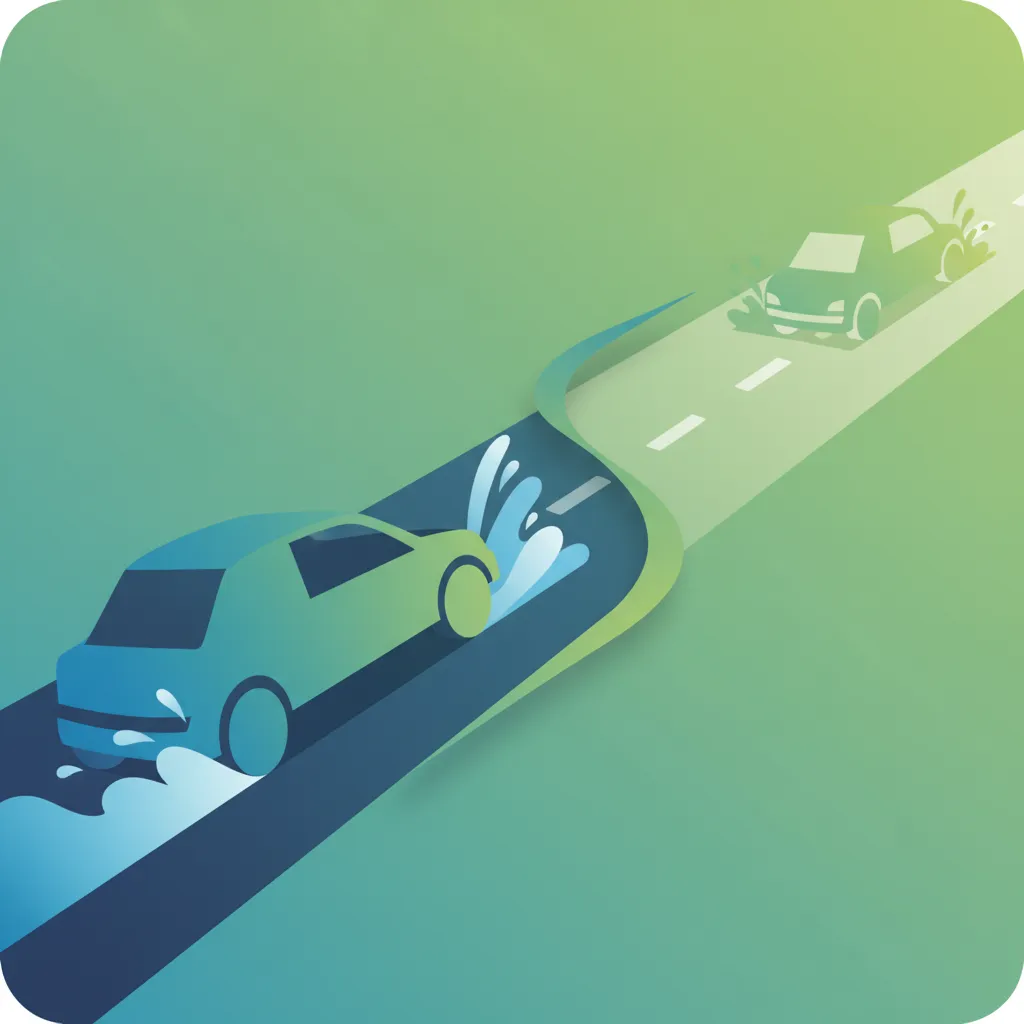
When roads are wet due to rain, the friction between your tires and the road surface is significantly reduced. This decrease in grip means your vehicle needs much longer to slow down or stop, and the risk of skidding or aquaplaning increases dramatically. Adapting your driving behavior by reducing speed and increasing following distance is essential to manage these hazards safely in Spain.
Theory topic content overview
Read the full theory topic guide for Wet Road Braking with structured, easy-to-scan content built for learners in Spain. This detailed section explains the exact rule, meaning, traffic context, comparison points, and exam logic behind this Spanish driving theory topic so you can study faster, understand the concept more clearly, and avoid common interpretation mistakes on the theory test.
When rain falls, the road surface undergoes a profound change, significantly impacting a vehicle's braking performance and overall control. For drivers in Spain, understanding the mechanics of wet road braking is not just crucial for safety but also a key area tested in DGT driving theory exams.
At its heart, braking on wet roads comes down to one fundamental principle: a drastic reduction in friction (adherencia) between your vehicle's tires and the road surface. Water acts as a lubricant, preventing the tire rubber from making optimal contact with the asphalt.
This diminished grip means:
Understanding wet road braking and vehicle control is vital for several reasons, particularly for driving in Spain:
The moment water appears on the road, the dynamics of driving change. Here’s a breakdown of the key mechanisms:
Water reduces the coefficient of friction. Your tires are designed with treads to channel water away, allowing the rubber to grip the dry road underneath. However, when the volume of water is high or speed is excessive, the treads can't cope, leading to reduced grip.
A primary rule for driving in rain in Spain is that your braking distance doubles compared to dry conditions. This is a critical point for DGT theory. This means if you normally stop in 20 meters, you might need 40 meters on a wet surface. This significant increase necessitates a much larger safety distance (distancia de seguridad) from the vehicle in front.
Skidding occurs when the braking or steering force applied by the driver exceeds the available grip between the tires and the road. On wet surfaces, this threshold is much lower. If you brake too hard or steer too sharply, your wheels can lock up or lose lateral grip, leading to a loss of control.
This is arguably the most dangerous consequence of wet roads. Aquaplaning (or hydroplaning) happens when a layer of water builds up between your tires and the road surface, lifting the tires off the ground.
Several elements influence how your vehicle performs on wet roads:
The fundamental distinction for DGT learners is understanding the magnitude of change.
Consider these common situations on Spanish roads:
Learners and even experienced drivers often make these errors:
The DGT's emphasis on wet road braking is clear and frequent in theory tests. They expect drivers to:
To master wet road braking in Spain and ensure safe vehicle control, adopt a defensive driving mindset. Always assume reduced grip and plan your driving with ample margins. Slow down significantly, increase your following distance, ensure your tires are in top condition, and use all vehicle controls (steering, braking, acceleration) with extreme gentleness and foresight. Your ability to adapt to rainy conditions is a hallmark of a safe and responsible driver, both for your DGT exam and for real-world safety on Spanish roads.
Wet road braking fundamentally differs from dry conditions because water reduces tire-road friction, doubling stopping distances and dramatically increasing the risk of skidding and aquaplaning. Speed reduction is the primary adaptation measure, followed by significantly increased safety distances and smooth, progressive use of brakes and steering. Tire condition, road surface type, and rain intensity all influence grip levels, with the first moments of rainfall being particularly hazardous due to mixed road contaminants. For DGT exams and real-world Spanish driving, mastering these wet weather adaptations is essential for both safety and theory test success.
A short set of high-value points that capture the most important ideas from this theory explanation.
Water acts as a lubricant between tires and road surface, drastically reducing the friction needed for effective braking
On wet roads, braking distance 'se duplica' (doubles) compared to dry conditions, requiring significantly more space to stop safely
Aquaplaning occurs when tires cannot displace water and literally ride on top of a water layer, completely eliminating steering and braking control
Reducing speed is the single most effective precaution because it allows tires more time to displace water and maintain grip
Gentle, progressive braking and steering inputs are essential to avoid exceeding the much lower grip threshold on wet surfaces
The DGT rule: braking distance doubles ('se duplica') on wet roads compared to dry conditions
Tire condition is critical — adequate tread depth and correct pressure allow tires to channel water away effectively
The first moments of rainfall create the most dangerous conditions as water mixes with accumulated oils and dust on the road
Safety distance (distancia de seguridad) must be substantially increased to allow for longer stopping distances
After driving through deep puddles or flooded sections, gently tap the brakes several times to dry the pads and restore effectiveness
Failing to adjust speed and following distance sufficiently, assuming the vehicle will perform like on dry roads
Using sudden or harsh braking which can lock wheels and cause a skid, especially without ABS
Making aggressive or sharp steering inputs that exceed available grip on wet surfaces
Neglecting tire condition — driving with worn tires or incorrect pressure severely compromises water displacement
Not recognizing that the initial moments of rain create an especially slippery road surface due to mixed contaminants
Start with a short, direct summary of Wet Road Braking before reading the full explanation below.
On wet roads, tire grip is significantly reduced, which can double your braking distance compared to dry conditions. This loss of friction also increases the risk of aquaplaning (where tires lose contact with the road due to a water layer) and skidding. To drive safely in rain, you must reduce your speed, increase your following distance, and use gentle, progressive braking and steering inputs to maintain control.
Review the most important terms, rule signals, and traffic concepts linked to Wet Road Braking.
Explore related theory topic pages connected to Wet Road Braking and continue with the next useful rule explanation.
See the common search queries learners use when trying to understand Wet Road Braking in Spain.

Continue your preparation by exploring specific Spanish driving theory topics in depth. Review road signs, understand priority rules, and master DGT traffic laws. This section provides the essential knowledge to pass your exam and drive safely across Spain.
Explore Spanish Driving Theory TopicsTheory topic content overview
A short set of high-value points that capture the most important ideas from this theory explanation.
Water acts as a lubricant between tires and road surface, drastically reducing the friction needed for effective braking
On wet roads, braking distance 'se duplica' (doubles) compared to dry conditions, requiring significantly more space to stop safely
Aquaplaning occurs when tires cannot displace water and literally ride on top of a water layer, completely eliminating steering and braking control
Reducing speed is the single most effective precaution because it allows tires more time to displace water and maintain grip
Gentle, progressive braking and steering inputs are essential to avoid exceeding the much lower grip threshold on wet surfaces
The DGT rule: braking distance doubles ('se duplica') on wet roads compared to dry conditions
Tire condition is critical — adequate tread depth and correct pressure allow tires to channel water away effectively
The first moments of rainfall create the most dangerous conditions as water mixes with accumulated oils and dust on the road
Safety distance (distancia de seguridad) must be substantially increased to allow for longer stopping distances
After driving through deep puddles or flooded sections, gently tap the brakes several times to dry the pads and restore effectiveness
Failing to adjust speed and following distance sufficiently, assuming the vehicle will perform like on dry roads
Using sudden or harsh braking which can lock wheels and cause a skid, especially without ABS
Making aggressive or sharp steering inputs that exceed available grip on wet surfaces
Neglecting tire condition — driving with worn tires or incorrect pressure severely compromises water displacement
Not recognizing that the initial moments of rain create an especially slippery road surface due to mixed contaminants
Start with a short, direct summary of Wet Road Braking before reading the full explanation below.
On wet roads, tire grip is significantly reduced, which can double your braking distance compared to dry conditions. This loss of friction also increases the risk of aquaplaning (where tires lose contact with the road due to a water layer) and skidding. To drive safely in rain, you must reduce your speed, increase your following distance, and use gentle, progressive braking and steering inputs to maintain control.
Review the most important terms, rule signals, and traffic concepts linked to Wet Road Braking.
Explore related theory topic pages connected to Wet Road Braking and continue with the next useful rule explanation.
See the common search queries learners use when trying to understand Wet Road Braking in Spain.
Continue your preparation by exploring specific Spanish driving theory topics in depth. Review road signs, understand priority rules, and master DGT traffic laws. This section provides the essential knowledge to pass your exam and drive safely across Spain.
Explore Spanish Driving Theory TopicsUse this exam-focused revision tip to understand how Wet Road Braking is likely to appear in theory questions for learners in Spain. This section helps you identify the most testable part of the rule, avoid common traps, and remember the concept more effectively during Spanish driving theory exam preparation.
DGT exams frequently test your understanding of how wet roads affect braking. Remember that braking distance 'se duplica' (doubles) in the rain. Pay close attention to questions about reducing speed, increasing safety distance, and the dangers of aquaplaning, especially in the first moments of a downpour.
Read direct answers to the most common learner questions about Wet Road Braking in Spain. This FAQ focuses on rule confusion, practical meaning, comparison with similar concepts, and the exact uncertainties that appear most often in Spanish driving theory revision and exam preparation.
Braking distance increases on wet roads because water acts as a lubricant between your tires and the road surface, drastically reducing the available friction. This means your tires have less grip, requiring more time and distance to bring the vehicle to a stop.
Aquaplaning, known as 'aquaplaning' in Spanish, occurs when a layer of water builds up between your tires and the road, causing the tires to lose contact and you to lose steering and braking control. Prevent it by reducing speed significantly, ensuring your tires have good tread depth, and avoiding large puddles.
According to DGT regulations and driving theory, the braking distance on wet roads can be at least double that on dry pavement. This is a crucial point for DGT exams.
If your vehicle skids on a wet road, lift your foot from the accelerator. Do not brake sharply. Try to steer gently in the direction of the skid to regain control, then slowly apply acceleration once grip is restored.
Yes, the first rain after a dry spell is often the most dangerous. Rain mixes with accumulated dust, oil, and grease on the road, creating a very slippery film that severely reduces tire grip.
Use your brakes smoothly and progressively, applying less pressure than you would on dry roads. Begin braking earlier than usual to allow for the increased stopping distance. If your car has ABS, you can press firmly, but always maintain control. Without ABS, pump the brakes gently to avoid locking the wheels.
Use our powerful search functionality to pinpoint specific Spanish DGT driving theory practice sets. Filter by road sign categories, traffic law topics, or question difficulty to build custom study sessions and reinforce your knowledge precisely where it matters for your official exam.