
This lesson focuses on the critical safety procedures required when reversing heavy goods vehicles, including Category C and C1 lorries. You will learn the importance of pre-reversing walk-around checks, effective communication, and how to safely utilize a banksman to navigate tight spaces.

Lesson content overview
Reversing a heavy goods vehicle (HGV) is one of the most hazardous maneuvers a professional driver can undertake. The sheer size, extensive blind spots, and load dynamics of Category C and C1 vehicles create significant risks for the driver, pedestrians, other road users, and property. This lesson, part of your Official Swiss Driving Theory Course for Category C & C1 Goods Vehicles, outlines the essential protocols and legal requirements for safe reversing, focusing on thorough pre-reversing checks and the critical role of a competent banksman (signaller). Mastering these techniques is fundamental to preventing accidents and ensuring the safety of everyone around your vehicle.
Heavy goods vehicles, including lorries and articulated trucks, are designed for carrying substantial loads, which inherently means they are long, wide, and tall. These dimensions result in severely restricted rear visibility, creating vast blind spots that conventional mirrors cannot fully cover. Furthermore, the immense mass and momentum of an HGV mean that even low-speed collisions can cause severe damage or fatal injuries.
When a heavy vehicle reverses, the driver's direct view of the area immediately behind and to the sides is often completely obstructed by the vehicle body, trailer, or load. This limited perspective, combined with the slow reaction time inherent in moving a large mass, makes reversing an inherently dangerous operation. Understanding these inherent risks is the first step towards implementing effective safety measures.
To mitigate the dangers associated with reversing, professional drivers must adhere to a set of core principles. These principles integrate proactive visual assessment, precise speed control, and clear communication to ensure every reversing maneuver is executed safely and efficiently.
Before a heavy vehicle moves even an inch backward, a comprehensive visual assessment of the surrounding area is mandatory. This is not merely a glance in the mirrors; it is a systematic and thorough scan that encompasses direct sight, mirror checks, and a peripheral scan for blind spots. The purpose is to identify any potential obstacles, pedestrians, cyclists, or other vehicles that may be in the vehicle's path.
This proactive assessment, required by Swiss road traffic regulations (Article 48), ensures that the driver has the most accurate picture of their surroundings before initiating movement. Relying solely on mirrors without personal visual confirmation is a common and dangerous misunderstanding.
Once the path is assessed as clear, the vehicle must begin reversing at a controlled and extremely slow speed. For heavy goods vehicles, this means reversing at a walking pace, typically not exceeding 3 kilometres per hour (km/h). This mandatory speed limit, enshrined in Swiss Traffic Regulations (Article 45), is crucial for several reasons:
To maintain walking pace, the driver should select a low gear (usually first gear for reverse) and gently modulate the accelerator, often relying primarily on clutch control to creep the vehicle backward. Avoid rapid gear changes or excessive throttle application, which can cause the vehicle to lurch or accelerate beyond a safe speed.
In situations where a driver's rear visibility is obstructed – which is often the case with heavy loads, trailers, or in confined spaces – the use of a competent banksman, also known as a signaller, is mandatory under Swiss Regulations (Article 52). A banksman is a designated and trained person who positions themselves outside the vehicle, typically at the front where they can maintain eye contact with the driver via the mirrors, and guides the reversing maneuver using standardized hand signals.
The banksman's primary role is to overcome the driver’s inherent visibility limitations. They act as the "eyes and ears" on the ground, providing an external perspective on the vehicle's position relative to obstacles, other vehicles, and vulnerable road users.
Never assume that just any person can act as a banksman. Their competence is paramount to safety.
Effective communication between the driver and the banksman is non-negotiable. To eliminate ambiguity and reduce the risk of misinterpretation, a universal set of standardized hand signals must be used, as mandated by Swiss Regulations (Article 53). Both the driver and the banksman must be thoroughly trained in these signals and understand their precise meaning.
The driver must constantly observe the banksman for these signals and respond without hesitation. Any deviation from these standardized signals can lead to dangerous misunderstandings.
Reversing a heavy vehicle is a dynamic process. The environment can change rapidly, and new hazards can emerge. Therefore, continuous communication between the banksman and the driver throughout the entire maneuver is vital. This means the banksman should provide ongoing updates and instructions, and the driver should acknowledge these commands.
The most critical aspect of continuous communication is the rule that the driver must stop immediately if visual contact with the banksman is lost for any reason. This is a mandatory requirement under Swiss Regulations (Article 54). Loss of contact implies a loss of coordinated control, and continuing to reverse blindly poses an unacceptable risk. The driver should then reassess the situation, re-establish visual contact with the banksman, or conduct another all-round check before resuming the maneuver.
The Swiss road traffic regulations, particularly those concerning heavy goods vehicles, are stringent when it comes to reversing. These rules are designed to protect all road users and property, acknowledging the inherent risks.
Before any reversing maneuver, drivers of heavy vehicles are legally obliged to perform a thorough visual check of the area behind, to the sides, and ahead of the vehicle. This includes using mirrors and, crucially, direct observation (turning the head) to confirm the path is clear. Failure to do so can result in significant penalties if an accident occurs.
Swiss law specifically mandates the use of a competent banksman (signaller) in situations where the driver's rear view is obstructed by the load or vehicle structure, or when maneuvering in confined, high-risk areas.
Swiss Regulations (Articles 52-54) regarding Banksmen:
These articles underscore the legal obligation to use a trained professional for guidance, especially when navigating complex environments like loading bays or construction sites.
As discussed, Swiss Traffic Regulations (Article 45) specify that all reversing maneuvers must be conducted at a very slow pace, typically defined as walking pace (not exceeding approximately 3 km/h for heavy vehicles). This speed limitation is fundamental for safety and allows for adequate reaction time.
Proper lighting is essential, especially when reversing during nighttime, dusk, or in conditions of reduced visibility such as fog, heavy rain, or snow.
Reversing is rarely a straightforward process, and various conditions can introduce additional complexities. Professional drivers must be prepared to adapt their approach based on the specific circumstances.
Reversing with a trailer or semi-trailer presents a unique challenge due to the phenomenon of articulation (the pivot point between the towing vehicle and the trailer). The trailer will move in the opposite direction to the steering input of the towing vehicle, requiring significant skill and practice.
When reversing an articulated vehicle:
Depots, loading bays, and construction sites are often confined spaces with limited maneuvering room, numerous obstacles, and a mix of vehicle and pedestrian traffic. Reversing in such environments, as explored further in Lesson 7.5: Manoeuvring in Confined Spaces: Depots and Loading Bays, demands extreme caution.
Pedestrians and cyclists are particularly vulnerable around heavy vehicles, especially during reversing. Their smaller size and often unpredictable movements make them difficult to spot.
Adverse weather and poor lighting significantly degrade visibility and can affect vehicle handling.
Modern heavy vehicles are increasingly equipped with Advanced Driver-Assistance Systems (ADAS), such as reverse cameras, proximity sensors, and audible alarms. These systems, detailed in Lesson 7.6: Advanced Driver-Assistance Systems (Cameras, Sensors), can provide valuable supplementary information during reversing.
ADAS as Supplemental Aids: While ADAS can enhance awareness, they do not replace the legal requirement for a pre-reversing visual check or the use of a competent banksman where mandated by Swiss regulations. They are tools to assist the driver, not substitutes for human vigilance and judgment. Sensors may miss small objects or rapidly moving pedestrians, and camera views can be distorted or blocked.
Even experienced drivers can fall into common traps when reversing. Being aware of these pitfalls can help prevent accidents:
Reversing without a Comprehensive Visual Scan:
Using an Untrained Person as a Banksman:
Exceeding Walking Pace:
Lost Communication with Banksman:
Inadequate Lighting at Night:
Ignoring Load Shift on Slopes:
The procedures outlined in this lesson are not merely suggestions; they are mandatory safety protocols designed to prevent serious incidents. Reversing accidents, particularly those involving heavy vehicles, often result in severe injuries or fatalities due to the sheer weight and crushing force involved. Statistically, a significant percentage of accidents in depots and loading areas are related to reversing maneuvers. Adhering to these safe reversing techniques, including the use of a competent banksman and maintaining walking pace, has been shown to reduce such incidents dramatically.
By consistently applying these principles, you contribute not only to your own safety and the integrity of your vehicle and load but, more importantly, to the safety of every individual who shares the road or working environment with your heavy goods vehicle.
Reversing heavy vehicles is inherently dangerous due to extensive blind spots and the vehicle's mass, requiring strict safety protocols under Swiss traffic law. Before reversing, a thorough visual assessment is mandatory, including direct observation and, where possible, a walk-around check of the entire perimeter. Swiss regulations (Articles 52-54) require a trained banksman whenever visibility is restricted, with standardized hand signals ensuring clear communication; the driver must stop immediately if contact with the banksman is lost. The walking pace rule (3 km/h maximum) is essential for maintaining reaction time and minimizing impact force, while proper lighting and heightened awareness of vulnerable road users complete the safety picture. ADAS systems are supplementary aids only and cannot replace human vigilance or regulatory safety requirements.
A short set of high-value points that capture the most important learning from this lesson.
Perform a comprehensive visual scan including mirrors, direct head checks, and walk-around before any reversing maneuver, as mandated by Swiss Article 48.
Maintain walking pace not exceeding 3 km/h during reversing to ensure sufficient reaction time and minimize impact severity.
Always use a competent, trained banksman when rear visibility is obstructed, as required by Swiss Article 52.
Master six standardized hand signals: Stop, Proceed Straight, Turn Left, Turn Right, Slow Down, and Emergency Stop.
Stop immediately if visual contact with the banksman is lost, as mandated by Swiss Article 54.
Explore all units and lessons included in this driving theory course.
Walking pace rule: reverse at walking pace (approximately 3 km/h) to allow quick reactions and reduce collision severity.
Article 52 requires a competent banksman whenever load or vehicle structure obstructs rear visibility.
Article 54 mandates immediate stopping if visual contact with the banksman is lost during reversing.
Standardized hand signals are mandatory under Swiss Article 53 to eliminate communication ambiguity.
ADAS systems supplement safety checks but do not replace the legal requirement for visual assessment or a competent banksman.
Relying solely on mirrors without performing a direct head check or walk-around, leading to unseen pedestrians or obstacles.
Asking an untrained person to act as banksman, resulting in misinterpreted improvised signals and potential collisions.
Exceeding walking pace (3 km/h) due to time pressure, which reduces reaction time and increases stopping distance.
Continuing to reverse when the banksman is out of sight or signals become unclear, breaking Article 54 requirements.
Using only hazard lights in low visibility instead of low-beam headlights and reversing lights.
Lesson content overview
A short set of high-value points that capture the most important learning from this lesson.
Perform a comprehensive visual scan including mirrors, direct head checks, and walk-around before any reversing maneuver, as mandated by Swiss Article 48.
Maintain walking pace not exceeding 3 km/h during reversing to ensure sufficient reaction time and minimize impact severity.
Always use a competent, trained banksman when rear visibility is obstructed, as required by Swiss Article 52.
Master six standardized hand signals: Stop, Proceed Straight, Turn Left, Turn Right, Slow Down, and Emergency Stop.
Stop immediately if visual contact with the banksman is lost, as mandated by Swiss Article 54.
Explore all units and lessons included in this driving theory course.
Walking pace rule: reverse at walking pace (approximately 3 km/h) to allow quick reactions and reduce collision severity.
Article 52 requires a competent banksman whenever load or vehicle structure obstructs rear visibility.
Article 54 mandates immediate stopping if visual contact with the banksman is lost during reversing.
Standardized hand signals are mandatory under Swiss Article 53 to eliminate communication ambiguity.
ADAS systems supplement safety checks but do not replace the legal requirement for visual assessment or a competent banksman.
Relying solely on mirrors without performing a direct head check or walk-around, leading to unseen pedestrians or obstacles.
Asking an untrained person to act as banksman, resulting in misinterpreted improvised signals and potential collisions.
Exceeding walking pace (3 km/h) due to time pressure, which reduces reaction time and increases stopping distance.
Continuing to reverse when the banksman is out of sight or signals become unclear, breaking Article 54 requirements.
Using only hazard lights in low visibility instead of low-beam headlights and reversing lights.
Explore search topics learners often look for when studying Safe Reversing Techniques and Using a Banksman (Signaller). These topics reflect common questions about road rules, driving situations, safety guidance, and lesson level theory preparation for learners in Switzerland.
Browse additional driving theory lessons that cover connected traffic rules, road signs, and common driving situations related to this topic. Improve your understanding of how different rules interact across everyday traffic scenarios.
Learn about the significant dangers associated with reversing large vehicles like lorries and trucks in Switzerland. This lesson covers common risks, visibility issues, and the critical importance of safety procedures for professional drivers.

Reversing is the most dangerous manoeuvre a large vehicle can perform and should be avoided whenever possible. This lesson details a safe system of work for when reversing is unavoidable. It covers the importance of a 360-degree check before starting, the use of a banksman, and how to interpret standard hand signals.

Construction sites and industrial areas are non-public roads with their own set of rules and hazards. This lesson covers the need to follow site-specific safety instructions, be aware of moving plant machinery and personnel on the ground, and assess ground conditions. It highlights that reversing is often required and should be done with a signaller wherever possible.

Turning a long vehicle requires careful planning and execution. This lesson covers the correct procedure: approach, observation, signalling, and positioning the vehicle correctly to allow for the trailer's off-tracking without mounting the kerb. It also highlights the need for constant mirror checks throughout the turn to monitor for cyclists or other vulnerable road users who may enter the danger zone.

This lesson focuses on safe reversing techniques, emphasizing the use of mirrors, rearview cameras, and checking rear visibility. You will learn to control reversing speed and safely reverse around corners or in narrow spaces. The content also outlines the necessary safety checks to perform before and during any reversing maneuver to prevent accidents.

Swiss law strictly regulates the maximum dimensions of commercial vehicles to ensure they can safely navigate the infrastructure. This lesson specifies the standard limits for vehicle height (4.0m), width (2.55m), and length for various lorry and trailer combinations. Adhering to these dimensions is crucial for avoiding collisions with bridges, tunnels, and other structures, and for navigating narrow roads.

Losing part of a load on the road creates an immediate and serious hazard for other drivers. This lesson outlines the driver's responsibilities: stop in a safe place, assess the situation from a safe distance, and immediately alert the police. The driver's primary role is to warn other road users and not to attempt to retrieve the load from a live carriageway.

Heavy vehicles, especially those with a high centre ofgravity, are susceptible to rolling over. This lesson examines the primary causes, including excessive speed on bends or roundabouts, sudden steering manoeuvres, and the 'sloshing' effect of liquid loads in tankers. It reinforces that maintaining a sensible speed and driving smoothly are the best ways to mitigate this serious risk.

Heavy goods vehicles are fitted with specific safety structures to mitigate the severity of collisions with smaller vehicles and vulnerable road users. This lesson explains the function of the rear underrun bar, which prevents cars from going underneath the truck in a rear-end collision. It also covers side guards, which are designed to stop cyclists and pedestrians from falling under the vehicle's wheels during a side impact.
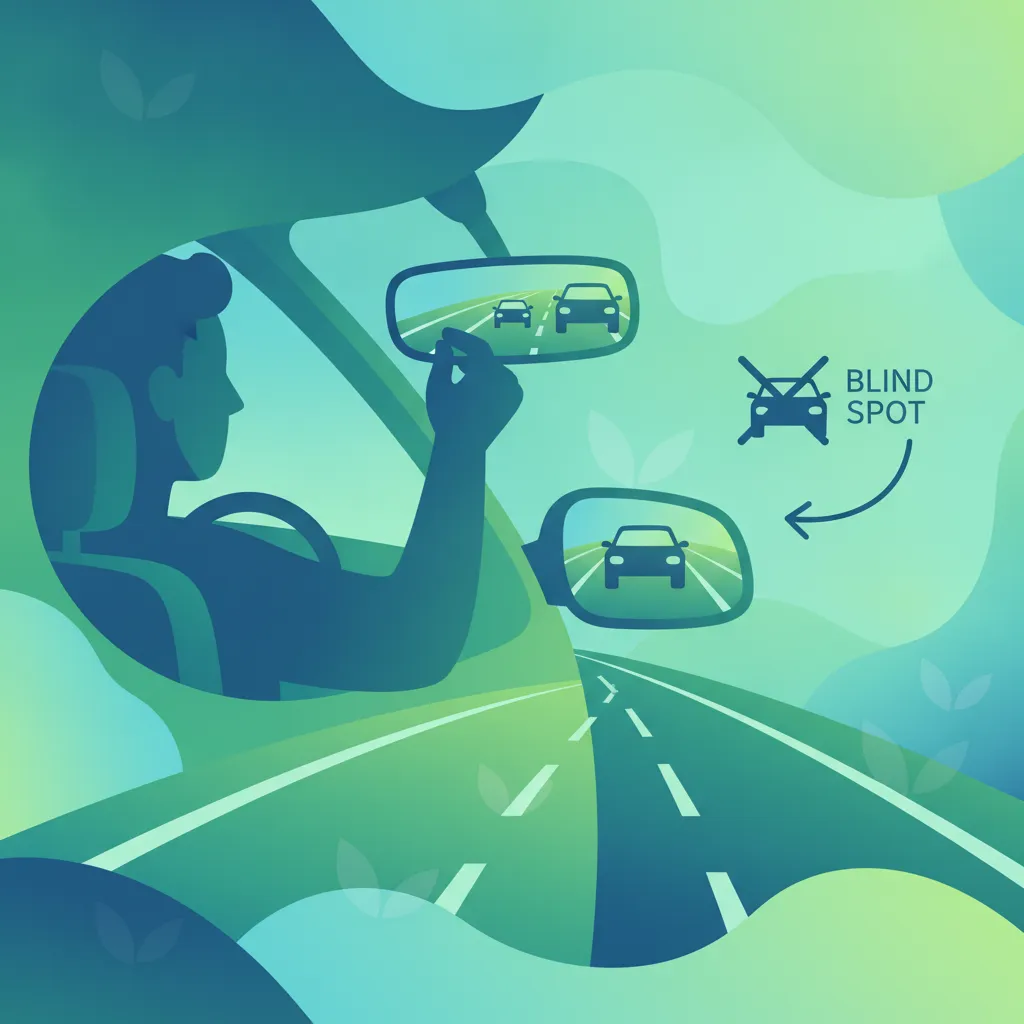
Despite the complex mirror systems, large areas around a truck remain hidden from the driver's view. This lesson maps out these significant blind spots: directly in front, behind, and along both sides of the vehicle. It teaches drivers to be constantly aware of these 'no-zones' and to anticipate that smaller vehicles, cyclists, or pedestrians may be hidden within them, especially before changing lanes or turning.
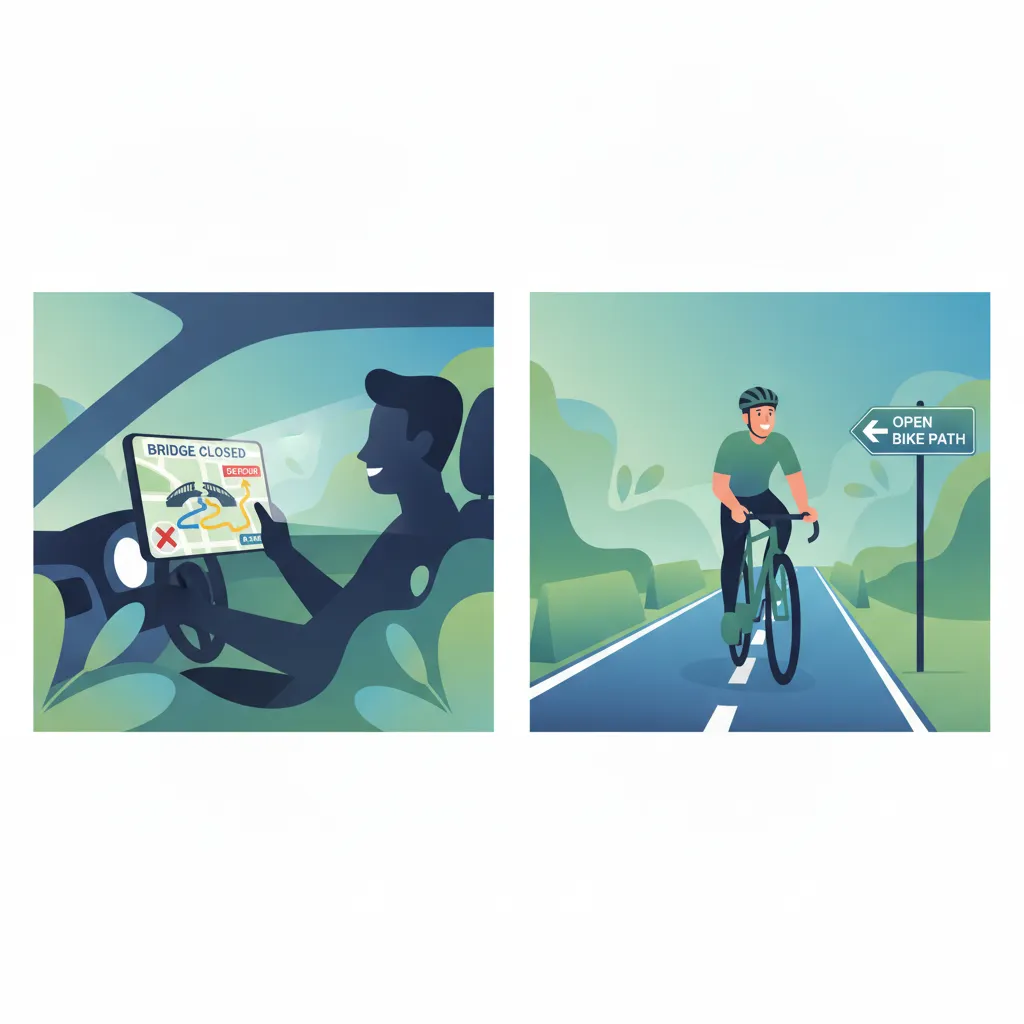
Unlike cars, heavy vehicles cannot travel on every road. This lesson stresses the importance of using HGV-specific satellite navigation systems or carefully checking maps to plan routes that avoid low bridges, weak bridges, and roads with weight or width restrictions. Proper planning saves time, fuel, and prevents dangerous situations or costly damage.
Master the essential role and communication techniques of a banksman (signaller) when reversing Category C and C1 heavy vehicles in Switzerland. Understand standardized hand signals and legal requirements for effective coordination and safety.
Reversing is the most dangerous manoeuvre a large vehicle can perform and should be avoided whenever possible. This lesson details a safe system of work for when reversing is unavoidable. It covers the importance of a 360-degree check before starting, the use of a banksman, and how to interpret standard hand signals.
Find clear answers to common questions learners have about Safe Reversing Techniques and Using a Banksman (Signaller). Learn how the lesson is structured, which driving theory objectives it supports, and how it fits into the overall learning path of units and curriculum progression in Switzerland. These explanations help you understand key concepts, lesson flow, and exam focused study goals.
Due to the size and significant blind spots of lorries, a banksman acts as the driver's eyes in restricted or high-pedestrian areas. The theory exam emphasizes that the driver is ultimately responsible for the vehicle, but must use a signaller to mitigate the inherent dangers of limited visibility.
A thorough walk-around check of the area behind and around the vehicle is mandatory. Even with a banksman, the driver must verify that the path is clear of pedestrians, cyclists, and obstacles before beginning the manoeuvre.
Yes, while the exact signals are standardized in professional training, you must understand the principle of clear, unambiguous communication. The exam looks for your knowledge that signals must be agreed upon beforehand and that the driver must stop immediately if visual contact with the banksman is lost.
Heavy vehicles have high mass and momentum; even at a low speed, a collision can be catastrophic. The theory test highlights the rule of a 'walking pace' to ensure the driver can stop instantly if a hazard emerges.
Pinpoint specific Swiss traffic rules, road signs, or driving situations you need to master. Use the practice search to start a focused revision session now and build confidence for your official driving theory exam.