
This lesson focuses on the critical skills required to manoeuvre large Category C and C1 vehicles safely within confined environments like loading bays and depots. You will learn to manage limited space, communicate with site staff, and handle common hazards to ensure both your vehicle and others remain secure.

Lesson content overview
Operating heavy goods vehicles (HGVs) in restricted environments like depots, loading bays, and warehouses presents some of the most challenging scenarios for Category C and C1 drivers. These areas are characterised by limited space, the frequent presence of pedestrians, other moving vehicles, and numerous fixed obstacles. Mastering safe and precise manoeuvring in these settings is not just a skill; it is a critical safety imperative that prevents accidents, protects cargo, and ensures the well-being of all site users. This lesson, part of your Official Swiss Driving Theory Course for Category C & C1 Goods Vehicles, delves into the essential principles and techniques required to navigate these complex environments with confidence and competence.
Confined spaces for heavy goods vehicles are areas where the ample dimensions of a truck or articulated combination are severely challenged by physical and operational constraints. These typically include:
The practical implication of these environments is that drivers must constantly adapt to tighter turning circles, reduced visibility due to obstacles or other vehicles, and the constant presence of vulnerable road users, primarily pedestrians. Site-specific rules, speed limits, and traffic flow regulations are almost always in place and must be strictly adhered to.
Ignoring site-specific rules, underestimating vehicle dimensions, or entering a confined area at excessive speed are common mistakes that can lead to costly collisions, damage to infrastructure, injury, or severe legal consequences.
Safe manoeuvring in confined spaces is built upon a foundation of several key principles that, when consistently applied, significantly reduce risk.
Operating your heavy goods vehicle at an extremely low speed, typically at or below 5 km/h, is the most crucial safety principle in confined environments.
Operating the vehicle at a speed that allows for full control and immediate stopping, typically at or below 5 km/h in confined spaces, using appropriate gear selection, engine braking, and clutch control.
The primary purpose of such low speeds is to drastically reduce the vehicle's kinetic energy (which increases with the square of speed), thereby increasing reaction time and making it easier to stop or adjust the vehicle’s path precisely. This precision is vital for tasks such as aligning with loading docks or navigating through narrow passages. Drivers must master the use of engine braking and clutch control to maintain a consistent, crawl-like speed without excessive use of the foot brake, which can lead to abrupt movements.
Constant and systematic observation of your surroundings is paramount. This involves continuously scanning the environment using all available visual aids and auditory cues.
The goal is to detect moving pedestrians, other vehicles, and unexpected obstacles as early as possible. This principle directly builds upon previous lessons regarding identifying and managing extensive blind spots in heavy vehicles.
Before initiating any manoeuvre in a confined space, especially reversing or tight turns, pause and formulate a clear plan.
The act of pre-planning the vehicle's path, identifying potential stop points, and anticipating necessary corrections before commencing any movement.
Visualise the vehicle’s trajectory, considering its overall dimensions, turning radius, and overhangs. Identify potential conflict points or obstacles. This methodical approach prevents abrupt manoeuvres, reduces stress for the driver, and ensures predictable movements for other site users. If unsure, stop, re-assess, or seek assistance. Rushing leads to errors and increased risk.
Effective communication is key to coordinating movements within busy and confined sites.
A trained person positioned to guide the driver, typically using standard hand signals or radio instructions, especially when the driver's view is obstructed. In Switzerland, this role is often referred to as a "Signaller."
The presence of a trained spotter or banksman (often called a 'Signaller' in Switzerland) is invaluable, especially when reversing or negotiating blind areas. They provide an external perspective, ensuring the path is clear and helping to maintain crucial clearance distances.
One of the most common tasks in a confined space is aligning the vehicle precisely with a loading dock.
Correct alignment is crucial for the safe transfer of goods, preventing load shift, and avoiding damage to both the vehicle and the infrastructure. It often requires meticulous reversing and slight forward adjustments.
Heavy vehicles have significant front and rear overhangs and a wide turning circle. When manoeuvring, drivers must always ensure sufficient clearance around all parts of the vehicle.
The minimum safe space required between any part of the vehicle and an obstacle (fixed structure, other vehicle, or pedestrian) to prevent collision.
This includes the corners of the cab, the rear of the trailer, and any protruding equipment. It is critical to account for the vehicle’s full dimensions, including mirrors and side markers, plus a safety margin, especially when turning into or out of bays or passing fixed pillars.
Before entering any confined area or commencing a manoeuvre, conduct a final visual and functional check.
Mirror Adjustment: Confirm all mirrors are correctly adjusted for your seating position and the current load.
Brake Function: Perform a gentle brake test at very low speed to ensure immediate stopping capability.
Load Security: Verify that the load is still securely fastened and has not shifted. Unsecured loads can affect vehicle stability during turns.
Spotter Readiness: If using a spotter, confirm their position is safe and that communication protocols are understood.
Site Assessment: Take a moment to visually re-assess the immediate area for new obstacles or pedestrians.
Any issues detected must be resolved before proceeding.
Beyond the core principles, several specific characteristics of heavy goods vehicles require particular attention in confined spaces.
Understanding the physical size of your heavy goods vehicle is fundamental to safe manoeuvring. This includes:
These dimensions dictate the space needed for safe entry into bays, clearance required while turning, and how close you can position the vehicle to fixed structures without contact. Always be aware of your vehicle's specific measurements.
Effective mirror use is even more critical in confined spaces.
Failing to adjust mirrors for load changes or neglecting to scan frequently can lead to missed obstacles or unseen pedestrians.
A spotter, or banksman, is an indispensable safety asset in situations where the driver's direct view is limited or obstructed.
In Switzerland, official guidelines often mandate the use of a trained spotter for reversing operations in areas with restricted visibility or high pedestrian traffic. Always confirm the spotter's presence and understanding before you start moving.
Depots and loading bays are often bustling with personnel and other vehicles.
Speed limits within depots, loading bays, and warehouse yards are typically very low, often posted at 5 km/h. These limits are not arbitrary; they are enforced to ensure maximum control and safety.
The maximum permissible speed for heavy goods vehicles within private or semi-private confined environments like depots, loading bays, and warehouse yards, often signposted at 5 km/h.
Exceeding these limits, even slightly, significantly reduces reaction time and increases the severity of any potential accident. Always adhere strictly to posted limits and, if none are posted, operate at an extreme low speed that allows for immediate stopping.
The stability of your vehicle can be significantly impacted by the load it carries.
This principle is directly connected to the broader topic of loads, weight distribution, and vehicle stability.
Off-tracking is a crucial concept for articulated vehicles (truck-and-trailer combinations) and even for rigid trucks with long wheelbases.
The phenomenon where the rear wheels of a vehicle, particularly an articulated one, follow a narrower path (inside the turning circle) than the front wheels during a turn.
When turning, the rear wheels will cut corners. This means that to avoid hitting obstacles with the trailer's side or rear, the driver must often initiate the turn wider or move further forward before turning. Understanding your vehicle's specific off-tracking characteristics is essential for planning the correct approach and trajectory into or out of a tight bay.
While many rules in depots and loading bays are site-specific, they are often underpinned by broader Swiss traffic law and safety guidelines applicable to heavy goods vehicles.
Drivers often encounter specific problems when manoeuvring in confined spaces:
Applying these principles in real-world scenarios is key to building proficiency.
To summarise, safe and efficient manoeuvring of heavy goods vehicles in confined spaces demands a highly disciplined and systematic approach:
By internalising and consistently applying these principles, you will be well-equipped to manage the complexities of manoeuvring heavy goods vehicles in confined spaces, ensuring safety for yourself, your vehicle, your cargo, and everyone else on site.
Manoeuvring heavy goods vehicles in confined spaces like depots and loading bays requires extreme low-speed control, continuous all-round observation, and meticulous planning. Key technical concepts include off-tracking (rear wheels cutting inside during turns), managing extensive blind spots through mirror use and spotter assistance, and understanding vehicle dimensions including overhangs. Swiss regulations mandate adherence to posted speed limits (typically 5 km/h), proper load securing, and the use of trained spotters when driver visibility is restricted. Pedestrian priority is absolute in these environments, and proper pre-manoeuvre checks of mirrors, brakes, and load security are essential before any movement.
A short set of high-value points that capture the most important learning from this lesson.
Extreme low speed (5 km/h or below) is the most critical safety principle in confined spaces, dramatically reducing kinetic energy and extending reaction time.
Off-tracking means rear wheels follow a narrower path than front wheels during turns, requiring wider initial positioning to prevent trailer contact with inner corners.
Continuous observation using mirrors, cameras, and head turns is essential because heavy vehicles have extensive A, B, and C blind spot zones.
A trained spotter or banksman (Signaller) must be used whenever the driver's view is obstructed, especially during reversing in tight spaces.
Pedestrians almost always have priority in depots and loading bays; drivers must yield and be prepared to stop immediately.
Explore all units and lessons included in this driving theory course.
Site speed limits in depots and loading bays are typically 5 km/h and must be strictly observed.
Pre-manoeuvre checks include mirror adjustment, brake function test, load security verification, and spotter confirmation.
The rear wheels cut inside during turns (off-tracking); plan wider approaches for articulated vehicles.
Never move against a stop signal from a banksman; always acknowledge signals before acting.
Mirrors must be re-adjusted when load conditions change to account for different vehicle dimensions and visibility.
Exceeding site speed limits due to speed creep, which reduces reaction time and increases collision severity.
Insufficient clearance calculation—failing to account for front and rear overhangs when turning near pillars or walls.
Moving the vehicle without a spotter in blind spots or reversing situations where direct vision is obstructed.
Neglecting to perform pre-move load security checks, risking load shift during turns that compromises vehicle stability.
Improper mirror adjustment for current load conditions, leaving critical blind spots unmonitored.
Lesson content overview
A short set of high-value points that capture the most important learning from this lesson.
Extreme low speed (5 km/h or below) is the most critical safety principle in confined spaces, dramatically reducing kinetic energy and extending reaction time.
Off-tracking means rear wheels follow a narrower path than front wheels during turns, requiring wider initial positioning to prevent trailer contact with inner corners.
Continuous observation using mirrors, cameras, and head turns is essential because heavy vehicles have extensive A, B, and C blind spot zones.
A trained spotter or banksman (Signaller) must be used whenever the driver's view is obstructed, especially during reversing in tight spaces.
Pedestrians almost always have priority in depots and loading bays; drivers must yield and be prepared to stop immediately.
Explore all units and lessons included in this driving theory course.
Site speed limits in depots and loading bays are typically 5 km/h and must be strictly observed.
Pre-manoeuvre checks include mirror adjustment, brake function test, load security verification, and spotter confirmation.
The rear wheels cut inside during turns (off-tracking); plan wider approaches for articulated vehicles.
Never move against a stop signal from a banksman; always acknowledge signals before acting.
Mirrors must be re-adjusted when load conditions change to account for different vehicle dimensions and visibility.
Exceeding site speed limits due to speed creep, which reduces reaction time and increases collision severity.
Insufficient clearance calculation—failing to account for front and rear overhangs when turning near pillars or walls.
Moving the vehicle without a spotter in blind spots or reversing situations where direct vision is obstructed.
Neglecting to perform pre-move load security checks, risking load shift during turns that compromises vehicle stability.
Improper mirror adjustment for current load conditions, leaving critical blind spots unmonitored.
Explore search topics learners often look for when studying Manoeuvring in Confined Spaces: Depots and Loading Bays. These topics reflect common questions about road rules, driving situations, safety guidance, and lesson level theory preparation for learners in Switzerland.
Browse additional driving theory lessons that cover connected traffic rules, road signs, and common driving situations related to this topic. Improve your understanding of how different rules interact across everyday traffic scenarios.
Learn essential techniques for identifying and mitigating extensive blind spots on lorries and articulated vehicles when manoeuvring in tight industrial environments such as depots and loading bays. Crucial for Swiss Category C driving theory.
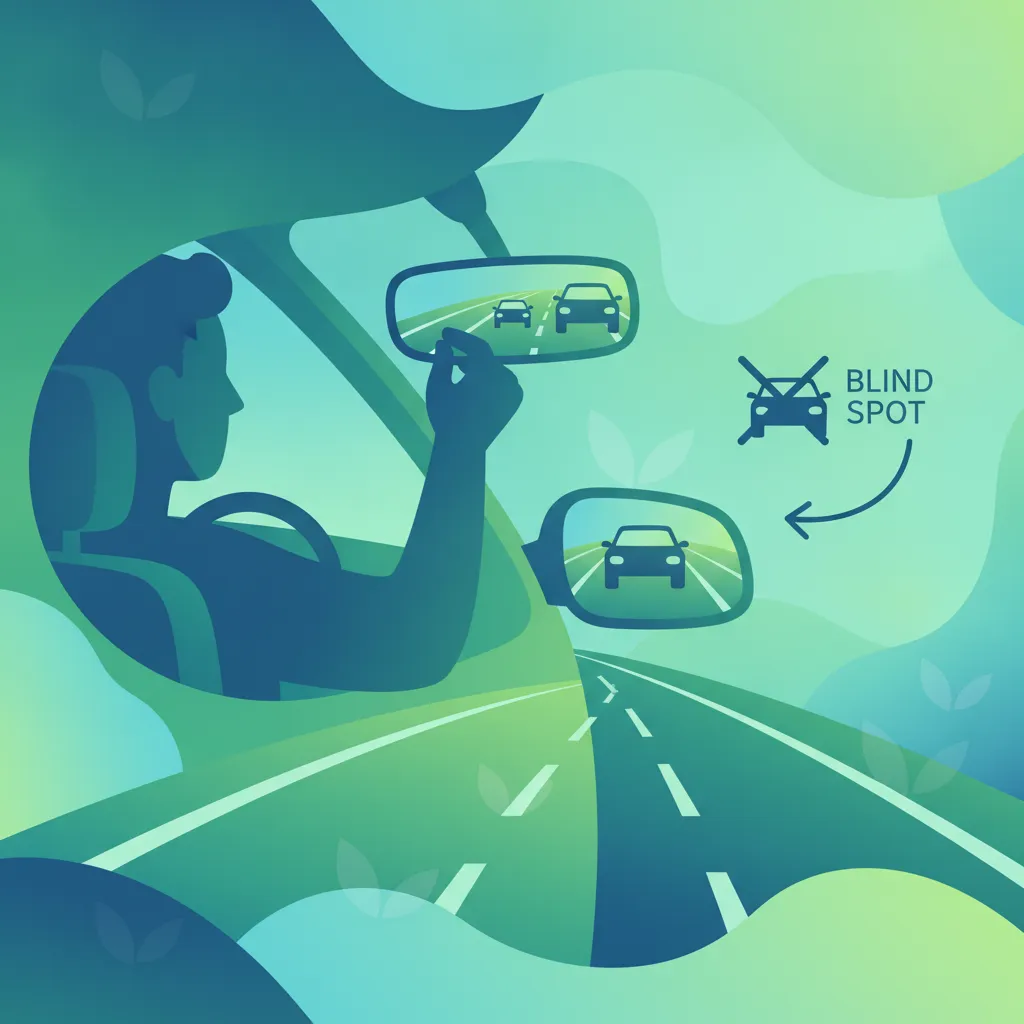
Despite the complex mirror systems, large areas around a truck remain hidden from the driver's view. This lesson maps out these significant blind spots: directly in front, behind, and along both sides of the vehicle. It teaches drivers to be constantly aware of these 'no-zones' and to anticipate that smaller vehicles, cyclists, or pedestrians may be hidden within them, especially before changing lanes or turning.

Construction sites and industrial areas are non-public roads with their own set of rules and hazards. This lesson covers the need to follow site-specific safety instructions, be aware of moving plant machinery and personnel on the ground, and assess ground conditions. It highlights that reversing is often required and should be done with a signaller wherever possible.

Buses and coaches have significant blind spots to the front, sides, and rear. This lesson maps out these 'no-zones' and teaches a continuous and active scanning process using all available mirrors and direct vision. The goal is to minimize the time any other road user spends undetected in a blind spot.
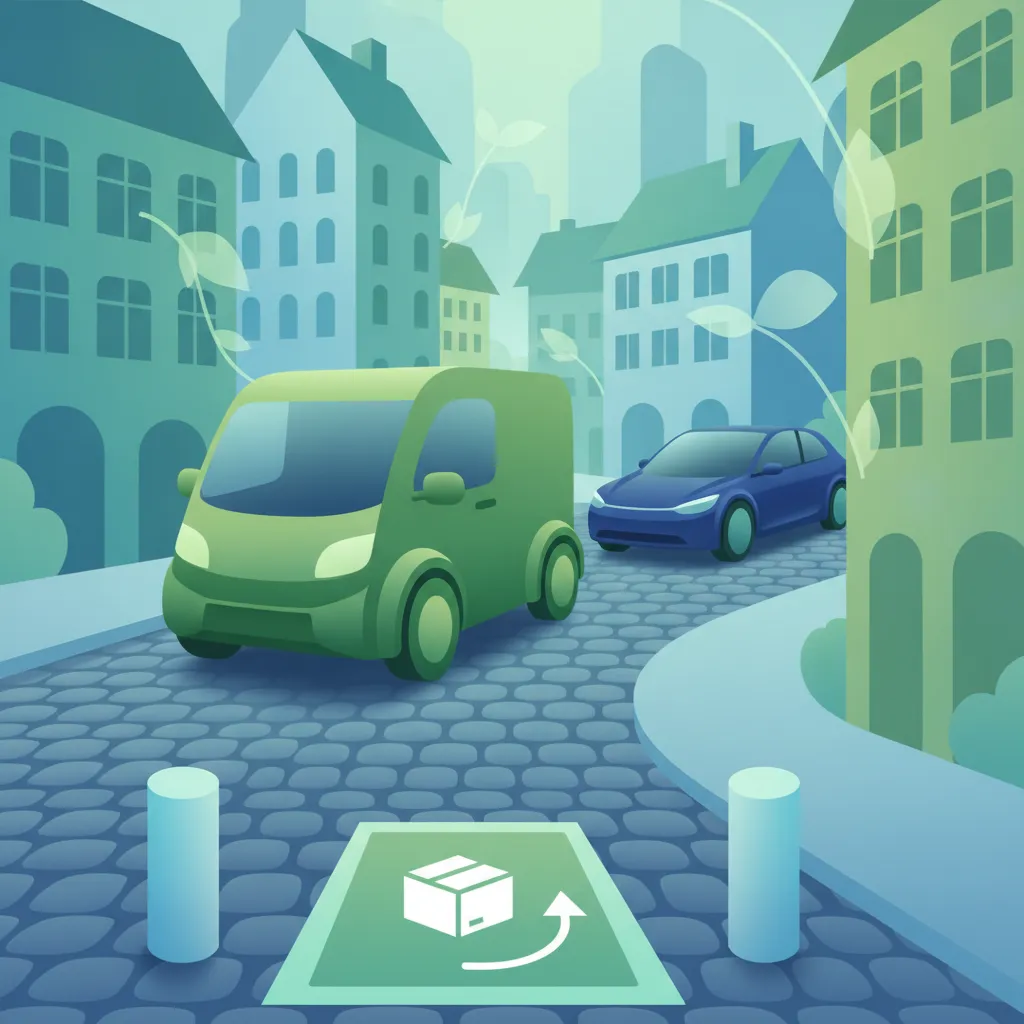
Urban driving requires heightened awareness and careful planning. This lesson covers the challenges of narrow streets, heavy traffic, and the need to identify designated loading and unloading zones. It emphasizes the importance of planning routes in advance to account for time-based access restrictions and to avoid unsuitable roads.

Rural roads present challenges like narrow lanes, poor surfaces, sharp bends, and limited visibility. This lesson teaches drivers how to position their large vehicle to maximize space and visibility, anticipate oncoming traffic at blind corners, and be aware of specific rural hazards. These hazards include slow-moving agricultural vehicles, animals on the road, and concealed farm entrances.

Terminals and depots are busy environments with other large vehicles, maintenance staff, and cleaning crews. This lesson focuses on the specific hazards present in these off-road locations. It emphasizes adherence to site-specific rules, maintaining low speeds, and being highly aware of people working around vehicles.

Proper visibility is paramount for the safety of large vehicles, especially at night or in poor weather. This lesson covers the full range of required lights, including headlights, indicators, brake lights, and side and rear marker lights. It also explains the function of reflectors and the mandatory high-visibility conspicuity markings that outline the vehicle's shape to other drivers.

Many modern lorries are equipped with technologies designed to improve safety. This lesson introduces common systems like reversing cameras, blind spot detection sensors, and lane departure warnings. It is crucial for drivers to understand that while these systems are valuable aids, they do not replace the need for fundamental skills of all-round observation and mirror use.

A lorry is equipped with multiple mirrors (up to six) to cover different fields of view. This lesson explains the function of each type: the main mirrors, wide-angle mirrors, and close-proximity (kerb and front) mirrors. It stresses the importance of adjusting them properly before every journey and developing a routine of constantly scanning all mirrors to maintain situational awareness.
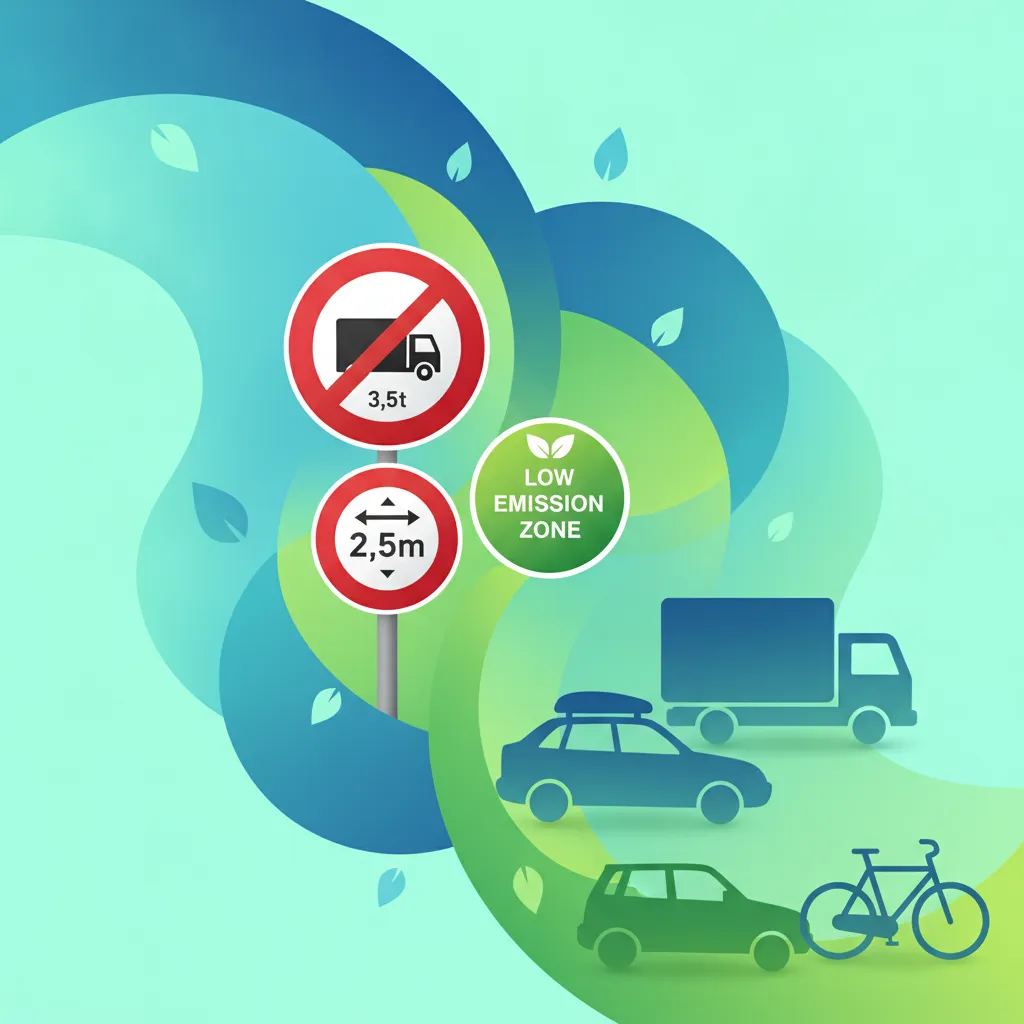
Many urban areas have restrictions to manage traffic and protect infrastructure. This lesson teaches drivers to identify and interpret traffic signs that prohibit access based on gross vehicle weight, axle load, height, or width. It also covers the growing prevalence of environmental or low-emission zones, which may restrict entry for older, more polluting vehicles.
Understand the critical role of strategic planning, patience, and clear communication, including effective use of spotters (banksmen), for safe heavy vehicle operations in challenging environments like depots and loading bays according to Swiss driving theory.
Despite the complex mirror systems, large areas around a truck remain hidden from the driver's view. This lesson maps out these significant blind spots: directly in front, behind, and along both sides of the vehicle. It teaches drivers to be constantly aware of these 'no-zones' and to anticipate that smaller vehicles, cyclists, or pedestrians may be hidden within them, especially before changing lanes or turning.

Pedestrians, cyclists, motorcyclists, and e-scooter riders are extremely vulnerable in any interaction with a heavy vehicle. This lesson instills a defensive mindset, teaching drivers to be hyper-aware of VRUs, especially near junctions, crossings, and cycle lanes. It focuses on anticipation and giving VRUs extra space, as they can be unpredictable and are often hidden in blind spots.

Reversing a heavy vehicle is inherently dangerous due to severely restricted visibility. This lesson outlines a safe-reversing protocol, which includes a thorough check of the area behind the vehicle before starting and using a competent banksman (signaller) whenever possible. It covers the standardized hand signals used for communication and emphasizes moving at a slow, walking pace.

Turning a long vehicle requires careful planning and execution. This lesson covers the correct procedure: approach, observation, signalling, and positioning the vehicle correctly to allow for the trailer's off-tracking without mounting the kerb. It also highlights the need for constant mirror checks throughout the turn to monitor for cyclists or other vulnerable road users who may enter the danger zone.
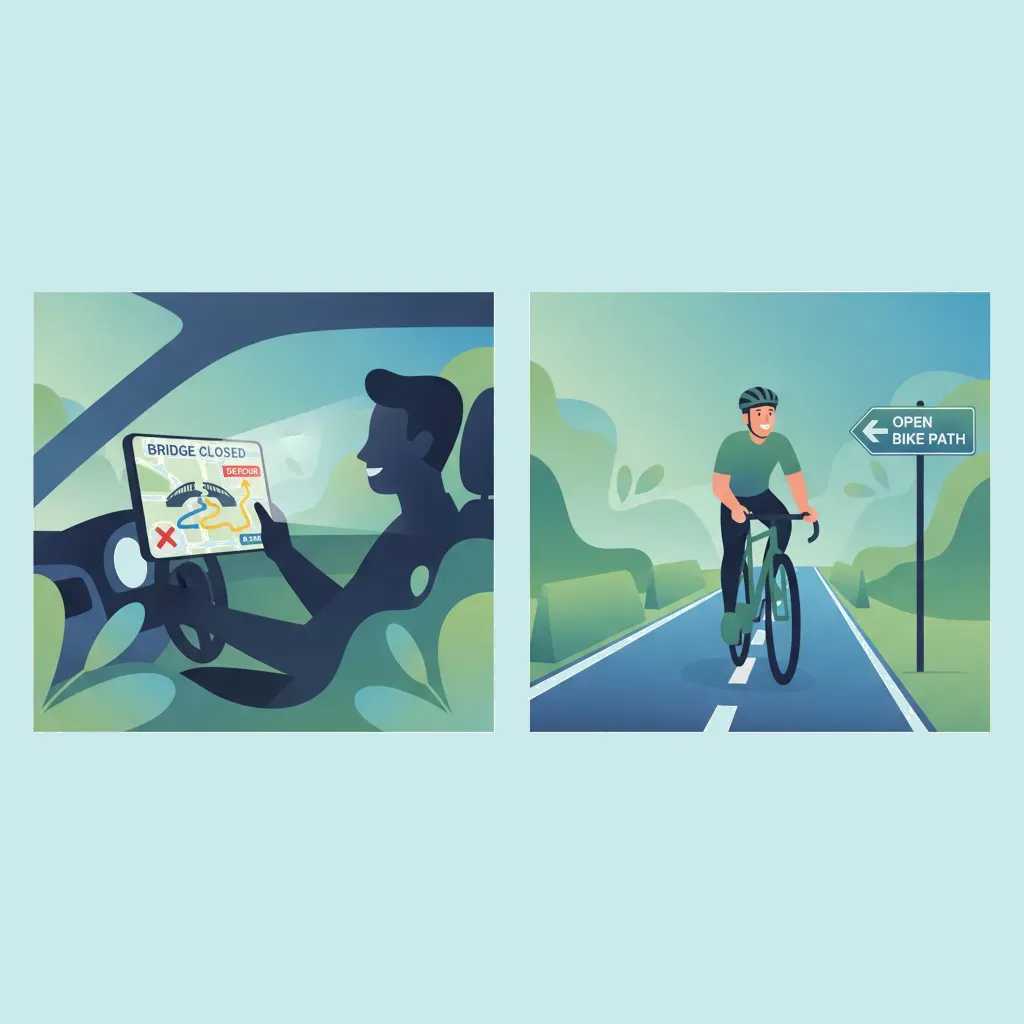
Unlike cars, heavy vehicles cannot travel on every road. This lesson stresses the importance of using HGV-specific satellite navigation systems or carefully checking maps to plan routes that avoid low bridges, weak bridges, and roads with weight or width restrictions. Proper planning saves time, fuel, and prevents dangerous situations or costly damage.

After stopping for an emergency, making the scene safe is the top priority. This lesson details the procedure: activate hazard warning lights, put on high-visibility clothing before exiting the cab, and place the warning triangle at the correct distance behind the vehicle (at least 100m on motorways). This warns approaching traffic and creates a safer environment for the driver and emergency responders.

Reversing is the most dangerous manoeuvre a large vehicle can perform and should be avoided whenever possible. This lesson details a safe system of work for when reversing is unavoidable. It covers the importance of a 360-degree check before starting, the use of a banksman, and how to interpret standard hand signals.

This lesson moves beyond simply staying within the lines, teaching how to actively position your vehicle within the lane to manage risk. You will learn to create a 'safety cushion' of space around your bus. This proactive approach improves your reaction time and gives other road users more space, reducing the likelihood of conflicts.

Motorway driving requires constant concentration due to high speeds. This lesson emphasizes the importance of staying in the right-hand lane unless overtaking and the specific restrictions on lorry overtaking in Switzerland. It reinforces the need for a following distance of at least four seconds to compensate for the vehicle's long stopping distance and provides guidance on safely merging and exiting.
Buses and coaches have significant blind spots to the front, sides, and rear. This lesson maps out these 'no-zones' and teaches a continuous and active scanning process using all available mirrors and direct vision. The goal is to minimize the time any other road user spends undetected in a blind spot.
Find clear answers to common questions learners have about Manoeuvring in Confined Spaces: Depots and Loading Bays. Learn how the lesson is structured, which driving theory objectives it supports, and how it fits into the overall learning path of units and curriculum progression in Switzerland. These explanations help you understand key concepts, lesson flow, and exam focused study goals.
Because of the sheer size of the vehicle and the complexity of its blind spots, a driver cannot see everything behind or around the vehicle. A bankman provides an extra pair of eyes, which is vital for preventing collisions with pedestrians or property in busy loading zones.
Many drivers attempt to reverse too quickly or fail to check their mirrors continuously. A slow, steady approach that allows for constant monitoring of all blind spots is the only way to ensure the vehicle is correctly aligned and safe.
While the core safety principles remain the same, C1 drivers must still be aware that they are driving significantly larger vehicles than a standard passenger car. The need for precise positioning and mirror management is universal for all professional goods vehicle drivers.
Pinpoint specific Swiss traffic rules, road signs, or driving situations you need to master. Use the practice search to start a focused revision session now and build confidence for your official driving theory exam.