
This lesson explores the integration of advanced driver-assistance systems in modern heavy goods vehicles. You will learn how to effectively use cameras and sensors to enhance safety while maintaining your primary responsibility for total situational awareness.

Lesson content overview
Modern heavy goods vehicles, particularly those used in the Official Swiss Driving Theory Course for Category C & C1 Goods Vehicles, are increasingly equipped with sophisticated Advanced Driver-Assistance Systems (ADAS). These technologies are designed to enhance safety, improve situational awareness, and reduce the risk of collisions. By leveraging a combination of cameras, ultrasonic sensors, radar, and lidar, ADAS provide valuable support to lorry drivers, particularly when navigating the extensive blind spots and complex manoeuvres inherent to large vehicles.
While these systems offer significant benefits, it is crucial for every professional driver to understand that ADADAS are aids, not replacements, for fundamental driving skills. The ultimate responsibility for safe operation always rests with the driver, who must continuously apply all-round observation, proper mirror use, and sound judgment.
Heavy goods vehicles present unique challenges due to their size, weight, and limited direct visibility. Traditional mirrors, while essential, cannot eliminate all blind spots, especially when turning, reversing, or changing lanes. ADAS technologies bridge these perceptual gaps by providing electronic feedback, visual warnings, and sometimes even partial automated control to alert drivers to potential hazards. This early detection allows for timely corrective actions, significantly contributing to overall road safety and reducing the likelihood of incidents on Swiss roads and beyond.
Proper use and understanding of ADAS capabilities and limitations are not merely about convenience; they are integral to fulfilling a driver's duty of care and adhering to safety regulations. These systems augment human perception, making driving a heavy goods vehicle safer and more efficient, especially in demanding situations such as urban deliveries, motorway driving, or manoeuvring in confined spaces.
The design and integration of ADAS into heavy vehicles are guided by several fundamental principles that ensure their effectiveness and safe operation. These principles highlight the interplay between technology and driver behaviour, emphasizing support rather than substitution.
The principle that electronic assistance must augment, not replace, the driver’s own observation skills. It ensures the driver remains the primary decision-maker.
This means that while ADAS provide valuable alerts, drivers must always verify these warnings with manual checks, such as using mirrors and direct observation. Technology adds an extra layer of safety, but it does not diminish the need for vigilant human input.
Understanding that sensors have specific coverage zones, can be affected by weather conditions (rain, fog, snow), and their performance may vary with vehicle load.
Drivers must be acutely aware of these limitations to prevent overreliance. For example, a camera might struggle in direct sunlight or heavy rain, requiring the driver to adjust their behaviour and rely more on traditional methods.
A defined method for drivers to acknowledge, respond to, and potentially override system alerts and assistance.
This protocol ensures consistent and predictable driver responses to warnings. Drivers must understand the meaning of different alerts (audible, visual, tactile) and act promptly and appropriately, rather than ignoring them or assuming the system will automatically correct the situation.
The legal requirement that the driver retains full responsibility for vehicle control at all times, irrespective of ADAS activation or system performance.
This principle, foundational in Swiss road traffic law, ensures driver accountability. Even if an ADAS system malfunctions or fails to detect a hazard, the driver cannot claim exemption from liability for any resulting incident. Technology is an aid, not a scapegoat.
The continuous monitoring by ADAS and the provision of real-time feedback to the driver, allowing for timely corrective action.
This constant communication loop ensures that drivers are informed of their vehicle's status and immediate surroundings. Drivers must be prepared to respond within a reasonable reaction time to maintain safety.
Modern heavy goods vehicles integrate a range of sophisticated ADAS technologies. Understanding each system's function, benefits, and limitations is vital for safe and compliant operation.
A reversing camera is a rear-mounted video camera that provides a live video feed of the area directly behind the vehicle. This feed is typically displayed on a monitor in the driver's cabin, often with superimposed distance guidelines to assist with judgment.
In heavy goods vehicles, the area directly behind the trailer or lorry can be a significant blind spot. Reversing cameras drastically improve visibility, allowing drivers to spot obstacles, pedestrians, or other vehicles that might be otherwise undetectable through mirrors alone. They are invaluable for precise manoeuvring into loading bays, parking spots, or tight turning areas, especially where ground-level objects are concerned. Some advanced systems feature wide-angle or "fisheye" lenses to provide an even broader view.
While extremely helpful, a reversing camera cannot be the sole source of information during reversing. Drivers must always combine camera use with mirror checks and, ideally, the guidance of a banksman (signaller).
Drivers sometimes mistakenly believe that the reversing camera eliminates the need to use mirrors or physically check the surroundings. This is a dangerous assumption, as cameras have a limited field of view and cannot detect objects outside their lens angle or those that might block the camera's view (e.g., mud, snow, or an obstruction directly in front of the lens).
Blind spot detection systems typically use ultrasonic transducers mounted on the vehicle's corners or sides. These sensors emit high-frequency sound waves and measure the time it takes for the echo to return, thereby detecting objects within a short, predefined range.
These systems can include front, rear, and side blind spot sensors. Their primary function is to alert the driver to the presence of objects (other vehicles, cyclists, pedestrians) in zones not adequately covered by mirrors. This is particularly useful when changing lanes on a motorway, making a turn at a junction, or moving off from a stationary position. Alerts usually take the form of an audible beep, a visual indicator on the mirror or dashboard, or even a tactile warning like steering wheel vibration.
Even with blind spot sensors, drivers must still check their mirrors and perform a physical shoulder check before initiating a manoeuvre. Sensors have limitations in detecting very small objects, objects moving at high speeds (where the system's refresh rate might be insufficient), or objects that are outside the sensor's narrow detection cone. Drivers must acknowledge and respond to sensor alerts promptly and not ignore them.
Lane Departure Warning (LDW) systems use forward-facing cameras to monitor the vehicle's position relative to lane markings on the road. If the vehicle begins to drift out of its lane unintentionally (without the turn signal being activated), the system provides a warning to the driver.
LDW systems are particularly valuable on long motorway journeys or during periods of reduced driver attention or fatigue. Warnings can be audible (a beep or rumble sound), visual (an icon on the dashboard), or tactile (a vibration in the steering wheel or seat). The purpose is to alert the driver to correct the vehicle's trajectory and prevent it from veering off course.
It is a common mistake to confuse LDW with more advanced Lane Keeping Assist (LKA) or automated steering systems. LDW is a warning system only; it does not automatically steer the vehicle back into the lane. The driver remains fully responsible for maintaining the correct lane position and must actively respond to all warnings. Dirty camera lenses or faded lane markings can impair the system's performance.
Adaptive Cruise Control (ACC) is a sophisticated system that combines radar and camera technologies to maintain a set speed while automatically adjusting that speed to keep a safe following distance from the vehicle ahead.
ACC significantly reduces driver workload, especially during long stretches on motorways or in moderate traffic flow. The driver sets a desired speed and a preferred following distance (often selectable in several steps). The system then autonomously accelerates, decelerates, and, in some advanced "stop-and-go" versions, can even bring the vehicle to a complete stop and restart it.
Despite its advanced capabilities, ACC is not an autonomous driving system. The driver must remain fully engaged, monitor the traffic situation, and be prepared to take over at any moment. ACC may struggle with vehicles cutting into the lane suddenly, merging traffic, or when encountering stationary obstacles. Drivers must understand its limits and intervene when necessary, especially in complex or rapidly changing traffic conditions.
Collision Avoidance Systems (CAS) are integrated platforms that combine data from radar, lidar, and cameras to detect imminent collisions with other vehicles, pedestrians, or obstacles. These systems provide warnings and, in many cases, can initiate automatic emergency braking (AEB).
Forward collision warning (FCW) alerts the driver visually and audibly if a potential collision is detected. If the driver does not react, or reacts insufficiently, the AEB component can automatically apply the brakes to reduce impact speed or even prevent the collision entirely, especially at lower speeds. Many systems also include pedestrian and cyclist detection, offering an additional layer of protection for vulnerable road users.
CAS are invaluable for reducing the severity of accidents, but they are not infallible. Their performance can be degraded by severe weather (heavy rain, snow, fog), dirty sensors, or specific lighting conditions. Drivers should never rely solely on CAS to avoid a collision; they must maintain a safe following distance, be attentive, and be ready to brake manually. Overreliance can lead to delayed reactions and increased risk.
Radar and lidar are fundamental sensor technologies underpinning many advanced ADAS. They provide the vehicle with crucial information about its surroundings, independent of visible light.
Radar (Radio Detection and Ranging) sensors emit radio waves and measure the reflections to determine the distance, speed, and angle of objects. Radar is highly effective in adverse weather conditions like fog or heavy rain, where cameras might struggle. It's primarily used for Adaptive Cruise Control, blind spot detection (longer range versions), and forward collision warning.
Lidar (Light Detection and Ranging) uses laser pulses to measure distances with high precision, creating detailed 3D maps of the vehicle's surroundings. Lidar can accurately detect the shape and position of objects, including lane markings and road edges. While often more precise than radar, lidar performance can be affected by heavy rain, snow, or dust. It is vital for high-resolution object detection in advanced collision avoidance and future autonomous driving features.
For both radar and lidar, sensor performance relies on a clear line of sight. Any obstruction—be it dirt, snow, ice, or even a sticker—can impair their functionality. Regular cleaning and calibration checks are essential as part of routine vehicle inspections to ensure these critical sensors operate accurately.
Cameras are integral to many ADAS, providing visual data that complements radar and lidar. Forward-facing cameras, often mounted near the rearview mirror, are a core component for systems that require visual recognition of the road environment.
These cameras capture video feeds used by systems like Lane Departure Warning (LDW), Lane Keeping Assist (LKA), Traffic Sign Recognition (TSR), and even for aspects of Collision Avoidance Systems (CAS) where object classification (e.g., distinguishing between a car and a pedestrian) is important. They are adept at detecting lane markings, road signs, and identifying potential obstacles based on their visual appearance.
Camera performance is highly dependent on lighting conditions. Glare, direct sunlight, heavy rain, dense fog, or darkness can significantly reduce their effectiveness. A dirty or damaged camera lens will also lead to inaccurate data, potentially causing false warnings or system failures. Drivers must ensure camera lenses are kept clean and clear, and always be prepared to take full control if camera-dependent systems provide unreliable data.
The integration of ADAS into heavy goods vehicles marks a significant advancement in road safety. However, these systems are fundamentally designed to assist, not replace, the human driver. Understanding the legal and practical implications of this distinction is paramount for every professional lorry driver.
Regardless of the sophistication of the ADAS installed, the driver remains the ultimate controller and decision-maker for the vehicle. Swiss road traffic law and vehicle regulations clearly stipulate that drivers bear full responsibility for the safe operation of their vehicle at all times. This "Responsibility Transfer Clause" means that even if an ADAS system fails, provides erroneous information, or does not detect a hazard, the driver is still accountable for taking appropriate action.
Drivers must resist the temptation to become complacent or over-reliant on ADAS. A false sense of security can lead to reduced vigilance and delayed reactions, negating the safety benefits of these systems.
This legal principle underpins the need for drivers to maintain constant situational awareness, conduct regular visual checks, properly use mirrors, and be prepared to manually intervene or override any system at a moment's notice. ADAS are tools to enhance safety, not to absolve the driver of their duties.
While ADAS significantly improve safety, they are not infallible. Their performance can be affected by various external factors, leading to limitations that drivers must recognize and compensate for.
In Switzerland, specific regulations govern the operation of heavy goods vehicles and the use of assistance systems. These regulations reinforce the principle of driver responsibility and mandate safe practices.
Integrating Advanced Driver-Assistance Systems into daily driving requires a conscious effort from the driver to maximize their benefits while understanding their limitations. Practical application involves avoiding common pitfalls, adapting to varying conditions, and ensuring the systems remain functional.
Failing to properly understand ADAS can lead to dangerous situations and even legal consequences. Drivers must actively avoid these common mistakes:
The effectiveness of ADAS is highly contextual. Drivers must adjust their expectations and driving behaviour based on current conditions.
Like any other critical vehicle component, ADAS require proper maintenance to function reliably.
Advanced Driver-Assistance Systems are powerful tools that offer substantial benefits for drivers of heavy goods vehicles within the Official Swiss Driving Theory Course for Category C & C1 Goods Vehicles. They significantly enhance situational awareness, provide crucial early warnings, and can even actively help prevent collisions. By leveraging technologies like reversing cameras, blind spot detection, lane departure warnings, adaptive cruise control, and collision avoidance systems, the challenges associated with large vehicles are mitigated.
However, the core message remains steadfast: ADAS are assistive technologies, not autonomous replacements for the driver's skill and vigilance. The fundamental principles of redundancy of perception, awareness of system limitations, appropriate human-machine interaction, and the unwavering concept of driver responsibility are non-negotiable. Drivers must actively engage with these systems, understand their operational boundaries, maintain them diligently, and be prepared to take full manual control at all times.
Embracing ADAS means integrating them intelligently into your driving practices – combining technological alerts with traditional observation methods (mirrors, direct visual checks, shoulder checks). This synergistic approach ensures the highest level of safety on the road, protecting not only the driver and their vehicle but also other road users. As technology continues to evolve, the professional driver's role in understanding, utilizing, and ultimately overseeing these systems will remain critical to safe and efficient heavy goods vehicle operation.
This lesson covers Advanced Driver-Assistance Systems (ADAS) in heavy goods vehicles, explaining how technologies like reversing cameras, blind spot detection sensors, Lane Departure Warning, Adaptive Cruise Control, and Collision Avoidance Systems enhance safety while highlighting their limitations. Key principles include the Responsibility Transfer Clause, which keeps drivers legally accountable regardless of ADAS performance, and the Redundancy of Perception principle, which requires ADAS to augment rather than replace manual observation. Environmental factors such as weather, lighting, and sensor obstruction can degrade system effectiveness, making maintenance and calibration critical. The lesson emphasizes that Swiss road traffic law requires drivers to maintain full situational awareness through combined mirror use, direct observation, and appropriate response to all ADAS warnings.
A short set of high-value points that capture the most important learning from this lesson.
ADAS technologies like reversing cameras, blind spot sensors, LDW, ACC, and CAS enhance safety but are aids, not replacements for driver observation and judgment.
The driver retains full legal responsibility for vehicle control at all times, regardless of ADAS activation or performance.
Sensors (cameras, radar, lidar, ultrasonic) have specific limitations affected by weather, lighting, dirt, and vehicle load that drivers must compensate for.
Mirrors must always be used in conjunction with electronic aids; no single system provides complete situational awareness.
After repairs involving sensors, professional recalibration is essential to ensure accurate ADAS operation.
Explore all units and lessons included in this driving theory course.
Lane Departure Warning (LDW) is a warning system only—it does not automatically steer the vehicle back into lane.
Blind spot detection sensors require physical shoulder checks and mirror use; they supplement but do not replace these actions.
In heavy rain, fog, snow, or glare, camera-dependent systems may fail or provide unreliable data—increase manual vigilance accordingly.
Reversing cameras have a limited field of view and can be blocked by mud, snow, or obstructions; always combine with mirrors and physical checks.
Collision Avoidance Systems with AEB can reduce impact severity but are not infallible; maintain safe following distances regardless of CAS presence.
Relying solely on a reversing camera without checking mirrors or performing a physical look-around, leading to missed low-lying or off-angle obstacles.
Ignoring blind spot sensor alerts and proceeding with lane changes without thorough mirror checks and shoulder verification.
Deactivating Lane Departure Warning to avoid alerts, which removes a safety net especially valuable during fatigue on long motorway journeys.
Failing to clean camera lenses and sensor faces, causing system malfunction, false alerts, or failure to detect hazards.
Assuming Adaptive Cruise Control can handle all traffic situations, including sudden lane cutting or stationary obstacles, without driver supervision.
Lesson content overview
A short set of high-value points that capture the most important learning from this lesson.
ADAS technologies like reversing cameras, blind spot sensors, LDW, ACC, and CAS enhance safety but are aids, not replacements for driver observation and judgment.
The driver retains full legal responsibility for vehicle control at all times, regardless of ADAS activation or performance.
Sensors (cameras, radar, lidar, ultrasonic) have specific limitations affected by weather, lighting, dirt, and vehicle load that drivers must compensate for.
Mirrors must always be used in conjunction with electronic aids; no single system provides complete situational awareness.
After repairs involving sensors, professional recalibration is essential to ensure accurate ADAS operation.
Explore all units and lessons included in this driving theory course.
Lane Departure Warning (LDW) is a warning system only—it does not automatically steer the vehicle back into lane.
Blind spot detection sensors require physical shoulder checks and mirror use; they supplement but do not replace these actions.
In heavy rain, fog, snow, or glare, camera-dependent systems may fail or provide unreliable data—increase manual vigilance accordingly.
Reversing cameras have a limited field of view and can be blocked by mud, snow, or obstructions; always combine with mirrors and physical checks.
Collision Avoidance Systems with AEB can reduce impact severity but are not infallible; maintain safe following distances regardless of CAS presence.
Relying solely on a reversing camera without checking mirrors or performing a physical look-around, leading to missed low-lying or off-angle obstacles.
Ignoring blind spot sensor alerts and proceeding with lane changes without thorough mirror checks and shoulder verification.
Deactivating Lane Departure Warning to avoid alerts, which removes a safety net especially valuable during fatigue on long motorway journeys.
Failing to clean camera lenses and sensor faces, causing system malfunction, false alerts, or failure to detect hazards.
Assuming Adaptive Cruise Control can handle all traffic situations, including sudden lane cutting or stationary obstacles, without driver supervision.
Explore search topics learners often look for when studying Advanced Driver-Assistance Systems (Cameras, Sensors). These topics reflect common questions about road rules, driving situations, safety guidance, and lesson level theory preparation for learners in Switzerland.
Browse additional driving theory lessons that cover connected traffic rules, road signs, and common driving situations related to this topic. Improve your understanding of how different rules interact across everyday traffic scenarios.
Explore the core technologies behind advanced driver-assistance systems (ADAS) in lorries, including radar, lidar, and cameras. Learn how these systems function and how to use them safely for Swiss driving theory.

The dashboard is the vehicle's primary communication interface with the driver. This lesson explains how to read essential gauges, such as the air pressure gauges for the braking system, the tachometer, and the fuel level. It focuses on recognizing the meaning of different warning lights (red for urgent, amber for caution) and the importance of stopping safely to investigate any critical alerts immediately.

Modern lorries are equipped with advanced electronic safety systems. This lesson explains how the Anti-lock Braking System (ABS) prevents wheels from locking up during hard braking, allowing the driver to maintain steering control. It also covers Electronic Stability Control (ESC), which can detect and mitigate skids or potential rollovers by automatically applying individual brakes and reducing engine power.
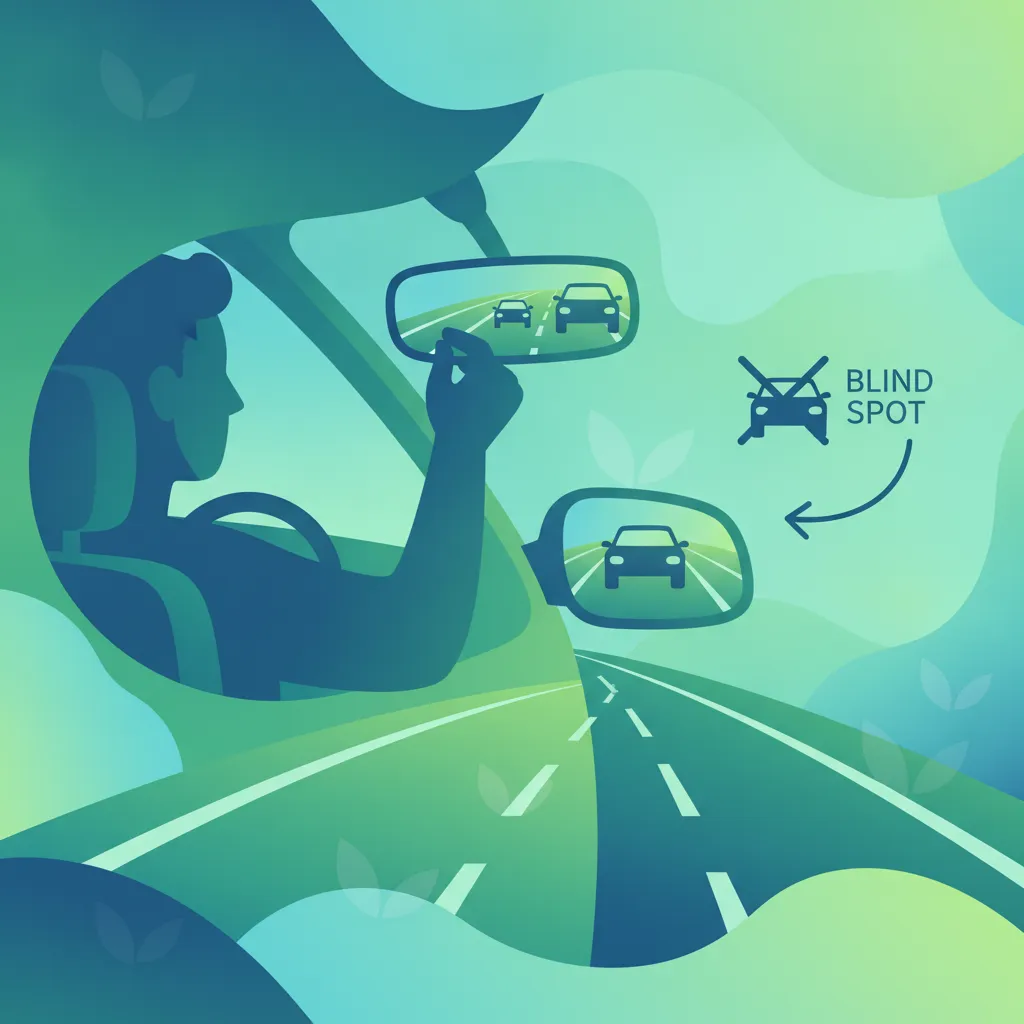
Despite the complex mirror systems, large areas around a truck remain hidden from the driver's view. This lesson maps out these significant blind spots: directly in front, behind, and along both sides of the vehicle. It teaches drivers to be constantly aware of these 'no-zones' and to anticipate that smaller vehicles, cyclists, or pedestrians may be hidden within them, especially before changing lanes or turning.

A lorry is equipped with multiple mirrors (up to six) to cover different fields of view. This lesson explains the function of each type: the main mirrors, wide-angle mirrors, and close-proximity (kerb and front) mirrors. It stresses the importance of adjusting them properly before every journey and developing a routine of constantly scanning all mirrors to maintain situational awareness.

Rural roads present challenges like narrow lanes, poor surfaces, sharp bends, and limited visibility. This lesson teaches drivers how to position their large vehicle to maximize space and visibility, anticipate oncoming traffic at blind corners, and be aware of specific rural hazards. These hazards include slow-moving agricultural vehicles, animals on the road, and concealed farm entrances.

Heavy goods vehicles are fitted with specific safety structures to mitigate the severity of collisions with smaller vehicles and vulnerable road users. This lesson explains the function of the rear underrun bar, which prevents cars from going underneath the truck in a rear-end collision. It also covers side guards, which are designed to stop cyclists and pedestrians from falling under the vehicle's wheels during a side impact.

Understanding the fundamental components of a lorry is essential for any professional driver. This lesson introduces the chassis as the vehicle's main support frame, discusses different cab designs like day cabs and sleeper cabs, and provides an overview of common body types. These include curtain siders for general freight, refrigerated units for temperature-controlled goods, and flatbeds for oversized cargo.

Proper visibility is paramount for the safety of large vehicles, especially at night or in poor weather. This lesson covers the full range of required lights, including headlights, indicators, brake lights, and side and rear marker lights. It also explains the function of reflectors and the mandatory high-visibility conspicuity markings that outline the vehicle's shape to other drivers.

Turning a long vehicle requires careful planning and execution. This lesson covers the correct procedure: approach, observation, signalling, and positioning the vehicle correctly to allow for the trailer's off-tracking without mounting the kerb. It also highlights the need for constant mirror checks throughout the turn to monitor for cyclists or other vulnerable road users who may enter the danger zone.

A secure connection between the tractor and trailer requires linking the braking and electrical systems. This lesson explains the function of the red (emergency) and yellow (service) air lines and the main electrical socket, which powers the trailer's lights and ABS. It outlines the correct, safe sequence for connecting and disconnecting these lines to ensure the trailer's brakes function correctly.
Understand the performance limits of truck driver-assistance systems (ADAS) like sensors and cameras in various conditions. Learn why drivers retain full responsibility for safety in Swiss heavy vehicle theory.
Despite the complex mirror systems, large areas around a truck remain hidden from the driver's view. This lesson maps out these significant blind spots: directly in front, behind, and along both sides of the vehicle. It teaches drivers to be constantly aware of these 'no-zones' and to anticipate that smaller vehicles, cyclists, or pedestrians may be hidden within them, especially before changing lanes or turning.
Modern lorries are equipped with advanced electronic safety systems. This lesson explains how the Anti-lock Braking System (ABS) prevents wheels from locking up during hard braking, allowing the driver to maintain steering control. It also covers Electronic Stability Control (ESC), which can detect and mitigate skids or potential rollovers by automatically applying individual brakes and reducing engine power.
The dashboard is the vehicle's primary communication interface with the driver. This lesson explains how to read essential gauges, such as the air pressure gauges for the braking system, the tachometer, and the fuel level. It focuses on recognizing the meaning of different warning lights (red for urgent, amber for caution) and the importance of stopping safely to investigate any critical alerts immediately.
A lorry is equipped with multiple mirrors (up to six) to cover different fields of view. This lesson explains the function of each type: the main mirrors, wide-angle mirrors, and close-proximity (kerb and front) mirrors. It stresses the importance of adjusting them properly before every journey and developing a routine of constantly scanning all mirrors to maintain situational awareness.

The driver is legally responsible for the roadworthiness of their vehicle at the start of and during every journey. This lesson outlines the formal process for reporting any identified defects to the transport manager or maintenance staff. It stresses the critical rule that a vehicle with a known safety-critical defect must not be driven until it has been professionally repaired and declared safe.

Fatigue is a major cause of accidents in the transport industry. This lesson teaches drivers to identify the early warning signs of tiredness, such as frequent yawning, heavy eyelids, and difficulty concentrating. It emphasizes that the only effective cure for fatigue is sleep and reinforces the legal and personal responsibility to take required breaks and never drive while tired.

Overloading is a serious offence with severe safety and legal ramifications. This lesson details how excess weight drastically increases braking distances, puts extreme stress on tyres leading to blowouts, and negatively affects steering and overall stability. Furthermore, it discusses the substantial fines, potential license withdrawal, and driver liability that result from violating Swiss weight regulations.

Buses and coaches have significant blind spots to the front, sides, and rear. This lesson maps out these 'no-zones' and teaches a continuous and active scanning process using all available mirrors and direct vision. The goal is to minimize the time any other road user spends undetected in a blind spot.

This lesson provides a structured guide for managing the scene of a road traffic accident. It covers the internationally recognized priorities: assess for danger, make the scene safe, send for help by calling emergency services (112), and provide first aid to the injured if trained to do so. It also details the legal requirement to stop and exchange information after being involved in a collision.
Heavy goods vehicles are fitted with specific safety structures to mitigate the severity of collisions with smaller vehicles and vulnerable road users. This lesson explains the function of the rear underrun bar, which prevents cars from going underneath the truck in a rear-end collision. It also covers side guards, which are designed to stop cyclists and pedestrians from falling under the vehicle's wheels during a side impact.
Find clear answers to common questions learners have about Advanced Driver-Assistance Systems (Cameras, Sensors). Learn how the lesson is structured, which driving theory objectives it supports, and how it fits into the overall learning path of units and curriculum progression in Switzerland. These explanations help you understand key concepts, lesson flow, and exam focused study goals.
Absolutely not. In the Swiss theory exam, it is consistently emphasized that systems like cameras and sensors are supplementary tools. You must always perform physical mirror checks and direct observation to ensure complete situational awareness.
As a professional driver, you are legally responsible for the roadworthiness of your vehicle. A warning light indicates a potential defect that must be reported and investigated before continuing your journey, as per Swiss maintenance requirements.
A camera has a restricted field of view and can suffer from glare, dirt, or technical failure. A banksman provides a secondary, reliable perspective that is essential for maneuvering large vehicles safely in tight urban spaces.
Yes. You may face questions regarding the safe operation of modern vehicle technology and the driver's duty to remain alert, ensuring you do not rely solely on automated sensors in hazardous traffic situations.
Pinpoint specific Swiss traffic rules, road signs, or driving situations you need to master. Use the practice search to start a focused revision session now and build confidence for your official driving theory exam.