
This lesson explores the critical physics and driving techniques required to maintain stability in heavy goods vehicles. You will learn how to identify rollover risks caused by high centers of gravity, load shifting, and improper speed selection to ensure your safety on Swiss roads.

Lesson content overview
Operating heavy goods vehicles (HGVs) in Switzerland, particularly those in Category C and C1, demands a profound understanding of vehicle stability and the inherent risks of rollover. This lesson, part of the Official Swiss Driving Theory Course for Category C & C1 Goods Vehicles, delves into the critical factors that contribute to rollover incidents, including the physics of vehicle dynamics, load characteristics, and crucial driver behaviour. Rollover is not merely an accident but a physics-driven event where forces acting on a vehicle overcome its ability to remain upright, often leading to severe consequences for life, cargo, and infrastructure.
Understanding these dynamics is paramount for every professional driver. It enables you to make informed decisions behind the wheel, mitigating risks and ensuring the safe transport of goods across Swiss roads, from flat motorways to challenging mountain passes. We will explore how factors like a vehicle's centre of gravity, lateral forces during turns, and even the movement of liquid loads can dramatically impact stability.
Heavy goods vehicles, by their very design, possess characteristics that make them inherently more susceptible to rollover than standard passenger cars. Their greater mass, often coupled with a higher centre of gravity and substantial length, means that the forces at play during manoeuvres are amplified. A rollover incident can occur when the forces attempting to tip the vehicle over exceed the forces holding it upright. This delicate balance is influenced by various factors, making a comprehensive understanding essential for all Category C and C1 drivers.
Rollover isn't just a concern for safety; it has significant legal and economic implications. Swiss regulations place a high responsibility on drivers to operate their vehicles safely, which includes preventing such incidents. The financial costs of a rollover—from vehicle damage and cargo loss to road closures and environmental cleanup—can be enormous, not to mention the potential for severe injuries or fatalities. Therefore, prevention is always the primary goal.
Rollover in HGVs is fundamentally a physics problem. It occurs when a combination of forces and moments acting on the vehicle exceeds its static and dynamic stability limits. Understanding these core principles allows drivers to anticipate and counteract potential risks.
The centre of gravity (CG) is perhaps the most critical concept in understanding vehicle stability. It is the single theoretical point at which the entire weight of the vehicle, including its load, is considered to act. Imagine trying to balance the entire vehicle on a single fingertip; that fingertip would be at its centre of gravity.
For HGVs, the CG is typically much higher than in passenger cars due to their design and the nature of their loads. A higher CG means a shorter distance between this theoretical balance point and the point where the wheels contact the road (the track width). This shorter distance reduces the "stabilising moment" – the torque that resists tipping. When a vehicle with a high CG encounters lateral forces (e.g., in a turn), the overturning force has a greater lever arm, making it easier to lift the inner wheels off the ground and initiate a roll.
Drivers must always be aware of the CG's location, which changes dynamically with load placement and movement. A poorly distributed load, especially one that is high or shifted to one side, will raise or shift the CG, significantly increasing rollover risk.
When a vehicle travels around a curve, it experiences lateral accelerative forces, commonly referred to as centrifugal force. This is the apparent outward force that pushes the vehicle away from the centre of the turn. This force is not constant; it is directly proportional to the square of the vehicle's speed and inversely proportional to the radius of the turn.
This relationship means that doubling your speed in a curve doesn't just double the lateral force; it quadruples it. Similarly, negotiating a tighter curve (smaller radius) at the same speed also drastically increases this force. For HGVs, these forces translate into a significant roll moment that attempts to tilt the vehicle. Managing speed, especially on bends, roundabouts, and ramps, is therefore the most critical factor in controlling lateral accelerative forces.
The roll moment is the torque or rotational force that attempts to rotate the vehicle about its longitudinal axis (front to back). This moment is primarily generated by the lateral accelerative forces acting through the vehicle's centre of gravity. The higher the CG and the stronger the lateral force, the greater the roll moment.
Conversely, the stabilising moment is the opposing torque generated by the vehicle's weight acting through its track width, attempting to keep the vehicle flat on the road. The wider the track width and the lower the CG, the greater the stabilising moment.
Rollover occurs when the roll moment exceeds the stabilising moment, leading to an overturning moment. At this critical point, the inner wheels begin to lift off the road surface. If the roll moment continues to increase or the driver fails to correct the manoeuvre, the vehicle will continue to tip over. Drivers must understand that even small, abrupt steering inputs at high speeds can generate enough roll moment to initiate this process, especially with a high or poorly distributed load.
Beyond the fundamental physics, several practical factors significantly influence an HGV's susceptibility to rollover. These relate directly to how a vehicle is loaded, what it carries, and how it is driven.
The way cargo is loaded onto a heavy vehicle has a profound impact on its stability. Load distribution refers to how the weight of the cargo is spread across the vehicle's axles and along its length. It directly influences the vehicle's centre of gravity.
Load securing is equally vital. Even if a load is perfectly distributed when stationary, it can shift during transit due to acceleration, braking, or cornering forces. Unsecured cargo can slide, tumble, or even fall off the vehicle, causing a sudden and dramatic shift in the dynamic CG. This unexpected change can instantly increase the roll moment, potentially triggering a rollover. Proper use of blocking, lashing, and other securing techniques (as covered in previous lessons on load securing) is therefore not just a legal requirement but a fundamental rollover prevention strategy.
Vehicles designed to transport liquid cargo, such as fuel, milk, or chemicals, face a unique stability challenge known as the sloshing effect. Unlike solid cargo, liquids are free to move within the tank. When a tanker accelerates, brakes, or turns, the liquid inside surges back and forth, or from side to side.
This movement of liquid causes the vehicle's dynamic centre of gravity to shift rapidly and unpredictably. For instance, during a sharp turn, the liquid inside a partially filled tank will surge towards the outer wall of the curve. This surge creates a temporary, but significant, shift in the CG towards the outside of the turn, substantially increasing the roll moment at the precise moment when the vehicle is already under stress from lateral forces.
To mitigate the sloshing effect, many tankers are equipped with internal baffles or partitions. These baffles break up the large volume of liquid, reducing the momentum of the moving fluid and limiting the extent of CG shifts. Even with baffles, drivers of tankers must exercise extreme caution, maintaining significantly lower speeds and executing all manoeuvres with exceptional smoothness to minimise dynamic load shifts.
Ultimately, the driver's actions are the most controllable factors in preventing rollover. Human behaviour, particularly in critical moments, can either avert or induce an incident.
Maintaining a calm, anticipatory, and smooth driving style is paramount for HGV operators. This involves looking far ahead, planning manoeuvres in advance, and avoiding any sudden changes in speed or direction.
Adherence to legal requirements and adopting best practices are cornerstones of preventing rollover incidents in the Official Swiss Driving Theory Course for Category C & C1 Goods Vehicles. Swiss regulations are designed to ensure maximum safety for all road users.
In Switzerland, load securing (Ladungssicherung) is not merely a recommendation; it is a mandatory legal obligation under Swiss road traffic regulations. Cargo must be secured to prevent any movement during normal driving conditions, including braking, acceleration, and cornering. This includes preventing sliding, tipping, rolling, or shifting. Failure to comply can result in severe penalties, not to mention the direct risk of an accident.
Similarly, strict axle load limits are enforced. Each axle of an HGV, as well as the total gross vehicle weight, must not exceed the maximum permissible loads specified by the vehicle manufacturer and Swiss traffic laws. Exceeding these limits significantly compromises vehicle stability, tyre integrity, and braking effectiveness, directly increasing rollover risk. Drivers are responsible for verifying their load distribution and axle weights before commencing a journey.
The rule "speed must be appropriate for the curvature of the road" is critical for all drivers, but it carries extra weight for HGV operators. This means:
Professional HGV drivers are expected to adopt a smooth driving style. This encompasses:
Smooth driving not only prevents rollover but also conserves fuel, reduces wear and tear on the vehicle, and enhances overall comfort and safety for everyone on the road.
Understanding where and how rollovers typically occur helps drivers develop a preventive mindset.
The risk of rollover is not static; it changes dramatically with external conditions and the state of the vehicle. A professional driver must continuously assess these variables.
This lesson explains the physics behind rollover in heavy goods vehicles, emphasising that rollover happens when roll moment exceeds the stabilising moment created by vehicle weight acting through the track width. Key factors include the centre of gravity height, lateral accelerative forces during turning (which grow with the square of speed), and the dangerous sloshing effect in partially filled tankers. Proper load distribution, securing practices compliant with Swiss regulations, and smooth driving techniques—particularly speed reduction before curves—are the primary mitigation strategies. The lesson also covers contextual risks including weather conditions, vehicle maintenance, and the unique handling challenges of articulated vehicles.
A short set of high-value points that capture the most important learning from this lesson.
Rollover occurs when lateral forces from turning exceed the vehicle's stabilising forces, primarily driven by the centre of gravity height and speed.
Speed is the most critical rollover factor because lateral force increases with the square of speed, making small speed reductions dramatically lower risk.
Liquid loads in tankers create dynamic centre of gravity shifts through sloshing, with partially filled tanks being more dangerous than full ones.
Proper load distribution—keeping weight low, balanced side-to-side, and correctly distributed across axles—is fundamental to vehicle stability.
Driver behaviour, particularly smooth steering and gradual speed changes, is the most controllable factor in preventing rollover incidents.
Explore all units and lessons included in this driving theory course.
Lateral accelerative force = speed² ÷ turn radius; doubling speed quadruples the force attempting to tip the vehicle.
Partially filled tankers with free-surface liquid movement require significantly slower speeds and smoother manoeuvres than solid loads.
Load securing (Ladungssicherung) is a mandatory legal requirement under Swiss road traffic regulations to prevent cargo shifting.
Baffles or internal partitions in tankers reduce sloshing by breaking up liquid momentum, but cannot eliminate the effect entirely.
Weather conditions—wet, icy, or snow-covered roads—drastically reduce tyre grip, requiring substantially lower speeds on curves.
Entering a curve at the same speed used for a passenger car, forgetting that HGVs with high loads generate far greater lateral forces.
Stacking heavier cargo on top of the load rather than placing it low, raising the centre of gravity and reducing stability margins.
Assuming a full tanker is more dangerous than a partially filled one; in reality, partial fills allow greater liquid movement and larger CG shifts.
Making sudden steering corrections to avoid obstacles without first reducing speed, which can generate dangerous roll moments.
Neglecting to recheck lashing tension during long journeys, as cargo can settle and loosen over time.
Lesson content overview
A short set of high-value points that capture the most important learning from this lesson.
Rollover occurs when lateral forces from turning exceed the vehicle's stabilising forces, primarily driven by the centre of gravity height and speed.
Speed is the most critical rollover factor because lateral force increases with the square of speed, making small speed reductions dramatically lower risk.
Liquid loads in tankers create dynamic centre of gravity shifts through sloshing, with partially filled tanks being more dangerous than full ones.
Proper load distribution—keeping weight low, balanced side-to-side, and correctly distributed across axles—is fundamental to vehicle stability.
Driver behaviour, particularly smooth steering and gradual speed changes, is the most controllable factor in preventing rollover incidents.
Explore all units and lessons included in this driving theory course.
Lateral accelerative force = speed² ÷ turn radius; doubling speed quadruples the force attempting to tip the vehicle.
Partially filled tankers with free-surface liquid movement require significantly slower speeds and smoother manoeuvres than solid loads.
Load securing (Ladungssicherung) is a mandatory legal requirement under Swiss road traffic regulations to prevent cargo shifting.
Baffles or internal partitions in tankers reduce sloshing by breaking up liquid momentum, but cannot eliminate the effect entirely.
Weather conditions—wet, icy, or snow-covered roads—drastically reduce tyre grip, requiring substantially lower speeds on curves.
Entering a curve at the same speed used for a passenger car, forgetting that HGVs with high loads generate far greater lateral forces.
Stacking heavier cargo on top of the load rather than placing it low, raising the centre of gravity and reducing stability margins.
Assuming a full tanker is more dangerous than a partially filled one; in reality, partial fills allow greater liquid movement and larger CG shifts.
Making sudden steering corrections to avoid obstacles without first reducing speed, which can generate dangerous roll moments.
Neglecting to recheck lashing tension during long journeys, as cargo can settle and loosen over time.
Explore search topics learners often look for when studying Rollover Risk and Factors Affecting Vehicle Stability. These topics reflect common questions about road rules, driving situations, safety guidance, and lesson level theory preparation for learners in Switzerland.
Browse additional driving theory lessons that cover connected traffic rules, road signs, and common driving situations related to this topic. Improve your understanding of how different rules interact across everyday traffic scenarios.
Understand the core physics principles behind heavy vehicle rollovers. Learn how centre of gravity, lateral forces, and vehicle dynamics influence stability and the risk of tipping over in Swiss Category C and C1 vehicles.

Buses have a high centre of gravity, making them susceptible to rollover forces. This lesson explains how factors like passenger load, luggage placement, and speed affect vehicle stability. Understanding these principles is essential for safe cornering, navigating roundabouts, and handling the vehicle in strong crosswinds.
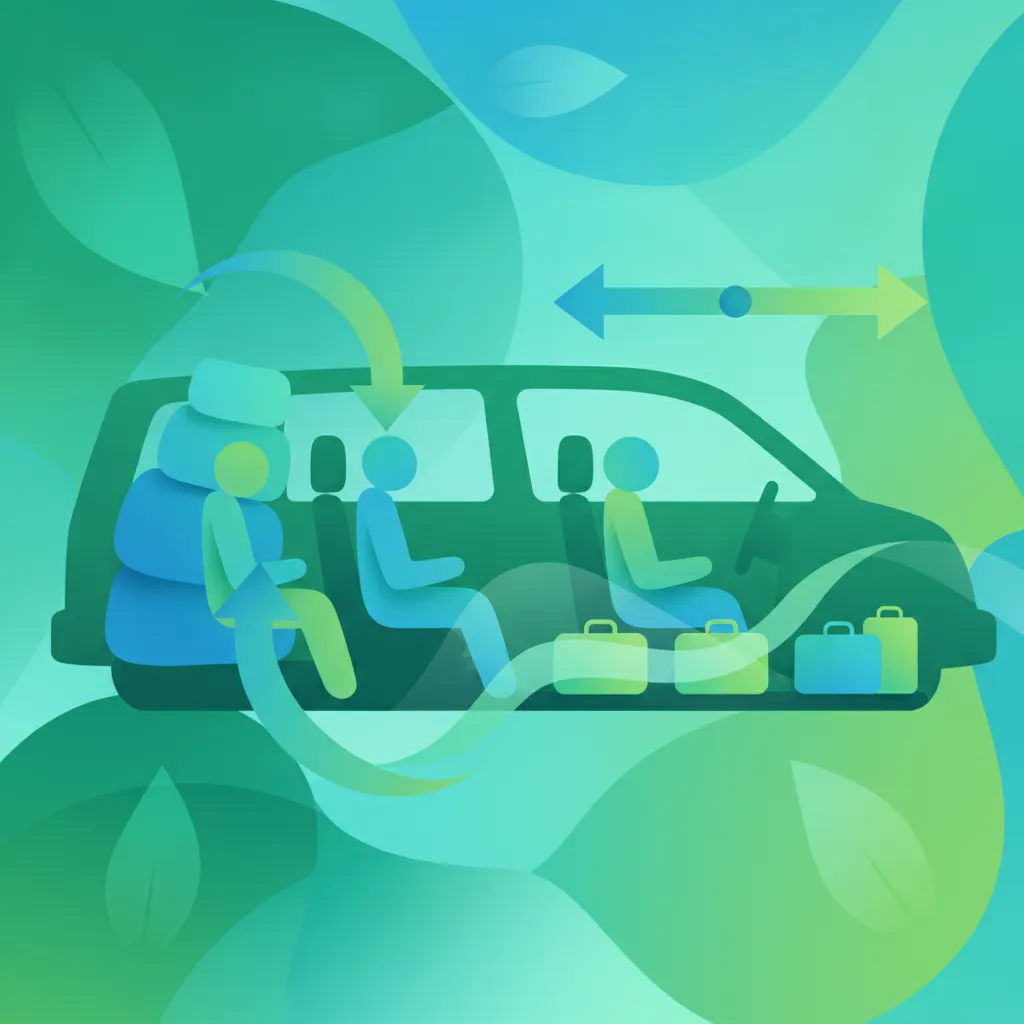
Correct load distribution is essential for safe handling and braking. This lesson explains that loads should be placed as low as possible and distributed evenly to maintain a low centre of gravity and comply with axle weight limits. A high or poorly positioned centre of gravity dramatically increases the risk of rollover, especially when cornering or in an emergency manoeuvre.
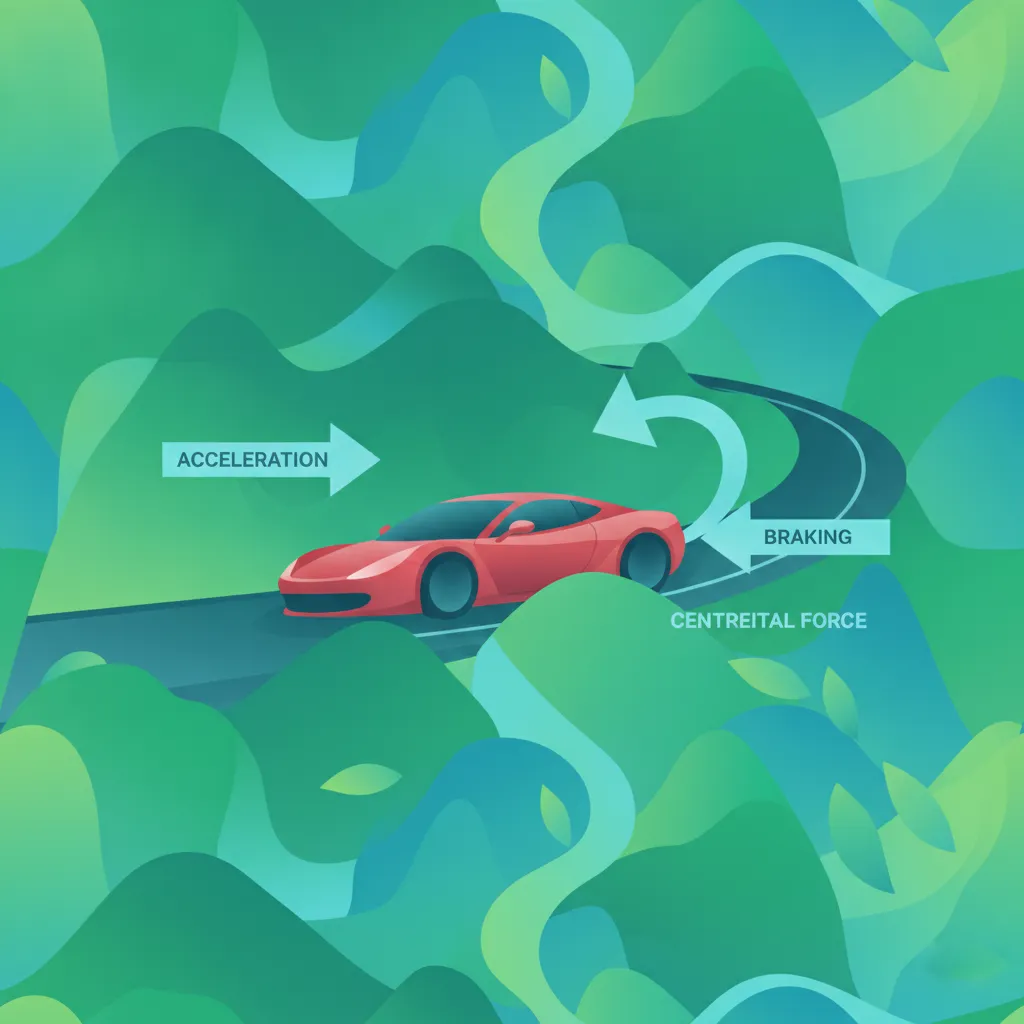
A load is not static; it is subjected to significant forces during transport. This lesson explains how acceleration, braking (deceleration), and cornering create powerful inertial forces that try to move the cargo. Load securing systems must be strong enough to counteract these forces to prevent the load from sliding forward during braking, backward during acceleration, or sideways when turning.
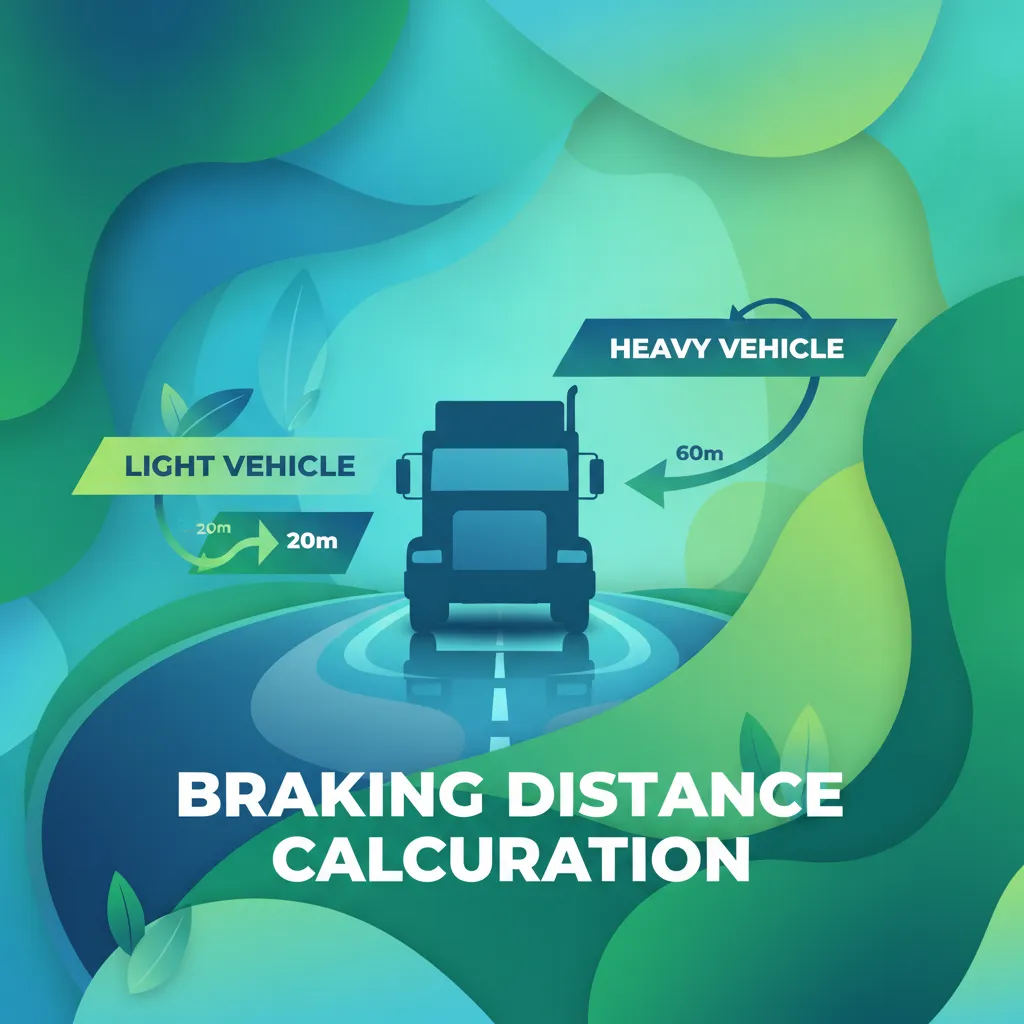
The immense mass of a loaded truck means its braking distance is far greater than that of a car. This lesson breaks down total stopping distance into reaction distance and braking distance, explaining how speed, weight, and road conditions have an exponential effect. It reinforces the necessity of maintaining a significantly larger following distance to ensure enough space to stop safely in an emergency.

A jack-knife occurs when the tractor unit and semitrailer skid and fold in on each other, resulting in a complete loss of control. This lesson explains the primary causes, which include harsh braking (especially while turning) or driving too fast for the conditions, causing the drive axles to lose traction. The key to prevention is smooth driving, anticipating hazards, and adapting speed to road and weather conditions.
Focus on practical driver actions to prevent rollover incidents. Learn how speed, steering, load securing, and awareness of dynamic forces like sloshing in tankers are critical for safe heavy vehicle operation in Switzerland.

Losing part of a load on the road creates an immediate and serious hazard for other drivers. This lesson outlines the driver's responsibilities: stop in a safe place, assess the situation from a safe distance, and immediately alert the police. The driver's primary role is to warn other road users and not to attempt to retrieve the load from a live carriageway.

Turning a long vehicle requires careful planning and execution. This lesson covers the correct procedure: approach, observation, signalling, and positioning the vehicle correctly to allow for the trailer's off-tracking without mounting the kerb. It also highlights the need for constant mirror checks throughout the turn to monitor for cyclists or other vulnerable road users who may enter the danger zone.
Correct load distribution is essential for safe handling and braking. This lesson explains that loads should be placed as low as possible and distributed evenly to maintain a low centre of gravity and comply with axle weight limits. A high or poorly positioned centre of gravity dramatically increases the risk of rollover, especially when cornering or in an emergency manoeuvre.
A jack-knife occurs when the tractor unit and semitrailer skid and fold in on each other, resulting in a complete loss of control. This lesson explains the primary causes, which include harsh braking (especially while turning) or driving too fast for the conditions, causing the drive axles to lose traction. The key to prevention is smooth driving, anticipating hazards, and adapting speed to road and weather conditions.

Despite the complex mirror systems, large areas around a truck remain hidden from the driver's view. This lesson maps out these significant blind spots: directly in front, behind, and along both sides of the vehicle. It teaches drivers to be constantly aware of these 'no-zones' and to anticipate that smaller vehicles, cyclists, or pedestrians may be hidden within them, especially before changing lanes or turning.

Depots and loading bays present unique challenges with tight spaces, other moving vehicles, and pedestrians. This lesson focuses on the principles of safe manoeuvring in these environments, stressing the need for extremely low speeds, constant observation, and patience. It covers techniques for aligning with loading docks and navigating around fixed obstacles and other site traffic.
The immense mass of a loaded truck means its braking distance is far greater than that of a car. This lesson breaks down total stopping distance into reaction distance and braking distance, explaining how speed, weight, and road conditions have an exponential effect. It reinforces the necessity of maintaining a significantly larger following distance to ensure enough space to stop safely in an emergency.

When a long vehicle makes a sharp turn, the rear overhang swings out in a wide arc. This lesson illustrates the danger of rear swing, particularly when pulling away from a kerb or turning in confined spaces. Drivers must be aware of this effect and use their mirrors to check for pedestrians, cyclists, or obstacles in the path of the swinging rear of the vehicle or trailer.

This lesson provides a more detailed look at managing off-tracking in challenging situations like sharp urban corners or tight industrial estate roads. It explains the technique of moving towards the centre line before a right turn (in a right-hand drive context) to create space for the trailer to follow. This requires careful judgement and observation to ensure it is safe to do so.

Overloading is a serious offence with severe safety and legal ramifications. This lesson details how excess weight drastically increases braking distances, puts extreme stress on tyres leading to blowouts, and negatively affects steering and overall stability. Furthermore, it discusses the substantial fines, potential license withdrawal, and driver liability that result from violating Swiss weight regulations.
Find clear answers to common questions learners have about Rollover Risk and Factors Affecting Vehicle Stability. Learn how the lesson is structured, which driving theory objectives it supports, and how it fits into the overall learning path of units and curriculum progression in Switzerland. These explanations help you understand key concepts, lesson flow, and exam focused study goals.
A high center of gravity makes a vehicle much more prone to tipping over during cornering. Because heavy vehicles are tall and wide, any shift in weight—like cargo moving or liquid sloshing—can destabilize the vehicle, especially at higher speeds.
The sloshing effect occurs when liquid cargo in a tanker moves back and forth or side to side during braking or turning. This moving mass creates unpredictable forces that can easily push the vehicle past its point of stability, leading to a rollover.
Not necessarily. While a full load can be stable if distributed correctly, the height of the load is the critical factor. A heavy load that is stacked high above the chassis drastically increases the center of gravity and the risk of rollover.
The most effective way to avoid rollovers is to reduce your speed well before entering a curve or roundabout. Smooth, gradual steering is essential, as sharp or sudden movements can cause a rollover even at relatively low speeds.
Pinpoint specific Swiss traffic rules, road signs, or driving situations you need to master. Use the practice search to start a focused revision session now and build confidence for your official driving theory exam.