
This lesson focuses on the critical skills required to safely navigate junctions and roundabouts in a heavy goods vehicle. Building on your knowledge of vehicle dimensions, you will learn how to manage off-tracking and monitor blind spots to ensure the safety of vulnerable road users, which is a core component of the Swiss Category C and C1 theory exam.

Lesson content overview
Turning a heavy goods vehicle (HGV) like those in Category C or C1 requires significantly more skill, planning, and awareness than driving a standard passenger car. The unique dynamics of large vehicles, particularly the phenomenon of off-tracking and extensive blind spots, demand a systematic approach to ensure safety for all road users and prevent vehicle damage. This lesson outlines the comprehensive procedures for navigating junctions and roundabouts safely and efficiently.
The operation of heavy goods vehicles presents distinct challenges when executing turns, primarily due to their substantial length, weight, and articulation points. These factors profoundly influence how a truck or lorry behaves during a turn, necessitating a specialized approach compared to smaller vehicles. Mastering these dynamics is fundamental to safe driving.
Off-tracking is a critical concept for heavy goods vehicle drivers. It describes the lateral deviation of a trailer's path from the path of the tractor unit during a turn. Simply put, the rear wheels of a heavy vehicle, especially those of a trailer or the rear axles of a long rigid truck, do not follow the exact same path as the front wheels. Instead, they cut a tighter curve.
There are two primary forms of off-tracking:
The extent of off-tracking is influenced by several factors, including the length of the vehicle or combination, the number and position of articulation points, and the sharpness of the turn. A longer trailer will exhibit more pronounced off-tracking. Understanding and anticipating this phenomenon is paramount to positioning the vehicle correctly before and during a turn, preventing accidents and ensuring the trailer's swept path remains within the intended lane.
Correct positioning is the strategic placement of your heavy vehicle within its lane as you approach and execute a turn. This is the primary method to counteract off-tracking and ensure the entire vehicle combination clears the turn safely without encroaching on kerbs, traffic islands, or other lanes.
For right turns, drivers must often move the tractor unit towards the centreline of the road or even slightly into the opposing lane (where safe and permissible, such as at a wide junction without oncoming traffic) to create a wider arc for the trailer. This seemingly counter-intuitive action allows the trailer's rear wheels to follow a path that stays clear of the right-hand kerb.
For left turns, the positioning strategy is slightly different. The tractor unit should generally stay close to the left edge of its lane, providing the maximum possible radius for the trailer to swing without veering into the right-hand lane or a central island.
Failure to position correctly, such as staying too close to the kerb on a right turn, inevitably leads to the trailer mounting the kerb, causing damage to the vehicle and infrastructure, or even leading to a loss of control.
Safe turning for heavy goods vehicles is a multi-faceted process built upon several core principles. Each step is interconnected and contributes to a smooth, controlled, and accident-free manoeuvre. Adhering to these principles is not just about avoiding violations; it is about mitigating inherent risks associated with operating large vehicles.
Effective turning begins long before reaching the junction or roundabout. Approach planning involves evaluating the upcoming turn, assessing its radius, and determining the appropriate speed and lane position. This requires early observation of road signs, markings, and traffic conditions.
Plan Ahead: For heavy vehicles, reducing speed smoothly and early is crucial. Abrupt braking close to the turn can destabilize the load or the trailer, especially in adverse weather conditions. Aim to reduce your speed to a level that allows you to maintain full control throughout the entire turning manoeuvre without needing to accelerate while turning.
Maintaining a consistent, low speed during the turn is essential to control articulation and prevent excessive trailer swing. Once you have initiated the turn, avoid accelerating until the entire vehicle combination has straightened out and is safely in the new lane. This steady speed management minimizes the risk of loss of control, particularly with an articulated vehicle.
Constant observation is the bedrock of safe driving, and it becomes even more critical when operating a heavy vehicle through turns. Drivers must continuously scan their surroundings using direct vision and all available mirrors to identify other traffic, pedestrians, cyclists, and potential hazards.
Before initiating any turn, assess the entire environment: oncoming traffic, traffic lights, road markings, and especially the presence of vulnerable road users (VRUs) who might be in or near your intended path. During the turn, your observation must be continuous, checking and re-checking mirrors to monitor the dynamic blind spots created by the turning vehicle.
Signalling your intentions clearly and early is a legal requirement and a vital safety measure. For heavy goods vehicles, due to their size and the time it takes for them to complete a manoeuvre, signals must be initiated well in advance. This provides other road users with ample time to react and adjust their speed or position.
According to Swiss road traffic regulations, signals must be given at least 100 metres before the turn for heavy vehicles. Early signalling mitigates the risk of sudden lane changes or misinterpretation by other drivers, cyclists, or pedestrians, allowing them to anticipate your actions and avoid potential conflicts.
The extensive blind spots around a heavy vehicle, especially during turns, necessitate continuous and systematic mirror use. Modern heavy vehicles are equipped with a variety of mirrors, including main side mirrors, wide-angle mirrors, and often additional apex mirrors (sometimes called trailer mirrors). These apex mirrors are particularly crucial as they provide a view of the area immediately behind the cab, covering the blind spot around the trailer's rear axles.
An additional mirror, often mounted on the cab or roof of a heavy goods vehicle, designed to provide the driver with a direct view of the area alongside and immediately behind the trailer's rear axles. It is essential for monitoring vulnerable road users in critical blind spots during turns.
Drivers must develop a habit of checking all relevant mirrors – main, wide-angle, and apex – before, during, and after a turn. This continuous monitoring allows for the detection of vulnerable road users, such as cyclists or motorcyclists, who may enter the turning path or position themselves in a blind spot as you begin to turn.
Dynamic Blind Spots: Blind spots are not static. As your vehicle articulates during a turn, these zones change. Continuous mirror checks are the only way to stay aware of these dynamic blind spots and detect hazards as they develop.
Regardless of vehicle size, legal precedence rules (right-of-way) must always be respected. At junctions and roundabouts, this means yielding to vehicles, cyclists, and pedestrians who have priority.
The legal principle dictating which vehicle or road user has precedence to proceed at an intersection or merge point. Drivers of heavy goods vehicles must always yield to those with right-of-way.
For example, when turning left across the path of oncoming traffic at a junction, you must yield to those vehicles or cyclists approaching from the opposite direction who are proceeding straight. Similarly, at a roundabout, vehicles already circulating have priority. Crucially, always yield to pedestrians and cyclists who are crossing your intended path, even if they appear to be in an unexpected position. Assuming priority due to vehicle size is a dangerous and illegal misconception.
Beyond the core principles, several key concepts govern the safe execution of turns in heavy goods vehicles. A deep understanding of these elements equips drivers with the knowledge to anticipate and manage complex situations.
As discussed, off-tracking is the central challenge in heavy vehicle turning. It implies that the trailer's swept path – the total area covered by the vehicle from its leading outer edge to its trailing inner edge during a turn – is significantly larger than that of the tractor unit alone.
Visualizing the Swept Path: Always visualize the entire swept path of your vehicle combination. Imagine a 'ghost trailer' following behind, and mentally trace its path. This helps in judging positioning and clearance.
Correct positioning directly counters off-tracking. For a right turn, the tractor unit often needs to move towards the centreline, creating a wider initial arc. This allows the trailer to maintain its path within the correct lane and avoid mounting the kerb. Conversely, for a left turn, maintaining proximity to the left side of the lane provides the necessary room for the trailer to swing without crossing into another lane or hitting a central island.
Kerb mounting occurs when the wheels or underside of the trailer or rigid truck come into contact with the kerb during a turn. This is a common consequence of inadequate positioning or underestimating the vehicle's off-tracking.
The act of a vehicle's wheels or underside contacting the road curb, typically occurring during turns when the driver fails to account for off-tracking. This can lead to vehicle damage, loss of control, and poses a risk to pedestrians.
The implications of kerb mounting are severe:
The only way to consistently avoid kerb mounting is through precise initial positioning for off-tracking, combined with slow, controlled steering, and continuous mirror checks to monitor the trailer's proximity to the kerb.
Roundabouts are designed to improve traffic flow, but they can be particularly challenging for heavy goods vehicles due to their geometry and the need to yield to circulating traffic.
Key rules for heavy vehicles at roundabouts:
Adhering to specific regulations is not just about avoiding penalties; it's about ensuring the safety of everyone on Swiss roads.
Consult Official Regulations: Always refer to the latest version of the Swiss Road Traffic Act (Strassenverkehrsgesetz, SVG / Loi sur la circulation routière, LCR) and related ordinances (Verkehrsregelverordnung, VRV / Ordonnance sur les règles de la circulation routière, OCR) for precise legal requirements.
As established, Swiss law mandates that heavy goods vehicles must signal their intention to turn at least 100 metres before the junction or roundabout. This extended distance, compared to passenger cars, is critical for safety, giving other road users ample time to react to the slower and wider manoeuvres of large vehicles.
Swiss regulations require all vehicles to remain within their designated lane during a turn. This means:
While specific frequency isn't typically prescribed as a number per second, Swiss regulations strongly emphasize the continuous and diligent use of all available mirrors (including blind spot and apex mirrors) by heavy vehicle drivers before, during, and after any turning manoeuvre. This is crucial for identifying vulnerable road users and other vehicles within dynamic blind spots. Neglecting mirror checks, particularly the apex mirror, can lead to serious consequences and legal liability.
Swiss traffic law places a strong emphasis on protecting vulnerable road users. When turning, heavy vehicle drivers must always yield to pedestrians and cyclists who are crossing or intending to cross the path of the turning vehicle. This includes situations where a cyclist might be travelling straight ahead on the right side of your vehicle as you prepare to turn right, or a pedestrian is using a designated crossing. The size and blind spots of a heavy vehicle make it imperative for the driver to actively seek out and yield to VRUs.
Ignoring safe turning procedures for heavy vehicles can lead to severe consequences, ranging from minor incidents to fatal collisions. Understanding these common violations is crucial for prevention.
Failing to signal at least 100 metres before a turn robs other road users of crucial reaction time. This can cause other drivers to brake sharply, lead to rear-end collisions, or confuse vulnerable road users who might misinterpret your intentions.
This is a frequent error, especially on right turns, where the driver keeps the tractor unit too close to the right edge of the lane. As a result, the trailer's rear wheels mount the kerb, potentially causing:
Neglecting the apex mirror means failing to monitor the critical blind spot alongside and behind the trailer. This oversight is a leading cause of collisions with cyclists or motorcyclists who may be attempting to pass on the inside (right side for a left turn, left side for a right turn) or are simply in the danger zone near the trailer's rear wheels.
Entering a junction or roundabout at a speed too high for the vehicle's length and articulation characteristics can lead to:
Cutting into an opposing lane or an adjacent lane when not necessary, or doing so without extreme caution and yielding, endangers oncoming traffic and other road users. This is particularly dangerous if not properly communicated or if executed without verifying clearance in blind spots.
This is perhaps the most serious violation. Assuming VRUs will yield or failing to confirm their position through thorough mirror checks before and during a turn can result in catastrophic collisions due to the immense size and momentum of a heavy vehicle. Always assume VRUs might be present and unseen.
Safe turning practices are not static; they must adapt to varying environmental conditions, road types, and vehicle states. A skilled heavy vehicle driver understands how to modify their approach based on context.
Successfully navigating turns with a heavy goods vehicle is a testament to a driver's skill, planning, and continuous awareness. It combines a theoretical understanding of vehicle dynamics with practical application of observation and control.
The core of safe turning lies in a few critical actions:
Approach Planning: Identify the turn early, assess its geometry, and observe traffic conditions.
Speed Reduction: Reduce speed smoothly and significantly well before the turn, allowing full vehicle control.
Signalling: Activate your turn signal at least 100 metres before the junction or roundabout.
Initial Positioning: Adjust your tractor unit's lateral position within the lane to account for the trailer's off-tracking (e.g., towards the centreline for a right turn).
Final Checks (Before Turn): Scan all mirrors (main, wide-angle, apex), check blind spots, and confirm right-of-way.
Execute Turn (Slowly): Begin turning, maintaining a consistent, very low speed.
Continuous Mirror Checks (During Turn): Repeatedly check all mirrors to monitor the trailer's path and for any encroaching road users.
Exit Turn: Straighten the vehicle combination, ensure it's safely within the new lane, and then gradually accelerate.
As a professional driver of heavy goods vehicles in Switzerland, you carry a significant responsibility. Adherence to traffic laws concerning signalling distances, lane discipline, and mirror use is not optional; it is a fundamental legal and ethical obligation. Prioritizing the safety of vulnerable road users and preventing damage to infrastructure are paramount.
By consistently applying these safe procedures, heavy goods vehicle drivers can significantly reduce the risks associated with turning manoeuvres, ensuring both their own safety and that of everyone else sharing the road.
Turning a heavy goods vehicle requires mastering off-tracking—the phenomenon where the trailer follows a tighter path than the tractor—and compensating through correct lane positioning before initiating any turn. Swiss regulations specifically require heavy vehicles to signal at least 100 metres in advance, maintain lane discipline, and continuously use all mirrors including apex mirrors to monitor dynamic blind spots. The procedure demands slow speed throughout the manoeuvre, continuous observation of vulnerable road users, and yielding priority to cyclists, pedestrians, and other vehicles as required by law. By following this systematic approach—plan early, position correctly, signal timely, observe continuously, and control speed—heavy vehicle drivers can safely navigate junctions and roundabouts while protecting themselves and other road users.
A short set of high-value points that capture the most important learning from this lesson.
Off-tracking means the trailer cuts a tighter path than the tractor unit during turns, requiring early positioning adjustments to keep the swept path within the lane
For right turns, move the tractor unit toward the centreline to create space for the trailer; for left turns, stay close to the left edge
Swiss law mandates heavy vehicles signal at least 100 metres before any junction or roundabout
Apex mirrors are essential for monitoring the blind spot around the trailer's rear axles where cyclists and pedestrians are most at risk
Maintain a slow, steady speed throughout the entire turn and do not accelerate until fully straightened in the new lane
Explore all units and lessons included in this driving theory course.
Inner off-tracking: trailer path stays inside the tractor's turn (most common); outer off-tracking: trailer swings wider than the tractor
Use all mirrors continuously—main, wide-angle, and apex—before, during, and after every turn
Yield to all vulnerable road users (cyclists, pedestrians, motorcyclists) regardless of whether they appear to be yielding to you
Correct positioning is the primary method to prevent kerb mounting and trailer damage
The size and momentum of a heavy vehicle make it your responsibility to anticipate and accommodate other road users
Positioning the tractor unit too close to the kerb on right turns, causing the trailer's rear wheels to mount the kerb
Signalling too late—under the mandatory 100-metre distance for heavy vehicles in Switzerland
Failing to check the apex mirror before and during a turn, missing cyclists or pedestrians in the critical blind spot alongside the trailer
Entering junctions or roundabouts at excessive speed, leading to trailer swing or loss of control
Assuming vulnerable road users have seen you or will yield, rather than actively confirming their position through mirror checks
Lesson content overview
A short set of high-value points that capture the most important learning from this lesson.
Off-tracking means the trailer cuts a tighter path than the tractor unit during turns, requiring early positioning adjustments to keep the swept path within the lane
For right turns, move the tractor unit toward the centreline to create space for the trailer; for left turns, stay close to the left edge
Swiss law mandates heavy vehicles signal at least 100 metres before any junction or roundabout
Apex mirrors are essential for monitoring the blind spot around the trailer's rear axles where cyclists and pedestrians are most at risk
Maintain a slow, steady speed throughout the entire turn and do not accelerate until fully straightened in the new lane
Explore all units and lessons included in this driving theory course.
Inner off-tracking: trailer path stays inside the tractor's turn (most common); outer off-tracking: trailer swings wider than the tractor
Use all mirrors continuously—main, wide-angle, and apex—before, during, and after every turn
Yield to all vulnerable road users (cyclists, pedestrians, motorcyclists) regardless of whether they appear to be yielding to you
Correct positioning is the primary method to prevent kerb mounting and trailer damage
The size and momentum of a heavy vehicle make it your responsibility to anticipate and accommodate other road users
Positioning the tractor unit too close to the kerb on right turns, causing the trailer's rear wheels to mount the kerb
Signalling too late—under the mandatory 100-metre distance for heavy vehicles in Switzerland
Failing to check the apex mirror before and during a turn, missing cyclists or pedestrians in the critical blind spot alongside the trailer
Entering junctions or roundabouts at excessive speed, leading to trailer swing or loss of control
Assuming vulnerable road users have seen you or will yield, rather than actively confirming their position through mirror checks
Explore search topics learners often look for when studying Safe Procedures for Turning at Junctions and Roundabouts. These topics reflect common questions about road rules, driving situations, safety guidance, and lesson level theory preparation for learners in Switzerland.
Browse additional driving theory lessons that cover connected traffic rules, road signs, and common driving situations related to this topic. Improve your understanding of how different rules interact across everyday traffic scenarios.
Understand the critical blind spots around heavy vehicles and learn essential safety procedures for turning and manoeuvring. This lesson focuses on protecting pedestrians and cyclists, crucial for your Swiss C category theory exam.
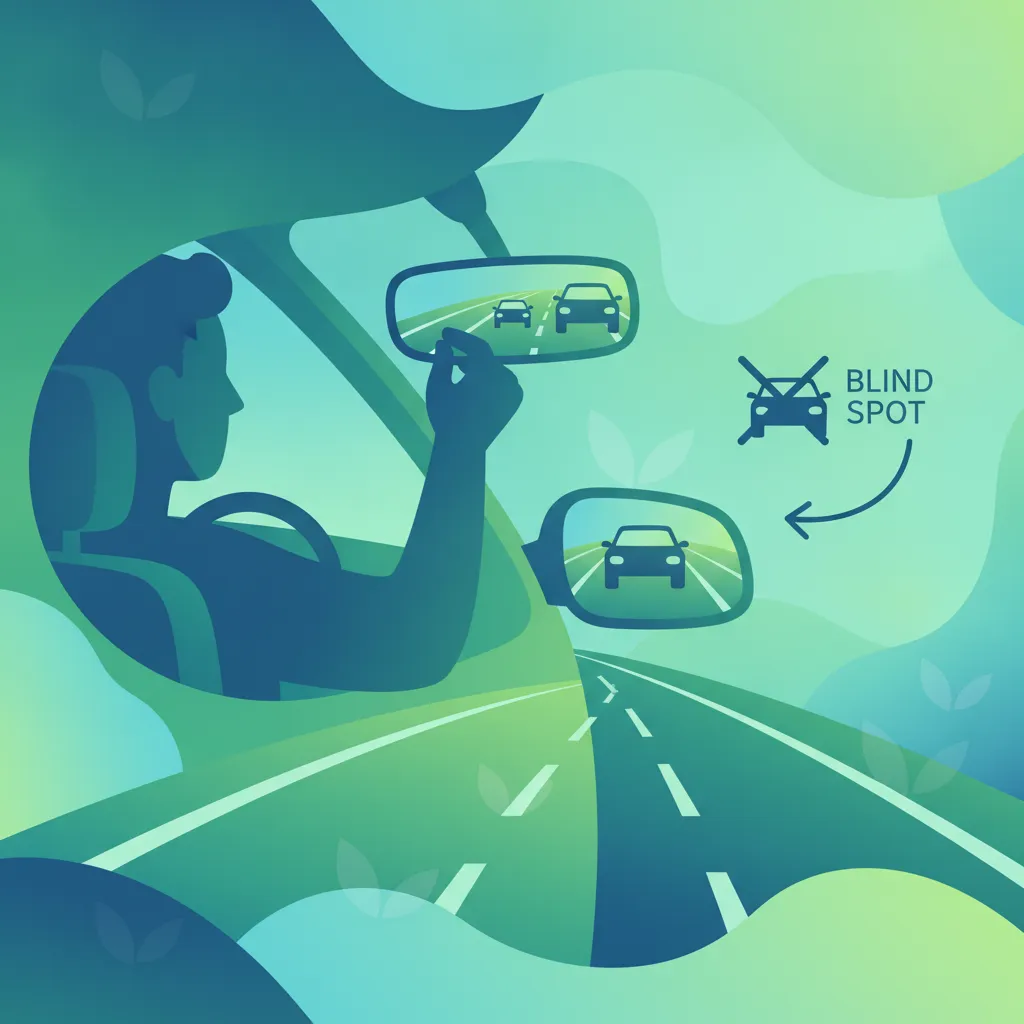
Despite the complex mirror systems, large areas around a truck remain hidden from the driver's view. This lesson maps out these significant blind spots: directly in front, behind, and along both sides of the vehicle. It teaches drivers to be constantly aware of these 'no-zones' and to anticipate that smaller vehicles, cyclists, or pedestrians may be hidden within them, especially before changing lanes or turning.

Pedestrians, cyclists, motorcyclists, and e-scooter riders are extremely vulnerable in any interaction with a heavy vehicle. This lesson instills a defensive mindset, teaching drivers to be hyper-aware of VRUs, especially near junctions, crossings, and cycle lanes. It focuses on anticipation and giving VRUs extra space, as they can be unpredictable and are often hidden in blind spots.

Buses and coaches have significant blind spots to the front, sides, and rear. This lesson maps out these 'no-zones' and teaches a continuous and active scanning process using all available mirrors and direct vision. The goal is to minimize the time any other road user spends undetected in a blind spot.

This lesson trains drivers to look beyond other vehicles and actively search for pedestrians, cyclists, and motorcyclists, especially those who may be distracted or unaware. It covers common behavioral patterns of different VRU groups. The goal is to see potential hazards developing early and create time and space to react safely.

This lesson covers the systematic use of rearview and side mirrors, combined with head checks, to maintain full awareness of surrounding traffic. It emphasizes frequent observation to detect vehicles in blind spots, especially during lane changes and turns. The content also details the proper timing for head checks and the role of scanning techniques in preventing collisions.

This lesson focuses on general driving safety in areas with a high concentration of children. It stresses the importance of significantly reducing speed, being prepared for unexpected events, and scanning for children between parked cars. The driver must exhibit maximum vigilance in these high-risk environments at all times.

This lesson focuses on mitigating the risk of collisions at intersections, particularly from vehicles turning across the rider's path. It teaches defensive strategies such as positioning for visibility, anticipating driver actions, and using head checks to be aware of surrounding traffic. Managing your own and others' blind spots is presented as a crucial survival skill.

The left-hand turn (in Switzerland) is a moment of high risk, as a cyclist can easily be hidden in the vehicle's nearside blind spot. This lesson provides a detailed analysis of this scenario, mandating a slow approach and meticulous, repeated mirror checks before and during the turn. It emphasizes that the driver must assume a cyclist could be there, even if one isn't immediately visible.

This lesson focuses on safe interaction with large vehicles. It highlights the significant blind spots (or 'no-zones') around trucks and buses and teaches riders how to position themselves to remain visible. The content also provides guidance on overtaking large vehicles safely and anticipating their wide turning radius at intersections.

Heavy goods vehicles are fitted with specific safety structures to mitigate the severity of collisions with smaller vehicles and vulnerable road users. This lesson explains the function of the rear underrun bar, which prevents cars from going underneath the truck in a rear-end collision. It also covers side guards, which are designed to stop cyclists and pedestrians from falling under the vehicle's wheels during a side impact.
Master the principles of off-tracking and correct vehicle positioning for safe turning with heavy goods vehicles. This lesson covers how trailer dynamics affect your manoeuvre and is essential for passing the Swiss C category driving theory test.

This lesson provides a more detailed look at managing off-tracking in challenging situations like sharp urban corners or tight industrial estate roads. It explains the technique of moving towards the centre line before a right turn (in a right-hand drive context) to create space for the trailer to follow. This requires careful judgement and observation to ensure it is safe to do so.

When an articulated vehicle turns, the trailer wheels do not follow the same path as the tractor's front wheels; they take a shortcut, or 'cut-in'. This lesson explains this principle of off-tracking and why the driver must take a wider path when initiating a turn. Failing to account for off-tracking is a common cause of striking kerbs, street furniture, or other vehicles.

When a long vehicle turns, the rear wheels follow a shorter path than the front wheels (swept path), and the rear of the vehicle swings outwards (tail swing). This lesson explains these critical concepts. You will learn how to position the vehicle before a turn to avoid mounting the kerb or striking objects like signs and pedestrians with the rear corner.
This lesson focuses on maintaining proper vehicle positioning within the lane, aligning correctly, and respecting road markings. You will understand how correct positioning contributes to safe overtaking and smooth turning. The content also discusses adjustments required in different scenarios, such as narrow roads and multi-lane highways, to maintain optimal lane discipline.
The left-hand turn (in Switzerland) is a moment of high risk, as a cyclist can easily be hidden in the vehicle's nearside blind spot. This lesson provides a detailed analysis of this scenario, mandating a slow approach and meticulous, repeated mirror checks before and during the turn. It emphasizes that the driver must assume a cyclist could be there, even if one isn't immediately visible.

This lesson explores the correct procedures for turning at intersections and navigating roundabouts, focusing on lane selection and signaling. It covers the right-of-way rules for right and left turns and the importance of positioning the vehicle correctly before the turn. In roundabouts, the content emphasizes yielding to circulating traffic and selecting the correct exit lane.

Motorway driving requires constant concentration due to high speeds. This lesson emphasizes the importance of staying in the right-hand lane unless overtaking and the specific restrictions on lorry overtaking in Switzerland. It reinforces the need for a following distance of at least four seconds to compensate for the vehicle's long stopping distance and provides guidance on safely merging and exiting.

Rural roads present challenges like narrow lanes, poor surfaces, sharp bends, and limited visibility. This lesson teaches drivers how to position their large vehicle to maximize space and visibility, anticipate oncoming traffic at blind corners, and be aware of specific rural hazards. These hazards include slow-moving agricultural vehicles, animals on the road, and concealed farm entrances.
Despite the complex mirror systems, large areas around a truck remain hidden from the driver's view. This lesson maps out these significant blind spots: directly in front, behind, and along both sides of the vehicle. It teaches drivers to be constantly aware of these 'no-zones' and to anticipate that smaller vehicles, cyclists, or pedestrians may be hidden within them, especially before changing lanes or turning.

This lesson provides guidance on safely navigating roundabouts and tram lanes, common features in Swiss cities. It covers the rules for yielding, lane positioning within the roundabout, and signaling intentions upon exiting. Special attention is given to the hazards of crossing slippery tram tracks and sharing the road with public transport.
Find clear answers to common questions learners have about Safe Procedures for Turning at Junctions and Roundabouts. Learn how the lesson is structured, which driving theory objectives it supports, and how it fits into the overall learning path of units and curriculum progression in Switzerland. These explanations help you understand key concepts, lesson flow, and exam focused study goals.
Off-tracking occurs because the rear wheels of a long vehicle or trailer follow a tighter arc than the front wheels. Failing to account for this can result in mounting the kerb, striking street furniture, or endangering pedestrians at the edge of the junction.
The primary danger is the blind spot on the passenger side where cyclists or pedestrians can be trapped. Drivers must use their additional wide-angle and curb mirrors systematically before and during the turn to ensure no vulnerable road user is in the danger zone.
Approach with extreme caution, slowing well in advance. Position the vehicle to allow for the tail swing and off-tracking while clearly signalling your intentions. Observe all other traffic continuously, as smaller vehicles may attempt to overtake on the inside of the roundabout.
While not always legally mandatory, it is highly recommended as a safety best practice in restricted areas or when reversing. If you cannot see clearly, you have a duty of care to ensure the area is safe, and using a trained signaller significantly reduces the risk of accidents.
Pinpoint specific Swiss traffic rules, road signs, or driving situations you need to master. Use the practice search to start a focused revision session now and build confidence for your official driving theory exam.