
This lesson guides professional drivers through the critical steps to take if cargo is lost or spilled on the road. It provides a clear framework for ensuring the safety of other road users and complying with Swiss transport regulations after such an incident.

Lesson content overview
Operating a heavy goods vehicle (HGV) within the Category C and C1 framework comes with significant responsibilities, particularly concerning the safety of your load. Despite stringent load securing protocols, unforeseen events can lead to a load loss or spill incident on the road. Such an event immediately creates a severe hazard for other road users, potentially causing collisions, vehicle damage, and personal injury. This lesson outlines the critical, immediate actions required of a driver in Switzerland when facing a load loss or spill incident, emphasizing safety and compliance with traffic regulations.
A load loss or spill incident occurs when any part of a vehicle's cargo detaches and falls onto the carriageway. This can range from small items, like debris or packaging, to large, heavy objects such as pallets or industrial equipment. The immediate danger arises because these fallen objects become unexpected obstacles, especially for drivers approaching at speed, in low light, or adverse weather conditions. For drivers of heavy goods vehicles, it is paramount to understand that continuing to drive or attempting to retrieve the load without proper safety measures is highly dangerous and legally prohibited.
An event where part or all of a vehicle’s cargo becomes detached from the vehicle and falls onto the roadway, creating a hazard.
While this course focuses on incident response, it is crucial to remember that proper load securing, as covered in Unit 5, is the primary preventative measure. However, even with the best practices, extreme braking, sudden maneuvers, road surface irregularities, or even component failures can lead to a load becoming dislodged. Recognizing that a load has been lost or is spilling requires constant vigilance and quick assessment by the driver. The consequences of such an event can extend beyond material damage, leading to significant legal penalties and, most importantly, endangering human lives.
When a load loss or spill occurs, the driver's primary responsibility shifts from transportation to incident management. The immediate priority is to prevent secondary accidents and protect other road users. This requires a rapid, calm, and systematic approach to securing the scene.
Recognize the Incident: Be constantly aware of your vehicle's behaviour and surroundings. A sudden change in vehicle handling, unusual noises, or seeing debris in your mirrors can indicate a load loss.
Stop Safely: Bring your heavy goods vehicle to a controlled and safe stop as quickly as possible without creating further danger.
Activate Hazard Warning Lights: Immediately turn on your hazard flashers to alert other traffic to your presence and the potential danger ahead.
Place a Warning Triangle: Before exiting the vehicle, ensure it is safe to do so, then place a warning triangle at the required distance to provide advance warning.
Notify the Police: Contact the emergency services without delay to report the incident and provide crucial information.
Do Not Retrieve Load: Under no circumstances should you attempt to retrieve the fallen load while traffic is present.
Each of these steps is vital and must be performed in sequence to ensure the safety of everyone involved.
After recognizing a load loss, the very first physical action is to stop the vehicle. For heavy goods vehicles, this requires careful consideration of braking distances, vehicle stability, and surrounding traffic conditions.
The goal is to move the vehicle safely out of the flow of traffic.
Never stop abruptly in a live traffic lane unless an immediate, unavoidable obstruction directly ahead makes it absolutely essential. Such a stop significantly increases the risk of a rear-end collision, especially for a heavy vehicle with its longer braking distances.
Once stopped, ensure your vehicle is positioned as far away from the traffic flow as possible. Secure the vehicle by engaging the parking brake.
Visual warning signals are crucial for alerting other drivers to the danger ahead. These signals give approaching drivers time to react, slow down, and adjust their course safely.
All-signal flashing lights (hazard flashers) that activate all turn signal lights simultaneously to indicate a vehicle is stationary due to an emergency or is posing a temporary obstruction.
Immediately after bringing your heavy goods vehicle to a safe stop, activate your hazard warning lights. This is a mandatory requirement under Swiss traffic law and provides an instant, universal signal of distress or obstruction. The flashing lights warn vehicles approaching from both directions (if on a two-way road) and from behind to exercise caution.
A warning triangle is a vital piece of safety equipment that all heavy goods vehicles must carry. Its correct placement provides an early visual cue to oncoming traffic, particularly effective in situations where the vehicle itself might be less visible due to bends, crests, or adverse weather.
Prioritize Safety: Before exiting your vehicle, assess the traffic conditions. If it is too dangerous to walk back, wait for a safe gap in traffic or for police assistance.
Distance from Vehicle:
Roadside Positioning: Always place the warning triangle on the left side of the carriageway (facing oncoming traffic for right-hand traffic countries like Switzerland), visible to drivers approaching the incident. This ensures it doesn't become another obstacle in the main path of traffic but still serves its warning purpose.
Visibility: Ensure the triangle is stable and clearly visible, especially at night or in poor weather. If visibility is severely reduced (e.g., heavy fog, snow), consider increasing the distance to up to 150 metres if it can be done safely.
Once you have safely stopped your vehicle and activated visual warnings, your next immediate step is to contact the police. This is a mandatory legal requirement for any incident that obstructs traffic, poses a danger, or involves fallen cargo.
In Switzerland, the primary emergency number for police is 117. For fire services, it's 118, and for ambulance, 144. In a load loss incident, the police (117) are your first point of contact, as they will coordinate all necessary responders, including road authorities and cleanup crews.
Call Immediately: Do not delay calling the police. Prompt notification enables a quicker and more coordinated response.
Provide Exact Location: Give precise details of your location. This could include:
Describe the Incident: Clearly state that you have experienced a load loss or spill.
Specify Nature of Load: Inform them what type of material has fallen onto the road (e.g., "pallets of wood," "sand," "empty chemical drums," "general cargo"). If the load is hazardous, explicitly state this.
Report Injuries: Confirm if there are any injuries to yourself or others.
Stay Safe and Await Instructions: Remain at a safe distance from the carriageway, in your vehicle or behind a barrier, until police arrive or give you further instructions. Do not attempt to manage traffic or clear the scene yourself.
One of the most critical rules in managing a load loss incident is the strict prohibition against attempting to retrieve the fallen load while traffic is present. This rule is in place for several compelling safety and legal reasons.
The mandatory prohibition against a driver attempting to retrieve or clean up detached cargo from a live carriageway while traffic flow continues.
Your role is to warn and report, not to clean up. Leave the retrieval and clearance to trained emergency personnel and road authorities who have the necessary equipment and authority to secure the area and manage traffic.
Retrieval of the load is only permissible after the police or relevant road authority have arrived at the scene, assessed the situation, and explicitly secured the area, often by stopping or diverting traffic.
The immediate actions remain consistent, but specific environmental factors, road types, and the nature of the load require additional considerations and adjustments to your procedure.
Adhering to the prescribed actions after a load loss incident is not just good practice; it is a legal obligation under Swiss road traffic law. Non-compliance can lead to serious consequences.
Swiss law is strict on ensuring road safety. Violations related to incident management can result in substantial fines, points on your driving license, or even suspension, particularly for professional drivers. In cases of injury or death, criminal liability may apply.
Understanding the rationale behind each rule empowers you to make correct decisions even under pressure. The legal framework prioritizes public safety over property recovery.
Managing a load loss or spill incident as a heavy goods vehicle driver requires immediate, decisive, and safety-focused action. Your primary goal is always to protect other road users from the hazards created by fallen cargo.
Recognize Immediately: Be vigilant for signs of load loss.
Stop Safely: Move your vehicle off the carriageway onto a hard shoulder or lay-by.
Activate Hazard Lights: Turn on your hazard flashers instantly.
Place Warning Triangle: Position the triangle 100m (motorway) or 50m (other roads) behind your vehicle, on the left side of the carriageway.
Call Police (117): Report the incident with precise location and load details.
Do NOT Retrieve Load: Never attempt to pick up fallen cargo while traffic is present.
Adapt to Conditions: Adjust your actions for weather, road type, and load specifics.
By following these procedures, you not only comply with Swiss traffic law but also play a critical role in preventing secondary accidents and ensuring the safety of everyone on the road.
This lesson covers the critical emergency response procedure for Swiss Category C and C1 drivers when cargo becomes detached on the road. The correct sequence is: recognize the incident, stop safely off the carriageway, activate hazard lights, place a warning triangle at the specified distance (100m on motorways, 50m on other roads), and call the police immediately with precise location and load details. A fundamental rule is the non-retrieval prohibition—drivers must never attempt to collect fallen cargo while traffic is present, as this endangers lives and carries serious legal consequences. The procedures adapt to different road types, weather conditions, and load types, with particular caution required for hazardous materials and high-speed motorway environments.
A short set of high-value points that capture the most important learning from this lesson.
The driver's primary role during a load loss is to warn and protect other road users, not to recover the cargo.
Always stop safely off the carriageway—use the hard shoulder on motorways, lay-bys on rural roads—before taking further action.
Activate hazard warning lights immediately and place a warning triangle at the correct distance (100m on motorways, 50m on other roads) on the left side of the carriageway.
Call the police (117 in Switzerland) immediately with precise location, road name or motorway, direction of travel, and load description.
Never attempt to retrieve fallen cargo from a live carriageway; only retrieve after police have secured the area and given permission.
Explore all units and lessons included in this driving theory course.
Warning triangle distances: 100 metres on motorways, 50 metres on other roads, with the triangle always placed on the left side facing oncoming traffic.
Swiss emergency number for police is 117; provide the road name (e.g., A1), nearest kilometre marker, direction of travel, and nature of the load when calling.
The non-retrieval rule strictly prohibits entering a live carriageway to pick up cargo—this protects your safety and prevents additional hazards.
Increase warning distances (up to 150m) in poor visibility conditions such as fog, rain, or snow, and wear high-visibility clothing if you must exit the vehicle.
Hazmat loads require immediate explicit notification to police; do not attempt to contain or approach hazardous spills yourself.
Placing the warning triangle too close to the vehicle, reducing the reaction time available to approaching drivers.
Attempting to retrieve fallen cargo while traffic is still flowing, creating a severe safety risk and potential criminal liability.
Failing to activate hazard warning lights, leaving other road users without immediate indication of the obstruction ahead.
Stopping in a live traffic lane instead of moving to the hard shoulder or lay-by, dramatically increasing the risk of secondary collisions.
Providing incomplete location information when calling police, which delays the emergency response and cleanup operations.
Lesson content overview
A short set of high-value points that capture the most important learning from this lesson.
The driver's primary role during a load loss is to warn and protect other road users, not to recover the cargo.
Always stop safely off the carriageway—use the hard shoulder on motorways, lay-bys on rural roads—before taking further action.
Activate hazard warning lights immediately and place a warning triangle at the correct distance (100m on motorways, 50m on other roads) on the left side of the carriageway.
Call the police (117 in Switzerland) immediately with precise location, road name or motorway, direction of travel, and load description.
Never attempt to retrieve fallen cargo from a live carriageway; only retrieve after police have secured the area and given permission.
Explore all units and lessons included in this driving theory course.
Warning triangle distances: 100 metres on motorways, 50 metres on other roads, with the triangle always placed on the left side facing oncoming traffic.
Swiss emergency number for police is 117; provide the road name (e.g., A1), nearest kilometre marker, direction of travel, and nature of the load when calling.
The non-retrieval rule strictly prohibits entering a live carriageway to pick up cargo—this protects your safety and prevents additional hazards.
Increase warning distances (up to 150m) in poor visibility conditions such as fog, rain, or snow, and wear high-visibility clothing if you must exit the vehicle.
Hazmat loads require immediate explicit notification to police; do not attempt to contain or approach hazardous spills yourself.
Placing the warning triangle too close to the vehicle, reducing the reaction time available to approaching drivers.
Attempting to retrieve fallen cargo while traffic is still flowing, creating a severe safety risk and potential criminal liability.
Failing to activate hazard warning lights, leaving other road users without immediate indication of the obstruction ahead.
Stopping in a live traffic lane instead of moving to the hard shoulder or lay-by, dramatically increasing the risk of secondary collisions.
Providing incomplete location information when calling police, which delays the emergency response and cleanup operations.
Explore search topics learners often look for when studying Managing a Load Loss or Spill Incident. These topics reflect common questions about road rules, driving situations, safety guidance, and lesson level theory preparation for learners in Switzerland.
Browse additional driving theory lessons that cover connected traffic rules, road signs, and common driving situations related to this topic. Improve your understanding of how different rules interact across everyday traffic scenarios.
Learn the critical steps for managing a load loss or spill incident on Swiss roads. Understand driver responsibilities for securing the scene, notifying authorities, and prioritizing safety according to Category C and C1 theory.
This lesson provides a structured guide for managing the scene of a road traffic accident. It covers the internationally recognized priorities: assess for danger, make the scene safe, send for help by calling emergency services (112), and provide first aid to the injured if trained to do so. It also details the legal requirement to stop and exchange information after being involved in a collision.

After stopping for an emergency, making the scene safe is the top priority. This lesson details the procedure: activate hazard warning lights, put on high-visibility clothing before exiting the cab, and place the warning triangle at the correct distance behind the vehicle (at least 100m on motorways). This warns approaching traffic and creates a safer environment for the driver and emergency responders.

Overloading is a serious offence with severe safety and legal ramifications. This lesson details how excess weight drastically increases braking distances, puts extreme stress on tyres leading to blowouts, and negatively affects steering and overall stability. Furthermore, it discusses the substantial fines, potential license withdrawal, and driver liability that result from violating Swiss weight regulations.
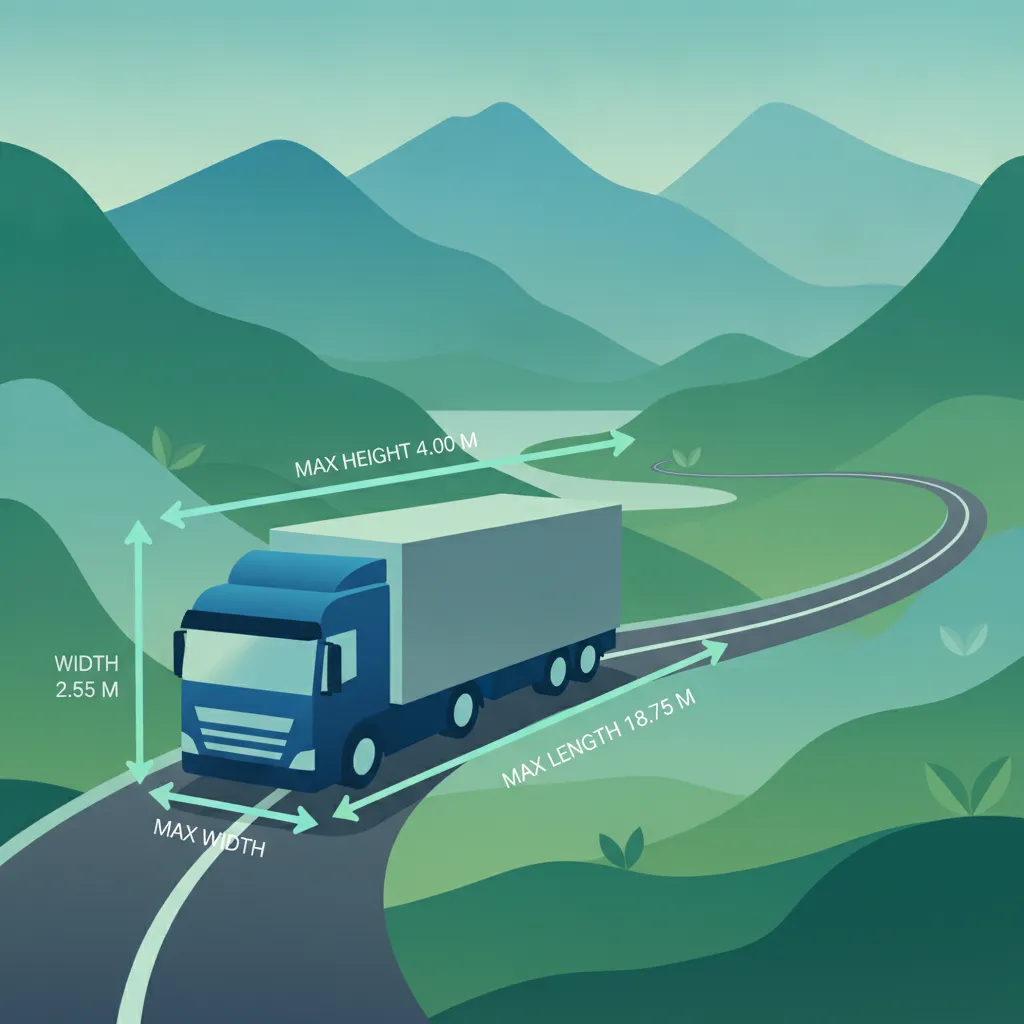
Swiss law strictly regulates the maximum dimensions of commercial vehicles to ensure they can safely navigate the infrastructure. This lesson specifies the standard limits for vehicle height (4.0m), width (2.55m), and length for various lorry and trailer combinations. Adhering to these dimensions is crucial for avoiding collisions with bridges, tunnels, and other structures, and for navigating narrow roads.
Transporting loads that are wider, longer, taller, or heavier than standard regulations allow requires special authorization. This lesson explains the concept of exceptional transport and the legal requirement to obtain a special permit from the relevant cantonal authorities. It highlights that such operations require careful route planning, often mandating specific times of travel and sometimes the use of escort vehicles.

This lesson details the main techniques used for effective load securing. Blocking involves placing cargo snugly against fixed structures like the headboard or using dunnage to fill gaps and prevent sliding. Lashing involves using devices like straps or chains to either tie the load down, increasing friction (friction lashing), or to directly restrain it against movement (direct lashing).

Turning a long vehicle requires careful planning and execution. This lesson covers the correct procedure: approach, observation, signalling, and positioning the vehicle correctly to allow for the trailer's off-tracking without mounting the kerb. It also highlights the need for constant mirror checks throughout the turn to monitor for cyclists or other vulnerable road users who may enter the danger zone.

The driver is legally responsible for the roadworthiness of their vehicle at the start of and during every journey. This lesson outlines the formal process for reporting any identified defects to the transport manager or maintenance staff. It stresses the critical rule that a vehicle with a known safety-critical defect must not be driven until it has been professionally repaired and declared safe.

While others may have loaded the vehicle, the driver holds the final legal responsibility for the security of the load once on the public highway. This lesson clarifies this crucial point of law, explaining that the driver must inspect the load and its securing arrangements before departure and re-check them during the journey. The consequences of a load shifting or falling can be catastrophic and result in severe legal penalties for the driver.
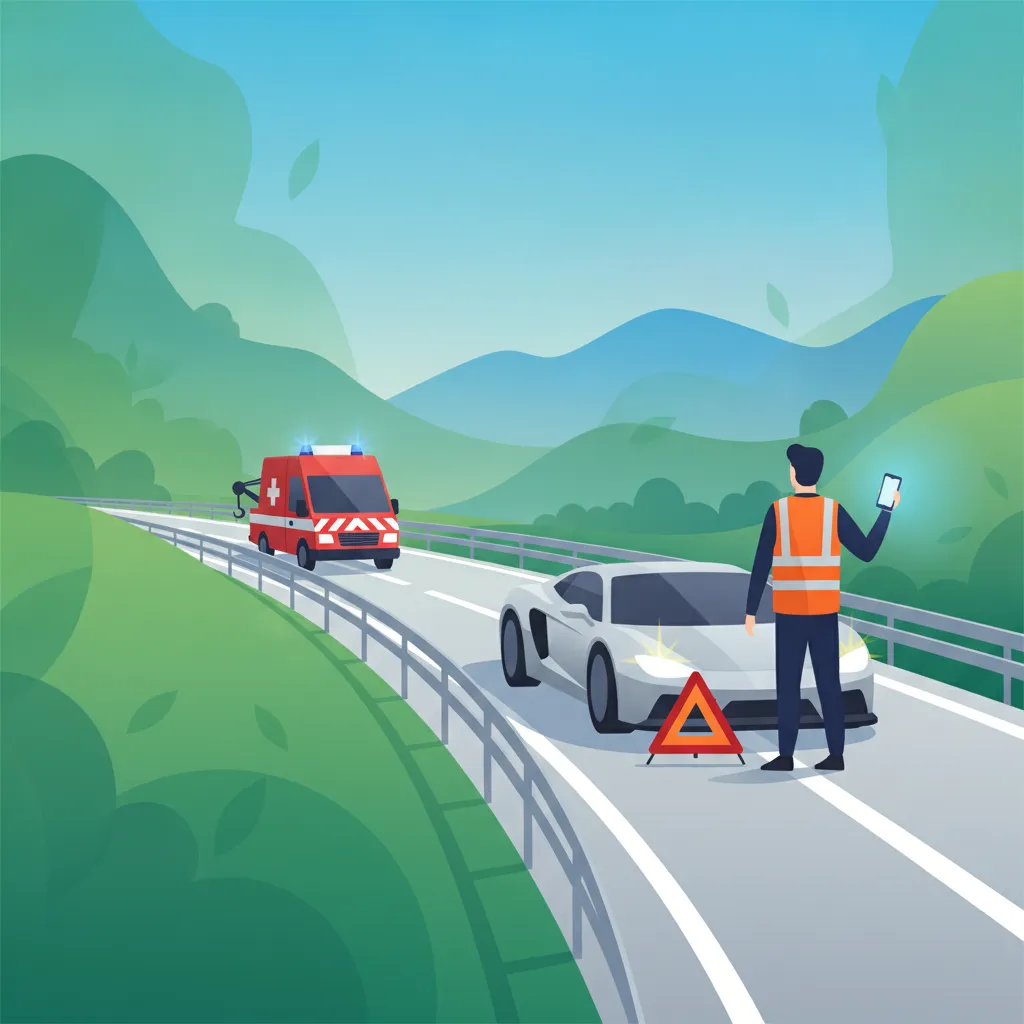
A breakdown can be a dangerous situation, especially on a busy road or motorway. This lesson provides a clear, sequential guide to follow. It includes pulling over to a safe location, activating hazard lights, placing the warning triangle, ensuring passenger safety, and contacting the appropriate services for assistance.
Understand the importance of load securing and the protocols for managing incidents when cargo is lost or spilled. This lesson covers driver obligations in Switzerland for ensuring road safety and legal compliance.
While others may have loaded the vehicle, the driver holds the final legal responsibility for the security of the load once on the public highway. This lesson clarifies this crucial point of law, explaining that the driver must inspect the load and its securing arrangements before departure and re-check them during the journey. The consequences of a load shifting or falling can be catastrophic and result in severe legal penalties for the driver.
After stopping for an emergency, making the scene safe is the top priority. This lesson details the procedure: activate hazard warning lights, put on high-visibility clothing before exiting the cab, and place the warning triangle at the correct distance behind the vehicle (at least 100m on motorways). This warns approaching traffic and creates a safer environment for the driver and emergency responders.

Operating a heavy goods vehicle involves a significant responsibility for the safety of all road users. This lesson emphasizes the professional driver's enhanced duty of care due to the vehicle's size, mass, and potential impact in a collision. It covers the importance of a professional attitude, constant vigilance, and adherence to all traffic regulations to prevent incidents and maintain a high standard of road safety.

Fatigue is a major cause of accidents in the transport industry. This lesson teaches drivers to identify the early warning signs of tiredness, such as frequent yawning, heavy eyelids, and difficulty concentrating. It emphasizes that the only effective cure for fatigue is sleep and reinforces the legal and personal responsibility to take required breaks and never drive while tired.
The driver is legally responsible for the roadworthiness of their vehicle at the start of and during every journey. This lesson outlines the formal process for reporting any identified defects to the transport manager or maintenance staff. It stresses the critical rule that a vehicle with a known safety-critical defect must not be driven until it has been professionally repaired and declared safe.

This lesson explores the correct use of seat belts, the installation of child restraints, and the importance of securing loads. It covers weight distribution guidelines, maximum load limits, and conditions for towing a trailer. Guidance is also provided for safely transporting animals and ensuring all loads are properly secured to prevent movement.
For professional drivers, traffic violations can have career-altering consequences beyond standard fines. This lesson details the heightened penalties for infringements such as speeding, overloading, insecure loads, and violations of driving time regulations. It outlines the process of warnings, license suspension or withdrawal, and potential criminal liability, emphasizing the importance of strict legal compliance in the transport industry.
Overloading is a serious offence with severe safety and legal ramifications. This lesson details how excess weight drastically increases braking distances, puts extreme stress on tyres leading to blowouts, and negatively affects steering and overall stability. Furthermore, it discusses the substantial fines, potential license withdrawal, and driver liability that result from violating Swiss weight regulations.
Unlike cars, heavy vehicles cannot travel on every road. This lesson stresses the importance of using HGV-specific satellite navigation systems or carefully checking maps to plan routes that avoid low bridges, weak bridges, and roads with weight or width restrictions. Proper planning saves time, fuel, and prevents dangerous situations or costly damage.
Taking regular breaks is a legal requirement and essential for combating fatigue. This lesson covers how to safely enter and park within designated lorry parks at service areas. It emphasizes the importance of applying the parking brake securely, using wheel chocks if on a slope, and being mindful of vehicle and cargo security to prevent theft.
Find clear answers to common questions learners have about Managing a Load Loss or Spill Incident. Learn how the lesson is structured, which driving theory objectives it supports, and how it fits into the overall learning path of units and curriculum progression in Switzerland. These explanations help you understand key concepts, lesson flow, and exam focused study goals.
The immediate priority is to pull over in a safe, legal place, such as a lay-by or emergency area. Do not stop in the middle of a live carriageway. Once stopped, activate your hazard lights and secure your vehicle.
No, you must never attempt to retrieve cargo from a live motorway carriageway. It is extremely dangerous and strictly prohibited. You should stay in a safe position and contact the police immediately.
Ensure your hazard lights are on and, if it is safe to do so, use your reflective vest and warning triangle in accordance with Swiss road regulations. Your main focus is alerting oncoming traffic to the danger.
Yes, if the load creates a hazard on the public road, you must report the incident to the police immediately. They will coordinate the safe removal of the hazard.
Pinpoint specific Swiss traffic rules, road signs, or driving situations you need to master. Use the practice search to start a focused revision session now and build confidence for your official driving theory exam.