
This lesson explores the essential physics and mechanics of braking to ensure you can control your moped or e-bike safely. It forms a core part of your vehicle control knowledge, building on your understanding of speed and preparing you for real-world handling in diverse Swiss traffic conditions.
Lesson content overview
Effective braking is a fundamental skill for all road users, especially for those operating small vehicles like Category M mopeds and e-bikes in Switzerland. Mastering braking dynamics not only enhances your control and safety but also directly influences your ability to react effectively in unexpected situations. This lesson delves into the principles of how your vehicle stops, the crucial role of your tyres, and how different road conditions demand varied braking techniques.
Understanding these concepts will help you maintain optimal grip, prevent skidding, and bring your vehicle to a safe, controlled stop, significantly reducing the risk of collisions. It builds upon foundational knowledge of vehicle control and speed management, preparing you for more complex maneuvers and diverse riding environments.
Deceleration is the process of reducing your vehicle's speed, essentially negative acceleration. When you apply the brakes, your vehicle converts its kinetic energy (energy of motion) into heat through friction between the brake pads and discs/drums, and most importantly, between the tyres and the road surface. The rate at which your vehicle decelerates directly determines your stopping distance. A higher rate of deceleration means you stop in a shorter distance, but this also demands greater grip from your tyres.
The primary purpose of understanding deceleration physics is to quantify your stopping capability and calculate the necessary following distances. Being aware of how quickly your vehicle can stop allows you to anticipate hazards and react appropriately, ensuring you can always stop safely within the visible distance ahead.
One of the most critical aspects of braking dynamics for small vehicles is understanding the distribution of braking force between the front and rear wheels. This is known as brake balance. When you brake, the vehicle's weight shifts forward due to inertia. This phenomenon, known as load transfer, significantly increases the downward force on the front wheel and reduces it on the rear wheel.
Because of this load transfer, the front wheel gains more grip potential, while the rear wheel's grip is diminished. Consequently, the front brake is significantly more effective and provides the majority of the stopping power (often 70-80% for small vehicles). Over-reliance on the rear brake, especially sudden or hard application, can easily cause the rear wheel to lock up and skid, leading to a loss of control or even a fall. Conversely, too much front-wheel braking without proper technique can also lead to instability or loss of traction if the limits of grip are exceeded.
Always aim for progressive braking: apply the front brake smoothly and gradually, increasing pressure as needed, while lightly modulating the rear brake to maintain stability and assist in stopping.
Tyre grip is the maximum friction force that can be generated between your tyres and the road surface without slipping. This concept is often visualized as a friction circle. Imagine a circle around your tyre's contact patch; any combination of braking, acceleration, or cornering forces that stays within this circle means your tyre maintains grip. Exceeding the boundaries of this circle, in any direction, results in a loss of traction or a skid.
The radius of this friction circle is determined by the coefficient of friction (μ) between the tyre and the road, multiplied by the normal load (weight) on the tyre. A higher coefficient of friction means more grip and a larger friction circle, allowing for greater braking, acceleration, and cornering forces. Different road surfaces and tyre conditions drastically alter this coefficient. For example, dry asphalt offers a high μ, while wet or icy surfaces significantly reduce it. Understanding the friction circle helps you instinctively stay within your tyres' limits, adjusting your braking to prevailing conditions.
A theoretical representation of the maximum combined longitudinal (braking/acceleration) and lateral (cornering) forces a tyre can exert before losing traction.
The air pressure inside your tyres is a fundamental factor influencing your vehicle's handling, grip, and safety. Tyre pressure dictates the size and shape of the contact patch – the area of the tyre actually touching the road.
Always refer to your vehicle manufacturer's recommendations for tyre pressure, usually found in the owner's manual or on a sticker on the vehicle itself. These recommendations often include different pressures for carrying a passenger or heavier loads. Regular checks, ideally once a week and before long journeys, are crucial.
Locate the manufacturer's recommended tyre pressure, typically measured in bar or psi.
Use an accurate tyre pressure gauge. Always check pressure when tyres are cold (before riding or after a short distance).
Remove the valve cap, press the gauge firmly onto the valve stem, and read the pressure.
Add or release air as necessary to match the recommended pressure.
Replace the valve cap securely.
The grooves on your tyre's surface, known as the tread, are not merely for aesthetics. They play a vital role in grip, especially on wet roads. Tread grooves channel water away from the contact patch, allowing the rubber to remain in direct contact with the road surface. This mechanism is crucial for preventing hydroplaning (also known as aquaplaning).
A condition where a layer of water builds up between a vehicle's tyres and the road surface, leading to a loss of traction and control.
As tyres wear down, their tread depth decreases. A new tyre for a small vehicle might have a tread depth of around 8 mm. However, Swiss regulations, similar to many jurisdictions, mandate a minimum tread depth of 1.6 mm for continued road use. Riding with insufficient tread depth is not only illegal but extremely dangerous, as it dramatically increases the risk of hydroplaning on wet surfaces and reduces overall grip.
It's essential to regularly inspect your tyres for wear, looking for the small tread wear indicators (tiny raised bars in the main grooves). If the tread surface is level with these indicators, the tyre has reached its legal limit and must be replaced immediately.
The type and condition of the road surface profoundly affect the coefficient of friction and, consequently, your available tyre grip. Drivers must constantly adapt their braking technique and speed to these variations.
Dry asphalt or concrete generally offers the highest coefficient of friction, providing excellent grip and allowing for effective braking. However, even on dry roads, contaminants like sand, gravel, or oil spills can drastically reduce grip in localized areas.
Rain or standing water significantly reduces the coefficient of friction. Wet roads require earlier and gentler brake application. Stopping distances can be doubled or even tripled compared to dry conditions. Smooth, progressive braking is vital to avoid wheel lock and hydroplaning.
These are the most treacherous road conditions. Ice, in particular, dramatically reduces the coefficient of friction, making effective braking extremely challenging. On snow or ice, even minimal braking force can cause wheel lock. The safest approach is to drastically reduce speed, anticipate braking needs much earlier, and use the brakes with extreme caution, often relying more on engine braking and very light, progressive front brake application while largely avoiding the rear brake.
Gravel or unpaved roads offer less predictable grip. Loose material can shift under the tyres, leading to instability. On such surfaces, apply brakes smoothly and avoid sudden movements. A balanced approach using both brakes, with a gentle touch on the rear, is often necessary to maintain stability and prevent the front wheel from digging in or the rear from skidding out.
Swiss traffic laws are clear about the driver's responsibility for safe braking and vehicle maintenance. Adhering to these regulations is not just a legal obligation but a cornerstone of road safety.
| Regulation | Rule Statement | Applicability | Legal Status | Rationale | Correct Example | Incorrect Example |
|---|---|---|---|---|---|---|
| Swiss Traffic Code (SVG) Art. 55 | The driver must stop the vehicle within the distance that is clearly visible and can be safely stopped within. | All road users, all speeds. | Mandatory | Ensures adequate stopping distance under any conditions. | Adjusting speed to stop safely at a traffic light. | Failing to stop before a stop line despite clear visibility. |
| SVG Art. 38 (Slippery Surfaces) | The driver must reduce speed appropriately when road conditions are slippery and avoid abrupt braking. | Wet, icy, gravel, or loose surfaces. | Mandatory | Prevents loss of traction and accident risk. | Light, progressive braking on a wet road. | Sudden full brake on an icy road causing wheel lock. |
| SVG Art. 20 (Vehicle Maintenance) | Tyres must be maintained in good condition, with adequate tread depth and correct pressure. | All vehicles; continuous. | Mandatory | Tyres in poor condition impair grip, increasing accident risk. | Regularly checking tyre pressure and tread depth. | Riding with worn tread and dangerously low pressure. |
| SVG Art. 30 (Use of Brakes) | The driver shall not use braking in a manner that endangers other road users. | All traffic situations. | Mandatory | Inappropriate braking can cause rear-end collisions. | Gradual braking before a planned stop. | Abrupt, unexpected braking causing a following vehicle to swerve. |
| SVG Art. 34 (Speed Adjustment) | The driver shall adapt speed to road, traffic, and visibility conditions. | All driving conditions. | Mandatory | Aligns speed with safe braking distances. | Reducing speed significantly on snowy or icy surfaces. | Maintaining high speed on a fog-covered road. |
| SVG Art. 35 (Safe Stopping Distance) | The driver must leave sufficient space to brake safely and avoid a collision, especially when following another vehicle. | Any time when following another vehicle. | Mandatory | Prevents rear-end crashes by ensuring enough reaction and braking distance. | Maintaining a two-second rule following distance in dry conditions. | Tailgating a car at high speed on a motorway. |
Violation of these articles can lead to fines, withdrawal of your driving license, and in severe cases, criminal charges, especially if an accident occurs.
Many accidents involving small vehicles are due to improper braking techniques or neglecting vehicle maintenance. Being aware of these common pitfalls can help you prevent dangerous situations.
Rear-Wheel Skid on Wet Surface:
Over-inflated Tyres:
Neglecting Tread Wear:
Abrupt Full Brake on Ice:
Ignoring Load-Adjusted Tyre Pressure:
Safe riding demands flexibility in your braking approach. Environmental factors, traffic situations, and your vehicle's state all require careful consideration.
| Condition | Variation in Braking Dynamics | Reasoning |
|---|---|---|
| Weather: Rain | Reduce overall braking force; apply brakes progressively; increase following distance. | Wet surfaces significantly lower the friction coefficient, increasing stopping distances and the risk of hydroplaning. Smooth application prevents wheel lock. |
| Weather: Snow/Ice | Use minimal front brake, avoid aggressive rear brake; anticipate much longer stopping distances. | Ice drastically reduces grip. Aggressive front braking can lead to a front-wheel lock and loss of steering, while rear braking causes skidding. Engine braking is often preferred. |
| Road Type: Urban Traffic | Frequent stops; use light, progressive braking; monitor pedestrian movements. | Dense traffic requires precise and gentle control. Abrupt braking can startle others or lead to rear-end collisions. Constant awareness of surroundings is critical. |
| Road Type: Rural Roads | Higher speeds; anticipate longer braking distances; adjust for surface irregularities. | While speed limits might be higher, rural roads can have unpredictable surfaces (gravel, dirt, potholes) and limited visibility, necessitating earlier braking anticipation. |
| Vehicle Load: Fully Loaded | Expect slightly increased braking distances; adjust tyre pressures accordingly. | Extra weight increases the vehicle's inertia, requiring more force and distance to stop. Load also affects tyre contact patch, necessitating pressure adjustment for optimal grip. |
| Vehicle State: Worn Tyres | Expect significantly reduced grip, especially in wet conditions; increase following distance; replace tyres urgently. | Worn tread compromises water displacement and overall friction. Your vehicle's braking performance is severely degraded, increasing accident risk. |
| Interaction with Vulnerable Users | Use smooth, gradual braking to avoid startling pedestrians or cyclists; make eye contact if possible. | Abrupt deceleration can cause vulnerable road users to react unpredictably or even lose balance if they are crossing near your path. Gentle braking signals your intent clearly and safely. |
The principles of braking dynamics are interconnected. A breakdown in one area can have a cascading effect on overall safety.
Let's apply these concepts to common situations you might encounter while riding your Category M moped or e-bike.
Setting: You are riding a moped on a straight city street with dry asphalt, adhering to a 30 km/h speed limit in light traffic. You see a stop sign ahead. Correct Behavior: Begin to decelerate smoothly and early. Apply the front brake progressively, increasing pressure as you get closer to the stop line. Lightly modulate the rear brake for additional stability and stopping power. Bring the moped to a complete and controlled stop just before the stop line, ensuring your feet are down for balance. Incorrect Behavior: Waiting until the last moment and then abruptly applying the rear brake. This could cause the rear wheel to lock up and skid, making you lose control and potentially overshoot the stop line. Explanation: On a dry road, you have excellent grip. Progressive use of the front brake, which is most effective due to load transfer, allows for a smooth, stable, and efficient stop. The rear brake assists without causing instability.
Setting: You are on a country road after a rain shower, meaning the pavement is wet. You are traveling at 40 km/h and suddenly see a pedestrian stepping into your path ahead. Correct Behavior: Recognize the reduced grip due to the wet surface. Immediately reduce speed by gently applying the front brake with smooth, increasing pressure. Use minimal rear brake to avoid wheel lock. Increase your following distance from any vehicles ahead, giving yourself more time and space to react. Stay calm and focus on controlling your deceleration. Incorrect Behavior: Panicking and grabbing a full handful of the front brake, or stomping on the rear brake. Either action could cause immediate wheel lock (front or rear), leading to a loss of control, a skid, or a fall on the slippery surface. Explanation: Wet surfaces dramatically reduce the coefficient of friction. Your braking strategy must account for this by starting earlier and applying less overall force, particularly to the rear brake, to prevent skidding and maintain control.
Setting: You are riding on a snowy mountain pass, with light snow covering the road surface. Visibility is slightly reduced, and you are approaching a blind curve at 30 km/h. Correct Behavior: Significantly reduce your speed well before entering the curve. Use predominantly the front brake with extremely light and progressive pressure, almost "feathering" it, to scrub off speed. Avoid the rear brake almost entirely to prevent a rear-wheel lock and slide. Maintain a stable, upright position, relying on minimal input and gentle deceleration. Incorrect Behavior: Using the rear brake aggressively to slow down. This would almost certainly lead to the rear wheel locking and sliding out from under you, causing a loss of stability and a potential fall, especially in a curve. Explanation: Snow and ice provide extremely low friction. The risk of wheel lock is very high. Gentle, controlled front braking (if absolutely necessary) allows you to reduce speed without completely losing traction. Engine braking can also be a safer primary method of deceleration in such conditions.
Setting: You are riding a moped on a loose gravel lane, carrying a passenger, at a speed of 25 km/h. You need to stop at a worksite gate. Correct Behavior: Begin braking early. Apply the front brake smoothly and progressively. Use the rear brake very lightly, applying just enough pressure to assist without causing the wheel to lock and dig into the loose gravel. Maintain your balance and anticipate the slightly longer stopping distance on the unstable surface. Remember to account for the increased load by potentially having adjusted tyre pressure beforehand. Incorrect Behavior: Hard application of the rear brake. On a loose gravel surface, this will cause the rear wheel to instantly lock and skid laterally, leading to a loss of forward stability and potentially a tumble. Heavy front braking without careful modulation could also cause the front wheel to dig in. Explanation: Gravel reduces grip and provides an unstable surface. A balanced and extremely gentle application of both brakes is crucial. The rear brake, while useful, must be handled with extreme care to prevent locking and loss of control on such a surface.
Braking is a complex interaction of physics, vehicle mechanics, and rider skill. A thorough understanding of these elements is paramount for safety on Swiss roads.
By integrating these principles into your riding habits, you build a robust foundation for safe and confident travel, contributing to safer roads for everyone.
This lesson covers the essential physics of braking for Category M mopeds in Switzerland, explaining how load transfer makes the front brake the primary stopping tool while the rear brake requires careful modulation. It details how tyre pressure and tread depth directly impact the contact patch and water displacement, with Swiss law mandating a minimum 1.6 mm tread depth. The friction circle concept illustrates how braking force must stay within available grip, which varies dramatically based on road surface—dry asphalt offers high friction while wet, icy, or loose surfaces demand earlier, gentler braking. Learners should understand that progressive braking technique prevents wheel lock, maintains stability, and adapts to conditions from urban traffic to snowy mountain roads.
A short set of high-value points that capture the most important learning from this lesson.
During braking, weight transfers forward, making the front brake significantly more effective (70-80% of stopping power) while rear brake grip diminishes
The friction circle concept shows that any combination of braking, acceleration, or cornering forces must stay within the tyre's grip limits to avoid skidding
Tyre pressure directly controls the contact patch size and shape; incorrect pressure reduces grip, increases wear, and compromises safety
Worn tyre tread below the legal minimum of 1.6 mm loses the ability to channel water, dramatically increasing hydroplaning risk on wet surfaces
Road surface conditions drastically alter the coefficient of friction, requiring different braking techniques for dry asphalt versus wet, icy, or loose surfaces
Explore all units and lessons included in this driving theory course.
Swiss Traffic Code (SVG) Art. 38 requires reduced speed and avoidance of abrupt braking on slippery surfaces like wet roads, snow, or ice
Progressive braking—gradually increasing front brake pressure while lightly modulating the rear brake—prevents wheel lock and maintains stability
Tyre pressure should be checked weekly and when tyres are cold, inflated to manufacturer specifications which may differ for loaded versus unloaded conditions
Minimum legal tread depth for road use is 1.6 mm; tread wear indicators show when tyres must be replaced immediately
Stopping distance equals reaction distance plus braking distance; maintaining adequate following distance accounts for human reaction time
Over-relying on the rear brake, especially suddenly on wet or slippery surfaces, causes the rear wheel to lock up and skid
Checking tyre pressure when tyres are hot or after long rides gives inaccurate readings and leads to over-inflation
Riding with under-inflated tyres causes excessive sidewall flex, heat buildup, and reduced steering precision
Using abrupt full braking on ice or snow causes immediate wheel lock and loss of directional control
Failing to adjust tyre pressure when carrying a passenger or heavy loads results in unsafe under-inflation for the increased weight
Lesson content overview
A short set of high-value points that capture the most important learning from this lesson.
During braking, weight transfers forward, making the front brake significantly more effective (70-80% of stopping power) while rear brake grip diminishes
The friction circle concept shows that any combination of braking, acceleration, or cornering forces must stay within the tyre's grip limits to avoid skidding
Tyre pressure directly controls the contact patch size and shape; incorrect pressure reduces grip, increases wear, and compromises safety
Worn tyre tread below the legal minimum of 1.6 mm loses the ability to channel water, dramatically increasing hydroplaning risk on wet surfaces
Road surface conditions drastically alter the coefficient of friction, requiring different braking techniques for dry asphalt versus wet, icy, or loose surfaces
Explore all units and lessons included in this driving theory course.
Swiss Traffic Code (SVG) Art. 38 requires reduced speed and avoidance of abrupt braking on slippery surfaces like wet roads, snow, or ice
Progressive braking—gradually increasing front brake pressure while lightly modulating the rear brake—prevents wheel lock and maintains stability
Tyre pressure should be checked weekly and when tyres are cold, inflated to manufacturer specifications which may differ for loaded versus unloaded conditions
Minimum legal tread depth for road use is 1.6 mm; tread wear indicators show when tyres must be replaced immediately
Stopping distance equals reaction distance plus braking distance; maintaining adequate following distance accounts for human reaction time
Over-relying on the rear brake, especially suddenly on wet or slippery surfaces, causes the rear wheel to lock up and skid
Checking tyre pressure when tyres are hot or after long rides gives inaccurate readings and leads to over-inflation
Riding with under-inflated tyres causes excessive sidewall flex, heat buildup, and reduced steering precision
Using abrupt full braking on ice or snow causes immediate wheel lock and loss of directional control
Failing to adjust tyre pressure when carrying a passenger or heavy loads results in unsafe under-inflation for the increased weight
Explore search topics learners often look for when studying Braking Dynamics, Grip, and Tyre Considerations. These topics reflect common questions about road rules, driving situations, safety guidance, and lesson level theory preparation for learners in Switzerland.
Browse additional driving theory lessons that cover connected traffic rules, road signs, and common driving situations related to this topic. Improve your understanding of how different rules interact across everyday traffic scenarios.
Understand the physics behind braking dynamics, how tyre condition affects grip, and the factors influencing stopping distance. Essential theory for safe Category M riding in Switzerland.
This lesson focuses on the rules governing when and how to stop a vehicle safely. You will learn to calculate the required stopping distance, considering reaction time and braking distance. The content also covers how to adjust stopping behavior for different road conditions and safe stopping techniques on inclines to ensure the vehicle remains under control.
Wet or icy roads drastically reduce tyre grip and can double or triple braking distances. This lesson stresses the importance of significantly reducing overall speed and increasing following distances in such conditions. It advises on using brakes with extreme care to avoid skidding and explains how the vehicle's retarder should be used with caution as it can cause the drive wheels to lock up on slippery surfaces.
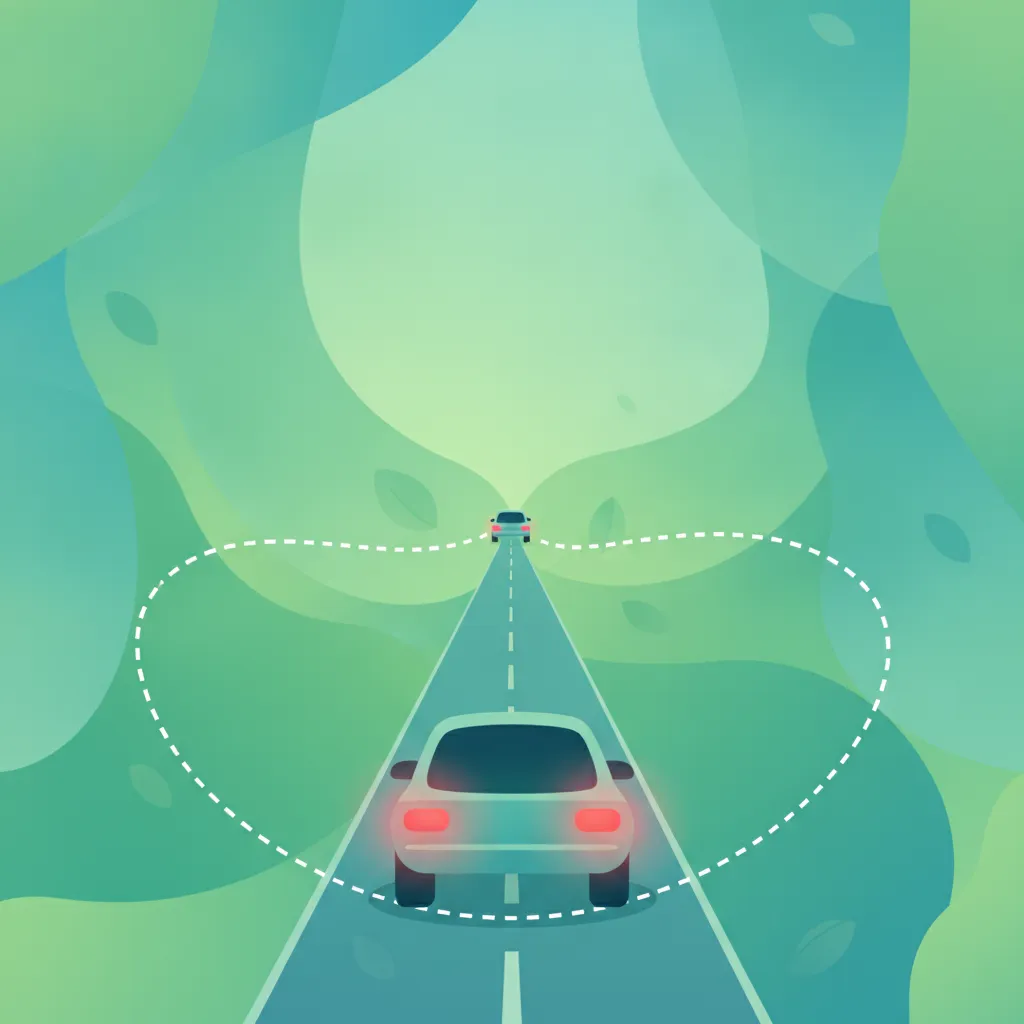
This lesson focuses on calculating total stopping distance, incorporating perception-reaction distance and the vehicle's braking distance. You will also learn to determine an appropriate following gap based on speed, visibility, and road conditions. The content emphasizes maintaining a safe distance to avoid collisions, especially in adverse weather.
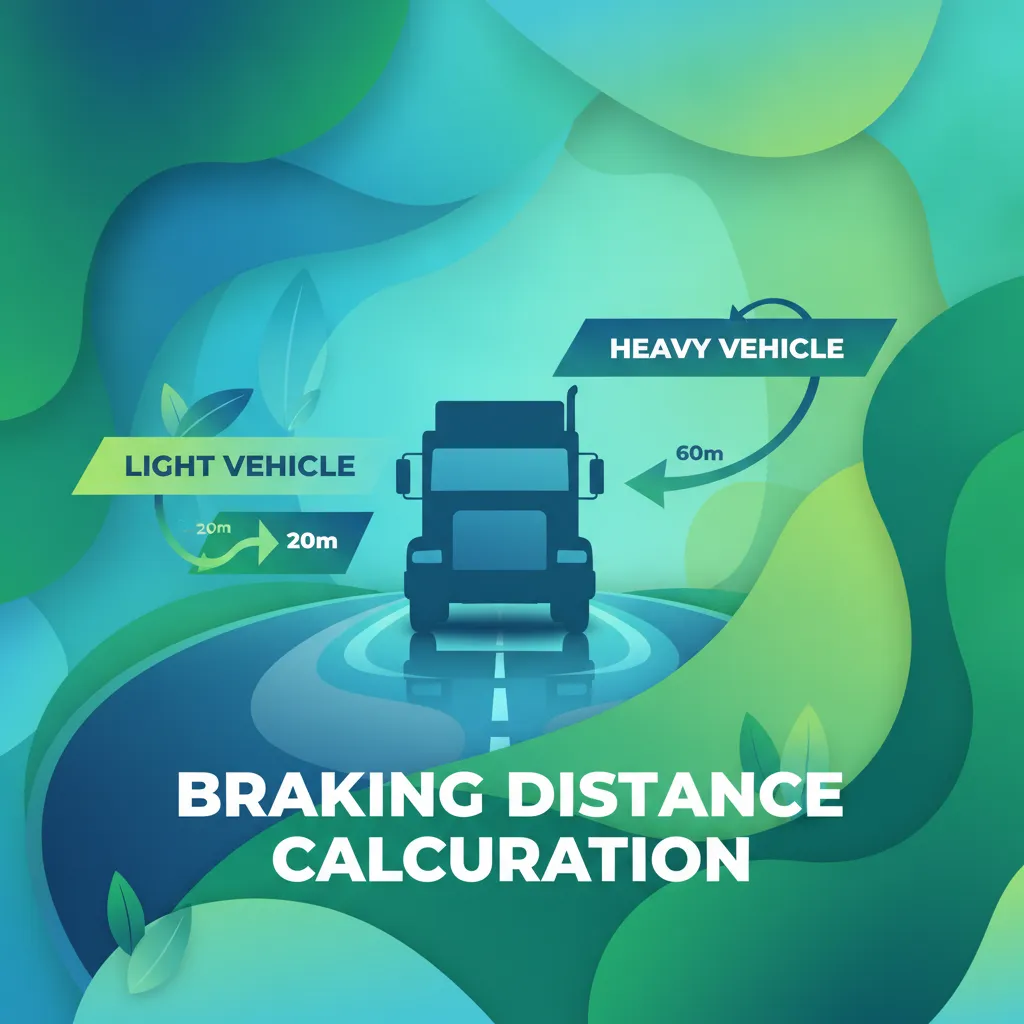
The immense mass of a loaded truck means its braking distance is far greater than that of a car. This lesson breaks down total stopping distance into reaction distance and braking distance, explaining how speed, weight, and road conditions have an exponential effect. It reinforces the necessity of maintaining a significantly larger following distance to ensure enough space to stop safely in an emergency.
Driving in the Alps requires a high level of skill and vehicle sympathy. This lesson covers techniques for climbing steep gradients by selecting the correct gear to maintain momentum without straining the engine. It reiterates the critical importance of using low gears and auxiliary brakes for descending, to ensure the service brakes remain cool and effective for the entire descent.
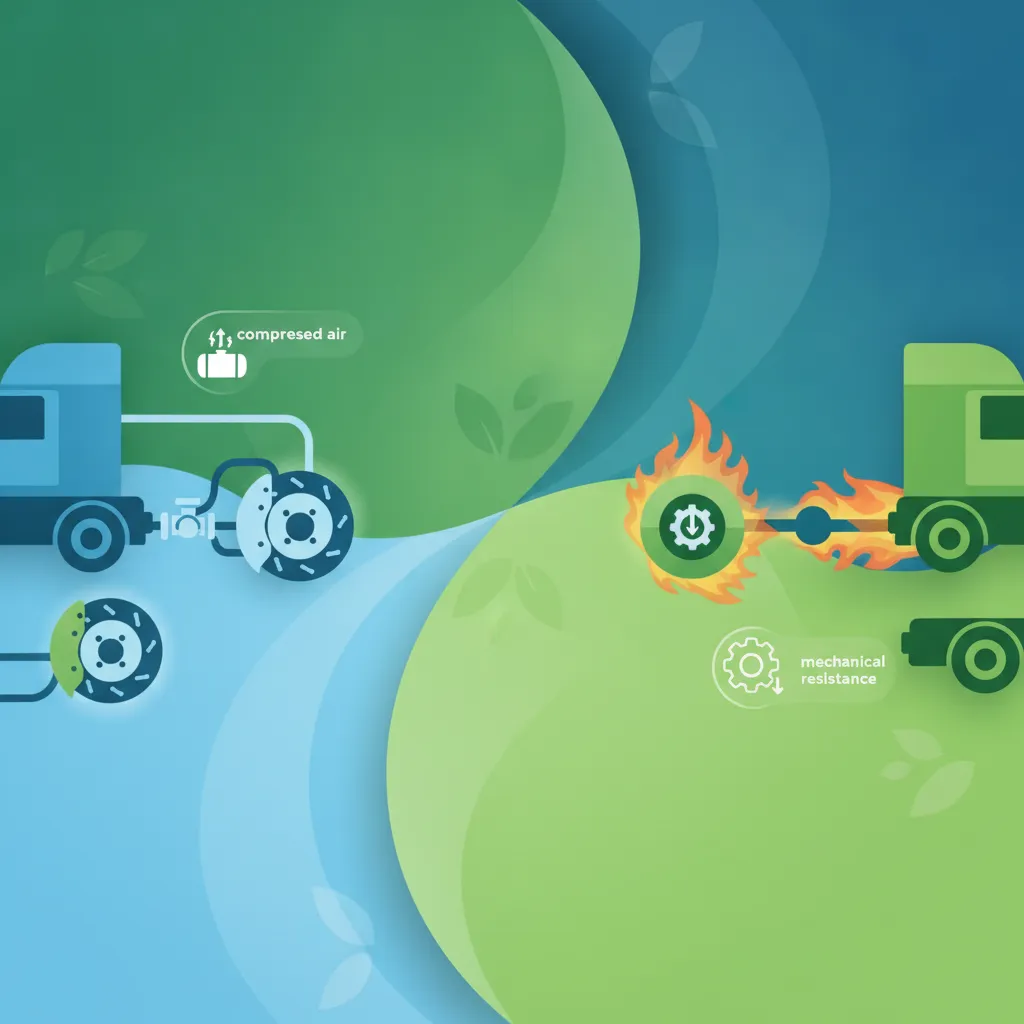
Large passenger vehicles rely on powerful air brake systems. This lesson explains how these systems work, including the importance of monitoring air pressure. It also details the function and proper use of auxiliary braking systems (retarders) to control speed on long descents and reduce wear on the service brakes.
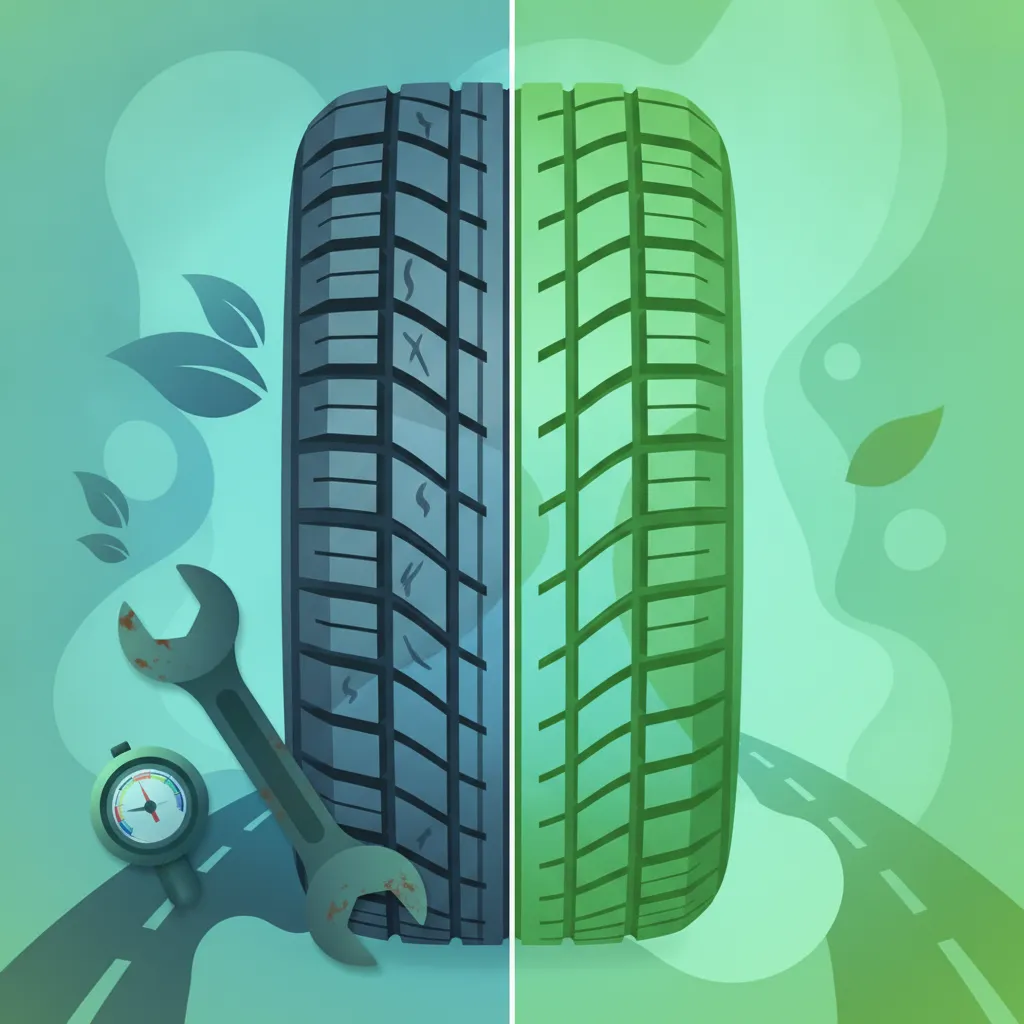
This lesson focuses on maintaining proper tyre pressure, tread depth, and overall condition. You will learn to check tyre pressure, interpret wear indicators, and select appropriate tyre types for different weather conditions. The content also covers load index and speed rating considerations, as well as legal requirements for tyre condition in Switzerland.

Relying solely on the service brakes on a long downhill stretch can lead to overheating and complete brake failure (brake fade). This lesson explains the function of auxiliary brakes like retarders. You will learn how and when to engage them to maintain a safe, controlled speed, preserving the main brakes for when they are truly needed.
This lesson focuses on adapting braking techniques for low-traction surfaces like wet or icy roads. It explains the need for gentle, progressive brake application to prevent wheel lock-up and maintain control. Learners will understand how to scan the road ahead for potential hazards and adjust their braking strategy accordingly.
This lesson examines motorcycle tyre specifications, explaining how correct pressure and adequate tread depth are crucial for optimal grip and handling. Learners will understand the relationship between tyre condition, road surfaces, and traction in both wet and dry conditions. The content reinforces the necessity of regular tyre inspection as a key part of rider safety.
Learn how to adjust your braking strategy for different road surfaces like wet or icy roads, and diverse environments. Critical theory for Category M riders in Switzerland.
Wet or icy roads drastically reduce tyre grip and can double or triple braking distances. This lesson stresses the importance of significantly reducing overall speed and increasing following distances in such conditions. It advises on using brakes with extreme care to avoid skidding and explains how the vehicle's retarder should be used with caution as it can cause the drive wheels to lock up on slippery surfaces.
This lesson provides essential strategies for riding in adverse weather like rain and fog. It explains how to increase following distances, reduce speed, and use lights effectively to enhance visibility. The content also addresses the loss of traction on wet roads and the importance of smooth control inputs for braking, accelerating, and steering.
This lesson focuses on adapting braking techniques for low-traction surfaces like wet or icy roads. It explains the need for gentle, progressive brake application to prevent wheel lock-up and maintain control. Learners will understand how to scan the road ahead for potential hazards and adjust their braking strategy accordingly.

This lesson examines the impact of weather and visibility on driving safety and speed selection. It covers how fog, rain, snow, and darkness affect visibility and reaction times, providing guidelines on adjusting speed. It also includes strategies for improving visibility, such as proper headlamp use, to ensure you can adapt to varying weather conditions.
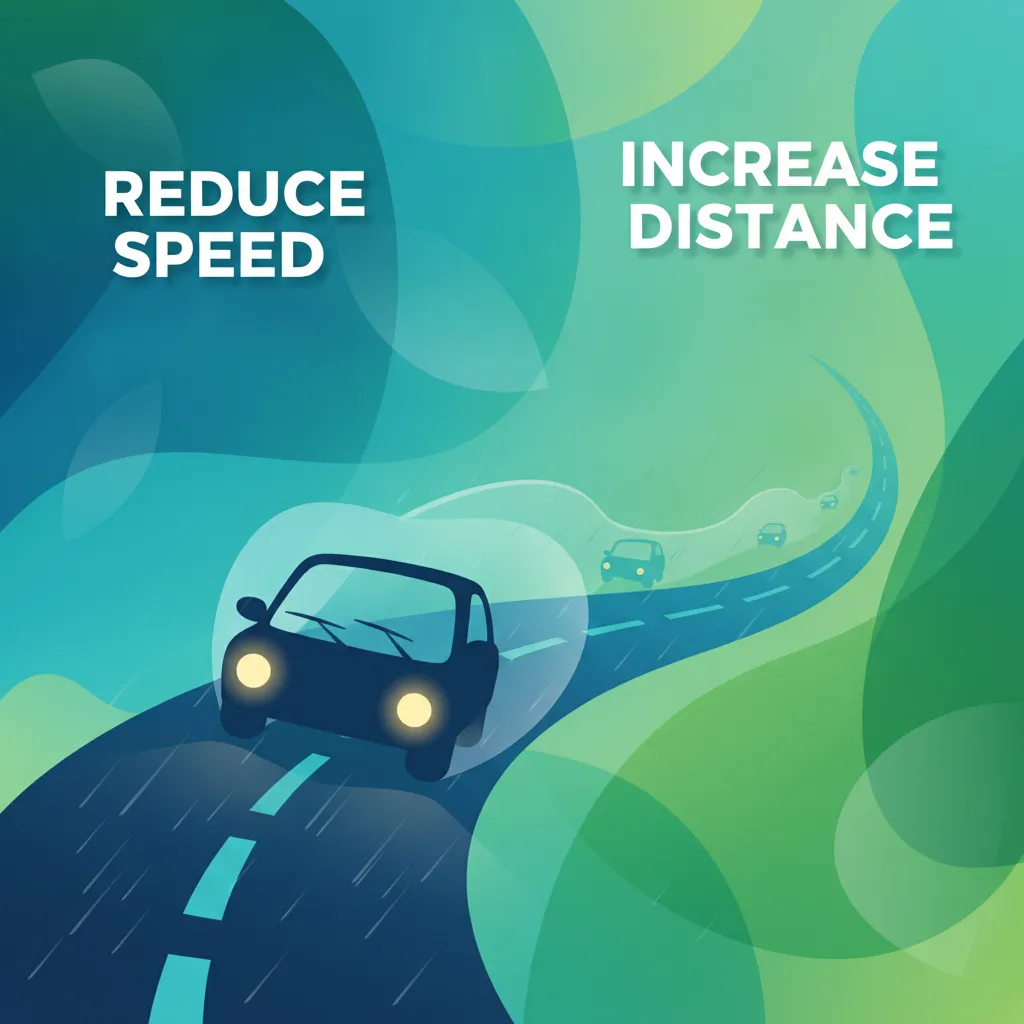
Weather has a profound impact on vehicle handling and visibility. This lesson teaches you how to reduce speed, increase following distances, and use controls smoothly to maintain traction in poor conditions. It also covers the legal requirements and practical application of snow chains in winter.

This lesson examines the impact of various weather conditions on driving safety. It explains how to adjust speed in low visibility and the risks of aquaplaning in heavy rain. The content also covers using snow chains in snowy conditions, handling icy surfaces, and dealing with strong winds, particularly on bridges and open roads.
This lesson teaches riders how to adapt their technique for a variety of challenging road surfaces. It explains how loose surfaces like gravel reduce grip and require smoother steering and braking inputs. The content also covers the hazards of slippery surfaces like wet cobblestones, manhole covers, and fallen leaves.
Driving in the Alps requires a high level of skill and vehicle sympathy. This lesson covers techniques for climbing steep gradients by selecting the correct gear to maintain momentum without straining the engine. It reiterates the critical importance of using low gears and auxiliary brakes for descending, to ensure the service brakes remain cool and effective for the entire descent.
This lesson details how adverse weather conditions like rain, fog, and snow affect motorcycle safety. It explains how wet surfaces reduce tyre grip, requiring smoother control inputs and longer braking distances. Strategies for managing reduced visibility in fog and the extreme hazards of riding on snow and ice are also covered.
Relying solely on the service brakes on a long downhill stretch can lead to overheating and complete brake failure (brake fade). This lesson explains the function of auxiliary brakes like retarders. You will learn how and when to engage them to maintain a safe, controlled speed, preserving the main brakes for when they are truly needed.
Find clear answers to common questions learners have about Braking Dynamics, Grip, and Tyre Considerations. Learn how the lesson is structured, which driving theory objectives it supports, and how it fits into the overall learning path of units and curriculum progression in Switzerland. These explanations help you understand key concepts, lesson flow, and exam focused study goals.
The front brake provides the majority of your stopping power because weight transfers forward during deceleration. However, it must be applied smoothly to avoid locking the front wheel, which can cause a loss of steering and a fall.
Correct tyre pressure is essential for optimal grip and vehicle stability. Under-inflated tyres can lead to sluggish handling and overheating, while over-inflated tyres reduce the contact patch with the road, significantly decreasing your traction during turns or braking.
You must increase your following distance and reduce your speed significantly. Braking should be done even more gradually than usual, as reduced friction makes it much easier to skid if you apply sudden or heavy force to the levers.
Yes, knowing the legal minimum tread depth is a common requirement for the Swiss theory exam. Ensuring your tyres are well-maintained is considered part of the driver's basic duty of care for vehicle safety.
Pinpoint specific Swiss traffic rules, road signs, or driving situations you need to master. Use the practice search to start a focused revision session now and build confidence for your official driving theory exam.