
This lesson focuses on the unique demands of driving heavy goods vehicles on challenging Swiss mountain roads. You will learn how to maintain control on steep gradients by mastering gear selection and using endurance braking systems to ensure vehicle safety.
Lesson content overview
Driving heavy goods vehicles, specifically Category C and C1, through the challenging terrain of Swiss mountain passes demands exceptional skill, foresight, and a deep understanding of vehicle dynamics. These alpine routes are renowned for their steep gradients, sharp hairpin turns, and variable weather conditions, presenting unique hazards that require specific driving techniques to ensure safety and compliance with Swiss traffic regulations. This lesson provides a detailed theoretical foundation for mastering these demanding environments, focusing on proactive vehicle management and adherence to legal requirements.
The majestic Swiss Alps, while breathtaking, pose significant challenges for professional drivers. Unlike flat or gently undulating roads, mountain passes subject heavy vehicles to extreme forces, primarily gravity. For a fully loaded truck, managing these forces becomes paramount to prevent loss of control, brake failure, and engine strain. Proper technique not only safeguards the vehicle and its cargo but, more importantly, protects all road users. Ignoring the specific demands of mountain driving can lead to severe consequences, including accidents, costly vehicle damage, and legal penalties.
Swiss mountain passes often feature prolonged steep inclines and descents, sometimes exceeding a 10% gradient. This means for every 100 meters traveled horizontally, the road gains or loses 10 meters in altitude. The winding nature of these roads, characterized by frequent hairpin turns, further complicates navigation, limiting visibility and increasing the risk of encountering oncoming traffic. Drivers must also be prepared for rapid changes in weather and road conditions, which can vary dramatically over short distances and altitudes.
Heavy goods vehicles have substantially different dynamics compared to passenger cars. Their mass translates into significantly higher kinetic energy, requiring more effective braking and greater torque for propulsion. When climbing, the engine works harder to overcome gravity. When descending, gravity constantly accelerates the vehicle, demanding continuous energy dissipation through braking systems. Without specific techniques to manage these forces, heavy vehicles are particularly susceptible to overheating their service brakes, straining the engine, or losing stability, especially with improperly distributed loads.
Climbing steep mountain passes requires precise control over engine power and gear selection. The primary goal is to maintain consistent momentum without overworking the engine, ensuring a steady, controlled ascent.
Selecting the correct gear is fundamental for a successful climb. Before starting a steep incline, anticipate the gradient and shift to a low enough gear (e.g., 1st or 2nd) that allows the engine to operate within its optimal torque band. This ensures sufficient power is available to overcome the gravitational pull and maintain speed without excessive acceleration or deceleration. Choosing a gear that is too high will cause the engine to labour, losing speed and potentially stalling. Conversely, a gear that is too low for the gradient may over-rev the engine, wasting fuel and causing unnecessary wear.
When approaching an uphill climb, assess the gradient well in advance. Downshift proactively before your speed drops significantly, allowing for a smooth transition and maintaining engine RPM within the power band.
Every engine has an optimal RPM range where it produces the most torque – the rotational force that propels the vehicle. For heavy vehicles, this range is typically at lower RPMs. By selecting the correct gear, you can keep the engine within this efficient torque band, providing maximum pulling power while preventing the engine from struggling or overheating. Modern heavy vehicles often have multi-speed gearboxes or automated manual transmissions (AMTs) that assist in selecting appropriate ratios, but driver intervention and anticipation remain crucial.
Stalling on a steep incline with a heavy load can be a dangerous situation, potentially leading to the vehicle rolling backward. By maintaining momentum through proper gear selection and a steady throttle input, you can avoid such scenarios. If you feel the engine struggling, it is usually better to downshift proactively to a lower gear, even if it means a slight increase in engine RPM, rather than risking a stall. Consistent speed, rather than bursts of acceleration, is key to efficient and safe climbing.
Descending steep mountain passes is arguably more challenging and risk-prone than ascending. The continuous pull of gravity on a heavy vehicle can quickly overwhelm the braking systems if not managed correctly. The primary concern is preventing brake fade and maintaining controlled speed throughout the descent.
Engine braking is the technique of using the engine's natural resistance to slow the vehicle without relying on the service brakes. It is achieved by downshifting to a lower gear, which causes the engine to act as a compressor, absorbing kinetic energy and converting it into heat, which is then dissipated by the engine's cooling system.
Engine braking is the first line of defence against excessive speed on a downhill gradient. By engaging a low gear, the engine's compression resistance helps to slow the vehicle. The lower the gear, the greater the engine braking effect. This technique is vital because it significantly reduces the workload on the service (foot) brakes, keeping them cool and ready for emergency stops or supplementary braking. On long descents, relying solely on service brakes will inevitably lead to overheating and brake fade.
Heavy goods vehicles are equipped with sophisticated auxiliary braking systems designed specifically for prolonged descents. These systems work independently of the service brakes and are crucial for safe mountain driving.
Auxiliary braking systems are secondary braking mechanisms, such as engine retarders (also known as compression release brakes or 'Jake brakes') or exhaust brakes, that provide continuous braking power to control vehicle speed on long descents, preventing the primary service brakes from overheating.
Swiss regulations explicitly mandate the use of auxiliary braking systems on certain gradients to ensure safety.
For heavy goods vehicles (Category C & C1) with a loaded weight exceeding 3.5 tonnes, auxiliary braking systems must be used on descents with a gradient of more than 8% if the downhill stretch is longer than 500 meters. Failure to comply can result in fines and dangerous situations.
It is crucial to engage the auxiliary brake system before starting the descent. This proactive approach ensures that the vehicle's speed is managed from the outset, preventing it from building up excessive momentum.
The service (foot) brakes are the primary means of rapid deceleration and coming to a complete stop. However, on long descents, they should be used judiciously, in conjunction with engine braking and auxiliary systems.
Instead of continuous, heavy application, which rapidly generates heat, employ an intermittent or "stabbing" braking technique:
Apply the service brakes firmly for a few seconds to reduce speed to a safe level.
Release the brakes completely, allowing them to cool.
Let the vehicle's speed gradually increase again (but not to an unsafe level), relying on engine braking and auxiliary systems.
Repeat the application and release as needed to maintain a controlled speed.
This method allows the brake components to cool down during the periods they are disengaged, significantly reducing the risk of overheating.
Brake fade is a reduction in braking effectiveness caused by the overheating of brake components (pads, discs, drums). As temperatures rise, the friction material can gasify or become glazed, leading to a spongy pedal feel and a dramatic increase in stopping distance.
Brake fade is one of the most serious dangers on long, steep descents. When brake components get too hot, their ability to generate friction diminishes drastically. The brake pedal may feel "soft" or require much greater pressure to achieve the same braking effect, if any. The only way to prevent brake fade is to manage heat buildup by primarily relying on engine braking and auxiliary systems, using service brakes sparingly and intermittently. Once brake fade sets in, it takes a significant amount of time and distance for the brakes to cool down and regain their effectiveness, which may not be an option on a steep mountain pass.
Swiss mountain passes are defined not only by their gradients but also by their intricate road geometry, including tight curves and narrow sections.
A hairpin turn is a very sharp, almost 180-degree bend in a road, frequently found on steep mountain passes, designed to allow vehicles to gain or lose altitude efficiently over a short horizontal distance.
Hairpin turns require significant speed reduction well in advance. For heavy vehicles, the wide turning circle means you may need to use parts of the opposing lane, especially on the inside of the turn. Always approach hairpins at a speed that allows you to maintain full control, typically much lower than the posted limit for a passenger car.
Always be prepared for the possibility of other vehicles, including large coaches or other trucks, also needing to use extra road width.
Maintaining an appropriate speed is critical. On many Alpine passes, specific sections, particularly hairpins, have reduced speed limits, sometimes as low as 30 km/h. Adhere strictly to these limits. Beyond legal compliance, appropriate speed ensures you can react to unforeseen hazards, such as falling rocks, oncoming traffic, or sudden changes in road surface. Your "line" through a curve, meaning the path you take, should always prioritize safety and visibility. On narrow, winding roads, maintaining a safe distance from the edge of the road and being prepared to stop is more important than achieving the smoothest racing line.
Mountain roads often have continuous solid lines or narrow sections where overtaking is strictly prohibited or simply unsafe. Patience is paramount. Attempting to overtake on a blind bend or a steep climb can lead to head-on collisions. Be content to follow slower traffic, utilizing designated passing zones or wider, straighter sections when they become available and it is safe to do so. The potential time saved by an unsafe overtake is never worth the risk.
The way a heavy vehicle is loaded significantly influences its handling, stability, and braking performance on mountain passes.
Proper load distribution is essential for maintaining vehicle stability. Heavy cargo should ideally be placed as low as possible within the cargo area and centered over the axles. This lowers the vehicle's center of gravity, reducing the risk of rollover on sharp turns and improving overall stability on inclines and declines. An unevenly distributed load, especially one that is too high or shifted to one side, can compromise the vehicle's balance and make it more difficult to control.
Incorrect load distribution can adversely affect both braking and steering. If too much weight is concentrated at the rear, the front wheels may lose traction during a steep ascent, making steering difficult and potentially causing the front end to lift. Conversely, if too much weight is towards the front, it can exacerbate brake dive on descents and put excessive strain on the front suspension. For optimal braking, the load should be distributed evenly across all axles, allowing each axle's brakes to contribute effectively to deceleration.
Even perfectly distributed cargo can become a hazard if not properly secured. The constant forces of acceleration, deceleration, and lateral movement on winding mountain roads can cause cargo to shift. A shifting load can drastically alter the vehicle's balance, potentially leading to instability, especially during cornering or emergency braking. Use appropriate lashing straps, chocks, anti-slip mats, and cargo barriers to ensure all goods remain firmly in place throughout the journey. Regularly check cargo security during stops on long mountain routes.
Adhering to Swiss traffic regulations is not just a legal requirement but a fundamental aspect of safe mountain driving for heavy vehicles.
As mentioned, on gradients exceeding 8% and extending over 500 meters, auxiliary braking systems are mandatory for vehicles over 3.5 tonnes. This rule is critical to prevent service brake failure and is strictly enforced. Always engage your retarder or exhaust brake well before the start of such descents.
While general speed limits apply (e.g., 80 km/h outside built-up areas), many mountain passes have specific, reduced speed limits indicated by road signs. These limits can vary based on the section of the road, the severity of curves, or particular hazards. Pay close attention to all posted signage, especially limits of 30 km/h or 50 km/h on sharp bends or through villages. Always adjust your speed according to actual conditions, even if it means driving below the posted limit.
Beyond specific mountain driving rules, Category C and C1 drivers must always comply with general Swiss traffic laws, including those regarding vehicle dimensions, axle loads, driving hours, and required safety equipment. Ensure your vehicle is roadworthy and adequately prepared for mountain conditions.
Weather and environmental conditions can dramatically alter the dynamics of mountain driving. Drivers must constantly assess and adapt to these variations.
Wet or icy road surfaces significantly reduce tire grip, increasing braking distances and reducing steering control. In such conditions:
Fog, heavy rain, or blizzards can severely limit visibility, making it difficult to anticipate curves, identify hazards, or see oncoming traffic.
Winter driving in the Alps requires specific preparations. This includes fitting winter tires (marked with a snowflake symbol), and often carrying snow chains, which may be mandatory on certain passes during heavy snowfall. Ensure your vehicle's cooling system is adequately protected with antifreeze and that all lights and wipers are in good working order.
Awareness of common errors can help drivers prevent dangerous situations.
This is the most frequent and dangerous mistake, leading directly to brake overheating and fade. Always prioritize engine braking and auxiliary systems for speed control on descents.
Using too high a gear on ascents will strain the engine, while using too high a gear on descents will negate the benefits of engine braking. Always select a gear appropriate for the gradient.
What might appear as a moderate slope can be a significant gradient for a fully loaded heavy vehicle. Pay attention to road signs indicating gradients and mentally prepare for the demands ahead.
Each heavy vehicle has its own characteristics. Understand your vehicle's weight, power, and braking system limitations. A vehicle towing a trailer or semi-trailer will handle even more differently, requiring additional caution and skill.
Driving heavy goods vehicles through Swiss mountain passes requires mastering specific techniques for both ascents and descents. On climbs, selecting the correct low gear maintains engine torque and prevents stalling, while on descents, prioritizing engine braking and auxiliary systems over service brakes prevents dangerous brake fade. Swiss regulations mandate auxiliary brake usage for vehicles over 3.5 tonnes on gradients exceeding 8% for stretches longer than 500 meters. Understanding vehicle dynamics, load distribution, and environmental adaptations for adverse weather conditions completes the essential knowledge for safe mountain driving in Category C & C1 theory exams.
A short set of high-value points that capture the most important learning from this lesson.
Heavy goods vehicles must use auxiliary braking systems on descents exceeding 8% gradient for more than 500 meters to prevent brake fade.
Engine braking and auxiliary systems (retarders, exhaust brakes) should be the primary means of speed control on descents, not service brakes.
Low gears maintain optimal torque band during ascents, providing sufficient pulling power without engine strain or stalling risk.
Brake fade occurs when overheated brake components lose friction effectiveness, requiring heat management through proper braking technique.
Proper load distribution (low, centered, even) is essential for vehicle stability on mountain passes, affecting braking and steering performance.
Explore all units and lessons included in this driving theory course.
Auxiliary braking mandatory rule: vehicles over 3.5t must engage retarders/exhaust brakes on descents steeper than 8% lasting more than 500 meters.
Intermittent braking technique: apply service brakes firmly, release completely to cool, repeat as needed to prevent overheating.
Gear selection principle: downshift before speed drops significantly on climbs; select low gears for engine braking effect on descents.
Hairpin turn approach: position wide on entry, aim for apex, drift wide on exit to maximize turning radius for heavy vehicles.
Weather adaptation: reduce speed, increase following distance, and rely more heavily on engine braking in rain, snow, or ice.
Over-reliance on service brakes during descents, leading to brake fade and potentially complete brake failure on long steep sections.
Selecting too high a gear on ascents, causing engine strain, loss of momentum, or stalling on steep gradients.
Underestimating gradient severity by not mentally preparing for what appears moderate but is significant for a loaded heavy vehicle.
Neglecting to engage auxiliary braking systems before starting a descent, allowing excessive speed to build up before attempting control.
Improper load securing or distribution that causes cargo shift during cornering or braking, altering vehicle balance and stability.
Lesson content overview
A short set of high-value points that capture the most important learning from this lesson.
Heavy goods vehicles must use auxiliary braking systems on descents exceeding 8% gradient for more than 500 meters to prevent brake fade.
Engine braking and auxiliary systems (retarders, exhaust brakes) should be the primary means of speed control on descents, not service brakes.
Low gears maintain optimal torque band during ascents, providing sufficient pulling power without engine strain or stalling risk.
Brake fade occurs when overheated brake components lose friction effectiveness, requiring heat management through proper braking technique.
Proper load distribution (low, centered, even) is essential for vehicle stability on mountain passes, affecting braking and steering performance.
Explore all units and lessons included in this driving theory course.
Auxiliary braking mandatory rule: vehicles over 3.5t must engage retarders/exhaust brakes on descents steeper than 8% lasting more than 500 meters.
Intermittent braking technique: apply service brakes firmly, release completely to cool, repeat as needed to prevent overheating.
Gear selection principle: downshift before speed drops significantly on climbs; select low gears for engine braking effect on descents.
Hairpin turn approach: position wide on entry, aim for apex, drift wide on exit to maximize turning radius for heavy vehicles.
Weather adaptation: reduce speed, increase following distance, and rely more heavily on engine braking in rain, snow, or ice.
Over-reliance on service brakes during descents, leading to brake fade and potentially complete brake failure on long steep sections.
Selecting too high a gear on ascents, causing engine strain, loss of momentum, or stalling on steep gradients.
Underestimating gradient severity by not mentally preparing for what appears moderate but is significant for a loaded heavy vehicle.
Neglecting to engage auxiliary braking systems before starting a descent, allowing excessive speed to build up before attempting control.
Improper load securing or distribution that causes cargo shift during cornering or braking, altering vehicle balance and stability.
Explore search topics learners often look for when studying Specific Challenges of Swiss Mountain Passes and Gradients. These topics reflect common questions about road rules, driving situations, safety guidance, and lesson level theory preparation for learners in Switzerland.
Browse additional driving theory lessons that cover connected traffic rules, road signs, and common driving situations related to this topic. Improve your understanding of how different rules interact across everyday traffic scenarios.
Focuses on the critical techniques for descending steep mountain gradients in Switzerland. Covers essential knowledge on using auxiliary brakes, engine braking, and managing service brakes to prevent overheating and brake fade for heavy vehicles.
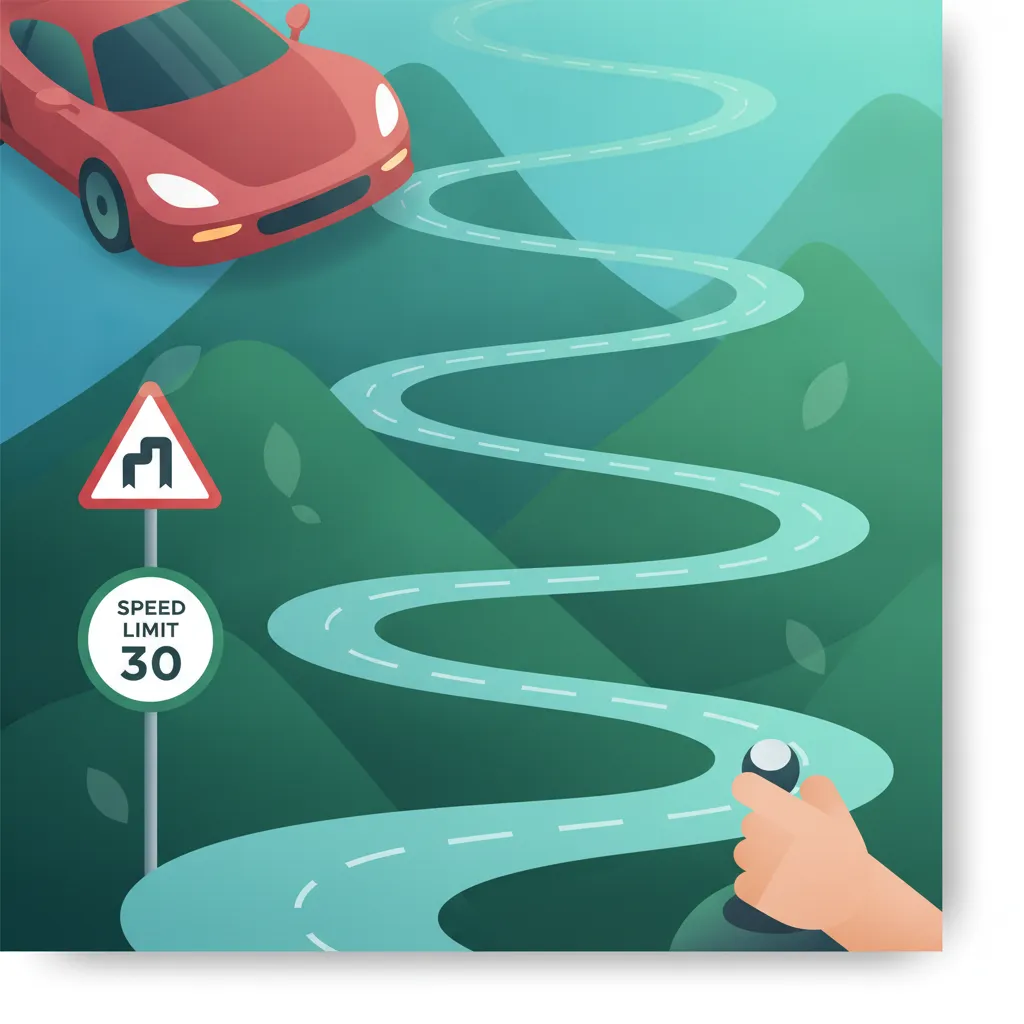
Controlling a heavy vehicle on a steep downhill grade requires a specific technique to avoid disaster. This lesson teaches the golden rule: select a low gear before starting the descent, one that is low enough to control the speed with minimal use of the service brakes. It explains how to effectively combine this with the engine brake or retarder to maintain a safe, steady speed and keep the service brakes cool and ready for an emergency.
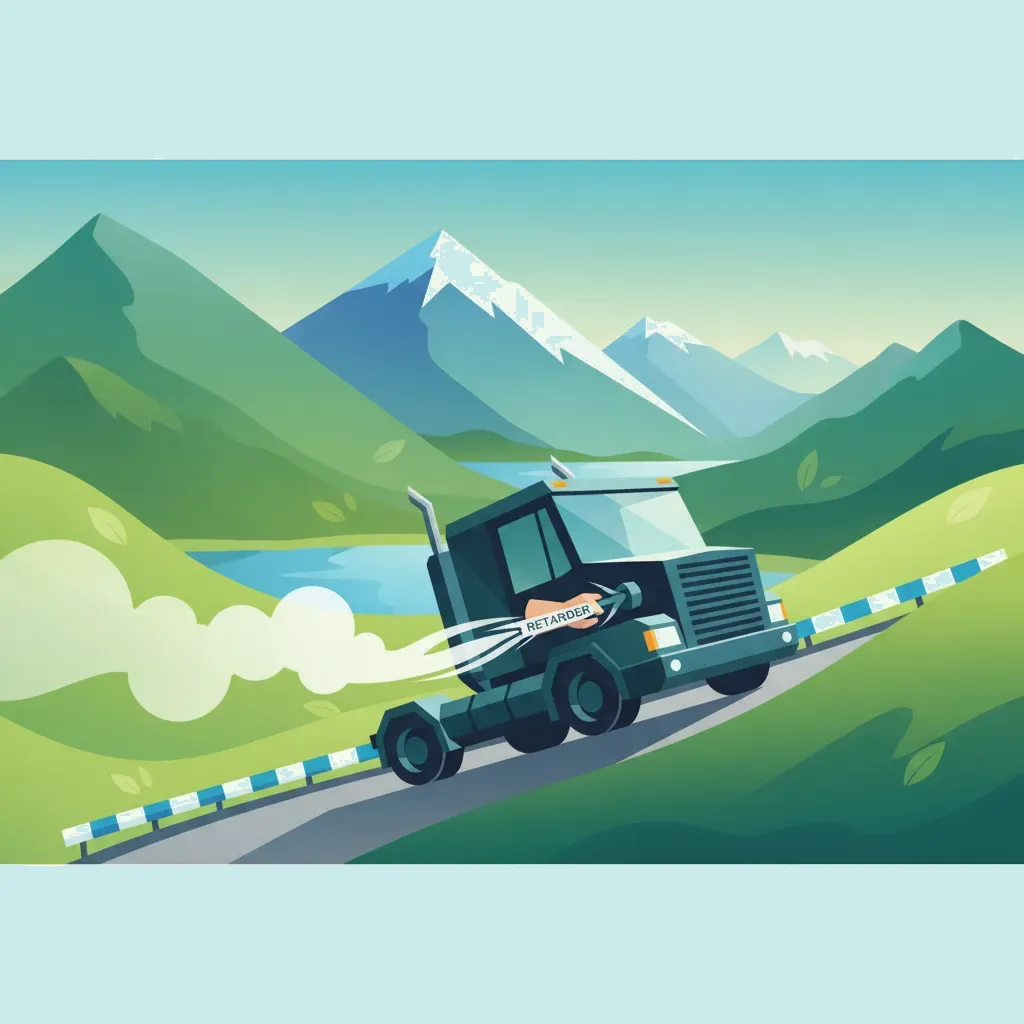
Relying solely on the service brakes on a long downhill stretch can lead to overheating and complete brake failure (brake fade). This lesson explains the function of auxiliary brakes like retarders. You will learn how and when to engage them to maintain a safe, controlled speed, preserving the main brakes for when they are truly needed.
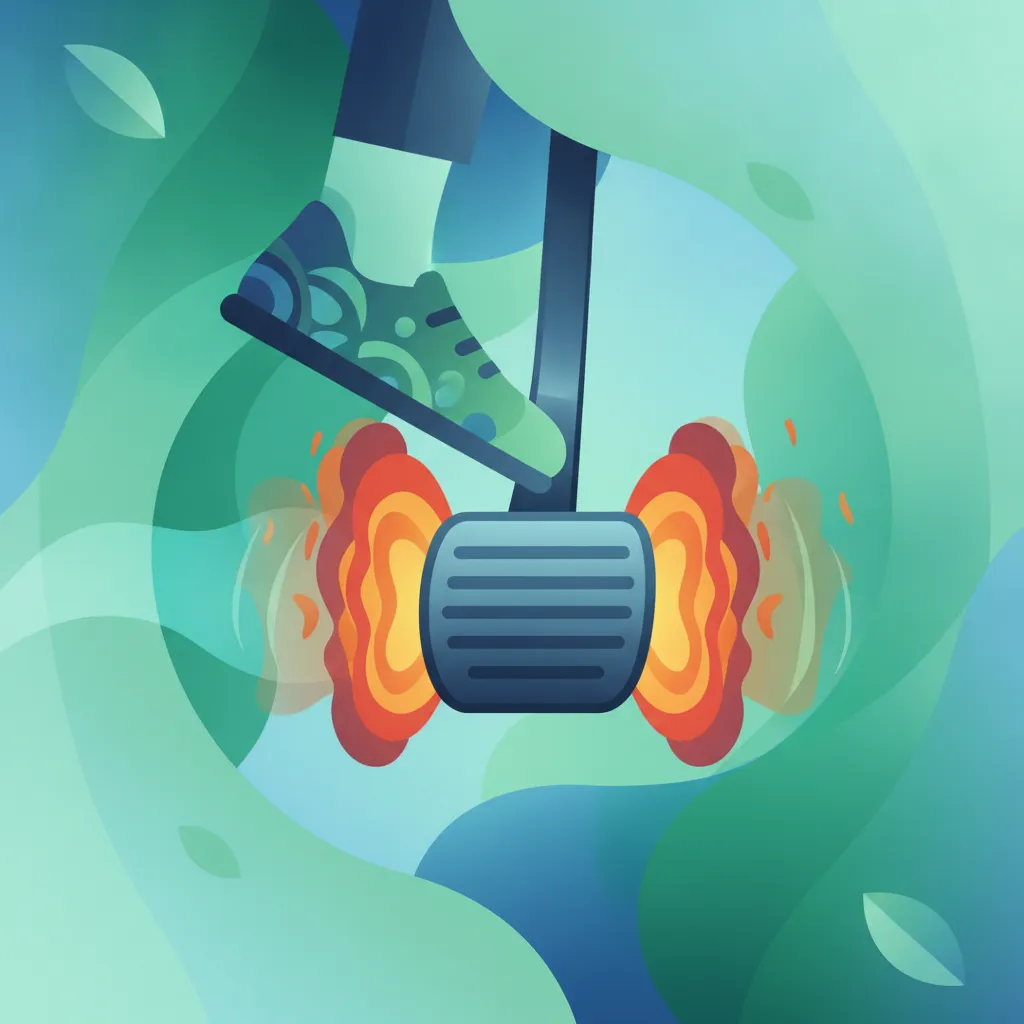
Two critical issues can affect air brake performance. This lesson explains brake lag, the slight delay between pressing the pedal and the brakes applying, and brake fade, a dangerous loss of braking power caused by overheating from prolonged or heavy use. It emphasizes that using endurance brakes and selecting the correct gear on descents are key techniques to prevent brake fade.
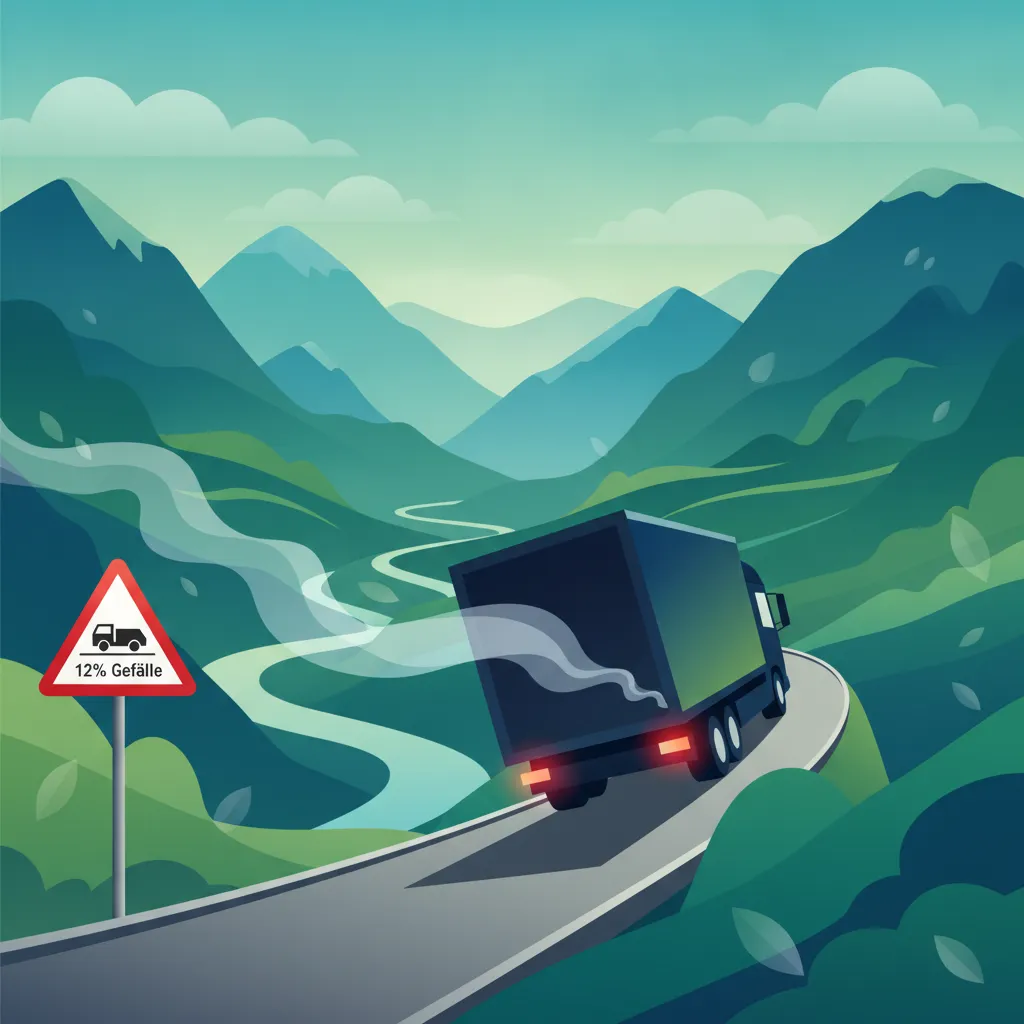
To prevent the service brakes from overheating and failing on long downhill gradients, heavy vehicles are equipped with endurance (or auxiliary) braking systems. This lesson explains the function of engine brakes (which alter valve timing) and retarders (which use hydrodynamic or electromagnetic force). These systems allow the driver to maintain a safe, controlled speed without relying solely on the service brakes.
Driving a large vehicle on mountain passes is a demanding skill. This lesson covers selecting the correct gear for both ascents and descents to maintain control and avoid overheating the brakes. It also explains the specific priority rules that apply on mountain roads and the importance of being aware of sudden weather changes.
Wet or icy roads drastically reduce tyre grip and can double or triple braking distances. This lesson stresses the importance of significantly reducing overall speed and increasing following distances in such conditions. It advises on using brakes with extreme care to avoid skidding and explains how the vehicle's retarder should be used with caution as it can cause the drive wheels to lock up on slippery surfaces.
This lesson focuses on driving on mountain roads, addressing steep gradients, hairpin bends, and altitude-related challenges. You will learn proper techniques for climbing ascents and using engine braking on descents. The content also covers the use of snow chains, recognizing avalanche risks, and interpreting mountain road signs for safe alpine navigation.
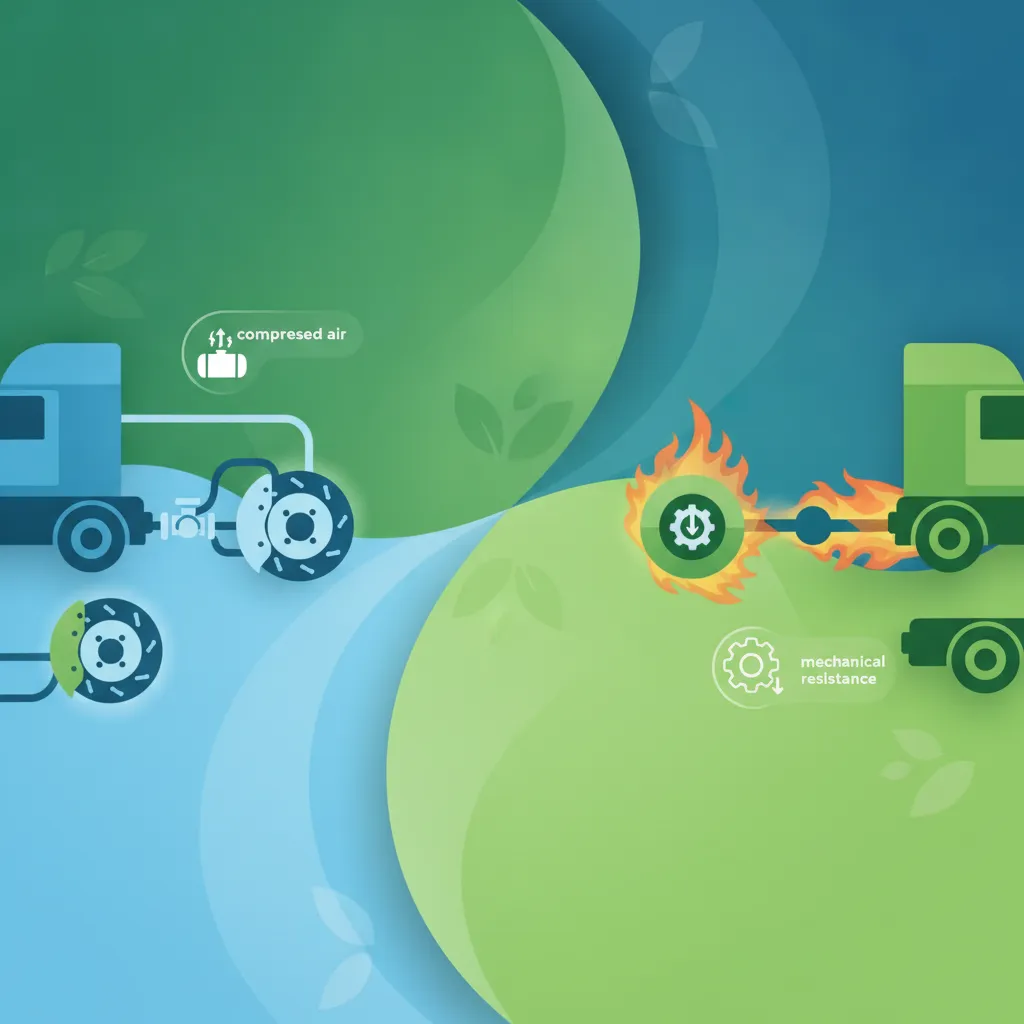
Large passenger vehicles rely on powerful air brake systems. This lesson explains how these systems work, including the importance of monitoring air pressure. It also details the function and proper use of auxiliary braking systems (retarders) to control speed on long descents and reduce wear on the service brakes.
This lesson focuses on adapting braking techniques for low-traction surfaces like wet or icy roads. It explains the need for gentle, progressive brake application to prevent wheel lock-up and maintain control. Learners will understand how to scan the road ahead for potential hazards and adjust their braking strategy accordingly.
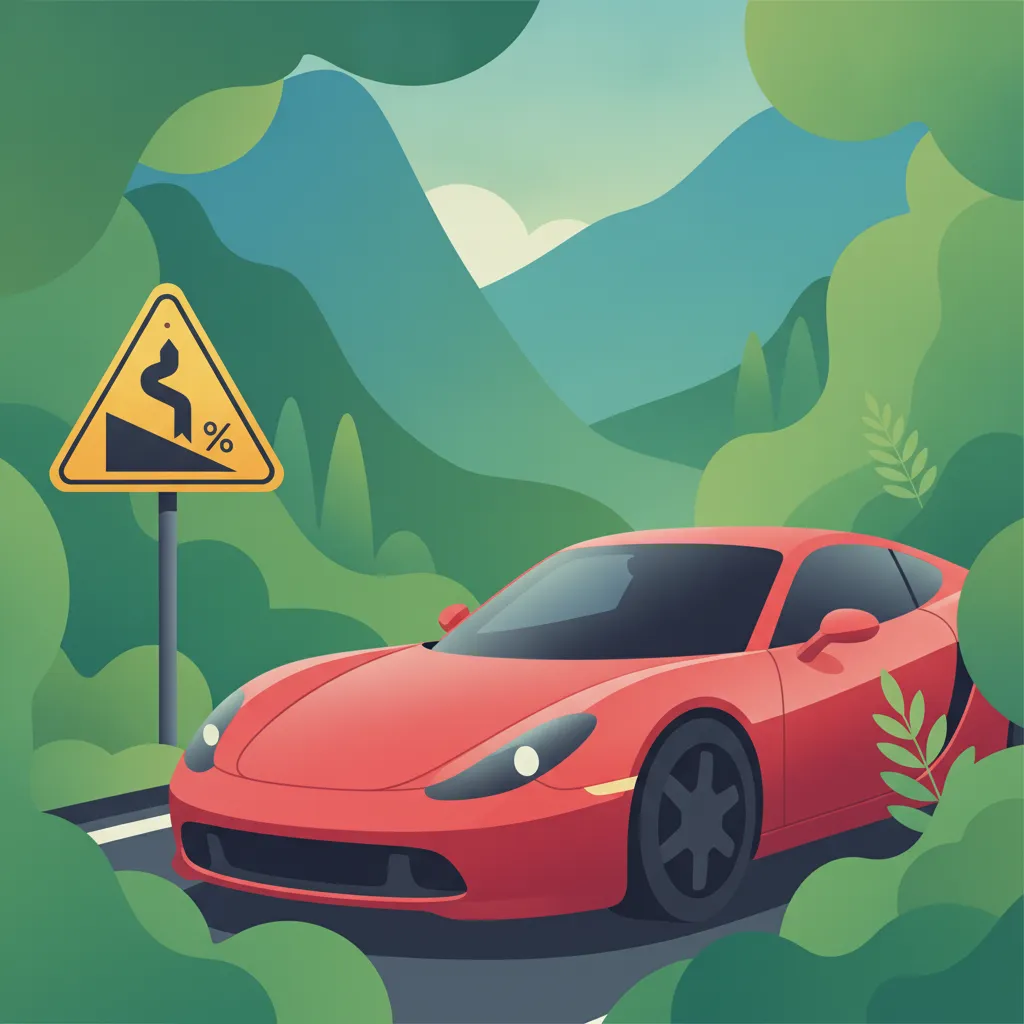
This lesson provides specialized techniques for safely handling hairpin turns and steep gradients. It teaches riders how to manage speed on approach, select the correct line through the bend, and use both brakes and engine braking on descents. Proper throttle control for maintaining momentum on uphill climbs is also covered.
Explains the specific skills needed for climbing steep mountain gradients with heavy vehicles in Switzerland. Covers optimal gear selection, managing engine torque, and understanding how load placement impacts stability and performance on alpine roads.
Controlling a heavy vehicle on a steep downhill grade requires a specific technique to avoid disaster. This lesson teaches the golden rule: select a low gear before starting the descent, one that is low enough to control the speed with minimal use of the service brakes. It explains how to effectively combine this with the engine brake or retarder to maintain a safe, steady speed and keep the service brakes cool and ready for an emergency.
Driving a large vehicle on mountain passes is a demanding skill. This lesson covers selecting the correct gear for both ascents and descents to maintain control and avoid overheating the brakes. It also explains the specific priority rules that apply on mountain roads and the importance of being aware of sudden weather changes.
This lesson focuses on driving on mountain roads, addressing steep gradients, hairpin bends, and altitude-related challenges. You will learn proper techniques for climbing ascents and using engine braking on descents. The content also covers the use of snow chains, recognizing avalanche risks, and interpreting mountain road signs for safe alpine navigation.
To prevent the service brakes from overheating and failing on long downhill gradients, heavy vehicles are equipped with endurance (or auxiliary) braking systems. This lesson explains the function of engine brakes (which alter valve timing) and retarders (which use hydrodynamic or electromagnetic force). These systems allow the driver to maintain a safe, controlled speed without relying solely on the service brakes.
Motorway driving requires constant concentration due to high speeds. This lesson emphasizes the importance of staying in the right-hand lane unless overtaking and the specific restrictions on lorry overtaking in Switzerland. It reinforces the need for a following distance of at least four seconds to compensate for the vehicle's long stopping distance and provides guidance on safely merging and exiting.
Relying solely on the service brakes on a long downhill stretch can lead to overheating and complete brake failure (brake fade). This lesson explains the function of auxiliary brakes like retarders. You will learn how and when to engage them to maintain a safe, controlled speed, preserving the main brakes for when they are truly needed.
Overloading is a serious offence with severe safety and legal ramifications. This lesson details how excess weight drastically increases braking distances, puts extreme stress on tyres leading to blowouts, and negatively affects steering and overall stability. Furthermore, it discusses the substantial fines, potential license withdrawal, and driver liability that result from violating Swiss weight regulations.
Wet or icy roads drastically reduce tyre grip and can double or triple braking distances. This lesson stresses the importance of significantly reducing overall speed and increasing following distances in such conditions. It advises on using brakes with extreme care to avoid skidding and explains how the vehicle's retarder should be used with caution as it can cause the drive wheels to lock up on slippery surfaces.
Rural roads present challenges like narrow lanes, poor surfaces, sharp bends, and limited visibility. This lesson teaches drivers how to position their large vehicle to maximize space and visibility, anticipate oncoming traffic at blind corners, and be aware of specific rural hazards. These hazards include slow-moving agricultural vehicles, animals on the road, and concealed farm entrances.
Heavy vehicles, especially those with a high centre ofgravity, are susceptible to rolling over. This lesson examines the primary causes, including excessive speed on bends or roundabouts, sudden steering manoeuvres, and the 'sloshing' effect of liquid loads in tankers. It reinforces that maintaining a sensible speed and driving smoothly are the best ways to mitigate this serious risk.
Find clear answers to common questions learners have about Specific Challenges of Swiss Mountain Passes and Gradients. Learn how the lesson is structured, which driving theory objectives it supports, and how it fits into the overall learning path of units and curriculum progression in Switzerland. These explanations help you understand key concepts, lesson flow, and exam focused study goals.
Prolonged use of the service brake leads to heat buildup, known as brake fade, which significantly reduces stopping power. Drivers must use engine brakes or retarders to maintain speed control.
Choosing the correct lower gear keeps the engine within its optimal torque range, preventing the engine from straining and maintaining momentum without excessive fuel consumption or overheating.
A spongy pedal is a sign of brake fluid boiling or extreme heat saturation. You should pull over safely at the earliest opportunity, let the braking system cool down, and check for any mechanical faults.
Yes, road signs indicating percentage gradients are common. Category C and C1 drivers must interpret these to anticipate the necessary gear and braking strategy before starting the ascent or descent.
Pinpoint specific Swiss traffic rules, road signs, or driving situations you need to master. Use the practice search to start a focused revision session now and build confidence for your official driving theory exam.