
This lesson focuses on the critical skills needed to maintain control of heavy goods vehicles during adverse weather conditions. Building on your understanding of braking systems, you will learn how to adapt your driving style to account for reduced grip and increased stopping distances on Swiss roads.
Lesson content overview
Operating a heavy goods vehicle (HGV) in Switzerland, whether a Category C or C1 vehicle, demands exceptional skill and foresight, particularly when confronted with adverse weather. Conditions such as rain, ice, snow, or slush drastically reduce the grip between tyres and the road surface, fundamentally altering vehicle dynamics and significantly extending the distances required to bring a large truck to a stop. This lesson provides essential knowledge and techniques for safely managing braking under challenging environmental circumstances, crucial for preventing collisions and maintaining control.
Understanding the principles discussed here is not only vital for personal and public safety but also for complying with stringent Swiss traffic laws regarding speed adaptation and safe following distances. This topic builds upon your foundational knowledge of heavy-vehicle braking systems, safe downhill driving techniques, and the functionality of anti-lock braking systems (ABS), applying them to the critical context of reduced traction.
The ability of a vehicle's tyres to adhere to the road surface is known as tyre grip, a critical factor in braking efficiency. This grip is scientifically quantified by the friction coefficient (µ), which represents the ratio of the frictional force to the normal force (the weight pressing down on the tyre). A higher friction coefficient indicates better traction, allowing for more effective braking and steering.
Under ideal dry conditions, the friction coefficient between a truck tyre and asphalt can be relatively high, typically ranging from 0.7 to 0.9. This allows for predictable and relatively short braking distances. However, adverse weather introduces substances like water, ice, or snow between the tyre and the road, dramatically lowering this coefficient.
The practical implication for heavy goods vehicle drivers is clear: a lower friction coefficient means that less braking force can be applied before the wheels lock up and the vehicle begins to skid, leading to a loss of control and extended braking distances. Therefore, proactive adjustment of driving style is paramount.
The distance a vehicle travels from the moment the brakes are applied until it comes to a complete stop is called braking distance. This distance is directly influenced by the vehicle's speed and the available tyre grip (friction coefficient). The relationship between speed and braking distance is not linear; it is approximately proportional to the square of the speed. This means that if you double your speed, your braking distance will roughly quadruple.
When the friction coefficient (µ) is reduced due to wet, icy, or snowy conditions, the maximum braking force that the tyres can generate before locking up decreases significantly. To achieve the same deceleration as on a dry road, you would need a much longer distance.
Consider these approximate impacts:
For heavy goods vehicles, the consequences of extended braking distances are even more severe due to their mass and inertia. A fully loaded truck carries immense kinetic energy, which must be dissipated over a longer distance when friction is low. Misjudging this can lead to catastrophic collisions.
Dangerous Misconception: Many drivers underestimate the exponential increase in braking distance with higher speeds and reduced friction. Always assume braking distances will be significantly longer than anticipated in adverse weather.
Effective braking in adverse conditions is a careful balance of technique, anticipation, and understanding your vehicle's systems. The goal is always to maximize available tyre grip without causing a wheel lock-up, which leads to skidding and loss of steering control.
The service brake, operated by the foot pedal, is your primary braking system. In slippery conditions, the key is progressive braking:
Begin with light, tentative pressure on the brake pedal to test the available grip.
Gradually and smoothly increase brake pressure, constantly monitoring the vehicle's response.
Ease off the pedal slightly if you feel the wheels locking or detect a skid, then reapply more gently.
Maintain focus on steering and directional control throughout the braking process.
Retarders (such as engine brakes, exhaust brakes, or hydraulic retarders) are invaluable tools for heavy vehicle speed control, especially on long descents. They reduce reliance on the service brakes, preventing overheating and fade. However, their use must be severely limited and highly cautious on slippery surfaces.
Gear Selection: On slippery descents, shift to a lower gear before starting the descent. This maximizes engine braking and reduces the need for heavy brake application, helping maintain better control and stability.
Modern heavy goods vehicles are almost universally equipped with Anti-lock Braking Systems (ABS). This crucial safety system prevents wheels from locking up during hard braking by rapidly modulating the brake pressure to each wheel independently. This allows the driver to maintain steering control while braking, even on slippery surfaces.
The most effective strategies for preventing collisions in adverse weather are proactive speed reduction and maintaining significantly increased following distances. These adjustments buy you precious time and space to react to unexpected hazards.
Swiss traffic law (Art. 10 of the Swiss Road Traffic Act) mandates that drivers must adapt their speed to prevailing road and weather conditions, even if this means driving below the posted speed limit. For heavy goods vehicles, this is particularly important due to their longer stopping distances.
A safe following distance provides the necessary space to react and stop if the vehicle ahead brakes suddenly. The common rule of thumb for dry conditions is the two-second rule. In adverse weather, this must be extended significantly for heavy goods vehicles.
Legal Obligation: Swiss Road Traffic Regulations (Art. 6) explicitly require drivers to maintain a safe following distance that allows them to stop in time to avoid an accident. Failure to do so, especially in adverse conditions, is considered negligence.
Driving a heavy goods vehicle demands specific adaptations for different types of adverse weather. Understanding these nuances is crucial for safety.
Rain is a common adverse condition that requires immediate adjustments.
Ice is arguably the most hazardous road condition. It can be invisible (black ice) and its effects are sudden and severe.
Snow and slush present their own set of challenges, combining reduced friction with variable, unpredictable surfaces.
Operating heavy goods vehicles in adverse weather conditions in Switzerland is not just a matter of best practice; it's a legal obligation. Non-compliance can lead to severe penalties, including fines, license suspension, and potential criminal charges in the event of an accident.
Here's a summary of key legal requirements:
| Rule | Applicability | Legal Status | Rationale | Correct Application | Incorrect Application |
|---|---|---|---|---|---|
| Drivers must adapt speed to road conditions, even below the legal limit. | All driving situations; especially adverse weather. | Mandatory (Swiss Road Traffic Act, Art. 10). | Ensures safe operation when traction is reduced, preventing loss of control and collisions. | Reducing speed significantly below the posted limit when roads are wet, icy, or snow-covered. | Maintaining speed just because it is below the legal limit, despite visible ice or heavy rain. |
| Safe following distance must be observed and increased in adverse conditions. | While following another vehicle. | Mandatory (Swiss Road Traffic Regulations, Art. 6). | Prevents rear-end collisions by providing sufficient stopping distance when braking distances are extended. | Maintaining a larger time-gap (e.g., 3-second rule in rain, 4-second rule on ice) behind other vehicles. | Keeping the minimal gap required for dry conditions on a wet or icy road. |
| Use of retarders must be limited on icy surfaces to avoid wheel lock. | During speed control, especially downhill. | Mandatory (Swiss Vehicle Regulation, Art. 31). | Retarders can reduce tyre grip on ice by applying torque to the drive wheels, potentially causing skidding. Service brakes allow for better modulation. | Using retarders very lightly and intermittently, primarily relying on service brakes with gentle, progressive pressure and proper gear selection on slippery descents. | Relying solely or aggressively on the retarder for deceleration on icy roads or slippery downhill sections. |
| Application of service brakes must be progressive to avoid wheel lock-up. | When braking on surfaces with reduced friction. | Mandatory (Swiss Road Traffic Regulations, Art. 45). | Preserves steering control and maximizes available tyre grip by preventing sudden wheel lock, reducing the risk of skidding. | Applying the brake pedal gradually and smoothly, monitoring the vehicle's response and adjusting pressure as needed to maintain control. | Sudden, forceful, or "panic" braking on wet, icy, or snowy roads, which can instantly lead to wheel lock-up and loss of control. |
| ABS must not be relied upon exclusively to stop on icy surfaces. | Driving with an ABS-equipped vehicle. | Recommended (Swiss Traffic Safety Guidelines, based on general duty of care). | ABS assists but cannot overcome extreme lack of friction. Driver input, speed reduction, and careful braking remain essential for safety on highly slippery surfaces. | Using ABS as a safety support system while still modulating brake pressure gently and maintaining a greatly reduced speed and increased following distance on icy conditions. | Assuming ABS will prevent all skidding or allow for normal braking distances on ice, leading to overconfidence and insufficient caution. |
Even experienced heavy goods vehicle drivers can make mistakes in challenging conditions. Being aware of common pitfalls can help prevent serious incidents.
Maintaining Normal Speed on a Freshly Frosted Road:
Sudden, Full-Pedal Braking on Wet Roads:
Aggressively Using the Retarder on Icy Downhill Sections:
Following Too Closely Behind Another Heavy Vehicle on a Wet Motorway:
Neglecting Tyre Pressure Checks in Winter:
To synthesize the knowledge gained, here are the overarching principles for braking a heavy goods vehicle safely in adverse weather:
By diligently applying these principles, you can significantly reduce the risks associated with braking a heavy goods vehicle in adverse weather conditions, ensuring a safer journey for yourself and all road users.
This lesson covers the critical skills for braking heavy goods vehicles in adverse weather conditions encountered in Switzerland. It explains how weather reduces tyre grip through friction coefficients and extends braking distances exponentially. Learners must master progressive braking techniques, understand when to limit retarder use on slippery surfaces, and recognize that ABS assists but does not replace careful driving judgment. The lesson emphasizes Swiss legal obligations to adapt speed and maintain appropriate following distances (2–4+ seconds depending on conditions), and identifies common mistakes such as over-reliance on retarders, sudden braking, and inadequate tyre maintenance.
A short set of high-value points that capture the most important learning from this lesson.
Tyre grip is quantified by the friction coefficient (µ), which drops dramatically in adverse weather: dry (0.7–0.9), wet (0.5–0.7), icy (0.1–0.3), snowy (0.2–0.5).
Braking distance increases approximately with the square of speed, meaning wet roads extend stopping distances by 30–50% and icy roads can double or triple them.
Progressive braking—gentle initial pressure followed by gradual increase—is essential to avoid wheel lock-up and maintain steering control on slippery surfaces.
Retarders must be used with extreme caution on icy surfaces because they can lock the drive wheels, causing fishtailing or loss of directional stability.
Swiss law mandates adapting speed to conditions even below posted limits and maintaining legally required safe following distances that increase from 2 seconds (dry) to 4+ seconds (icy).
Explore all units and lessons included in this driving theory course.
On icy roads, friction coefficient can drop to 0.1–0.3, making normal braking distances inadequate—always assume significantly longer stopping distances are needed.
ABS prevents wheel lock-up but does not increase tyre grip; it cannot overcome black ice and requires the same careful speed reduction and gentle braking.
Use retarders only lightly and intermittently on slippery surfaces; rely on low gear selection and gentle service brake modulation instead.
Follow the time-gap rules: 2 seconds (dry), 3 seconds (wet/light snow), 4+ seconds (ice/heavy snow) to ensure adequate space for extended braking distances.
Bridges, overpasses, and shaded areas freeze first and are most likely to develop black ice—reduce speed in these zones proactively.
Maintaining normal speed on freshly frosted or icy roads because the posted limit seems safe, leading to sudden loss of control on black ice.
Applying brakes suddenly and forcefully on wet or icy surfaces, which overwhelms tyre grip and causes wheel lock-up even with ABS.
Relying aggressively on the retarder for speed control on icy downhill sections, risking drive-wheel lock-up and fishtailing.
Following too closely behind another heavy vehicle on wet motorways without accounting for the extended braking distances of both vehicles.
Neglecting tyre pressure checks in winter conditions, as cold temperatures lower pressure and reduce the contact patch and grip.
Lesson content overview
A short set of high-value points that capture the most important learning from this lesson.
Tyre grip is quantified by the friction coefficient (µ), which drops dramatically in adverse weather: dry (0.7–0.9), wet (0.5–0.7), icy (0.1–0.3), snowy (0.2–0.5).
Braking distance increases approximately with the square of speed, meaning wet roads extend stopping distances by 30–50% and icy roads can double or triple them.
Progressive braking—gentle initial pressure followed by gradual increase—is essential to avoid wheel lock-up and maintain steering control on slippery surfaces.
Retarders must be used with extreme caution on icy surfaces because they can lock the drive wheels, causing fishtailing or loss of directional stability.
Swiss law mandates adapting speed to conditions even below posted limits and maintaining legally required safe following distances that increase from 2 seconds (dry) to 4+ seconds (icy).
Explore all units and lessons included in this driving theory course.
On icy roads, friction coefficient can drop to 0.1–0.3, making normal braking distances inadequate—always assume significantly longer stopping distances are needed.
ABS prevents wheel lock-up but does not increase tyre grip; it cannot overcome black ice and requires the same careful speed reduction and gentle braking.
Use retarders only lightly and intermittently on slippery surfaces; rely on low gear selection and gentle service brake modulation instead.
Follow the time-gap rules: 2 seconds (dry), 3 seconds (wet/light snow), 4+ seconds (ice/heavy snow) to ensure adequate space for extended braking distances.
Bridges, overpasses, and shaded areas freeze first and are most likely to develop black ice—reduce speed in these zones proactively.
Maintaining normal speed on freshly frosted or icy roads because the posted limit seems safe, leading to sudden loss of control on black ice.
Applying brakes suddenly and forcefully on wet or icy surfaces, which overwhelms tyre grip and causes wheel lock-up even with ABS.
Relying aggressively on the retarder for speed control on icy downhill sections, risking drive-wheel lock-up and fishtailing.
Following too closely behind another heavy vehicle on wet motorways without accounting for the extended braking distances of both vehicles.
Neglecting tyre pressure checks in winter conditions, as cold temperatures lower pressure and reduce the contact patch and grip.
Explore search topics learners often look for when studying Braking in Adverse Weather Conditions. These topics reflect common questions about road rules, driving situations, safety guidance, and lesson level theory preparation for learners in Switzerland.
Browse additional driving theory lessons that cover connected traffic rules, road signs, and common driving situations related to this topic. Improve your understanding of how different rules interact across everyday traffic scenarios.
Learn essential techniques for heavy goods vehicle braking on snow and ice. Understand reduced friction, extended stopping distances, and safe retarder use in Swiss winter conditions.
Driving in the Alps requires a high level of skill and vehicle sympathy. This lesson covers techniques for climbing steep gradients by selecting the correct gear to maintain momentum without straining the engine. It reiterates the critical importance of using low gears and auxiliary brakes for descending, to ensure the service brakes remain cool and effective for the entire descent.

Driving a large vehicle on mountain passes is a demanding skill. This lesson covers selecting the correct gear for both ascents and descents to maintain control and avoid overheating the brakes. It also explains the specific priority rules that apply on mountain roads and the importance of being aware of sudden weather changes.
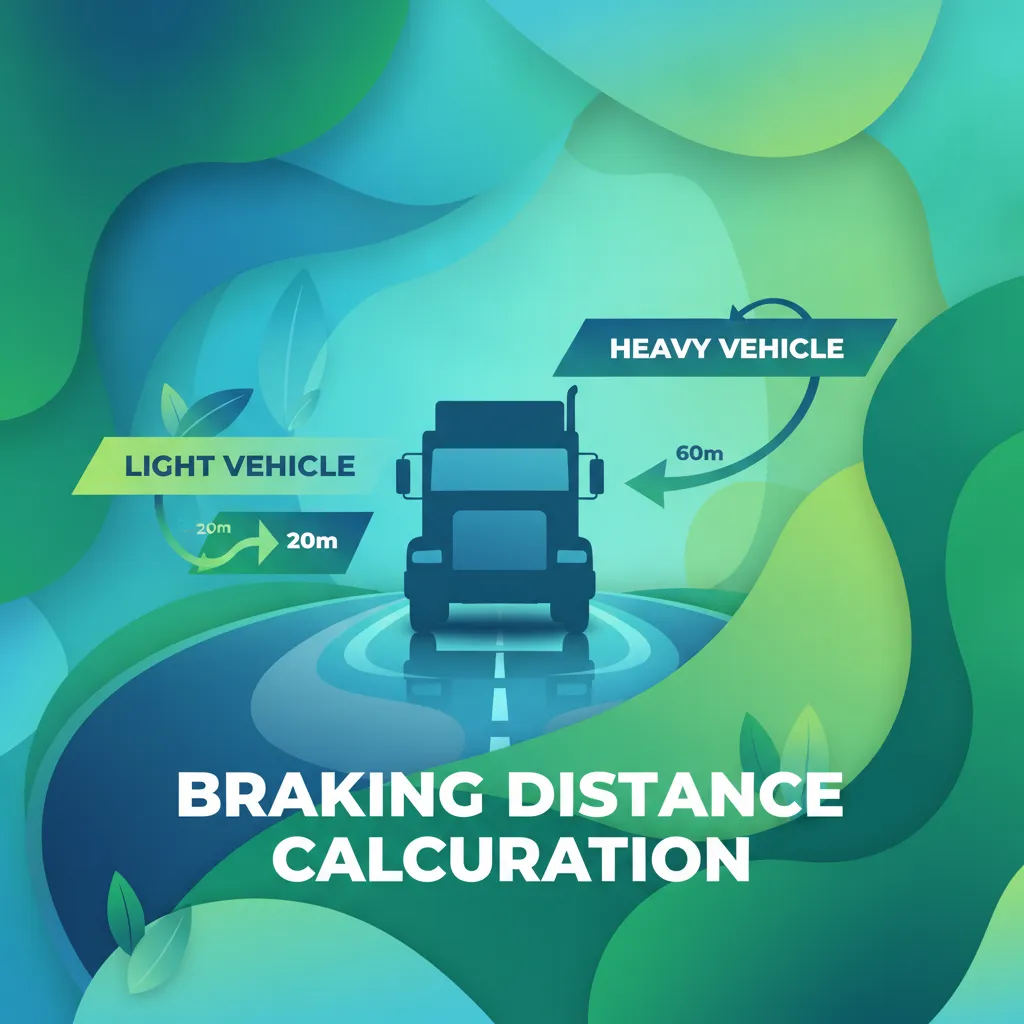
The immense mass of a loaded truck means its braking distance is far greater than that of a car. This lesson breaks down total stopping distance into reaction distance and braking distance, explaining how speed, weight, and road conditions have an exponential effect. It reinforces the necessity of maintaining a significantly larger following distance to ensure enough space to stop safely in an emergency.
Controlling a heavy vehicle on a steep downhill grade requires a specific technique to avoid disaster. This lesson teaches the golden rule: select a low gear before starting the descent, one that is low enough to control the speed with minimal use of the service brakes. It explains how to effectively combine this with the engine brake or retarder to maintain a safe, steady speed and keep the service brakes cool and ready for an emergency.

This lesson focuses on driving on mountain roads, addressing steep gradients, hairpin bends, and altitude-related challenges. You will learn proper techniques for climbing ascents and using engine braking on descents. The content also covers the use of snow chains, recognizing avalanche risks, and interpreting mountain road signs for safe alpine navigation.
Weather has a profound impact on vehicle handling and visibility. This lesson teaches you how to reduce speed, increase following distances, and use controls smoothly to maintain traction in poor conditions. It also covers the legal requirements and practical application of snow chains in winter.
This lesson focuses on adapting braking techniques for low-traction surfaces like wet or icy roads. It explains the need for gentle, progressive brake application to prevent wheel lock-up and maintain control. Learners will understand how to scan the road ahead for potential hazards and adjust their braking strategy accordingly.
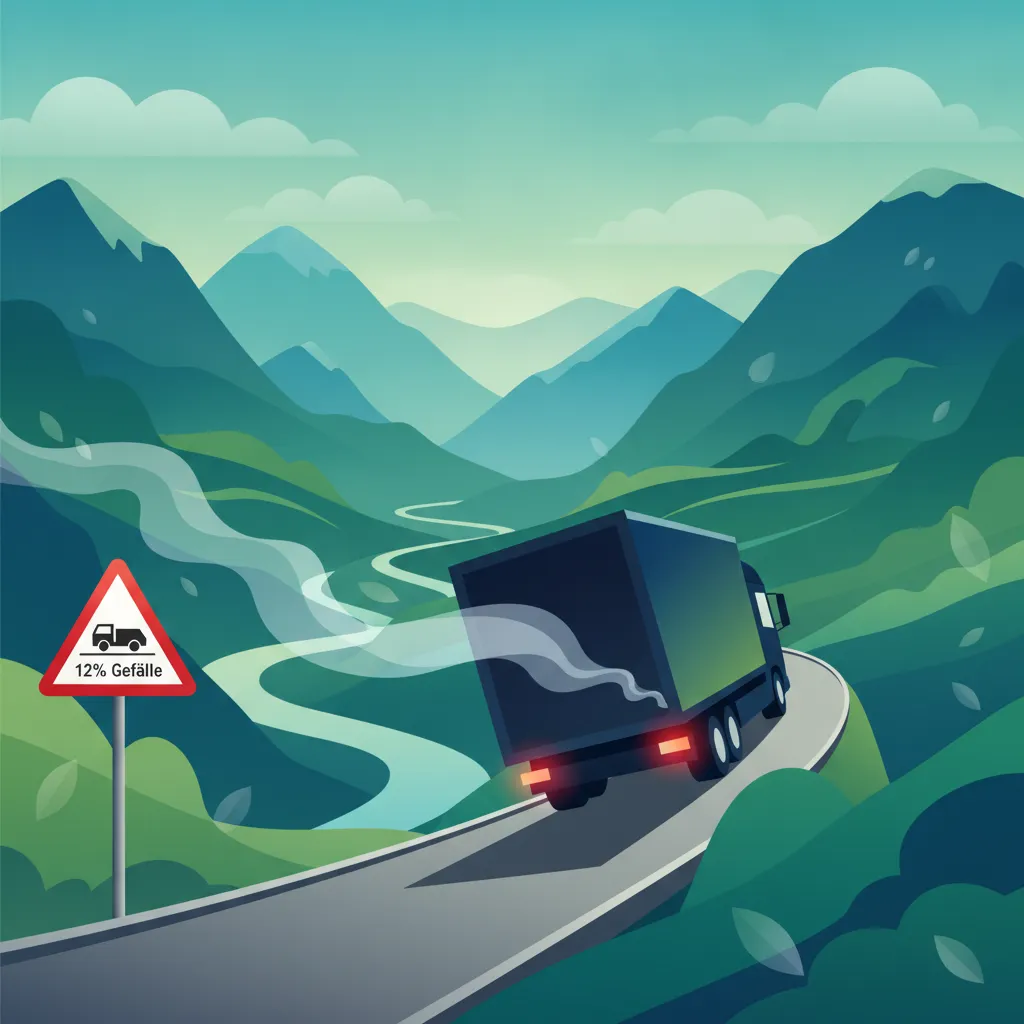
To prevent the service brakes from overheating and failing on long downhill gradients, heavy vehicles are equipped with endurance (or auxiliary) braking systems. This lesson explains the function of engine brakes (which alter valve timing) and retarders (which use hydrodynamic or electromagnetic force). These systems allow the driver to maintain a safe, controlled speed without relying solely on the service brakes.

This lesson examines the impact of various weather conditions on driving safety. It explains how to adjust speed in low visibility and the risks of aquaplaning in heavy rain. The content also covers using snow chains in snowy conditions, handling icy surfaces, and dealing with strong winds, particularly on bridges and open roads.
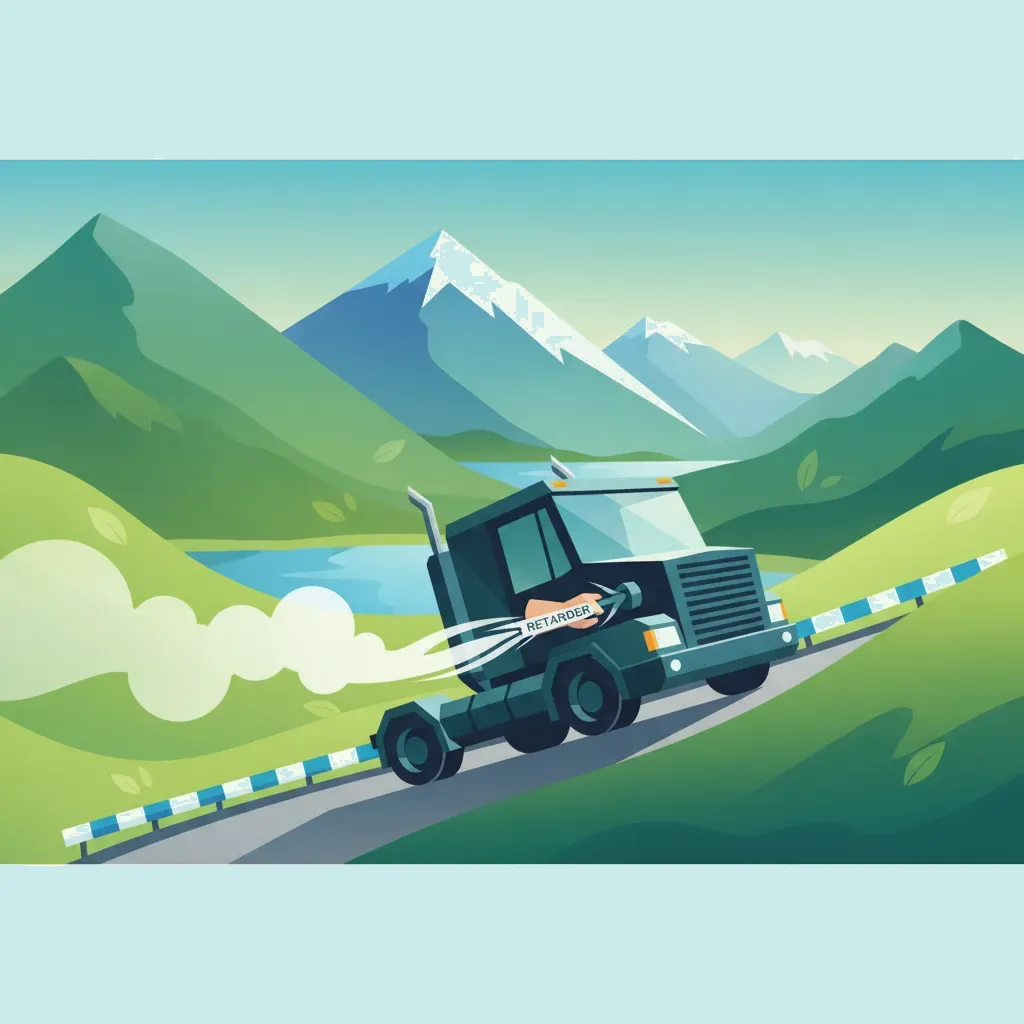
Relying solely on the service brakes on a long downhill stretch can lead to overheating and complete brake failure (brake fade). This lesson explains the function of auxiliary brakes like retarders. You will learn how and when to engage them to maintain a safe, controlled speed, preserving the main brakes for when they are truly needed.
Identify and avoid critical errors drivers make when braking heavy goods vehicles in rain, snow, or ice. Learn how to prevent skidding and maintain control on slippery Swiss roads.
Weather has a profound impact on vehicle handling and visibility. This lesson teaches you how to reduce speed, increase following distances, and use controls smoothly to maintain traction in poor conditions. It also covers the legal requirements and practical application of snow chains in winter.
The immense mass of a loaded truck means its braking distance is far greater than that of a car. This lesson breaks down total stopping distance into reaction distance and braking distance, explaining how speed, weight, and road conditions have an exponential effect. It reinforces the necessity of maintaining a significantly larger following distance to ensure enough space to stop safely in an emergency.
Overloading is a serious offence with severe safety and legal ramifications. This lesson details how excess weight drastically increases braking distances, puts extreme stress on tyres leading to blowouts, and negatively affects steering and overall stability. Furthermore, it discusses the substantial fines, potential license withdrawal, and driver liability that result from violating Swiss weight regulations.
A tyre blowout or engine failure can be a frightening experience. This lesson provides a clear action plan: maintain a firm grip on the steering wheel, avoid harsh braking, signal, and move the vehicle to a safe location like the hard shoulder if possible. It then covers the essential safety steps of activating hazard lights, placing the warning triangle, and waiting in a safe place away from the vehicle.
Driving in the Alps requires a high level of skill and vehicle sympathy. This lesson covers techniques for climbing steep gradients by selecting the correct gear to maintain momentum without straining the engine. It reiterates the critical importance of using low gears and auxiliary brakes for descending, to ensure the service brakes remain cool and effective for the entire descent.

High-sided lorries and trailers present a large surface area to the wind, making them susceptible to being pushed off course by strong crosswinds. This lesson highlights the danger, especially on exposed sections of road like bridges and viaducts, and when overtaking other large vehicles. It advises drivers to reduce speed and maintain a firm grip on the steering wheel when experiencing strong gusts.
This lesson examines the impact of various weather conditions on driving safety. It explains how to adjust speed in low visibility and the risks of aquaplaning in heavy rain. The content also covers using snow chains in snowy conditions, handling icy surfaces, and dealing with strong winds, particularly on bridges and open roads.
Controlling a heavy vehicle on a steep downhill grade requires a specific technique to avoid disaster. This lesson teaches the golden rule: select a low gear before starting the descent, one that is low enough to control the speed with minimal use of the service brakes. It explains how to effectively combine this with the engine brake or retarder to maintain a safe, steady speed and keep the service brakes cool and ready for an emergency.
This lesson focuses on adapting braking techniques for low-traction surfaces like wet or icy roads. It explains the need for gentle, progressive brake application to prevent wheel lock-up and maintain control. Learners will understand how to scan the road ahead for potential hazards and adjust their braking strategy accordingly.
Relying solely on the service brakes on a long downhill stretch can lead to overheating and complete brake failure (brake fade). This lesson explains the function of auxiliary brakes like retarders. You will learn how and when to engage them to maintain a safe, controlled speed, preserving the main brakes for when they are truly needed.
Find clear answers to common questions learners have about Braking in Adverse Weather Conditions. Learn how the lesson is structured, which driving theory objectives it supports, and how it fits into the overall learning path of units and curriculum progression in Switzerland. These explanations help you understand key concepts, lesson flow, and exam focused study goals.
On very slippery surfaces, the retarder can provide too much braking force suddenly, which may cause the drive wheels to lose traction and skid. It is safer to use the service brake gently and rely on lower gears.
Because heavy vehicles have much greater mass, your stopping distance is significantly longer than that of a car. In wet or icy conditions, you must at least double or triple your normal following distance to account for the reduced friction.
Brake fade occurs when brakes become overheated due to prolonged use, often on long descents. This significantly reduces braking effectiveness. Drivers should use endurance brakes like engine brakes to mitigate this risk.
ABS helps maintain steering control by preventing wheel lock-up during hard braking, but it does not change the physical laws of friction. You must still drive at an appropriate speed for the conditions.
Pinpoint specific Swiss traffic rules, road signs, or driving situations you need to master. Use the practice search to start a focused revision session now and build confidence for your official driving theory exam.