
This lesson guides you through the professional use of auxiliary brakes, such as retarders, on long downhill stretches. By understanding how to manage your speed without relying solely on service brakes, you will ensure passenger comfort and prevent dangerous brake fade during your Category D driving career.
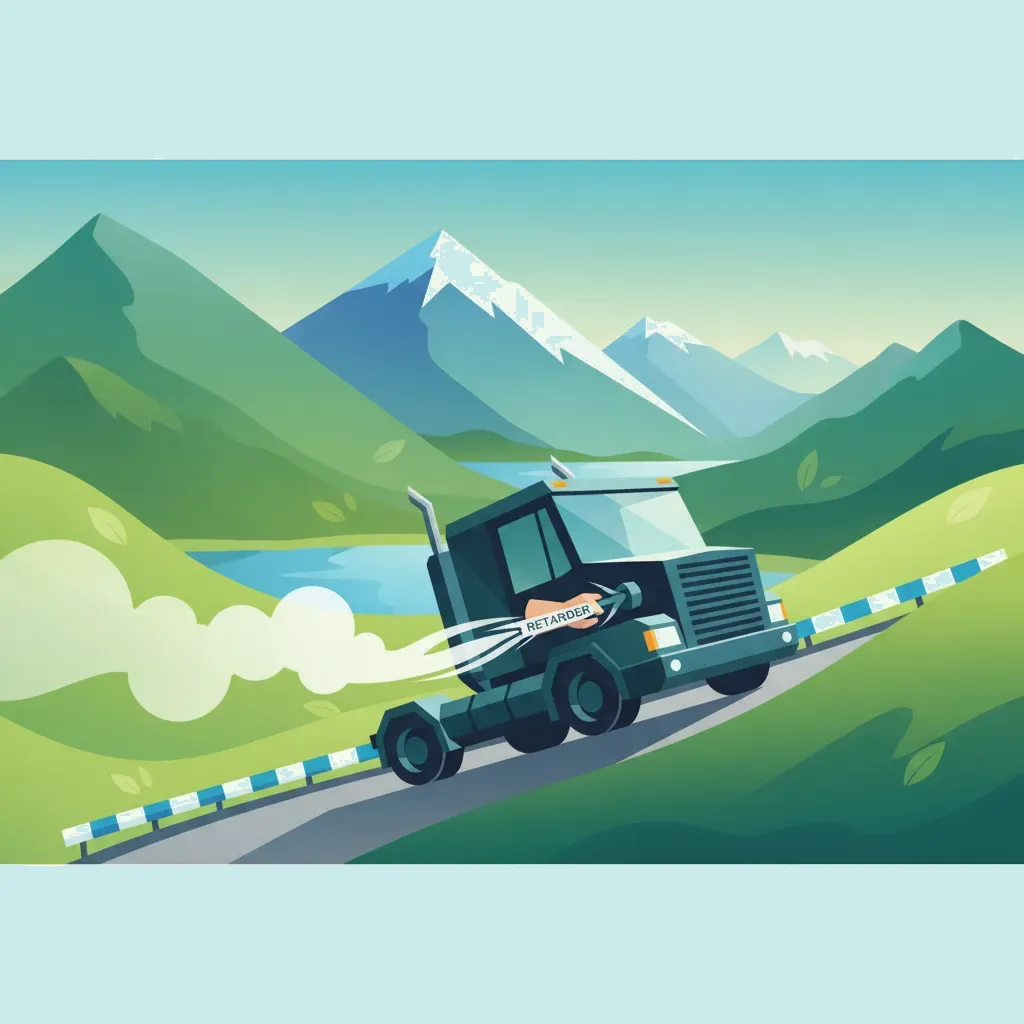
Lesson content overview
Driving a Category D passenger vehicle, such as a bus or coach, through Switzerland's diverse terrain often involves navigating challenging descents, particularly in mountainous regions. On such long or steep downhill stretches, relying solely on the vehicle's service brakes (foot brakes) can lead to severe overheating, a dangerous condition known as brake fade. This significantly reduces braking efficiency and can result in a complete loss of vehicle control. To prevent this critical safety hazard and ensure the reliable operation of the primary braking system, heavy vehicles are equipped with auxiliary brakes, commonly known as retarders.
This lesson explores the essential role of auxiliary brakes in maintaining safe speed control on descents for professional drivers. You will learn the function and various types of retarders, understand the underlying physics of kinetic energy management, and master the correct procedures for engaging and modulating these systems. Adhering to Swiss traffic regulations concerning retarder use is not only a matter of safety but also a legal obligation for all Category D drivers.
Heavy passenger vehicles like buses carry significant mass, which translates into substantial kinetic energy, especially when traveling downhill. On a descent, gravity continuously accelerates the vehicle, increasing its kinetic energy. To maintain a constant, safe speed, this excess energy must be dissipated. The service brakes accomplish this by converting kinetic energy into heat through friction.
However, prolonged or intensive use of service brakes on a long or steep descent generates immense amounts of heat in the brake components (discs, drums, pads). If this heat cannot dissipate quickly enough, the brake system can overheat, leading to a phenomenon called brake fade. Auxiliary brakes are designed specifically to provide a supplementary braking force, sharing the load and significantly reducing the thermal stress on the service brakes. This preservation ensures that the service brakes remain cool and effective for emergency situations, precise speed adjustments, or bringing the vehicle to a complete stop.
Brake fade is a critical safety concern for any driver, but it poses an even greater risk for heavy vehicles like buses and coaches due to their mass and the forces involved in braking. It refers to the reduction in braking efficiency caused by excessive heat build-up within the friction braking system.
A dangerous reduction in braking efficiency caused by the overheating of friction materials (brake pads and discs/drums), leading to decreased friction coefficient and increased stopping distances.
When brake components reach excessively high temperatures, several things happen:
The practical implication for the driver is that the vehicle requires significantly more pedal pressure and a much longer distance to stop, or may even become uncontrollable on a descent. Preventing brake fade through the proper use of auxiliary brakes is paramount for the safety of all passengers and other road users.
Modern Category D vehicles are typically equipped with one or more types of auxiliary braking systems, also known as retarders. These systems work by converting the vehicle's kinetic energy into heat or other forms of energy, but critically, they do so without relying on the friction components of the service brakes.
Engine brakes, often referred to by a brand name like "Jake brake," work by altering the timing of the engine's exhaust valves. During the compression stroke, instead of allowing the compressed air to expand and push the piston down, the exhaust valve is opened, releasing the compressed air. This requires the engine to expend energy to compress the air again in the next cycle, creating a powerful retarding force. Engine brakes are highly effective at higher engine RPMs.
An exhaust brake operates by restricting the flow of exhaust gases from the engine. A valve, often butterfly-style, closes in the exhaust pipe, creating back pressure in the exhaust manifold. This increased back pressure provides resistance against the engine's pistons, converting engine rotational energy into braking force. Exhaust brakes are generally less powerful than engine brakes but are effective and commonly found on buses.
Hydraulic retarders, also known as hydrodynamic retarders, are typically integrated into the vehicle's drivetrain, often with the gearbox. They consist of a rotor and a stator within a sealed casing filled with fluid (usually oil). As the vehicle's driveshaft turns the rotor, the fluid is churned and resists the rotor's motion due to viscous forces, transferring kinetic energy into heat within the fluid. This heat is then dissipated through a dedicated cooling system, often integrated with the engine's cooling system. Hydraulic retarders offer smooth, continuous braking force and are highly effective across a wide range of speeds.
Electric retarders operate on the principle of electromagnetic induction. They consist of a rotor attached to the vehicle's driveshaft and a stationary stator with electromagnets. When the driver engages the retarder, an electric current is passed through the stator coils, creating a magnetic field. As the rotor spins through this magnetic field, eddy currents are induced, which oppose the rotor's motion. This generates a powerful braking torque, converting kinetic energy directly into heat within the retarder unit, which is then dissipated by fins or a dedicated cooling fan. Electric retarders are very effective, provide smooth braking, and are independent of the engine.
Understanding how a vehicle's kinetic energy behaves on a descent is fundamental to safe driving. Kinetic energy is the energy an object possesses due due to its motion, defined by the formula ½ mv², where 'm' is mass and 'v' is velocity.
When a bus descends a hill, its gravitational potential energy is converted into kinetic energy. Without a braking force, the vehicle would continuously accelerate. The role of any braking system is to dissipate this kinetic energy, converting it into other forms, primarily heat, to control the vehicle's speed.
The strategic control and dissipation of a vehicle's kinetic energy, especially on descents, to maintain a safe speed and prevent overheating of the service brakes.
Auxiliary brakes are specifically designed for this energy management task. By generating resistance before the service brakes are heavily applied, retarders prevent the build-up of kinetic energy that would otherwise overload the friction braking system. This distributed energy dissipation ensures that the service brakes are preserved for final stopping or emergency maneuvers, remaining cool and fully responsive.
In Switzerland, the use of auxiliary brakes on heavy vehicles, including Category D buses and coaches, is not merely a recommendation but a legal requirement under specific conditions. Swiss road traffic regulations are designed to enhance safety, especially on mountain roads and challenging terrain.
Failure to use auxiliary brakes when mandated by Swiss law can result in severe penalties, including fines, points on your license, or increased liability in the event of an incident.
The core regulation states that drivers of heavy vehicles must use auxiliary brakes when descending a road with a gradient exceeding 6% for a distance longer than 500 metres. This threshold is critical for professional drivers to remember and act upon. It is important to note that these are minimum thresholds; drivers should always use their professional judgment and engage retarders even on less severe descents if doing so enhances safety and preserves the service brakes.
Article 37, sub-paragraph 3 of the Swiss road traffic regulations explicitly mandates the use of auxiliary brakes where available on steep, long descents. This underscores the legal responsibility of Category D drivers to be proficient in retarder operation and to integrate it into their routine driving practice. Compliance with this regulation contributes significantly to overall road safety, reducing the risk of accidents caused by brake failure.
Always be observant of road signs indicating steep descents. While the legal threshold applies generally, sometimes specific signage may require retarder use on descents that might otherwise seem less severe.
Proper engagement and modulation of auxiliary brakes are critical skills for Category D drivers. Incorrect use can lead to sudden deceleration, passenger discomfort, or even a loss of control. The goal is smooth, consistent speed control throughout the descent.
Identify the Descent: Before reaching the start of a descent, identify it through road signs (e.g., steep gradient warnings), visual observation of the road profile, or GPS navigation. This allows for proactive preparation.
Pre-select Target Speed: Based on posted speed limits, road conditions, vehicle load, and visibility, determine a safe target speed for the descent.
Engage Retarder Before the Descent: Crucially, engage the auxiliary brake before the vehicle starts to gain significant speed. This allows the retarder to take over speed control early, preventing speed build-up and reducing the need for service brake applications. Most retarders have multiple levels (e.g., 1 to 5); select an initial level based on the descent's steepness and your target speed.
Modulate Retarder Intensity: Adjust the retarder level incrementally to maintain the desired speed. If the vehicle is accelerating, increase the retarder level. If it's decelerating too much, reduce the level. Aim for smooth, continuous adjustments rather than sudden changes. This prevents speed oscillations and enhances passenger comfort.
Integrate Service Brakes Sparingly: Use the service brakes only for fine speed adjustments, bringing the vehicle to a complete stop, or in emergency situations. A light, infrequent application of the service brake is acceptable if the retarder alone cannot maintain the exact desired speed, but the primary speed control should always be with the retarder.
Release Retarder Gradually: As the gradient eases or when reaching level ground, gradually reduce and then disengage the retarder. Continuing to use the retarder unnecessarily can cause unnecessary wear and heat generation.
Modulation is key to a smooth descent. Instead of treating the retarder as an on/off switch, professional drivers learn to make fine adjustments. Many retarder systems offer a lever or stalk with several resistance levels. Start with a lower level and increase it progressively until the desired speed is maintained. Anticipate changes in gradient or upcoming curves, and adjust the retarder accordingly. Over-braking with the retarder, especially on slippery surfaces, can lead to loss of traction.
The service brakes are your primary stopping system and must always be ready for action. By using the retarder effectively, you preserve the service brakes, keeping them cool and highly responsive. Think of the retarder as your primary speed controller on descents, and the service brake as your ultimate safety net and fine-tuning tool. A useful technique is to apply the service brake briefly and firmly (the "stab braking" method) if a quick speed reduction is needed, then release it to allow for cooling, letting the retarder manage the sustained descent.
The optimal use of auxiliary brakes is not a one-size-fits-all approach. Several factors influence the appropriate retarder level and overall braking strategy.
The total mass of your bus (including passengers, luggage, and the vehicle itself) has a profound impact on the kinetic energy that needs to be dissipated. A fully loaded coach will naturally gain speed much faster on a descent than an empty one, requiring significantly more retarding force. Always adjust your chosen retarder level upwards for heavier loads. Be mindful that even seemingly small changes in passenger count can alter the vehicle's dynamics.
Even experienced drivers can sometimes make errors or hold misconceptions about auxiliary brakes. Avoiding these pitfalls is crucial for safe and efficient operation.
Like all critical vehicle systems, auxiliary brakes require regular maintenance and inspection to ensure their reliability and performance. For Category D vehicles in Switzerland, this is not just good practice but a legal mandate for operational safety.
Regular checks of the retarder system are a fundamental part of the pre-trip inspection for any professional passenger vehicle driver.
Maintenance typically involves:
A malfunctioning retarder can compromise vehicle safety and lead to non-compliance during vehicle inspections, potentially resulting in fines or grounding of the vehicle. Drivers must report any signs of retarder malfunction (e.g., reduced braking force, unusual noises, warning lights) immediately.
Mastering the correct use of auxiliary brakes (retarders) is an indispensable skill for any professional driver of a Category D bus or coach in Switzerland. It is the cornerstone of safe descent management, protecting both your vehicle's critical service brakes and the lives of your passengers.
Key Takeaways:
By diligently applying these principles, you ensure optimal vehicle control, enhance safety for all road users, and fulfill your professional responsibilities as a Category D driver navigating the challenging, yet beautiful, roads of Switzerland.
This lesson covers the critical role of auxiliary brakes (retarders) for Category D drivers on Swiss mountain descents. Heavy vehicles like buses carry significant kinetic energy that must be dissipated on descents; using service brakes alone causes dangerous brake fade through overheating. Four types of retarders—engine brake, exhaust brake, hydraulic retarder, and electric retarder—each convert kinetic energy into heat using different mechanisms without wearing the friction brakes. Swiss law mandates retarder use on gradients exceeding 6% for more than 500 metres, making compliance both a legal obligation and a safety requirement. Effective technique involves engaging the retarder before the descent begins, modulating it smoothly and incrementally to maintain safe speed, and reserving service brakes for emergencies and final stops.
A short set of high-value points that capture the most important learning from this lesson.
Auxiliary brakes (retarders) are essential for heavy vehicles on descents because they prevent dangerous brake fade by dissipating kinetic energy without using friction brake components
The four main types of retarders—engine brake, exhaust brake, hydraulic retarder, and electric retarder—each work through different principles (compression release, exhaust restriction, fluid resistance, and electromagnetic induction)
Swiss law mandates retarder use on descents exceeding 6% gradient for more than 500 metres; non-compliance carries penalties and increased liability
Retarders must be engaged proactively before the descent begins to prevent speed buildup, not as a reactive measure once excessive speed is already reached
The service brake should be preserved as a safety net for emergencies and final stops, while the retarder handles continuous speed control on descents
Explore all units and lessons included in this driving theory course.
Swiss mandatory retarder threshold: 6% gradient over 500 metres minimum (Article 37, Swiss road traffic regulations)
Brake fade occurs when friction materials overheat, causing reduced friction coefficient, disc expansion, or brake fluid boiling—all leading to increased stopping distances or loss of braking
Different retarder types have different speed ranges: engine brakes work best at higher RPMs, while most retarders become inefficient below 20-30 km/h
Vehicle load significantly affects braking requirements; a fully loaded bus requires higher retarder settings than an empty vehicle
Retarder modulation should be smooth and incremental—avoid switching from off to maximum or vice versa abruptly to prevent passenger discomfort and traction loss
Exclusive reliance on service brakes for speed control on long descents, leading directly to brake fade and potential loss of control
Engaging the retarder too late—after the vehicle has already gained excessive speed—making it harder to manage and often requiring compensatory service brake use
Failing to adjust retarder level for vehicle load; a loaded bus will accelerate faster and needs more retarding force than an empty one
Leaving the retarder engaged on level ground or after the descent ends, causing unnecessary wear and slight fuel consumption increase
Neglecting pre-trip inspection of the retarder system, assuming it is functional without verification—a dangerous oversight before mountain driving
Lesson content overview
A short set of high-value points that capture the most important learning from this lesson.
Auxiliary brakes (retarders) are essential for heavy vehicles on descents because they prevent dangerous brake fade by dissipating kinetic energy without using friction brake components
The four main types of retarders—engine brake, exhaust brake, hydraulic retarder, and electric retarder—each work through different principles (compression release, exhaust restriction, fluid resistance, and electromagnetic induction)
Swiss law mandates retarder use on descents exceeding 6% gradient for more than 500 metres; non-compliance carries penalties and increased liability
Retarders must be engaged proactively before the descent begins to prevent speed buildup, not as a reactive measure once excessive speed is already reached
The service brake should be preserved as a safety net for emergencies and final stops, while the retarder handles continuous speed control on descents
Explore all units and lessons included in this driving theory course.
Swiss mandatory retarder threshold: 6% gradient over 500 metres minimum (Article 37, Swiss road traffic regulations)
Brake fade occurs when friction materials overheat, causing reduced friction coefficient, disc expansion, or brake fluid boiling—all leading to increased stopping distances or loss of braking
Different retarder types have different speed ranges: engine brakes work best at higher RPMs, while most retarders become inefficient below 20-30 km/h
Vehicle load significantly affects braking requirements; a fully loaded bus requires higher retarder settings than an empty vehicle
Retarder modulation should be smooth and incremental—avoid switching from off to maximum or vice versa abruptly to prevent passenger discomfort and traction loss
Exclusive reliance on service brakes for speed control on long descents, leading directly to brake fade and potential loss of control
Engaging the retarder too late—after the vehicle has already gained excessive speed—making it harder to manage and often requiring compensatory service brake use
Failing to adjust retarder level for vehicle load; a loaded bus will accelerate faster and needs more retarding force than an empty one
Leaving the retarder engaged on level ground or after the descent ends, causing unnecessary wear and slight fuel consumption increase
Neglecting pre-trip inspection of the retarder system, assuming it is functional without verification—a dangerous oversight before mountain driving
Explore search topics learners often look for when studying Correct Use of Auxiliary Brakes (Retarders) on Descents. These topics reflect common questions about road rules, driving situations, safety guidance, and lesson level theory preparation for learners in Switzerland.
Browse additional driving theory lessons that cover connected traffic rules, road signs, and common driving situations related to this topic. Improve your understanding of how different rules interact across everyday traffic scenarios.
Understand the physics behind kinetic energy and brake fade, and learn the specific Swiss legal requirements for using auxiliary brakes and retarders on Category D vehicles during descents.
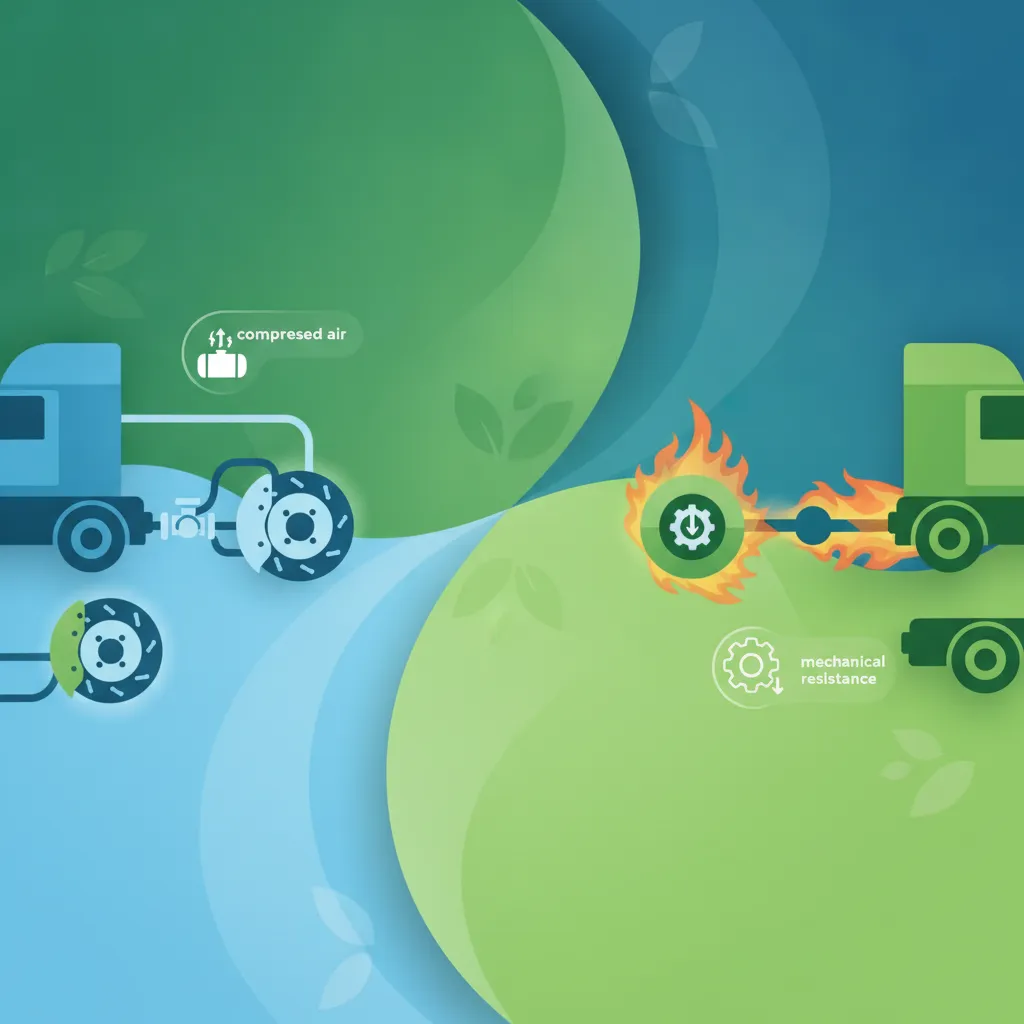
Large passenger vehicles rely on powerful air brake systems. This lesson explains how these systems work, including the importance of monitoring air pressure. It also details the function and proper use of auxiliary braking systems (retarders) to control speed on long descents and reduce wear on the service brakes.
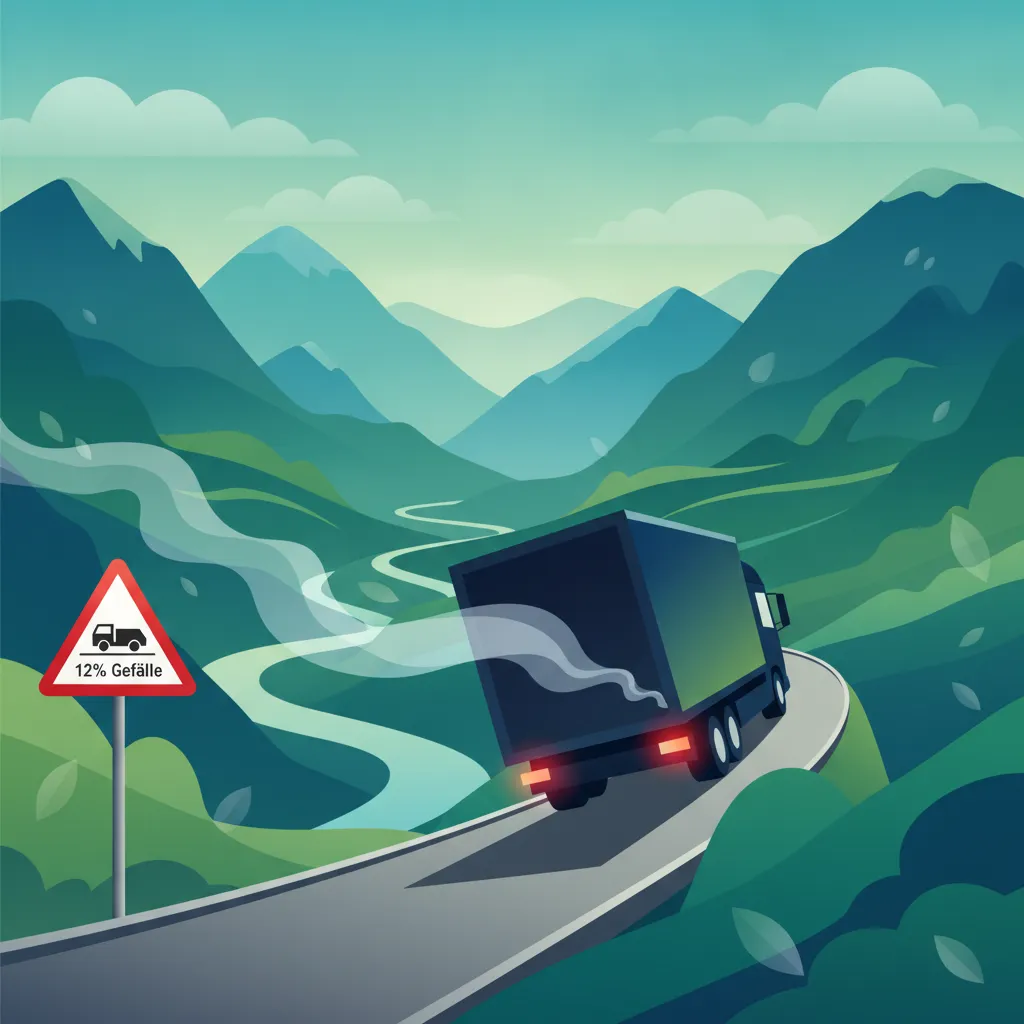
To prevent the service brakes from overheating and failing on long downhill gradients, heavy vehicles are equipped with endurance (or auxiliary) braking systems. This lesson explains the function of engine brakes (which alter valve timing) and retarders (which use hydrodynamic or electromagnetic force). These systems allow the driver to maintain a safe, controlled speed without relying solely on the service brakes.

Wet or icy roads drastically reduce tyre grip and can double or triple braking distances. This lesson stresses the importance of significantly reducing overall speed and increasing following distances in such conditions. It advises on using brakes with extreme care to avoid skidding and explains how the vehicle's retarder should be used with caution as it can cause the drive wheels to lock up on slippery surfaces.
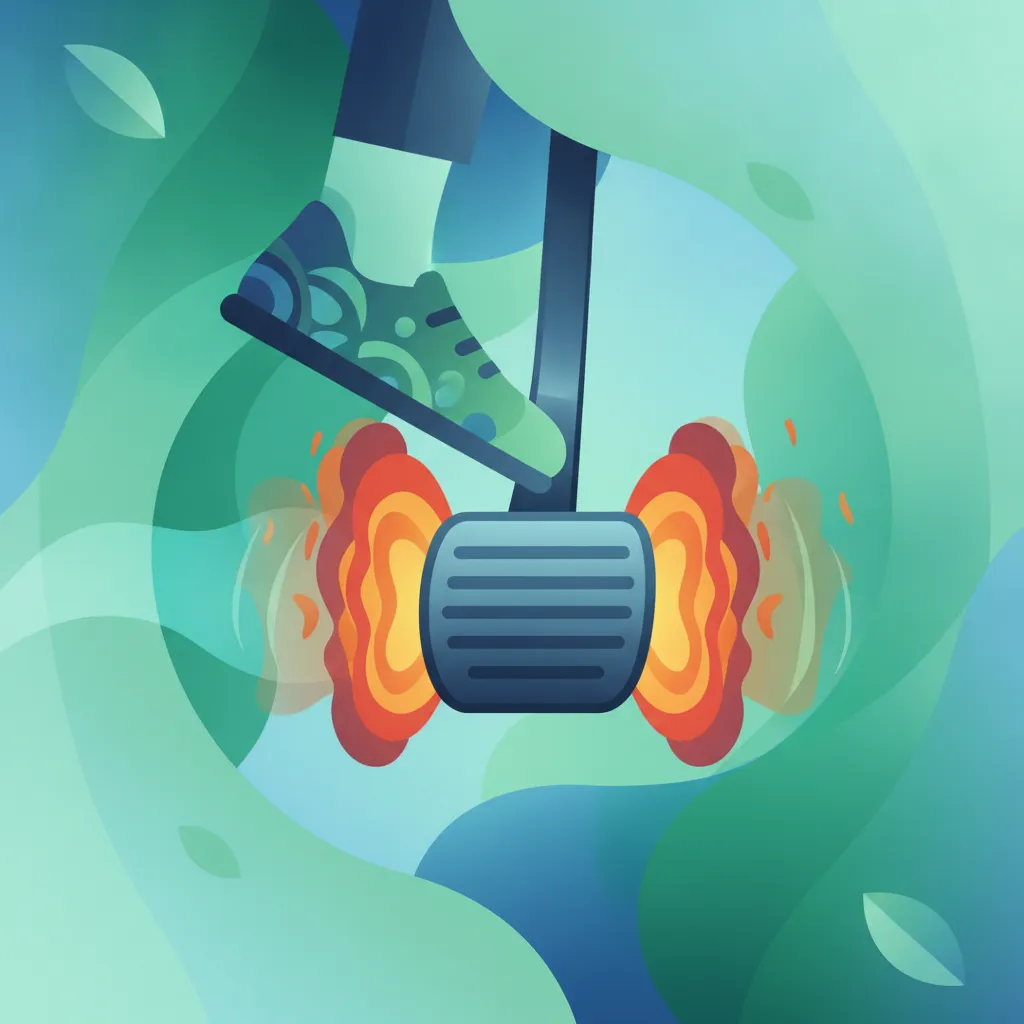
Two critical issues can affect air brake performance. This lesson explains brake lag, the slight delay between pressing the pedal and the brakes applying, and brake fade, a dangerous loss of braking power caused by overheating from prolonged or heavy use. It emphasizes that using endurance brakes and selecting the correct gear on descents are key techniques to prevent brake fade.

This lesson focuses entirely on the technique of applying brakes smoothly and gradually. You will learn how to anticipate stops far in advance, applying gentle initial pressure and increasing it progressively. This method avoids sudden jolts, enhancing comfort and preventing falls, especially for standing passengers.
The immense mass of a loaded truck means its braking distance is far greater than that of a car. This lesson breaks down total stopping distance into reaction distance and braking distance, explaining how speed, weight, and road conditions have an exponential effect. It reinforces the necessity of maintaining a significantly larger following distance to ensure enough space to stop safely in an emergency.

This lesson details the function of the two primary braking circuits. The service brake (Betriebsbremse) is the main system operated by the foot pedal for slowing and stopping the vehicle. The parking brake (Feststellbremse) is a powerful spring-applied system that is held off by air pressure, meaning it engages automatically if a major air leak occurs, serving as a critical fail-safe.

Driving in the Alps requires a high level of skill and vehicle sympathy. This lesson covers techniques for climbing steep gradients by selecting the correct gear to maintain momentum without straining the engine. It reiterates the critical importance of using low gears and auxiliary brakes for descending, to ensure the service brakes remain cool and effective for the entire descent.

Driving a large vehicle on mountain passes is a demanding skill. This lesson covers selecting the correct gear for both ascents and descents to maintain control and avoid overheating the brakes. It also explains the specific priority rules that apply on mountain roads and the importance of being aware of sudden weather changes.
Controlling a heavy vehicle on a steep downhill grade requires a specific technique to avoid disaster. This lesson teaches the golden rule: select a low gear before starting the descent, one that is low enough to control the speed with minimal use of the service brakes. It explains how to effectively combine this with the engine brake or retarder to maintain a safe, steady speed and keep the service brakes cool and ready for an emergency.
Learn the step-by-step procedure for engaging and modulating auxiliary brakes (retarders) on Category D vehicles, and identify common errors to ensure safe and efficient speed control on descents.
Large passenger vehicles rely on powerful air brake systems. This lesson explains how these systems work, including the importance of monitoring air pressure. It also details the function and proper use of auxiliary braking systems (retarders) to control speed on long descents and reduce wear on the service brakes.
To prevent the service brakes from overheating and failing on long downhill gradients, heavy vehicles are equipped with endurance (or auxiliary) braking systems. This lesson explains the function of engine brakes (which alter valve timing) and retarders (which use hydrodynamic or electromagnetic force). These systems allow the driver to maintain a safe, controlled speed without relying solely on the service brakes.
This lesson focuses entirely on the technique of applying brakes smoothly and gradually. You will learn how to anticipate stops far in advance, applying gentle initial pressure and increasing it progressively. This method avoids sudden jolts, enhancing comfort and preventing falls, especially for standing passengers.
Wet or icy roads drastically reduce tyre grip and can double or triple braking distances. This lesson stresses the importance of significantly reducing overall speed and increasing following distances in such conditions. It advises on using brakes with extreme care to avoid skidding and explains how the vehicle's retarder should be used with caution as it can cause the drive wheels to lock up on slippery surfaces.
Controlling a heavy vehicle on a steep downhill grade requires a specific technique to avoid disaster. This lesson teaches the golden rule: select a low gear before starting the descent, one that is low enough to control the speed with minimal use of the service brakes. It explains how to effectively combine this with the engine brake or retarder to maintain a safe, steady speed and keep the service brakes cool and ready for an emergency.
Two critical issues can affect air brake performance. This lesson explains brake lag, the slight delay between pressing the pedal and the brakes applying, and brake fade, a dangerous loss of braking power caused by overheating from prolonged or heavy use. It emphasizes that using endurance brakes and selecting the correct gear on descents are key techniques to prevent brake fade.

Reversing is the most dangerous manoeuvre a large vehicle can perform and should be avoided whenever possible. This lesson details a safe system of work for when reversing is unavoidable. It covers the importance of a 360-degree check before starting, the use of a banksman, and how to interpret standard hand signals.
Driving a large vehicle on mountain passes is a demanding skill. This lesson covers selecting the correct gear for both ascents and descents to maintain control and avoid overheating the brakes. It also explains the specific priority rules that apply on mountain roads and the importance of being aware of sudden weather changes.
Find clear answers to common questions learners have about Correct Use of Auxiliary Brakes (Retarders) on Descents. Learn how the lesson is structured, which driving theory objectives it supports, and how it fits into the overall learning path of units and curriculum progression in Switzerland. These explanations help you understand key concepts, lesson flow, and exam focused study goals.
Continuous use of service brakes on long descents leads to brake fade. This occurs when the heat generated causes the brake linings to lose friction efficiency, resulting in a significant reduction or complete loss of braking power.
You should engage the retarder at the start of a long descent before your speed builds up. It is designed to assist in maintaining a constant, safe speed, but it should not be used as a replacement for the service brake in emergency situations.
No, they complement each other. Using a lower gear to allow engine braking combined with the retarder is the standard professional procedure for navigating steep mountain passes safely.
Yes, it improves it significantly. Retarders provide smooth deceleration, preventing the 'jerky' braking motions that occur when a driver constantly taps the service brakes, leading to a much more stable and comfortable ride for passengers.
Pinpoint specific Swiss traffic rules, road signs, or driving situations you need to master. Use the practice search to start a focused revision session now and build confidence for your official driving theory exam.