
This lesson explores the critical mechanics of air braking systems and the role of retarders in large passenger vehicles. It builds upon your knowledge of bus construction to ensure you can safely manage vehicle speed, particularly during long descents in mountainous terrain. This expertise is vital for passing your Swiss Category D theory exam and ensuring passenger comfort.
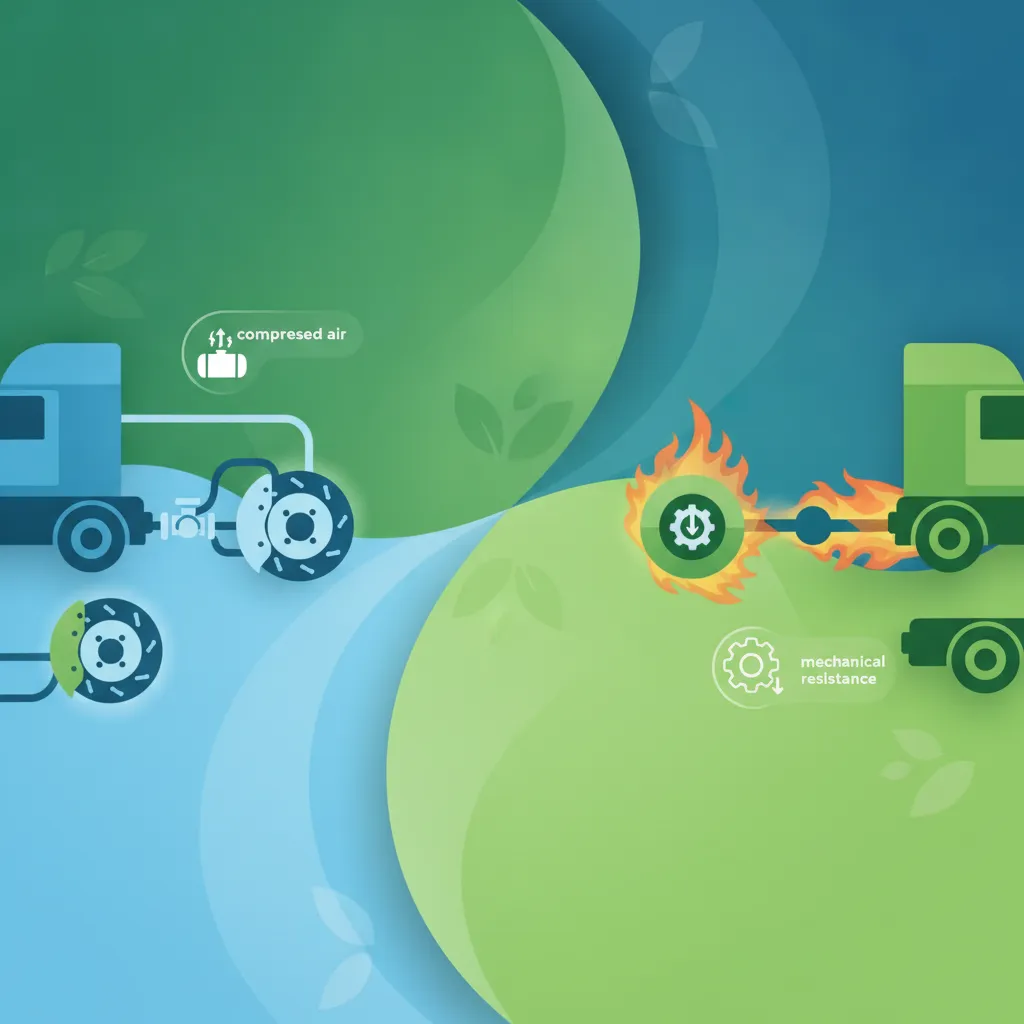
Lesson content overview
Operating large passenger vehicles, such as buses and coaches, demands an in-depth understanding of their sophisticated braking systems. Unlike smaller vehicles, these heavy vehicles primarily rely on air brakes and are augmented by auxiliary braking systems known as retarders. This lesson, part of the Swiss Category D Driving License Theory Course, delves into the mechanics of these crucial systems, emphasizing their proper use, monitoring, and maintenance to ensure passenger safety and operational efficiency.
Braking systems are the cornerstone of vehicle safety, allowing drivers to control speed, stop reliably, and prevent accidents. For buses and coaches, the sheer weight and momentum necessitate robust and redundant braking capabilities. A comprehensive understanding of air brakes and retarders is not merely about knowing how to stop; it's about mastering speed control, preventing brake wear and overheating, and ensuring peak performance, especially during challenging conditions like long mountain descents.
Proactive Braking: Effective braking is a proactive skill. Drivers must anticipate road conditions and traffic flow to apply brakes smoothly and efficiently, minimizing wear and maximizing safety.
Air brakes are a type of friction brake for vehicles that use compressed air to operate the brake. They are standard in large commercial vehicles due to their reliability, power, and ability to handle heavy loads. The system operates by converting air pressure into mechanical force, which then applies the brake shoes or pads against drums or discs.
A typical air brake system is a complex network of interconnected parts, each playing a critical role in generating and delivering braking force. Understanding these components is fundamental to diagnosing issues and operating the system safely.
The device responsible for drawing in air from the atmosphere, compressing it, and storing it under high pressure within the system's reservoirs.
The compressor continuously supplies air to the reservoirs. As the pressure in the system reaches its maximum (e.g., 8-10 bar), the compressor unloads, meaning it stops pumping air into the system until the pressure drops again. This ensures a constant supply of air is available for braking. Multiple reservoirs enhance safety by providing separate air supplies for different brake circuits and as a backup in case of a leak in one part of the system.
When the driver presses the brake pedal, the brake pedal valve opens, releasing compressed air from the reservoirs through the air lines to the brake chambers at each wheel. The air pressure pushes the diaphragms or pistons in the brake chambers, which then force the brake shoes or pads against the drums or discs. Releasing the pedal causes the valve to close and vent the air from the brake chambers, releasing the brakes.
Slack adjusters are crucial for maintaining consistent braking performance. As brake linings wear, the distance between the brake shoe and the drum increases (known as "slack"). Without proper adjustment, the brake pedal would have to be pressed further, and braking force would be diminished. Modern heavy vehicles often have automatic slack adjusters, but drivers should still inspect them during pre-trip checks to ensure they are functioning correctly and that there isn't excessive free play.
For a professional driver, monitoring air pressure is as critical as watching the road ahead. The air brake system relies entirely on adequate pressure to function correctly. Any significant drop can compromise braking effectiveness and lead to dangerous situations.
In the cockpit of a bus or coach, you will find one or more air pressure gauges. These typically display the pressure in the primary and secondary air reservoirs, allowing the driver to monitor the system's health. Modern vehicles also come equipped with audible and visual warning systems (e.g., a warning light or buzzer) that activate if the air pressure drops below a safe operating threshold.
Minimum Operating Pressure: In Switzerland, the minimum air pressure for service brakes must be 5 bar while the vehicle is in motion. For parking brakes, the minimum operational pressure is 3 bar. Never operate a vehicle with pressure below these thresholds.
Before commencing a journey, and regularly during operation, the driver must verify that the air pressure gauges show sufficient pressure (typically between 8 and 10 bar when fully charged, and never below 5 bar during active use). The compressor should build pressure relatively quickly when the engine is running. If it takes an unusually long time, or if pressure drops rapidly without brake application, it indicates a problem that needs immediate attention.
A sudden or continuous drop in air pressure below the minimum safe levels while driving is an emergency. It could indicate a significant leak, a compressor malfunction, or a damaged air line.
Stay Calm and Assess: Do not panic. Note the rate of pressure loss and listen for any hissing sounds.
Reduce Speed Gradually: Begin to reduce speed by lifting your foot off the accelerator.
Find a Safe Pull-Over Spot: Signal and steer towards the nearest safe location off the road, such as a rest area, shoulder, or emergency lane. Avoid sudden turns or hard braking.
Apply Parking Brake (Carefully): Once stopped, engage the parking brake. Most parking brakes on heavy vehicles are spring-applied, air-released; meaning they will engage automatically if air pressure drops too low, but manually engaging it ensures the vehicle is secured.
Engage Hazard Lights: Make your vehicle visible to other road users.
Turn Off Engine (if safe): This prevents further air consumption by the compressor and allows for inspection.
Investigate (if trained and safe): Look for obvious signs of a leak (e.g., damaged hoses, loud air escaping). If you cannot identify or fix the problem safely, call for assistance.
Continuing to drive with low air pressure is extremely dangerous, as it can lead to a complete loss of braking ability.
While air service brakes are essential for stopping, continuous use, especially on long or steep descents, can lead to severe overheating. This is where auxiliary braking systems, commonly known as retarders, become indispensable. Retarders provide continuous deceleration, significantly reducing the workload on the service brakes and preventing brake fade.
The primary purpose of a retarder is to maintain a controlled speed, particularly on gradients, without consuming the service brakes. By converting kinetic energy into heat (hydraulically or electrically) or using engine compression, retarders allow drivers to descend safely and smoothly, preserving the service brakes for actual stops or emergencies. This extends the lifespan of brake components and, more importantly, prevents the critical loss of braking power due to overheating.
There are several types of retarders commonly found in heavy passenger vehicles:
Most retarders are engaged via a dedicated lever on the steering column or dashboard, often with multiple stages of braking force.
The correct application of retarders is a hallmark of a skilled professional driver, especially in mountainous regions like Switzerland.
Brake fade is a serious and potentially catastrophic condition that every professional driver must understand and actively prevent.
A dangerous reduction in braking effectiveness caused by the overheating of brake components, leading to significantly extended stopping distances and potentially complete loss of braking ability.
When service brakes are used continuously and excessively, especially on long descents, the friction generated heats up the brake shoes/pads and drums/discs to extreme temperatures. This heat can cause the brake linings to gasify, creating a layer of gas between the friction material and the braking surface, which drastically reduces friction. The brake fluid in hydraulic systems can also boil, creating vapor pockets that render the hydraulic system inoperative. The driver will experience a "soft" or "spongy" brake pedal and a noticeable decrease in stopping power.
Preventing brake fade is paramount. The primary strategy is to minimize the use of service brakes on descents by leveraging retarders.
A thorough pre-trip inspection, often referred to as a "walk-around check," is a mandatory routine for all professional drivers. It's your opportunity to identify potential issues with the braking system before they become critical during operation.
Check Air Pressure: Before starting the engine, ensure there is zero air pressure. Then, start the engine and observe the air pressure gauges. The compressor should build pressure quickly to its maximum operating range (e.g., 8-10 bar).
Test Warning Systems: With the engine off and ignition on, "pump down" the brake pedal repeatedly to reduce air pressure. The low air pressure warning light and buzzer should activate before the pressure drops below 5 bar for service brakes and 3 bar for the parking brake.
Parking Brake Test: Engage the parking brake. Put the vehicle in a low gear (or drive) and gently attempt to move forward. The parking brake should hold the vehicle firmly.
Air Leak Test: With full air pressure, turn off the engine and listen for any audible air leaks around the vehicle. Press the service brake pedal and hold it for a minute; observe if the pressure drops more than 0.2 bar for a single vehicle or 0.3 bar for a combination vehicle.
Visual Inspection (Walk-Around):
Retarder Function Test: If safe and appropriate, test the engagement of the retarder (e.g., engine brake, hydraulic, electric) to ensure it activates and provides resistance.
Documentation: Any defects found during the inspection must be reported and rectified before the vehicle is put into service.
Adherence to specific regulations and established best practices is non-negotiable for professional drivers in Switzerland. These rules are designed to ensure maximum safety for passengers and other road users.
Swiss vehicle regulations (e.g., Strassenverkehrsverordnung) stipulate precise requirements for air brake systems.
While not always explicitly outlined in simple articles, the broader legal framework concerning safe vehicle operation and preventing accidents implies mandatory retarder use. Swiss driving instruction provisions mandate the appropriate use of retarders on long or steep descents, particularly on grades exceeding 6%. This is a critical measure to prevent brake fade and maintain safe speed without overheating the service brakes. Drivers are expected to understand the optimal use of these systems based on vehicle load, road conditions, and gradient.
Failure to adhere to these regulations or general principles of safe braking can lead to severe consequences:
Understanding common mistakes can help professional drivers prevent them.
Braking performance is not static; it varies significantly with external factors. Professional drivers must adapt their braking techniques accordingly.
Mastery of a bus or coach's braking system is fundamental to professional driving. It involves understanding both the primary air brakes and the auxiliary retarder systems.
By integrating these principles into daily driving practice, professional drivers ensure the safety of their passengers, protect their vehicles, and contribute to safer roads in Switzerland and beyond.
This lesson covers the essential mechanics of air brake systems in large passenger vehicles, explaining how compressors, reservoirs, valves, and brake chambers work together to provide reliable friction braking. It emphasizes Swiss-specific pressure requirements (5 bar service, 3 bar parking minimums) and the critical role of dashboard warning systems. Retarders—including engine, hydraulic, and electric types—serve as the primary speed control tool on descents, preserving service brakes for actual stops and emergencies. The content details proper retarder use, brake fade prevention through intermittent braking, comprehensive pre-trip inspection procedures, and the serious consequences of non-compliance, including legal penalties and loss of braking power.
A short set of high-value points that capture the most important learning from this lesson.
Air brake systems use compressed air to convert pressure into mechanical braking force through components like compressors, reservoirs, valves, chambers, and slack adjusters.
In Switzerland, minimum air pressure thresholds are mandatory: 5 bar for service brakes and 3 bar for parking brakes while the vehicle is in motion.
Retarders (engine, hydraulic, or electric) provide continuous deceleration on descents without using service brakes, preventing brake fade.
Brake fade occurs when overheating causes brake components to lose friction effectiveness, drastically increasing stopping distances.
Pre-trip inspections must verify air pressure build-up, warning system activation, parking brake function, and check air lines, brake chambers, slack adjusters, and brake linings for damage or wear.
Explore all units and lessons included in this driving theory course.
Monitor pressure gauges continuously; warning systems activate before reaching critical minimums.
Engage retarders before starting a descent and use intermittent service brake application ('snub braking') to allow cooling.
Slack adjusters maintain correct brake clearance as linings wear; check for excessive free play during inspections.
Retarders only function when the vehicle is moving and cannot hold a stationary vehicle.
Plan braking strategy in advance for descents, considering vehicle load, gradient length, and road conditions.
Riding service brakes continuously on long descents causes rapid heat buildup and brake fade.
Ignoring low air pressure warnings and continuing to drive risks complete loss of braking ability.
Skipping the walk-around inspection and relying solely on dashboard gauges to identify physical damage or leaks.
Engaging retarders when stationary is ineffective and causes unnecessary wear on the system.
Failing to select appropriate lower gears before descents reduces engine braking effectiveness and increases retarder workload.
Lesson content overview
A short set of high-value points that capture the most important learning from this lesson.
Air brake systems use compressed air to convert pressure into mechanical braking force through components like compressors, reservoirs, valves, chambers, and slack adjusters.
In Switzerland, minimum air pressure thresholds are mandatory: 5 bar for service brakes and 3 bar for parking brakes while the vehicle is in motion.
Retarders (engine, hydraulic, or electric) provide continuous deceleration on descents without using service brakes, preventing brake fade.
Brake fade occurs when overheating causes brake components to lose friction effectiveness, drastically increasing stopping distances.
Pre-trip inspections must verify air pressure build-up, warning system activation, parking brake function, and check air lines, brake chambers, slack adjusters, and brake linings for damage or wear.
Explore all units and lessons included in this driving theory course.
Monitor pressure gauges continuously; warning systems activate before reaching critical minimums.
Engage retarders before starting a descent and use intermittent service brake application ('snub braking') to allow cooling.
Slack adjusters maintain correct brake clearance as linings wear; check for excessive free play during inspections.
Retarders only function when the vehicle is moving and cannot hold a stationary vehicle.
Plan braking strategy in advance for descents, considering vehicle load, gradient length, and road conditions.
Riding service brakes continuously on long descents causes rapid heat buildup and brake fade.
Ignoring low air pressure warnings and continuing to drive risks complete loss of braking ability.
Skipping the walk-around inspection and relying solely on dashboard gauges to identify physical damage or leaks.
Engaging retarders when stationary is ineffective and causes unnecessary wear on the system.
Failing to select appropriate lower gears before descents reduces engine braking effectiveness and increases retarder workload.
Explore search topics learners often look for when studying Understanding Braking Systems: Air Brakes and Retarders. These topics reflect common questions about road rules, driving situations, safety guidance, and lesson level theory preparation for learners in Switzerland.
Browse additional driving theory lessons that cover connected traffic rules, road signs, and common driving situations related to this topic. Improve your understanding of how different rules interact across everyday traffic scenarios.
Explore advanced techniques for using air brakes and retarders on buses and coaches in Switzerland. Understand critical operational thresholds, common issues, and how to prevent brake fade on challenging terrain, crucial for Category D theory.
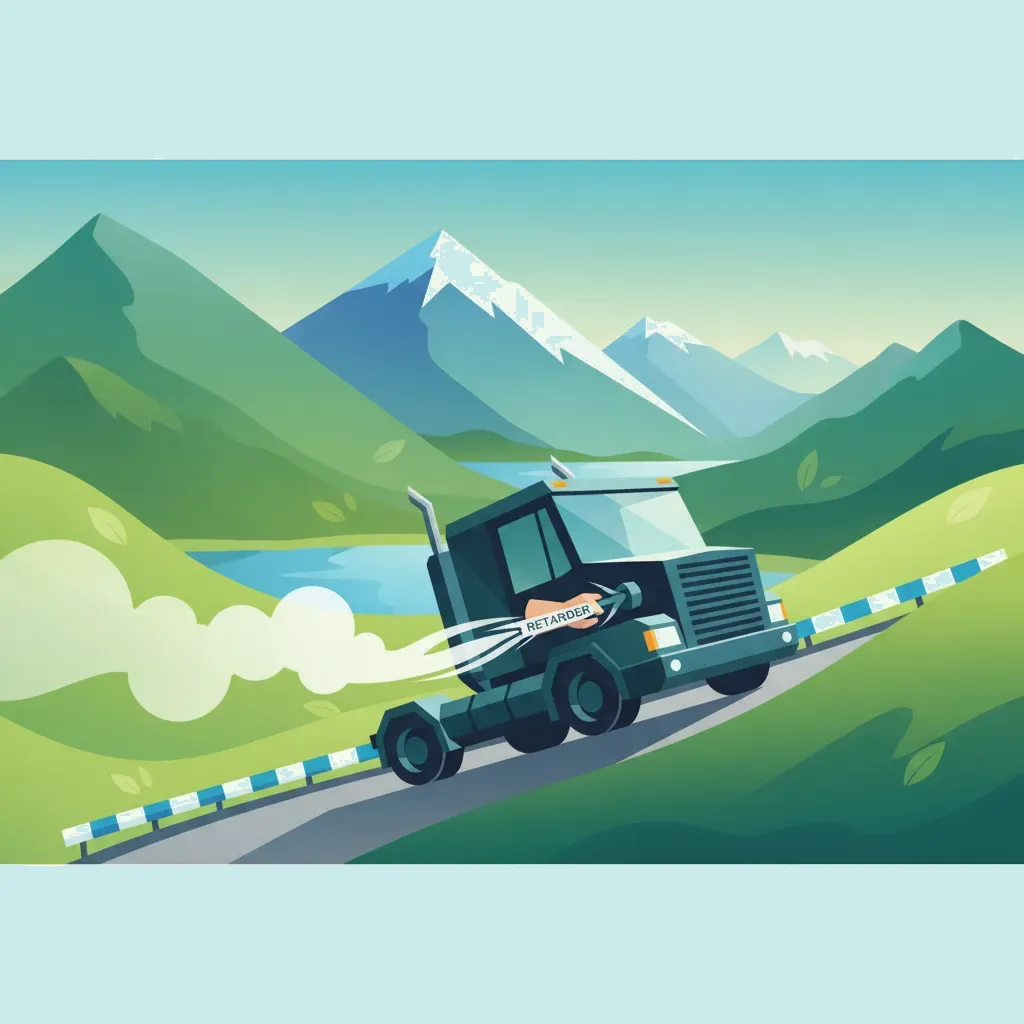
Relying solely on the service brakes on a long downhill stretch can lead to overheating and complete brake failure (brake fade). This lesson explains the function of auxiliary brakes like retarders. You will learn how and when to engage them to maintain a safe, controlled speed, preserving the main brakes for when they are truly needed.
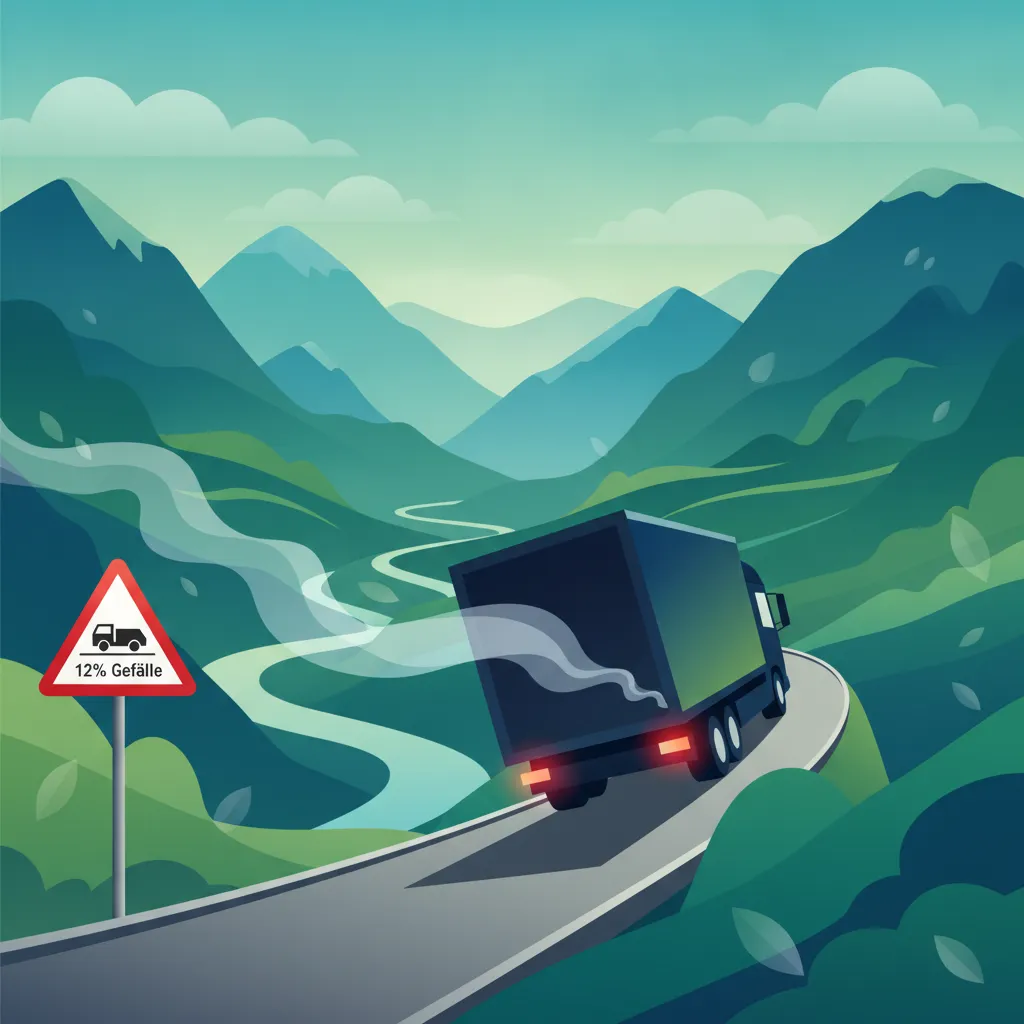
To prevent the service brakes from overheating and failing on long downhill gradients, heavy vehicles are equipped with endurance (or auxiliary) braking systems. This lesson explains the function of engine brakes (which alter valve timing) and retarders (which use hydrodynamic or electromagnetic force). These systems allow the driver to maintain a safe, controlled speed without relying solely on the service brakes.

This lesson details the function of the two primary braking circuits. The service brake (Betriebsbremse) is the main system operated by the foot pedal for slowing and stopping the vehicle. The parking brake (Feststellbremse) is a powerful spring-applied system that is held off by air pressure, meaning it engages automatically if a major air leak occurs, serving as a critical fail-safe.

Wet or icy roads drastically reduce tyre grip and can double or triple braking distances. This lesson stresses the importance of significantly reducing overall speed and increasing following distances in such conditions. It advises on using brakes with extreme care to avoid skidding and explains how the vehicle's retarder should be used with caution as it can cause the drive wheels to lock up on slippery surfaces.
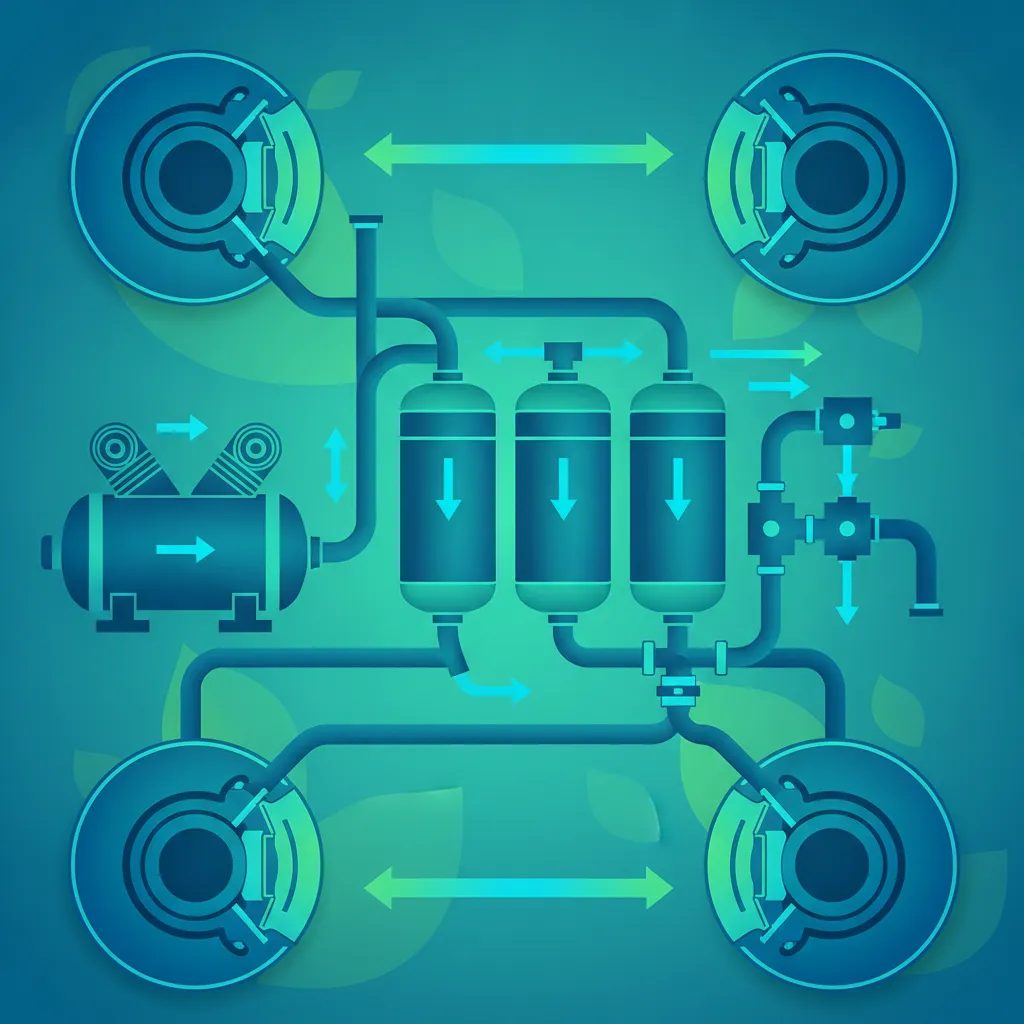
Unlike the hydraulic brakes in cars, heavy vehicles use a compressed-air system for its power and reliability. This lesson explains the basic operating principle, covering key components like the engine-driven compressor, air storage tanks, and the brake chambers that actuate the brakes. Understanding this system is fundamental to appreciating its capabilities and limitations.
Two critical issues can affect air brake performance. This lesson explains brake lag, the slight delay between pressing the pedal and the brakes applying, and brake fade, a dangerous loss of braking power caused by overheating from prolonged or heavy use. It emphasizes that using endurance brakes and selecting the correct gear on descents are key techniques to prevent brake fade.

Driving in the Alps requires a high level of skill and vehicle sympathy. This lesson covers techniques for climbing steep gradients by selecting the correct gear to maintain momentum without straining the engine. It reiterates the critical importance of using low gears and auxiliary brakes for descending, to ensure the service brakes remain cool and effective for the entire descent.
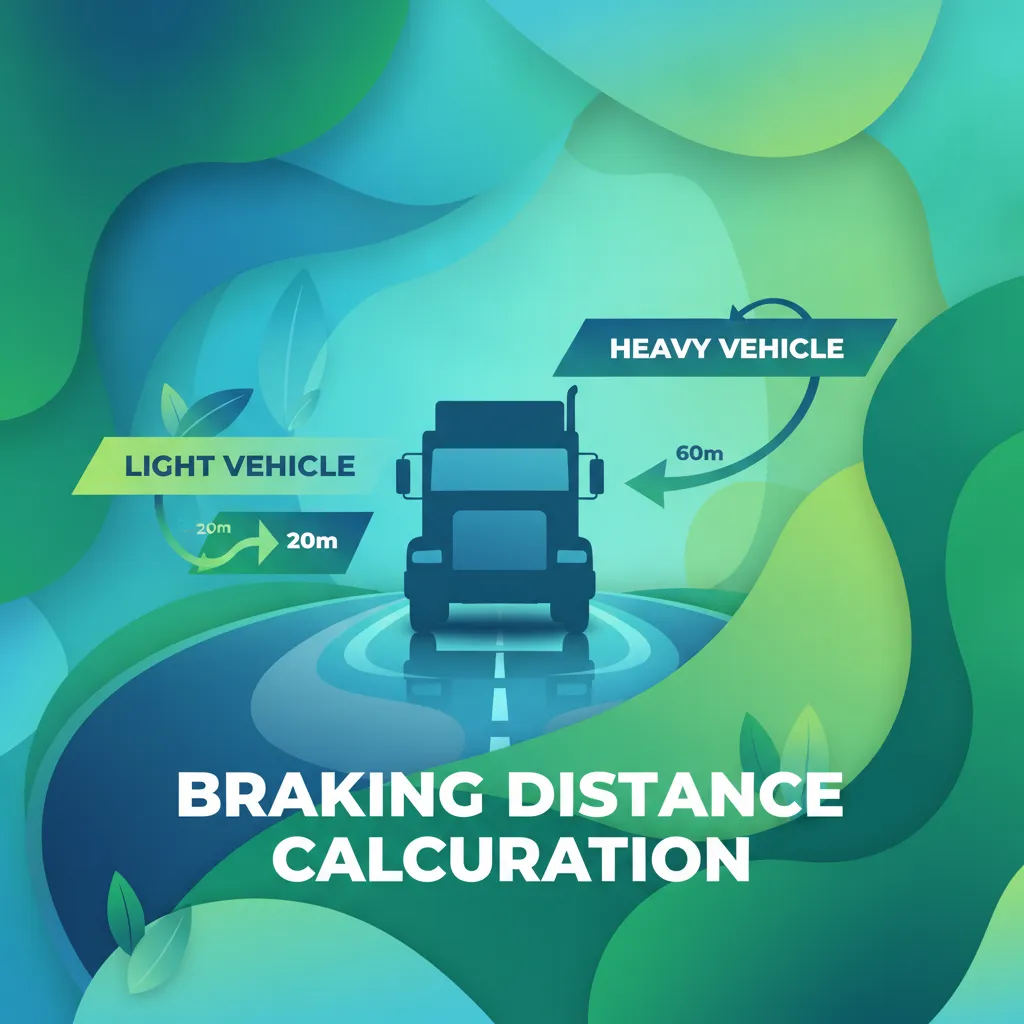
The immense mass of a loaded truck means its braking distance is far greater than that of a car. This lesson breaks down total stopping distance into reaction distance and braking distance, explaining how speed, weight, and road conditions have an exponential effect. It reinforces the necessity of maintaining a significantly larger following distance to ensure enough space to stop safely in an emergency.

Driving a large vehicle on mountain passes is a demanding skill. This lesson covers selecting the correct gear for both ascents and descents to maintain control and avoid overheating the brakes. It also explains the specific priority rules that apply on mountain roads and the importance of being aware of sudden weather changes.

This lesson focuses entirely on the technique of applying brakes smoothly and gradually. You will learn how to anticipate stops far in advance, applying gentle initial pressure and increasing it progressively. This method avoids sudden jolts, enhancing comfort and preventing falls, especially for standing passengers.
Learn essential pre-trip inspection steps for air brake and retarder systems on passenger vehicles. Understand how to identify potential issues and ensure compliance with Swiss safety standards for heavy vehicle operation.
The condition of tyres and wheels is paramount to safety. This lesson details how to check tyre pressures, tread depth, and sidewalls for any damage or defects. You will also learn to inspect wheel nuts for security and look for signs of issues with the suspension system.

A secure connection between the tractor and trailer requires linking the braking and electrical systems. This lesson explains the function of the red (emergency) and yellow (service) air lines and the main electrical socket, which powers the trailer's lights and ABS. It outlines the correct, safe sequence for connecting and disconnecting these lines to ensure the trailer's brakes function correctly.
To prevent the service brakes from overheating and failing on long downhill gradients, heavy vehicles are equipped with endurance (or auxiliary) braking systems. This lesson explains the function of engine brakes (which alter valve timing) and retarders (which use hydrodynamic or electromagnetic force). These systems allow the driver to maintain a safe, controlled speed without relying solely on the service brakes.
This lesson details the function of the two primary braking circuits. The service brake (Betriebsbremse) is the main system operated by the foot pedal for slowing and stopping the vehicle. The parking brake (Feststellbremse) is a powerful spring-applied system that is held off by air pressure, meaning it engages automatically if a major air leak occurs, serving as a critical fail-safe.
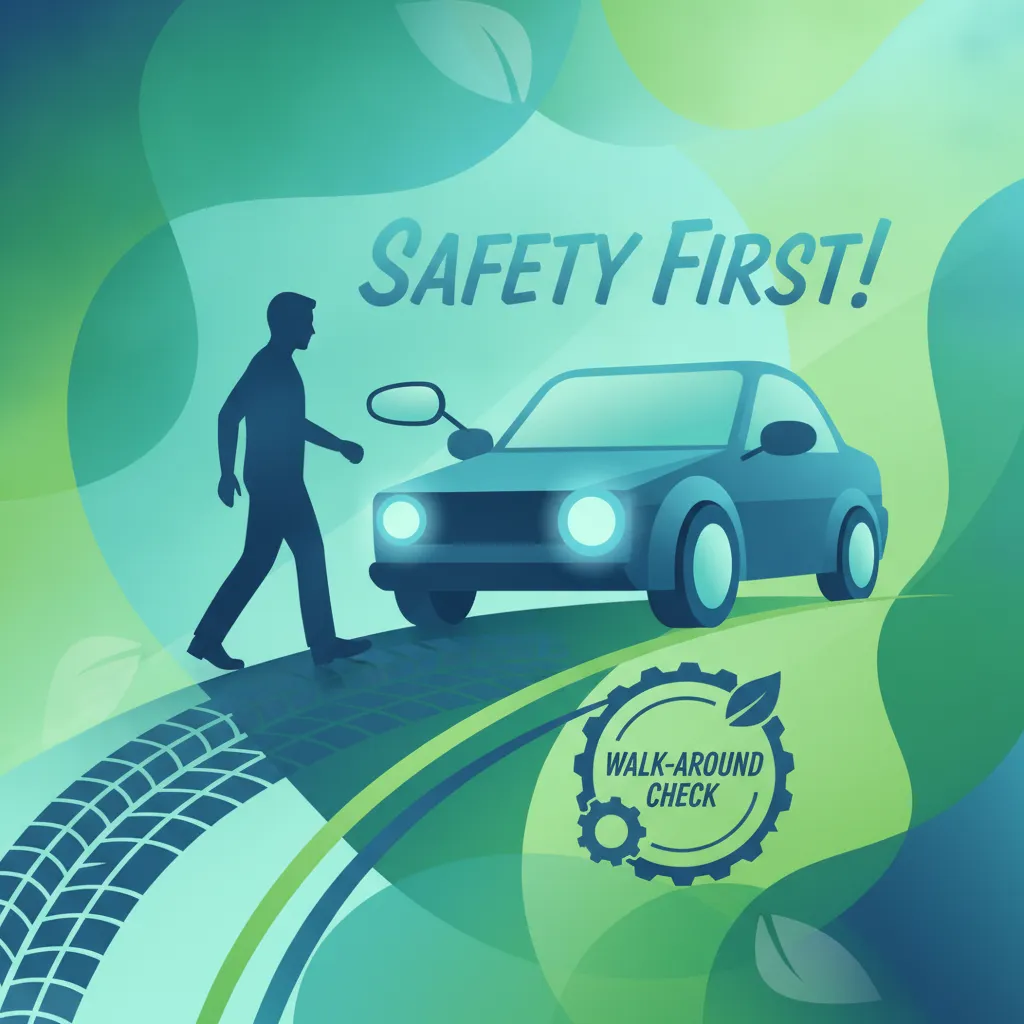
Before starting any journey, a professional driver must conduct a thorough pre-drive inspection. This lesson teaches a systematic walk-around method to check critical components like tyres, wheels, lights, mirrors, fluid levels, and safety equipment. This daily routine is a legal requirement and is crucial for identifying potential defects before they become a danger on the road.

This lesson focuses on the legally required safety equipment that must be on board every passenger vehicle. You will learn how to locate and check the fire extinguisher, first aid kit, and emergency hammers. It also covers the inspection of emergency exits to ensure they are unobstructed and functional.
Relying solely on the service brakes on a long downhill stretch can lead to overheating and complete brake failure (brake fade). This lesson explains the function of auxiliary brakes like retarders. You will learn how and when to engage them to maintain a safe, controlled speed, preserving the main brakes for when they are truly needed.
The driver is legally responsible for the roadworthiness of their vehicle at the start of and during every journey. This lesson outlines the formal process for reporting any identified defects to the transport manager or maintenance staff. It stresses the critical rule that a vehicle with a known safety-critical defect must not be driven until it has been professionally repaired and declared safe.
Wet or icy roads drastically reduce tyre grip and can double or triple braking distances. This lesson stresses the importance of significantly reducing overall speed and increasing following distances in such conditions. It advises on using brakes with extreme care to avoid skidding and explains how the vehicle's retarder should be used with caution as it can cause the drive wheels to lock up on slippery surfaces.

A lorry is equipped with multiple mirrors (up to six) to cover different fields of view. This lesson explains the function of each type: the main mirrors, wide-angle mirrors, and close-proximity (kerb and front) mirrors. It stresses the importance of adjusting them properly before every journey and developing a routine of constantly scanning all mirrors to maintain situational awareness.
Find clear answers to common questions learners have about Understanding Braking Systems: Air Brakes and Retarders. Learn how the lesson is structured, which driving theory objectives it supports, and how it fits into the overall learning path of units and curriculum progression in Switzerland. These explanations help you understand key concepts, lesson flow, and exam focused study goals.
Air brakes rely on compressed air to hold the brakes in an 'off' position. If pressure drops below a safe threshold, the brakes will automatically apply (spring brakes), which can immobilize the vehicle unexpectedly or reduce stopping effectiveness.
A retarder uses the engine or transmission to slow the vehicle without relying on friction brakes. This prevents the service brakes from overheating and losing effectiveness, which is critical for long, steep descents typical of Swiss mountain passes.
No. Retarders can apply significant braking force to the wheels, which may lead to skidding or loss of traction on slippery surfaces. You should disable the retarder and use lower gears when driving in snow or ice.
You must immediately find a safe place to stop, secure the vehicle, and investigate the cause. It is a critical safety hazard to continue driving with low air pressure as it significantly compromises your stopping capability.
Pinpoint specific Swiss traffic rules, road signs, or driving situations you need to master. Use the practice search to start a focused revision session now and build confidence for your official driving theory exam.