This lesson details the critical legal steps every stor knallert rider must take if involved in a traffic accident. Understanding these responsibilities is a mandatory part of the Category AM curriculum to ensure you can act lawfully and safely in emergency situations.
Lesson content overview
Being involved in a traffic accident, regardless of its severity, is a stressful experience. However, as a rider of a Category AM (stor knallert) in Denmark, it is crucial to understand your legal responsibilities in such situations. Danish traffic law imposes specific duties on all road users involved in a collision, designed to ensure safety, provide necessary assistance, and facilitate proper legal and insurance procedures. Failing to adhere to these obligations can lead to significant legal penalties, including fines, license consequences, and increased liability.
This comprehensive lesson will outline your essential duties after a traffic incident, focusing on the legal requirements to stop, render assistance, and report the accident to the police and your insurance provider. Understanding these principles is fundamental not only for passing your Danish Category AM theory test but also for becoming a responsible and compliant road user.
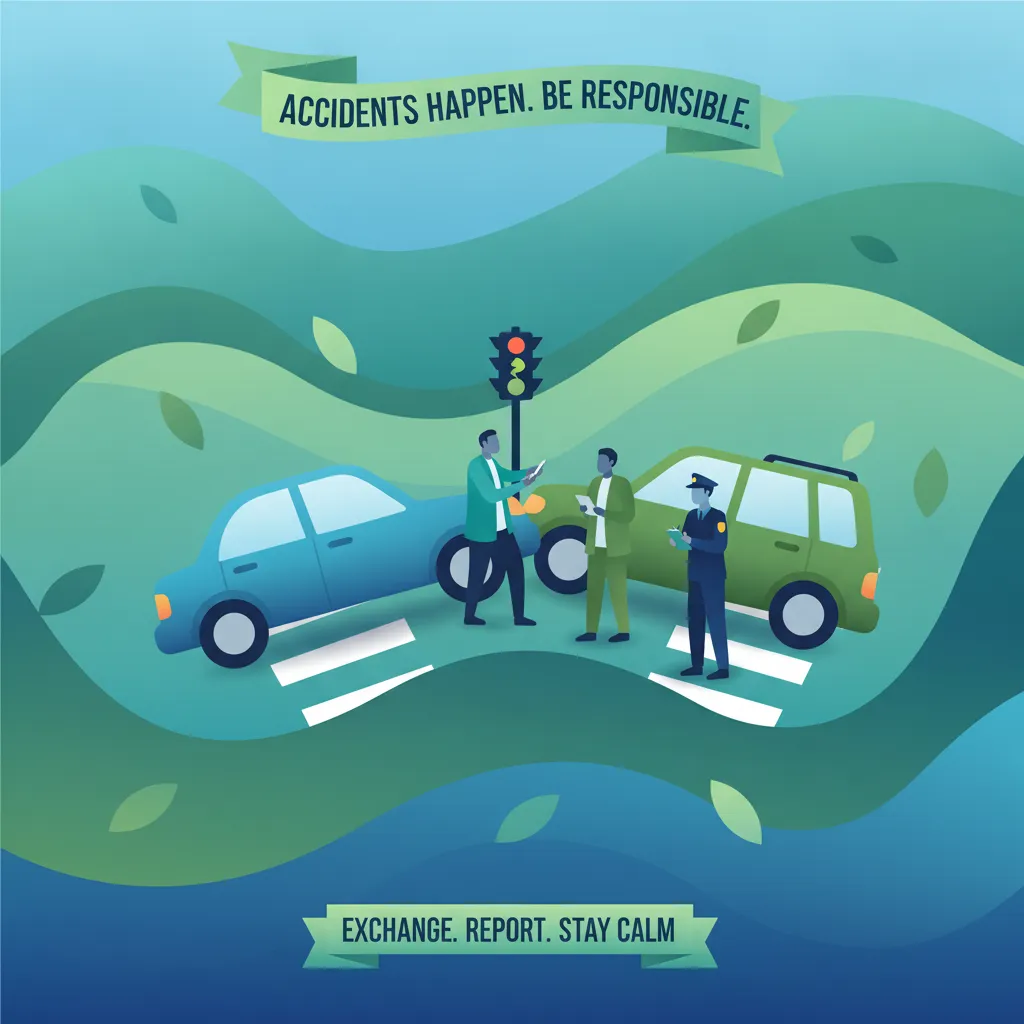
When you are involved in an accident, your immediate actions are critical. Danish law outlines three primary duties that all drivers and riders must uphold: the duty to stop, the duty to render assistance, and the duty to report. These duties are interconnected and form the bedrock of responsible conduct after a collision.
The three primary legal obligations for a rider involved in a traffic accident in Denmark: the duty to stop, the duty to render assistance, and the duty to report the incident to relevant authorities and insurers.
The first and most immediate legal requirement after being involved in any traffic accident is the duty to stop (stop-pligt). This means you must bring your stor knallert to a halt at the scene of the incident without delay. This obligation applies to all accidents, irrespective of how minor the damage appears or whether any injuries are immediately apparent.
The primary purpose of the duty to stop is to prevent hit-and-run situations, where a party involved in an accident flees the scene to evade responsibility. Such actions are considered a serious criminal offense under Danish traffic law (Færdselsloven) and carry severe penalties, including substantial fines, points on your license, or even license revocation. By stopping, you ensure that all parties can assess the situation, exchange information, and fulfill their subsequent legal responsibilities.
Your vehicle must be brought to a complete stop at the exact location of the incident, or as close to it as safely possible, without causing further danger or obstruction to other traffic. Even a minor collision, such as a slight scrape against a parked car or a low-speed fender-bender, triggers this duty. Never assume that because damage is minimal or seemingly non-existent, you are exempt from stopping. Always pull over safely, switch off your engine, and activate your hazard warning lights.
Once you have stopped, your next critical legal obligation is the duty to render assistance (hjælpe-pligt) to any injured persons. This duty reflects a fundamental societal responsibility and is paramount. It means you must check on the well-being of anyone involved in the accident, including other drivers, passengers, pedestrians, or cyclists.
Your immediate priority should be to assess if anyone is injured. If someone is hurt, you are obligated to provide necessary help within your capabilities. This can include administering basic first aid if you are trained, or at the very least, comforting the injured person and ensuring they remain still if there's a suspected neck or spinal injury. Do not move an injured person unless they are in immediate danger, such as from an approaching vehicle or fire.
Consider carrying a basic first aid kit on your stor knallert. While not legally mandatory for two-wheeled vehicles, it can be invaluable in an emergency. Knowing basic first aid can make a critical difference.
For severe injuries, unconsciousness, significant bleeding, suspected fractures, or any situation where professional medical help is clearly needed, you must immediately call the emergency services by dialing 112 in Denmark. When you call, be prepared to provide:
Assess the Scene Safely: Ensure no further danger exists before approaching injured parties.
Check for Injuries: Gently ask if anyone is hurt. Visually inspect for obvious injuries.
Call 112: If injuries are severe or uncertain, call emergency services immediately.
Provide Basic Aid: If safe and capable, offer first aid (e.g., stop bleeding, cover wounds, keep warm).
Stay with the Injured: Remain with the injured person until professional help arrives.
While your duty to assist is paramount, you must not endanger your own safety in the process. Take precautions such as wearing a high-visibility vest if available, and being aware of ongoing traffic. Secure the scene as much as possible before assisting others.
The third crucial legal obligation is the duty to report (rapporterings-pligt). This involves informing both the police and your insurance company about the accident within specific timeframes and according to established procedures.
You are legally obliged to notify the Danish police (Politiet) in the following situations:
In situations where there are no injuries and only minor property damage, and all parties involved have exchanged contact and insurance details amicably, a police report might not be strictly necessary. However, if in doubt, it is always safer to report.
Regardless of whether the police are involved, you must inform your insurance company about the accident. This is a contractual obligation and a legal requirement. Most insurance policies specify a timeframe for reporting, often within 24 to 48 hours of the incident. Delaying this notification can lead to your claim being denied or complicated, even if you were not at fault.
Contact your insurance provider as soon as possible after ensuring everyone's safety and fulfilling your duties to stop and assist. They will guide you through the claims process and inform you of any required documentation.
Effective accident documentation is vital for police investigations and insurance claims. While at the scene (if safe to do so), try to collect the following information:
Understanding liability is crucial. In Danish law, liability (ansvar) for traffic accidents can be both civil (erstatningsansvar) and criminal (straffeansvar).
Civil liability refers to your financial responsibility for damages or injuries caused by the accident. In Denmark, the principle of strict liability (objektivt ansvar) applies to certain situations, particularly regarding injuries caused by vehicles, meaning that the owner/driver of a vehicle can be held liable even without proven fault in some cases, especially towards vulnerable road users. However, in most accidents, fault is determined based on adherence to traffic laws and negligent behavior. If you are found to be at fault, you or your insurance company will be responsible for covering the costs of repairs, medical expenses, and other losses incurred by the other party.
Criminal liability arises when traffic laws have been violated. This can range from minor infractions to serious offenses. Examples include:
Depending on the severity of the offense and the consequences, criminal charges can lead to fines (bøder), points on your driving license, conditional or unconditional license revocation (fraktagelse af kørekort), or in extreme cases, imprisonment.
The legal consequences for riders involved in accidents, especially if found at fault or if they fail to uphold their duties, can be severe:
Even well-intentioned riders can make mistakes under pressure. Being aware of common pitfalls can help you avoid further legal complications.
As mentioned, leaving the scene of an accident without stopping and exchanging details is a serious offense known as hit-and-run or "flugt fra ulykkesstedet" in Danish. This is never an option, regardless of the perceived severity of the accident. The penalties for this violation are significantly harsher than for merely causing an accident.
Not checking on injured parties or failing to call for emergency services when needed can lead to charges of criminal negligence. Even if you did not cause the accident, you have a legal and moral obligation to assist.
Delaying the notification to your insurance company beyond their specified timeframe or providing false or misleading information to the police or insurers can jeopardize your claim and lead to fraud charges. Always be truthful and report promptly.
Failing to take reasonable measures to secure the accident scene (e.g., activating hazard lights, setting up a warning triangle if safe and available) can lead to further accidents or injuries and potentially increase your liability for those subsequent incidents.
Different circumstances can influence your actions and responsibilities after an accident.
When an accident involves a vulnerable road user such as a pedestrian or a cyclist, your duty to assist is heightened. These individuals are unprotected and far more susceptible to serious injury. Always assume serious injury and prioritize their well-being. Even minor contact with a stor knallert can cause significant harm to a pedestrian or cyclist.
In poor visibility (fog, heavy rain) or on slippery surfaces (ice, snow), the accident scene itself can be hazardous. Take extra care when stopping and moving around the scene. Ensure your vehicle is highly visible (hazard lights) and, if possible, move it to a safer location if it's obstructing traffic, provided doing so doesn't worsen the situation or remove critical evidence for investigation.
After stopping safely, your immediate action should be to secure the accident scene to prevent further incidents. This includes:
As a stor knallert rider in Denmark, being involved in an accident demands a clear understanding and adherence to your legal duties. Remember these crucial points:
By fulfilling these responsibilities, you contribute to road safety, ensure proper care for those involved, and protect yourself from unnecessary legal complications.
This lesson covers the mandatory legal duties for stor knallert riders involved in traffic accidents in Denmark: stopping immediately at the scene, rendering assistance to injured parties by providing first aid and calling emergency services (112) when needed, and reporting the incident to both police and your insurance provider. Danish law distinguishes between civil liability (financial responsibility for damages) and criminal liability (penalties for violations), with hit-and-run being one of the most serious offenses. Riders must understand specific reporting triggers, gather comprehensive documentation at the scene, and recognize that failing to comply with these duties can result in fines, license points, license revocation, insurance claim denial, and increased premiums.
A short set of high-value points that capture the most important learning from this lesson.
Always stop immediately at any accident scene, regardless of how minor the damage appears.
Prioritize rendering assistance to injured parties, including calling emergency services (112) for severe injuries.
Report the accident to police when injuries occur, significant property damage exists, there is a dispute, or an animal is injured.
Understand that civil liability (financial responsibility) and criminal liability (penalties) are separate consequences of accidents.
Document the accident thoroughly by collecting details, photos, and witness information to support insurance and police reports.
Explore all units and lessons included in this driving theory course.
The three legal duties after an accident: stop (stop-pligt), render assistance (hjælpe-pligt), and report (rapporterings-pligt).
Call 112 only when injuries are severe, uncertain, or professional help is clearly needed.
Police must be notified for injuries, significant property damage, disputes, or if an animal larger than a cat is injured.
Insurance notification is always required, typically within 24-48 hours, regardless of police involvement.
Hit-and-run (flugt fra ulykkesstedet) carries significantly harsher penalties than the accident itself.
Leaving the scene without stopping, even for what seems like minor contact with a parked vehicle.
Failing to check on all parties involved or hesitating to call emergency services when injuries are uncertain.
Delaying insurance notification beyond the policy timeframe, which can result in claim denial.
Not documenting the scene properly—missing photos, witness details, or vehicle information weakens your case.
Moving an injured person unnecessarily when there is no immediate danger, risking further injury.
Lesson content overview
A short set of high-value points that capture the most important learning from this lesson.
Always stop immediately at any accident scene, regardless of how minor the damage appears.
Prioritize rendering assistance to injured parties, including calling emergency services (112) for severe injuries.
Report the accident to police when injuries occur, significant property damage exists, there is a dispute, or an animal is injured.
Understand that civil liability (financial responsibility) and criminal liability (penalties) are separate consequences of accidents.
Document the accident thoroughly by collecting details, photos, and witness information to support insurance and police reports.
Explore all units and lessons included in this driving theory course.
The three legal duties after an accident: stop (stop-pligt), render assistance (hjælpe-pligt), and report (rapporterings-pligt).
Call 112 only when injuries are severe, uncertain, or professional help is clearly needed.
Police must be notified for injuries, significant property damage, disputes, or if an animal larger than a cat is injured.
Insurance notification is always required, typically within 24-48 hours, regardless of police involvement.
Hit-and-run (flugt fra ulykkesstedet) carries significantly harsher penalties than the accident itself.
Leaving the scene without stopping, even for what seems like minor contact with a parked vehicle.
Failing to check on all parties involved or hesitating to call emergency services when injuries are uncertain.
Delaying insurance notification beyond the policy timeframe, which can result in claim denial.
Not documenting the scene properly—missing photos, witness details, or vehicle information weakens your case.
Moving an injured person unnecessarily when there is no immediate danger, risking further injury.
Explore search topics learners often look for when studying Legal Implications of Accidents and Injuries. These topics reflect common questions about road rules, driving situations, safety guidance, and lesson level theory preparation for learners in Denmark.
Browse additional driving theory lessons that cover connected traffic rules, road signs, and common driving situations related to this topic. Improve your understanding of how different rules interact across everyday traffic scenarios.
Explore the detailed legal responsibilities for Category AM riders involved in accidents. Understand Danish traffic law regarding stopping, assisting, reporting, liability, and potential legal consequences.
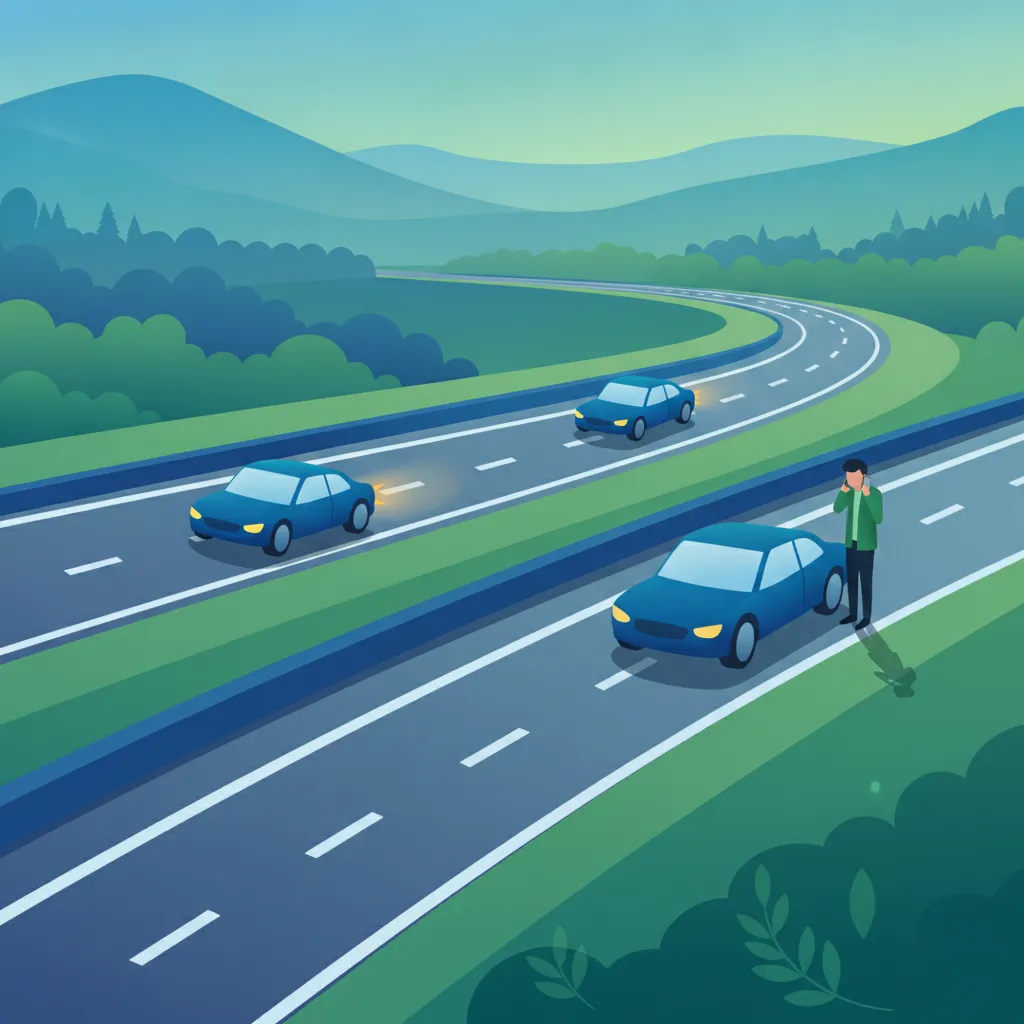
This lesson covers the immediate actions to take at the scene of an accident. It explains how and when to call the Danish emergency number 112, and what information to provide to the operator. The content also includes the principles of securing an accident scene to prevent further incidents and basic first aid concepts.
This lesson focuses on the core safety duties of a stor knallert rider. It explains the legal requirement for wearing a helmet and the benefits of other protective gear. The content also covers essential pre-ride checks, including brakes, tyres, and lights, to ensure the vehicle is in safe operating condition.
This lesson provides an overview of essential first aid principles relevant to a transport environment. It covers how to assess a casualty, perform basic life support, and manage common injuries until professional help arrives. The content also details the correct procedure for contacting emergency services, providing clear and accurate information, and completing required incident reports.
This lesson identifies common high-risk behaviors, including riding while impaired by alcohol, drugs, or fatigue. It details the strict legal limits in Denmark and the severe penalties for violations. The dangers of distraction, particularly from mobile phones, are also explained as a significant cause of accidents.
This lesson defines the fundamental responsibilities of a motorcyclist, which extend beyond simple rule-following. It emphasizes the duty of care required to operate safely, including practicing defensive riding techniques and proactively identifying potential hazards. The content focuses on the importance of maintaining visibility and communicating intentions clearly to ensure safe interactions in traffic.
This lesson provides an overview of the Danish legal system as it applies to motorcyclists. It details the consequences of traffic violations, including fines, penalty points, and potential licence suspension. Learners will also understand their legal responsibilities concerning insurance coverage and procedures to follow in the event of a collision.

This lesson details the function and meaning of traffic light signals in Denmark. It covers the standard red, amber, and green sequences, as well as special signals like flashing amber lights and green arrows for turning. The content also explains signals specific to cyclists and pedestrians that moped riders must observe at intersections.
This lesson provides a step-by-step guide for managing a vehicle breakdown safely. It instructs the rider on moving the vehicle to a safe location, making it visible to other traffic using hazard lights, and personal safety while waiting for assistance. The importance of staying away from active traffic lanes is a key point.
This lesson outlines the administrative and legal steps for acquiring a Category AM licence in Denmark. It details the requirements for the theory and practical tests, the process for vehicle registration, and the necessity of valid insurance. Learners will understand the complete legal framework and documentation needed to become a licensed stor knallert rider.
This lesson prepares riders for the unfortunate event of a crash. It covers the crucial first steps to take, including ensuring personal safety, making the accident scene visible to prevent further collisions, and assessing for injuries. Understanding these immediate priorities can significantly impact the outcome of an emergency situation.
Learn about typical errors riders make after traffic accidents and the specific legal considerations when vulnerable road users such as pedestrians and cyclists are involved. Understand Danish theory requirements.
This lesson emphasizes the professional driver's heightened responsibility to protect vulnerable road users. It revisits Danish regulations concerning cyclist priority, particularly during right turns, and details the correct procedures for maintaining safe overtaking distances. The content focuses on developing advanced situational awareness, using mirrors and cameras effectively, and anticipating the behavior of pedestrians and cyclists in urban environments.
This lesson focuses on safe interactions with Denmark's large population of cyclists and other vulnerable road users. It covers the rules for passing cyclists, yielding at pedestrian crossings, and the specific hazard of turning across a bike lane. Developing heightened awareness for these interactions is critical for urban riding.
This lesson focuses on the safe integration of cyclists and pedestrians within the traffic system, a key feature of Danish roads. It covers the specific rights and common behaviors of cyclists, including those on e-bikes and cargo bikes, and explains procedures for yielding to pedestrians. The content emphasizes maintaining safe distances and heightened awareness to prevent accidents and promote harmonious road sharing.
This lesson provides detailed guidance on navigating pedestrian crossings (fodgængerfelter) and areas with high cyclist traffic. It clarifies your legal obligation to stop for pedestrians at zebra crossings and the proper speed to approach these zones. A central theme is understanding the rights of vulnerable road users and how to yield safely to them in accordance with Danish traffic law.
This lesson provides a clear overview of the penalties associated with breaking traffic laws as a motorcyclist. It details the Danish penalty point system ('klip i kørekortet') and the conditions that can lead to fines or licence revocation. Understanding these consequences reinforces the importance of lawful riding.
This lesson identifies common high-risk behaviors, including riding while impaired by alcohol, drugs, or fatigue. It details the strict legal limits in Denmark and the severe penalties for violations. The dangers of distraction, particularly from mobile phones, are also explained as a significant cause of accidents.
This lesson provides critical guidance for driving in environments with heavy cycle traffic, typical of Danish cities. It focuses on identifying and yielding to cyclists in dedicated bike lanes, especially when turning right across their path. The content emphasizes advanced observation skills to detect cyclists in blind spots and the importance of giving adequate space.
This lesson addresses the critical skill of safely coexisting with cyclists and cargo bikes, which are prevalent in Denmark. It explains how to maintain a safe distance, overtake properly, and be vigilant for cyclists, especially when turning right. Understanding the infrastructure of cycle lanes and predicting cyclist behavior is a key focus.
This lesson provides in-depth guidance on safely interacting with cyclists and e-bike riders, a daily reality in Danish cities. It explains how to provide adequate space when overtaking, how to anticipate their movements at intersections, and how to respect their right-of-way in designated lanes. Understanding these dynamics is essential for preventing common accidents and ensuring a safe urban driving experience for everyone.
This lesson provides an overview of the Danish legal system as it applies to motorcyclists. It details the consequences of traffic violations, including fines, penalty points, and potential licence suspension. Learners will also understand their legal responsibilities concerning insurance coverage and procedures to follow in the event of a collision.
Find clear answers to common questions learners have about Legal Implications of Accidents and Injuries. Learn how the lesson is structured, which driving theory objectives it supports, and how it fits into the overall learning path of units and curriculum progression in Denmark. These explanations help you understand key concepts, lesson flow, and exam focused study goals.
Yes. Under Danish law, you are always required to stop immediately if you are involved in a traffic accident, regardless of how minor the damage is, to determine if help is needed and to exchange information.
You have a legal duty to provide whatever assistance you can without endangering yourself. This includes calling 112 for professional help and ensuring the site is secured so no further accidents occur.
You must call the police if there are injuries, significant property damage, or if the other party involved leaves the scene or refuses to exchange necessary insurance information.
It is crucial to report all accidents to your insurance provider immediately. Failing to report an incident can lead to complications with coverage and potential legal repercussions regarding liability.
Use our powerful search tool to pinpoint specific Danish driving theory topics, road signs, or traffic situations you need to review. Start exploring relevant practice sets now to reinforce your knowledge and build confidence for your upcoming driving licence exam.