
This lesson details the legal obligations and regulatory requirements for all motorcycle riders in Belgium. It builds on your foundational understanding of the licence process to help you grasp the mandatory standards for safety, documentation, and conduct on the road.
Lesson content overview
Becoming a motorcyclist in Belgium involves more than just mastering riding skills; it requires a deep understanding and strict adherence to a comprehensive set of legal responsibilities. This lesson, part of the Comprehensive Belgian Motorcycle Theory Course: Licence A, A1 & A2, will detail the specific duties mandated for all motorcyclists, ensuring you are fully prepared to navigate Belgian roads safely and lawfully. From carrying essential documentation to understanding your liability in traffic, every aspect of your conduct as a rider is governed by the Belgian traffic code.
Your legal responsibilities as a motorcyclist are designed to protect not only yourself but also other road users. They form the bedrock of road safety and ensure accountability. Familiarity with these obligations is crucial for passing your theory exam and, more importantly, for maintaining safety and avoiding legal consequences on the road.
The legal framework for motorcyclists in Belgium is built upon several core principles: liability, documentation, and continuous risk assessment. These foundational concepts dictate how riders must behave, what they must carry, and their proactive role in preventing incidents. Understanding these pillars is essential for any aspiring or current motorcyclist seeking a Licence A, A1, or A2.
Legal liability is the cornerstone of accountability in traffic. As a motorcyclist, you are legally responsible for your actions and their potential impact on yourself, your passengers, other road users, and property. This responsibility is not merely theoretical; it has direct implications if you violate traffic laws or are involved in an accident.
The purpose of liability is to ensure that individuals are held accountable for infringements of the traffic code. This could range from minor administrative penalties, such as fines for parking violations, to more severe criminal liability, for instance, in cases of reckless driving causing injury. Furthermore, civil liability often comes into play, primarily through insurance claims, where you might be held responsible for damages or injuries to third parties. Understanding these implications is vital, as ignoring your legal duties can lead to significant financial, administrative, and even personal consequences.
One of the most fundamental legal responsibilities for any motorcyclist in Belgium is the mandatory carrying of correct documentation. These documents serve a crucial purpose: they allow authorities to immediately verify your compliance with licensing, vehicle registration, and insurance requirements. Without these papers, law enforcement cannot confirm your identity, your right to operate the motorcycle, or that the vehicle is legally allowed on the road.
Failure to produce the required documents upon request by law enforcement can lead to immediate and serious implications. These can include substantial fines, the temporary impoundment of your motorcycle, or even more severe legal proceedings. It is a common misconception that simply having a valid rider's licence is sufficient; Belgian law mandates a broader set of documents to be carried at all times. This topic will be explored in more detail in subsequent sections.
Beyond adhering to explicit laws, motorcyclists have an implicit yet critical legal obligation to conduct continuous risk assessment. This proactive process involves constantly evaluating potential hazards to reduce the likelihood of accidents and legal infractions. A motorcyclist's environment is dynamic, and conditions can change rapidly.
Effective risk assessment requires you to consider various factors: the prevailing road conditions (e.g., wet surfaces, gravel, potholes), current and forecasted weather patterns (e.g., rain, fog, strong winds), the density and behavior of other traffic, and critically, your own physical and mental fitness to ride. This includes ensuring you are not fatigued, under the influence of alcohol or drugs, or distracted. By consistently performing this assessment, you adopt a defensive riding posture, which is not only a safety imperative but also a demonstration of responsible conduct that can be relevant in legal contexts following an incident.
Motorcyclists in Belgium must fulfill a specific set of legal duties that go beyond general road safety. These duties ensure that every rider contributes to a safe and orderly traffic environment. From documentation to understanding specific road rules, compliance is paramount for obtaining and maintaining your Licence A, A1, or A2.
It is an absolute legal requirement for every motorcyclist to carry specific documents whenever they are riding on public roads in Belgium. These are not merely suggestions but mandatory items that law enforcement can request to see at any time.
The key documents you must always have with you include:
Common Misunderstanding: Many new riders mistakenly believe that only their physical driving licence is needed. However, Belgian law explicitly requires all these documents. Failing to produce any of them can result in significant fines and potential vehicle impoundment.
When stopped by law enforcement at a checkpoint or during a routine traffic stop, you must be able to present all these documents promptly. It is advisable to keep them in a waterproof holder or pouch, securely stored on your person or within the motorcycle's storage, to protect them from weather and ensure their accessibility.
Compliance with posted speed limits is a non-negotiable legal obligation for all road users, including motorcyclists. Speed limits are not arbitrary; they are set based on road type, urbanisation, and safety considerations to reduce accident severity and protect vulnerable road users.
Motorcyclists must adhere to the maximum permissible speed indicated by road signs. Where no specific sign is present, general speed limits apply:
It is a common misunderstanding that motorcyclists, due to their agility, might be exempt from certain speed regulations or can interpret them differently. This is incorrect; the same speed limits apply to motorcycles as to cars, unless explicitly stated otherwise for specific vehicle categories. Enforcement mechanisms include fixed speed cameras, mobile radar checks, and police patrols. Exceeding speed limits can lead to substantial fines, points on your driving record, and even the suspension of your driving licence, depending on the severity of the infraction.
Ensuring your personal safety is paramount, and Belgian law mandates the use of specific protective gear for motorcyclists. This equipment significantly reduces the risk of injury in the event of an accident.
The mandatory protective gear includes:
While not always explicitly mandated by law for all conditions, wearing a reflective vest is strongly recommended, especially in low light or adverse weather. It dramatically increases your visibility to other road users.
It is a misconception to believe that certain gear is optional or only required for long journeys. All these items are mandatory for every ride on public roads. Failure to wear the prescribed protective gear can result in fines and, crucially, significantly increase the severity of injuries in an accident.
Legal responsibilities extend to how you adapt your riding behavior to challenging environmental conditions. Night riding and adverse weather demand heightened caution and specific actions to maintain safety and comply with the law.
When riding during night hours, or any period of low visibility (such as dusk, dawn, or fog), specific lighting requirements apply:
Adverse weather conditions such as rain, fog, strong winds, or icy roads demand a significant adjustment in riding behavior. While specific regulations may not dictate precise speed reductions, the law implies that you must adapt your speed and riding technique to maintain control and safety.
Overestimating a motorcycle's stability or your own ability in challenging conditions is a common and dangerous misunderstanding. Always err on the side of caution and prioritize safety over maintaining speed.
Carrying a passenger on your motorcycle comes with specific legal obligations to ensure their safety and compliance with the law.
Always instruct your passenger on how to sit, hold on, and lean with the bike before setting off. Their cooperation is crucial for maintaining balance and control.
Assuming that any passenger is permissible without meeting these conditions is a common misunderstanding. Ensure your motorcycle is legally equipped for a passenger and that your passenger is properly geared and instructed for a safe ride.
During a traffic stop or at a police checkpoint, motorcyclists have specific obligations. Knowing how to respond appropriately is key to a smooth interaction and avoiding further legal complications.
Signal and pull over to a safe location as soon as possible.
Turn off your engine and keep your hands visible, preferably on the handlebars or helmet.
Do not make sudden movements or reach for documents until asked.
Present all requested documents calmly and clearly.
Answer questions respectfully, and do not argue.
Ignoring requests for documentation or attempting to evade a stop can lead to severe legal consequences, including fines, criminal charges, and licence suspension.
Fundamental to safe and legal riding is the ability to recognize, understand, and obey all road signs, markings, and traffic light signals. This knowledge, covered extensively in earlier lessons (e.g., Lesson 3: Belgian Road Signs, Markings, Lights and Priority Rules), is a continuous legal obligation.
Misinterpreting the meaning or relevance of a sign, whether due to inattention or lack of knowledge, is not an acceptable excuse in the eyes of the law. You are expected to have a complete understanding of the Belgian traffic code's visual cues.
While this course primarily focuses on motorcycles (Licence A, A1, A2), it is crucial to understand that mopeds and scooters (often categorized as Class AM vehicles, sometimes referred to as 'light' motorcycles or scooters with smaller engines) have distinct regulations. Applying motorcycle rules to these smaller vehicles, or vice-versa, can lead to confusion and legal infractions.
Key distinctions often include:
It is a common misunderstanding to treat all two-wheeled motor vehicles identically. Always be aware of the specific category of vehicle you are riding and the corresponding legal obligations.
Parking your motorcycle responsibly and legally is another important aspect of your legal duties. Incorrect parking can cause obstructions, create hazards, and result in fines.
A common misunderstanding is that motorcycles, being smaller, have more leeway in where they can park. This is generally not true; the basic principles of obstruction and designated zones still apply.
Understanding and applying priority rules at crossroads and intersections is crucial for preventing accidents and is a fundamental legal responsibility. While covered in detail in Lesson 3, its importance warrants reiteration here.
It is a dangerous misunderstanding to assume motorcycles always have priority due to their size or speed. Adhering to priority rules is essential for safe navigation and avoiding legal liability in the event of a collision.
Understanding common traffic violations and the penalties associated with them is critical for any motorcyclist. Furthermore, knowing how to adapt your riding behavior to different conditions is not just about safety, but often about fulfilling implicit legal obligations for due care.
Violating Belgian traffic laws as a motorcyclist can result in a range of penalties, varying in severity based on the nature of the infraction. These consequences serve as deterrents and uphold the integrity of the traffic code.
Don't Assume Fines Are the Only Consequence: Many riders underestimate the potential for non-monetary penalties, such as licence suspension or criminal proceedings, which can have long-lasting effects on personal mobility and legal record.
Forgetting to bring your insurance certificate, for example, is a common violation that typically results in a fine but can escalate if you cannot prove insurance cover at all. Misreading a speed limit sign, even if unintentional, will still lead to a penalty if detected.
Legal compliance often extends to demonstrating due care and adjusting your riding to prevailing conditions. This "conditional logic" is essential for responsible motorcycling.
These contextual variations are not merely suggestions for safer riding; they embody the legal expectation that a competent rider will continuously assess and adapt to their environment to minimize risk.
To ensure you are a safe, competent, and legally compliant motorcyclist on Belgian roads, remember these essential points:
Failure to comply with any of these legal obligations can result in administrative fines, criminal penalties, points on your driving record, and significantly impact your insurance liability. Responsible motorcycling is about continuous learning, vigilance, and adherence to the law.
This lesson covers the comprehensive legal framework governing motorcyclists in Belgium, including mandatory documentation requirements, speed regulations, protective gear standards, and liability consequences. Motorcyclists must carry their identity card, driving licence, vehicle registration certificate, and insurance proof at all times, with specific speed limits of 50/90/120 km/h depending on road type. All riders must wear ECE-certified helmets, protective clothing, gloves, and boots, with reflective vests mandatory at night. Legal consequences for violations range from administrative fines to criminal penalties and points on your driving record, while failing to adapt riding to weather conditions can be considered negligent driving.
A short set of high-value points that capture the most important learning from this lesson.
Belgian law requires motorcyclists to carry four specific documents at all times: valid identity card, motorcycle driving licence, vehicle registration certificate, and proof of insurance (Green Card).
Speed limits for motorcycles in Belgium are identical to cars: 50 km/h in built-up areas, 90 km/h outside built-up areas, and 120 km/h on motorways.
All protective gear (ECE-certified helmet, abrasion-resistant jacket and trousers, gloves, and boots) is mandatory for every ride, not just long journeys.
Continuous risk assessment considering road conditions, weather, traffic, and personal fitness is both a safety and legal obligation.
Legal liability for motorcyclists encompasses administrative fines, criminal penalties, points on your driving record, and civil insurance claims.
Explore all units and lessons included in this driving theory course.
Missing any of the four mandatory documents can result in fines and potential motorcycle impoundment, even if you hold a valid licence.
The reflective vest is legally required at night or during poor visibility, not just recommended.
Speed camera and radar enforcement applies equally to motorcycles as to cars.
Passengers must have their own certified helmet and the motorcycle must have a proper passenger seat with footrests.
The same priority-from-the-right rule applies to motorcycles at intersections unless overridden by signs or lights.
Assuming only the physical driving licence needs to be carried, when Belgian law explicitly requires all four documents.
Believing motorcyclists are exempt from certain speed limits or can interpret them differently than car drivers.
Riding in adverse weather without adjusting speed or following distance, assuming motorcycle agility compensates for reduced traction.
Assuming motorcycles can park more flexibly than cars due to their smaller size.
Failing to adapt night riding behavior by using proper headlights and wearing reflective gear as legally mandated.
Lesson content overview
A short set of high-value points that capture the most important learning from this lesson.
Belgian law requires motorcyclists to carry four specific documents at all times: valid identity card, motorcycle driving licence, vehicle registration certificate, and proof of insurance (Green Card).
Speed limits for motorcycles in Belgium are identical to cars: 50 km/h in built-up areas, 90 km/h outside built-up areas, and 120 km/h on motorways.
All protective gear (ECE-certified helmet, abrasion-resistant jacket and trousers, gloves, and boots) is mandatory for every ride, not just long journeys.
Continuous risk assessment considering road conditions, weather, traffic, and personal fitness is both a safety and legal obligation.
Legal liability for motorcyclists encompasses administrative fines, criminal penalties, points on your driving record, and civil insurance claims.
Explore all units and lessons included in this driving theory course.
Missing any of the four mandatory documents can result in fines and potential motorcycle impoundment, even if you hold a valid licence.
The reflective vest is legally required at night or during poor visibility, not just recommended.
Speed camera and radar enforcement applies equally to motorcycles as to cars.
Passengers must have their own certified helmet and the motorcycle must have a proper passenger seat with footrests.
The same priority-from-the-right rule applies to motorcycles at intersections unless overridden by signs or lights.
Assuming only the physical driving licence needs to be carried, when Belgian law explicitly requires all four documents.
Believing motorcyclists are exempt from certain speed limits or can interpret them differently than car drivers.
Riding in adverse weather without adjusting speed or following distance, assuming motorcycle agility compensates for reduced traction.
Assuming motorcycles can park more flexibly than cars due to their smaller size.
Failing to adapt night riding behavior by using proper headlights and wearing reflective gear as legally mandated.
Explore search topics learners often look for when studying Legal Responsibilities of a Motorcyclist. These topics reflect common questions about road rules, driving situations, safety guidance, and lesson level theory preparation for learners in Belgium.
Browse additional driving theory lessons that cover connected traffic rules, road signs, and common driving situations related to this topic. Improve your understanding of how different rules interact across everyday traffic scenarios.
Understand the essential documents every motorcyclist must carry in Belgium, including registration and insurance. Learn about legal liability and the consequences of traffic violations for A, A1, and A2 licence holders.

This lesson details the specific rights and responsibilities of motorcyclists within the Belgian road system, focusing on the correct application of priority rules and safe overtaking. It covers the legal requirements for signaling intentions and adhering to proper road etiquette to ensure smooth traffic flow. The content emphasizes how riders must balance their rights with their safety obligations toward all other road users.

This lesson outlines the system of penalties for traffic violations in Belgium, ensuring riders are fully aware of the consequences of illegal behavior. It covers common offenses like speeding and explains the structure of fines and the demerit point system that can lead to license suspension. The content emphasizes the significant financial and legal repercussions of non-compliance, reinforcing the importance of lawful and responsible riding.
This lesson details a motorcyclist's obligations when approaching various types of crossings, including marked pedestrian and bicycle lanes. It emphasizes the legal requirement to yield to vulnerable road users and the importance of thorough visual checks before proceeding. You will learn how to maintain a safe distance and anticipate the movements of pedestrians and cyclists in urban areas.
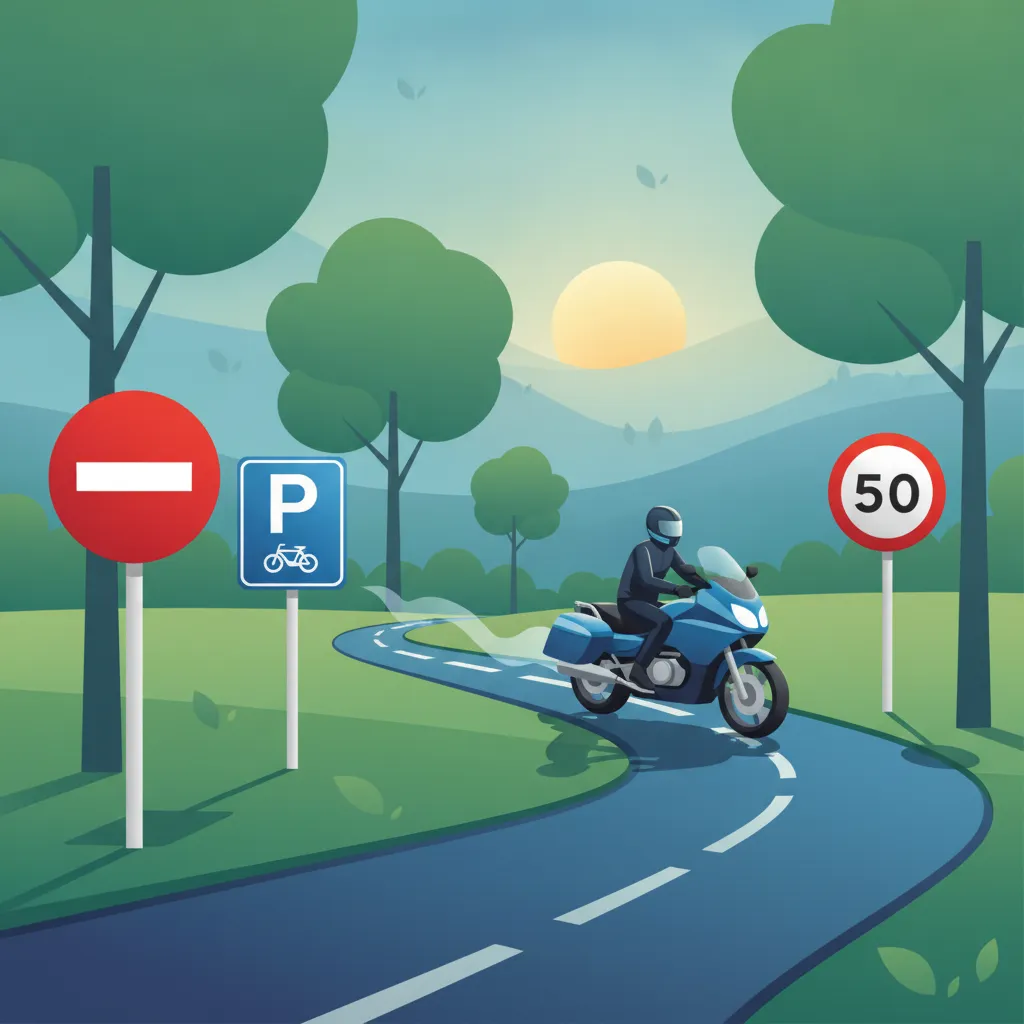
This lesson focuses on the correct identification and interpretation of regulatory and informative road signs that are particularly relevant to motorcyclists. It covers signs that dictate speed limits, prohibit overtaking, and indicate compulsory routes or turns. You will learn to recognize different sign categories based on their distinct shapes and colors as defined by Belgian traffic law.
This lesson provides a detailed overview of the Belgian motorcycle licence framework, explaining the distinctions between categories A1, A2, and the full A licence. It outlines the specific age and skill prerequisites for each level of certification. Furthermore, it covers the mandatory legal requirements such as obtaining a medical certificate, securing proper insurance, and completing the vehicle registration process.
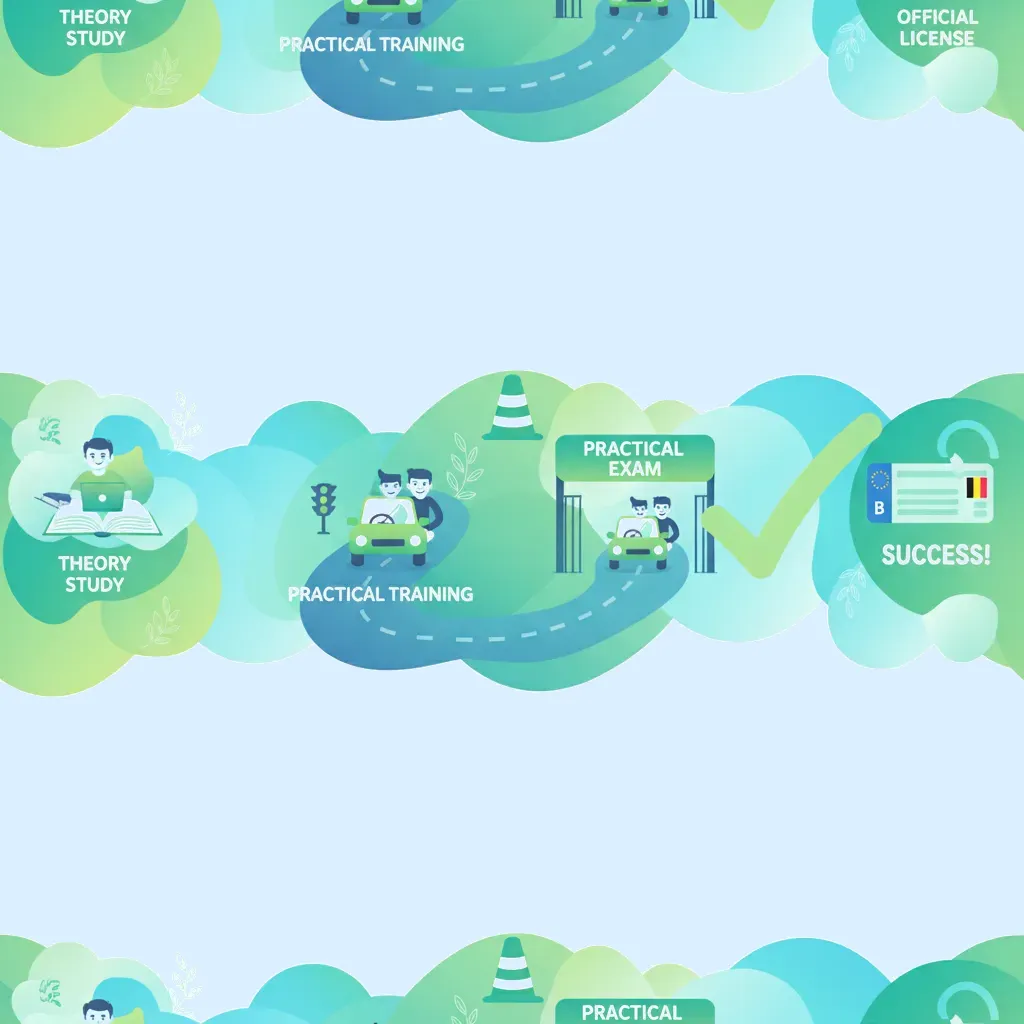
This lesson explains the complete procedure for acquiring a Belgian motorcycle licence, from registering for the theory examination to successfully passing the practical test. It provides a comprehensive list of required documentation, such as identity proof and medical certificates, and clarifies the associated fees. You will also learn about the progression routes available for moving from A1 to A2 and ultimately to a full Category A licence.
This lesson provides a detailed explanation of the various road markings found on Belgian roads and their specific significance for motorcyclists. It covers the rules associated with solid and broken lane lines, stop lines at junctions, and markings for pedestrian and bicycle crossings. Understanding these markings is essential for correct lane positioning and safe navigation.
This lesson focuses on the legal duties and responsibilities that an AM vehicle operator must uphold on Belgian roads. It covers critical rules such as adhering to speed limits, correctly applying right-of-way principles, and following regulations for overtaking other vehicles. The lesson also explains the system of fines and penalty points for traffic violations, emphasizing the legal consequences of non-compliance to foster responsible driving habits.
This lesson details the spectrum of obligations that apply to drivers, from basic compliance with traffic signs to responsibilities like vehicle upkeep and accident reporting. Learners will understand the importance of maintaining a vehicle in a roadworthy condition. It also covers the legal expectations for safe driving practices, including the use of safety equipment.
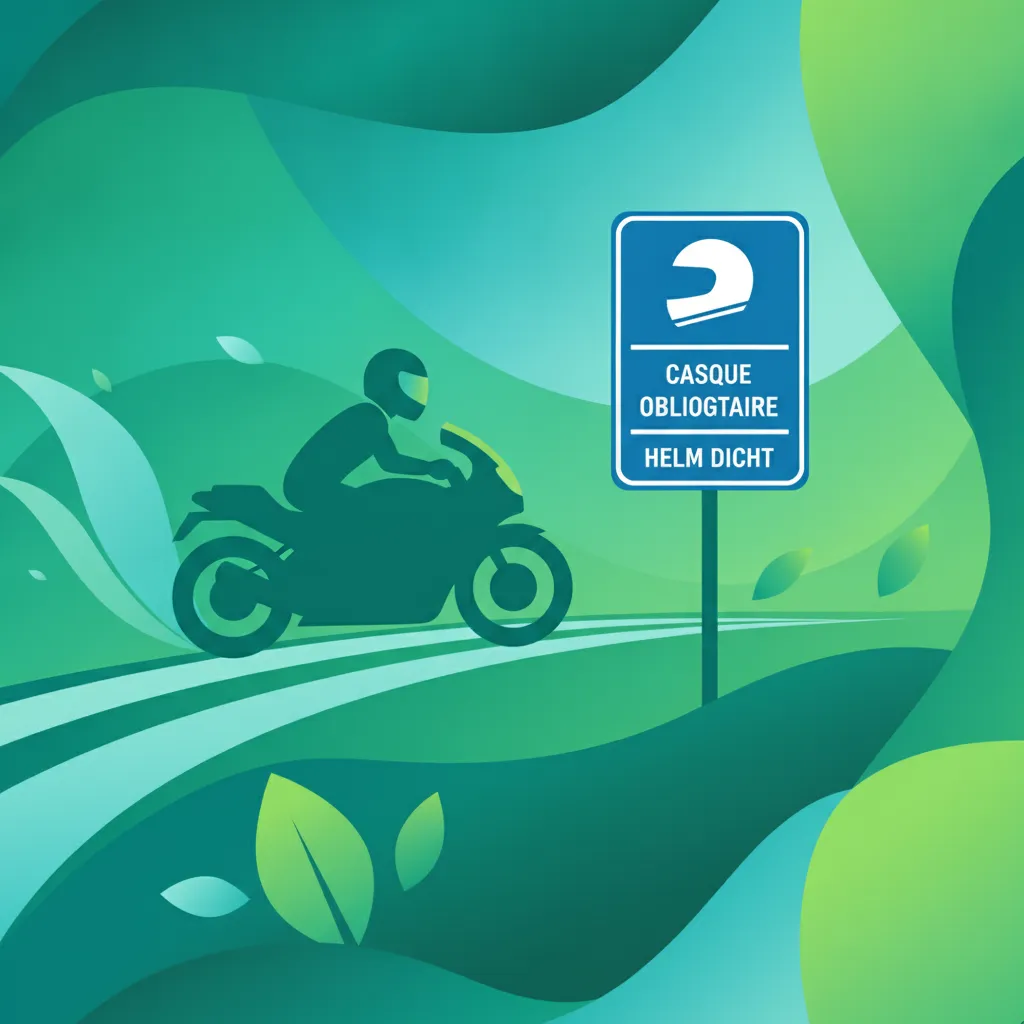
This lesson covers the absolute legal requirement for all Category AM vehicle operators in Belgium to wear a safety helmet. It explains the specific safety standards and certifications that helmets must meet to be legally compliant. Learners will be taught how to select the correct size, achieve a secure fit, and conduct regular inspections to ensure the helmet's protective integrity is maintained.
Explore the legal obligations for motorcyclists in Belgium regarding speed limits, protective gear, passenger rules, and adapting riding to weather and night conditions. Covers essential safety and legal adherence.

This lesson details the specific precautions and techniques required for riding in rain and fog. It explains how water on the road affects tyre grip and braking distances, and how to avoid aquaplaning. You will learn the correct use of lights to be seen in low visibility and how to adjust your speed and following distance accordingly.

This lesson teaches riders how to modify their technique and preparation in response to various weather conditions beyond just rain. It covers how to handle strong crosswinds, the effects of extreme heat on both the rider and the motorcycle, and the precautions for riding in cold temperatures. The focus is on proactive adaptation to ensure safety and comfort regardless of the weather.

This lesson addresses the unique challenges of riding after dark, focusing on the correct use of high and low beam headlights to maximize visibility. It offers techniques for coping with glare from other vehicles and for adapting to the body's natural reduction in visual acuity at night. The content also emphasizes the heightened risk of fatigue during night rides and strategies to manage it.
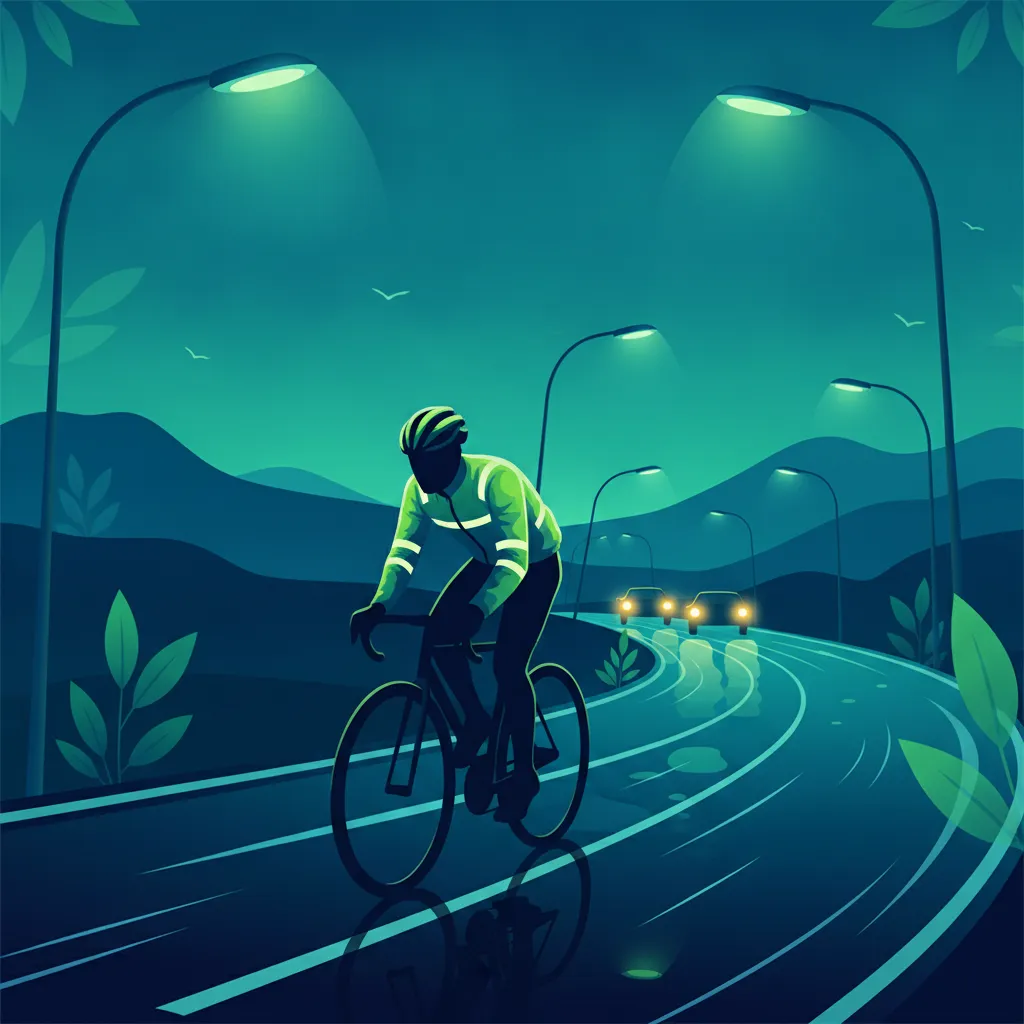
This lesson focuses on the unique hazards associated with riding after dark. It emphasizes the importance of a fully functional lighting system and the use of reflective gear to be seen by others. The content explains how darkness affects depth perception and peripheral vision, requiring riders to reduce their speed to compensate for shorter sight distances and potential fatigue.

This lesson focuses on the specific challenges of riding in adverse conditions such as rain, fog, and darkness, which severely reduce visibility. It provides practical strategies for riders to increase their own conspicuity through the use of lights and reflective gear. The content also explains how to adapt riding behavior, such as reducing speed and increasing following distance, to safely manage these high-risk situations.
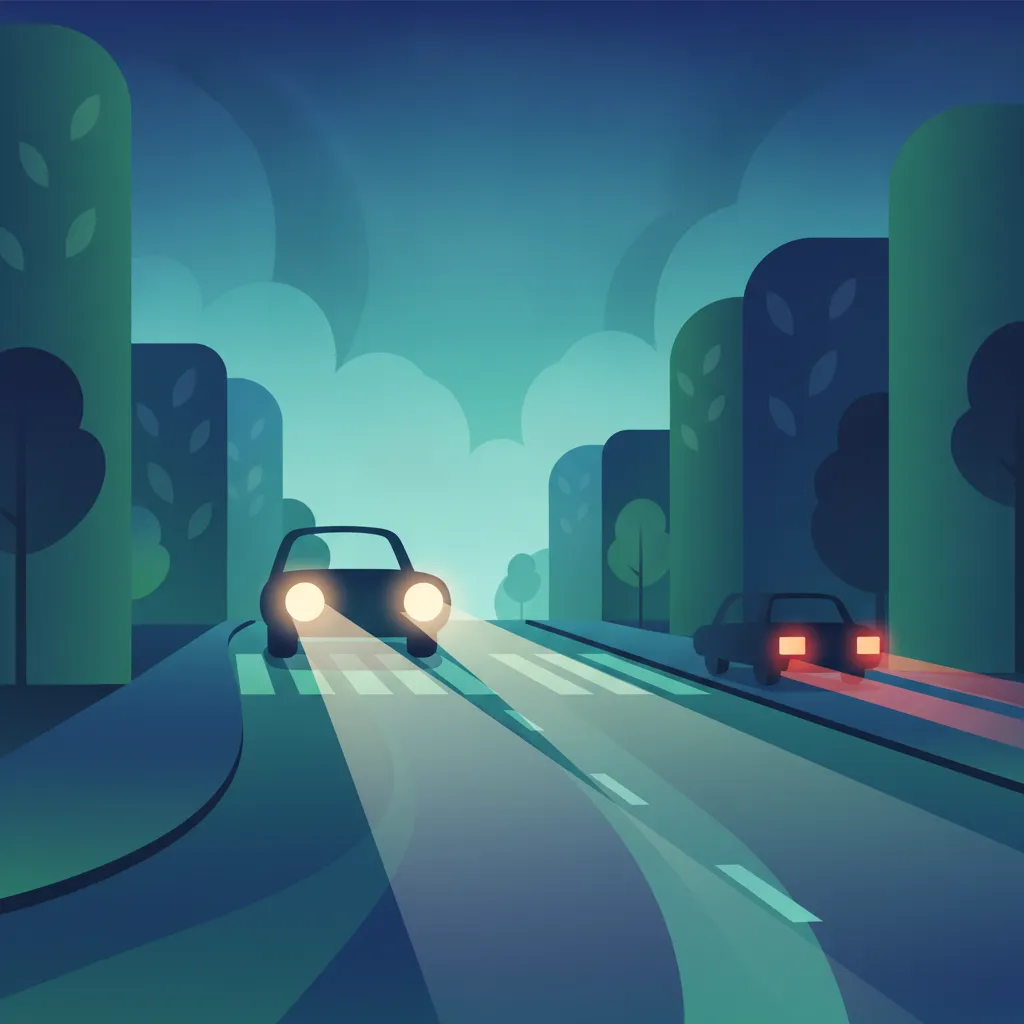
This lesson focuses on techniques and equipment designed to enhance a rider's visibility on the road. It covers the effective use of reflective materials on clothing and the motorcycle itself, as well as the legal requirements for lighting under Belgian law. You will learn strategies to improve your conspicuity during the day, at night, and in adverse weather conditions.
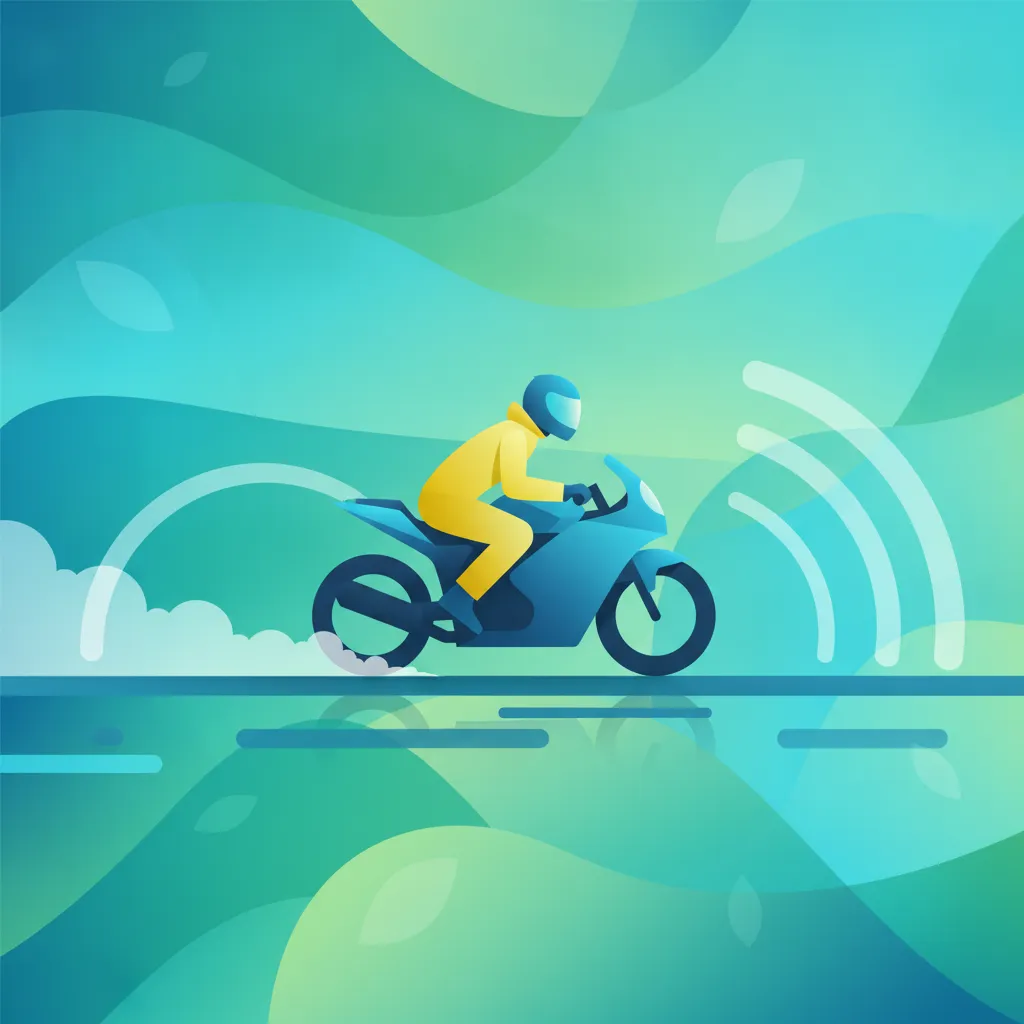
This lesson provides crucial advice for riding in rainy conditions, a frequent occurrence in Belgium. It explains how water on the road surface dramatically reduces tire grip, extends stopping distances, and creates a risk of hydroplaning. Riders will learn how to adjust their speed, increase following distances, and manage reduced visibility from rain and road spray to maintain safety.
This lesson focuses on the correct identification and interpretation of regulatory and informative road signs that are particularly relevant to motorcyclists. It covers signs that dictate speed limits, prohibit overtaking, and indicate compulsory routes or turns. You will learn to recognize different sign categories based on their distinct shapes and colors as defined by Belgian traffic law.
This lesson examines the crucial psychological factors that influence riding safety, such as maintaining mental focus and managing stress. It explains the process of accurate risk perception and the dangers of both under-confidence and overconfidence. You will learn about effective decision-making techniques that are essential for navigating complex traffic situations safely and responsibly.

This lesson provides a comprehensive overview of the mandatory lighting systems for all Category AM vehicles under Belgian law. It details the required functions of headlamps, rear lights, brake lights, and turn signals, explaining their importance for communication and visibility. Learners will understand the legal standards for this equipment and how to perform simple pre-ride checks to ensure all lights are functioning correctly.
Find clear answers to common questions learners have about Legal Responsibilities of a Motorcyclist. Learn how the lesson is structured, which driving theory objectives it supports, and how it fits into the overall learning path of units and curriculum progression in Belgium. These explanations help you understand key concepts, lesson flow, and exam focused study goals.
You are legally required to carry your valid driving licence, the motorcycle's registration certificate, and proof of valid insurance. Failure to present these during a traffic stop can lead to significant fines.
While the fundamental traffic rules apply to all riders, your specific responsibilities regarding vehicle power limits and engine capacity vary by licence category. Ensure you stay within the legal bounds of the category you are licensed to operate.
The exam often uses scenario-based questions to see if you understand the legal implications of specific actions, such as speeding or ignoring signs. You must demonstrate that you understand your duty of care to other road users.
Many riders underestimate the importance of carrying the correct physical documentation or fail to realize that even minor traffic infractions impact their overall safety record. Always prioritize maintaining your legal standing as a road user.
Ready to focus your Belgian driving theory revision? Utilize our powerful search tool to pinpoint exact topics, road signs, or difficulty levels. Engage with practice questions that directly address your learning needs and solidify your understanding of Belgian traffic laws for your upcoming exam.