
Choosing the right speed is about more than just reading the road signs. In this lesson, you will learn how to assess environmental factors like weather, traffic density, and road surface to determine a safe and legal speed for your Category B driving.
Lesson content overview
Becoming a safe and responsible driver in Denmark involves more than simply knowing the posted speed limits. While speed limits provide a legal maximum, the true art of safe driving lies in determining safe speed in various conditions – a dynamic assessment that requires constant vigilance and adaptation. This lesson will explore the critical factors influencing safe speed selection, ensuring you maintain control, mitigate risks, and comply with Danish traffic regulations, specifically the Færdselsloven.
The fundamental principle governing speed selection is adaptation. A truly safe driver understands that the correct speed is not a fixed number but a variable that must be adjusted based on the prevailing circumstances. This concept, often referred to as the Principle of Safe Velocity, is central to defensive driving and accident prevention. It acknowledges that your vehicle's speed directly impacts your ability to react, stop, and maintain control.
Driving at an appropriate speed is the cornerstone of road safety. It allows you sufficient time to perceive hazards, make decisions, and execute maneuvers safely. Conversely, excessive speed, even if within a posted limit, dramatically increases the risks of an accident and the severity of any collision.
The physics of driving clearly illustrates the importance of speed adaptation. Your vehicle's kinetic energy — the energy of motion — increases exponentially with speed. Doubling your speed quadruples your kinetic energy. This higher energy translates directly into significantly longer stopping distances and greater force upon impact in a collision.
Understanding stopping distance is paramount. It comprises two main components:
An appropriate speed ensures that your total stopping distance is always within the visible distance ahead, allowing you to react and stop safely if an unforeseen hazard appears.
Effective risk management is an integral part of safe speed selection. This involves continuously assessing potential dangers on the road and adjusting your speed to mitigate them. Hazard perception — the ability to recognize and assess potential dangers — is a key skill. Lower speeds provide more time to detect and respond to hazards, transforming potential emergencies into manageable situations.
The systematic process of identifying potential dangers, evaluating their likelihood and severity, and implementing strategies to reduce their impact.
A responsible driver considers a multitude of factors when determining a safe speed. These are not isolated elements but often interact, demanding a comprehensive assessment of the driving environment.
The volume and movement of other vehicles significantly impact the safe speed you can maintain. In Denmark, particularly in urban areas or during peak hours, traffic density can change rapidly.
One of the most critical adjustments in traffic is maintaining an adequate safe following distance. This distance provides a buffer, allowing you sufficient time and space to react if the vehicle in front suddenly brakes or changes direction. The general rule of thumb, often referred to as the "two-second rule" in good conditions, should be increased significantly in heavy traffic or adverse conditions.
To check your following distance, pick a fixed point on the road (e.g., a lamppost). When the vehicle in front passes it, start counting "one thousand one, one thousand two." If your vehicle reaches the point before you finish counting, you are following too closely.
When approaching or driving within congested traffic or queues, your speed must match the flow of traffic, which is often much lower than the posted limit. Aggressive acceleration and braking in stop-and-go traffic increase fuel consumption and the risk of rear-end collisions. Smooth, gradual adjustments are key.
The condition of the road surface profoundly affects tyre grip and vehicle stability, directly influencing the safe speed. Different surfaces and conditions require distinct speed adjustments to maintain control.
Rain-slicked roads dramatically reduce tyre traction. Water acts as a lubricant between the tyres and the road, increasing braking distances and making cornering more hazardous. At higher speeds, especially with worn tyres, your vehicle can experience hydroplaning (aquaplaning), where the tyres lose contact with the road surface entirely, riding on a film of water. This results in a complete loss of steering and braking control. To prevent this, reduce your speed significantly, especially during the initial stages of rain when oil and dirt on the road mix with water, making the surface exceptionally slippery.
Winter conditions, with ice and snow, are among the most hazardous for drivers. Even a thin layer of black ice, often invisible, can reduce grip to near zero. Bridges and shaded areas are particularly prone to icing. In such conditions, speeds must be drastically reduced, sometimes to mere walking pace, to maintain any semblance of control. Smooth, gentle inputs for steering, acceleration, and braking are essential to avoid skidding.
Driving on unpaved roads, gravel, or roads with loose stones requires a significant reduction in speed. Loose surfaces can cause tyres to lose grip easily, especially during braking or cornering. Potholes and uneven surfaces can damage your suspension, tyres, or even cause you to lose control, particularly at higher speeds. Always slow down substantially on such roads.
Reduced visibility limits your ability to see hazards, necessitating a lower speed to compensate for the shortened reaction time.
Dense fog, heavy rain, or severe snowfall can reduce visibility to just a few metres. In these conditions, your headlamps, even dipped beams, have a limited effect. High beams can reflect off the particles, worsening visibility. Your speed must be reduced to ensure you can stop within the visible distance ahead. This often means driving well below the posted speed limit.
In heavy fog or snow, always use your dipped beam headlights. Fog lights (if equipped) should be used appropriately. Do not use high beams as they can reflect off the fog/snow and reduce your own visibility.
Night driving inherently involves reduced visibility. While street lighting helps in urban areas, rural roads can be very dark. Your depth perception and ability to spot hazards like pedestrians, cyclists, or animals are diminished. Adjust your speed to ensure you can stop within the illuminated area of your headlights. This often means driving slower than you would during daylight hours, even on familiar roads.
Low sun, particularly during sunrise or sunset, can cause severe glare, effectively blinding drivers for short periods. This momentary loss of vision requires an immediate speed reduction. Similarly, objects or vehicles in your blind spots become more difficult to detect when visibility is already compromised, warranting a cautious approach to speed.
Your vehicle's characteristics and how it is loaded also play a crucial role in determining a safe speed.
A heavier vehicle, whether due to passengers, cargo, or towing a trailer, requires a significantly longer distance to stop. The increased mass means more kinetic energy to dissipate. When towing a trailer, speed limits are often lower, and your speed must be adapted even further to account for the increased length, weight, and reduced maneuverability. Always consult the vehicle and trailer manuals for recommended speeds and ensure your load is properly secured.
The mechanical condition of your vehicle directly impacts its safe operating speed. Worn tyres with insufficient tread depth will have drastically reduced grip, especially on wet or slippery surfaces. Faulty brakes will increase stopping distances. Always ensure your vehicle is well-maintained, with healthy tyres and a fully functional braking system, before assessing your safe speed.
In Denmark, the Færdselsloven (Road Traffic Act) does not merely specify maximum speed limits; it imposes a legal duty of care on every driver to adapt their speed to prevailing conditions. This means that even if you are below the posted speed limit, you can be held accountable if your speed is deemed unsafe for the circumstances.
The Danish traffic law explicitly states that a driver must always adjust their speed so that they can maintain full control of the vehicle and stop within the distance they can see ahead. This "exception clause" overrides the maximum speed limit whenever conditions warrant a lower speed.
For example, driving at 80 km/h on a motorway with a 110 km/h limit might be considered too fast if dense fog reduces visibility to 50 metres. Failure to adapt your speed is a legal offence, carrying potential fines and penalty points on your licence.
Driving at an inappropriate speed, even if it's below the posted limit, can lead to severe consequences:
Many drivers underestimate the impact of conditions on safe speed. Avoiding common pitfalls is crucial for road safety.
Mistake: Driving at the speed limit in heavy rain, causing hydroplaning. Correction: Reduce speed significantly (e.g., 20-30 km/h below the limit) to maintain tyre traction and prevent hydroplaning.
Mistake: Maintaining speed in dense, slow-moving traffic, leading to tailgating. Correction: Adjust speed to match the traffic flow and ensure a safe following distance of at least 2 seconds, increasing in poor conditions.
Mistake: Ignoring temporary speed limit reductions in construction zones or near accident sites. Correction: Always observe and strictly adhere to temporary speed limits, which are in place for the safety of workers and other road users.
Mistake: Driving too fast on winding, unfamiliar roads with poor visibility. Correction: Reduce speed significantly before entering bends, and only accelerate when you can clearly see the road ahead.
Mistake: Not adjusting speed for slippery bridge surfaces in winter. Correction: Always assume bridges and elevated sections are icier than surrounding roads and reduce speed well in advance.
Mastering safe speed selection is an ongoing process of developing acute observation skills and sound judgment. It requires you to continuously scan the road ahead, evaluate the surrounding environment, and anticipate potential changes. This means not just reacting to hazards but actively predicting them.
Cultivate these habits:
The ability to select and maintain a safe speed is a hallmark of a competent driver in Denmark. It transcends mere adherence to posted limits and delves into a deeper understanding of vehicle dynamics, environmental factors, and legal responsibilities.
Remember these core tenets:
By consistently applying these principles, you will become a more confident, controlled, and ultimately, safer driver on Danish roads.
Safe speed selection in Denmark requires continuously evaluating road conditions, traffic density, visibility, and weather rather than simply following posted limits. The physics of stopping distance—comprising reaction distance and braking distance—demonstrates why speed increases carry exponentially greater risks. Danish law under Færdselsloven imposes a duty of care requiring drivers to adapt speed whenever conditions demand it, regardless of the posted limit. Key hazards include hydroplaning on wet roads, reduced visibility in fog or darkness, and significantly compromised grip on icy surfaces, particularly on bridges. Developing habits like scanning far ahead, anticipating hazards, and adjusting speed fluidly transforms reactive driving into proactive safety management.
A short set of high-value points that capture the most important learning from this lesson.
Speed limits are legal maximums, not targets—your safe speed must always account for actual conditions.
Stopping distance equals reaction distance plus braking distance, and it increases exponentially with speed.
Hydroplaning occurs when tyres lose contact with the road on wet surfaces, resulting in complete loss of steering and braking control.
Bridges and elevated roads freeze before surrounding surfaces due to cold air circulating underneath.
Under Færdselsloven, you can be held legally accountable for driving too fast even if you are below the posted speed limit when conditions warrant a lower speed.
Explore all units and lessons included in this driving theory course.
The two-second rule for following distance should be increased significantly in heavy traffic or adverse conditions.
In dense fog or heavy snowfall, drive slow enough to stop within your visible distance ahead.
Worn tyres drastically reduce grip, especially on wet or slippery roads, increasing stopping distances substantially.
Always reduce speed before entering a bend, not during it—cornering at high speed reduces available grip for braking.
Vehicle weight and towing trailers increase stopping distance and require lower speeds than usual.
Assuming the posted speed limit is always safe—conditions like heavy rain, fog, or ice may require driving well below the limit.
Not increasing following distance in poor conditions, leading to insufficient time to react if the vehicle ahead brakes suddenly.
Driving at motorway speeds in urban congestion without adjusting to match the slower flow of traffic.
Ignoring temporary speed reductions at construction zones or accident sites, which are legally enforceable.
Accelerating out of a bend before being able to see the road ahead clearly, reducing control and reaction time.
Lesson content overview
A short set of high-value points that capture the most important learning from this lesson.
Speed limits are legal maximums, not targets—your safe speed must always account for actual conditions.
Stopping distance equals reaction distance plus braking distance, and it increases exponentially with speed.
Hydroplaning occurs when tyres lose contact with the road on wet surfaces, resulting in complete loss of steering and braking control.
Bridges and elevated roads freeze before surrounding surfaces due to cold air circulating underneath.
Under Færdselsloven, you can be held legally accountable for driving too fast even if you are below the posted speed limit when conditions warrant a lower speed.
Explore all units and lessons included in this driving theory course.
The two-second rule for following distance should be increased significantly in heavy traffic or adverse conditions.
In dense fog or heavy snowfall, drive slow enough to stop within your visible distance ahead.
Worn tyres drastically reduce grip, especially on wet or slippery roads, increasing stopping distances substantially.
Always reduce speed before entering a bend, not during it—cornering at high speed reduces available grip for braking.
Vehicle weight and towing trailers increase stopping distance and require lower speeds than usual.
Assuming the posted speed limit is always safe—conditions like heavy rain, fog, or ice may require driving well below the limit.
Not increasing following distance in poor conditions, leading to insufficient time to react if the vehicle ahead brakes suddenly.
Driving at motorway speeds in urban congestion without adjusting to match the slower flow of traffic.
Ignoring temporary speed reductions at construction zones or accident sites, which are legally enforceable.
Accelerating out of a bend before being able to see the road ahead clearly, reducing control and reaction time.
Explore search topics learners often look for when studying Determining Safe Speed in Various Conditions. These topics reflect common questions about road rules, driving situations, safety guidance, and lesson level theory preparation for learners in Denmark.
Browse additional driving theory lessons that cover connected traffic rules, road signs, and common driving situations related to this topic. Improve your understanding of how different rules interact across everyday traffic scenarios.
Understand how traffic density, road surface conditions, visibility, and weather affect safe driving speeds in Denmark. Learn to adapt your speed beyond the posted limits for enhanced road safety and compliance with Danish traffic laws.
This lesson details the specific speed limits applicable to stor knallert riders in various Danish environments, including urban zones and rural roads. It emphasizes the concept of 'appropriate speed,' which requires adjusting speed based on weather, visibility, and traffic density. The content explains how to manage speed to ensure safety and legal compliance.

This lesson equips you with the knowledge to drive safely in challenging weather conditions. It explains the risk of aquaplaning in heavy rain, how to counteract strong crosswinds, and the correct use of lights in darkness and fog. The core principle is adapting your speed and increasing your following distance to compensate for reduced visibility and traction.
This lesson addresses the combined challenges of navigating narrow rural roads and driving in adverse weather. It explains how to adapt speed and braking techniques for conditions like heavy rain, fog, or ice, which are common on rural routes. The content also integrates these factors into route planning, teaching drivers how to select the safest and most appropriate path while avoiding local weight or height restrictions.
This lesson contrasts the driving techniques required for rural roads and motorways. It covers managing speed on narrow, winding lanes with potential hazards like farm machinery or animals. The content also explains the principles of safe motorway driving, including maintaining lane discipline, managing high-speed stability, and executing safe overtaking maneuvers.

This lesson introduces cooperative driving as a fundamental element of road safety in Denmark. It highlights the social responsibility of drivers to act predictably, anticipate the actions of others, and maintain courteous interactions with all road users. By fostering mutual respect and cooperation, you will learn how to reduce the potential for conflict and enhance overall traffic safety.
This lesson explains how to adjust driving techniques for adverse conditions. It covers the effects of rain, snow, ice, and fog on tire grip and visibility, emphasizing the need to increase following distances and reduce speed. The content also details the correct use of lights for night driving and in poor weather to ensure the bus is visible to others.
This lesson provides a clear overview of the penalties associated with breaking traffic laws as a motorcyclist. It details the Danish penalty point system ('klip i kørekortet') and the conditions that can lead to fines or licence revocation. Understanding these consequences reinforces the importance of lawful riding.
This lesson provides critical guidance for driving in environments with heavy cycle traffic, typical of Danish cities. It focuses on identifying and yielding to cyclists in dedicated bike lanes, especially when turning right across their path. The content emphasizes advanced observation skills to detect cyclists in blind spots and the importance of giving adequate space.
This lesson focuses on techniques for riding when visibility and traction are compromised by weather. It explains how to adjust speed, increase following distance, and use lights to see and be seen in rain or fog. Understanding the risk of hydroplaning and making smooth control inputs are key takeaways.
This lesson details the legal blood alcohol concentration (BAC) limit in Denmark and explains the zero-tolerance policy for driving under the influence of illegal drugs. It covers the serious legal consequences, which can include heavy fines, license suspension, and even imprisonment. The content also emphasizes the significant dangers and legal ramifications of distracted driving, particularly mobile phone use.
Explore the physics behind safe speed selection. Learn how kinetic energy increases with speed and impacts braking distances. Essential understanding for controlling your vehicle and preventing accidents in Denmark.

This lesson breaks down the concept of total stopping distance into its core components: perception, reaction, and braking distances. It explains how variables such as vehicle speed, tyre quality, and road friction significantly impact how quickly you can stop. By understanding these principles, you will be ableto maintain a safe following distance and avoid collisions.
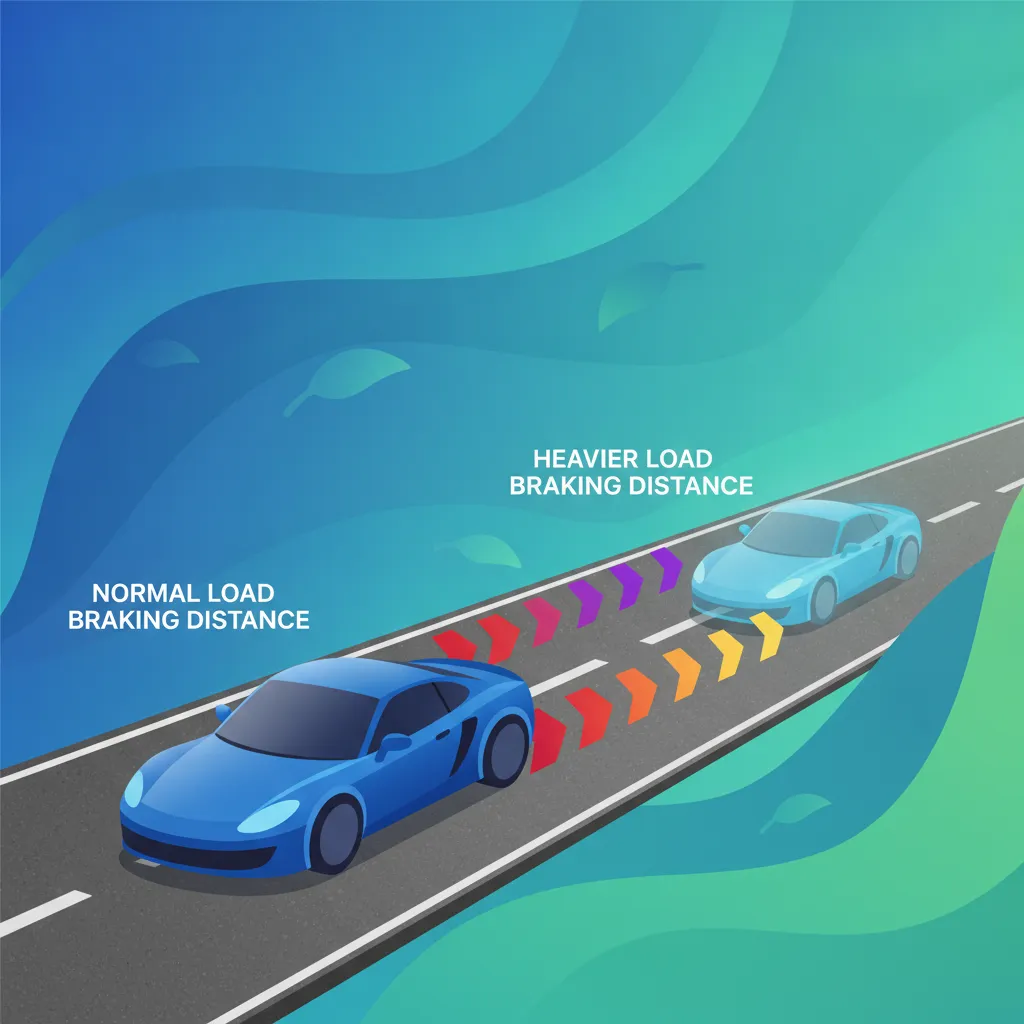
This lesson explores the direct relationship between a vehicle's mass, its speed, and the distance required to stop. It explains how increased load significantly lengthens the braking distance and details how road conditions like gradient and surface friction further affect this calculation. Learners will understand the importance of anticipating stops and maintaining a greater following distance to ensure safety.

This lesson explains the components of total stopping distance: reaction distance and braking distance. It provides instruction on how to use both front and rear brakes effectively for a controlled and efficient stop. The content also highlights how factors like speed, road condition, and tyre quality influence how quickly you can stop.
This lesson teaches the proper application of auxiliary speed control devices, such as retarders and engine brakes. It focuses on their use for maintaining a safe, controlled speed on long downhill gradients, which helps prevent service brake overheating and fade. The content also covers Danish regulations related to these systems and their benefits for reducing brake wear and improving overall safety.

This lesson explains the physics of motorcycle braking, highlighting the primary role of the front brake in stopping power. It covers techniques for smooth, progressive brake application to avoid wheel lock-up. Learners will also understand how body position and weight transfer affect braking efficiency and stability.
This lesson details the specific speed limits applicable to stor knallert riders in various Danish environments, including urban zones and rural roads. It emphasizes the concept of 'appropriate speed,' which requires adjusting speed based on weather, visibility, and traffic density. The content explains how to manage speed to ensure safety and legal compliance.

This lesson explains the physical effects of adding weight to a motorcycle. It covers how passengers or luggage change the center of gravity, affecting steering, stability, and increasing stopping distances. Learners will understand how to adjust suspension and tyre pressure, and adapt their riding inputs accordingly.
Find clear answers to common questions learners have about Determining Safe Speed in Various Conditions. Learn how the lesson is structured, which driving theory objectives it supports, and how it fits into the overall learning path of units and curriculum progression in Denmark. These explanations help you understand key concepts, lesson flow, and exam focused study goals.
The posted limit is the maximum allowed speed under ideal conditions. You must lower your speed when visibility is poor, the road is slippery, or traffic is heavy to maintain control and reduce stopping distances.
Wet, icy, or snow-covered roads significantly increase the distance your vehicle needs to come to a complete stop. You must increase your following distance and reduce your speed to compensate for the reduced friction.
While the speed limits are the same for all, new drivers are expected to demonstrate higher levels of caution. The theory test often includes questions where the correct answer involves proactively reducing speed in high-risk zones.
Yes. When traffic is dense, stopping and starting more frequently, you should adjust your speed to match the flow of traffic, keep a safe buffer, and ensure you have enough reaction time to avoid collisions.
Use our powerful search tool to pinpoint specific Danish driving theory topics, road signs, or traffic situations you need to review. Start exploring relevant practice sets now to reinforce your knowledge and build confidence for your upcoming driving licence exam.