
This lesson guides you through two fundamental vehicle maneuvers required for both your Category B driving test and real-world safety. You will learn the precise mechanics of controlling your car at low speeds, ensuring you can navigate tight spaces and challenging gradients with confidence.

Lesson content overview
Navigating the roads safely and confidently requires mastery of various driving maneuvers, not just those at speed. This lesson, part of your Danish Driving License Theory Course: Category B Preparation, delves into two crucial low-speed techniques: reversing safely and executing a smooth hill start. These skills are fundamental for everyday driving, enabling you to handle challenging situations in parking lots, driveways, and on inclined roads.
We will explore the core principles behind these maneuvers, emphasizing meticulous observation, precise speed control, and the coordinated use of vehicle controls. Understanding these techniques is not just about passing your practical test; it's about developing the spatial awareness and control needed to prevent accidents and ensure the safety of yourself and other road users in Denmark's diverse traffic environments.
Reversing is the act of driving your vehicle backward from a stationary position. It is a common maneuver required for parking, exiting driveways, and turning in confined spaces. While seemingly straightforward, reversing demands a heightened level of attention and precision due to reduced visibility and the vehicle's altered handling characteristics.
Successful and safe reversing hinges on two primary principles: comprehensive observation and controlled speed. Neglecting either can quickly lead to accidents.
The continuous and thorough monitoring of the entire area surrounding your vehicle using mirrors and direct head-turns, identifying potential hazards and ensuring clear passage.
Before initiating any reverse maneuver, it is imperative to conduct a full 360-degree check of your surroundings. This means looking forward, to the sides, and particularly over both shoulders to cover your vehicle's blind spots. Mirrors (rear-view, side mirrors) provide valuable information but should never be your sole source of observation. Direct glances over the shoulder are essential to spot pedestrians, cyclists, children, or smaller objects that might be hidden from mirror view.
During the actual reversing maneuver, observation must be continuous. Your head should be swiveling, constantly updating your perception of the changing environment. Anticipate movements from other road users, especially in busy urban areas or residential streets where children and cyclists might be present. Always assume there could be something behind you that you haven't seen.
Operating the vehicle at a minimal, steady pace, typically using clutch control and gentle accelerator input, to allow for precise steering and immediate reaction to hazards.
Reversing should always be executed at a very slow, walking pace. This slow speed is crucial for several reasons:
In a manual transmission vehicle, achieving this slow speed primarily involves clutch control. You should find the clutch's bite point – the specific position where the clutch plates begin to engage, transmitting power to the wheels – and use this to modulate your speed. Light, consistent pressure on the accelerator might be needed to prevent stalling, especially on slight inclines or with a loaded vehicle, but the clutch remains your primary speed regulator for these low-speed maneuvers.
Reversing skills are applied in various practical situations. Understanding the nuances of each can improve your confidence and safety.
When reversing in a straight line, such as backing out of a long driveway or adjusting position in a parking lot, your primary focus is on maintaining a straight trajectory.
This maneuver requires more complex steering inputs and heightened spatial awareness.
When reversing into a parking space, whether parallel or perpendicular, always aim to make a wider initial turn. This allows the vehicle to settle into the space more smoothly with fewer adjustments.
Reversing into a parking space often presents the best approach for better visibility when exiting.
Under the Danish Road Traffic Act (Færdselsloven), specific obligations apply to reversing:
A driver must ensure it is safe to reverse and that the maneuver will not cause danger or inconvenience to other road users or obstacles. Control must be maintained throughout the entire maneuver.
This means:
A hill start is the maneuver of moving a vehicle forward from a stationary position on an incline without rolling backward. This skill is critical for safety and smooth traffic flow, especially in areas with hilly terrain or at intersections located on slopes. Incorrect execution can lead to minor bumps or, in severe cases, collisions with the vehicle behind you.
The primary challenge of a hill start is to prevent the vehicle from rolling backward under gravity while you transition from braking to accelerating forward. This requires precise coordination between the clutch, accelerator, and the handbrake (or foot brake).
To perform a successful hill start in a manual transmission vehicle, you need to coordinate three primary controls:
The handbrake hill start is generally considered the safest and most controlled method, particularly on steeper inclines. It allows you to stabilize the vehicle while preparing your pedals.
Stop Safely: When you stop on a hill, apply the foot brake, put the gear lever into neutral, and then firmly apply the handbrake. You can then release the foot brake. This secures the vehicle.
Prepare for Movement: Engage the first gear while keeping the clutch pedal fully depressed.
Find the Bite Point: Gently press the accelerator pedal to increase the engine's RPMs slightly (around 1500-2000 RPM is often a good starting point, but this varies by vehicle). Simultaneously, slowly release the clutch pedal until you feel the engine note change or the front of the vehicle dip slightly – this is the bite point. Hold the clutch pedal steadily at this position.
Verify Engine Power: With the clutch at the bite point and the accelerator engaged, you should feel the engine "pulling" against the handbrake, trying to move the car forward. The vehicle will feel poised and ready to move.
Smooth Release: While maintaining the clutch at the bite point and steady accelerator pressure, release the handbrake fully and smoothly. The vehicle should start to move forward without rolling backward.
Accelerate and Engage: As the vehicle moves, continue to smoothly release the clutch pedal fully while gradually increasing accelerator pressure to gain speed and shift into second gear when appropriate.
Releasing the clutch too quickly before the accelerator is adequately applied, or before the handbrake is fully released, will cause the engine to stall or the vehicle to roll backward. Practice is key to finding the right balance for your specific vehicle.
While the handbrake method is recommended for learners and steeper hills, an experienced driver might use a foot-brake hill start on gentler inclines. This involves holding the vehicle with the foot brake, then quickly transitioning your right foot from the brake to the accelerator while simultaneously engaging the clutch at the bite point. This technique requires very rapid and precise pedal work to prevent rollback.
The Danish Road Traffic Act mandates that:
When starting on an incline, the driver must prevent the vehicle from rolling backward. The maneuver must be executed smoothly and safely, without endangering or inconveniencing other traffic.
This rule directly addresses the core safety concern of hill starts. Any rollback that causes an obstruction or risk to traffic could lead to legal consequences. Proper use of the handbrake is the most effective way to adhere to this regulation.
Understanding the detailed function of your vehicle's controls is paramount for mastering reversing and hill starts.
The clutch pedal is your primary tool for managing power delivery from the engine to the wheels. It allows you to:
The specific position of the clutch pedal where the clutch plates begin to engage, transferring engine power to the transmission and wheels, causing the vehicle to start moving or feel resistance.
Mastering the bite point requires practice and developing a feel for your specific vehicle. It's about finding that sweet spot where the engine starts to pull without fully stalling or engaging abruptly.
During low-speed maneuvers, the accelerator pedal is used to provide just enough engine power to prevent stalling and assist the clutch in moving the vehicle. For reversing, only a very light touch is usually needed. For hill starts, a slightly firmer but still gentle application is required to ensure enough power to overcome the incline. Abrupt acceleration can cause loss of control or excessive wheel spin.
The handbrake, also known as the parking brake, is an essential safety device. It mechanically locks the rear wheels, holding the vehicle stationary.
The environment and surrounding conditions significantly impact how you should perform reversing and hill start maneuvers. Always adapt your technique to the situation.
Pedestrians and cyclists are particularly vulnerable during reversing maneuvers because they might not anticipate a vehicle moving backward. Always give them priority, make eye contact if possible, and be prepared to stop instantly. On a hill, ensure your vehicle does not roll back towards them.
Mastery of safe reversing and smooth hill starts is integral to becoming a competent and responsible driver for your Danish Category B license. These low-speed maneuvers demand constant vigilance, precise control, and a thorough understanding of your vehicle's mechanics.
By diligently practicing these techniques and paying close attention to your surroundings, you will develop the confidence and skill necessary to handle these common driving challenges effectively and safely on Danish roads.
Safe reversing and hill starts are fundamental low-speed maneuvers requiring meticulous observation and precise vehicle control. Reversing demands continuous 360-degree checks using mirrors and direct head-turns, with speed kept to a walking pace for maximum reaction time and steering precision. Hill starts require coordinating the handbrake, clutch at the bite point, and accelerator to prevent rollback, with the handbrake method being the safest approach for learners. Danish traffic law under Færdselsloven mandates that drivers ensure safety before reversing and prevent rollback when starting on inclines, with vulnerable road users always having priority.
A short set of high-value points that capture the most important learning from this lesson.
360-degree observation combining mirror checks and direct shoulder turns is essential before and during any reversing maneuver
The clutch bite point is the foundation of both reversing and hill starts, allowing precise speed control and power modulation
The handbrake method provides the safest hill start by anchoring the vehicle while you coordinate clutch and accelerator
Reversing speed must be extremely slow to allow continuous observation and immediate reaction to changing hazards
When reversing, the front of the vehicle swings opposite to your steering direction and requires active monitoring
Explore all units and lessons included in this driving theory course.
Find the bite point by slowly releasing the clutch until the engine note changes or the front dips slightly, indicating power transfer
Hill start sequence: handbrake on, first gear, find bite point with gentle accelerator, then smoothly release handbrake while maintaining clutch at bite point
Mirrors alone cannot reveal blind spots near the vehicle's sides; direct shoulder checks are mandatory during reversing
Danish law (Færdselsloven) requires full control and safety verification before reversing, with pedestrians and cyclists having priority
On steeper inclines, more engine RPM is needed at the bite point to prevent rollback than on gentler slopes
Relying solely on mirrors without turning to look over shoulders, missing pedestrians or objects in blind spots close to the vehicle
Releasing the clutch too quickly causes stalling or significant rollback on inclines
Insufficient accelerator input at the bite point leaves the engine without enough power to overcome gravity
Forgetting that the front of the car swings wide in the opposite direction when reversing around corners
Holding the clutch at the bite point for too long without adequate accelerator risks clutch wear and engine strain
Lesson content overview
A short set of high-value points that capture the most important learning from this lesson.
360-degree observation combining mirror checks and direct shoulder turns is essential before and during any reversing maneuver
The clutch bite point is the foundation of both reversing and hill starts, allowing precise speed control and power modulation
The handbrake method provides the safest hill start by anchoring the vehicle while you coordinate clutch and accelerator
Reversing speed must be extremely slow to allow continuous observation and immediate reaction to changing hazards
When reversing, the front of the vehicle swings opposite to your steering direction and requires active monitoring
Explore all units and lessons included in this driving theory course.
Find the bite point by slowly releasing the clutch until the engine note changes or the front dips slightly, indicating power transfer
Hill start sequence: handbrake on, first gear, find bite point with gentle accelerator, then smoothly release handbrake while maintaining clutch at bite point
Mirrors alone cannot reveal blind spots near the vehicle's sides; direct shoulder checks are mandatory during reversing
Danish law (Færdselsloven) requires full control and safety verification before reversing, with pedestrians and cyclists having priority
On steeper inclines, more engine RPM is needed at the bite point to prevent rollback than on gentler slopes
Relying solely on mirrors without turning to look over shoulders, missing pedestrians or objects in blind spots close to the vehicle
Releasing the clutch too quickly causes stalling or significant rollback on inclines
Insufficient accelerator input at the bite point leaves the engine without enough power to overcome gravity
Forgetting that the front of the car swings wide in the opposite direction when reversing around corners
Holding the clutch at the bite point for too long without adequate accelerator risks clutch wear and engine strain
Explore search topics learners often look for when studying Reversing Safely and Hill Starts. These topics reflect common questions about road rules, driving situations, safety guidance, and lesson level theory preparation for learners in Denmark.
Browse additional driving theory lessons that cover connected traffic rules, road signs, and common driving situations related to this topic. Improve your understanding of how different rules interact across everyday traffic scenarios.
Learn essential techniques for safe reversing in various scenarios, including straight lines and around corners. Understand Danish traffic laws concerning reversing and common mistakes to avoid for your Category B driving test.

This lesson explains the concept of off-tracking, where the rear wheels follow a tighter path than the front wheels during a turn. It provides techniques for positioning the bus correctly before a turn to avoid striking curbs or obstacles. The content also outlines the systematic safety checks and procedures for reversing, including the proper use of mirrors, cameras, and a guide.

This lesson covers the correct techniques for various turning manoeuvres, including how to signal, position your vehicle, and judge gaps in traffic. It also details the legal and safety protocols for overtaking, emphasizing the importance of assessing speed, distance, and oncoming traffic. A thorough understanding of these procedures is crucial for navigating intersections and two-lane roads safely.

Reversing a tractor-trailer combination requires skill and a clear understanding of vehicle dynamics. This lesson breaks down the technique, explaining how to use steering inputs to guide the trailer accurately while monitoring its position through mirrors and cameras. It emphasizes the importance of a slow, controlled speed and planning the entire maneuver before starting to ensure safety and precision.
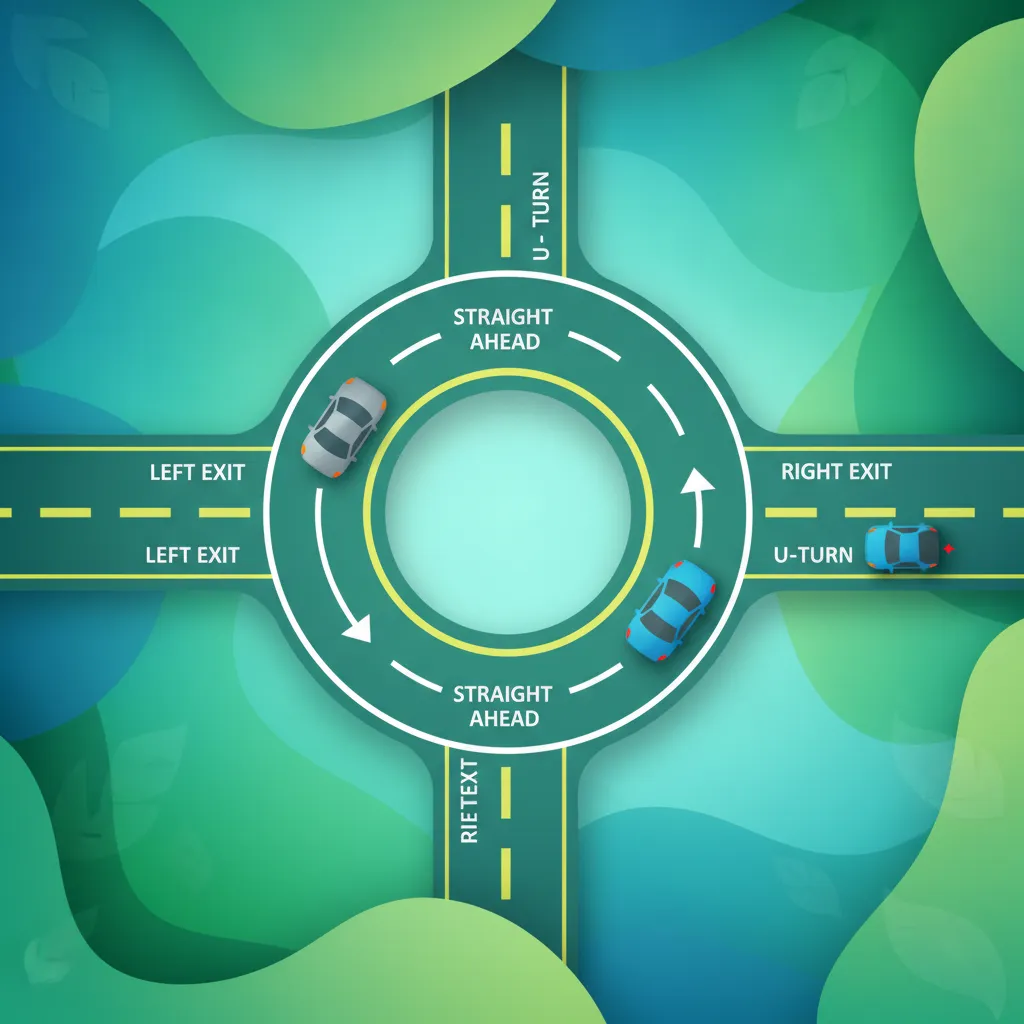
This lesson offers a step-by-step guide to navigating roundabouts in Denmark. You will learn how to approach and enter a roundabout, the requirement to yield to circulating traffic, and how to select the appropriate lane for your intended exit. Special attention is given to safely managing interactions with cyclists and pedestrians who may be present at roundabout entrances and exits.
This lesson introduces the essential principles of defensive driving, shifting the focus from reacting to hazards to proactively anticipating them. You will learn techniques for systematic scanning of the driving environment, maintaining a safety cushion around your vehicle, and identifying potential risks before they develop. These proactive strategies are fundamental to becoming a safer, more confident driver.
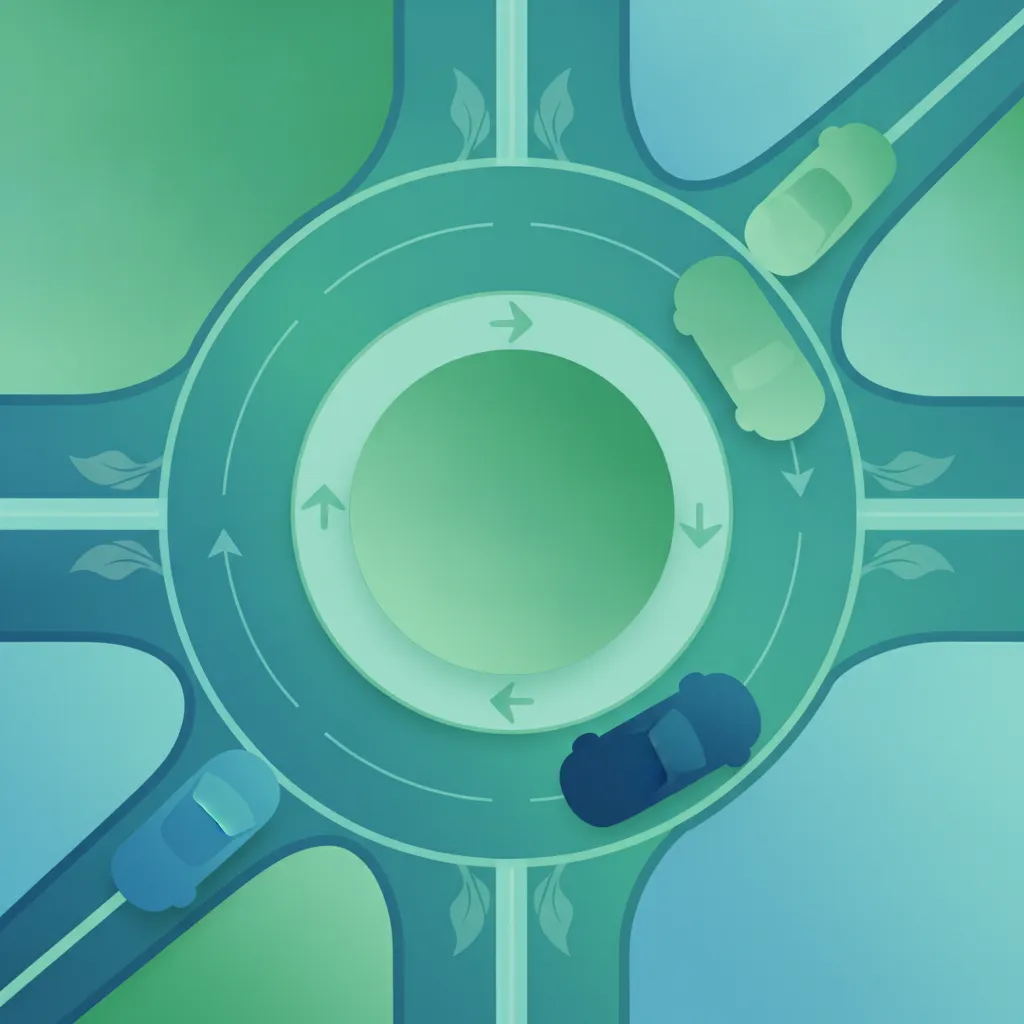
This lesson provides detailed instructions for navigating Danish roundabouts. It covers the rules for yielding upon entry, selecting the correct lane based on the intended exit, and signalling intentions clearly. The lesson also highlights the specific rules regarding priority for cyclists crossing entry and exit lanes.
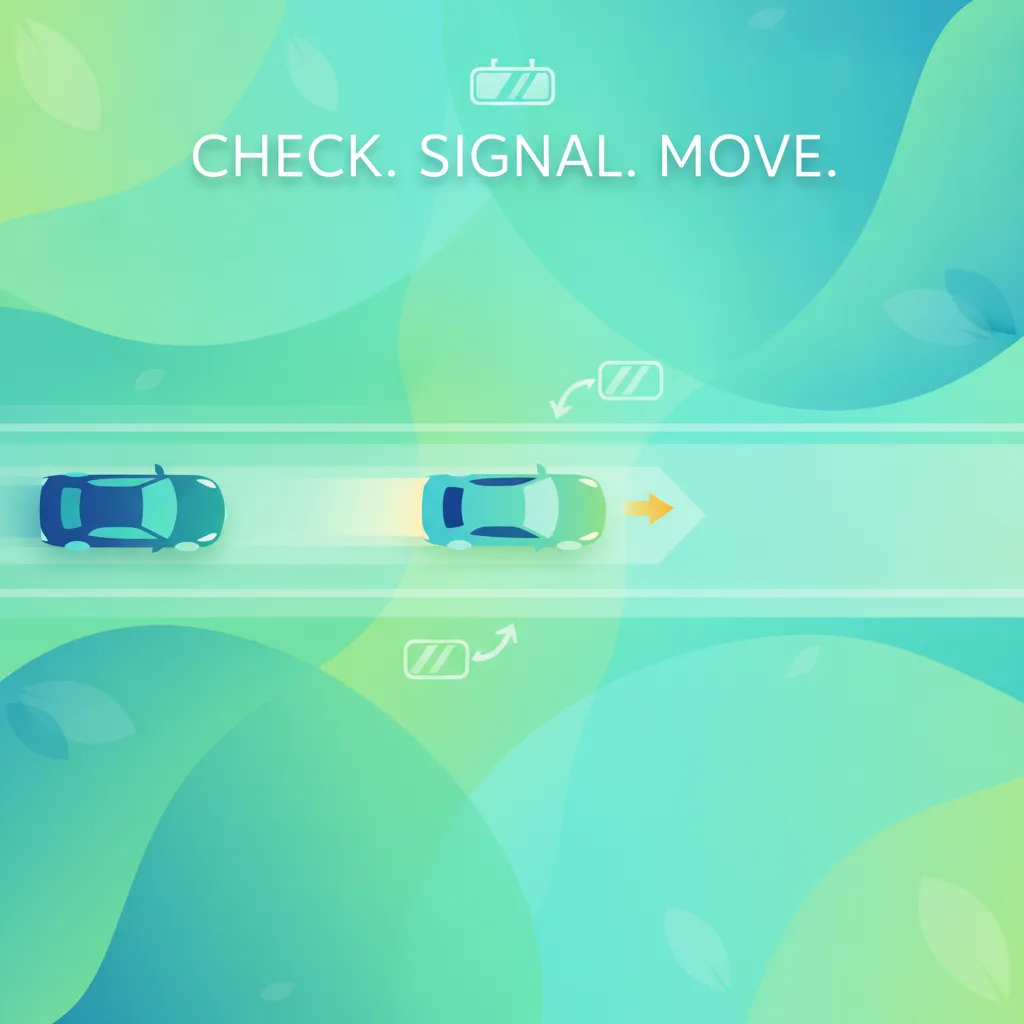
This lesson explains the principles of correct lane discipline, including proper positioning within your lane and adherence to road markings. It provides a clear, safe procedure for changing lanes, which includes signalling your intentions early, checking mirrors, and performing a final shoulder check for the blind spot. Mastering this process is essential for smooth and safe navigation in multi-lane traffic.

This lesson introduces cooperative driving as a fundamental element of road safety in Denmark. It highlights the social responsibility of drivers to act predictably, anticipate the actions of others, and maintain courteous interactions with all road users. By fostering mutual respect and cooperation, you will learn how to reduce the potential for conflict and enhance overall traffic safety.

This lesson breaks down the critical skill of overtaking into a safe, repeatable process. It covers how to judge the time and space needed, check for oncoming traffic, and execute the maneuver decisively. The importance of signaling and returning to the lane safely is also emphasized.

This lesson provides essential training for driving on motorways. It details the correct procedure for using acceleration lanes to merge safely into fast-moving traffic, maintaining proper lane discipline, and executing safe overtaking manoeuvres. You will also learn the importance of keeping a safe following distance and planning for your exit well in advance.
Gain confidence in performing smooth hill starts on inclines. This lesson covers essential clutch control, brake usage, and accelerator coordination to prevent rollback, crucial for Danish driving theory and practical skills.
This lesson introduces the essential controls required to operate a motorcycle, such as the throttle, clutch lever, and brake controls. It explains the purpose and correct use of each function for smooth and safe maneuvering. Learners will also understand the importance of proper ergonomics and riding posture for effective control.

This lesson teaches the proper application of auxiliary speed control devices, such as retarders and engine brakes. It focuses on their use for maintaining a safe, controlled speed on long downhill gradients, which helps prevent service brake overheating and fade. The content also covers Danish regulations related to these systems and their benefits for reducing brake wear and improving overall safety.
Reversing a tractor-trailer combination requires skill and a clear understanding of vehicle dynamics. This lesson breaks down the technique, explaining how to use steering inputs to guide the trailer accurately while monitoring its position through mirrors and cameras. It emphasizes the importance of a slow, controlled speed and planning the entire maneuver before starting to ensure safety and precision.

This lesson focuses on the fundamental skills of balance and steering. It explains how body position affects the vehicle's center of gravity and stability. The concept of counter-steering is introduced as the primary method for initiating turns at moderate to high speeds, a key skill for effective control.

This lesson details the principles of smooth acceleration and braking, which are essential for passenger safety and comfort. It explains how to apply gradual and consistent pressure to the accelerator and brake pedals to prevent jerking motions that could cause passengers to lose their balance. The content also covers anticipation skills needed to manage speed effectively in varying Danish traffic and road conditions.
This lesson covers the correct techniques for various turning manoeuvres, including how to signal, position your vehicle, and judge gaps in traffic. It also details the legal and safety protocols for overtaking, emphasizing the importance of assessing speed, distance, and oncoming traffic. A thorough understanding of these procedures is crucial for navigating intersections and two-lane roads safely.
This lesson provides essential training for driving on motorways. It details the correct procedure for using acceleration lanes to merge safely into fast-moving traffic, maintaining proper lane discipline, and executing safe overtaking manoeuvres. You will also learn the importance of keeping a safe following distance and planning for your exit well in advance.
This lesson explains the principles of correct lane discipline, including proper positioning within your lane and adherence to road markings. It provides a clear, safe procedure for changing lanes, which includes signalling your intentions early, checking mirrors, and performing a final shoulder check for the blind spot. Mastering this process is essential for smooth and safe navigation in multi-lane traffic.

This lesson breaks down the technique of parallel parking into a simple, repeatable process. It teaches you how to use specific reference points on your vehicle to accurately judge distances and positioning relative to the curb and other cars. These skills are essential for complying with parking regulations and confidently maneuvering in constrained Danish urban environments.
This lesson introduces cooperative driving as a fundamental element of road safety in Denmark. It highlights the social responsibility of drivers to act predictably, anticipate the actions of others, and maintain courteous interactions with all road users. By fostering mutual respect and cooperation, you will learn how to reduce the potential for conflict and enhance overall traffic safety.
Find clear answers to common questions learners have about Reversing Safely and Hill Starts. Learn how the lesson is structured, which driving theory objectives it supports, and how it fits into the overall learning path of units and curriculum progression in Denmark. These explanations help you understand key concepts, lesson flow, and exam focused study goals.
The handbrake keeps the vehicle stationary while you prepare the clutch for the bite point, effectively preventing any roll-back that could endanger pedestrians or vehicles behind you.
You should maintain continuous 360-degree observation. This means frequently checking mirrors and performing shoulder checks to ensure your surroundings remain clear throughout the entire maneuver.
Rolling back significantly is often viewed as a lack of vehicle control. In the context of a driving test, it can lead to immediate marks against you, especially if it creates a hazard for other road users.
While possible, using the handbrake is the safer, standard practice taught in Danish driving schools as it allows you to focus fully on the clutch bite point and throttle synchronization without the risk of slipping.
Use our powerful search tool to pinpoint specific Danish driving theory topics, road signs, or traffic situations you need to review. Start exploring relevant practice sets now to reinforce your knowledge and build confidence for your upcoming driving licence exam.