
This lesson provides a structured, step-by-step approach to mastering parallel parking and maneuvering in tight spaces. As part of your Category B training, it bridges the gap between basic vehicle control and the practical precision required for the Danish theory and driving tests.

Lesson content overview
Navigating the dense urban landscapes of Denmark requires a keen understanding of precise vehicle control, especially when it comes to parking. This lesson, part of your Danish Driving License Theory Course: Category B Preparation, will equip you with the knowledge and techniques necessary to confidently execute parallel parking and other maneuvers in confined spaces. Mastering these skills is not just about convenience; it is crucial for ensuring safety, preventing damage to your vehicle, and complying with stringent Danish traffic regulations.
Parallel parking is a fundamental skill for any driver, involving positioning your vehicle alongside a curb, typically between two other parked cars. This maneuver demands precision, spatial awareness, and a systematic approach to ensure safety and compliance with the law. The underlying logic is multifaceted: it prevents collisions with surrounding vehicles or infrastructure, ensures pedestrians and cyclists have clear passage, and allows your vehicle to be parked legally without obstructing traffic flow. This advanced skill builds upon earlier lessons on vehicle dimensions, spatial perception, and accurate speed control.
Precision positioning is the cornerstone of successful parallel parking and maneuvering in tight spaces. It refers to the ability to accurately place your vehicle within a limited gap, using specific visual cues to judge distances. The primary purpose is to avoid any contact with other vehicles, the curb, or any obstacles, thereby preventing damage and ensuring a safe and legal park. This requires a nuanced estimation of distances and precise alignment with the curb, even when your vehicle is stationary.
Reference points are fixed landmarks on your vehicle that serve as consistent visual cues to help you judge distances and align your vehicle during a maneuver. These can include parts of your side mirrors, the corner of your rear window, or specific points on your dashboard. By consistently using these points, you can achieve repeatable and reliable execution of parking techniques, reducing guesswork and increasing accuracy. This method is particularly vital when reversing into a tight spot, where direct visual assessment might be limited.
Continuous observation and spatial awareness are non-negotiable throughout any tight maneuver. This involves actively assessing your vehicle's immediate surroundings, not just ahead but to the sides and rear, before and during the maneuver. Critical for safe execution, this practice helps prevent collisions and allows you to adjust your positioning as needed in real-time. Failing to use mirrors effectively or developing "tunnel vision" are common mistakes that reduce situational awareness and increase risk.
To maneuver effectively in tight spaces, a thorough understanding of your vehicle's physical characteristics is indispensable. Knowing the exact length, width, and turning radius of your car enables accurate distance estimation, which is vital for choosing appropriate parking spaces and executing turns without collisions. Underestimating your vehicle's dimensions can easily lead to unintentional contact with other cars or the curb. The turning radius, specifically, dictates how tight a turn your vehicle can make, directly influencing your approach and steering inputs during parking.
Parallel parking, while seemingly complex, can be broken down into a systematic, repeatable sequence of actions. This three-step method helps drivers execute the maneuver confidently and precisely, even in challenging urban environments.
Step 1: Positioning the Vehicle (Initial Alignment) Approach the parking space and pull up alongside the vehicle you intend to park behind. Ensure there is approximately 0.5 to 1 meter (one car door's width) of lateral space between your vehicle and the parked car. Align your rear bumper with the rear bumper of the parked car. At this point, your vehicle should be parallel to the parked car and slightly ahead of the intended parking spot.
Step 2: Reversing with Initial Steering Input Engage reverse gear. Check all mirrors and over your shoulders for any approaching traffic or pedestrians. Begin to reverse slowly, turning your steering wheel fully towards the curb (e.g., if parking on the right, turn fully right). Continue reversing until your vehicle is at a 45-degree angle to the curb, or until you can see the headlights of the car behind in your left side mirror (if parking on the right). A common reference point is when your vehicle's rear-view mirror aligns with the rear-view mirror of the car you are parking behind.
Step 3: Straightening and Final Adjustment Once you reach the 45-degree angle, or your chosen reference point, straighten your steering wheel (turn it back to the center position) and continue reversing slowly. As your front bumper clears the rear bumper of the vehicle in front, begin to turn your steering wheel fully away from the curb (e.g., fully left for parking on the right). Continue reversing until your vehicle is parallel to the curb. Make small forward or backward adjustments to center your vehicle within the space, ensuring you maintain a safe distance from both the vehicle in front and behind. The final position should have your wheels no more than 30 cm from the curb.
Always maintain slow speeds during the entire maneuver. This gives you more time to observe, react, and make precise steering adjustments. Continuous observation using all mirrors and checking blind spots is crucial at every stage.
Several common errors can hinder successful parallel parking. These include oversteering early in the maneuver, which can cause you to hit the curb or the car behind; misjudging the initial distance to the curb, leading to being too far out or too close; and failing to complete the full sequence of steering inputs, resulting in an improperly angled park. Consistent practice and focusing on reference points will help overcome these challenges.
Maneuvering in tight spaces extends beyond just parallel parking. It encompasses any situation where space is limited by other vehicles, infrastructure, or narrow road widths. This is a frequent challenge in dense urban areas across Denmark. The key to success lies in combining spatial perception, the effective use of mirrors, and precise control over steering and speed. It is vital not to rely solely on mirrors; always make direct head checks to cover blind spots.
Adhering to Danish traffic laws (Færdselsloven) regarding parking is not only a legal requirement but also a critical aspect of road safety. Violations can lead to fines and, more importantly, create hazards for other road users.
One of the most frequently tested regulations relates to the distance from the curb.
In Denmark, a parked vehicle must be positioned close enough to the curb so that it does not obstruct traffic. Generally, the wheels should be no more than 30 centimeters from the curb.
This rule is mandatory for all vehicles parked on roads with a curb. Parking too far from the curb significantly increases the risk of obstructing traffic flow, endangering cyclists and other vehicles.
Drivers must always ensure they are parking in an area where parking is legally permitted. This means paying close attention to road signs and markings. Parking in a no-parking zone, even for a short duration, is a violation. The rationale is to maintain traffic flow, ensure access for emergency vehicles, and prevent congestion.
When parallel parking, it is mandatory to leave a safe distance between your vehicle and the vehicles ahead and behind. This distance should be sufficient to allow other drivers to safely exit their parking spaces and for your own vehicle to maneuver out later. A common guideline is to leave at least one meter of space both front and rear. Failing to do so can hinder the movement of other vehicles and lead to frustration or minor collisions.
A parked vehicle must never obstruct driveways, intersections, pedestrian crossings, or emergency routes. This ensures unimpeded access for all road users, including private residents, businesses, and essential services. Parking too close to a junction can severely obstruct visibility for drivers entering or exiting, increasing the risk of accidents.
Above all, any parking maneuver must be executed without creating a hazard for pedestrians, cyclists, or other motor vehicle traffic. This means being mindful of vulnerable road users, ensuring clear sightlines, and not blocking bike lanes or footpaths. Forcing cyclists or pedestrians into the main traffic lane due to improper parking is a serious offense and highly dangerous.
Beyond the core rules, several common missteps can lead to fines or dangerous situations.
C61 (No Stopping) or C62 (No Parking) signs before choosing a spot.Parking is not always performed under ideal conditions. Drivers must adapt their technique based on environmental and vehicle-specific factors.
Developing a confident and safe approach to parking involves more than just mechanical steps; it requires strategic thinking and a strong safety mindset.
Understanding the direct consequences of your actions is vital:
To excel in parallel parking and tight space maneuvers within the Danish driving context, remember these key takeaways:
Parallel parking in Denmark is executed through a precise three-step technique requiring correct initial alignment (0.5–1 meter gap, rear bumpers aligned), a 45-degree reversal using mirror-based reference points, and final straightening before positioning within the mandatory 30 cm curb distance. Danish traffic law under Færdselsloven enforces strict parking rules regarding curb proximity, safe vehicle spacing (at least 1 meter front and rear), and prohibited zones marked by signs C61 and C62. Successful parking demands continuous all-around observation, properly timed steering inputs, and adaptation to weather and visibility conditions. Common errors include oversteering, insufficient observation, and misjudging space suitability, all of which can be eliminated through consistent use of established reference points and deliberate practice.
A short set of high-value points that capture the most important learning from this lesson.
Parallel parking follows a systematic three-step process: initial positioning, reversing at 45 degrees, then straightening and final adjustment to the curb.
Vehicle reference points (such as mirror alignment with the parked car) are essential visual cues that eliminate guesswork and ensure repeatable accuracy.
Danish law requires parked vehicles to be within 30 centimeters of the curb to avoid obstructing traffic and endangering cyclists.
Continuous observation using all mirrors and shoulder checks is mandatory throughout every stage of the parking maneuver.
Environmental factors such as weather, reduced visibility, and vehicle load require adjusted technique with slower speeds and gentler inputs.
Explore all units and lessons included in this driving theory course.
Maintain approximately 0.5 to 1 meter lateral distance from the parked car when aligning, and position your rear bumper even with the other vehicle's rear bumper before reversing.
When reversing at 45 degrees, the reference point is when your rear-view mirror aligns with the rear-view mirror of the car behind you.
Final parking position must be wheels no more than 30 cm from the curb, with at least 1 meter of space from vehicles ahead and behind.
Turn the steering wheel fully toward the curb first, then straighten, then turn fully away from the curb in sequence.
Road signs C61 (No Stopping) and C62 (No Parking) prohibit parking entirely; never obstruct driveways, intersections, bike lanes, or pedestrian crossings.
Oversteering too early causes the vehicle to swing too sharply, risking contact with the curb or the car behind.
Misjudging the initial lateral distance results in being parked too far from or too close to the curb.
Failing to complete the full steering sequence—turning, straightening, then counter-turning—leaves the vehicle improperly angled.
Using mirrors without performing shoulder checks creates blind spot risks, especially for cyclists and pedestrians.
Attempting to park in a space that is too small for the vehicle leads to forced maneuvers and potential collisions.
Lesson content overview
A short set of high-value points that capture the most important learning from this lesson.
Parallel parking follows a systematic three-step process: initial positioning, reversing at 45 degrees, then straightening and final adjustment to the curb.
Vehicle reference points (such as mirror alignment with the parked car) are essential visual cues that eliminate guesswork and ensure repeatable accuracy.
Danish law requires parked vehicles to be within 30 centimeters of the curb to avoid obstructing traffic and endangering cyclists.
Continuous observation using all mirrors and shoulder checks is mandatory throughout every stage of the parking maneuver.
Environmental factors such as weather, reduced visibility, and vehicle load require adjusted technique with slower speeds and gentler inputs.
Explore all units and lessons included in this driving theory course.
Maintain approximately 0.5 to 1 meter lateral distance from the parked car when aligning, and position your rear bumper even with the other vehicle's rear bumper before reversing.
When reversing at 45 degrees, the reference point is when your rear-view mirror aligns with the rear-view mirror of the car behind you.
Final parking position must be wheels no more than 30 cm from the curb, with at least 1 meter of space from vehicles ahead and behind.
Turn the steering wheel fully toward the curb first, then straighten, then turn fully away from the curb in sequence.
Road signs C61 (No Stopping) and C62 (No Parking) prohibit parking entirely; never obstruct driveways, intersections, bike lanes, or pedestrian crossings.
Oversteering too early causes the vehicle to swing too sharply, risking contact with the curb or the car behind.
Misjudging the initial lateral distance results in being parked too far from or too close to the curb.
Failing to complete the full steering sequence—turning, straightening, then counter-turning—leaves the vehicle improperly angled.
Using mirrors without performing shoulder checks creates blind spot risks, especially for cyclists and pedestrians.
Attempting to park in a space that is too small for the vehicle leads to forced maneuvers and potential collisions.
Explore search topics learners often look for when studying Parallel Parking and Tight Space Maneuvers. These topics reflect common questions about road rules, driving situations, safety guidance, and lesson level theory preparation for learners in Denmark.
Browse additional driving theory lessons that cover connected traffic rules, road signs, and common driving situations related to this topic. Improve your understanding of how different rules interact across everyday traffic scenarios.
Learn a systematic, step-by-step method for parallel parking and other tight space maneuvers. This lesson focuses on using vehicle reference points for accuracy and avoiding common errors in urban Danish driving.

This lesson covers the correct techniques for various turning manoeuvres, including how to signal, position your vehicle, and judge gaps in traffic. It also details the legal and safety protocols for overtaking, emphasizing the importance of assessing speed, distance, and oncoming traffic. A thorough understanding of these procedures is crucial for navigating intersections and two-lane roads safely.

This lesson focuses on the practical skills needed to maneuver a large vehicle in confined environments such as urban delivery zones and loading docks. It teaches how to accurately judge the required space, understand the vehicle's turning radius, and use reference points to position the vehicle precisely. The content covers strategies for navigating tight corners and avoiding fixed obstacles, which is essential for damage-free urban operations.
This lesson explains the principles of correct lane discipline, including proper positioning within your lane and adherence to road markings. It provides a clear, safe procedure for changing lanes, which includes signalling your intentions early, checking mirrors, and performing a final shoulder check for the blind spot. Mastering this process is essential for smooth and safe navigation in multi-lane traffic.

This lesson provides detailed instruction on two key practical skills. You will learn the correct procedure for reversing, which emphasizes slow speed and comprehensive 360-degree observation. It also covers the technique for executing a smooth hill start, teaching the precise coordination of the clutch, accelerator, and handbrake to prevent the vehicle from rolling backwards.

This lesson explains the relationship between a bus's dimensions—length, width, and height—and its maneuverability. It covers key concepts such as turning radius, rear overhang, and swept path, which are critical for navigating turns and tight spaces safely. Learners will also understand how these physical characteristics create significant blind spots that require specific observation techniques to manage.

This lesson introduces cooperative driving as a fundamental element of road safety in Denmark. It highlights the social responsibility of drivers to act predictably, anticipate the actions of others, and maintain courteous interactions with all road users. By fostering mutual respect and cooperation, you will learn how to reduce the potential for conflict and enhance overall traffic safety.

This lesson introduces the essential principles of defensive driving, shifting the focus from reacting to hazards to proactively anticipating them. You will learn techniques for systematic scanning of the driving environment, maintaining a safety cushion around your vehicle, and identifying potential risks before they develop. These proactive strategies are fundamental to becoming a safer, more confident driver.

This lesson explains the concept of off-tracking, where the rear wheels follow a tighter path than the front wheels during a turn. It provides techniques for positioning the bus correctly before a turn to avoid striking curbs or obstacles. The content also outlines the systematic safety checks and procedures for reversing, including the proper use of mirrors, cameras, and a guide.
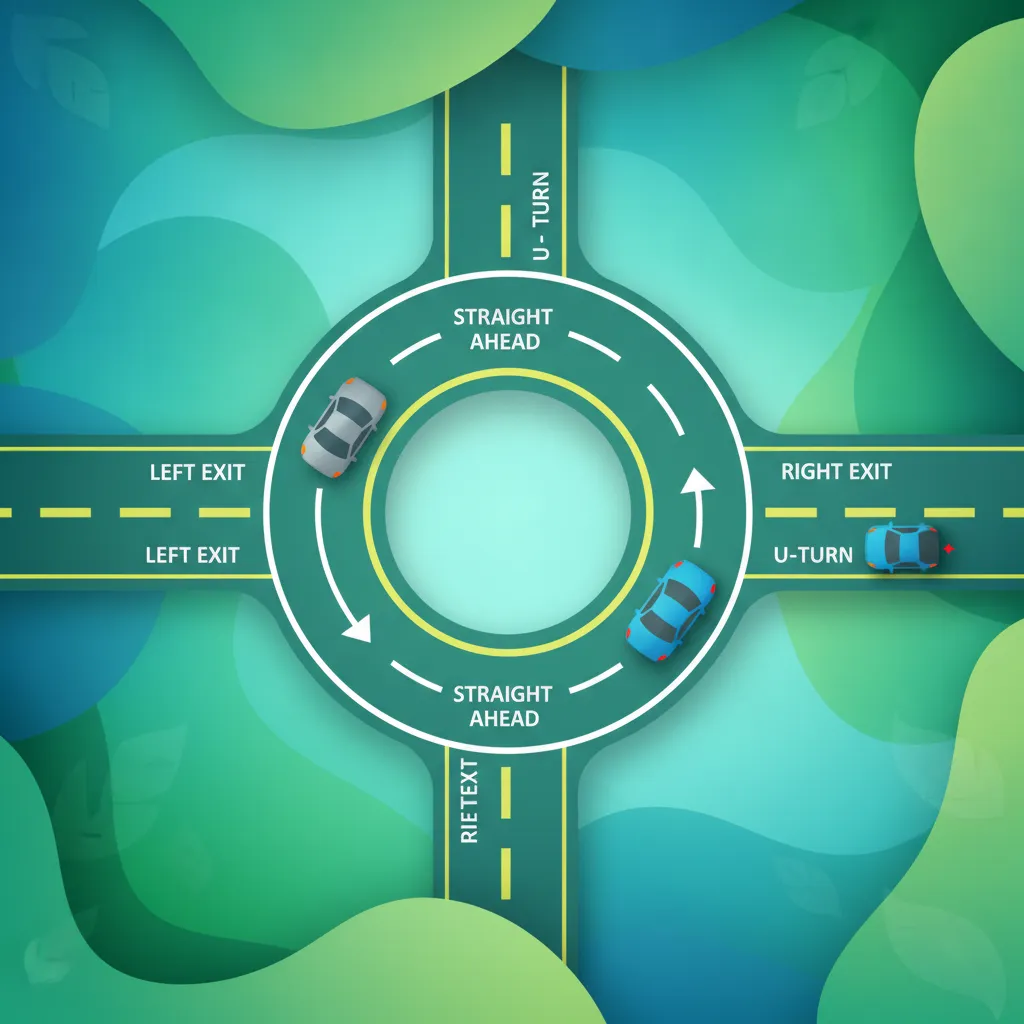
This lesson offers a step-by-step guide to navigating roundabouts in Denmark. You will learn how to approach and enter a roundabout, the requirement to yield to circulating traffic, and how to select the appropriate lane for your intended exit. Special attention is given to safely managing interactions with cyclists and pedestrians who may be present at roundabout entrances and exits.

This lesson covers the core principles of defensive driving in an urban context. It teaches drivers how to anticipate the actions of other road users, maintain safe following distances in dense traffic, and navigate complex intersections with multiple signals. The content emphasizes heightened awareness of pedestrians, cyclists, and unexpected events common in Danish city environments.
Understand Danish parking regulations, including the mandatory distance from the curb, rules for designated spots, and how to avoid common violations. Essential theory for safe urban driving and compliance.

This lesson details the specific rules related to bus lanes and bus stops. It clarifies when other vehicles may use bus lanes, the legal requirement to yield to buses pulling away from a stop, and the importance of being cautious around embarking or disembarking passengers. Adherence to these rules is vital for the efficient and safe operation of public transportation.

This lesson focuses on the safe integration of cyclists and pedestrians within the traffic system, a key feature of Danish roads. It covers the specific rights and common behaviors of cyclists, including those on e-bikes and cargo bikes, and explains procedures for yielding to pedestrians. The content emphasizes maintaining safe distances and heightened awareness to prevent accidents and promote harmonious road sharing.
This lesson provides a detailed explanation of the Category B license, specifying which vehicles you are permitted to drive. It covers crucial limitations such as maximum authorised mass, passenger capacity, and the regulations for towing a trailer. Furthermore, it clarifies the legal distinctions between holding a license for an automatic versus a manual transmission vehicle, grounding your knowledge in official Danish legislation.
This lesson focuses on regulatory signs, which enforce mandatory actions or prohibitions, such as speed limits, stop signs, and no-entry signs. You will learn about the legally binding nature of these signs and the serious consequences of non-compliance. The material also explains signs related to parking rules and overtaking restrictions, providing a clear framework for adhering to Danish traffic law.

This lesson provides detailed guidance on navigating pedestrian crossings (fodgængerfelter) and areas with high cyclist traffic. It clarifies your legal obligation to stop for pedestrians at zebra crossings and the proper speed to approach these zones. A central theme is understanding the rights of vulnerable road users and how to yield safely to them in accordance with Danish traffic law.
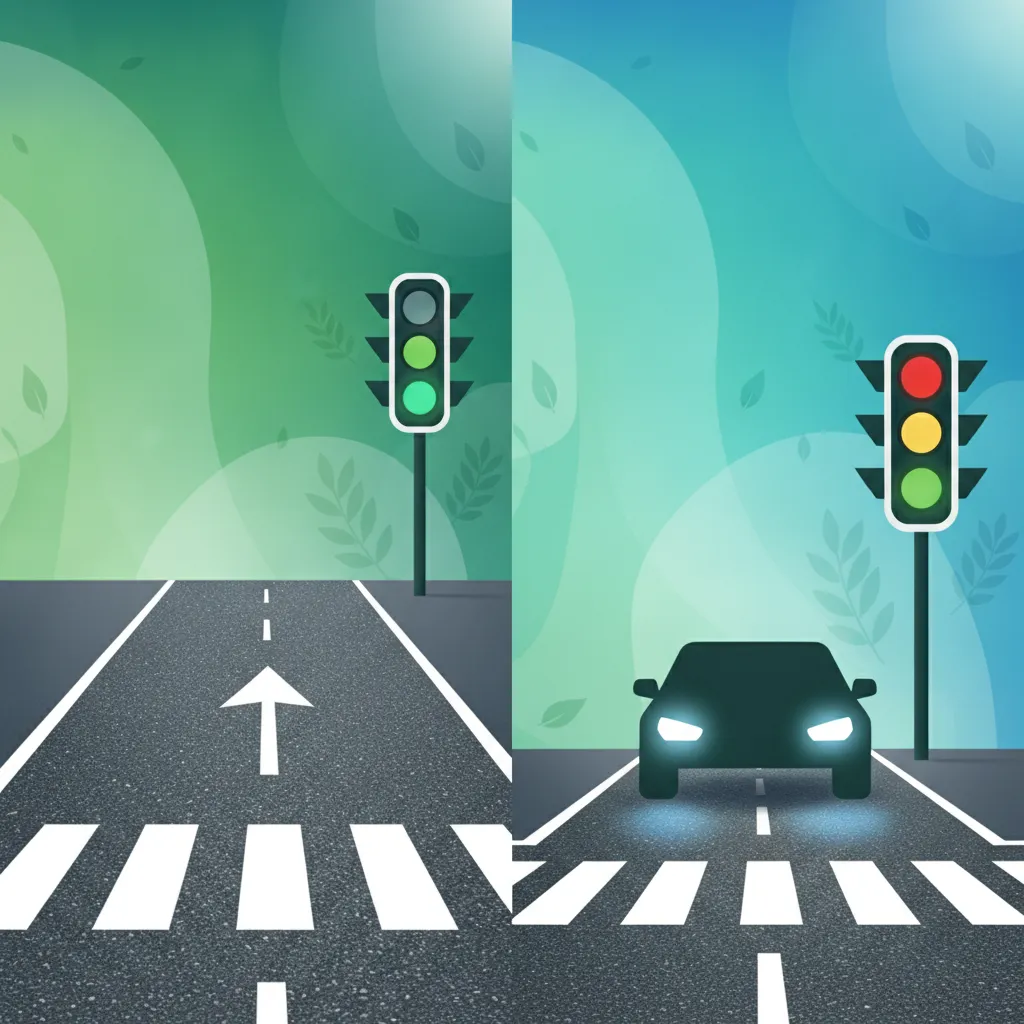
This lesson details the meaning and application of various road surface markings, including lane dividers, solid and broken lines, and directional arrows. You will also learn to interpret the full sequence of traffic light signals, including the specific rules for the amber (yellow) light phase. A proper understanding of these systems is vital for maintaining correct lane discipline and adhering to traffic controls.

This lesson addresses the specific skills required to navigate around public transport and heavy goods vehicles safely. You will learn the rules for bus lanes, recognize when buses have priority at stops, and understand the unique challenges posed by large vehicles, such as wider turning circles and larger blind spots. The material also provides clear protocols for overtaking these vehicles while maintaining adequate safety margins.

This lesson teaches you to identify warning signs that alert drivers to upcoming hazards and changing road conditions. It covers common signs such as sharp curves, school zones, animal crossings, and temporary conditions like roadworks or slippery surfaces. Understanding these signs is crucial for anticipating risks and adjusting your driving to ensure safety on all types of Danish roads.
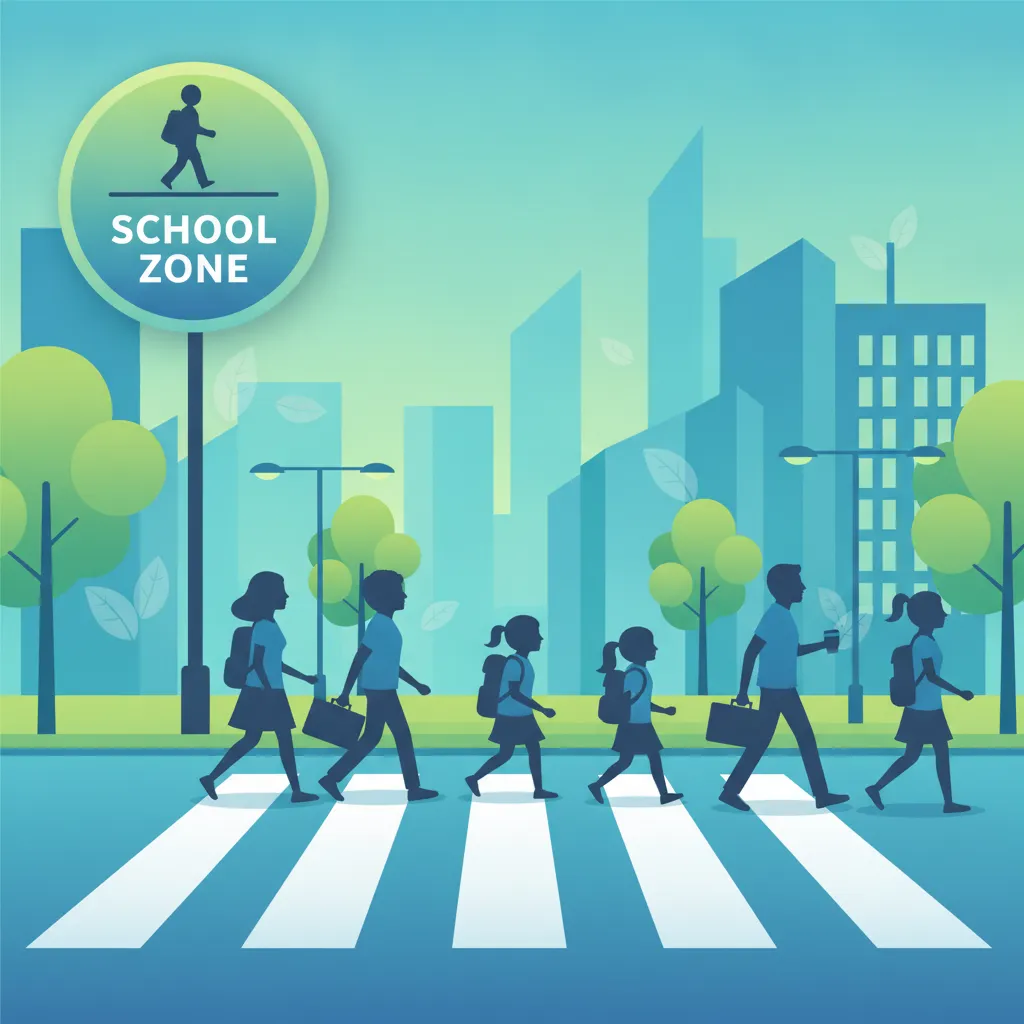
This lesson reinforces the driver's responsibility to protect pedestrians, particularly in busy urban areas and near schools. It details the procedures for approaching pedestrian crossings, the legal requirement to reduce speed significantly in marked school zones, and how to anticipate the unpredictable actions of pedestrians. The content covers traffic calming measures and the legal rights of pedestrians in various settings.

This lesson provides critical guidance for driving in environments with heavy cycle traffic, typical of Danish cities. It focuses on identifying and yielding to cyclists in dedicated bike lanes, especially when turning right across their path. The content emphasizes advanced observation skills to detect cyclists in blind spots and the importance of giving adequate space.
Find clear answers to common questions learners have about Parallel Parking and Tight Space Maneuvers. Learn how the lesson is structured, which driving theory objectives it supports, and how it fits into the overall learning path of units and curriculum progression in Denmark. These explanations help you understand key concepts, lesson flow, and exam focused study goals.
The most important observation is to continuously monitor your surroundings using all mirrors and performing a shoulder check. You must ensure no cyclists or pedestrians are moving into your blind spots while you are reversing.
A good rule of thumb is to look for a space that is at least one and a half times the length of your vehicle. During your exam, focus on identifying clearly marked or appropriate gaps that allow for sufficient clearance for both your car and others.
The test examiner expects a safe, systematic, and controlled approach. While there is no single legally mandated 'method', using consistent reference points helps ensure you maintain the safety and precision expected in the Danish Category B assessment.
If you observe a cyclist or pedestrian approaching, you must stop immediately. Vulnerable road users have high priority in Danish traffic culture, and safety always takes precedence over completing a maneuver.
Use our powerful search tool to pinpoint specific Danish driving theory topics, road signs, or traffic situations you need to review. Start exploring relevant practice sets now to reinforce your knowledge and build confidence for your upcoming driving licence exam.