
The R-4 sign serves as general information, indicating the presence and type of a designated cycling route. It often displays the route's name, total length, or branding, acting as a welcome or identification marker for cyclists. While it confirms you are on an official path, remember that route conditions can vary, and understanding the specific network is key for safe and enjoyable cycling.
The R-4 sign provides crucial bicycle route information, indicating officially recognized and often networked cycling paths in Poland. Correct road sign interpretation is essential for all drivers, cyclists, and pedestrians to safely navigate shared spaces and understand local traffic rules, directly impacting your Polish driving theory test preparation.
The R-4 sign is a general informational marker. It can show the name of the trail, its total length, or its logo. It is often used as a 'welcome' sign or to identify a route that is part of a larger network (like the Green Velo or EuroVelo). It confirms to the cyclist that the path they are on is an officially recognized and maintained route.
Provides general information about the presence and type of cycling route in the area.
Get clear, practical answers to the most common questions about the R-4 - Information about Bicycle Route road sign. Learn how the sign works, what rules it represents, and how it affects real driving situations. This FAQ strengthens your understanding and supports accurate decision making for the Polish driving theory exam in Poland.
The R-4 sign is an informational marker. Its main purpose is to identify and brand official cycling routes, such as the Green Velo or EuroVelo. It lets cyclists know they are on a recognized and potentially maintained path, often including details like the route's name or length.
The R-4 sign is purely informational; it does not require a specific driving or cycling action like stopping or giving way. However, it signals that you are entering or continuing on a designated bicycle route, so you should be aware of cycling traffic and adhere to any cycling-specific rules that may apply to that route.
A common trap is mistaking this informational sign for a regulatory sign that dictates mandatory behaviour. Learners might incorrectly assume it implies a speed limit or a specific type of path (like a separated cycle lane) when it simply provides route identification. Always read the sign's context and other potential signs nearby.
While the R-4 sign confirms the route is official, it doesn't usually detail the surface quality, gradient, or specific infrastructure of every section. It's best to research the specific route in advance, especially for longer journeys, to understand what to expect in terms of road surface and terrain.
If the R-4 sign displays a logo or name, it's branding for a specific cycling trail or network. This helps cyclists identify the route they are on, especially if it's part of a larger regional, national, or international system like Green Velo. It's a navigation aid and part of route marketing.
A clear reference image of the R-4 - Information about Bicycle Route road sign used in Poland.
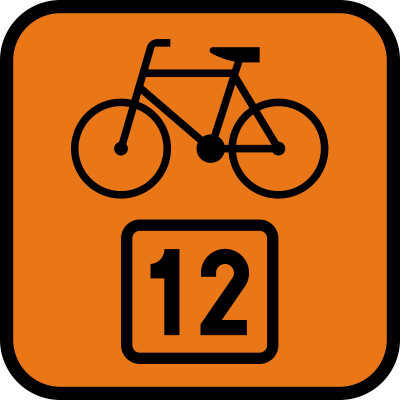
The R-4 - Information about Bicycle Route road sign may also be known by these alternative names or terms.
The R-4 - Information about Bicycle Route road sign is part of the Additional Railway Crossing Signs (G) category, which groups together signs with similar rules and functions.
Reviewing signs like the R-4 'Information about Bicycle Route' alongside similar informational markers helps solidify your understanding and improves sign recognition for the theory test. Effective traffic sign comparison is key to mastering these distinctions for exam preparation.

Prepare for tram signals ahead with the AT-1 warning sign.

Understand the AT-2 Tram-Activated Signal: Know when trams are coming!
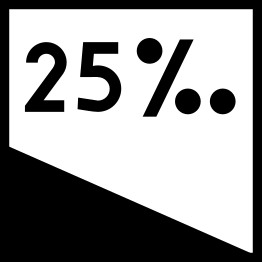
Understand the AT-3 Dangerous Tram Descent warning sign for trams.
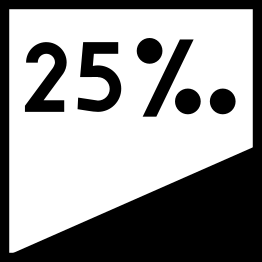
Warning: Steep Tram Ascent Ahead (AT-4)

Understand the AT-5 sign: Tram Collision Movement Warning for Turning Trams
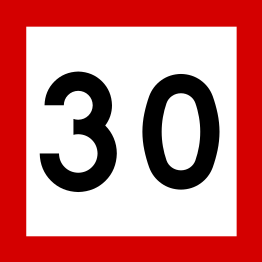
What the BT-1 Tram Speed Limit sign means and how to obey it.

BT-2: Tram Speed Limit Restriction Ends Here

BT-3 Tram Switch Lock: Don't Enter Until Clear!
Deepen your understanding of specific road signs by reviewing official Polish traffic rules and associated real-world driving scenarios. These expert-led resources help you bridge the gap between visual recognition and practical exam application.
Navigating the rules regarding bike paths and road usage is a critical aspect of Polish traffic law. This guide clarifies when a cyclist is obligated to use a designated path marked by a C-13 sign and identifies the rare situations where road use is legally permitted. By mastering these regulations, you will better understand road safety, priority rules, and how to anticipate the actions of cyclists to pass your Polish driving theory exam with confidence.
Learn why driving in Poland with a foreign license is illegal if your Polish driving privileges have been revoked. This article explains the fundamental principle that driving entitlements are personal and singular under Polish law, as reinforced by court rulings, helping you understand the strict requirements for legal driving.
Master Your Rights and Obligations During a Polish Roadside Inspection
Even a Second Can Be Fatal: Understand Microsleep to Drive Safely in Poland.
The D-34 sign features a lowercase 'i' (for information). It marks the location of an office dedicated to helping tourists navigate the local area. Here, you can find free maps, information about local attractions, museum opening hours, and help with booking accommodation. These centers are usually located in town halls, near train stations, or in popular tourist districts.
The D-40 sign marks the entrance to a 'Strefa Zamieszkania'. Inside this zone, pedestrians are allowed to use the entire width of the road and have absolute priority over vehicles. The speed limit is strictly 20 km/h. Drivers must be extremely vigilant as children are legally allowed to play on the street without adult supervision. Additionally, parking is only permitted in designated spaces, and all speed bumps are considered 'marked' by this entry sign.
After reviewing the full list of Polish road signs, explore specific sign categories for in-depth understanding. Challenge your knowledge with practice questions focused on sign recognition and interpretation to solidify your preparation for the driving theory exam.
Browse All Polish Road Signs