
The AT-2 'Tram-Activated Signal' road sign warns you about an upcoming intersection where the traffic lights are triggered by the arrival of a tram. This means the signal system detects trams approaching via a sensor, and the lights will adjust to give them priority. As a driver, be aware that the lights aren't on a fixed timer; they respond to tram presence, so maintain a steady approach and prepare to react to changing signals. This sign helps ensure smoother traffic flow for trams and provides crucial information for car drivers approaching these junctions.
This sign specifically warns of an intersection with a signal activated by trams, crucial for anticipating traffic flow changes. Understanding its meaning is vital for your theory test revision and safe driving in Poland, covering essential road sign interpretation and traffic rule adherence.
The AT-2 sign indicates that the upcoming intersection features an 'actuated' signal. As the tram approaches a sensor in the track, the traffic light system is informed and will eventually provide a 'Go' phase for the tram. This sign tells the driver that they don't necessarily need to wait for a fixed cycle, but should be prepared for the system to detect and process their arrival.
Warns of a signal that is triggered specifically by the arrival of a tram.
Get clear, practical answers to the most common questions about the AT-2 - Tram-Activated Signal road sign. Learn how the sign works, what rules it represents, and how it affects real driving situations. This FAQ strengthens your understanding and supports accurate decision making for the Polish driving theory exam in Poland.
The AT-2 sign indicates that the traffic lights at the upcoming intersection are 'actuated' and will respond to the presence of a tram. A sensor detects an approaching tram, which triggers a specific phase for it. This sign prepares drivers that the signal timing is dynamic and based on tram movements.
When you see the AT-2 sign, approach the intersection steadily. Avoid stopping too far back, as this might prevent the sensor from detecting your vehicle if it's also part of the actuation system. Drive over the detection sensor at a consistent speed, and watch for visual confirmation (often a small indicator light on the signal post) that the system has registered your approach before proceeding when signaled.
A common trap for the AT-2 sign in the theory exam is assuming the light will turn green immediately for you. This sign is about tram priority; while your signal might change, it's based on the tram's arrival and clearing of other traffic. Never enter the intersection without a clear green signal for your direction.
The AT-2 sign means the traffic lights are designed to give trams priority, but it doesn't override general right-of-way rules entirely. You must wait for your signal to turn green. However, the system will prioritize the tram's passage, so be prepared for your light cycle to be influenced by its approach. Always wait for a green light before entering the intersection.
Stopping too far from the intersection where the AT-2 sign is placed can be problematic. The detection system, which activates the tram signal, might not register your vehicle if you are outside its range. This could potentially delay or prevent the signal from changing for you, so maintaining an appropriate distance and steady approach is important.
A clear reference image of the AT-2 - Tram-Activated Signal road sign used in Poland.

The AT-2 - Tram-Activated Signal road sign may also be known by these alternative names or terms.
The AT-2 - Tram-Activated Signal road sign is part of the Additional Railway Crossing Signs (G) category, which groups together signs with similar rules and functions.
Comparing related road signs, like the AT-2 Tram-Activated Signal, sharpens recognition and recall for your theory test revision. Practising traffic sign comparison helps you confidently distinguish similar symbols and understand their unique meanings, crucial for passing your driving theory exam.

Prepare for tram signals ahead with the AT-1 warning sign.
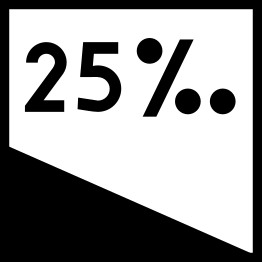
Understand the AT-3 Dangerous Tram Descent warning sign for trams.
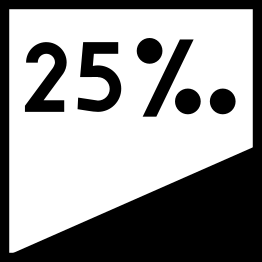
Warning: Steep Tram Ascent Ahead (AT-4)

Understand the AT-5 sign: Tram Collision Movement Warning for Turning Trams
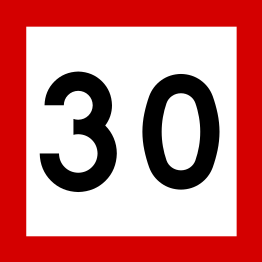
What the BT-1 Tram Speed Limit sign means and how to obey it.

BT-2: Tram Speed Limit Restriction Ends Here

BT-3 Tram Switch Lock: Don't Enter Until Clear!

Stop and manually check the tram switch with the BT-4 sign.
Deepen your understanding of specific road signs by reviewing official Polish traffic rules and associated real-world driving scenarios. These expert-led resources help you bridge the gap between visual recognition and practical exam application.
Don't Be a Road Block: Master Minimum Speeds and Smooth Traffic Flow for Your Polish Exam!
When selling a car in Poland, you have specific legal duties regarding insurance and registration that must be met promptly. This article clarifies these seller obligations, including the crucial 14-day window to inform your insurer and the 30-day deadline to notify the relevant communication department, ensuring a smooth and compliant transfer of ownership for both parties.
Even a Second Can Be Fatal: Understand Microsleep to Drive Safely in Poland.
Navigate Polish roads with confidence by understanding critical cyclist priority rules at junctions and crossings. This guide explains your legal obligations as a driver to yield to cyclists, a common area of confusion and potential exam pitfalls. Learn the nuances of right-of-way at intersections and designated cyclist passages to drive safely and pass your theory test.
The D-2 sign officially cancels the priority status previously granted by the D-1 sign. It appears as the standard yellow diamond but is crossed out with a thick black diagonal line. This sign is usually placed before an intersection with another priority road, an equal-priority intersection (where the 'right-hand rule' applies), or a roundabout. It serves as a critical warning for drivers to transition from 'priority' mindset to 'yielding' mindset.
The D-46 sign indicates a non-public road, such as those within housing estates, shopping center lots, or factory grounds. The rules of the road (PoRD) still apply for safety, but the road is maintained by a private manager whose name might be written on the sign. Importantly, when you exit an internal road onto a public road, you are 'entering traffic' and must yield to all other road users.
After reviewing the full list of Polish road signs, explore specific sign categories for in-depth understanding. Challenge your knowledge with practice questions focused on sign recognition and interpretation to solidify your preparation for the driving theory exam.
Browse All Polish Road Signs