
The R-1 sign marks local bicycle trails, guiding cyclists along designated routes with colored stripes that differentiate various paths. While primarily for cyclists, drivers should be aware that trails marked with R-1 may sometimes be shared with pedestrians or might be crossed by motor vehicles on specific roads. Understanding this sign helps maintain order and safety for all road users, especially in recreational areas, and is crucial for theory exam preparation.
This sign marks a designated local cycle route, essential for cyclists navigating Poland's network. Understanding its meaning aids in safe route selection and is vital for theory test revision.
The R-1 sign is a small square plaque, typically white with a bicycle symbol and a colored stripe (red, blue, green, yellow, or black). These colors do not indicate difficulty, but rather distinguish between different routes in the same area. This sign is a primary marker for recreational cycling, keeping riders on designated paths and away from heavy motorized traffic.
Marks the path of a local cycle route, providing orientation for cyclists.
Get clear, practical answers to the most common questions about the R-1 - Local Bicycle Trail road sign. Learn how the sign works, what rules it represents, and how it affects real driving situations. This FAQ strengthens your understanding and supports accurate decision making for the Polish driving theory exam in Poland.
The R-1 sign's primary purpose is to mark the path of a local cycle route. It serves as an orientation marker for cyclists, helping them follow designated paths and stay on a specific recreational trail.
The colored stripes (red, blue, green, yellow, or black) on the R-1 sign do not indicate the difficulty of the route. Instead, they are used to distinguish between different local cycling routes in the same area, allowing cyclists to choose or follow a specific trail.
Generally, paths marked exclusively with the R-1 sign are intended for bicycles. Motor vehicles should not use these paths unless it is explicitly designated as a shared road or part of a larger route that permits mixed traffic. Drivers should always respect the primary purpose of the sign for cyclists.
Drivers should be aware that R-1 signs indicate routes used by cyclists and potentially pedestrians. If a motor vehicle must use a section marked by R-1, drivers should proceed with extreme caution, be prepared to encounter cyclists or pedestrians, and yield to them. It’s also important not to obstruct the view of these signs with parked vehicles.
While the R-1 sign is primarily for cyclists, understanding its presence and implications is important for drivers. Theory exams may test your awareness of shared routes, potential hazards like cyclists in unexpected areas, and your responsibility to navigate around or yield to them. It helps assess your understanding of multi-modal traffic environments.
A clear reference image of the R-1 - Local Bicycle Trail road sign used in Poland.
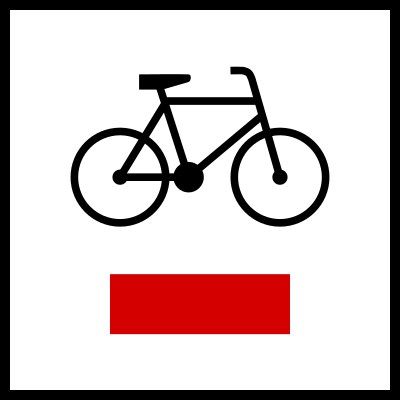
The R-1 - Local Bicycle Trail road sign may also be known by these alternative names or terms.
The R-1 - Local Bicycle Trail road sign is part of the Additional Railway Crossing Signs (G) category, which groups together signs with similar rules and functions.
Reviewing related signs side-by-side aids in distinguishing subtle differences, crucial for theory test revision and accurate sign recognition. Effective traffic sign comparison strengthens your memory and reduces common errors encountered during exam preparation.

Prepare for tram signals ahead with the AT-1 warning sign.

Understand the AT-2 Tram-Activated Signal: Know when trams are coming!
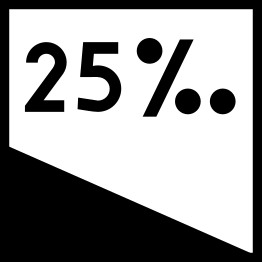
Understand the AT-3 Dangerous Tram Descent warning sign for trams.
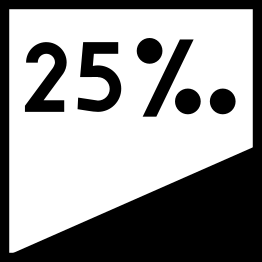
Warning: Steep Tram Ascent Ahead (AT-4)

Understand the AT-5 sign: Tram Collision Movement Warning for Turning Trams
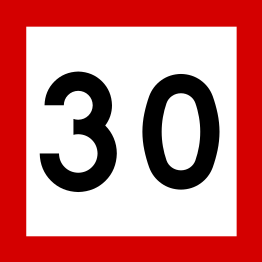
What the BT-1 Tram Speed Limit sign means and how to obey it.

BT-2: Tram Speed Limit Restriction Ends Here

BT-3 Tram Switch Lock: Don't Enter Until Clear!
Deepen your understanding of specific road signs by reviewing official Polish traffic rules and associated real-world driving scenarios. These expert-led resources help you bridge the gap between visual recognition and practical exam application.
Navigating the rules regarding bike paths and road usage is a critical aspect of Polish traffic law. This guide clarifies when a cyclist is obligated to use a designated path marked by a C-13 sign and identifies the rare situations where road use is legally permitted. By mastering these regulations, you will better understand road safety, priority rules, and how to anticipate the actions of cyclists to pass your Polish driving theory exam with confidence.
Learners often struggle to differentiate between binding regulatory signs and mere safety advice, which can lead to confusion during the official theory exam. This guide clarifies the specific role of Polish B-33 prohibitive signs versus international speed recommendations, helping you distinguish between legal mandates and situational safety advice. You will learn to identify key sign types, understand their legal weight, and recognize why adjusting your speed to road conditions remains a fundamental requirement of the Polish driving system.
Know Your Obligations: What to Do After a Road Incident in Poland.
Don't Be a Road Block: Master Minimum Speeds and Smooth Traffic Flow for Your Polish Exam!
The P-27 marking, often called a 'sharrow' (shared arrow), consists of a bicycle symbol with two chevrons above it. It is used on roads where a dedicated bike lane is not present. It informs cyclists where they should position themselves for safety (usually away from the 'door zone' of parked cars) and reminds motorists that cyclists are likely to be present and sharing the lane. It also indicates the correct direction of travel for the cyclist.
The D-6a sign marks a specific location where a bicycle path or lane crosses the roadway. Similar to the pedestrian crossing sign, it is a blue square with a white triangle, but it features a black bicycle silhouette. Drivers must slow down when approaching this point to ensure they do not endanger cyclists who are already on the crossing or entering it. This sign is often used where major cycling routes intersect with motor traffic roads.
After reviewing the full list of Polish road signs, explore specific sign categories for in-depth understanding. Challenge your knowledge with practice questions focused on sign recognition and interpretation to solidify your preparation for the driving theory exam.
Browse All Polish Road Signs