
The R-1b sign is a crucial information sign for cyclists, indicating an upcoming turn in the designated bicycle route. It ensures you stay on the correct path, especially in complex or rural areas. Pay close attention to the direction shown by the colored stripe and prepare to follow it. This sign helps maintain the continuity of cycling routes through intersections.
Accurate road sign interpretation of the R-1b sign is vital for safe cycling and successfully passing your Polish driving theory test. This sign ensures cyclists remain on designated paths, preventing disorientation and potential hazards on shared roads.
The R-1b sign is an essential navigation tool for cyclists. It shows the bicycle symbol and a colored stripe that bends at an angle. It is placed before and at the junction where the trail leaves the current road or path. Without these markers, cyclists could easily lose the designated route, especially in forested or complex rural areas.
Indicates where the cycling route turns left or right.
Get clear, practical answers to the most common questions about the R-1b - Change of Direction of Bicycle Trail road sign. Learn how the sign works, what rules it represents, and how it affects real driving situations. This FAQ strengthens your understanding and supports accurate decision making for the Polish driving theory exam in Poland.
The R-1b sign indicates that the bicycle trail you are following will change direction, turning either left or right. It's an informational sign designed to guide cyclists and ensure they continue on the designated route without getting lost.
When you see the R-1b sign, you should prepare to change direction according to the arrow's indication. It's advisable to slow down as you approach the turn to safely navigate the new terrain. Always confirm the next R-1 marker is visible after completing the turn.
Yes, if the R-1b sign clearly shows a turn, you must not continue straight, as this would mean leaving the designated bicycle path. Also, avoid making a sudden turn without checking for other cyclists behind you, and always ensure the color of the sign matches the trail you've been following.
Yes, even though you're on a bicycle and may not be required by law to signal as a car driver would, it's good practice and recommended to signal your turn to alert other path users, including fellow cyclists, about your intentions. This enhances safety for everyone.
In the theory exam, understanding the R-1b sign is important to ensure you know how to interpret directional signs for cyclists and pedestrians. It tests your ability to follow route guidance and understand the responsibilities associated with using dedicated paths, even when not driving a car.
A clear reference image of the R-1b - Change of Direction of Bicycle Trail road sign used in Poland.
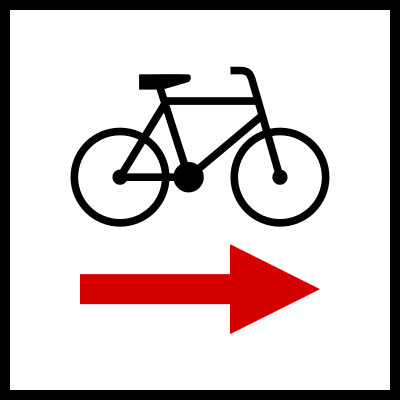
The R-1b - Change of Direction of Bicycle Trail road sign may also be known by these alternative names or terms.
The R-1b - Change of Direction of Bicycle Trail road sign is part of the Additional Railway Crossing Signs (G) category, which groups together signs with similar rules and functions.
Reviewing similar road signs aids in distinguishing subtle differences, improving your sign recognition and recall for the Polish theory test. Effective traffic sign comparison is key to mastering all signage and reducing exam mistakes.

Prepare for tram signals ahead with the AT-1 warning sign.

Understand the AT-2 Tram-Activated Signal: Know when trams are coming!
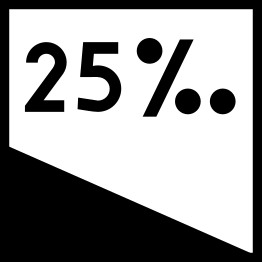
Understand the AT-3 Dangerous Tram Descent warning sign for trams.
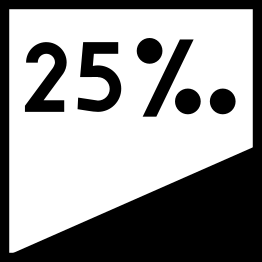
Warning: Steep Tram Ascent Ahead (AT-4)

Understand the AT-5 sign: Tram Collision Movement Warning for Turning Trams
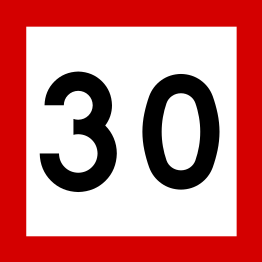
What the BT-1 Tram Speed Limit sign means and how to obey it.

BT-2: Tram Speed Limit Restriction Ends Here

BT-3 Tram Switch Lock: Don't Enter Until Clear!
Deepen your understanding of specific road signs by reviewing official Polish traffic rules and associated real-world driving scenarios. These expert-led resources help you bridge the gap between visual recognition and practical exam application.
Navigating the rules regarding bike paths and road usage is a critical aspect of Polish traffic law. This guide clarifies when a cyclist is obligated to use a designated path marked by a C-13 sign and identifies the rare situations where road use is legally permitted. By mastering these regulations, you will better understand road safety, priority rules, and how to anticipate the actions of cyclists to pass your Polish driving theory exam with confidence.
Master Polish Crossing Markings for a Safer Drive and Exam Success.
Navigate Tram Intersections Like a Pro: Essential for Your Polish Driving Exam.
Learn the exact Polish traffic regulations for yielding to pedestrians at crossings, a crucial element of the national driving theory test. We clarify what constitutes 'yielding' and the significant consequences of non-compliance, including a common €1500 PLN fine and 10 penalty points. This essential knowledge will help you navigate pedestrian areas safely and pass your theory exam.
The F-12 sign is used to guide through-traffic (transit) away from city centers or sensitive areas. It features a symbol of a specific vehicle (usually a truck) and an arrow. By following this sign, long-distance drivers can stay on roads designed for heavy traffic, avoiding narrow streets or residential zones. This sign is an advance warning placed before the junction where the turn must be made.
The R-4d is a classic arrow sign (like the E-4) but dedicated to cyclists. It points directly down a path and gives a specific kilometer reading. It is most commonly found in scenic rural areas or at the transition between a town and a nature trail. It gives the cyclist immediate feedback: 'To the Lake: 4km'—this way.
After reviewing the full list of Polish road signs, explore specific sign categories for in-depth understanding. Challenge your knowledge with practice questions focused on sign recognition and interpretation to solidify your preparation for the driving theory exam.
Browse All Polish Road Signs