
The AT-1 road sign is a crucial warning for tram drivers, indicating that traffic lights controlling tram movement are approaching. This triangular sign, featuring a black traffic light symbol on a yellow background, allows motormen to anticipate signal changes and adjust their speed accordingly. It is specifically designed for trams to ensure smooth stops and prevent passenger discomfort, highlighting the importance of recognizing and preparing for these signals.
This AT-1 sign warns tram drivers of upcoming traffic signals, ensuring timely preparation for stops and smooth operation. Mastering this road sign meaning is crucial for your theory test revision and safe urban navigation.
The AT-1 sign is part of the additional signs for tram drivers. It is a triangular warning sign with a black traffic light symbol on a yellow background. It alerts the motorman that a dedicated tram signal (S-6) or general traffic light is ahead. This ensures the tram driver can begin slowing the heavy vehicle in time to stop smoothly at a red signal, preventing hard braking which could injure standing passengers.
Warns the tram driver that they are approaching a location where traffic is controlled by signals.
Get clear, practical answers to the most common questions about the AT-1 - Tram Traffic Signals Warning road sign. Learn how the sign works, what rules it represents, and how it affects real driving situations. This FAQ strengthens your understanding and supports accurate decision making for the Polish driving theory exam in Poland.
The AT-1 sign warns tram drivers that they are approaching traffic signals that control tram movement. This means the driver should be prepared to stop or adjust their speed based on the signal's indication ahead.
This sign is important because it allows tram drivers to anticipate signal changes. By slowing down in advance, they can avoid harsh braking, which is crucial for the safety and comfort of standing passengers on a heavy vehicle like a tram.
No, the AT-1 sign is exclusively for tram drivers. Regular motor vehicle drivers do not need to react to this specific sign, as it pertains to the tram's operational signals.
Upon seeing the AT-1 sign, a tram driver should begin to reduce speed in a controlled manner. They should observe the traffic signals ahead carefully and be ready to stop if the signal indicates so, ensuring they can navigate the intersection safely.
A common trap is confusing this sign with general traffic signals that apply to all vehicles. Learners might incorrectly assume it requires a specific action from car drivers. It's vital to remember AT-1 is a tram-specific warning.
A clear reference image of the AT-1 - Tram Traffic Signals Warning road sign used in Poland.

The AT-1 - Tram Traffic Signals Warning road sign may also be known by these alternative names or terms.
The AT-1 - Tram Traffic Signals Warning road sign is part of the Additional Railway Crossing Signs (G) category, which groups together signs with similar rules and functions.
Reviewing adjacent or related road signs aids in distinguishing subtle differences, crucial for accurate recognition and fewer errors during your theory test revision. Comparing similar road signs actively sharpens your sign recognition skills and deepens your understanding for the exam.

Understand the AT-2 Tram-Activated Signal: Know when trams are coming!
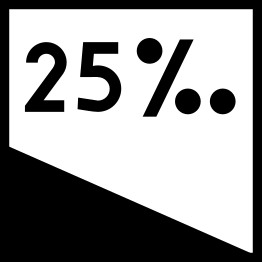
Understand the AT-3 Dangerous Tram Descent warning sign for trams.
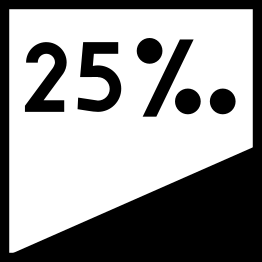
Warning: Steep Tram Ascent Ahead (AT-4)

Understand the AT-5 sign: Tram Collision Movement Warning for Turning Trams
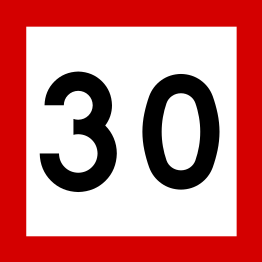
What the BT-1 Tram Speed Limit sign means and how to obey it.

BT-2: Tram Speed Limit Restriction Ends Here

BT-3 Tram Switch Lock: Don't Enter Until Clear!
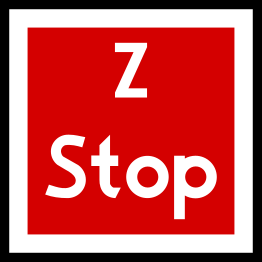
Stop and manually check the tram switch with the BT-4 sign.
Deepen your understanding of specific road signs by reviewing official Polish traffic rules and associated real-world driving scenarios. These expert-led resources help you bridge the gap between visual recognition and practical exam application.
Navigate Tram Intersections Like a Pro: Essential for Your Polish Driving Exam.
Learn why driving in Poland with a foreign license is illegal if your Polish driving privileges have been revoked. This article explains the fundamental principle that driving entitlements are personal and singular under Polish law, as reinforced by court rulings, helping you understand the strict requirements for legal driving.
Master Polish Crossing Markings for a Safer Drive and Exam Success.
Navigating Polish intersections requires a deep understanding of how trams, known locally as 'tramwaje', are prioritized. This guide breaks down the specific rules governing tram priority, particularly in equal priority ('skrzyżowania równorzędne') situations, ensuring you know exactly when to yield. Mastering these nuances is essential for safe urban driving and achieving a high score on your driving theory test.
The C-5 sign features a white arrow pointing vertically upward on a blue background. It mandates that vehicles proceed only in a straight direction at the nearest intersection or where a change of direction is possible. It is frequently used on high-traffic roads to prevent congestion caused by turning vehicles or to stop drivers from entering narrow side streets that cannot handle current traffic volumes.
The E-15c sign features white letters and numbers on a blue background. In Poland, motorways are the highest class of road, featuring at least two lanes in each direction, a hard shoulder, and no flat intersections. These are often toll roads. The blue color is the primary indicator that you are on or approaching an 'Autostrada'.
After reviewing the full list of Polish road signs, explore specific sign categories for in-depth understanding. Challenge your knowledge with practice questions focused on sign recognition and interpretation to solidify your preparation for the driving theory exam.
Browse All Polish Road Signs