
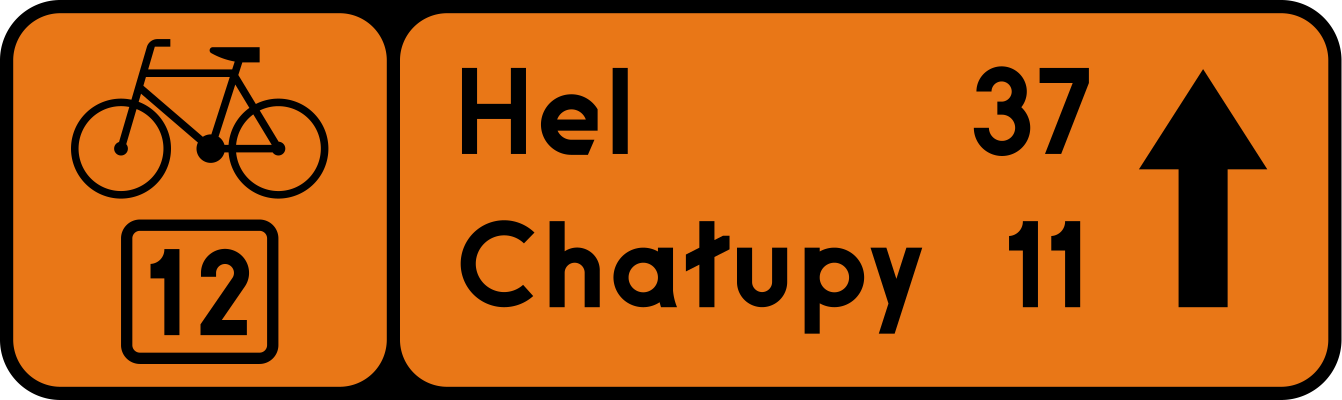
The R-4c sign, a directional board for bicycle trails, functions much like a road sign for cyclists, indicating directions to towns or landmarks. Placed at junctions, it uses arrows and names to guide you along designated cycling paths, often found in rural or forest areas. It's crucial for cyclists to read this sign from a distance and follow the indicated direction for their chosen destination to ensure safe and efficient navigation.
The R-4c Directional Board for Bicycle Trails provides crucial guidance at multi-path junctions, essential for cyclists navigating Polish routes. Understanding this road sign meaning helps you make correct navigational decisions and is vital for your driving theory test revision regarding bicycle infrastructure.
The R-4c sign is the cycling equivalent of the E-2a. It is a large rectangular board placed at junctions. It lists the names of towns and landmarks and uses arrows to show which branch of the intersection to take. It is designed to be readable from a distance by cyclists, helping them navigate complex rural or forest crossroads where several trails might meet.
A rectangular board at a junction pointing toward cities or landmarks reachable by bike.
Get clear, practical answers to the most common questions about the R-4c - Directional Board for Bicycle Trail road sign. Learn how the sign works, what rules it represents, and how it affects real driving situations. This FAQ strengthens your understanding and supports accurate decision making for the Polish driving theory exam in Poland.
The R-4c sign is specifically for cyclists. It's a directional board placed at junctions to show the way to towns, landmarks, or specific destinations via bicycle trails. It helps cyclists navigate complex routes and choose their intended path.
A cyclist should look for the name of their intended destination on the R-4c sign and follow the arrow pointing towards it. The sign helps you choose the correct branch of an intersection to stay on your planned route.
Yes, the R-4c sign may include additional symbols indicating services like 'Bike Repair', 'Rest Area', 'Shelter', or 'Water'. Cyclists should pay attention to these icons as they can provide useful information about facilities available along the route.
Common mistakes include ignoring adjacent signs like 'Private Road' warnings, stopping in the middle of a narrow trail to decipher the board, or not choosing a specific destination and thus missing the correct turn. It's also important to note if a route might lead to challenging terrain, like hilly areas, as indicated by the destination name.
No, the R-4c sign is exclusively for cyclists. While car drivers might encounter these signs in areas where bicycle paths are present, they are not relevant to road traffic rules for motor vehicles. Car drivers should be aware of cyclists and these signs to anticipate cyclist movements.
A clear reference image of the R-4c - Directional Board for Bicycle Trail road sign used in Poland.
The R-4c - Directional Board for Bicycle Trail road sign may also be known by these alternative names or terms.
The R-4c - Directional Board for Bicycle Trail road sign is part of the Additional Railway Crossing Signs (G) category, which groups together signs with similar rules and functions.
Reviewing related signs like the R-4c alongside others helps cement your understanding and distinguish between similar traffic signs. This focused comparison is key for effective theory test revision and improving your sign recognition skills.

Prepare for tram signals ahead with the AT-1 warning sign.

Understand the AT-2 Tram-Activated Signal: Know when trams are coming!
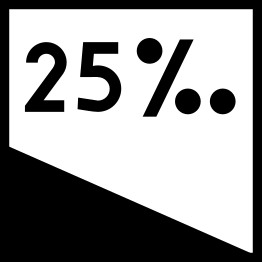
Understand the AT-3 Dangerous Tram Descent warning sign for trams.
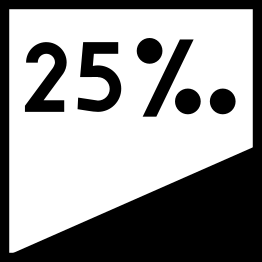
Warning: Steep Tram Ascent Ahead (AT-4)

Understand the AT-5 sign: Tram Collision Movement Warning for Turning Trams
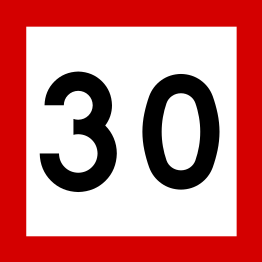
What the BT-1 Tram Speed Limit sign means and how to obey it.
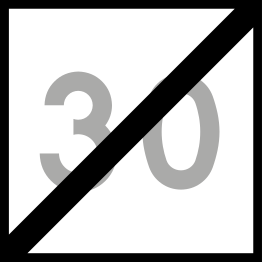
BT-2: Tram Speed Limit Restriction Ends Here

BT-3 Tram Switch Lock: Don't Enter Until Clear!
Deepen your understanding of specific road signs by reviewing official Polish traffic rules and associated real-world driving scenarios. These expert-led resources help you bridge the gap between visual recognition and practical exam application.
Navigating the rules regarding bike paths and road usage is a critical aspect of Polish traffic law. This guide clarifies when a cyclist is obligated to use a designated path marked by a C-13 sign and identifies the rare situations where road use is legally permitted. By mastering these regulations, you will better understand road safety, priority rules, and how to anticipate the actions of cyclists to pass your Polish driving theory exam with confidence.
Don't Be a Road Block: Master Minimum Speeds and Smooth Traffic Flow for Your Polish Exam!
Every vehicle registered in Poland must have valid third-party liability insurance (OC) at all times, regardless of whether the car is driven or parked in a private garage. This guide clarifies the automated enforcement process managed by the Insurance Guarantee Fund and the substantial financial risks associated with even a single-day lapse in coverage. By mastering these administrative requirements, you will be prepared to handle vehicle ownership duties confidently and avoid avoidable legal penalties.
Mastering Lane Discipline and Priority at Polish Intersections with Arrow Signals
The R-4a sign provides a mini-map or schematic. It shows where the trail goes, including sharp turns or splits that might not be obvious. It is particularly useful in urban settings where a bike trail might weave through parks, cross several streets, and use back alleys. It helps the cyclist visualize the upcoming path and avoid getting lost in the urban 'maze'.
The E-2b is placed above the roadway, typically on multi-lane roads or at complex interchanges. By placing the information directly over the lanes, it clearly communicates 'lane-specific' navigation—for example, showing that the two left lanes go straight to Warsaw, while the right lane exits toward Krakow. This is essential for maintaining high-speed traffic flow in urban areas and near expressways where side-mounted signs might be obscured by trucks.
After reviewing the full list of Polish road signs, explore specific sign categories for in-depth understanding. Challenge your knowledge with practice questions focused on sign recognition and interpretation to solidify your preparation for the driving theory exam.
Browse All Polish Road Signs