
This D-36a traffic sign, meaning 'Escalator Up,' informs drivers and pedestrians that a pedestrian overpass is equipped with an escalator moving upwards. This sign is typically found in urban areas or busy locations to make crossing high bridges more accessible and less physically demanding. When you encounter this sign, remember that it's designed to guide pedestrians to use the escalator for ascent, ensuring a safer and more convenient way to reach the overpass. Pedestrians should be mindful of escalator etiquette, such as standing to the right and holding the handrail.
Master the D-36a 'Escalator Up' sign, essential for navigating Polish pedestrian overpasses with upward escalators, and improve your theory test revision by recognising its meaning and application on the road.
The D-36a sign is the 'upward' version of the escalator sign. It indicates that the bridge can be accessed via an escalator. This significantly eases the effort required to cross a high bridge, especially at large transit hubs or in hilly cities. It is shown with a zigzag line pointing upwards next to the person silhouette.
Indicates a pedestrian overpass equipped with an upward escalator.
Get clear, practical answers to the most common questions about the D-36a - Escalator Up road sign. Learn how the sign works, what rules it represents, and how it affects real driving situations. This FAQ strengthens your understanding and supports accurate decision making for the Polish driving theory exam in Poland.
The D-36a sign indicates that a pedestrian overpass ahead is fitted with an escalator that moves in the upward direction. Its purpose is to facilitate easier access to the overpass, particularly useful in areas with steep inclines or high pedestrian traffic.
This sign is primarily for pedestrians. For drivers, it serves as an indicator of pedestrian facilities. Pedestrians should use the escalator to ascend to the overpass, standing to the right to allow others to pass on the left, and always holding the handrail.
Yes, you should not attempt to walk down the 'up' escalator, as it's designed only for ascent. It's also unsafe to let children play near the moving parts, and large wheeled items like shopping carts should not be placed on it; a lift or stairs are usually provided for such items.
The theory exam tests your understanding of road signs and traffic situations. Knowing what the D-36a sign signifies helps you anticipate pedestrian behaviour near overpasses and understand traffic management in urban areas, demonstrating your awareness of road safety and infrastructure.
No, the D-36a sign specifically denotes an 'Escalator Up'. You should only use it for ascending. If there is a separate escalator or stairs for descent, it will be indicated by different signage. Always check for appropriate signs before using pedestrian facilities.
A clear reference image of the D-36a - Escalator Up road sign used in Poland.
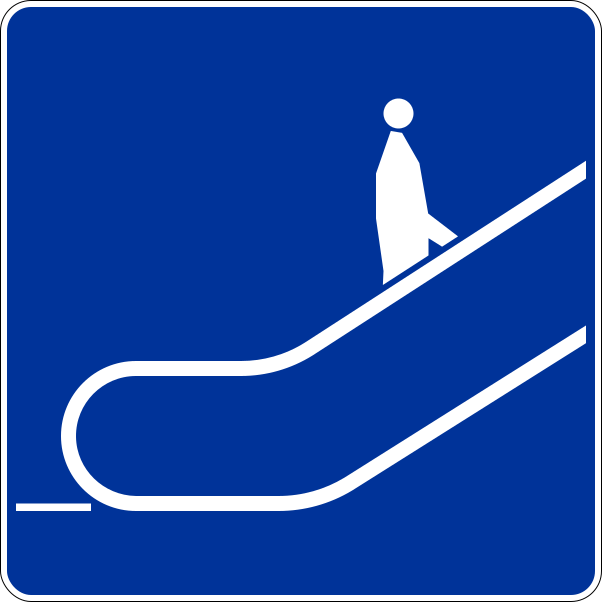
The D-36a - Escalator Up road sign may also be known by these alternative names or terms.
The D-36a - Escalator Up road sign is part of the Information Signs (D) category, which groups together signs with similar rules and functions.
Comparing 'Escalator Up' with similar traffic sign comparison examples helps solidify your knowledge. Master sign recognition and boost your theory test revision by understanding subtle differences between related road signs.
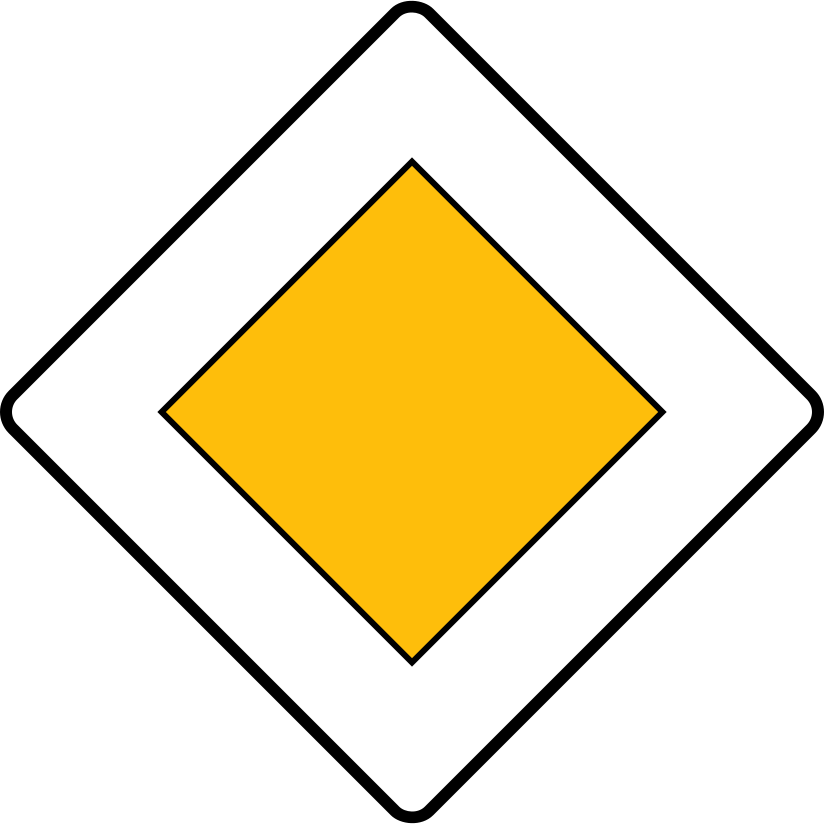
The D-1 Priority Road sign means you have the right of way.
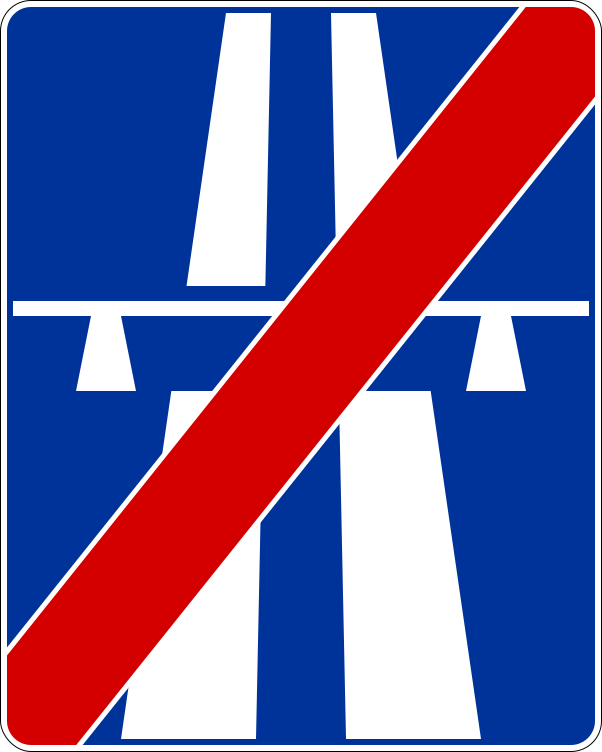
Prepare for the End of the Motorway with the D-10 Sign
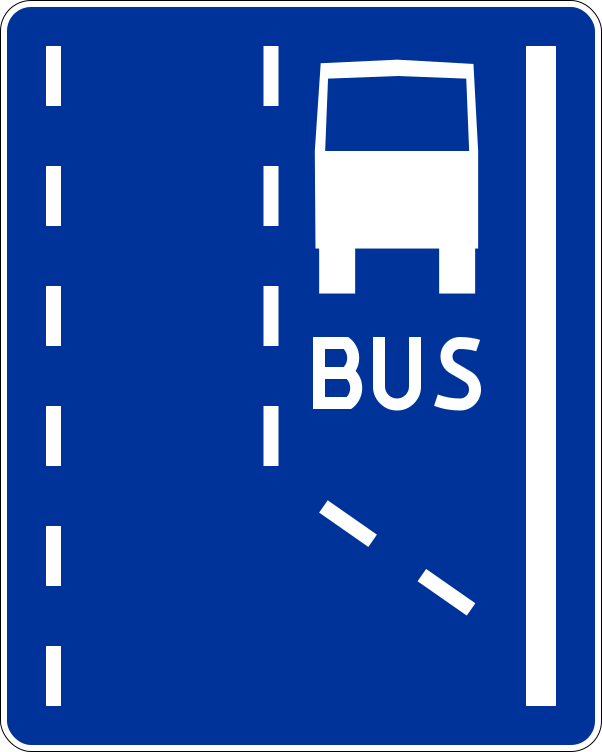
D-11 Road Sign: You're Approaching the Start of a Bus Lane
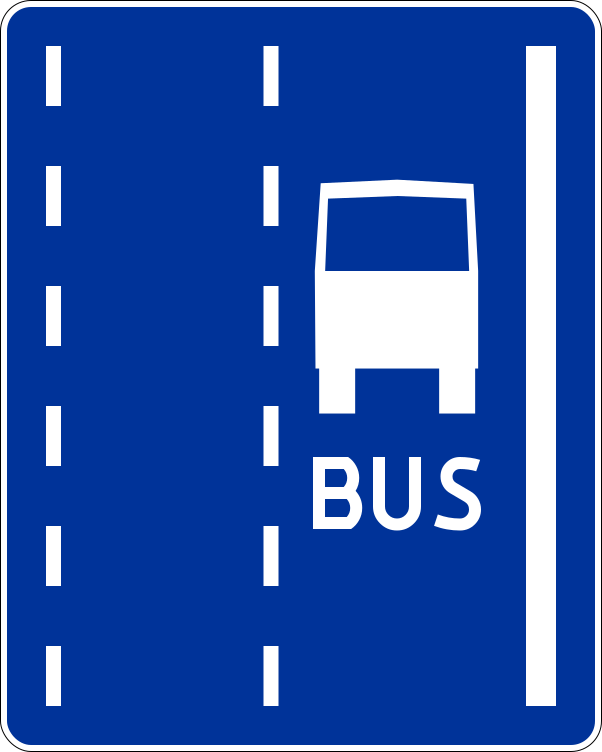
The D-12 'Bus Lane' sign confirms the lane remains exclusively for buses and authorized vehicles.
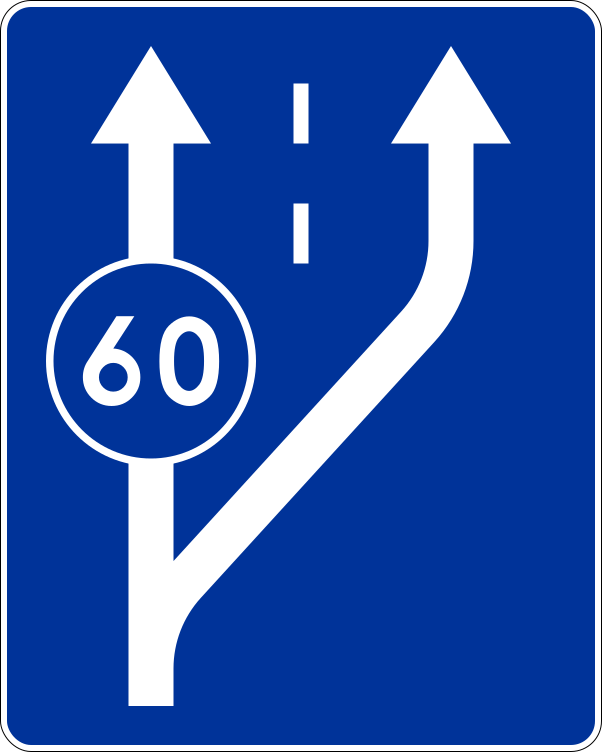
D-13 Sign: Prepare for the Start of a Slow-Moving Traffic Lane
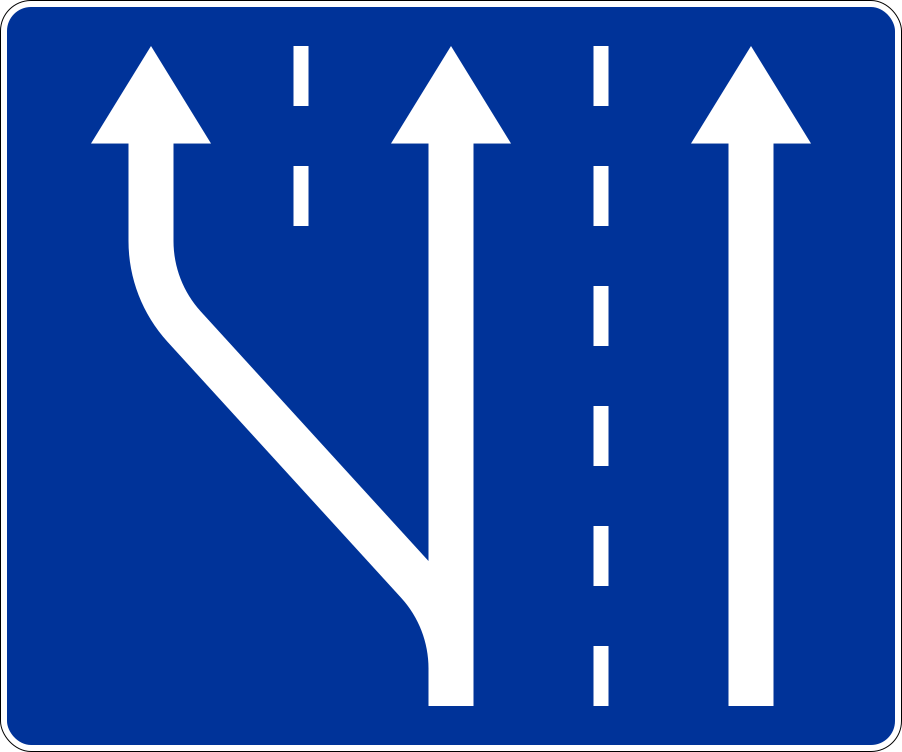
The D-13a 'Start of Lane' sign means a new lane is opening up ahead.
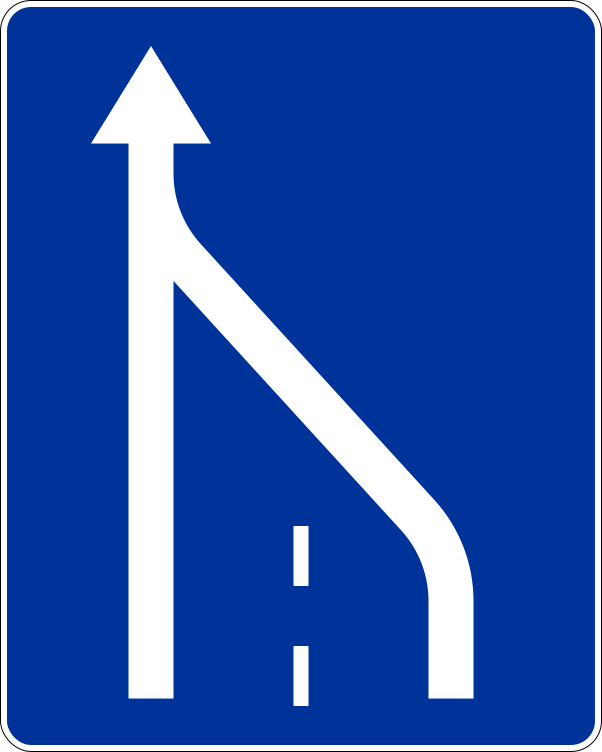
D-14 End of Lane: Know When and How to Merge Safely
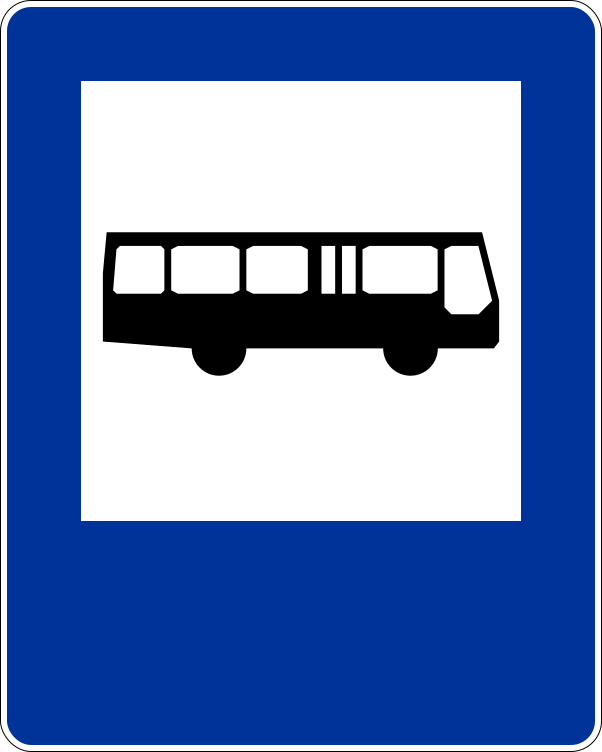
The D-15 'Bus Stop' Sign: Understanding and Reacting to Public Transport Stops
Deepen your understanding of specific road signs by reviewing official Polish traffic rules and associated real-world driving scenarios. These expert-led resources help you bridge the gap between visual recognition and practical exam application.
This article provides a detailed explanation of how Polish traffic signs A-7 ('Ustąp Pierwszeństwa' - Yield), B-20 ('STOP'), and D-1 ('Droga z Pierwszeństwem' - Priority Road) dictate right-of-way at intersections. Understanding the nuances of these signs is a fundamental aspect of the Polish driving theory exam, and mastering them will significantly improve your preparedness for real-world driving scenarios.
Even a Second Can Be Fatal: Understand Microsleep to Drive Safely in Poland.
Learn the critical distinctions between the Polish A-16 warning sign and the D-6 pedestrian crossing sign. This guide explains your legal responsibilities when approaching these areas, including the mandatory speed reduction and yielding requirements. Understand the significant penalties, such as hefty fines and accumulating penalty points, especially the 'recydywa' (repeat offender) system in Poland, which can lead to immediate license suspension.
Don't Be a Road Block: Master Minimum Speeds and Smooth Traffic Flow for Your Polish Exam!
The D-36 sign shows a person walking up stairs. It signifies a pedestrian bridge (overpass) crossing the roadway. These are commonly built over wide motorways or expressways where a ground-level crossing would be impossible or too dangerous. For drivers, it serves as a landmark and a reminder that pedestrians should not be on the roadway itself.
The D-35 sign shows a person walking down stairs. It informs pedestrians that there is a safe way to cross a busy road or railway without having to interact with traffic. For drivers, this sign explains why there may be no zebra crossings on a busy stretch—pedestrians are expected to go under the road. These are often found at large intersections or near train stations.
After reviewing the full list of Polish road signs, explore specific sign categories for in-depth understanding. Challenge your knowledge with practice questions focused on sign recognition and interpretation to solidify your preparation for the driving theory exam.
Browse All Polish Road Signs