
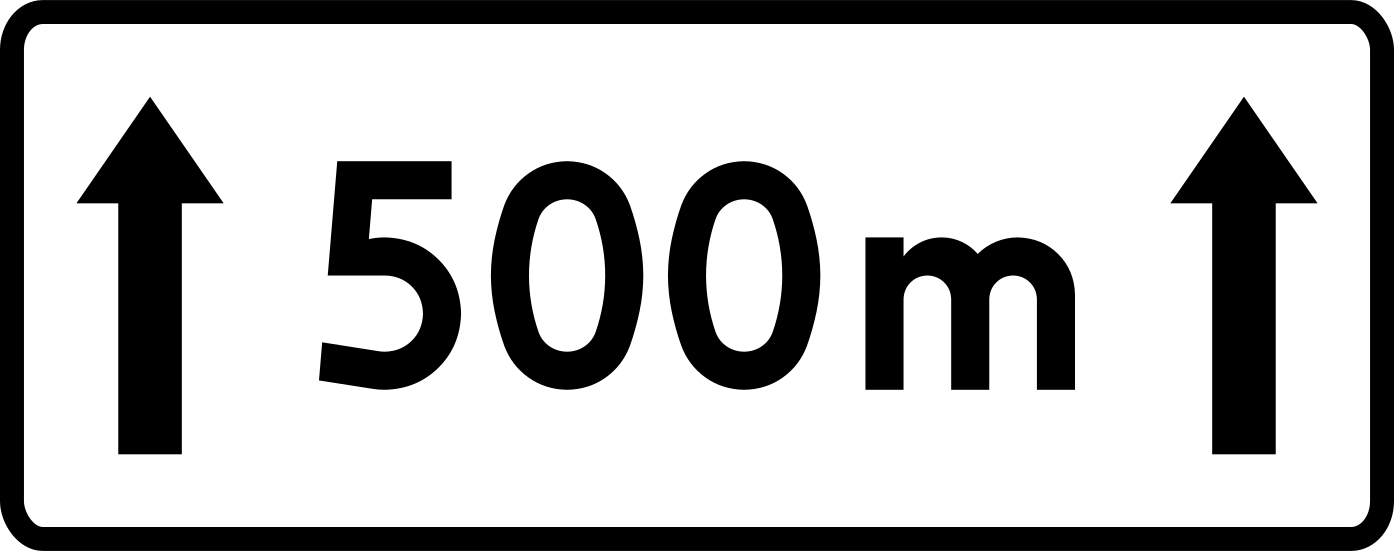
The T-20 supplementary plate, often seen with signs like 'Speed Limit' or 'No Stopping', clarifies the exact distance over which a restriction applies. For instance, if you see a speed limit sign with a T-20 plate showing '↑ 500 m ↑', it means the lower speed limit is in effect for exactly 500 meters from the sign. This sign is crucial for understanding temporary restrictions in Poland and helps drivers know precisely when they can resume normal driving behaviour, which is vital knowledge for the theory exam.
The T-20 'Length of Prohibition' sign is crucial for understanding distance-based restrictions in Polish traffic law. Learn its specific meaning to correctly interpret prohibitions and avoid penalties during your driving theory test.
The T-20 plate is used with prohibitory signs like B-33 (Speed limit) or B-36 (No stopping). It looks like '↑ 500 m ↑'. It tells the driver that the rule starts at the sign and ends exactly after the specified distance. This is often used on stretches of road between intersections where a specific risk (like a school or a narrow bridge) requires a lower speed limit for a short, defined period.
Indicates the distance over which a restriction (like speed or parking) applies.
Get clear, practical answers to the most common questions about the T-20 - Length of Prohibition road sign. Learn how the sign works, what rules it represents, and how it affects real driving situations. This FAQ strengthens your understanding and supports accurate decision making for the Polish driving theory exam in Poland.
The T-20 sign is a supplementary plate used with prohibitory signs. It indicates the specific distance, typically in meters, over which the main sign's restriction (like a speed limit or no stopping zone) is active. The prohibition starts at the sign and ends after the specified distance.
You should pay close attention to the distance indicated on the T-20 plate, often shown with upward arrows on both sides (e.g., '↑ 500 m ↑'). You can use your trip odometer to track the distance covered since passing the sign. Once you have travelled the specified distance, the restriction automatically ends, and normal rules apply.
A common mistake is assuming the prohibition ends at the next intersection or simply guessing when it might be over. Learners might also incorrectly assume the restriction continues indefinitely or ignore it because the reason for it isn't immediately obvious. Always adhere to the stated distance on the T-20 plate.
No, you must maintain the imposed restriction, such as the lower speed limit, for the full distance indicated by the T-20 plate. Resuming normal speed before reaching the end of the specified distance is a violation and could be an exam trap. The prohibition is only lifted after you have travelled the full measurement.
The T-20 sign is most commonly used with signs that impose a temporary restriction over a distance, such as 'B-33 Speed limit' or 'B-36 No stopping' or 'B-35 No parking'. It's designed to manage traffic flow and safety on specific road segments, like those between junctions or near hazard areas.
A clear reference image of the T-20 - Length of Prohibition road sign used in Poland.
The T-20 - Length of Prohibition road sign may also be known by these alternative names or terms.
The T-20 - Length of Prohibition road sign is part of the Supplementary Plates (T) category, which groups together signs with similar rules and functions.
Comparing related road signs like this one with others aids theory test revision and sign recognition. Understanding subtle differences helps you master traffic sign comparison for fewer mistakes.
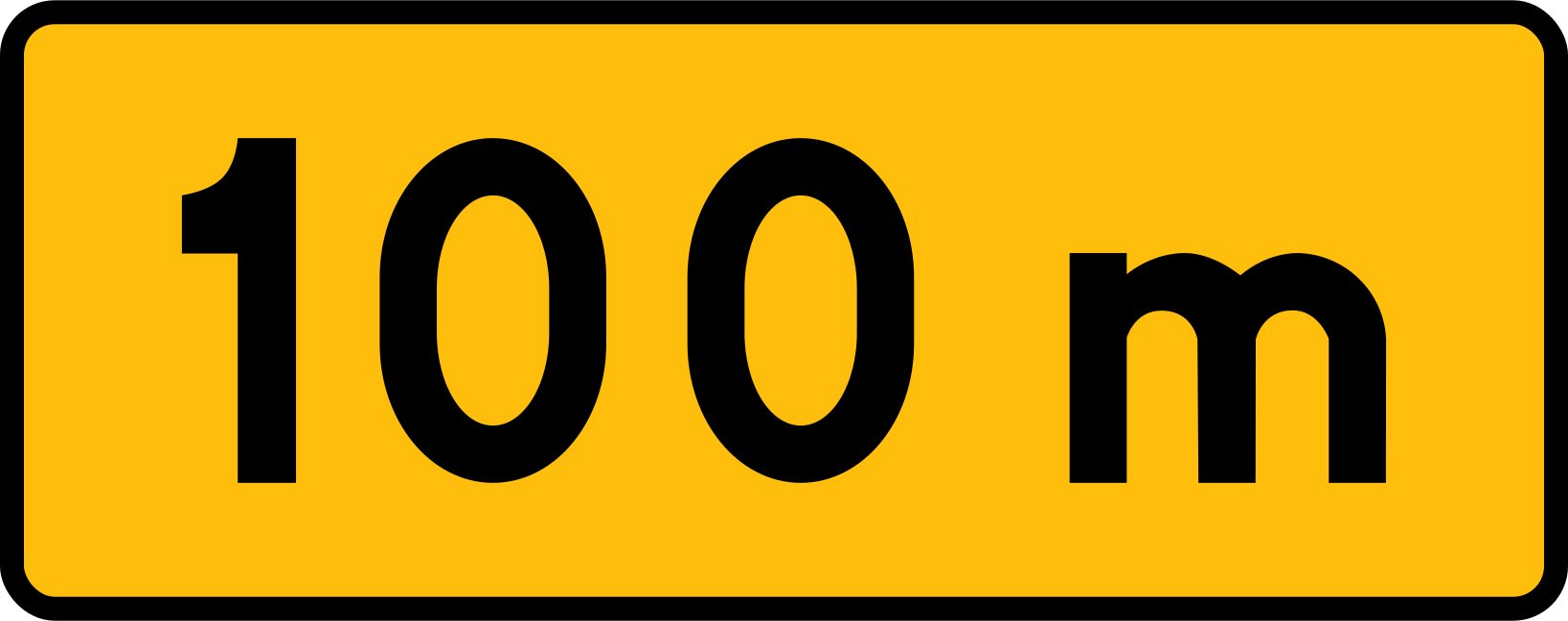
Understand the T-1 'Distance to Hazard' Plate for Safe Driving
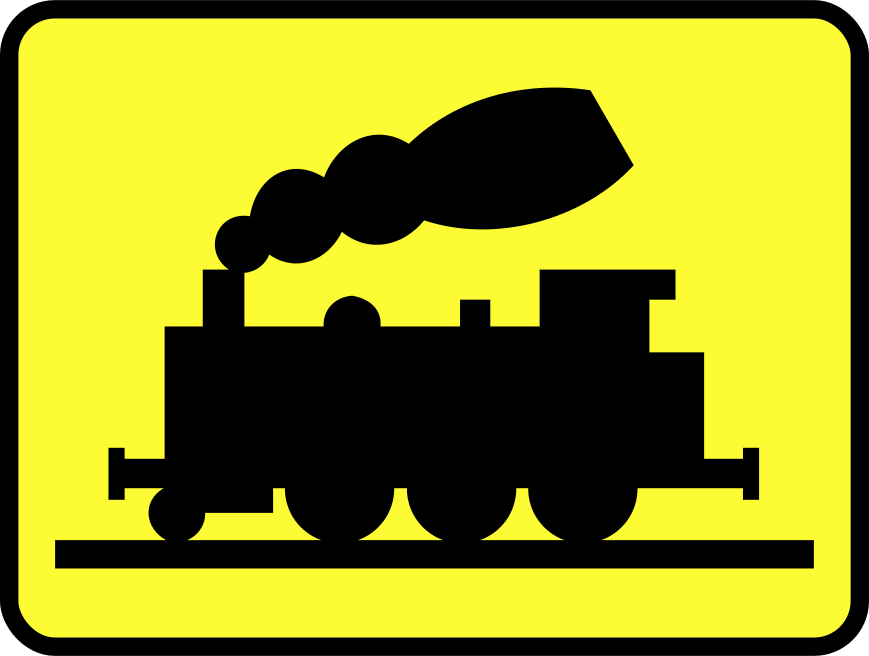
Beware of the T-10 sign: Industrial Railway Siding Ahead
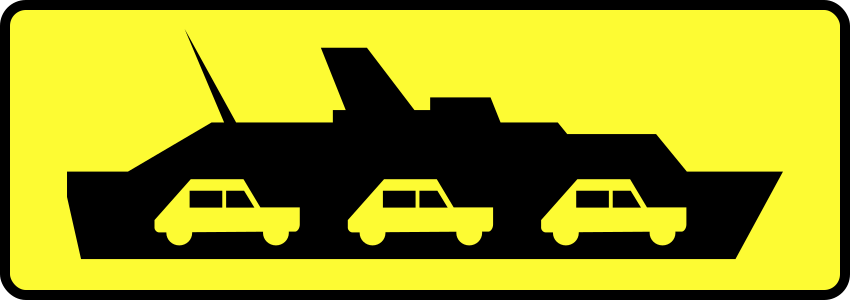
Prepare for a Ferry Crossing with the T-11 Warning Sign
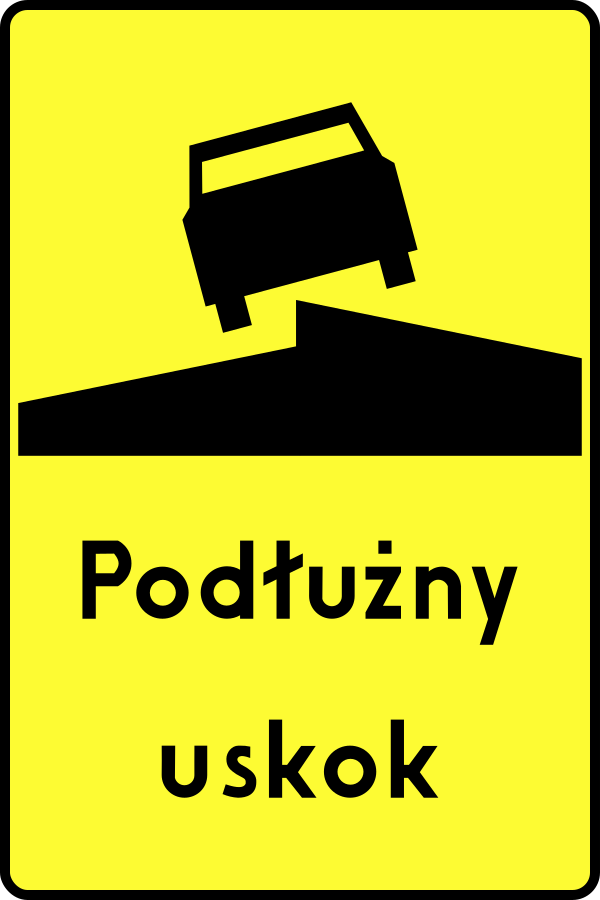
Watch out for the T-12 sign warning of a longitudinal step in the road surface!
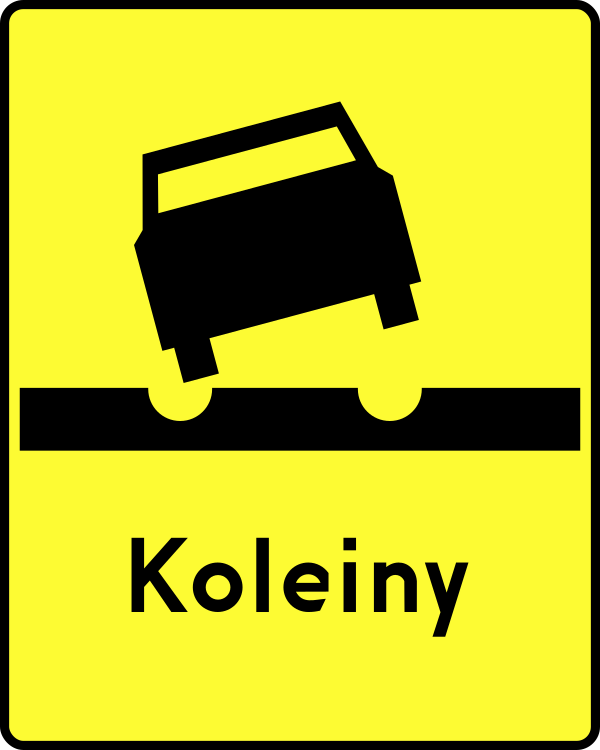
Warning: Deep Road Surface Ruts Ahead (T-13)
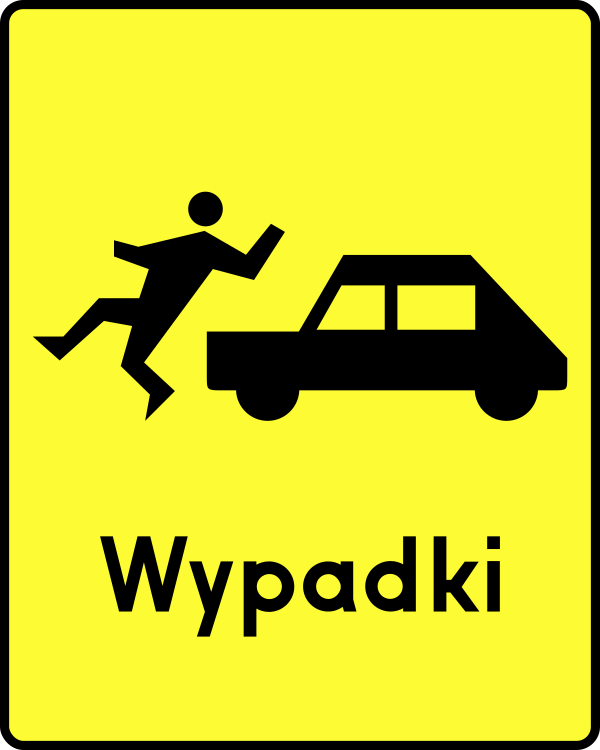
T-14: Beware of Frequent Pedestrian Accidents Ahead!
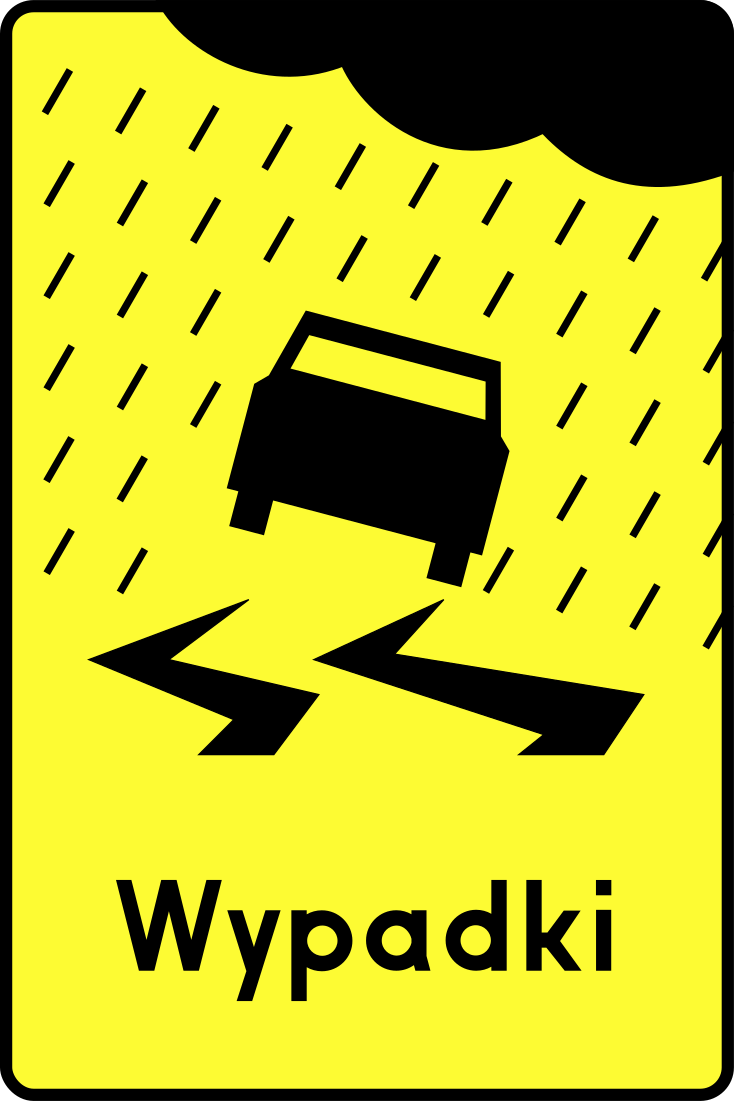
Beware: This Road Can Become Extremely Slippery When Wet!
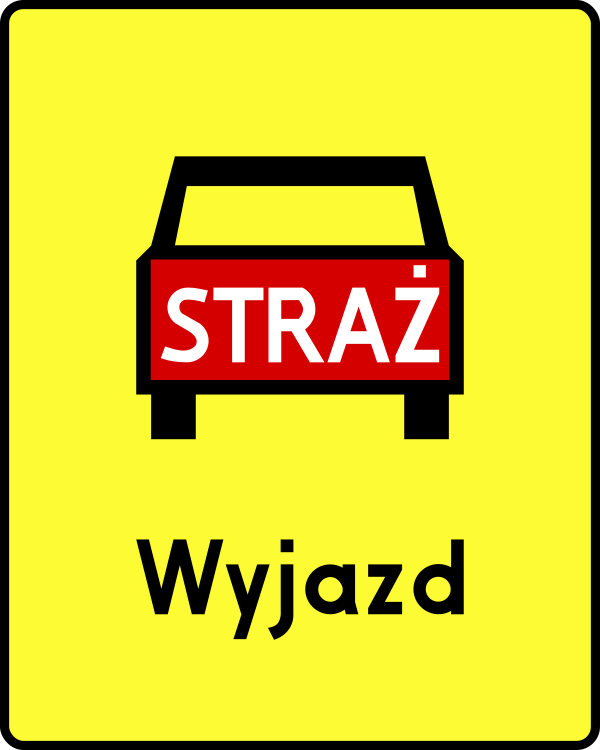
Prepare for sudden fire truck departures with the T-16 Fire Engine Exit sign.
Deepen your understanding of specific road signs by reviewing official Polish traffic rules and associated real-world driving scenarios. These expert-led resources help you bridge the gap between visual recognition and practical exam application.
This article provides a detailed explanation of how Polish traffic signs A-7 ('Ustąp Pierwszeństwa' - Yield), B-20 ('STOP'), and D-1 ('Droga z Pierwszeństwem' - Priority Road) dictate right-of-way at intersections. Understanding the nuances of these signs is a fundamental aspect of the Polish driving theory exam, and mastering them will significantly improve your preparedness for real-world driving scenarios.
Learn the precise regulations for towing trailers in Poland with a Category B driving license. This guide breaks down the differences between the standard B license, the enhanced Code 96, and the full B+E category, focusing on weight limits and when each is necessary. This knowledge is vital for safe driving and for correctly answering exam questions on vehicle combinations.
Know Your Obligations: What to Do After a Road Incident in Poland.
Master Polish Crossing Markings for a Safer Drive and Exam Success.
The B-31 sign is placed at one end of a narrow passage (like a bridge or roadworks) where two vehicles cannot safely pass each other. If you see this sign (with the red arrow on your side), you MUST stop and wait for any oncoming vehicles that are already in or approaching the narrow section. The driver on the other side will see a blue D-5 sign, indicating they have priority.
The B-18 sign protects roads and bridges that are not strong enough to support very heavy loads. Unlike other signs that look at 'allowed weight' on paper, this sign looks at the 'actual weight' (masa rzeczywista) of the vehicle at that moment. Overweight vehicles can cause permanent structural damage or even cause a bridge to collapse.
After reviewing the full list of Polish road signs, explore specific sign categories for in-depth understanding. Challenge your knowledge with practice questions focused on sign recognition and interpretation to solidify your preparation for the driving theory exam.
Browse All Polish Road Signs