
This lesson focuses on regulatory road signs that dictate obligations and prohibitions specifically for moped riders in Spain. Building on your understanding of general traffic signals, you will learn to correctly interpret the meaning of these crucial signs. Mastering this topic is essential for navigating urban roads legally and safely, and for successfully answering DGT exam questions.
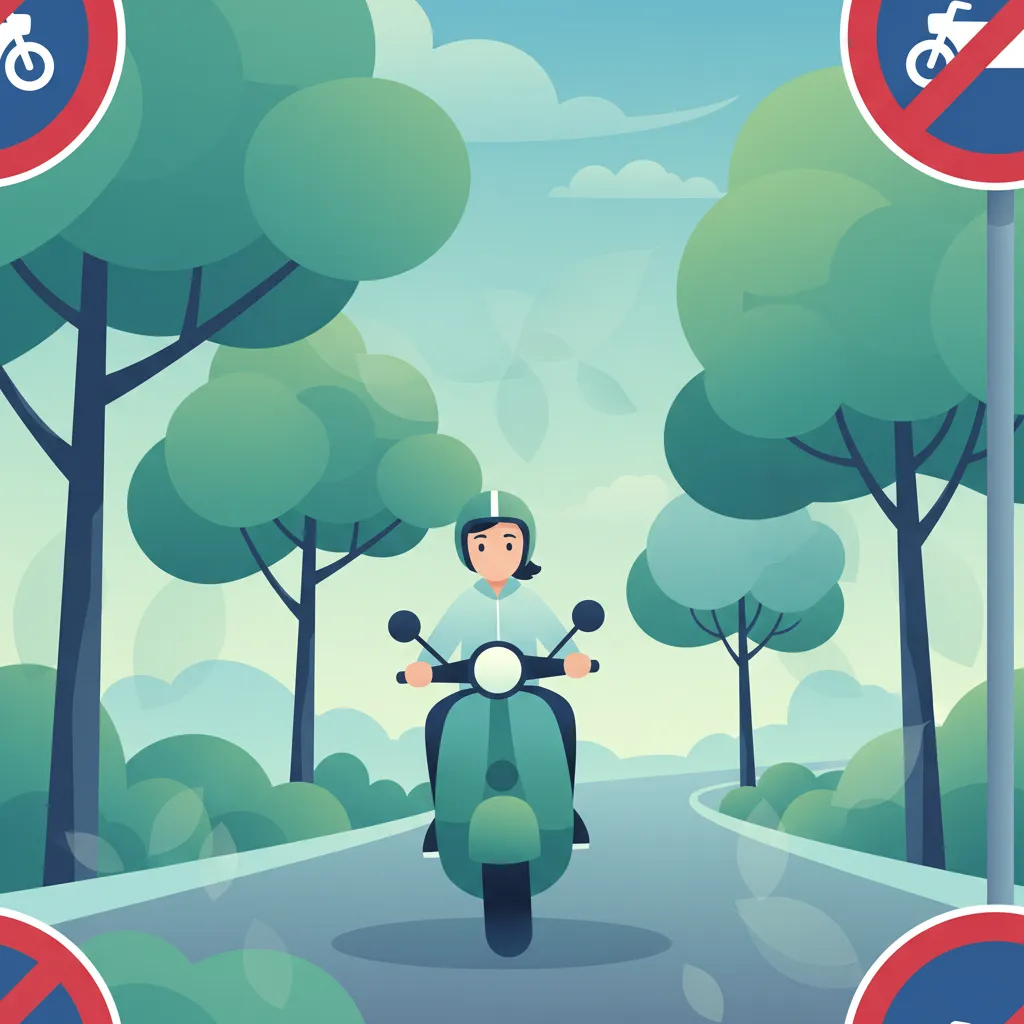
Lesson content overview
Learning to navigate the roads safely and legally as a moped rider in Spain involves mastering a crucial aspect of traffic law: regulatory road signs. These signs are the primary legal instruments that dictate obligations, prohibitions, and specific instructions to all road users. For those preparing for the Spanish Category AM theoretical exam, a thorough understanding of these signs is not just important—it's mandatory for both passing the exam and ensuring safety on the road.
This comprehensive lesson introduces the various types of regulatory signs, focusing specifically on those most relevant to mopeds (Category AM vehicles). We will explore their distinctive shapes, colours, and symbols, and explain how to correctly interpret them to make informed decisions while riding. By the end of this chapter, you will be equipped to identify, understand, and comply with these critical traffic directives, confidently navigating urban and mixed traffic environments while avoiding potential fines and ensuring your safety.
Regulatory road signs serve as the authoritative language of the road, communicating binding instructions that are legally enforceable. They ensure predictable traffic flow, reduce confusion, and enhance safety for all users, particularly vulnerable road users like moped riders. For mopeds, these signs often address specific vulnerabilities and performance characteristics, guiding riders on appropriate speeds, lane usage, and access restrictions.
Understanding these signs is foundational. Incorrect interpretation or non-compliance can lead to serious consequences, including traffic violations, fines, points deductions from a future driving license, and, most critically, dangerous situations or accidents. This lesson builds upon basic traffic signal theory, providing the essential knowledge required for subsequent modules on road positioning, intersection priorities, and speed management within the Spanish Driving License Theory – AM Category curriculum.
Regulatory signs are designed to be instantly recognisable, conveying their critical message at a glance. Their standardised design, including shape, colour, and symbols, follows a universal system that makes rapid recognition and decision-making possible.
The core principles of regulatory sign classification include:
This clear visual coding provides an immediate cue about the type of action required or forbidden, ensuring that all road users, including moped riders, can react appropriately and in a timely manner.
Speed limits are among the most common and crucial regulatory signs. They are designed to control vehicle kinetic energy, reduce the severity of accidents, and align with the capabilities and safety considerations of different vehicle types and road conditions. For mopeds, strict adherence to these limits is vital for safety, particularly in urban environments.
The maximum speed limit sign clearly displays the highest speed (in kilometres per hour, km/h) that a vehicle may travel on the stretch of road ahead. For mopeds (Category AM vehicles) in Spain, typical limits are 30 km/h in many urban areas and 45 km/h on non-urban roads where specific moped rules apply, though general urban limits can be 50 km/h depending on the road type and local regulations. Always be aware that these general limits may be superseded by specific signs.
Practical Meaning for Mopeds: As a moped rider, you must adjust your throttle and gear selection to ensure your speed never exceeds the displayed limit, regardless of road conditions or whether you feel you could go faster. Your speedometer reading is your primary tool for compliance.
Associated Rules: According to the Reglamento General de Circulación (RGC), Articles 70-73, exceeding the displayed speed constitutes a traffic violation, which can lead to fines and potential point penalties on a future driving license.
Common Misunderstanding: Some moped riders might mistakenly believe that lower speed limits, such as 30 km/h zones, primarily apply to cars or are advisory. However, these limits are mandatory for all vehicles, including mopeds, even if a moped's maximum speed is often naturally lower than other motor vehicles.
Always scan ahead for speed limit signs, especially when entering new zones (e.g., residential areas, school zones). Be prepared to adjust your speed smoothly and in good time.
This sign signals the termination of a specific speed restriction. Once you pass this sign, the default speed limit for that particular road type applies, unless another speed limit sign is immediately encountered. For example, in an urban environment, if a 30 km/h zone ends, the default urban speed limit (often 50 km/h on two-lane roads, or 20 km/h on single platform roads) would apply again.
Practical Meaning: Upon seeing this sign, you are no longer bound by the previous, lower speed limit. You may accelerate to the general speed limit for the road type you are on, provided it is safe to do so and no new limit is posted.
Associated Rules: RGC Article 72 clarifies that the end of a speed limit sign removes the earlier restriction, allowing for a return to general limits.
Common Misunderstanding: Riders sometimes maintain the previous reduced speed limit out of habit or uncertainty. It's crucial to recognise the "end" sign as permission to revert to the standard limits for the road type. However, always exercise caution and adapt your speed to actual road and traffic conditions, even if the limit allows for higher speeds.
Prohibitory signs are critical for safety, preventing vehicles from entering dangerous areas, performing unsafe manoeuvres, or obstructing traffic. These signs are generally circular with a red border, making them highly visible and unambiguous.
The "No Entry" sign is a powerful prohibition, meaning no motorised vehicles (including mopeds) may proceed past it. This sign is typically found at the exit of one-way streets, at entrances to pedestrian zones, or at points where traffic flow must be restricted for safety reasons.
Practical Meaning: As a moped rider, you must absolutely not enter the roadway beyond this sign under any circumstances. If you encounter it, you must turn around or find an alternative route.
Associated Rules: RGC Article 58 strictly forbids entry where this sign is displayed. Violation can lead to significant fines and dangerous situations.
Common Misunderstanding: Some drivers confuse "No Entry" (which prohibits entry from one direction) with "No Through Traffic" (a different sign, R-102, which means the road has no exit for vehicles but may be entered). The "No Entry" sign is a complete block for all motorised traffic from that direction.
This sign prohibits all motor vehicles, including mopeds, from overtaking other vehicles on the stretch of road where it is present. These signs are typically placed where visibility is limited (e.g., blind curves, hill crests), on narrow roads, or in areas with high pedestrian activity, to prevent dangerous manoeuvres.
Practical Meaning: When you see this sign, you must not move into an adjacent lane or the opposing lane to pass another vehicle. You must maintain your position behind the vehicle ahead, even if the road appears clear.
Associated Rules: RGC Article 59 explicitly forbids overtaking where this sign is displayed. This rule overrides your judgment of whether an overtaking manoeuvre seems safe.
Common Misunderstanding: Believing that overtaking is allowed if the road appears clear. The sign's presence means there is a legal and safety reason for the prohibition, regardless of your immediate assessment.
Mandatory signs, easily identifiable by their blue circular shape and white symbols, instruct drivers on actions they must take. These signs are crucial for guiding traffic flow, especially at intersections and in complex urban environments.
These signs specify the only permissible direction(s) of travel at a junction or along a particular lane. They are fundamental for maintaining orderly traffic flow and preventing collisions.
Practical Meaning: When you encounter a mandatory direction sign, you have no choice but to follow the indicated direction. For example, a "Mandatory Turn Right" sign means you must turn right; proceeding straight or turning left would be a violation.
Associated Rules: RGC Article 57 demands strict compliance with all mandatory signs. Ignoring these signs can lead to traffic conflicts and is a punishable offense.
Common Misunderstanding: Assuming these signs offer suggestions or are optional. The blue background clearly signals a compulsory instruction. Always ensure you are in the correct lane in advance if a turn is mandated for that lane.
Determining who has the right of way at intersections is a cornerstone of safe driving. Priority signs clarify these situations, reducing uncertainty and the risk of collisions.
When you are on a road marked with this sign, you have the right of way at any upcoming intersections, unless another sign explicitly dictates otherwise (e.g., a traffic light or a specific 'Stop' or 'Give Way' sign for you).
Practical Meaning: As a moped rider on a priority road, you can generally proceed through intersections without stopping or yielding to traffic entering from side roads, provided it is safe to do so. However, always remain vigilant and be prepared to react to other drivers who may not respect your priority.
Associated Rules: RGC Article 44 outlines the rules for priority roads, granting precedence to vehicles on such roads.
Common Misunderstanding: Some drivers assume priority means they never have to slow down. While you have the right of way, caution and defensive riding are always necessary, especially for vulnerable moped riders.
This sign indicates that the priority status of the road you are on has ceased. After this sign, you must be prepared to yield to traffic from intersecting roads according to general right-of-way rules or any new specific signs (e.g., "Give Way" or "Stop").
Practical Meaning: When you see this sign, you must no longer assume you have priority at the next intersection. You must anticipate having to yield to other traffic.
Associated Rules: RGC Article 46 clarifies that passing this sign removes the previous priority status.
Common Misunderstanding: Believing that the right of way persists beyond this sign. Failing to yield after this sign is a common cause of intersection collisions.
Proper parking and stopping are essential for maintaining clear traffic flow, ensuring safety, and preventing obstruction of pedestrian and emergency access. Regulatory signs clearly define where these actions are permitted or prohibited.
These two signs are distinct and carry different levels of restriction.
Practical Meaning: For moped riders, understanding the distinction is crucial. If you see a "No Parking" sign, you can quickly drop someone off. If you see "No Stopping," you must keep moving and find an alternative location to halt.
Associated Rules: RGC Articles 64-65 regulate parking and stopping. Violations can result in fines and the towing of your moped.
Common Misunderstanding: Confusing "No Parking" with "No Stopping." Stopping even briefly in a "No Stopping" zone is a violation. Always look for accompanying supplementary plates that might specify times or specific vehicle exemptions.
Some regulatory signs specifically target or exempt certain vehicle classes, including mopeds. These are vital for managing traffic flow, allocating specific lanes, and ensuring the safety of particular road users.
This sign designates a lane or road segment for the exclusive use of mopeds. Other vehicle types (cars, motorcycles, bicycles unless specified) are prohibited from using it. These lanes are often found in urban areas to provide a safer route for mopeds or to facilitate their movement through congested zones.
Practical Meaning: If you are riding a moped, you must use this lane or area if it is available and leads in your desired direction. If you are in any other vehicle, you must not enter this lane.
Associated Rules: RGC Articles 45-46 specify rules for vehicle class restrictions and dedicated lanes.
Common Misunderstanding: Assuming that mopeds can choose whether or not to use these lanes. If such a lane exists and is appropriate for your route, its use is generally mandatory.
This sign prohibits entry for all motor vehicles. It's important to clarify that mopeds are considered motor vehicles under Spanish traffic law, despite their lower power and speed. Therefore, if you see this sign, your moped is also prohibited from entering. This sign is typically used to create pedestrian zones, cycle paths, or areas reserved for specific non-motorised traffic.
Practical Meaning: As a moped rider, you must not enter any road segment marked with this sign. You will need to find an alternative route.
Common Misunderstanding: Moped riders sometimes mistakenly believe that because their vehicle is small and low-powered, it is not considered a "motor vehicle" in the context of this sign. This is incorrect. Always assume your moped is a motor vehicle unless a sign explicitly exempts or permits mopeds (e.g., a "Mopeds Only" sign).
Compliance with regulatory road signs is not optional; it is a legal requirement under the Spanish Reglamento General de Circulación (RGC). Understanding the legal implications of each sign is crucial for safe and lawful moped operation.
The articles referenced here pertain to the Reglamento General de Circulación (RGC), which is the foundational legal text for Spanish traffic rules. Always ensure you are familiar with the latest official DGT publications, as regulations may be updated.
Even experienced riders can sometimes make mistakes or misinterpret signs under specific conditions. Awareness of these common pitfalls and contextual variations is crucial for consistent compliance and safety.
Regulatory signs apply continuously, but external conditions can influence how you perceive and react to them.
Environmental conditions (heavy rain, fog, ice) do not nullify the legal requirement to obey a sign, but they demand increased caution and an even greater reduction in speed than the posted limit if necessary for safety.
Understanding the "why" behind road rules and how different elements of driving theory connect is essential for holistic learning and practical application.
This lesson on regulatory road signs forms a crucial link in your Spanish AM Driving License theory education:
Regulatory road signs are the explicit instructions of the road, demanding mandatory actions or prohibitions. For moped riders in Spain, correctly interpreting and complying with these signs is paramount for safety, legal compliance, and successful navigation.
R-501) cancels previous restrictions, reverting to default limits.R-101) unequivocally prohibit entry for all motor vehicles, including mopeds, into a road segment.C-1, C-2, C-3) require specific turning or straight-ahead actions at junctions.P-1) grant right-of-way, while the "End of priority road" sign (P-2) necessitates yielding at subsequent intersections.R-305), "No Parking" (R-307), and "No Stopping" (R-308) restrict vehicle actions to prevent hazards and obstructions.C-8, R-109) allocate or prohibit road use based on vehicle class. Mopeds must understand that they are generally considered "motor vehicles" unless explicitly exempted.This lesson covers regulatory road signs essential for safe and legal moped riding in Spain, categorising signs by shape and colour: prohibitory (red border), mandatory (blue background), and special types. Key content includes specific speed limits for Category AM vehicles (30 km/h urban, 45 km/h non-urban), the distinction between No Parking and No Stopping signs, mandatory direction sign compliance, and priority road rules. Understanding these signs is critical for DGT exam success and for navigating urban traffic safely, as violations carry fines, penalty points, and accident risk. The lesson also addresses how weather, lighting, and road type conditions require adaptive interpretation while maintaining legal compliance.
A short set of high-value points that capture the most important learning from this lesson.
Regulatory signs are legally binding instructions—prohibitory signs are red circles with a border, while mandatory signs are blue circles with white symbols
Mopeds (Category AM) face specific speed limits: typically 30 km/h in urban areas and 45 km/h on applicable non-urban roads, superseding any higher general limits
The 'No Entry' sign (R-101) completely prohibits motorised vehicle entry, and mopeds are classified as motor vehicles under Spanish law
Mandatory direction signs (C-1, C-2, C-3) require specific actions—proceeding straight or turning as indicated is compulsory, not optional
The 'End of Priority Road' sign (P-2) cancels your right-of-way, obligating you to yield at subsequent intersections
Explore all units and lessons included in this driving theory course.
Distinguish between 'No Parking' (R-307, single diagonal—brief stops allowed) and 'No Stopping' (R-308, red cross—no halt permitted for any reason)
Mopeds must use 'Mopeds Only' lanes (C-8) when available and appropriate; their use is generally mandatory, not optional
Speed limit signs remain legally binding in adverse weather, though conditions may require driving below the posted limit for safety
The 'No Entry' sign (R-101) differs from 'No Through Traffic' (R-102)—only the former blocks entry completely
After an 'End of Speed Limit' sign (R-501), revert immediately to the default speed limit for that road type
Assuming mopeds are exempt from speed limit signs because they cannot physically exceed certain speeds—the limits are mandatory regardless
Confusing 'No Entry' (R-101) with 'No Through Traffic' (R-102), leading to entering one-way streets from the wrong direction
Believing overtaking is permissible if the road appears clear when a 'No Overtaking' sign (R-305) is visible—the sign always applies
Continuing at the previous reduced speed after an 'End of Speed Limit' sign instead of returning to standard limits for the road
Parking a moped in 'No Stopping' zones briefly to drop off passengers—both stopping and parking are prohibited there
Lesson content overview
A short set of high-value points that capture the most important learning from this lesson.
Regulatory signs are legally binding instructions—prohibitory signs are red circles with a border, while mandatory signs are blue circles with white symbols
Mopeds (Category AM) face specific speed limits: typically 30 km/h in urban areas and 45 km/h on applicable non-urban roads, superseding any higher general limits
The 'No Entry' sign (R-101) completely prohibits motorised vehicle entry, and mopeds are classified as motor vehicles under Spanish law
Mandatory direction signs (C-1, C-2, C-3) require specific actions—proceeding straight or turning as indicated is compulsory, not optional
The 'End of Priority Road' sign (P-2) cancels your right-of-way, obligating you to yield at subsequent intersections
Explore all units and lessons included in this driving theory course.
Distinguish between 'No Parking' (R-307, single diagonal—brief stops allowed) and 'No Stopping' (R-308, red cross—no halt permitted for any reason)
Mopeds must use 'Mopeds Only' lanes (C-8) when available and appropriate; their use is generally mandatory, not optional
Speed limit signs remain legally binding in adverse weather, though conditions may require driving below the posted limit for safety
The 'No Entry' sign (R-101) differs from 'No Through Traffic' (R-102)—only the former blocks entry completely
After an 'End of Speed Limit' sign (R-501), revert immediately to the default speed limit for that road type
Assuming mopeds are exempt from speed limit signs because they cannot physically exceed certain speeds—the limits are mandatory regardless
Confusing 'No Entry' (R-101) with 'No Through Traffic' (R-102), leading to entering one-way streets from the wrong direction
Believing overtaking is permissible if the road appears clear when a 'No Overtaking' sign (R-305) is visible—the sign always applies
Continuing at the previous reduced speed after an 'End of Speed Limit' sign instead of returning to standard limits for the road
Parking a moped in 'No Stopping' zones briefly to drop off passengers—both stopping and parking are prohibited there
Explore search topics learners often look for when studying Regulatory Road Signs for Mopeds. These topics reflect common questions about road rules, driving situations, safety guidance, and lesson level theory preparation for learners in Spain.
Browse additional driving theory lessons that cover connected traffic rules, road signs, and common driving situations related to this topic. Improve your understanding of how different rules interact across everyday traffic scenarios.
Explore nuanced interpretations of Spanish regulatory road signs beyond the basics. This lesson covers common misunderstandings, conditional variations, and advanced applications of signs like 'No Entry' and mandatory directions in complex scenarios for the AM license theory.

This lesson introduces the visual language of road markings, focusing on the distinction between solid and broken lines and what they permit regarding lane changes and overtaking. It explains the meaning of directional arrows painted on the road surface, which guide drivers into the correct lane for their intended maneuver. Understanding these markings is crucial for maintaining proper lane discipline and navigating complex intersections and multi-lane roads.
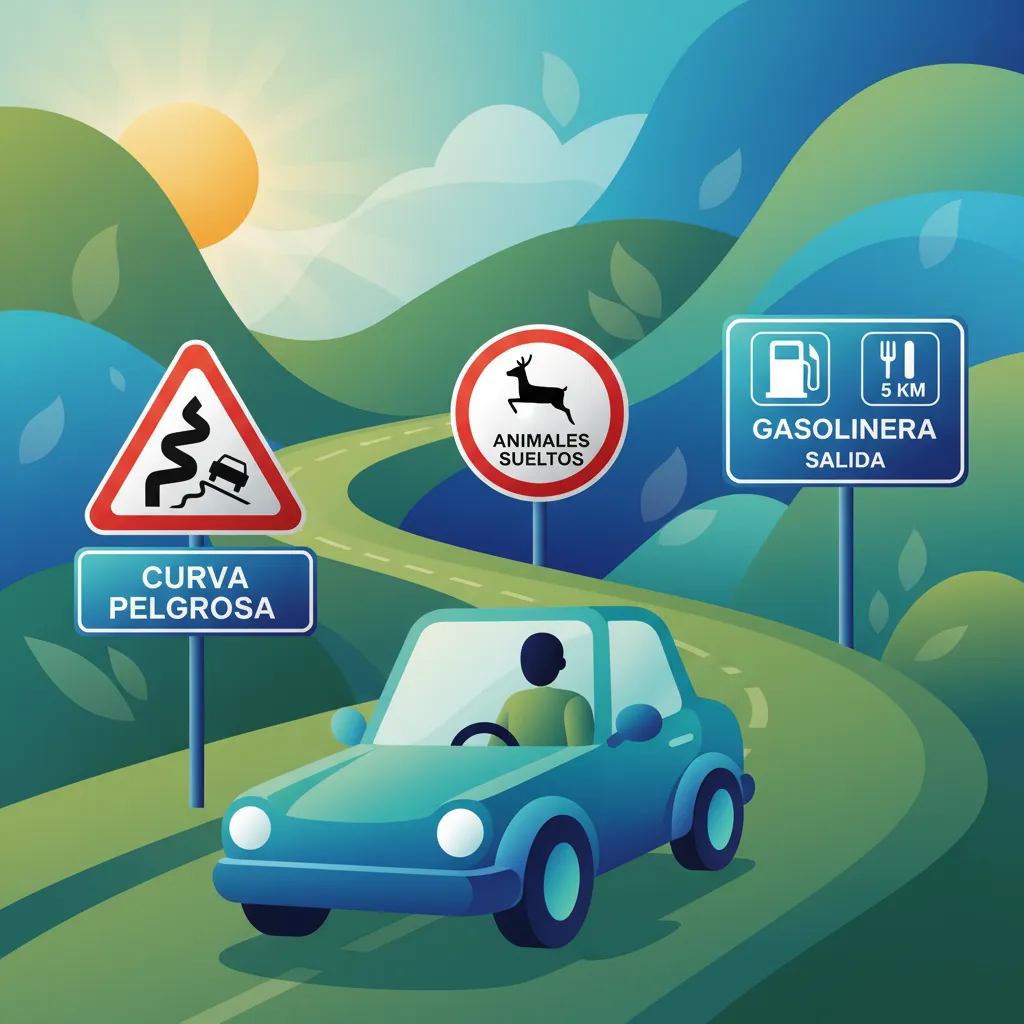
This lesson covers warning and informational signs, which are crucial for anticipating road conditions. It explains how triangular warning signs alert riders to upcoming hazards like sharp curves, slippery surfaces, or pedestrian crossings. The content also describes rectangular informational signs that provide directions, distances, and other useful guidance, helping riders to plan their route and adjust their driving in advance.
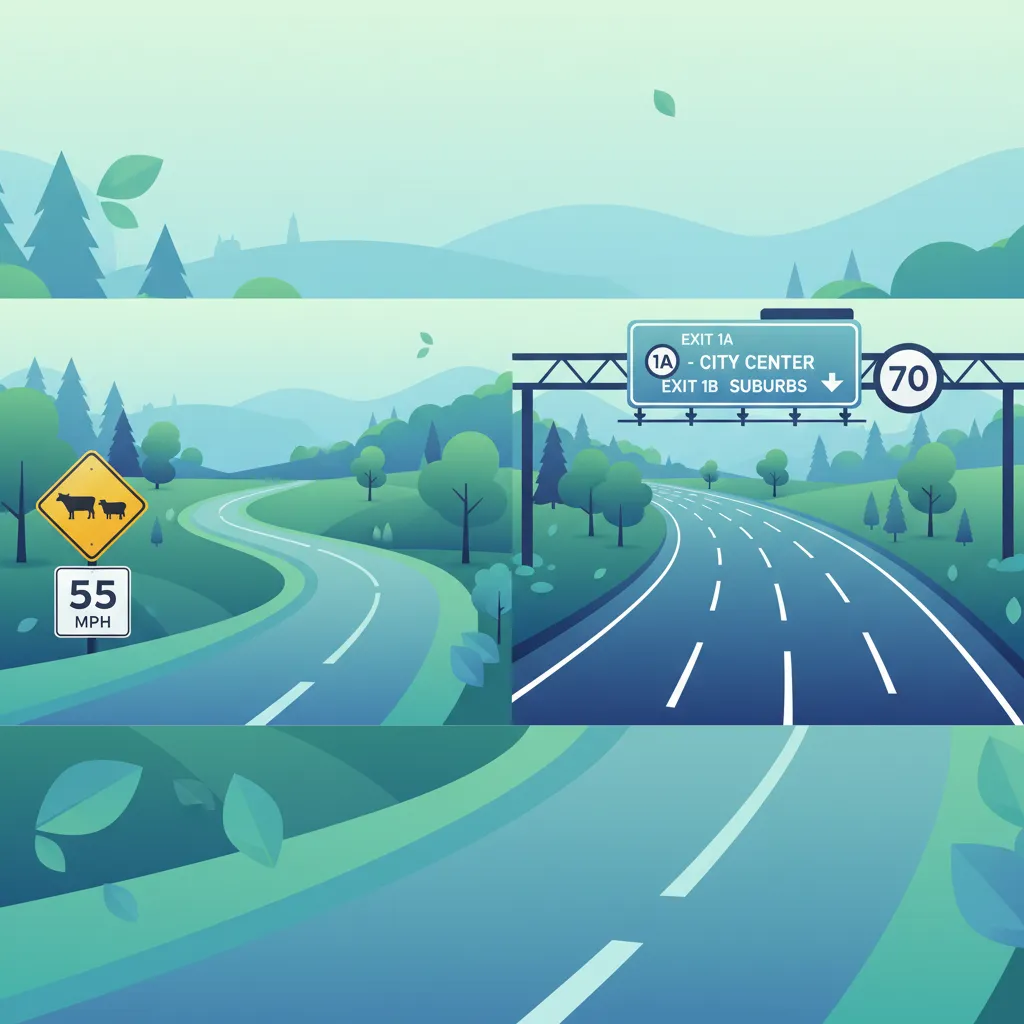
This lesson focuses on the specific signage systems used in rural and highway environments in Spain. It explains how to interpret directional signs, exit numbering, distance markers, and signs for services like fuel and rest areas. Understanding these signs is crucial for effective navigation and safe driving at high speeds.
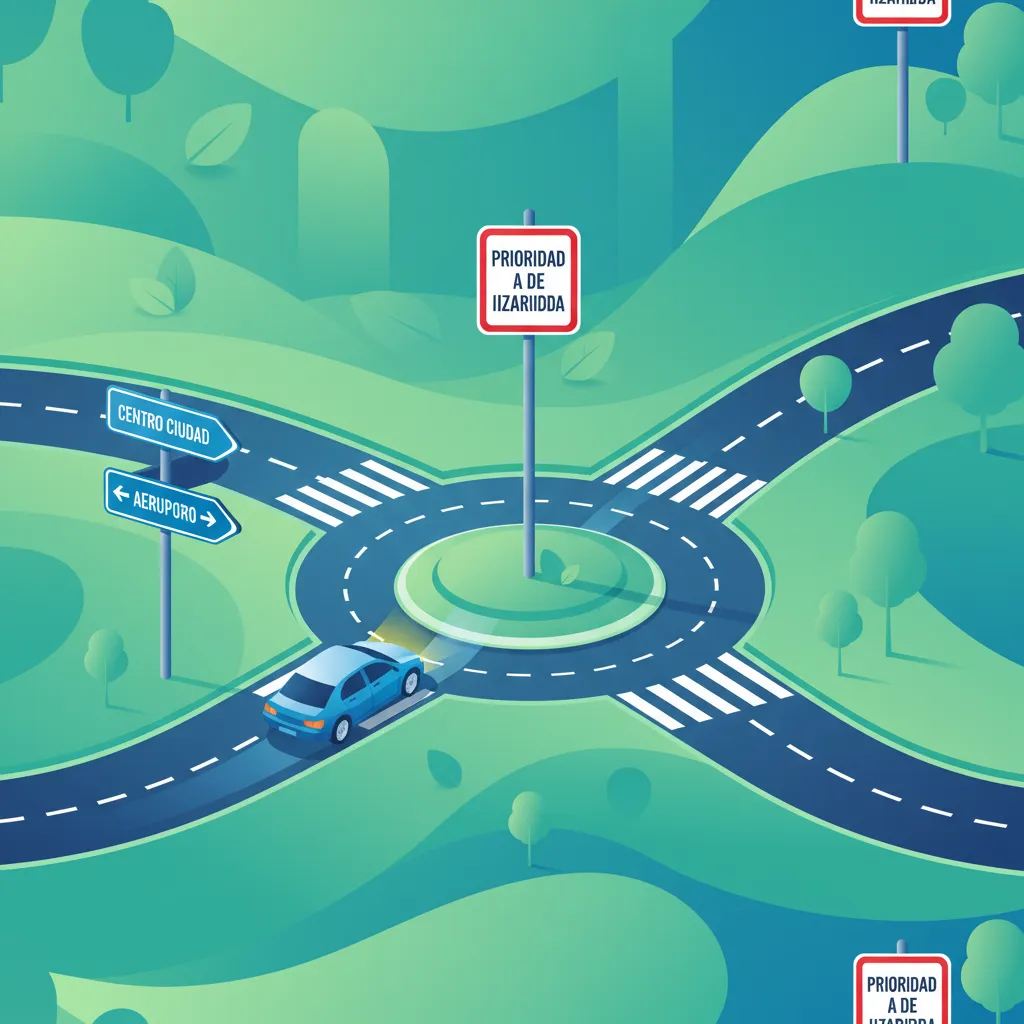
This lesson presents the variety of signs that guide drivers through roundabout navigation. It explains the significance of the roundabout warning symbol, priority signs, lane arrows, and directional signs placed before and within the roundabout. Mastery of roundabout signage ensures that drivers follow legal requirements and maintain safe traffic flow.

This lesson focuses on the comprehensive understanding of traffic light signals and their timing sequences. It defines the meanings of steady red, amber, and green lights, as well as flashing amber and arrow signals. The content also covers pedestrian and cyclist phases, describing the actions drivers must take during each signal change to maintain safety and compliance.

This lesson explains each phase of a Spanish traffic light, detailing the specific action required for red, amber, and green signals. It clarifies the meaning of a flashing amber light, which indicates yielding to other traffic or pedestrians, and the red-amber combination. Understanding these signals is fundamental for safely navigating controlled intersections and ensuring compliance with traffic flow rules established by the DGT.
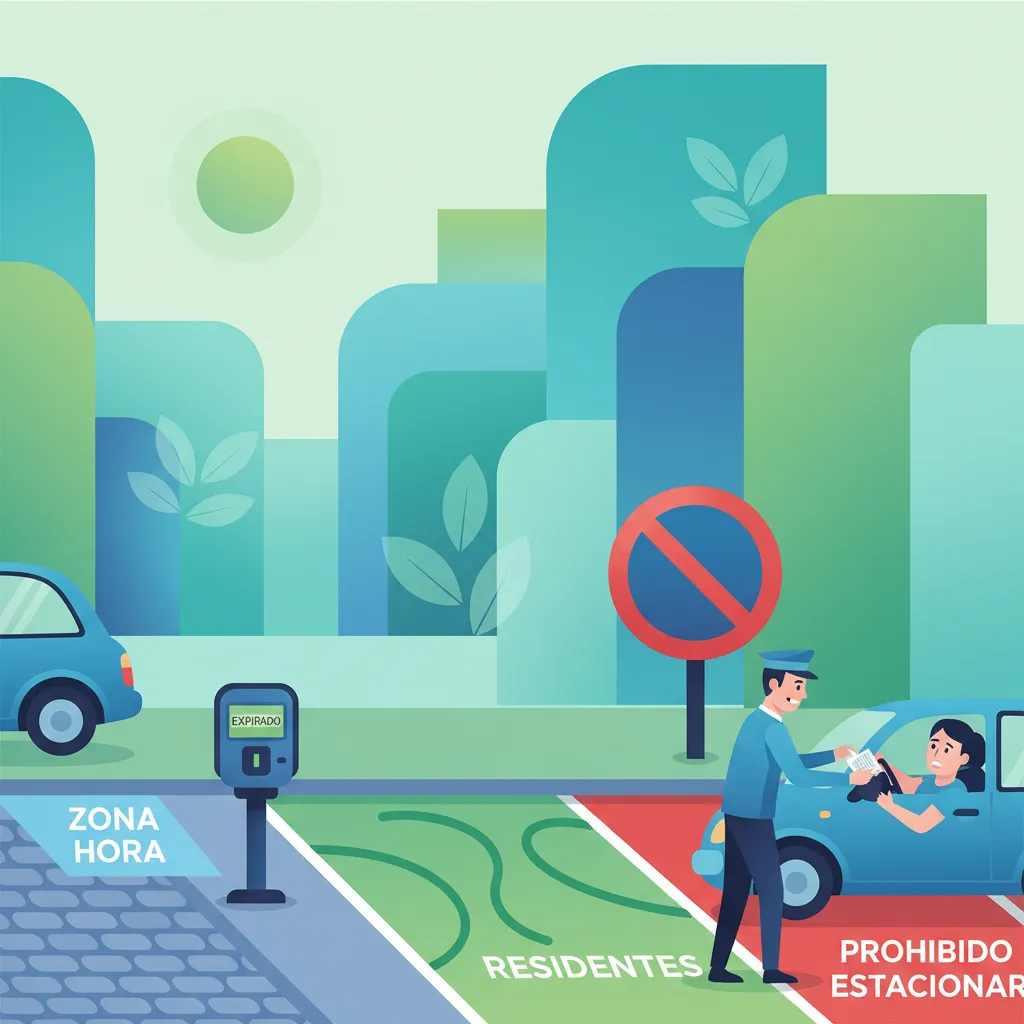
This lesson outlines the legal framework surrounding parking regulations in Spain, including the identification of regulated zones (e.g., ORA/SER), no-parking areas, and disabled parking spaces. It explains DGT signage interpretation and how improper parking can affect traffic flow and result in penalties. Learners will understand the regulatory environment to comply with parking laws and avoid fines.

This lesson outlines the proper use and legal requirements of vehicle lighting and mirror systems. It covers headlamps, fog lights, turn signals, and brake lights, clarifying when each must be used according to DGT regulations. The lesson also explains the correct adjustment of rearview and side mirrors and strategies for effective blind-spot monitoring.
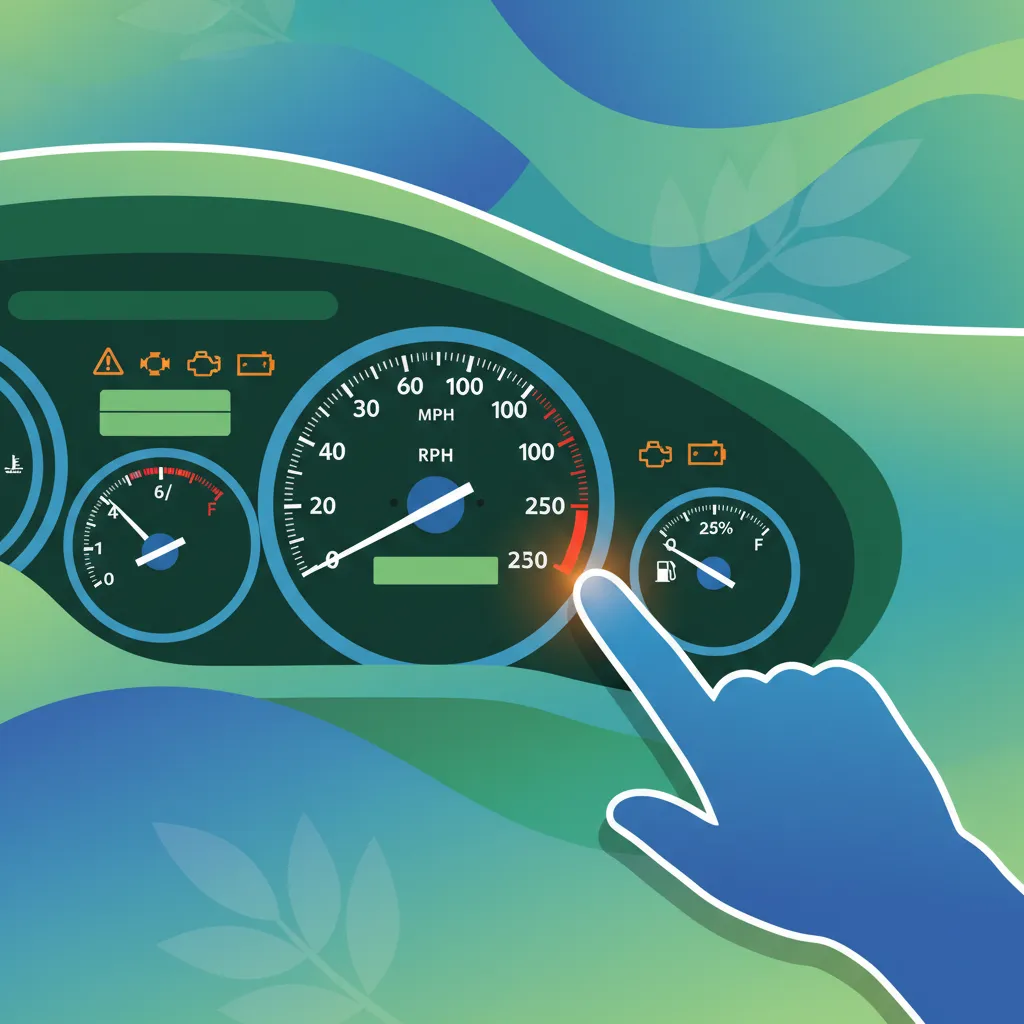
This lesson focuses on the primary components displayed on a vehicle's dashboard and their functional significance. Learners will identify instruments like the speedometer and fuel gauge and understand the meaning of key warning lights, including ABS, oil pressure, and check engine. The lesson explains how to interpret these signals while driving and the immediate actions required upon their illumination.

This lesson covers how environmental conditions such as rain, fog, and darkness affect driving safety. It instructs drivers on adjusting speed, using appropriate lighting, and increasing following distance to compensate for reduced visibility and traction. The lesson incorporates DGT safety recommendations for handling adverse weather to mitigate risk and maintain control.
Understand how regulatory road signs directly influence priority rules at Spanish intersections and roundabouts. Learn to interpret signs like 'Priority Road' and mandatory direction signs to navigate junctions safely and legally, a key component of driving theory.

This lesson addresses the crucial 'priority to the right' rule that governs traffic at intersections without signs or signals. It explains that drivers must yield to any vehicle approaching from their right-hand side. The content provides practical examples of how to assess traffic, determine the correct order of passage, and proceed with caution to safely navigate these common but potentially confusing intersections.
This lesson presents the variety of signs that guide drivers through roundabout navigation. It explains the significance of the roundabout warning symbol, priority signs, lane arrows, and directional signs placed before and within the roundabout. Mastery of roundabout signage ensures that drivers follow legal requirements and maintain safe traffic flow.

This lesson analyzes the various intersection configurations found in Spanish cities, such as controlled and uncontrolled junctions. It explains the hierarchy of right-of-way, detailing when vehicles must yield, when pedestrians have priority, and how traffic signs dictate movement. Learners are guided through DGT signage conventions that determine priority at each intersection type.
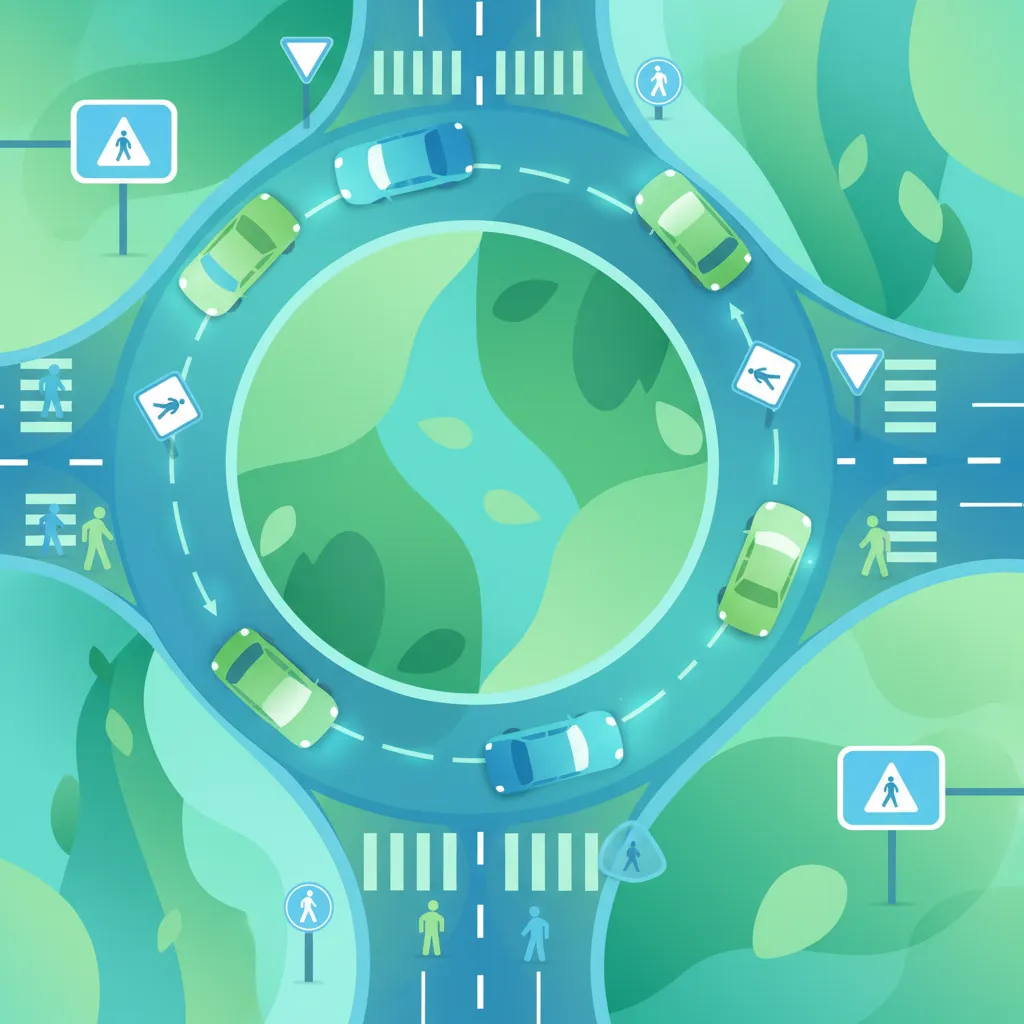
This lesson offers a comprehensive guide to navigating roundabouts in urban settings, explaining the correct protocols for entry, yielding, and circulation. Learners will be taught how to interpret lane markings and signage on multi-lane roundabouts and determine the correct vehicle positioning for safe entry and exit. The content emphasizes full compliance with Spanish city regulations that govern priority and right-of-way at these intersections.

This lesson clarifies the primary rule for roundabouts: all vehicles entering must yield to traffic already on the circular roadway. It explains how to approach a roundabout, select the appropriate lane based on the intended exit, and merge safely into the flow of traffic. Proper signaling before exiting is also covered, ensuring other drivers can anticipate the rider's movements for a smooth and safe negotiation of the junction.

This lesson focuses on the yielding hierarchy that governs roundabout usage in Spain. It clarifies that vehicles already circulating have priority over those entering and explains the proper lane positioning based on the intended exit. The content includes the correct use of signals for changing lanes and exiting, and safe merging techniques.
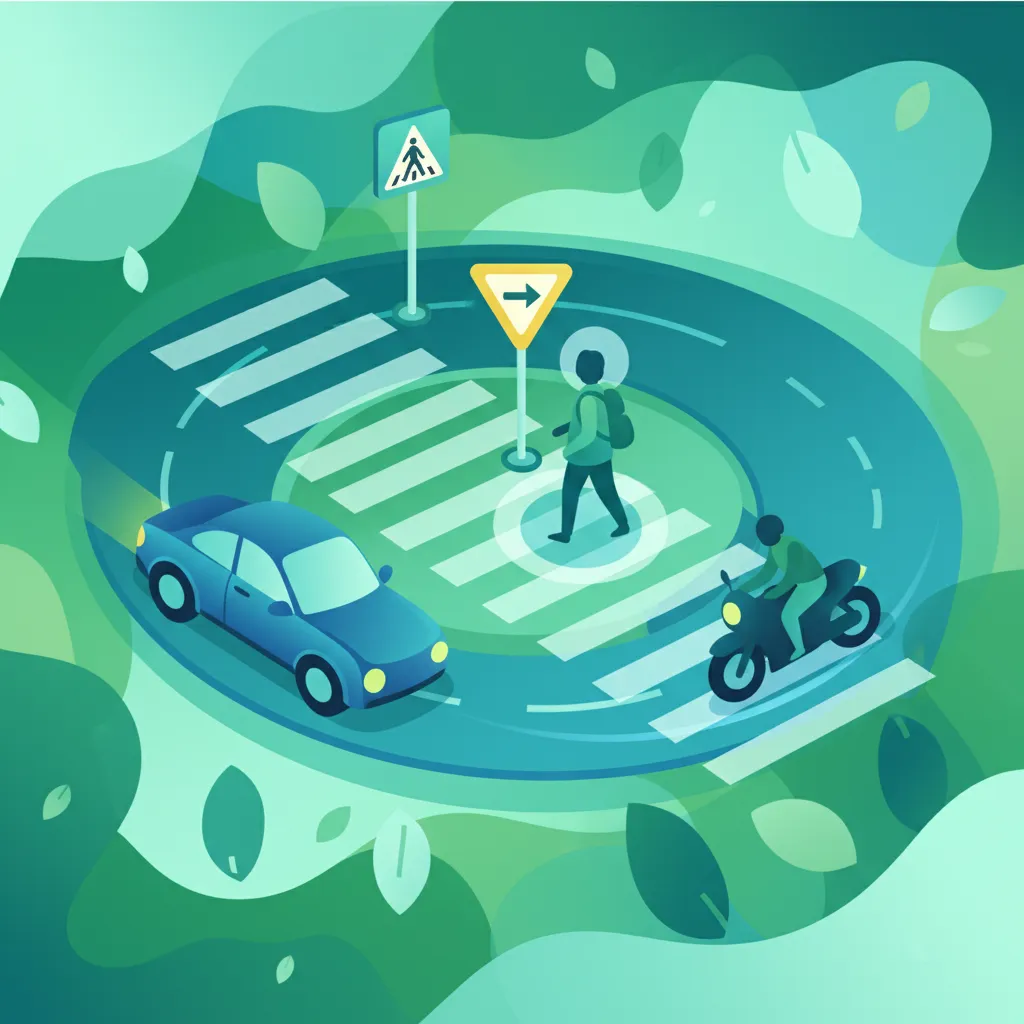
This lesson outlines the proper techniques for negotiating roundabouts and signal-controlled intersections in Spain. It explains priority rules at entry, lane selection based on the intended exit, and yielding to circulating traffic. The content also covers compliance with traffic signals and DGT regulations, including handling cyclist crossings.
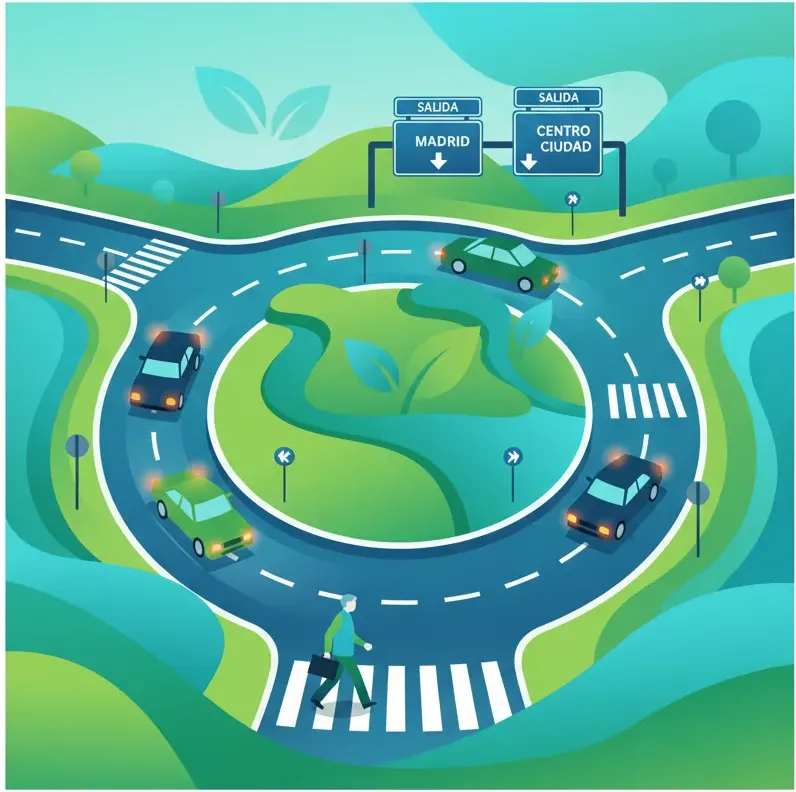
This lesson provides specific instructions on how to safely navigate complex junctions such as roundabouts and intersections with a large vehicle. It explains the rules of priority, the correct lane to use based on the intended exit, and the importance of proper vehicle positioning to account for off-tracking. The content also covers clear signaling to communicate intentions to other road users for safe and efficient passage.
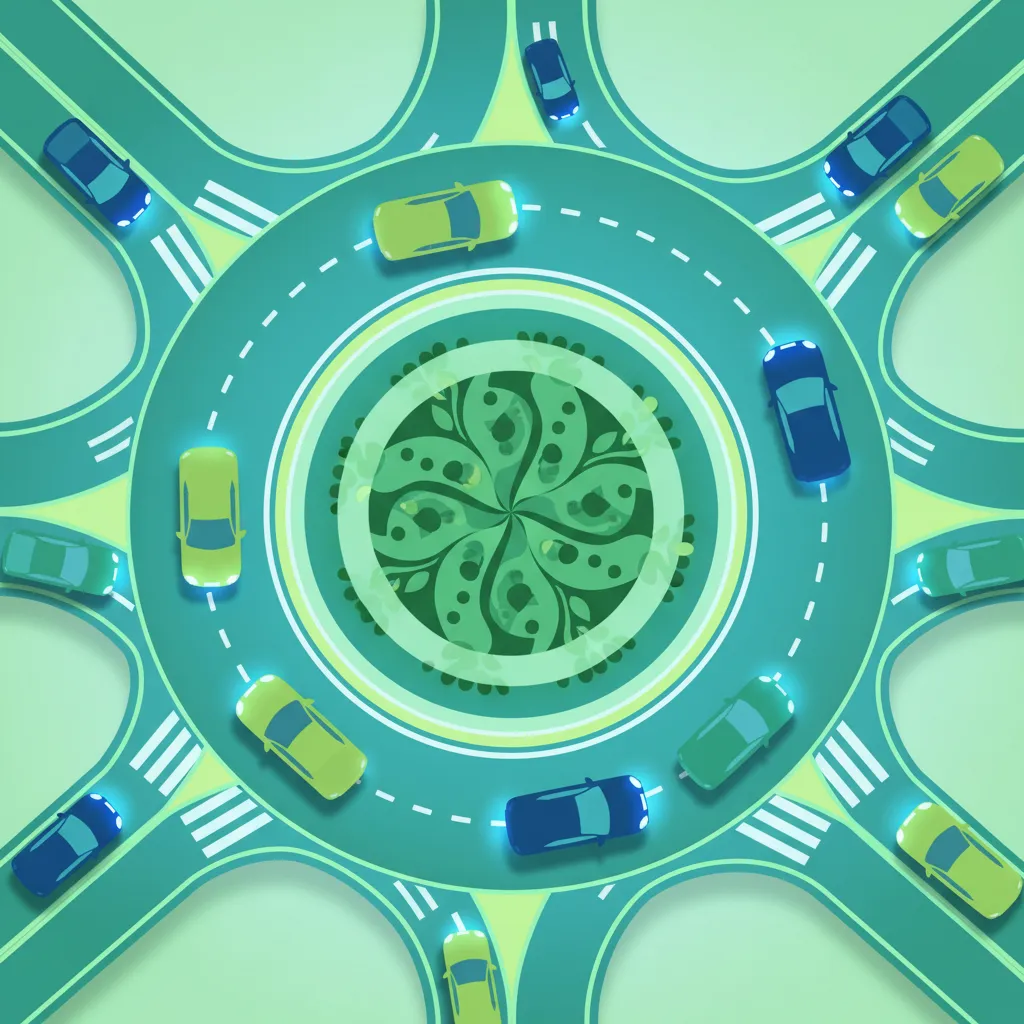
This lesson examines the structural components of a typical Spanish roundabout, describing the central island, entry and circulating lanes, and the placement of yield signs. It outlines how DGT standards dictate the geometric design and entry/exit points to ensure smooth traffic flow. Understanding these design elements enables drivers to anticipate vehicle movements and navigate safely.
This lesson focuses on the specific signage systems used in rural and highway environments in Spain. It explains how to interpret directional signs, exit numbering, distance markers, and signs for services like fuel and rest areas. Understanding these signs is crucial for effective navigation and safe driving at high speeds.
Find clear answers to common questions learners have about Regulatory Road Signs for Mopeds. Learn how the lesson is structured, which driving theory objectives it supports, and how it fits into the overall learning path of units and curriculum progression in Spain. These explanations help you understand key concepts, lesson flow, and exam focused study goals.
Regulatory signs, typically circular with red borders (prohibitory) or blue backgrounds (mandatory), impose strict obligations or prohibitions that moped riders must follow. Warning signs, usually triangular with a red border, simply alert you to potential dangers ahead, allowing you to prepare but not imposing a direct command.
While the sign itself indicates the general speed limit for all vehicles, mopeds often have specific maximum speed limits lower than cars, such as 45 km/h. Therefore, a regulatory speed limit sign might show 50 km/h, but a moped rider must still adhere to their 45 km/h maximum, unless the sign explicitly indicates a lower speed.
A 'No Entry' sign (circular, red background with a white horizontal bar) prohibits all vehicles, including mopeds, from entering that street or area. You must not proceed past this sign, as doing so is a serious traffic infraction in Spain and carries significant penalties.
While most regulatory signs apply to all vehicles, certain signs, like a circular blue sign with a moped icon, indicate a mandatory path or lane for mopeds. Conversely, a circular red-bordered sign with a moped crossed out would prohibit mopeds from entering. It's crucial to identify the vehicle pictogram on signs.
A circular blue sign with a white arrow indicates a mandatory direction. As a moped rider, you must follow the direction shown by the arrow. These signs are common at intersections or before roundabouts to guide traffic flow and ensure safety.
Use our powerful search functionality to pinpoint specific Spanish DGT driving theory practice sets. Filter by road sign categories, traffic law topics, or question difficulty to build custom study sessions and reinforce your knowledge precisely where it matters for your official exam.