
This lesson delves into motorcycle braking systems, focusing on Anti-lock Braking Systems (ABS) and combined braking. Understanding these technologies is vital for safe riding and forms a key part of your Spanish motorcycle theory exam preparation for A, A1, and A2 licences.

Lesson content overview
Modern motorcycles are equipped with sophisticated braking technologies designed to enhance safety and control, particularly for riders taking the Spanish Motorcycle Theory Exam for A, A1, and A2 licences. Understanding these systems, primarily Anti-Lock Braking Systems (ABS) and Combined Braking Systems (CBS), is crucial for safe riding, especially under challenging conditions, and is a key requirement for your exam. This comprehensive guide delves into the principles, operation, and legal requirements of these advanced braking technologies.
The Anti-Lock Braking System (ABS) is a pivotal safety feature on many contemporary motorcycles, specifically designed to prevent wheel lock-up during sudden or hard braking. Preventing a wheel from locking is critical because a locked wheel ceases to roll, leading to a complete loss of traction and, consequently, a loss of steering control and potential skidding or falling.
At its core, ABS operates by constantly monitoring the rotational speed of each wheel. This is achieved through dedicated wheel speed sensors mounted near the wheel hub. These sensors feed data to an Electronic Control Unit (ECU), which is the "brain" of the ABS.
When the rider applies the brakes, the ECU compares the speed of each wheel to the motorcycle's overall speed. If it detects that a wheel is decelerating much faster than the others, or if its rotational speed drops significantly compared to the vehicle's forward motion—indicating impending lock-up—the ECU takes immediate action. It rapidly reduces the hydraulic pressure to the brake caliper for that specific wheel, then re-applies it as the wheel regains traction. This process, known as ABS modulation, happens many times per second, creating a distinct pulsing sensation at the brake lever or pedal.
This rapid pulsing ensures that the wheel continues to rotate, maintaining a small amount of slip that is ideal for maximizing grip, typically around 20-30% slip. This optimal slip range provides the best balance between braking force and steering capability, allowing the rider to retain control and steer around obstacles even during emergency braking.
Motorcycle ABS systems can vary in their sophistication and coverage:
The primary benefit of ABS is its ability to significantly enhance safety, particularly on low-traction surfaces such as wet roads, gravel, or uneven pavement. In such conditions, a non-ABS system can easily lead to wheel lock-up, causing a loss of control. ABS allows riders to brake harder and more confidently, knowing the system will prevent a skid.
While ABS generally shortens stopping distances on slippery surfaces, it's important to note that on perfectly dry asphalt, a skilled rider might achieve a slightly shorter stopping distance without ABS by precisely managing maximum braking force just before lock-up. However, this level of precision is extremely difficult to achieve consistently, especially in an emergency. For the vast majority of riders and situations, ABS provides a safer and more effective braking solution.
For the Spanish DGT motorcycle theory exam and safe riding, it is mandatory that riders understand and comply with regulations concerning ABS:
Always check your ABS indicator light before riding. If it remains illuminated, your ABS may be faulty, significantly increasing the risk of wheel lock-up during braking.
Beyond ABS, many motorcycles also feature a Combined Braking System (CBS), sometimes referred to as "linked braking." This system is designed to simplify braking and enhance stability by automatically distributing braking force between the front and rear wheels, even when only one brake control is actuated.
CBS can be implemented through hydraulic or electronic means:
The specific braking ratio varies significantly between motorcycle models and manufacturers. A common setup might see:
This automatic distribution helps to stabilize the motorcycle during braking, reduce rider workload (as a single input addresses both wheels), and mitigate the risk of rear-wheel lift under moderate braking.
CBS is particularly beneficial in everyday riding scenarios, especially in urban environments. It allows for smoother, more balanced deceleration with less effort, as the system intelligently manages the front-rear brake balance. For novice riders, it can provide a safety net, ensuring both brakes are always somewhat engaged, even if they only focus on one control.
However, riders must still understand that combined braking does not eliminate the need for proper braking technique. On most motorcycles, the front brake provides approximately 70% or more of the total stopping power. While CBS assists, effective emergency braking almost always requires strong, deliberate application of both the front and rear brake controls (allowing ABS to manage modulation if present). Over-reliance on the rear brake, even with combined systems, can still lead to longer stopping distances or, if applied too aggressively at higher speeds, potentially cause rear-wheel lift, leading to instability.
While not as strictly regulated as ABS functionality, the DGT recommends that riders of CBS-equipped motorcycles:
At the heart of effective braking and the function of ABS lies the concept of wheel slip. This refers to the difference between a tire's rotational speed and the actual forward speed of the vehicle.
When a wheel is rolling freely, its rotational speed perfectly matches the vehicle's forward speed, resulting in zero slip. As brakes are applied, the wheel's rotational speed slows down relative to the vehicle's speed, creating slip. This slip is essential for braking, as it's the friction generated during this slight "slide" that provides deceleration.
However, there's a critical point:
ABS works precisely by keeping the wheel slip within this optimal 20-30% range. By rapidly modulating brake pressure, it prevents the wheel from reaching 100% slip (lock-up) and instead maintains the highest possible grip for both stopping and steering.
Several factors influence the available traction and thus how much braking force can be applied before wheel slip becomes excessive:
Understanding these factors is crucial for riders to anticipate and adjust their braking technique, even with advanced systems like ABS.
Braking distance is the distance a motorcycle travels from the moment the brakes are applied until it comes to a complete stop. This is distinct from stopping distance, which also includes the rider's reaction distance (the distance traveled from perceiving a hazard to applying the brakes).
Remember that reaction time adds considerable distance. From perceiving a hazard to fully applying brakes, a rider typically takes around 1.5 seconds. At 50 km/h, this means traveling approximately 21 metres before braking even begins!
The Dirección General de Tráfico (DGT) stipulates that all drivers, including motorcyclists, must maintain safe following distances and be able to stop their vehicles within the visibility and safety limits dictated by road conditions and speed. While specific numerical distances are often provided for training purposes (e.g., in driving manuals), the core principle is to always be able to stop within the visible clear distance ahead.
Understanding these principles helps riders choose appropriate speeds and maintain safe distances, which is fundamental to hazard perception and defensive riding.
Compliance with the regulations set by the Dirección General de Tráfico (DGT) regarding motorcycle braking systems and practices is paramount for all riders in Spain, particularly for those preparing for the A, A1, and A2 licence exams. These rules ensure road safety and legal compliance.
Understanding ABS and combined braking systems in theory is one thing; applying that knowledge in real-world riding situations is another. Let's explore several common scenarios to illustrate correct and incorrect usage.
The advanced braking systems discussed are only as effective as their maintenance allows. Regular checks and timely servicing are not just recommendations; they are vital for safety and DGT compliance.
Even with advanced braking systems, riders can make mistakes or harbor misconceptions that undermine safety and effectiveness.
Mastering the principles of Anti-Lock Braking Systems (ABS) and Combined Braking Systems (CBS) is indispensable for any motorcyclist, especially for those preparing for the Spanish DGT A, A1, and A2 licence exams. These advanced technologies are designed to enhance safety, stability, and control, allowing riders to manage their motorcycle more effectively, particularly in challenging situations and on low-traction surfaces.
Understanding how ABS prevents wheel lock-up by intelligently modulating brake pressure, and how combined braking systems balance forces between the front and rear wheels, provides a crucial foundation for safe riding. Furthermore, adherence to DGT regulations regarding ABS functionality, regular maintenance, and responsible braking practices are not just legal requirements but fundamental pillars of defensive riding.
By combining theoretical knowledge with practical application and ongoing maintenance, you can fully leverage the benefits of these sophisticated systems, ensuring a safer and more confident riding experience on Spanish roads. This knowledge also serves as a critical prerequisite for advanced riding techniques and comprehensive hazard perception.
Anti-lock Braking Systems (ABS) use wheel speed sensors and an ECU to prevent wheel lock-up by maintaining optimal 20-30% slip, which maximizes both traction and steering control. Combined Braking Systems (CBS) automatically distribute braking force between front and rear wheels when only one control is applied. Dual-channel ABS, standard on most A, A1, and A2 motorcycles, independently monitors both wheels. The front brake provides the majority of stopping power, making simultaneous use of both brakes essential for shortest stopping distances. DGT regulations require functional ABS with working warning indicators, and brake fluid must be replaced every two years to maintain system reliability.
A short set of high-value points that capture the most important learning from this lesson.
ABS prevents wheel lock-up by rapidly modulating brake pressure to maintain the optimal 20-30% wheel slip ratio for maximum traction
Dual-channel ABS monitors both wheels independently and is the most common system on A, A1, and A2 category motorcycles
Combined braking automatically distributes force between front and rear wheels when only one brake is applied, typically 70/30 or 30/70 depending on input
The front brake provides approximately 70% or more of total stopping power, making simultaneous use of both brakes essential for shortest stopping distances
A locked wheel completely loses traction and steering control, making wheel lock-up the primary danger ABS prevents
Explore all units and lessons included in this driving theory course.
ABS warning light must illuminate briefly on ignition then extinguish; if it stays on, the system is faulty and the motorcycle should not be ridden
ABS modulation creates a distinct pulsing sensation at the brake lever or pedal—this is normal and indicates the system is actively preventing lock-up
The ITV (Inspección Técnica de Vehículos) verifies ABS functionality, and a malfunctioning system is illegal for road use in Spain
Optimal slip of 20-30% provides maximum friction; 100% slip (lock-up) significantly reduces friction and eliminates steering
Brake fluid absorbs moisture over time and must be replaced every two years to maintain ABS valve responsiveness
Assuming ABS eliminates the need for proper braking technique—ABS prevents lock-up but doesn't replace smooth, progressive brake application
Ignoring the ABS warning light when it remains illuminated after the self-check, believing it is a minor issue or that you can manage without ABS
Over-relying on the rear brake, thinking combined braking makes the front brake unnecessary, which results in significantly longer stopping distances
Assuming combined braking provides a 50/50 front/rear split—ratios vary by model (commonly 30% front/70% rear when rear brake is applied)
Braking heavily while already leaned deeply in a corner, unaware that cornering forces have already consumed much of the tire's available traction
Lesson content overview
A short set of high-value points that capture the most important learning from this lesson.
ABS prevents wheel lock-up by rapidly modulating brake pressure to maintain the optimal 20-30% wheel slip ratio for maximum traction
Dual-channel ABS monitors both wheels independently and is the most common system on A, A1, and A2 category motorcycles
Combined braking automatically distributes force between front and rear wheels when only one brake is applied, typically 70/30 or 30/70 depending on input
The front brake provides approximately 70% or more of total stopping power, making simultaneous use of both brakes essential for shortest stopping distances
A locked wheel completely loses traction and steering control, making wheel lock-up the primary danger ABS prevents
Explore all units and lessons included in this driving theory course.
ABS warning light must illuminate briefly on ignition then extinguish; if it stays on, the system is faulty and the motorcycle should not be ridden
ABS modulation creates a distinct pulsing sensation at the brake lever or pedal—this is normal and indicates the system is actively preventing lock-up
The ITV (Inspección Técnica de Vehículos) verifies ABS functionality, and a malfunctioning system is illegal for road use in Spain
Optimal slip of 20-30% provides maximum friction; 100% slip (lock-up) significantly reduces friction and eliminates steering
Brake fluid absorbs moisture over time and must be replaced every two years to maintain ABS valve responsiveness
Assuming ABS eliminates the need for proper braking technique—ABS prevents lock-up but doesn't replace smooth, progressive brake application
Ignoring the ABS warning light when it remains illuminated after the self-check, believing it is a minor issue or that you can manage without ABS
Over-relying on the rear brake, thinking combined braking makes the front brake unnecessary, which results in significantly longer stopping distances
Assuming combined braking provides a 50/50 front/rear split—ratios vary by model (commonly 30% front/70% rear when rear brake is applied)
Braking heavily while already leaned deeply in a corner, unaware that cornering forces have already consumed much of the tire's available traction
Explore search topics learners often look for when studying Braking Systems: ABS and Combined Braking. These topics reflect common questions about road rules, driving situations, safety guidance, and lesson level theory preparation for learners in Spain.
Browse additional driving theory lessons that cover connected traffic rules, road signs, and common driving situations related to this topic. Improve your understanding of how different rules interact across everyday traffic scenarios.
Explore the technical details of motorcycle ABS and Combined Braking Systems (CBS) for your Spanish theory exam. Understand how these systems function, their benefits on different surfaces, and crucial DGT legal requirements for safe operation.

This lesson focuses on adapting braking techniques for wet and slippery roads. Topics include hydroplaning risk, reduced tire friction, and how ABS assists in preventing wheel lock-up. Learners are taught to employ progressive braking, reduce speed, and assess tire tread depth to maintain adequate grip.

This lesson details the protocol for performing an emergency stop, emphasizing full-force application of both front and rear brakes while maintaining optimal rider posture. It covers the importance of visual fixation and the role of ABS in stabilizing the bike under panic conditions. Learners also study the calculation of stopping distances based on speed and road conditions.
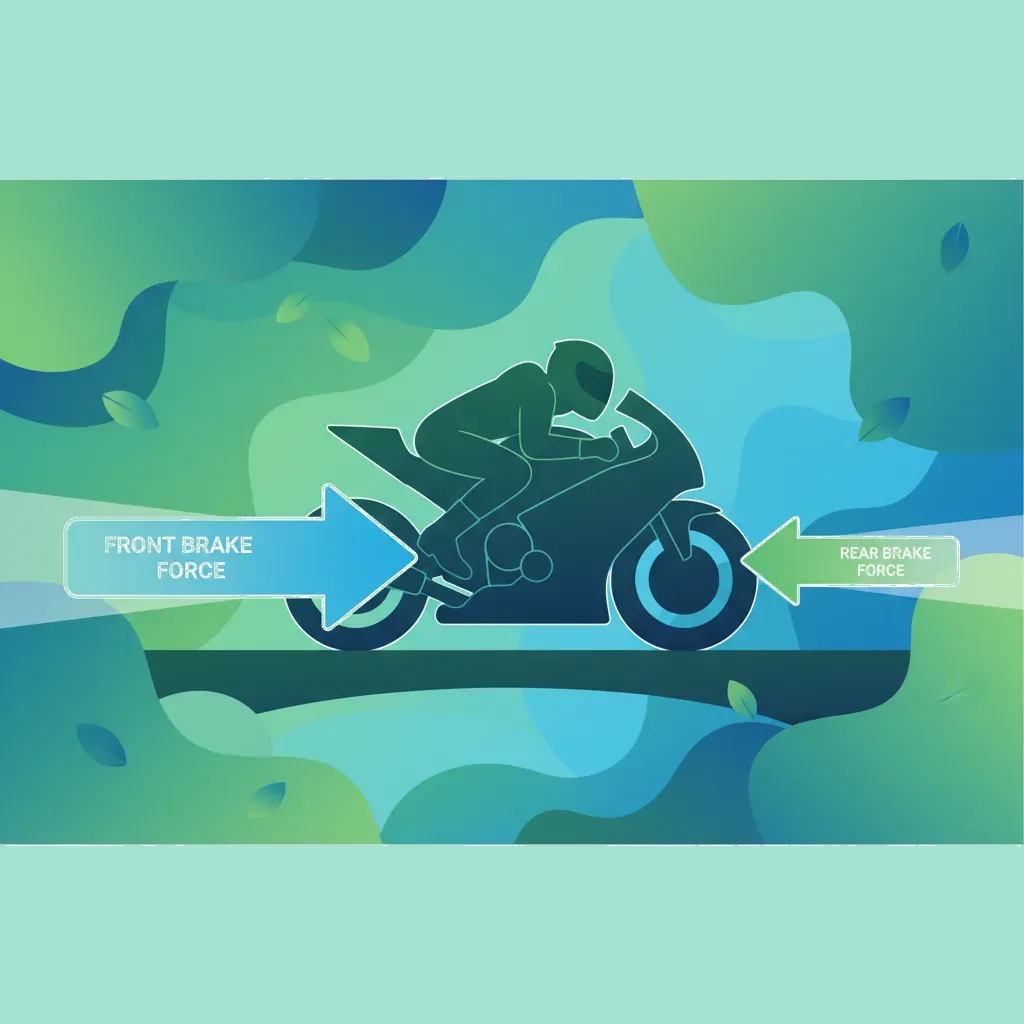
This lesson explores the physics behind brake torque distribution, explaining why the front brake provides greater stopping power due to weight shift during deceleration. It discusses the optimal brake bias for various speeds and surface conditions. Understanding these principles enables riders to modulate braking forces effectively.

This lesson details the technique of safely reducing speed while entering a corner, known as trail braking. It explains how the motorcycle’s lean angle affects front-wheel load and rear-wheel traction. The content aligns with DGT cornering safety standards to ensure riders execute controlled deceleration without compromising grip.

This lesson focuses on the specific techniques required for riding in rainy and slippery conditions. It explains how water on the road surface reduces tire grip and significantly increases braking distances. Learners will be taught to reduce speed, use controls smoothly and progressively, and be particularly cautious of painted lines and manhole covers, which become extremely slippery when wet.
This lesson provides an overview of modern driver-assistance technologies designed to prevent collisions. It explains the function of systems like the Anti-lock Braking System (ABS), Electronic Stability Control (ESC), and Automatic Emergency Braking Systems (AEBS). Learners will understand how these systems work to help maintain control during emergency maneuvers, while also recognizing their operational limitations.

This lesson teaches riders how to react effectively in a sudden, critical situation. It explains the technique for applying maximum braking force without locking the wheels, ensuring the shortest possible stopping distance while maintaining stability. The content also covers how to perform a swift and controlled swerve to avoid an obstacle when stopping is not possible, emphasizing the importance of looking where you want to go.

This lesson examines the complex braking systems found in heavy passenger vehicles, with a focus on air brakes and anti-lock braking systems (ABS). It covers how these systems impact stopping distance, brake fade, and overall safety under different load and weather conditions. Learners will also study the required maintenance schedules and safety checks to ensure the braking components remain in optimal working order.
This lesson focuses on the coordination of acceleration and deceleration to maintain vehicle stability. It explains how to modulate the accelerator pedal for smooth acceleration and how to apply the brake pedal for controlled deceleration. The content covers the role of the ABS system, the calculation of stopping distances, and the importance of maintaining stability during speed changes.

This lesson outlines procedures for handling emergency situations and accidents. It covers emergency braking techniques, hazard avoidance strategies, and the DGT emergency protocol for accident reporting. Emphasis is placed on rider protective actions, post-crash first aid, roadside safety, and legal obligations after an incident.
Learn from practical scenarios involving ABS and combined braking systems. Identify common rider mistakes in various conditions like wet roads or gravel, and understand how to avoid them for better control and safety according to Spanish DGT guidelines.
This lesson focuses on adapting braking techniques for wet and slippery roads. Topics include hydroplaning risk, reduced tire friction, and how ABS assists in preventing wheel lock-up. Learners are taught to employ progressive braking, reduce speed, and assess tire tread depth to maintain adequate grip.
This lesson details the protocol for performing an emergency stop, emphasizing full-force application of both front and rear brakes while maintaining optimal rider posture. It covers the importance of visual fixation and the role of ABS in stabilizing the bike under panic conditions. Learners also study the calculation of stopping distances based on speed and road conditions.
This lesson identifies frequent beginner errors such as over-application of throttle, misuse of the clutch, and improper braking timing. It analyzes the underlying causes of these mistakes and offers corrective techniques to develop safe riding habits. By referencing DGT exam examples, learners gain insight into how to avoid these common pitfalls.
This lesson explores the physics behind brake torque distribution, explaining why the front brake provides greater stopping power due to weight shift during deceleration. It discusses the optimal brake bias for various speeds and surface conditions. Understanding these principles enables riders to modulate braking forces effectively.

This lesson presents advanced cornering scenarios common on Spanish roads, such as mountain hairpins and high-speed autovía exits. It outlines specific techniques for descent control, ascent maneuvers, and safely merging into traffic after cornering. Interaction with cyclists and emergency cornering strategies are also covered in accordance with DGT regulations.
This lesson focuses on the specific techniques required for riding in rainy and slippery conditions. It explains how water on the road surface reduces tire grip and significantly increases braking distances. Learners will be taught to reduce speed, use controls smoothly and progressively, and be particularly cautious of painted lines and manhole covers, which become extremely slippery when wet.
This lesson details the technique of safely reducing speed while entering a corner, known as trail braking. It explains how the motorcycle’s lean angle affects front-wheel load and rear-wheel traction. The content aligns with DGT cornering safety standards to ensure riders execute controlled deceleration without compromising grip.
This lesson focuses on the correct application of a moped's brakes for effective and stable deceleration. It explains the concept of balanced braking, using both front and rear brakes simultaneously for maximum stopping power without losing traction. Learners will understand how factors like speed, road surface, and weather dramatically affect total stopping distance, and will learn techniques for emergency braking.
This lesson teaches riders how to react effectively in a sudden, critical situation. It explains the technique for applying maximum braking force without locking the wheels, ensuring the shortest possible stopping distance while maintaining stability. The content also covers how to perform a swift and controlled swerve to avoid an obstacle when stopping is not possible, emphasizing the importance of looking where you want to go.
This lesson outlines procedures for handling emergency situations and accidents. It covers emergency braking techniques, hazard avoidance strategies, and the DGT emergency protocol for accident reporting. Emphasis is placed on rider protective actions, post-crash first aid, roadside safety, and legal obligations after an incident.
Find clear answers to common questions learners have about Braking Systems: ABS and Combined Braking. Learn how the lesson is structured, which driving theory objectives it supports, and how it fits into the overall learning path of units and curriculum progression in Spain. These explanations help you understand key concepts, lesson flow, and exam focused study goals.
The main purpose of ABS on a motorcycle, as per DGT guidelines, is to prevent wheel lock-up during braking by automatically modulating brake pressure. This helps the rider maintain steering control and stability, particularly in emergency situations or on slippery surfaces, thereby reducing the risk of accidents.
Combined braking systems automatically apply a proportion of the braking force to both the front and rear wheels when either brake lever is activated. This differs from independent braking, where the rider must consciously apply both levers in the correct ratio. Combined braking simplifies the braking process and helps maintain balance, especially for less experienced riders.
Yes, ABS and combined braking systems are designed to enhance safety on all road surfaces, including dry asphalt, wet conditions, and even gravel or dirt roads common in some parts of Spain. While they significantly improve safety, riders must still exercise caution and adjust their braking technique according to the specific surface conditions.
No, ABS significantly improves safety but does not eliminate the need for proper braking technique. While ABS prevents wheel lock-up, understanding how to apply brakes effectively, anticipate hazards, and use the system's full potential, especially in conjunction with combined braking, is crucial for optimal safety. The DGT emphasizes that riders must still learn and practice safe braking strategies.
Yes, the Spanish DGT theory exams for A, A1, and A2 licences include questions to assess your understanding of essential motorcycle technologies like ABS and combined braking. These questions often relate to their function, benefits, and how they contribute to safe riding practices in various scenarios.
Use our powerful search functionality to pinpoint specific Spanish DGT driving theory practice sets. Filter by road sign categories, traffic law topics, or question difficulty to build custom study sessions and reinforce your knowledge precisely where it matters for your official exam.