
Explore a complete collection of Spanish driving theory topics covering all aspects of DGT road legislation, traffic signs, and safe driving practices. This hub provides detailed explanations designed to build your foundational knowledge and ensure a thorough understanding of the rules applied across Spain's unique road network. Prepare effectively for your licence exam by mastering critical concepts.

Navigate the Spanish driving theory by isolating essential topics like complex road signs, priority at roundabouts, and motorway speed limits. Our structured curriculum allows you to target specific traffic rules and safety regulations required to pass.
11 topics
6 topics
5 topics
4 topics
3 topics
3 topics
3 topics
2 topics
2 topics
1 topic
1 topic
1 topic
Dive into comprehensive driving theory topics covering official Spanish traffic rules, road signs, and DGT regulations. Use our search to quickly find specific information or browse subjects to strengthen your overall exam study.
Filter by category
6 theory topics found
Speed limits are critical traffic regulations in Spain that define the maximum legal speed for different road types and environments. While these limits set an upper boundary, a safe driver always adjusts their speed dynamically based on current road, weather, and traffic conditions. This page will explain the general speed regulations across Spanish urban areas, conventional roads, and motorways, emphasizing the importance of 'velocidad adecuada' (adequate speed) as taught by the DGT.
Stopping distance is the total distance your vehicle travels from the moment you detect a hazard until it comes to a complete stop. This includes two critical phases: reaction distance and braking distance. Mastering this concept is fundamental for hazard perception, maintaining safe following distances, and successfully navigating traffic in Spain, especially given varied road conditions and speed limits.
Stopping distance is the total distance your vehicle travels from the moment you identify a hazard until you come to a complete stop. It consists of two crucial components: reaction distance and braking distance. Understanding how speed affects each of these is fundamental for safe driving and a key part of the DGT driving theory in Spain.

Reaction distance is the meters your vehicle travels from the moment you perceive a hazard until you physically begin to apply the brakes. This critical period is directly influenced by your speed and your state as a driver, distinct from the actual braking process. In Spain, DGT guidelines emphasize mastering this concept for effective hazard management and exam readiness.
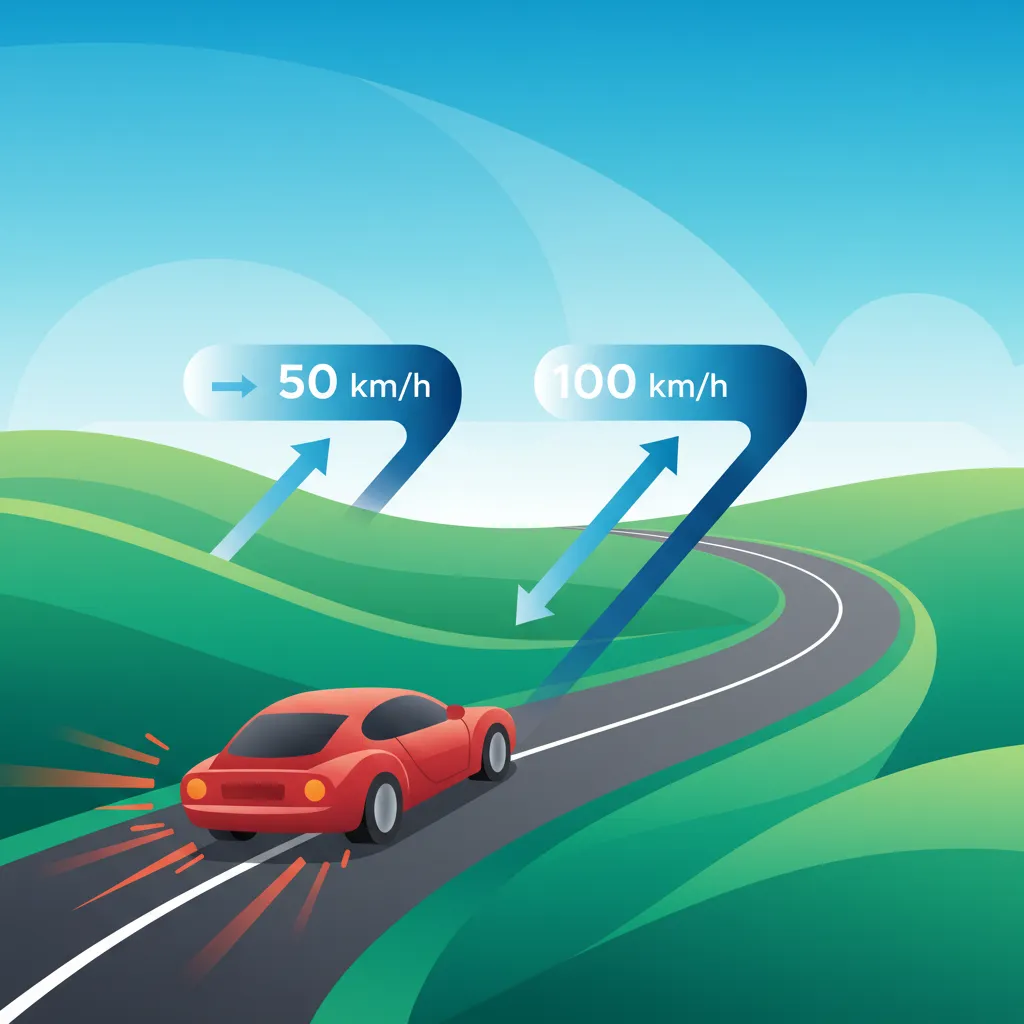
Braking distance refers to the space your vehicle travels from the moment you apply the brakes until it comes to a complete halt. This crucial safety concept is heavily influenced by factors such as your speed, the road surface condition, and the state of your vehicle. In Spain, understanding 'distancia de frenado' is key to maintaining adequate safety margins and correctly interpreting DGT test questions related to speed and stopping.

Safe speed refers to the constant evaluation and adjustment of your driving velocity based on immediate road, weather, and traffic circumstances. It's crucial to understand that simply adhering to the maximum legal speed limit isn't always safe; conditions often demand a slower, more cautious approach. This concept is fundamental for maintaining vehicle control, effectively responding to hazards, and is frequently tested in the Spanish DGT driving theory exam.
Continue your learning journey by browsing our full collection of in-depth articles. Find detailed explanations of DGT traffic rules, road signs, driving procedures, and essential safety knowledge to ensure you are fully prepared for your Spanish driving licence exam.
Spanish Driving Theory Articles & Guides