
This lesson is a critical part of your Swiss motorcycle theory preparation, focusing on the fundamental priority rules you will encounter daily. You will learn to correctly identify and react to 'Vortritt' (right-of-way) situations, including 'Rechtsvortritt' and stop signs, which are essential for passing your Category A or A1 exam. Mastering these concepts ensures you navigate intersections with confidence and safety.

Lesson content overview
Navigating intersections safely and efficiently is a fundamental skill for every road user, especially for motorcyclists. In Switzerland, a clear and comprehensive set of priority rules, collectively known as Vortritt, dictates who has the right-of-way at any given junction. Understanding these rules is not just a legal requirement but a critical aspect of defensive riding, directly impacting your safety and the smooth flow of traffic. This lesson, part of your Swiss Motorcycle Licence Theory Course for Categories A and A1, will detail these essential regulations, from uncontrolled crossroads to complex signalized junctions, helping you make informed decisions on the road.
In Switzerland, Vortritt refers to the legal right for a road user to proceed before others. This systematic allocation of right-of-way is designed to ensure predictable vehicle movements, minimize conflict points, and promote orderly traffic flow. The rules for Vortritt are clearly defined in Swiss law and are communicated through various means, including road signs, road markings, and traffic signals.
The core logic behind these rules is rooted in safety and efficiency. By establishing a clear hierarchy, drivers can anticipate the actions of others, reducing the need for abrupt braking or steering maneuvers, which is particularly important for the stability of a motorcycle. Legally, these rules create enforceable expectations for all road users, helping to prevent collisions and resolve disputes. Mastering these principles is crucial for safely navigating intersections, roundabouts, and other junctions you will encounter on Swiss roads.
For motorcyclists, understanding and correctly applying priority rules is paramount. Motorcycles, due to their smaller profile, can sometimes be less visible to other drivers, making predictable behavior at intersections even more vital. Incorrectly judging right-of-way can lead to dangerous situations, as a sudden stop or swerve on a motorcycle carries a higher risk of instability or collision compared to a four-wheeled vehicle.
Furthermore, a motorcyclist's braking distance can be affected by various factors, including road surface, tire grip, and riding technique. Therefore, knowing exactly when you must yield or when you have the right-of-way allows you to approach intersections with appropriate speed and preparedness, giving you sufficient time to react safely. Your ability to anticipate traffic movements based on Vortritt rules will directly enhance your defensive riding skills and overall road safety.
In the absence of specific road signs, traffic signals, or police directions, the fundamental rule governing right-of-way at uncontrolled intersections in Switzerland is Rechtsvortritt (right-hand priority). This rule states that the vehicle approaching from your right has the legal right of way. It is a universal rule for intersections where no explicit control exists, simplifying decision-making in such situations.
This applies whether you are driving, cycling, or riding a motorcycle. For instance, if two vehicles arrive at a four-way crossroad simultaneously, and there are no signs (like stop or yield signs) or traffic lights, the vehicle to your right proceeds first. You must be prepared to yield to them. This rule is absolute unless signage or signals specifically override it.
Swiss Road Traffic Regulations (SVG) Article 77 mandates that at intersections with no signs or signals, vehicles must give way to traffic approaching from the right.
Applying Rechtsvortritt requires constant vigilance, especially in residential areas or on smaller roads where signs might be absent. As a motorcyclist, you must actively scan intersections for traffic approaching from your right. Even if you believe you arrived first, or if the other vehicle appears to be traveling slower, the right-hand rule takes precedence. Assuming that speed or approach angle supersedes this rule is a common and dangerous misunderstanding.
For example, if you are riding your motorcycle down a street and approach an intersection where another vehicle is coming from your right, you must slow down and be prepared to stop to let them pass. Only when the path is clear can you proceed. Failing to observe Rechtsvortritt is a significant cause of side-impact collisions and can lead to serious consequences, including fines and potential legal liability. Always yield to traffic from your right unless a sign or signal explicitly tells you otherwise.
At many intersections, Vortritt is explicitly managed by traffic signs and signals. These controls establish a clear hierarchy, overriding the Rechtsvortritt rule where present. It is crucial to correctly identify and respond to these directives to ensure safety and compliance with Swiss traffic law.
The Stop-Pflicht (stop obligation) is one of the most stringent requirements at intersections. It mandates that you bring your vehicle to a complete and absolute halt before proceeding. This obligation is typically indicated by a distinctive stop sign (a red octagon with "STOP" in white) or a thick, white stop line marked on the road surface.
The purpose of the Stop-Pflicht is to ensure drivers have an opportunity to thoroughly assess the intersection for any cross-traffic or pedestrians, especially where sightlines might be limited. A common misunderstanding is confusing a stop sign with a yield sign; unlike a yield sign, a stop sign requires a complete cessation of movement, regardless of whether other traffic is visible. You must stop, look carefully in all directions, and only then proceed when the way is absolutely clear and safe.
SVG Article 91 clearly states that vehicles must stop at stop signs and at white stop lines before entering an intersection. Failing to come to a complete stop is a serious violation.
When you encounter a yield sign, also known as Vorbeifahrt (giving way), you are required to allow other road users to proceed before you. This sign is a white triangle with a red border, pointing downwards.
The key difference from a stop sign is that a complete stop is not always necessary. You must reduce your speed and be prepared to stop if required, but if the intersecting road is clear of traffic, you may continue without stopping. The goal is to allow smoother traffic flow in intersections where stopping might not always be essential for safety.
A common error is treating a yield sign as if it were a stop sign, causing unnecessary delays. Conversely, failing to slow down and check for traffic when approaching a yield sign can lead to dangerous situations. Always assess the traffic situation on the priority road and proceed only when it is safe and will not impede other vehicles.
SVG Article 91bis details the obligation to give way at yield signs (triangular), instructing drivers to reduce speed and be prepared to stop if necessary.
A Vorfahrtstraße (priority road) is a main road designated to retain the right-of-way at all intersections it meets, unless traffic signals indicate otherwise. These roads are identified by a priority road sign: a yellow diamond with a white border.
If you are traveling on a Vorfahrtstraße, vehicles on intersecting side roads are typically required to yield to you. This system helps establish a clear hierarchy, reducing the need for stop or yield signs at every junction. Vehicles on a priority road can generally continue through intersections without stopping, though they must always be prepared to react to unforeseen circumstances and must, of course, obey any traffic signals.
It's a common misunderstanding to believe that vehicles on a priority road never need to stop. While you have the Vortritt, if a traffic light at an intersection on a Vorfahrtstraße turns red, you must stop. Traffic signals always take precedence over priority road signage.
SVG Article 73 establishes that vehicles on a Vorfahrtstraße have priority at intersections unless traffic signals require stopping.
Traffic signals, or Lichtzeichen, consisting of red, amber (yellow), and green lights, are the most powerful form of traffic control at intersections. They override all other priority rules, including Rechtsvortritt and priority road signage.
SVG Article 58 details the meaning and obligations associated with traffic signals, emphasizing their mandatory nature.
Beyond standard crossroads, Swiss roads feature various types of intersections and require special attention to vulnerable road users. Understanding priority in these contexts is vital for comprehensive motorcycle safety.
Roundabouts, or Kreisverkehr, are circular intersections designed to improve traffic flow and reduce conflict points. In Switzerland, vehicles already circulating within the roundabout generally have priority over vehicles wishing to enter.
Upon approaching a roundabout, you will almost always see a yield sign (B6) before the entry point. This means you must yield to traffic already inside the roundabout. You should slow down, check for a safe gap in the circulating traffic, and then enter. Once inside, you have priority over any vehicles waiting to enter.
A common mistake is entering a roundabout without yielding, forcing circulating vehicles to brake or swerve. Conversely, some drivers stop completely at the yield sign even when the roundabout is clear, causing unnecessary traffic delays. As a motorcyclist, maintaining a smooth, consistent speed when entering and circulating helps ensure your stability and predictability.
Swiss Road Traffic Regulations (SVV) Article 68 specifies that vehicles already circulating in a roundabout have priority.
Many Swiss towns and cities have tram lines (Straßenbahn) that often intersect with motor vehicle lanes. Trams are a form of public transport and generally have priority at intersections, especially when their movement is signposted or controlled by specific tram signals.
When you encounter tram tracks, particularly at intersections, you must be extremely cautious. Always assume the tram has priority unless specific signs or signals indicate otherwise. A white triangular sign with a black tram symbol warns you of a tram crossing and signifies that you must yield. Never block tram tracks while waiting at an intersection, as this can delay public transport and create dangerous situations. Motorcyclists should also be aware of the smooth, slippery surface of tram tracks, especially in wet conditions, and cross them at an angle as close to 90 degrees as possible to avoid losing traction.
SVG Article 90 generally grants trams priority at intersections unless otherwise signposted.
Pedestrians are among the most vulnerable road users. At marked pedestrian crosswalks (Zebrastreifen), indicated by white stripes on the road, pedestrians always have priority over vehicular traffic. This means you must stop and allow pedestrians to cross safely, regardless of other priority signs or signals at the intersection.
Even if you have a green light or are on a priority road, if a pedestrian is at or entering a Zebrastreifen, you are legally obligated to stop. Failure to yield to pedestrians at crosswalks is a serious offense and can lead to severe consequences. Always approach crosswalks with caution, reduce your speed, and be prepared to stop.
Blinder Winkel, or blind spots, are areas around your motorcycle or other vehicles that are not visible through mirrors. At intersections, blind spots pose a significant risk, especially when turning or changing lanes. Other vehicles, pedestrians, or even other motorcycles can easily disappear into a blind spot.
As a motorcyclist, you must actively check your blind spots before turning, changing lanes, or proceeding after yielding or stopping. This involves not only using your mirrors but also performing a quick head check (shoulder check) to confirm the area is clear. This habit is critical at intersections where movements are complex and multiple road users might be present. Adjust your speed and position to maintain good visibility, and never assume an area is clear without visually confirming it.
The application of priority rules is not static; it must be adapted to prevailing conditions and specific circumstances. Factors like weather, visibility, road type, and even your vehicle's state can influence how safely and effectively you can exercise or yield priority.
Adverse weather conditions significantly impact your ability to assess intersections and respond to priority rules.
The inherent characteristics of a motorcycle also influence how you navigate priority situations.
The type of road also influences typical priority setups:
Failing to correctly interpret and adhere to priority rules is a leading cause of traffic accidents and violations. Understanding common mistakes can help you avoid them.
Here are some common violations and their potential consequences:
This lesson covers the fundamental priority rules governing Swiss intersections, collectively known as Vortritt. At uncontrolled intersections, Rechtsvortritt applies—yield to traffic from your right. Traffic signs and signals override this rule: stop signs require a complete halt, yield signs require slowing and giving way, and priority roads maintain right-of-way at all junctions unless signals intervene. Roundabouts require yielding to circulating traffic, while pedestrians on crosswalks always have priority. For motorcyclists, understanding these rules is critical for defensive riding, as your smaller profile makes predictable behavior at intersections especially vital for safety.
A short set of high-value points that capture the most important learning from this lesson.
Rechtsvortritt means traffic approaching from your right always has priority at uncontrolled intersections unless signs or signals state otherwise
Traffic signals override all other priority rules, including Rechtsvortritt and priority road signage
Stop signs require a complete cessation of movement, while yield signs only require slowing and being prepared to stop
Vehicles already circulating in a roundabout have priority over vehicles waiting to enter
Pedestrians on marked crosswalks (Zebrastreifen) always have priority regardless of your right-of-way status
Explore all units and lessons included in this driving theory course.
Vortritt = right-of-way; Rechtsvortritt = right-before-left at unmarked intersections
Stop-Pflicht (stop sign) = mandatory complete stop; Vorbeifahrt (yield sign) = slow down and give way
Priority roads (Vorfahrtstraße) retain priority unless traffic signals require stopping
Amber light means prepare to stop if safe; proceed only if too close for emergency braking
Always yield to trams unless signs or signals specifically indicate otherwise
Assuming speed or arriving first overrides Rechtsvortritt at uncontrolled intersections
Treating a yield sign as a stop sign or failing to slow down sufficiently when approaching one
Believing vehicles on a priority road never need to stop (traffic signals still apply)
Entering a roundabout without yielding to circulating traffic
Proceeding on green without checking for pedestrians, cyclists, or emerging hazards
Lesson content overview
A short set of high-value points that capture the most important learning from this lesson.
Rechtsvortritt means traffic approaching from your right always has priority at uncontrolled intersections unless signs or signals state otherwise
Traffic signals override all other priority rules, including Rechtsvortritt and priority road signage
Stop signs require a complete cessation of movement, while yield signs only require slowing and being prepared to stop
Vehicles already circulating in a roundabout have priority over vehicles waiting to enter
Pedestrians on marked crosswalks (Zebrastreifen) always have priority regardless of your right-of-way status
Explore all units and lessons included in this driving theory course.
Vortritt = right-of-way; Rechtsvortritt = right-before-left at unmarked intersections
Stop-Pflicht (stop sign) = mandatory complete stop; Vorbeifahrt (yield sign) = slow down and give way
Priority roads (Vorfahrtstraße) retain priority unless traffic signals require stopping
Amber light means prepare to stop if safe; proceed only if too close for emergency braking
Always yield to trams unless signs or signals specifically indicate otherwise
Assuming speed or arriving first overrides Rechtsvortritt at uncontrolled intersections
Treating a yield sign as a stop sign or failing to slow down sufficiently when approaching one
Believing vehicles on a priority road never need to stop (traffic signals still apply)
Entering a roundabout without yielding to circulating traffic
Proceeding on green without checking for pedestrians, cyclists, or emerging hazards
Explore search topics learners often look for when studying Priority Rules at Intersections (Vortritt, Rechtsvortritt, Stop). These topics reflect common questions about road rules, driving situations, safety guidance, and lesson level theory preparation for learners in Switzerland.
Browse additional driving theory lessons that cover connected traffic rules, road signs, and common driving situations related to this topic. Improve your understanding of how different rules interact across everyday traffic scenarios.
Understand specific priority rules for roundabouts, tram tracks, and pedestrian crossings in Switzerland. Learn how to safely navigate complex intersections and protect vulnerable road users as part of your driving theory.
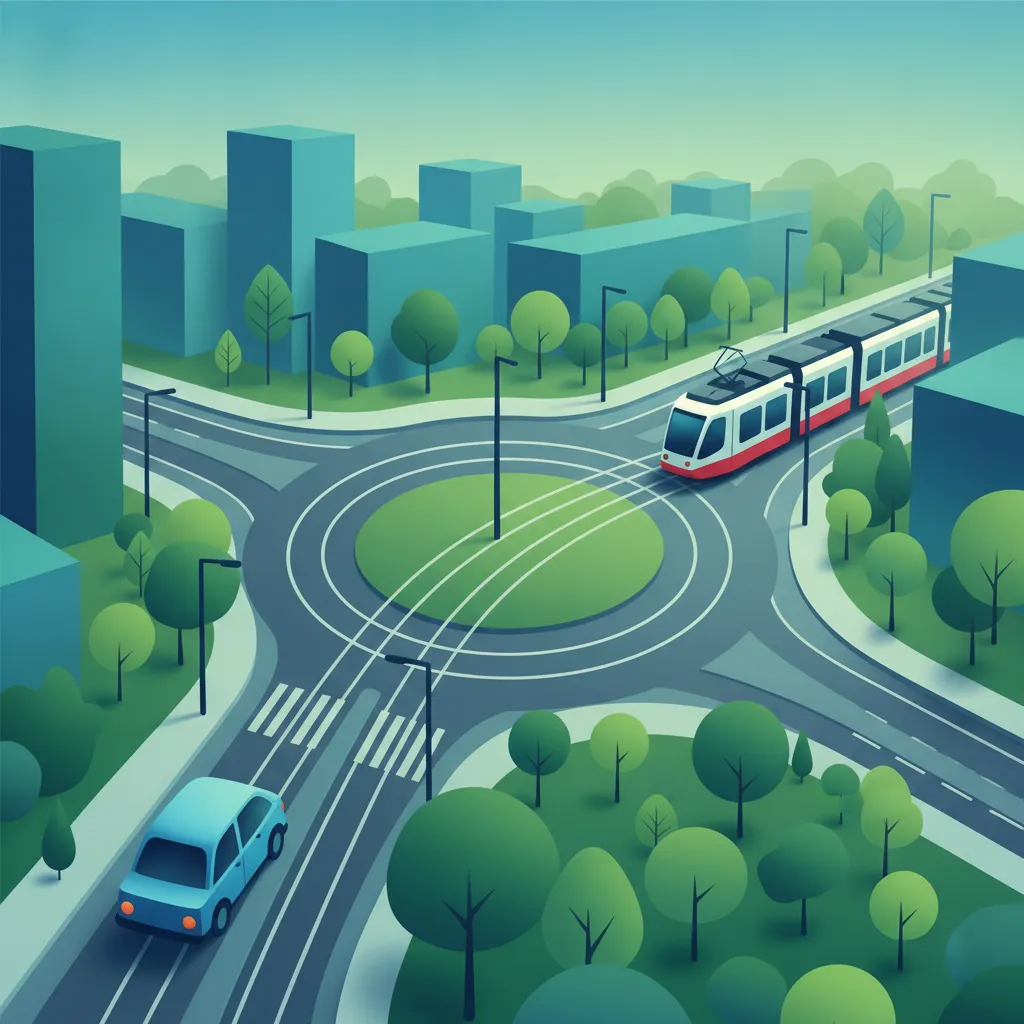
This lesson provides guidance on safely navigating roundabouts and tram lanes, common features in Swiss cities. It covers the rules for yielding, lane positioning within the roundabout, and signaling intentions upon exiting. Special attention is given to the hazards of crossing slippery tram tracks and sharing the road with public transport.
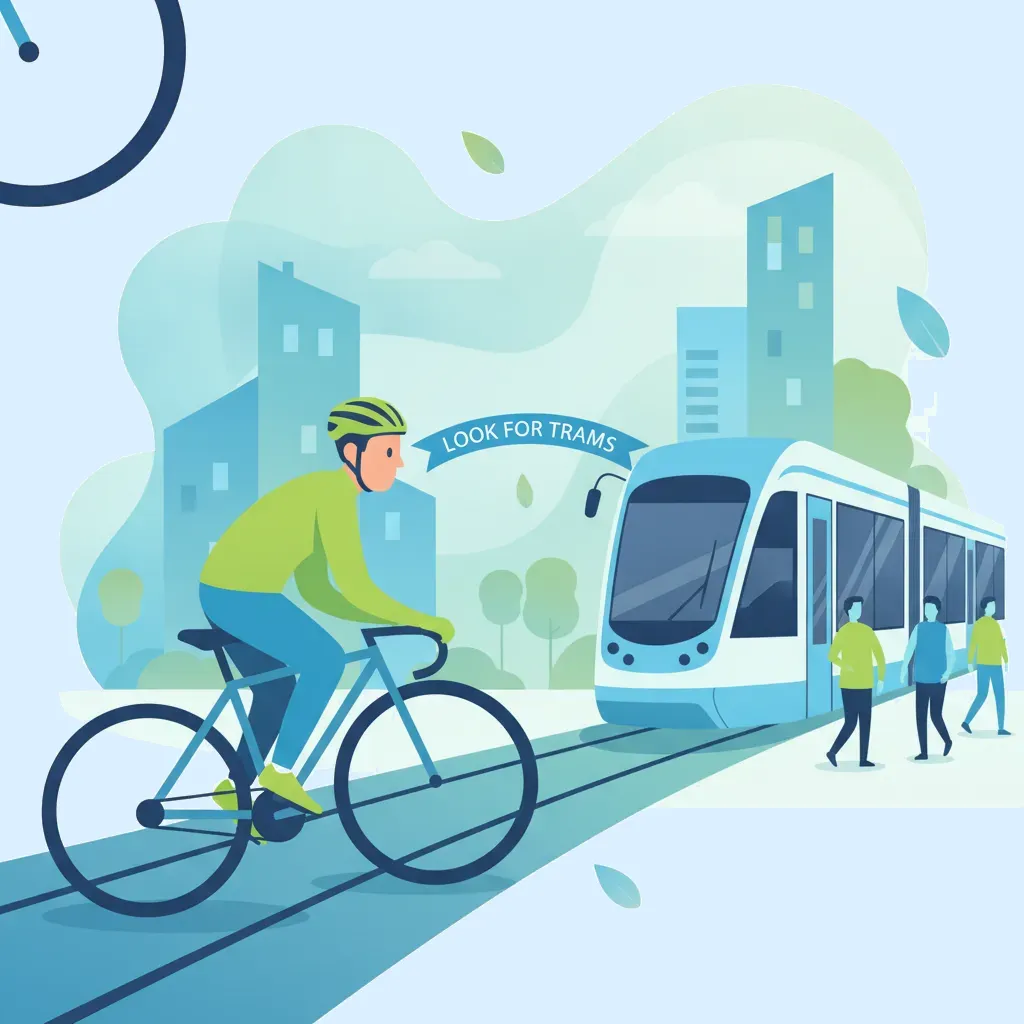
Sharing road space with trams presents unique challenges, including different priority rules and physical hazards like tracks. This lesson covers the Swiss regulations regarding tram priority at junctions and stops. It also provides practical advice on crossing tram tracks safely and maintaining awareness of tram movements.

This lesson explains the fundamental rules of priority that govern traffic flow at Swiss intersections. It details the concept of 'Rechtsvortritt' at unmarked junctions and how priority signs alter this default rule. The specific procedures for entering, navigating, and exiting roundabouts are also covered to ensure predictable and safe maneuvers.
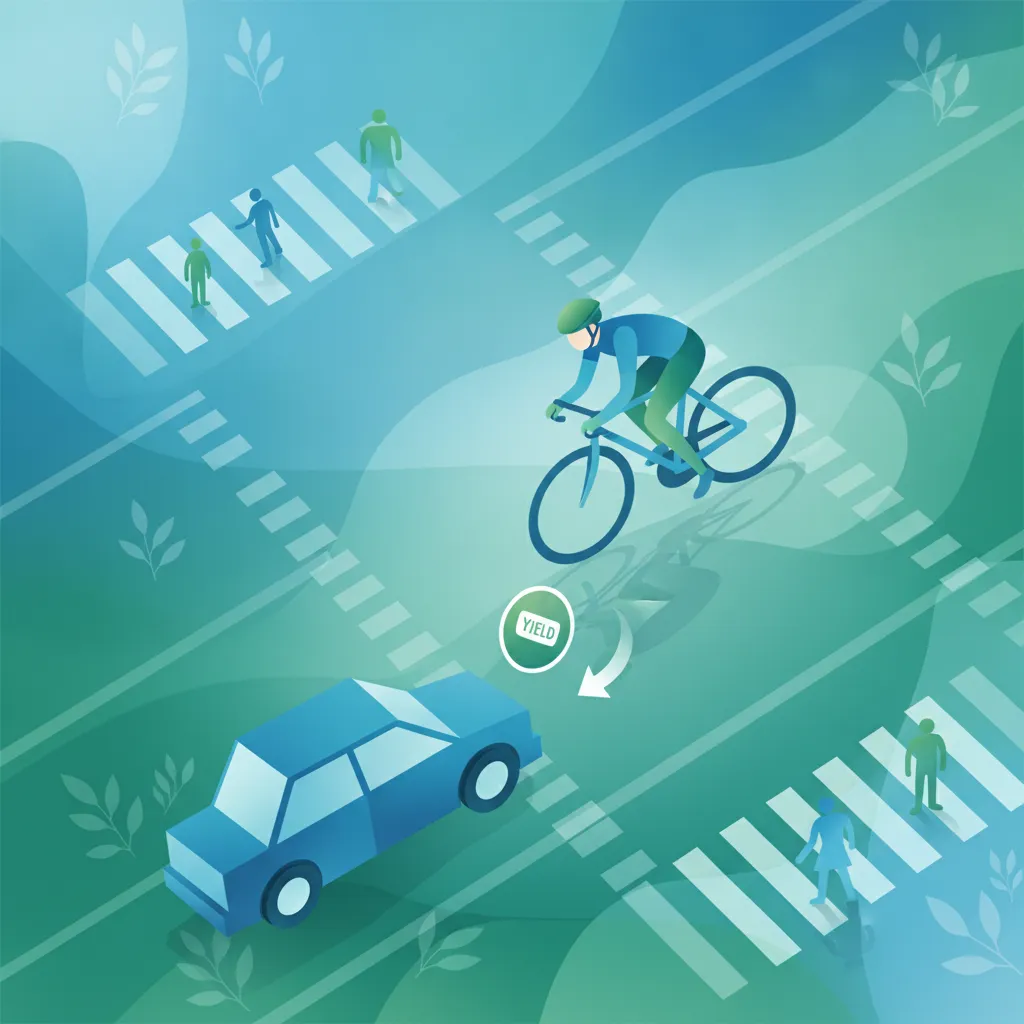
This lesson provides a step-by-step guide to navigating intersections. It reinforces the priority rules, such as 'Rechtsvortritt', and the meaning of yield and stop signs. The content emphasizes the importance of a thorough visual scan on approach and correct positioning to ensure visibility and a safe passage.
This lesson provides guidance on safely negotiating intersections and roundabouts on a motorcycle. It details the correct procedures for approach, lane selection, and yielding according to Swiss traffic regulations. Emphasis is placed on heightened awareness of other vehicles, cyclists, and pedestrians in these complex traffic environments.

This lesson explores the priority given to public transport vehicles, especially trams and buses, in Swiss traffic. It explains how to recognize dedicated public transport lanes and the requirement to yield to trams at intersections. The content also covers procedures when a bus is stopping for passengers and how to ensure safe interactions.

This lesson focuses on the rules governing interactions with public transport vehicles like buses and trams. It explains the priority given to these vehicles at stops and the use of dedicated lanes. Additionally, the content covers tram track crossing procedures and correct vehicle positioning near public transport stops to ensure safety.
This lesson provides a detailed guide to navigating roundabouts, focusing on yielding to circulating traffic and correct lane usage. You will learn the priority principle that vehicles already in the roundabout have precedence over entering traffic. The content also covers multi-lane roundabout navigation and proper exit strategies for smooth, safe traversal.
This lesson examines special traffic situations such as railway level crossings and shared zones where different road users coexist. It explains the specific safety procedures required at railway crossings and how to behave in shared zones with mixed traffic. The content also addresses the need to yield to oncoming trains and follow special signage in these unique zones.
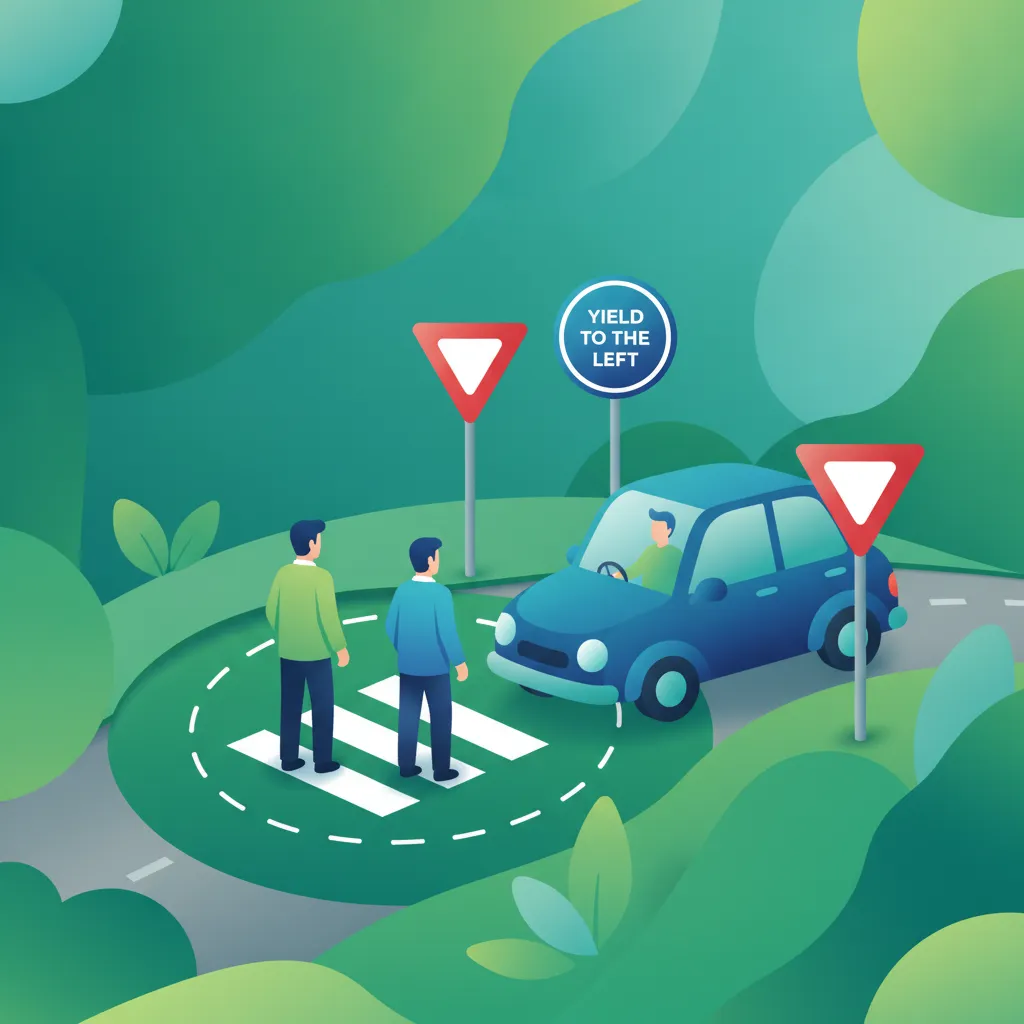
This lesson focuses specifically on the rules and techniques for navigating roundabouts. It clarifies that traffic already in the roundabout has priority and explains how to choose the correct lane on approach based on your intended exit. Proper signaling procedure for entering and, most importantly, exiting the roundabout is also detailed.
Learn about frequent errors when applying priority rules at Swiss intersections, including Rechtsvortritt and stop signs. Understand the legal penalties and how to avoid dangerous violations for your theory exam.
This lesson explains the fundamental rules of priority that govern traffic flow at Swiss intersections. It details the concept of 'Rechtsvortritt' at unmarked junctions and how priority signs alter this default rule. The specific procedures for entering, navigating, and exiting roundabouts are also covered to ensure predictable and safe maneuvers.

This lesson explores how traffic lights dictate priority at intersections, superseding general priority rules. It explains the meanings of red, amber, and green signals and the required actions for each. Emphasis is placed on understanding green light right-of-way and the cautionary role of the amber phase for navigating signal-controlled junctions safely.
This lesson examines the concept of Vortritt (priority) and Rechtsvortritt, the right-hand rule used at uncontrolled intersections. It explains how these rules determine which vehicle has the right-of-way and the hierarchy of priority signs. You will learn to apply these rules in typical scenarios like four-way stops and T-intersections without traffic signals.
This lesson focuses on the Kein Vortritt rule, which applies when a vehicle must yield to all other traffic. You will learn to recognize scenarios where this rule is in effect, such as at minor roads or when entering a main road. The content also discusses how priority signs and traffic signals override the default right-hand rule, clarifying when you must yield.

This lesson explores pedestrian right-of-way at various crossings, including zebra crossings and pedestrian islands. It emphasizes the need for drivers to reduce speed, anticipate pedestrian movement, and stop safely when required. The content also covers special regulations that apply in school zones, such as reduced speed limits and heightened vigilance.
This lesson provides a step-by-step guide to navigating intersections. It reinforces the priority rules, such as 'Rechtsvortritt', and the meaning of yield and stop signs. The content emphasizes the importance of a thorough visual scan on approach and correct positioning to ensure visibility and a safe passage.
This lesson outlines the legal and administrative repercussions of committing traffic violations or being involved in an accident. It covers the system of fines, licence points, and potential licence revocation under Swiss law. Understanding these consequences reinforces the importance of lawful and responsible riding.
This lesson provides guidance on safely negotiating intersections and roundabouts on a motorcycle. It details the correct procedures for approach, lane selection, and yielding according to Swiss traffic regulations. Emphasis is placed on heightened awareness of other vehicles, cyclists, and pedestrians in these complex traffic environments.

This lesson delineates the various categories of road users on Swiss roads, highlighting their specific rights and responsibilities. It explains the legal hierarchy that determines priority at intersections and in shared spaces. The content also discusses the unique considerations for vulnerable users, such as children, emphasizing the need for heightened caution.
This lesson provides a detailed guide to navigating roundabouts, focusing on yielding to circulating traffic and correct lane usage. You will learn the priority principle that vehicles already in the roundabout have precedence over entering traffic. The content also covers multi-lane roundabout navigation and proper exit strategies for smooth, safe traversal.
Find clear answers to common questions learners have about Priority Rules at Intersections (Vortritt, Rechtsvortritt, Stop). Learn how the lesson is structured, which driving theory objectives it supports, and how it fits into the overall learning path of units and curriculum progression in Switzerland. These explanations help you understand key concepts, lesson flow, and exam focused study goals.
In Switzerland, the default rule is Rechtsvortritt, which means you must yield to traffic coming from your right, provided there are no other signs or markings to the contrary.
Yes, a Stop sign requires a complete halt of your motorcycle, even if the road appears clear. You must then wait until it is safe before proceeding.
Generally, trams have priority over other road users at intersections, even if they are coming from the left, provided they are not restricted by specific priority signs. Always exercise caution around trams.
Priority questions are a significant part of the theory exam. Misunderstanding these rules is a common reason for failure, as they represent the most frequent types of collision risks.
Pinpoint specific Swiss traffic rules, road signs, or driving situations you need to master. Use the practice search to start a focused revision session now and build confidence for your official driving theory exam.