
Understanding safe following distances is crucial for preventing rear-end collisions and ensuring smooth traffic flow. This lesson, part of Unit 5: Speed Management and Stopping Distances, builds on your knowledge of Polish speed limits and introduces practical methods to maintain a safe buffer zone. Mastering this skill is vital for passing your Category B theory exam and for safe driving in all conditions.
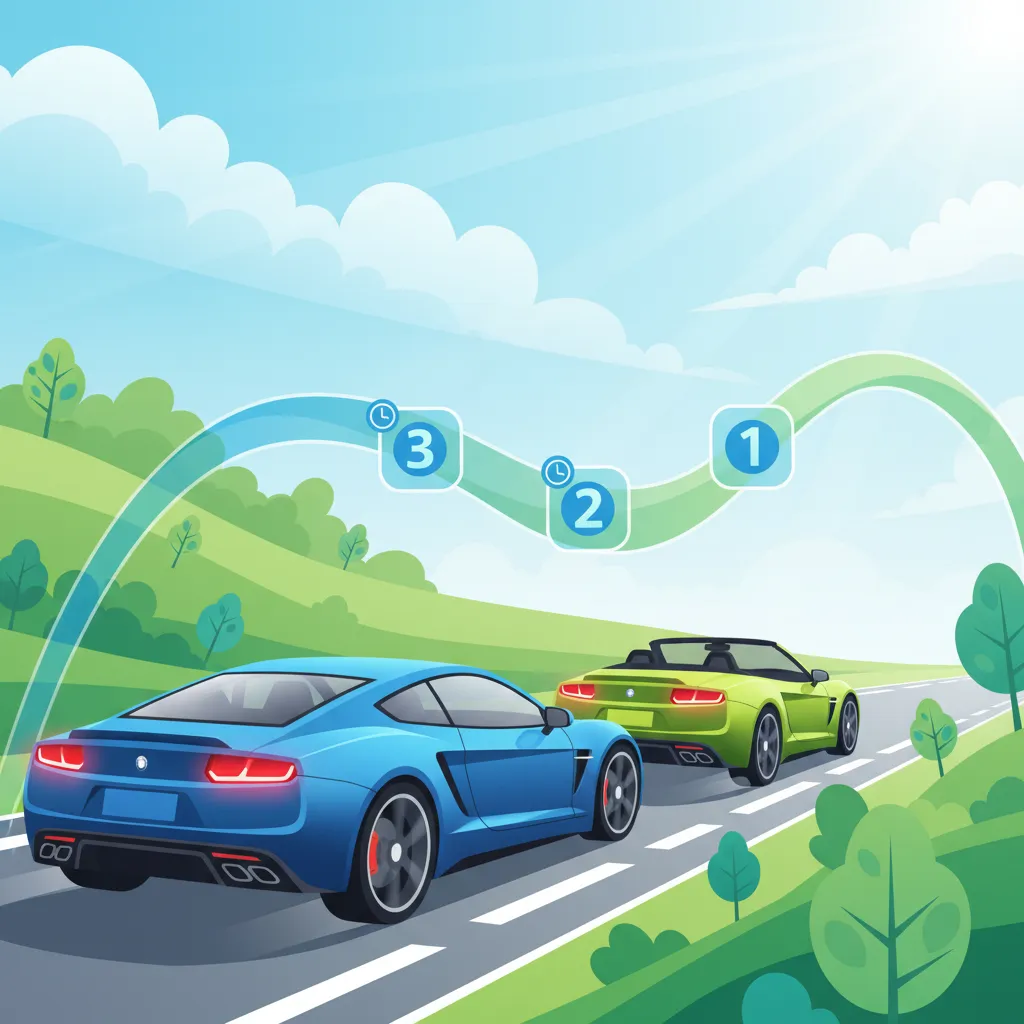
Lesson content overview
Maintaining a safe following distance is one of the most fundamental skills for any driver, crucial for preventing rear-end collisions and ensuring road safety. In the context of the Polish Driving Theory – Comprehensive Category B License Preparation, mastering this concept is not only vital for passing your exam but also for responsible and defensive driving throughout your life on the road. This lesson delves into practical methods for determining and maintaining an adequate buffer zone behind the vehicle in front, focusing on time-based rules and their application in diverse conditions.
The space you keep between your vehicle and the one ahead acts as a critical buffer zone. This buffer provides you with the necessary time and distance to react to sudden changes in traffic, such as emergency braking by the leading vehicle, and to bring your own vehicle to a complete stop without collision. Without sufficient space, even a momentary lapse in attention or a slight delay in reaction can lead to a dangerous rear-end impact.
Proper following distances significantly reduce the risk and severity of crashes. It allows for smoother braking, less aggressive maneuvers, and overall better traffic flow. From a legal standpoint, Polish road safety regulations, particularly the Prawo o ruchu drogowym (Road Traffic Law), explicitly mandate drivers to maintain a safe distance. Therefore, understanding and applying these principles is a core duty of every Category B driver.
Rather than relying on a fixed physical distance (e.g., 10 meters), safe following distance is best understood and applied as a time gap. This time-based approach automatically adjusts the physical distance required based on your current speed. For instance, two seconds of travel time at 50 km/h covers a much shorter distance than two seconds at 120 km/h, but the time to react and brake remains consistent. This adaptability makes time-based rules highly effective and practical for drivers.
This approach combines two critical elements: your perception-reaction time (the time it takes for you to see a hazard and start braking) and your vehicle's braking distance (the distance your vehicle travels once the brakes are applied until it stops). By ensuring a time gap that accommodates both, you build a robust safety margin.
The Two-Second Rule is the foundational guideline for maintaining a safe following distance under ideal driving conditions: dry roads, good visibility, and normal traffic flow. It dictates that there should be a minimum two-second time gap between the rear bumper of the vehicle in front and the front bumper of your vehicle.
Applying this rule in practice is straightforward and requires no special equipment:
Choose a Fixed Point: As the vehicle ahead passes a stationary object on the side of the road (e.g., a sign, a lamppost, a bridge abutment), begin counting "one thousand one, one thousand two."
Reach the Point: You should not reach the same fixed point until you have finished counting "one thousand two."
Adjust Your Speed: If you reach the fixed point before completing your count, you are following too closely. You must reduce your speed to increase the gap until you can comfortably count to two seconds.
This method implicitly accounts for varying speeds; at higher speeds, the physical distance covered in two seconds is naturally greater, providing a larger spatial buffer. For example, at 50 km/h (approximately 13.9 meters per second), a two-second gap translates to about 28 meters. At 90 km/h (25 m/s), it becomes 50 meters.
The two-second rule provides a baseline buffer that generally accounts for an average driver's perception-reaction time (approximately 1 second) and a basic braking distance at typical speeds under good conditions. While not explicitly codified as a "two-second rule" in Polish law, the principle is implicitly required by Article 82 § 1 of the Polish Road Traffic Law, which mandates drivers to maintain a safe distance adapted to speed, road, weather, vehicle condition, and traffic.
A common misunderstanding is to treat the two-second rule as a fixed distance (e.g., always 10 meters). This is incorrect and dangerous, as the required safe distance changes dramatically with speed. Always think in terms of time.
The two-second rule serves as a minimum under ideal conditions. However, driving conditions are often less than ideal. When factors reduce traction, limit visibility, or increase your vehicle's stopping requirements, you must extend your following distance. This leads to the Three-Second Rule and, in some cases, even longer time gaps.
You should increase your following distance by at least one second for each adverse factor present. This means moving from a two-second baseline to three, four, or even five seconds in challenging situations.
For example, on a wet road at 80 km/h (approximately 22.2 m/s), a three-second gap would mean maintaining around 66 meters of space. This increased buffer provides crucial additional time for braking on a less grippy surface. While there isn't an explicit law for a "three-second rule," official guidance and common sense in Polish road safety strongly advocate for increasing the buffer when conditions deteriorate. Failing to do so can result in a fine for not adapting your distance to conditions.
To fully appreciate the reasoning behind safe following distances, it's essential to understand its two main components: perception-reaction distance and braking distance.
Perception-Reaction Time (PRT) is the interval from the moment a driver detects a hazard until they physically initiate a response, such as applying the brakes or steering. For an average, alert driver, this time is typically about 1 second. However, PRT can be longer due to factors like fatigue, distraction, alcohol, drugs, or even old age.
The Perception-Reaction Distance is the distance your vehicle travels during this PRT. It is calculated by:
Perception-Reaction Distance = Speed × Perception-Reaction Time
For instance, if you are driving at 90 km/h (which is approximately 25 m/s) and your PRT is 1 second, you will cover about 25 meters before your foot even touches the brake pedal. This distance is entirely "lost" for braking and must be accounted for in your following distance. Polish law, particularly Article 95, implicitly requires drivers to be vigilant and anticipate hazards, which directly relates to minimizing PRT through alertness.
Braking Distance is the distance a vehicle travels from the moment the brakes are applied until it comes to a complete halt. This distance is influenced by several factors:
The approximate formula for braking distance is:
d = (v²) / (2 × µ × g)
Where:
d is braking distance (meters)v is speed (meters per second)µ is the road-tire friction coefficientg is the acceleration due to gravity (approximately 9.81 m/s²)This formula highlights why speed is such a critical factor and why adverse conditions (lower µ) demand much greater following distances. For example, at 50 km/h on a dry road, braking distance is roughly 14 meters. On a wet road, it could be around 25 meters, and on ice, it might exceed 70 meters.
Many drivers mistakenly believe that an Anti-Lock Braking System (ABS) significantly reduces braking distance. While ABS is a crucial safety feature that prevents wheel lock-up and allows you to steer during emergency braking, it primarily maintains steering control, not necessarily reduces the overall stopping distance, especially on loose or very slippery surfaces.
The Safe Following Distance is the sum of your perception-reaction distance and your braking distance. It is ultimately expressed as a time gap (seconds) that adequately covers both these components at any given speed. The beauty of the two-second or three-second rule is that it acts as a simple, real-time heuristic for this complex calculation across various speeds, providing a dynamic buffer zone.
Safe Following Distance = Perception-Reaction Distance + Braking Distance
This composite metric is what Polish law refers to when it requires drivers to maintain a safe distance.
Polish road traffic law clearly outlines the driver's responsibility for maintaining a safe following distance. Compliance with these regulations is mandatory and crucial for preventing accidents.
This fundamental article states that drivers must keep a safe distance from the vehicle ahead, adapted to speed, road, weather, vehicle condition, and traffic.
This article emphasizes a broader duty for drivers to adjust their speed and following distance according to the prevailing conditions.
Additionally, Rozdział III § 26 of the Vehicle Inspection Regulation mandates that vehicle braking systems must be functional and ensure that braking distances meet specified technical standards. While this focuses on vehicle maintenance, it underpins the assumption that drivers have a vehicle capable of stopping safely when a proper following distance is maintained.
Ignoring the principles of safe following distance can lead to severe consequences. Here are some common violations and dangerous edge cases:
Tailgating in Urban Traffic: Many drivers follow too closely (often less than a one-second gap) in city traffic, especially in queues at traffic lights or during rush hour.
Incorrect Buffer on Wet Roads: A driver maintains a standard two-second gap on a wet or slippery bridge, even when driving at 90 km/h.
Heavy Load Miscalculation: A delivery van, fully loaded with cargo, assumes the standard two-second rule applies at 80 km/h.
Night Driving with Reduced Visibility: A driver on a dark road at night underestimates the needed distance, maintaining only a visual distance rather than a time-based gap. Oncoming headlights can further reduce immediate visibility.
Over-reliance on Automatic Cruise Control: Some drivers wrongly believe that adaptive cruise control systems will always maintain a perfectly safe distance in all situations.
Safe driving requires continuous adaptation. Your following distance should constantly be adjusted based on a dynamic assessment of your driving environment.
Let's look at how these rules translate into everyday driving situations:
This lesson teaches the two-second rule as a time-based minimum following distance under good conditions and explains why it must be extended to three seconds or more in rain, snow, fog, at night, when carrying heavy loads, or when driving at high speeds. The underlying logic combines perception-reaction time (roughly one second for an alert driver) with braking distance, which increases dramatically with speed and decreases sharply on wet or icy surfaces. Polish law requires drivers to maintain a safe distance adapted to all prevailing conditions, not merely a minimum gap. Practically, you apply this by counting seconds to a fixed roadside marker, adding extra seconds for each adverse factor present.
A short set of high-value points that capture the most important learning from this lesson.
Safe following distance is measured as a time gap (seconds), not a fixed physical distance, automatically adapting to your current speed.
The two-second rule is the minimum baseline gap under ideal conditions: dry roads, good visibility, and normal traffic.
Increase your gap to three seconds or more whenever traction, visibility, or stopping requirements are compromised.
Safe following distance equals perception-reaction distance plus braking distance, both of which vary with conditions.
Article 82 § 1 of the Polish Road Traffic Law mandates maintaining a safe distance adapted to speed, road, weather, vehicle condition, and traffic.
Explore all units and lessons included in this driving theory course.
At 50 km/h on dry roads, a two-second gap is approximately 28 metres; at 90 km/h it extends to roughly 50 metres.
On wet roads the friction coefficient drops significantly, tripling or quadrupling braking distance compared to dry conditions.
Heavy loads, towing trailers, and steep downhill gradients all increase braking distance and require at least one additional second.
ABS helps maintain steering control during emergency braking but does not necessarily reduce overall stopping distance.
Kinetic energy increases with the square of speed, meaning doubling your speed quadruples the energy that must be dissipated during braking.
Treating the two-second rule as a fixed physical distance (e.g., always 10 metres) rather than a time gap that varies with speed.
Maintaining only a standard two-second gap on wet, icy, or slippery roads where three seconds or more is required.
Failing to account for increased braking distance when driving a heavily loaded vehicle or one with worn brakes or tires.
Assuming adaptive cruise control systems always maintain a perfectly safe distance in all conditions without driver oversight.
Following too closely in urban queues at traffic lights where sudden braking is common, leaving no reaction time.
Lesson content overview
A short set of high-value points that capture the most important learning from this lesson.
Safe following distance is measured as a time gap (seconds), not a fixed physical distance, automatically adapting to your current speed.
The two-second rule is the minimum baseline gap under ideal conditions: dry roads, good visibility, and normal traffic.
Increase your gap to three seconds or more whenever traction, visibility, or stopping requirements are compromised.
Safe following distance equals perception-reaction distance plus braking distance, both of which vary with conditions.
Article 82 § 1 of the Polish Road Traffic Law mandates maintaining a safe distance adapted to speed, road, weather, vehicle condition, and traffic.
Explore all units and lessons included in this driving theory course.
At 50 km/h on dry roads, a two-second gap is approximately 28 metres; at 90 km/h it extends to roughly 50 metres.
On wet roads the friction coefficient drops significantly, tripling or quadrupling braking distance compared to dry conditions.
Heavy loads, towing trailers, and steep downhill gradients all increase braking distance and require at least one additional second.
ABS helps maintain steering control during emergency braking but does not necessarily reduce overall stopping distance.
Kinetic energy increases with the square of speed, meaning doubling your speed quadruples the energy that must be dissipated during braking.
Treating the two-second rule as a fixed physical distance (e.g., always 10 metres) rather than a time gap that varies with speed.
Maintaining only a standard two-second gap on wet, icy, or slippery roads where three seconds or more is required.
Failing to account for increased braking distance when driving a heavily loaded vehicle or one with worn brakes or tires.
Assuming adaptive cruise control systems always maintain a perfectly safe distance in all conditions without driver oversight.
Following too closely in urban queues at traffic lights where sudden braking is common, leaving no reaction time.
Explore search topics learners often look for when studying Calculating Safe Following Distances. These topics reflect common questions about road rules, driving situations, safety guidance, and lesson level theory preparation for learners in Poland.
Browse additional driving theory lessons that cover connected traffic rules, road signs, and common driving situations related to this topic. Improve your understanding of how different rules interact across everyday traffic scenarios.
Learn how to adjust following distances for challenging Polish road conditions like rain, snow, and ice. Understand the impact of weather on braking and reaction times to prevent collisions.
This lesson teaches the crucial concept that drivers must always adapt their speed to the current conditions. It explains how factors like rain, fog, ice, heavy traffic, and poor visibility reduce safety margins and require a lower speed than the posted limit. This principle of defensive driving is essential for preventing accidents in challenging situations.
This lesson focuses on the specific challenges of driving in rainy conditions. It explains the phenomenon of hydroplaning, where tires lose contact with the road surface, and how to prevent it by reducing speed. The importance of good tire condition, effective windscreen wipers, and extending following distances is also covered in detail.
This lesson focuses on the skills needed for safe winter driving. It explains how to use gentle acceleration, steering, and braking to avoid losing traction on snow and ice. The lesson also discusses how to recognize and handle a skid, and the critical role that appropriate winter tires play in maintaining vehicle control.

This lesson details the specific driving adjustments needed for adverse weather. It focuses on how rain, snow, and ice affect vehicle dynamics and driver perception. Learners will study techniques to prevent hydroplaning, use winter tires effectively, and increase following distances on slippery surfaces while using safety systems like fog lights.
This lesson focuses on the principles of maintaining a safe following distance behind other road users, introducing the two-second and three-second rules as guidelines. Learners will learn how to estimate safe gaps based on speed, road conditions, and traffic density, and understand the importance of a reaction-time buffer to prevent rear-end collisions. The lesson also covers techniques for visual distance estimation, promoting safe tailgating avoidance.
This lesson provides essential guidance for driving in fog, one of the most dangerous conditions. It instructs on the correct use of low-beam headlights and fog lights to maximize visibility without causing glare. The core advice is to significantly reduce speed and use the edge of the road or markings as a guide.

This lesson teaches drivers how to adapt their speed, following distance, and control inputs to safely navigate adverse conditions. It covers the challenges posed by rain, snow, and ice, explaining the loss of traction and the increased risk of skidding or aquaplaning. The content provides specific strategies for driving in fog, which reduces visibility, and strong crosswinds, which can affect the stability of a high-sided vehicle, promoting a proactive and defensive driving mindset.
This lesson introduces defensive driving principles for rural settings, teaching learners how to continually scan the environment and anticipate potential hazards. It discusses the unique challenges posed by slow-moving agricultural traffic, field entrances, and unpredictable farm equipment maneuvers. The lesson emphasizes proactive decision-making and early brake application to avoid collisions in mixed traffic.
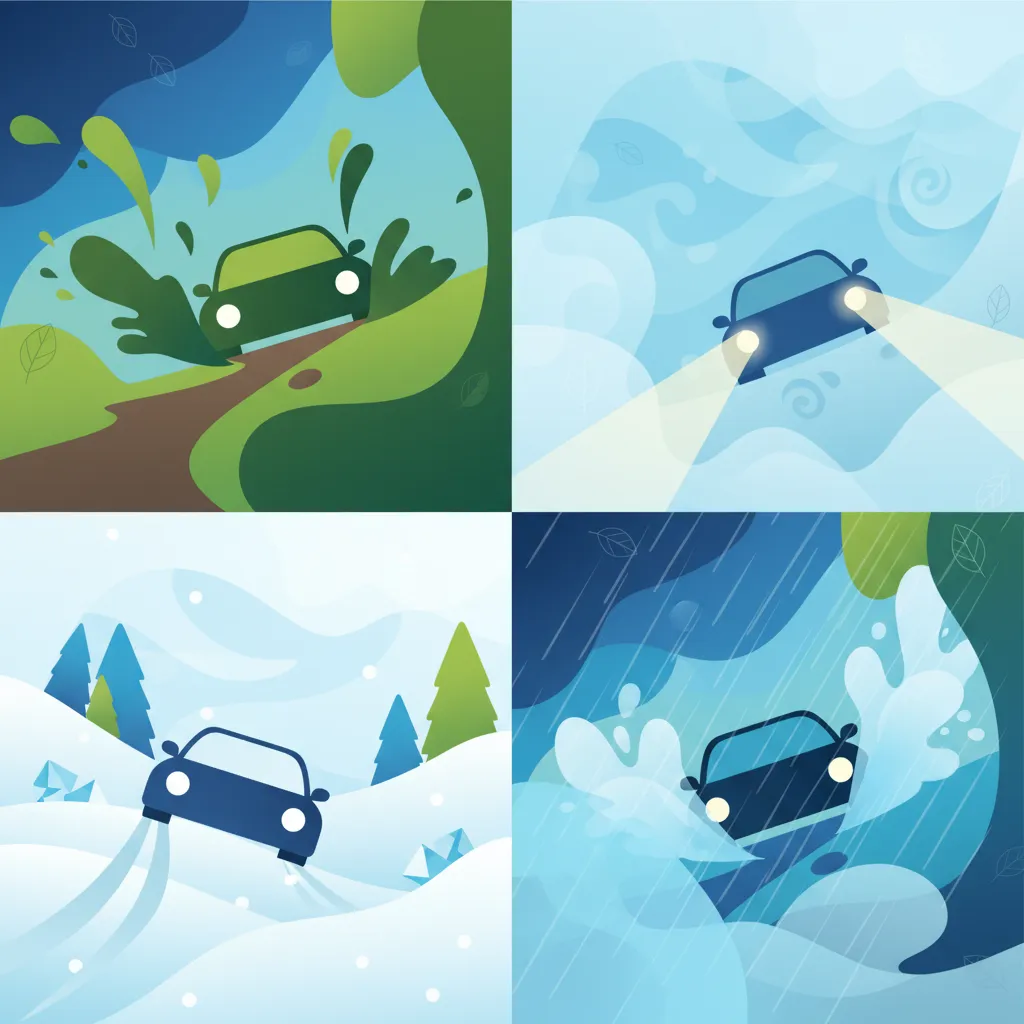
This lesson focuses on the specific hazards introduced by seasonal weather, such as mud, snow, ice, fog, and heavy rain. It explains how these conditions affect traction, braking, and driver visibility, and provides guidance on adjusting speed and using appropriate tires. The lesson also covers the proper use of lights and reflectors to improve visibility in low-light conditions.
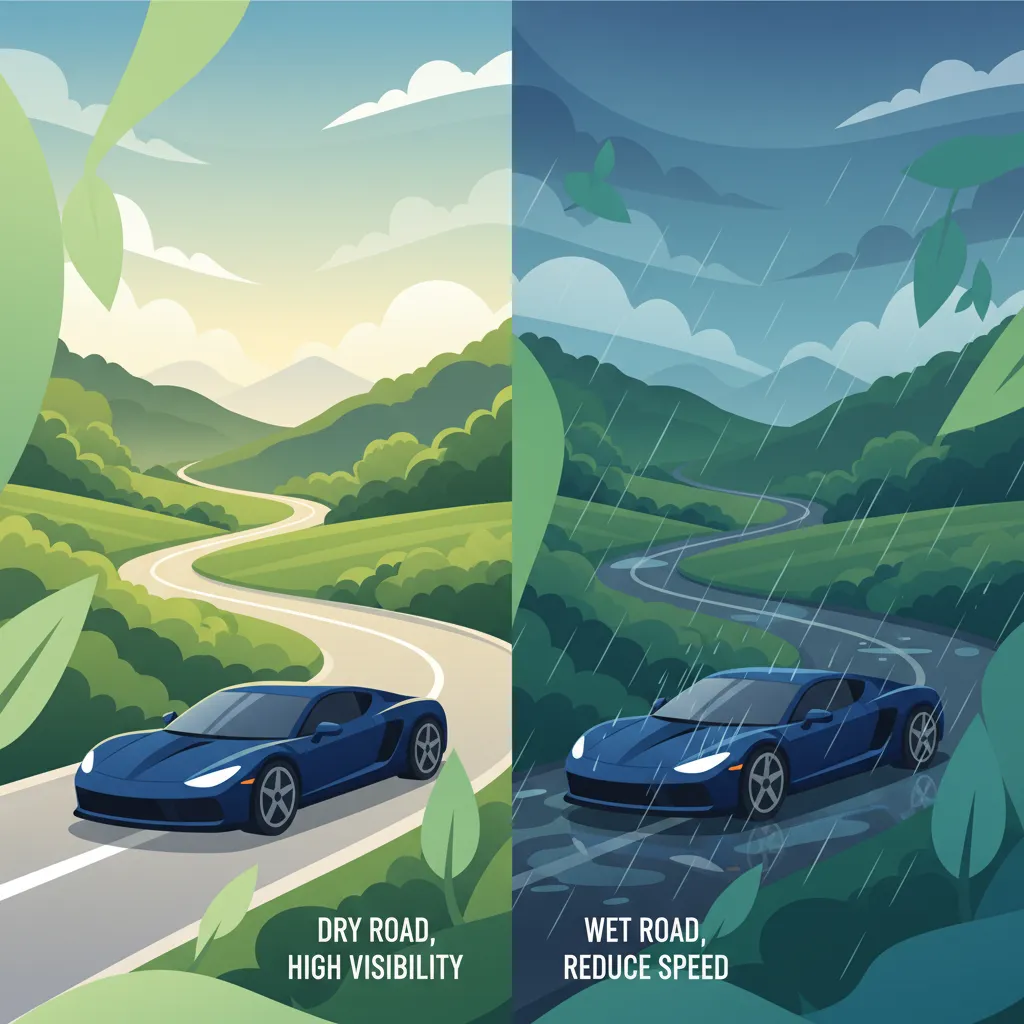
In this lesson, learners examine how environmental conditions such as rain, wind, ice, and reduced visibility necessitate adjustments in riding speed. The content provides guidelines for assessing road surfaces, judging appropriate cornering speeds, and reducing speed proactively in adverse weather. Learners will understand the impact of temperature on tyre performance and the need to increase safety margins, mastering adaptive speed management to maintain control.
Explore the key factors that determine your total stopping distance, including perception-reaction time and braking distance, as required by Polish traffic laws.
This lesson breaks down the physics of stopping a vehicle. It defines reaction distance (the distance traveled before applying the brakes) and braking distance (the distance traveled while braking). The content explains how factors like speed, road condition, and tire grip influence the total stopping distance, and introduces proper braking techniques.
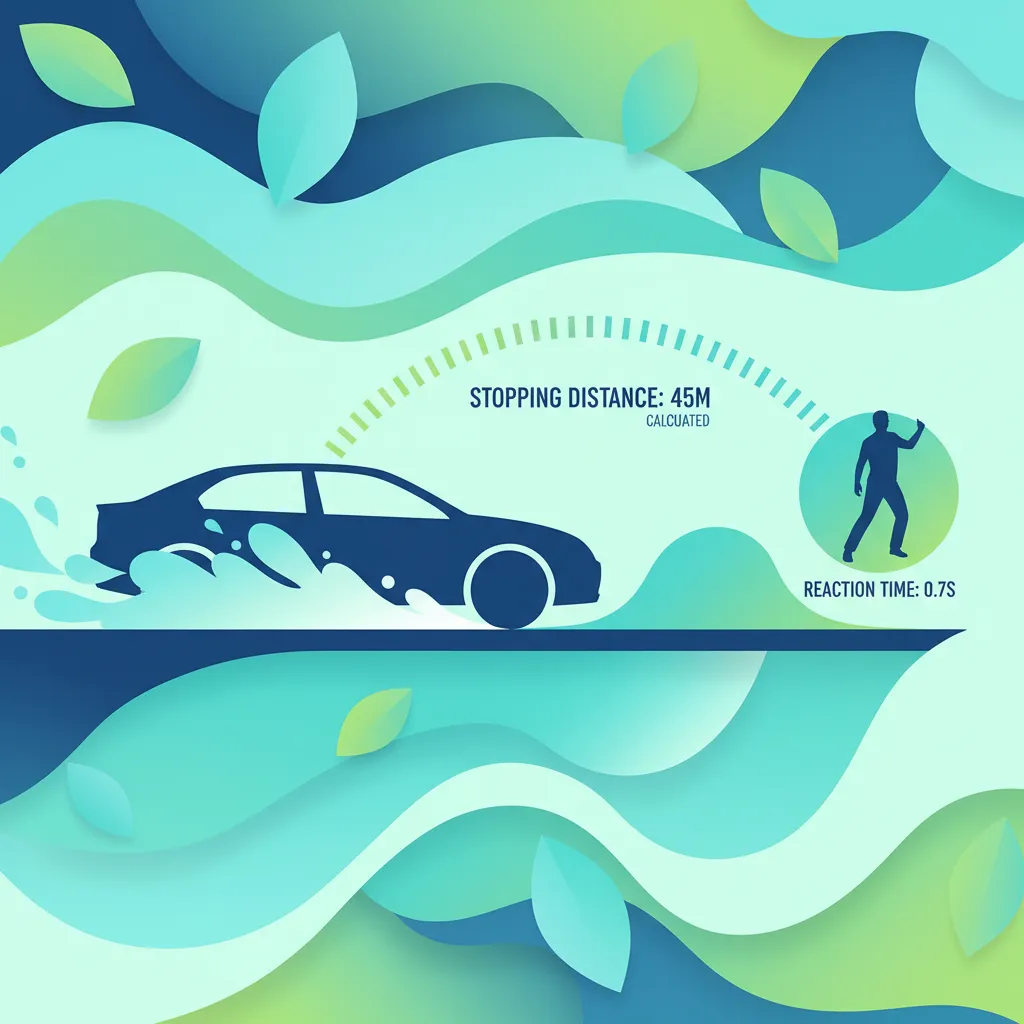
In this lesson, learners study the physics behind stopping distances, breaking it down into perception-reaction time and braking distance components. The content explains how speed, vehicle mass, and road surface friction influence the total stopping distance. Learners will practice calculating stopping distances under different conditions and understand the importance of maintaining a safety margin by improving hazard perception and rider response.
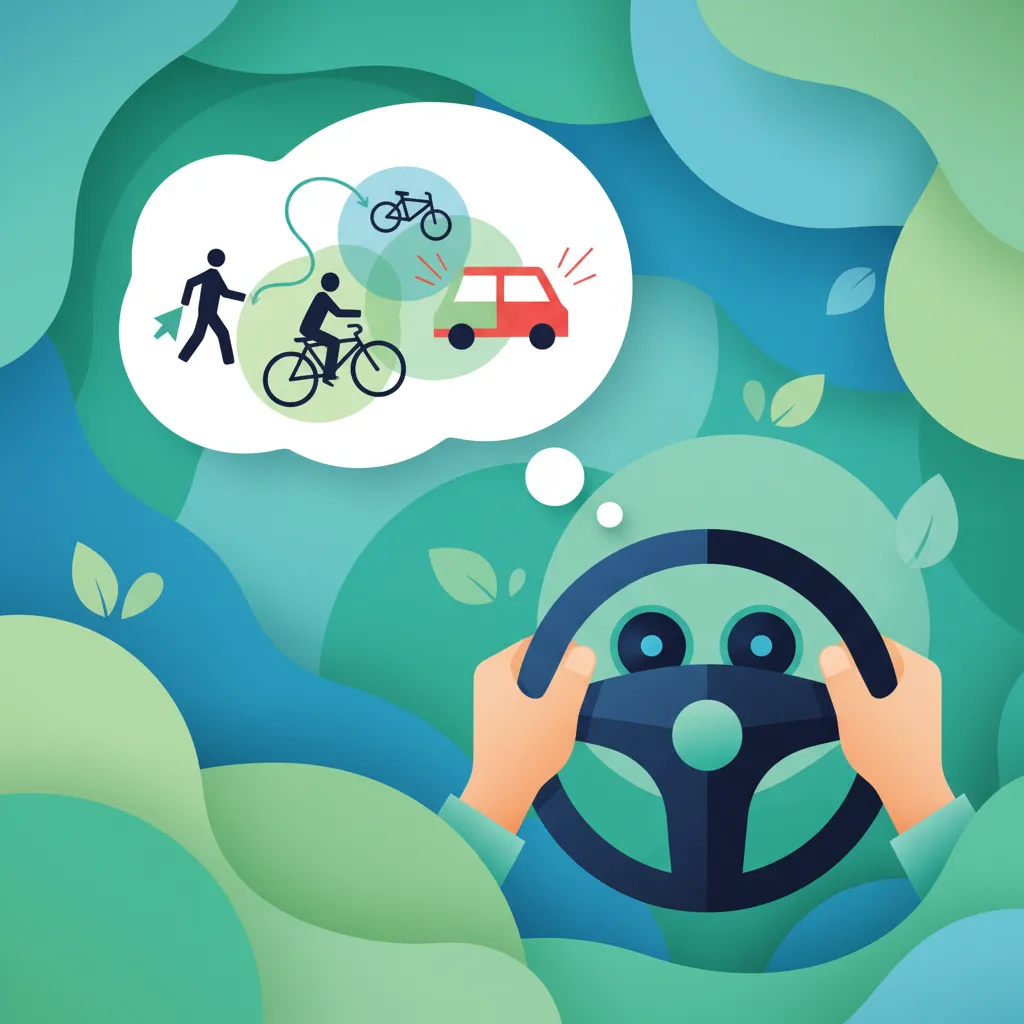
This lesson examines the internal factors that can impact a driver's performance. It explains how fatigue, distractions (like mobile phones), and the influence of alcohol or drugs significantly increase reaction time and impair judgment. Understanding these risks is fundamental to making responsible decisions before and during every journey.
This lesson teaches the essential skill of calculating a heavy vehicle's total stopping distance. It breaks the calculation into two key parts: the driver's perception-reaction distance and the vehicle's braking distance. Learners will understand how factors such as vehicle mass, speed, road gradient, and the friction coefficient of the road surface dramatically influence the distance required to come to a complete and safe stop, emphasizing the need for large safety margins.

This lesson covers the principles of motorcycle braking, differentiating between the front and rear brake systems and their respective contributions to stopping power. It explains how anti-lock braking system (ABS) works to prevent wheel lock-up and improve control on slippery surfaces. Learners will explore the optimal brake balance, techniques for progressive deceleration, and the factors influencing stopping distances under various road conditions, ensuring riders can maintain reliable braking performance.
This lesson explores how increasing speed amplifies kinetic energy, thereby affecting braking efficiency and required stopping distances. Learners will learn about brake fade due to heat, the differing contributions of front and rear brakes, and how ABS assists in maintaining stability on slippery surfaces. The lesson covers techniques for proper brake modulation, especially when decelerating from high speeds, to help riders apply appropriate braking techniques for safety.
This lesson teaches the crucial concept that drivers must always adapt their speed to the current conditions. It explains how factors like rain, fog, ice, heavy traffic, and poor visibility reduce safety margins and require a lower speed than the posted limit. This principle of defensive driving is essential for preventing accidents in challenging situations.
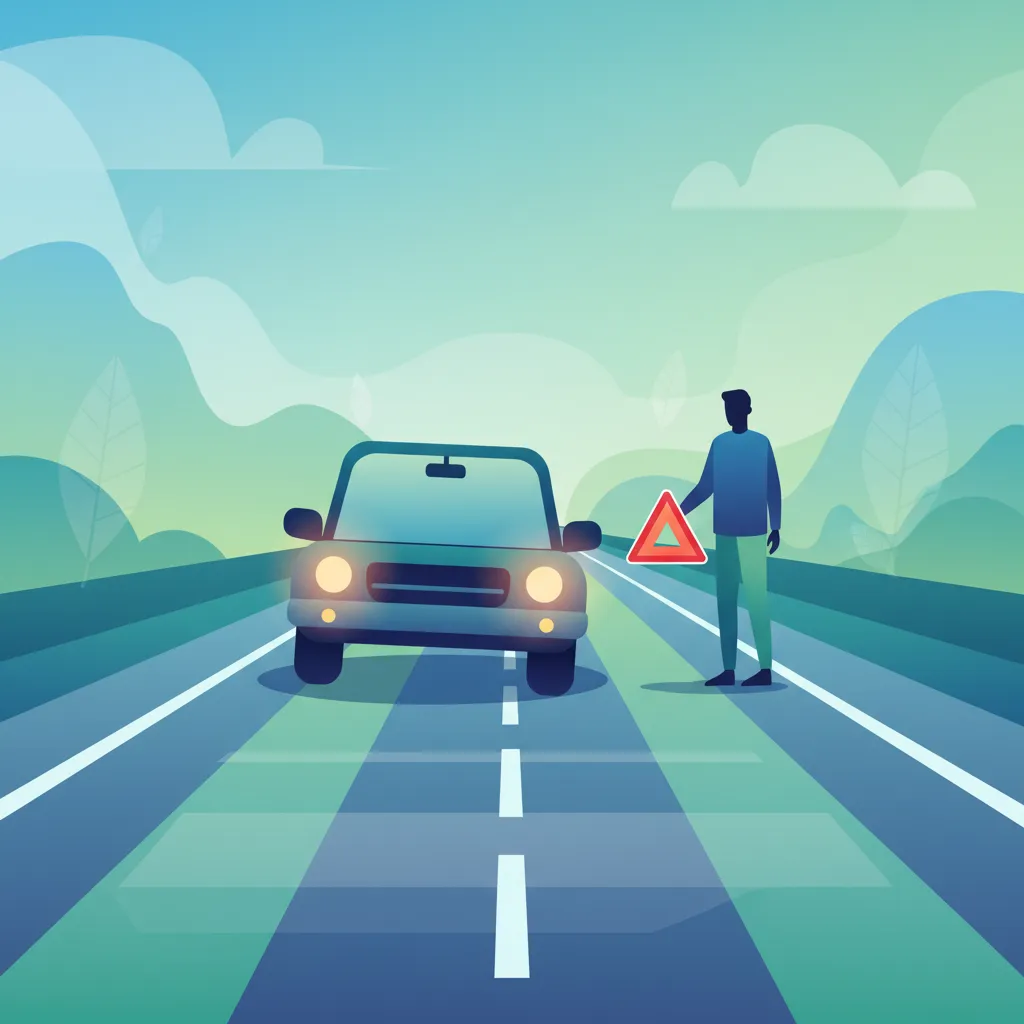
This lesson prepares drivers for the event of a vehicle breakdown on a motorway or expressway. It details the correct procedure: pulling over to the emergency lane, activating hazard lights, and placing the warning triangle at the legally required distance. The importance of wearing a reflective vest when outside the vehicle is also a key safety point.

This lesson focuses on the critical procedures for executing an emergency stop with an air-braked vehicle. It explains how to apply firm, steady pressure to the brake pedal to achieve maximum braking force without locking the wheels, which could lead to a loss of control. The content also discusses the response time of air brake systems and how to manage the significant forces of deceleration when the vehicle is fully loaded, ensuring the quickest possible stop in a crisis situation.
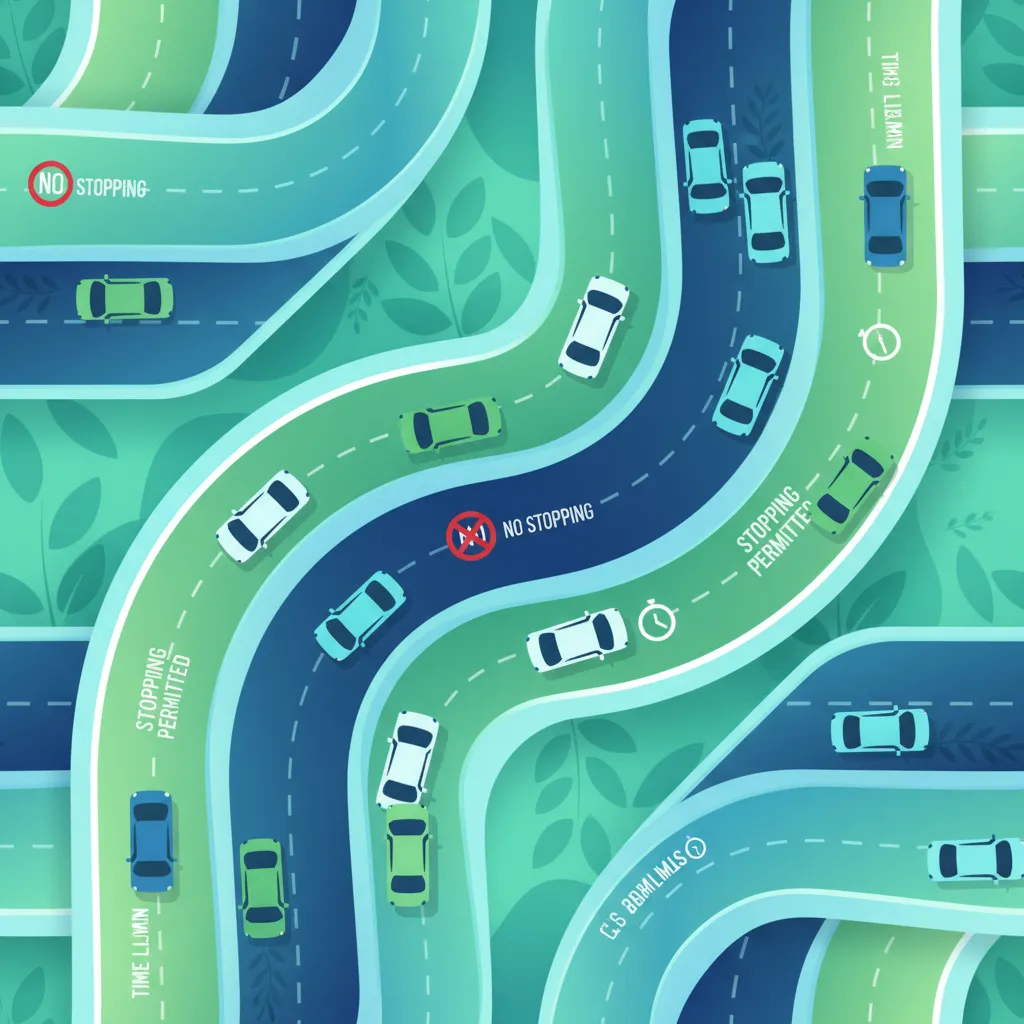
This lesson clarifies the legal distinction between 'stopping' and 'parking' and the rules that apply to each. It teaches how to read and understand a variety of parking signs, including those that indicate time limits, paid parking zones, and areas where stopping is completely forbidden. This knowledge is essential for avoiding fines and ensuring traffic flow is not obstructed.
Find clear answers to common questions learners have about Calculating Safe Following Distances. Learn how the lesson is structured, which driving theory objectives it supports, and how it fits into the overall learning path of units and curriculum progression in Poland. These explanations help you understand key concepts, lesson flow, and exam focused study goals.
The 'two-second rule' is a simple method to gauge a safe minimum following distance. Pick a fixed point (like a sign or bridge) that the vehicle in front passes. Start counting 'one thousand one, one thousand two'. If you pass the same point before you finish counting, you are too close and need to slow down.
You must increase your following distance in adverse conditions. This includes driving in rain, fog, snow, or on icy roads. Also increase it when following large vehicles that obstruct your view, motorcycles, or when you yourself are carrying a heavy load or towing a trailer.
As your speed increases, your total stopping distance (reaction time + braking distance) also increases. This means at higher speeds, you need a significantly larger gap to stop safely if the vehicle in front brakes suddenly. The two-second rule provides a starting point, but more distance is always better at higher speeds or in difficult conditions.
While specific numerical distances are not always prescribed for motorways, the principles of safe following distance apply universally. The 'two-second rule' is the minimum. Given the higher speeds, maintaining a larger gap, especially in busy traffic or poor weather, is strongly advised and crucial for exam success on related questions.
The theory exam will present scenarios where you must choose the safest action or identify the correct distance. Questions often involve situations with different speeds, weather conditions, or types of vehicles, testing your understanding of when to apply the 'two-second rule' or increase the gap.
Build custom practice sessions tailored precisely to your needs. Focus on areas requiring improvement, review specific Polish road signs, or master complex traffic rules to ensure full preparation for your official driving license exam.