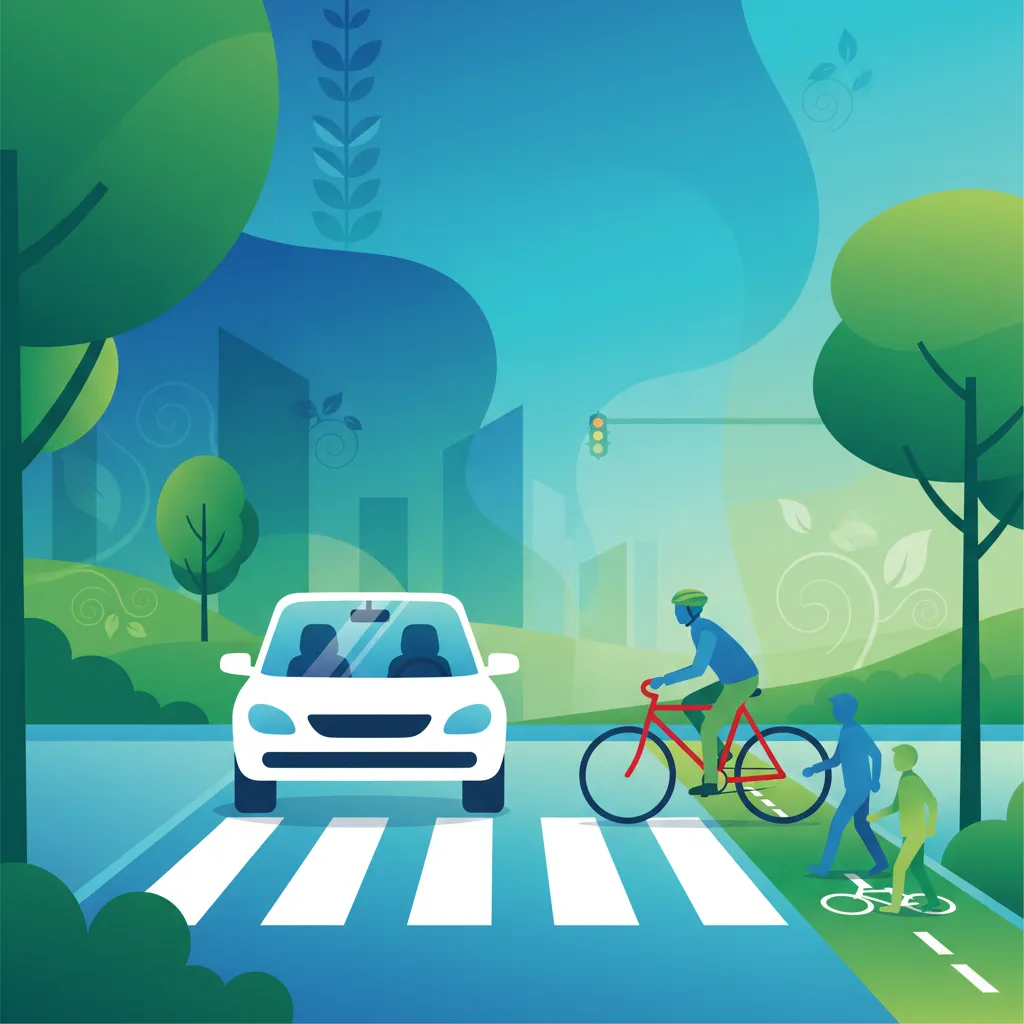
Navigating busy city streets requires special attention to vulnerable road users like cyclists and pedestrians. This lesson, part of your Polish Category B license preparation, teaches you how to safely coexist with them. You’ll learn crucial rules for bike lanes, pedestrian crossings, and general urban driving to ensure everyone's safety and pass your theory exam.
Lesson content overview
Driving in urban areas, particularly within city streets and residential zones, presents unique challenges due to the high density of various road users. Among these, cyclists and pedestrians are considered the most vulnerable. This lesson, part of your Polish Driving Theory – Comprehensive Category B License Preparation, will equip you with the essential knowledge and practices for safe coexistence, minimizing risks, and adhering to Polish road traffic law (Prawo o ruchu drogowym, Ustawa z 20 czerwca 1997 r.).
Understanding and respecting the presence of cyclists and pedestrians is not just a legal obligation; it is a fundamental principle of defensive driving. Their lack of physical protection compared to a motor vehicle means that even minor collisions can result in severe injuries or fatalities. By the end of this lesson, you will have a comprehensive understanding of your responsibilities, the specific rules governing interactions, and strategies to anticipate their movements.
Cyclists and pedestrians, often referred to as vulnerable road users, are disproportionately affected in road accidents involving motor vehicles. The fundamental physics of a collision—the immense difference in mass and kinetic energy between a car and a person or bicycle—means that they bear the brunt of any impact. This inherent vulnerability underpins the stricter legal framework and heightened duty of care placed upon drivers in urban settings.
Beyond the physical danger, vulnerable road users can be less predictable than other vehicles. They might change direction suddenly, appear from blind spots, or not always adhere to traffic rules, especially children or individuals who are distracted. Therefore, drivers must adopt a proactive and anticipatory mindset, constantly scanning their surroundings for these users, particularly near intersections, crossings, and areas with high foot traffic.
The legal intent behind Polish traffic law is clear: to protect those who are most exposed. This means that as a driver, you will often have the legal obligation to yield or maintain specific distances, even if it means altering your speed or delaying your journey. Adhering to these principles is not just about avoiding fines and penalties; it's about protecting lives and fostering a safer urban environment for everyone.
Dedicated bicycle lanes, known as pas rowerowy or ścieżka rowerowa in Poland, are specific sections of the road or separate paths reserved for cyclists. These are typically marked by distinct white lines and bicycle symbols painted on the road surface, or by specific road signs. Their purpose is to provide cyclists with a safe, continuous route, reducing conflicts with motor vehicles.
Drivers must recognize and respect these lanes. Generally, motor vehicles are prohibited from driving, stopping, or parking in a dedicated bicycle lane. The only exceptions are when a driver needs to cross the lane to turn or access a property, or when specifically permitted by signage or road markings for short distances.
When a bicycle lane is integrated into the main carriageway, it is usually separated by a solid white line. Crossing this line is generally prohibited unless a broken line indicates a permissible maneuver, such as approaching an intersection to turn. You must always maintain a clear distance from cyclists within these lanes and never impede their progress.
Parking or stopping in a dedicated bicycle lane, even for a brief moment, is illegal and dangerous. It forces cyclists into the main traffic flow, putting them at significant risk.
Intersections are common conflict points between vehicles turning right and cyclists continuing straight in a dedicated lane. In Poland, when turning across a bicycle lane, you must yield to cyclists who are already in the lane or are about to enter it, especially if they are proceeding straight.
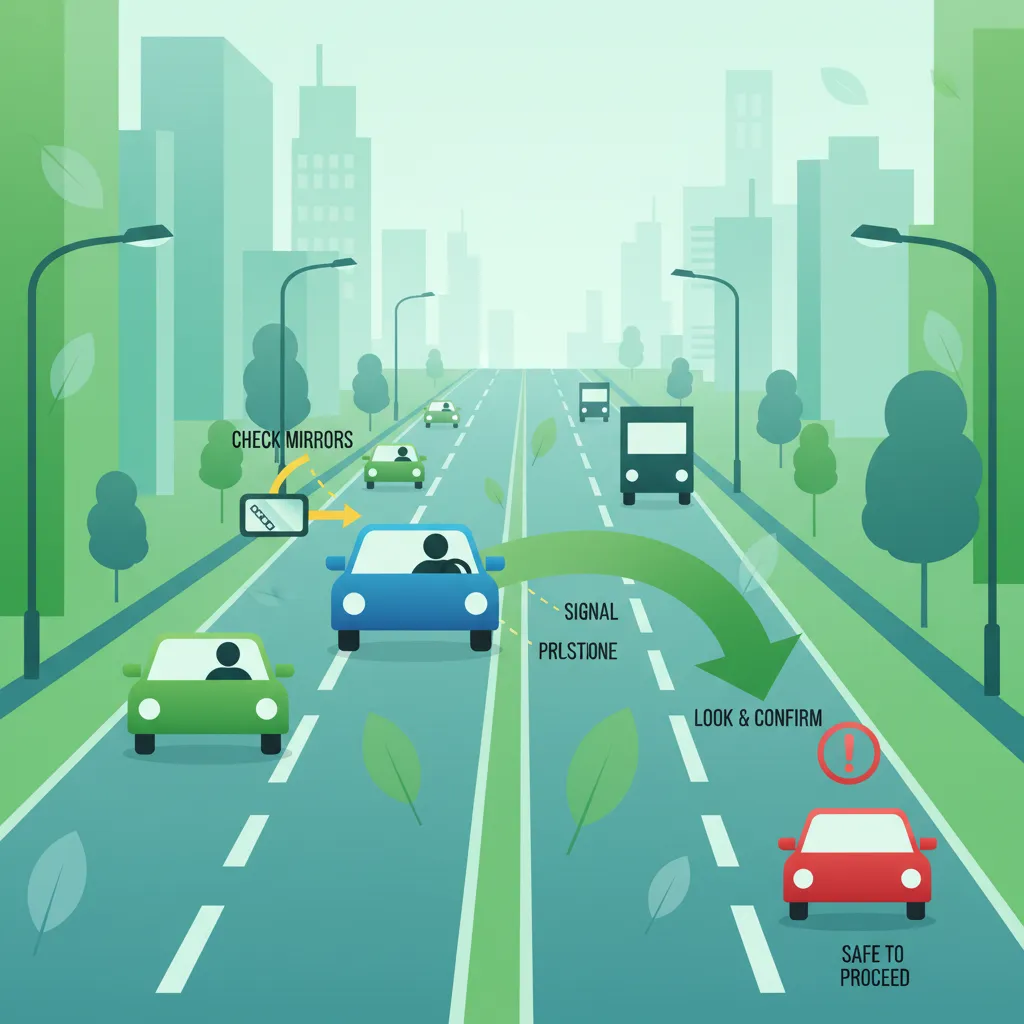
Signal Early: Activate your right turn indicator well in advance, giving ample warning to cyclists behind and alongside you.
Check Mirrors and Blind Spots: Thoroughly check your right-side mirror and perform a shoulder check (head turn) to ensure no cyclist is in your blind spot or approaching rapidly.
Approach with Caution: Reduce your speed and position your vehicle as close to the right edge of the road as safely possible, without entering the bicycle lane prematurely.
Yield to Cyclists: If a cyclist is proceeding straight in the bicycle lane, you must stop before the lane and wait for them to pass.
Complete Turn Safely: Only proceed with your turn when the bicycle lane is completely clear, ensuring sufficient space and speed to complete the maneuver without endangering any newly appearing cyclists.
Failing to yield in such situations is a significant cause of collisions between cars and cyclists. Always prioritize checking for vulnerable users before initiating any turn or lane change that crosses their path.
Pedestrian crossings, known as przejście dla pieszych, are clearly marked areas on the road where pedestrians have the legal right-of-way. The most common type is the "zebra crossing," characterized by white stripes painted across the road. Recognizing and reacting correctly to these crossings is crucial for pedestrian safety.
Polish law mandates that drivers must yield to pedestrians who are already on a zebra crossing or are about to step onto it. This means you must stop your vehicle before the crossing line, allowing the pedestrian to cross safely and without feeling rushed or threatened. The obligation to yield applies regardless of whether the pedestrian has fully stepped onto the crossing or is merely indicating their intention to cross (e.g., by approaching the edge).
Always approach pedestrian crossings with reduced speed, ready to stop. A sudden appearance of a pedestrian, especially a child, requires immediate reaction.
While marked crossings provide clear guidance, drivers must also be vigilant in areas where pedestrians might cross less formally. Near schools, parks, bus stops, or residential areas, pedestrians might cross at unmarked points. Although pedestrians do not have the same legal priority as at a marked crossing, drivers still have a general duty of care to avoid collisions.
In school zones (strefa szkoły), identified by specific signage, additional rules apply. Speed limits are often significantly reduced (e.g., to 20 km/h), and drivers must exercise extreme caution. Children, in particular, can be unpredictable and may dart into the road without looking. Therefore, reduce your speed substantially, continuously scan for children on sidewalks and near the road, and be prepared to stop instantly.
Failing to yield to a pedestrian at a marked crossing is a serious traffic violation in Poland. It carries significant penalties, including fines and penalty points on your license, and can lead to severe accidents. Never assume a pedestrian will wait or adjust their pace for your vehicle. Your primary responsibility is to ensure their safety.
When you overtake or pass a cyclist or pedestrian on the road, maintaining a safe lateral clearance is not just good practice; it's a legal requirement in Poland. This "safe distance" ensures that your vehicle does not come too close, preventing side-impact collisions, accounting for air turbulence created by your vehicle, and allowing for minor swerves by the cyclist or pedestrian.
Polish regulations generally stipulate a minimum lateral clearance of 1.5 metres (approximately 5 feet) when overtaking a cyclist. This distance must be maintained on single-carriageway roads, urban streets, and whenever a cyclist is present.
Overtaking a cyclist too closely is a major cause of serious accidents. The air turbulence generated by a passing vehicle can destabilize a cyclist, causing them to lose balance and fall.
While the 1.5m rule specifically applies to cyclists, the principle of maintaining a safe and respectful distance extends to pedestrians walking on the road, for instance, in areas without sidewalks. Always give them ample space, reduce your speed, and pass cautiously. If possible, avoid unnecessary horn use, which can startle them.
Intersections are complex environments where the paths of various road users converge. Understanding the right-of-way rules at these points, particularly concerning cyclists and pedestrians, is critical for preventing collisions. Right-of-way is determined by a hierarchy of controls: traffic lights, road signs, and then general rules (e.g., priority to the right).
At intersections controlled by traffic lights, signals dictate who has the right-of-way. Cyclists often have their own dedicated traffic signals (sygnalizacja rowerowa), which may operate independently of the main vehicle signals.
At uncontrolled intersections (no traffic lights or priority signs), the general rule of "priority to the right" often applies. However, this can become complex with cyclists. Many roundabouts in Poland also include dedicated bicycle paths or crossings around their perimeter.
Safe interaction with cyclists and pedestrians hinges on proactive driving, which means actively anticipating potential hazards, ensuring maximum visibility, and constantly adjusting your speed to suit the prevailing conditions.
Anticipation is the ability to foresee potential hazards and conflicts before they fully develop. In urban environments, this involves:
Being seen and seeing others is fundamental to safety:
Speed is the single most critical factor influencing the severity of a collision and your ability to react.
Always drive at a speed that allows you to stop safely within the visible distance ahead, especially when visibility is limited.
Understanding the specific legal obligations under Polish road traffic law (Ustawa Prawo o ruchu drogowym) is paramount for all drivers. These regulations are designed to protect vulnerable road users and ensure harmonious traffic flow.
Adhering to these rules is not just about avoiding penalties; it's about fulfilling your legal and ethical responsibility to contribute to road safety.
Many accidents involving vulnerable road users stem from common, preventable errors. Being aware of these typical mistakes can help you develop safer driving habits.
Avoiding these common pitfalls requires continuous vigilance, patience, and a commitment to defensive driving principles.
Safe interaction with cyclists and pedestrians isn't static; it requires dynamic adaptation to varying conditions. External factors like weather, time of day, and specific road environments demand adjustments to your driving strategy.
Behind every traffic rule and safety recommendation lies a basis in physics, human psychology, and statistical evidence. Understanding these underlying principles reinforces the importance of responsible driving.
By understanding these insights, drivers can move beyond simply following rules to genuinely adopting a safety-first mindset.
Safe and responsible driving in Polish city streets, particularly when interacting with bicycles and pedestrians, is a cornerstone of your Category B license preparation. It demands a combination of legal adherence, proactive vigilance, and empathetic awareness of other road users' vulnerability.
Key Legal Foundations to Remember:
Essential Safety Practices:
Operational Behaviors:
Contextual Awareness:
This lesson builds upon foundational knowledge from earlier units, specifically Priority Rules and Intersections, Traffic Signs and Road Markings, and Speed Management and Stopping Distances. The principles learned here are crucial for upcoming topics like Overtaking, Merging and Lane Changes and preparing for Emergency Situations, where avoiding collisions with vulnerable users is critical.
By integrating these principles into your daily driving, you contribute to a safer, more predictable, and harmonious road environment for everyone in Poland.
This lesson covers the essential rules for safely interacting with vulnerable road users in Polish urban driving. Key legal obligations include yielding to pedestrians on marked crossings, maintaining a minimum 1.5m lateral clearance when overtaking cyclists, and respecting dedicated bicycle lanes. The lesson provides a step-by-step procedure for turning across bicycle lanes and explains how to navigate intersections with cyclists and pedestrians. Special attention is given to school zones, adverse weather conditions, and the importance of constant scanning and speed adaptation. Understanding these principles is critical for both passing the Category B theory exam and developing safe driving habits that protect cyclists and pedestrians.
A short set of high-value points that capture the most important learning from this lesson.
Drivers must yield to pedestrians on marked crossings (zebra crossings) when they are on or about to step onto the crossing, regardless of whether they have fully stepped on
A minimum lateral clearance of 1.5 metres is legally required when overtaking a cyclist on any road in Poland
Motor vehicles are prohibited from driving, stopping, or parking in dedicated bicycle lanes (pas rowerowy or ścieżka rowerowa) unless specifically permitted for turning
When turning across a bicycle lane, always perform a shoulder check for cyclists and yield to those proceeding straight before initiating the turn
Speed must be constantly adapted to conditions, with 50 km/h being the general urban limit and reduced limits (e.g., 20 km/h) required in school zones
Explore all units and lessons included in this driving theory course.
Pedestrian priority at zebra crossings (przejście dla pieszych) applies the moment a pedestrian is on or indicates intention to step onto the crossing
The 1.5m lateral clearance rule applies on all road types; if the road is too narrow to maintain this distance, overtaking must be postponed
Bike lane obstruction is prohibited under Polish traffic law; even brief stops are illegal and dangerous
School zones (strefa szkoły) require significantly reduced speeds (typically 20 km/h) due to unpredictable child behaviour
Cyclists may have their own dedicated traffic signals (sygnalizacja rowerowa) operating independently of vehicle signals
Failing to yield to pedestrians at zebra crossings when the pedestrian has already stepped onto the crossing or is clearly indicating intention to cross
Overtaking cyclists with insufficient lateral clearance, often due to impatience or underestimating the required space
Turning right across a bicycle lane without performing a shoulder check, cutting off cyclists proceeding straight
Speeding in built-up areas (obszar zabudowany), reducing reaction time and increasing stopping distance significantly
Blocking or parking in a bicycle lane, even momentarily, forcing cyclists into main traffic flow
Lesson content overview
A short set of high-value points that capture the most important learning from this lesson.
Drivers must yield to pedestrians on marked crossings (zebra crossings) when they are on or about to step onto the crossing, regardless of whether they have fully stepped on
A minimum lateral clearance of 1.5 metres is legally required when overtaking a cyclist on any road in Poland
Motor vehicles are prohibited from driving, stopping, or parking in dedicated bicycle lanes (pas rowerowy or ścieżka rowerowa) unless specifically permitted for turning
When turning across a bicycle lane, always perform a shoulder check for cyclists and yield to those proceeding straight before initiating the turn
Speed must be constantly adapted to conditions, with 50 km/h being the general urban limit and reduced limits (e.g., 20 km/h) required in school zones
Explore all units and lessons included in this driving theory course.
Pedestrian priority at zebra crossings (przejście dla pieszych) applies the moment a pedestrian is on or indicates intention to step onto the crossing
The 1.5m lateral clearance rule applies on all road types; if the road is too narrow to maintain this distance, overtaking must be postponed
Bike lane obstruction is prohibited under Polish traffic law; even brief stops are illegal and dangerous
School zones (strefa szkoły) require significantly reduced speeds (typically 20 km/h) due to unpredictable child behaviour
Cyclists may have their own dedicated traffic signals (sygnalizacja rowerowa) operating independently of vehicle signals
Failing to yield to pedestrians at zebra crossings when the pedestrian has already stepped onto the crossing or is clearly indicating intention to cross
Overtaking cyclists with insufficient lateral clearance, often due to impatience or underestimating the required space
Turning right across a bicycle lane without performing a shoulder check, cutting off cyclists proceeding straight
Speeding in built-up areas (obszar zabudowany), reducing reaction time and increasing stopping distance significantly
Blocking or parking in a bicycle lane, even momentarily, forcing cyclists into main traffic flow
Explore search topics learners often look for when studying Interaction with Bicycles and Pedestrians in City Streets. These topics reflect common questions about road rules, driving situations, safety guidance, and lesson level theory preparation for learners in Poland.
Browse additional driving theory lessons that cover connected traffic rules, road signs, and common driving situations related to this topic. Improve your understanding of how different rules interact across everyday traffic scenarios.
Understand precise Polish traffic regulations for interacting with cyclists and pedestrians in urban settings. This lesson details rules for bike lanes, pedestrian crossings, and safe passing distances, crucial for Category B license theory.
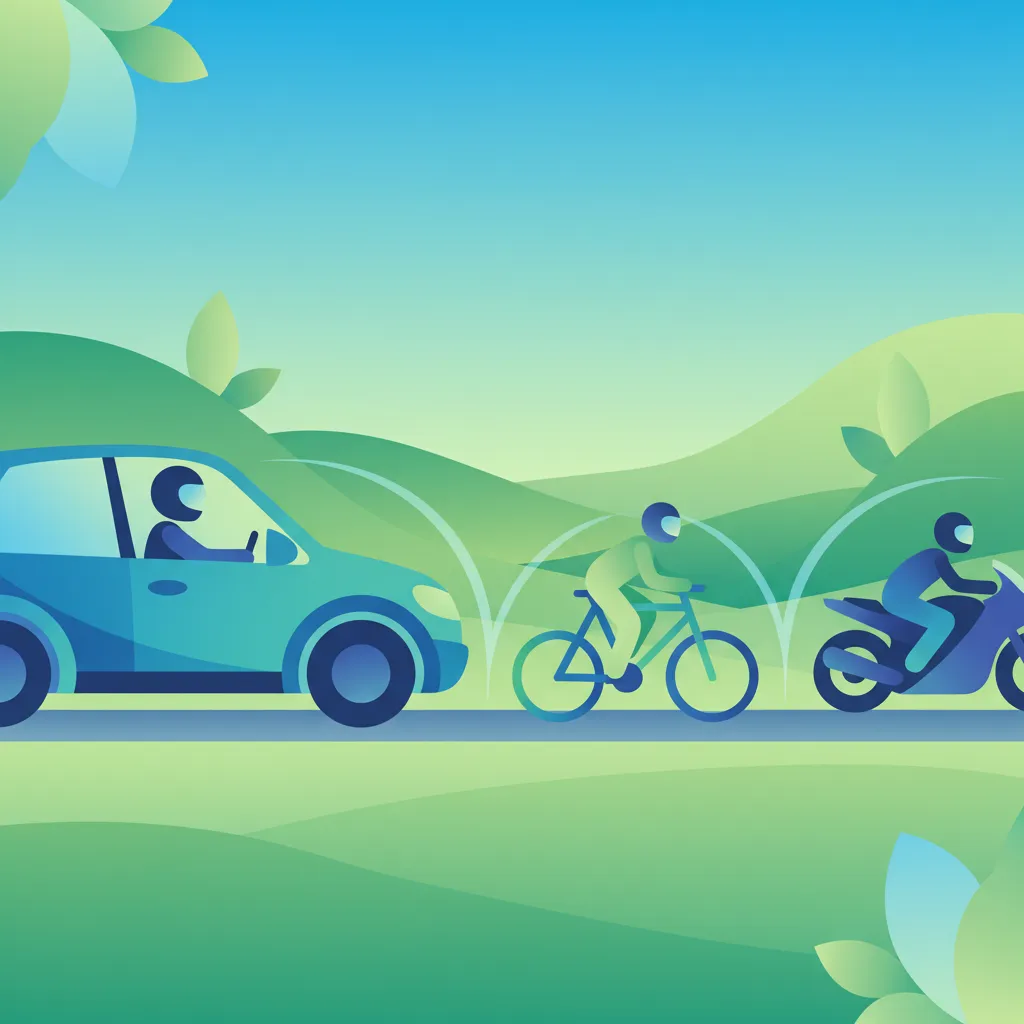
This lesson is dedicated to the safe overtaking of two-wheeled vehicles. It explains the legal requirement to leave a sufficient lateral distance (at least 1 meter) when passing cyclists. The content highlights the vulnerability of these road users and the need for patience, reduced speed, and careful judgment.
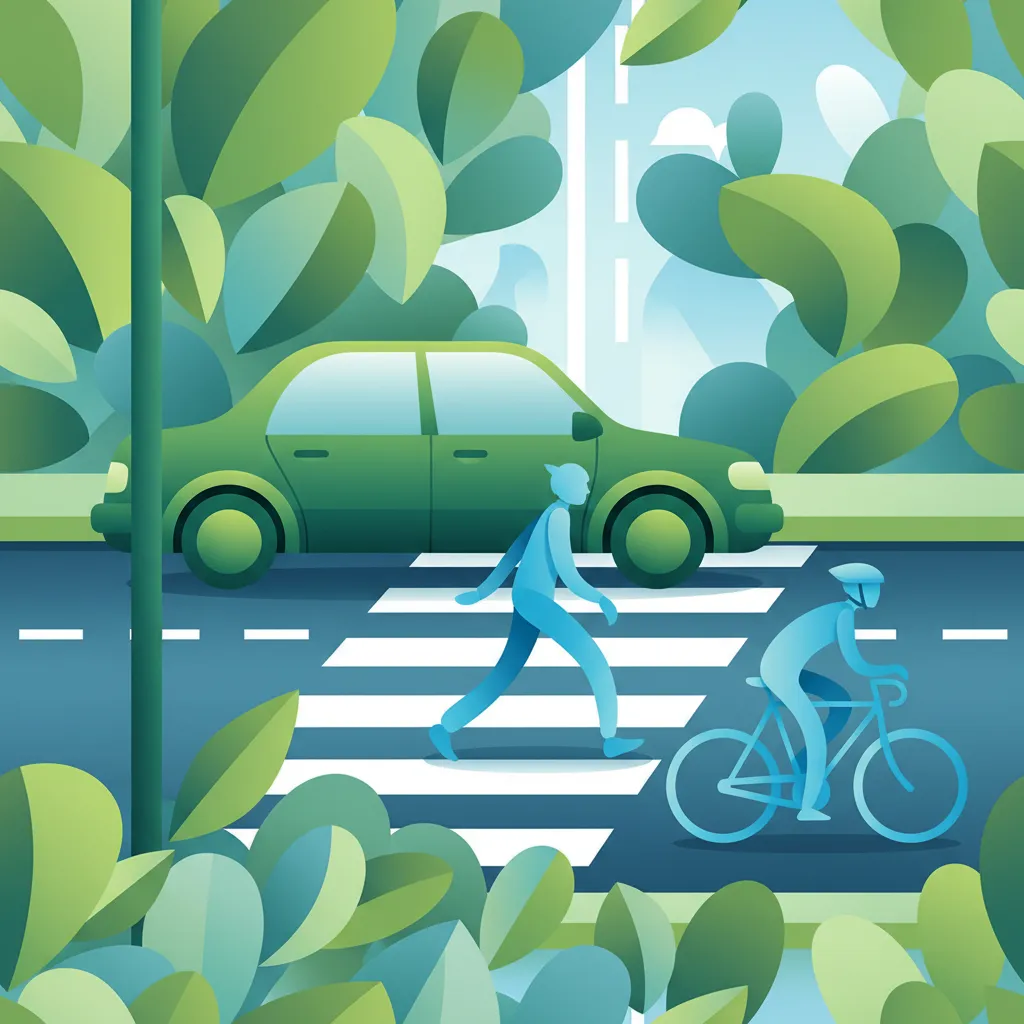
This lesson examines the responsibilities of motorcyclists when approaching pedestrian crossings and interacting with cyclists, emphasizing the marked right-of-way for pedestrians at zebra crossings. Learners will study how to determine safe passing distances, adjust speed, and use visual cues such as eye contact to ensure pedestrians have cleared the crossing. The content also covers interactions with cyclists sharing the road, highlighting the need for anticipation and adequate passing gaps.
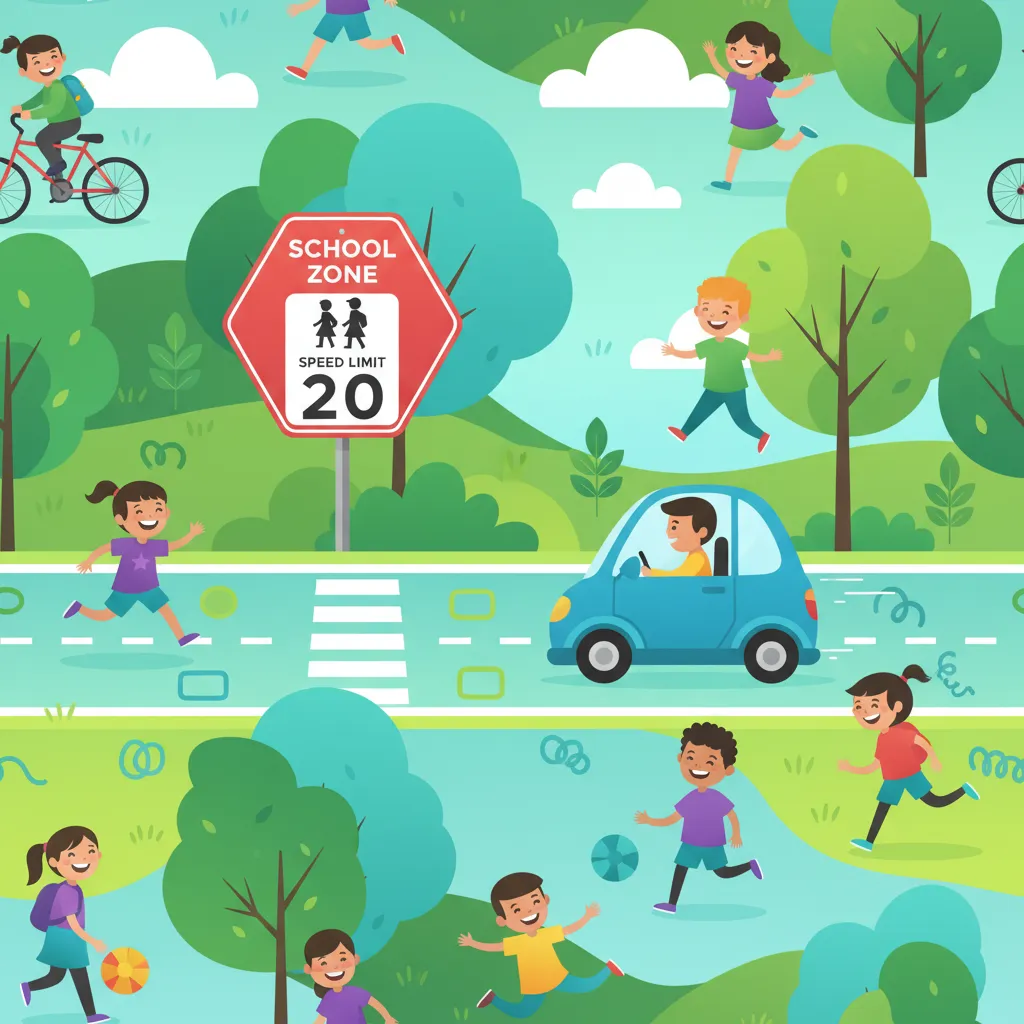
This lesson focuses on areas with high pedestrian activity, requiring special caution. It covers the rules for 'living zones' (strefa zamieszkania), where pedestrians have priority and the speed limit is 20 km/h. The content also addresses regulations for school zones and other designated pedestrian areas to ensure the safety of the most vulnerable road users.
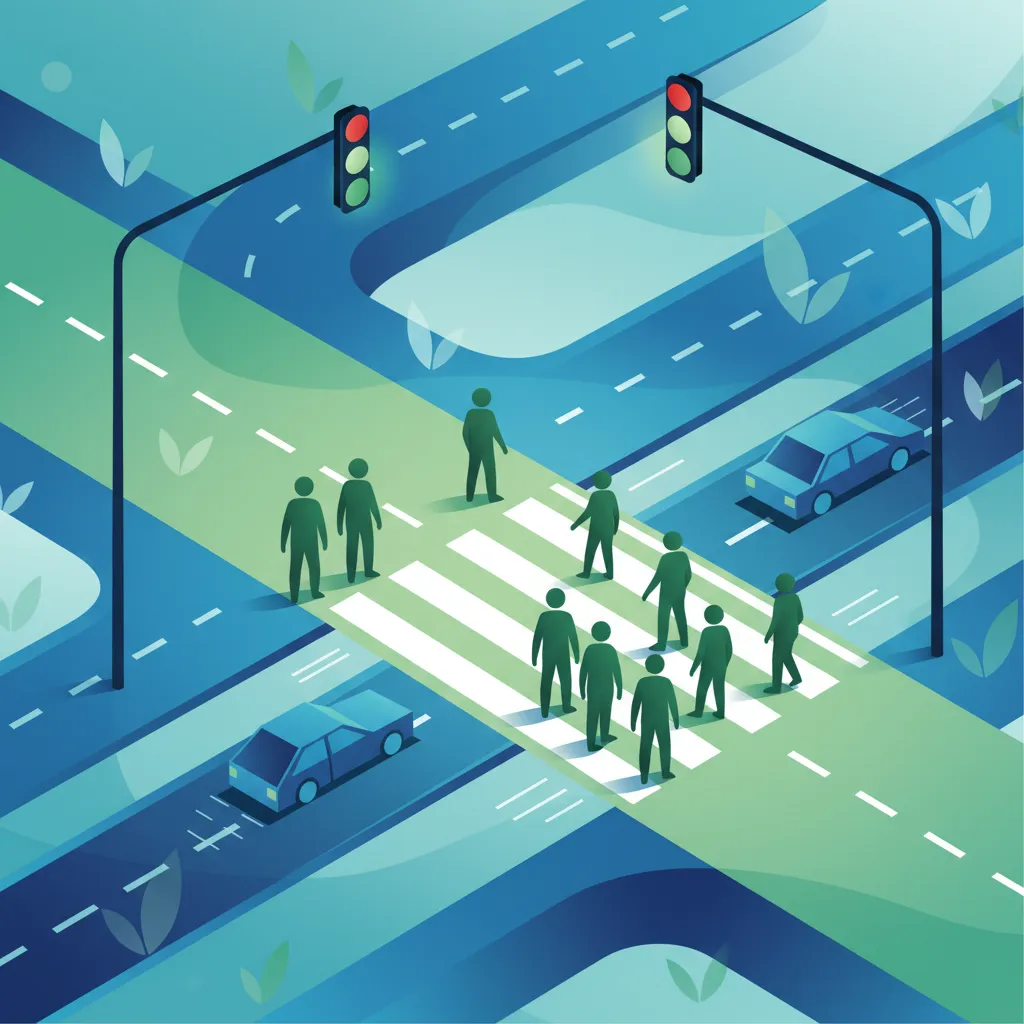
This lesson addresses advanced scenarios, including multi-lane intersections and interactions with vulnerable road users. It reinforces the legal obligation to give absolute priority to pedestrians at marked crossings (zebra crossings). The content also covers navigating around traffic islands and using dedicated turning lanes in complex urban environments.
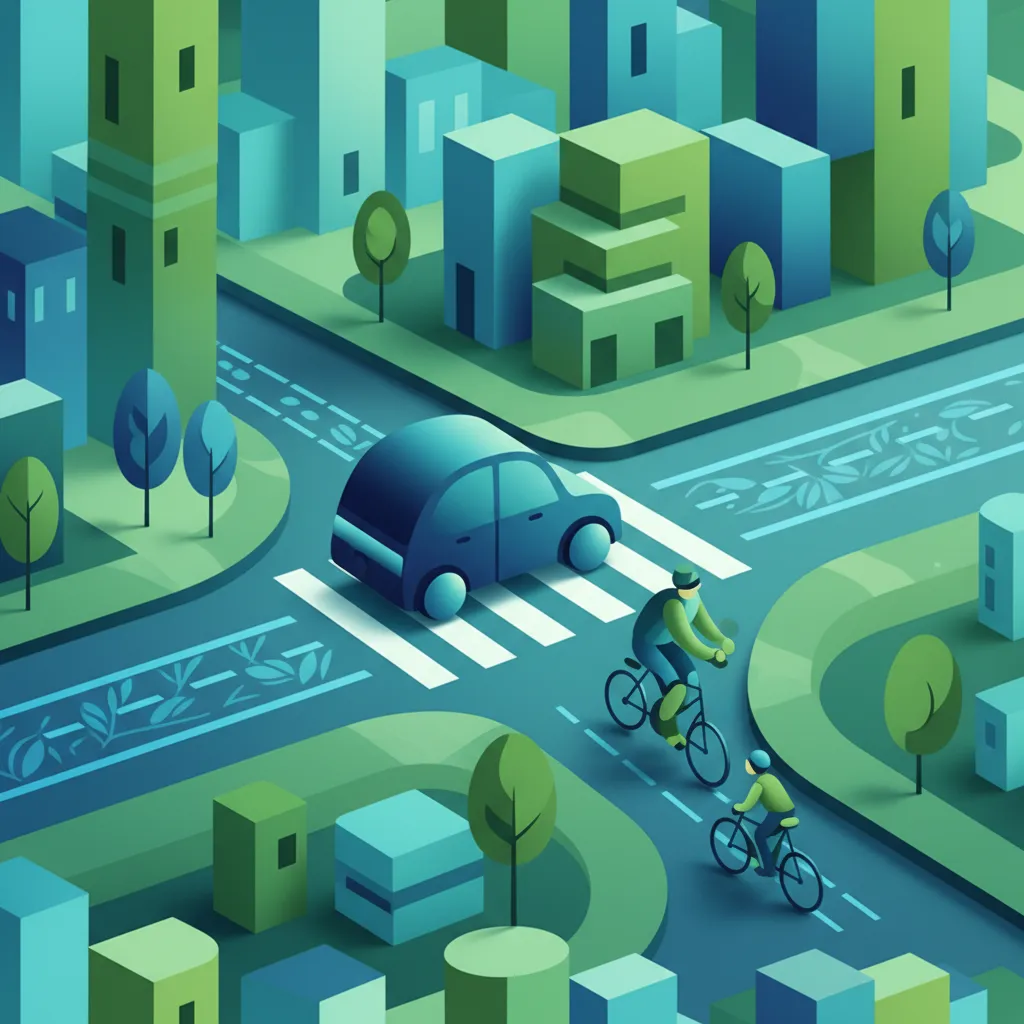
This lesson highlights the professional driver's heightened responsibility to protect vulnerable road users. It focuses on the significant blind spots around a large truck, particularly during turns in urban areas where pedestrians and cyclists are common. The content teaches strategies for anticipating the unpredictable movements of these users, providing ample space when passing, and using warning signals to communicate intentions clearly, fostering a culture of shared road safety.

This lesson focuses on the unique demands of urban riding within Polish cities, addressing traffic lights, pedestrian zones, one-way streets, and the presence of tram tracks. Learners will study safe lane positioning on narrow roads, blind-spot management, and how to share the road with buses and cyclists. The content also covers strategies for navigating stop-and-go traffic, anticipating signal changes, and maintaining visibility in dense urban environments.
This lesson introduces the fundamental principles of right-of-way on Polish roads, explaining how priority road signs determine the flow of traffic at intersections. Learners will explore the hierarchy of vehicle classes and the specific obligations that arise when approaching a yield line or a give-way sign. The content details the legal precedence of main road traffic over secondary road traffic, helping riders safely navigate intersections and avoid right-of-way infractions.
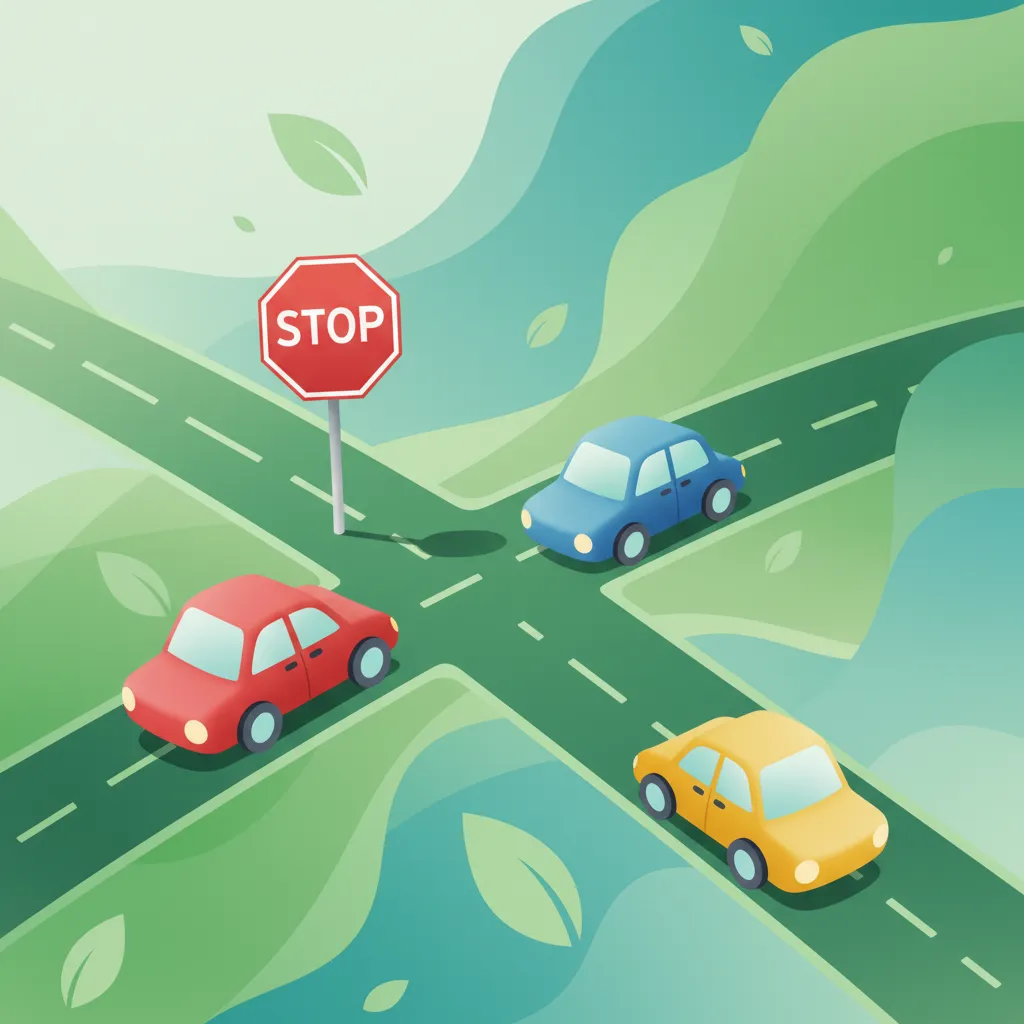
In this lesson, learners examine the specific actions required at stop signs and give-way intersections under Polish traffic regulations. The content explains the legal requirement for a full stop before the stop line, incorporating a visual scan of all directions before proceeding. It also covers the give-way protocol, where riders must yield to traffic already in the intersection or on the main road, emphasizing the need for correct positioning and observation.
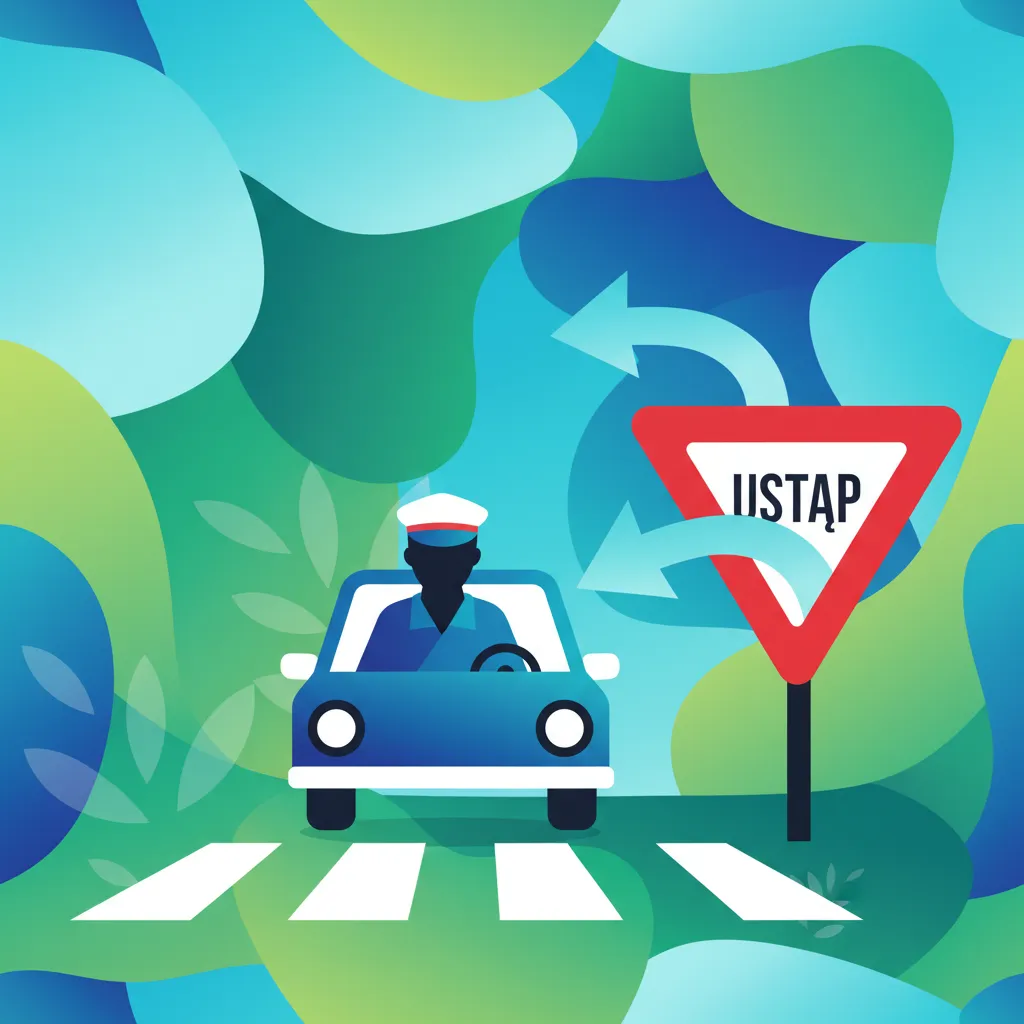
This lesson focuses on navigating intersections that are not controlled by traffic signals. It covers the interpretation of the 'Yield' sign (ustąp pierwszeństwa) and the application of the 'priority to the right' rule at junctions of equal roads. Safe decision-making and proper observation techniques are emphasized for these common scenarios.
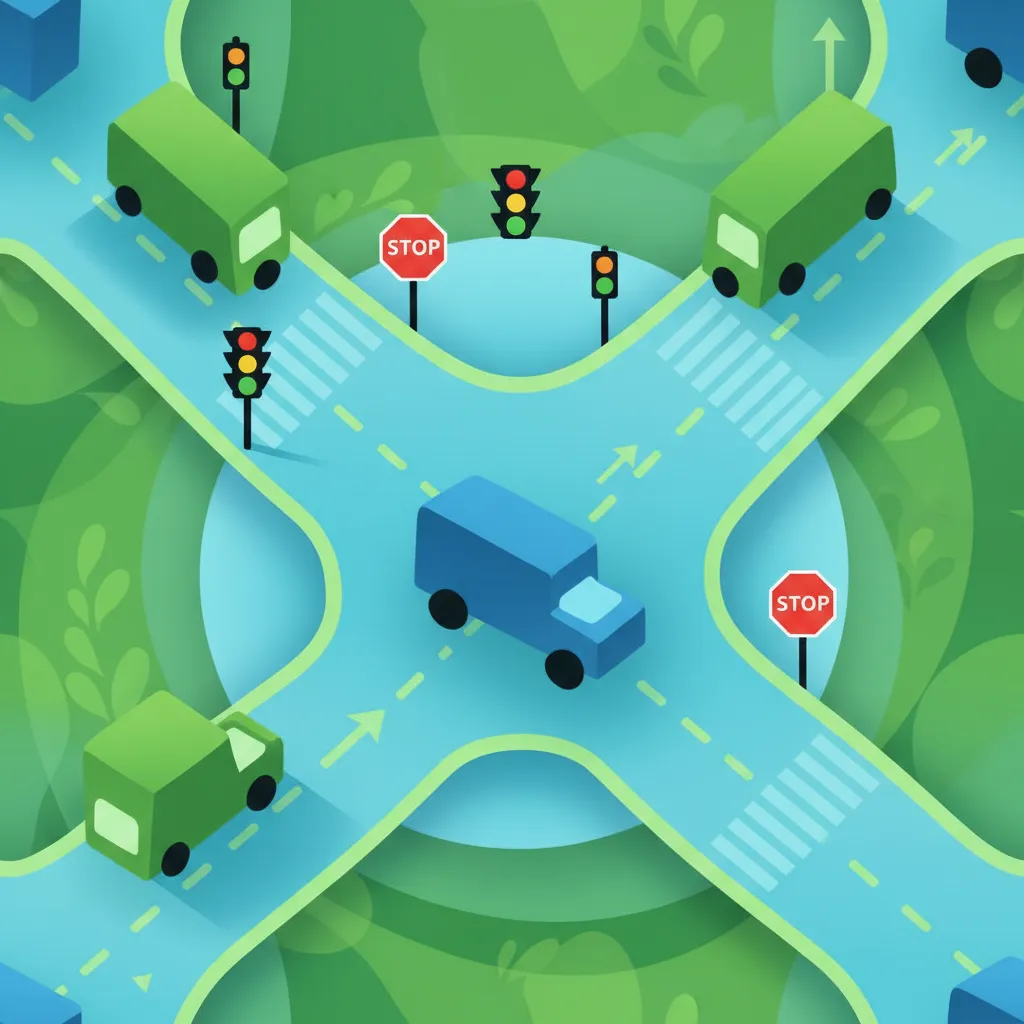
This lesson provides a comprehensive breakdown of the right-of-way rules that govern intersections. It explains the clear directives given by traffic lights, stop signs, and yield signs, and clarifies the procedures at unmarked or uncontrolled intersections, where the 'priority to the right' rule often applies. Learners will understand the legal hierarchy of these rules to make correct, safe, and predictable decisions when navigating through any junction, reducing the risk of conflict with other traffic.
Learn essential defensive driving techniques for urban environments. Focus on maximizing visibility, anticipating movements of pedestrians and cyclists, and adjusting speed for safer interactions in Polish cities.
This lesson focuses on the unique demands of urban riding within Polish cities, addressing traffic lights, pedestrian zones, one-way streets, and the presence of tram tracks. Learners will study safe lane positioning on narrow roads, blind-spot management, and how to share the road with buses and cyclists. The content also covers strategies for navigating stop-and-go traffic, anticipating signal changes, and maintaining visibility in dense urban environments.
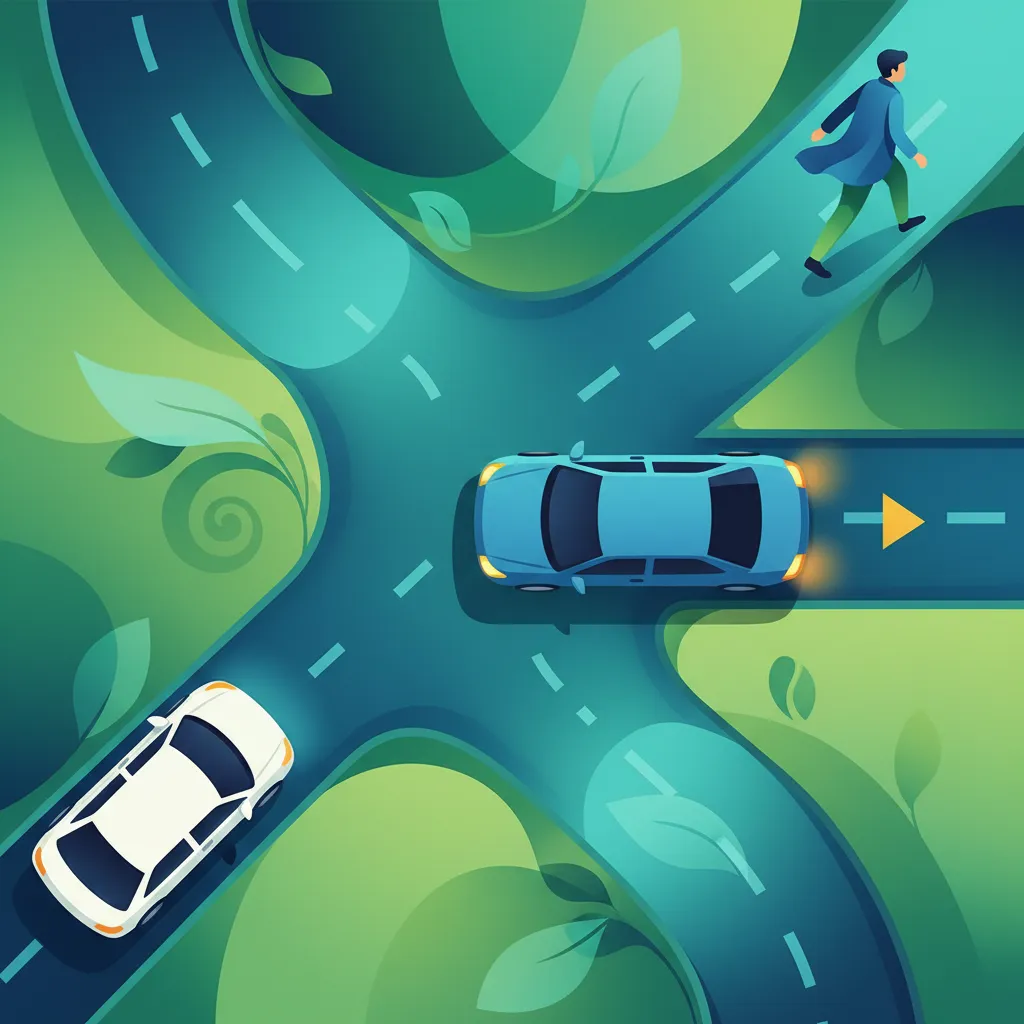
This lesson provides strategies for safely navigating the numerous intersections typical of urban environments. It reinforces the application of priority rules in situations with limited visibility and high traffic volume. Techniques for making turns in narrow streets and being aware of pedestrians and cyclists at junctions are central to the instruction.
This lesson adapts lane-changing principles for the challenging environment of dense city traffic. It reinforces the critical 'mirror, signal, maneuver' sequence, with a strong focus on checking blind spots immediately before moving. The content advises on judging gaps in traffic and executing the lane change smoothly and decisively.
This lesson addresses advanced scenarios, including multi-lane intersections and interactions with vulnerable road users. It reinforces the legal obligation to give absolute priority to pedestrians at marked crossings (zebra crossings). The content also covers navigating around traffic islands and using dedicated turning lanes in complex urban environments.

This lesson explores the unique characteristics of driving on rural roads. It highlights potential hazards such as sharp, unbanked curves, poor road surfaces, and limited visibility due to hills and vegetation. The content teaches drivers to anticipate these conditions and adjust their speed and position to navigate safely.
This lesson examines the responsibilities of motorcyclists when approaching pedestrian crossings and interacting with cyclists, emphasizing the marked right-of-way for pedestrians at zebra crossings. Learners will study how to determine safe passing distances, adjust speed, and use visual cues such as eye contact to ensure pedestrians have cleared the crossing. The content also covers interactions with cyclists sharing the road, highlighting the need for anticipation and adequate passing gaps.

In this lesson, learners explore riding on rural and countryside roads, where road markings may be sparse and surface conditions varied. The content covers safe overtaking in single-lane sections, interaction with agricultural vehicles and animals, and the handling of gravel or uneven surfaces. Learners will also study the importance of anticipating curves and adjusting speed to light conditions, equipping them with the skills needed for safe countryside travel.
This lesson highlights the professional driver's heightened responsibility to protect vulnerable road users. It focuses on the significant blind spots around a large truck, particularly during turns in urban areas where pedestrians and cyclists are common. The content teaches strategies for anticipating the unpredictable movements of these users, providing ample space when passing, and using warning signals to communicate intentions clearly, fostering a culture of shared road safety.

This lesson defines what constitutes a 'built-up area' in Poland, marked by specific informational signs. It explains the default speed limit of 50 km/h that applies within these zones unless otherwise indicated. The content highlights the need for increased vigilance due to higher traffic density and the frequent presence of pedestrians.
This lesson focuses on areas with high pedestrian activity, requiring special caution. It covers the rules for 'living zones' (strefa zamieszkania), where pedestrians have priority and the speed limit is 20 km/h. The content also addresses regulations for school zones and other designated pedestrian areas to ensure the safety of the most vulnerable road users.
Find clear answers to common questions learners have about Interaction with Bicycles and Pedestrians in City Streets. Learn how the lesson is structured, which driving theory objectives it supports, and how it fits into the overall learning path of units and curriculum progression in Poland. These explanations help you understand key concepts, lesson flow, and exam focused study goals.
In Poland, drivers must yield to pedestrians at both marked (zebra crossings) and unmarked crossings where pedestrians are present and intending to cross. This is a critical aspect of the theory test, emphasizing driver responsibility for the safety of pedestrians.
When driving alongside a designated bicycle lane, maintain a safe distance and be aware that cyclists may merge or turn unexpectedly. Do not enter the bicycle lane unless specifically permitted for a maneuver like turning, and always check for cyclists before doing so.
Yes, when turning at an intersection, you must pay close attention to any cyclists or pedestrians who may be crossing the road you intend to enter, even if they are not yet in the path. Polish law requires drivers to ensure their turn can be completed without endangering these road users.
Vulnerable road users (WRD - Wrażliwi Uczestnicy Ruchu) typically include pedestrians, cyclists, motorcyclists, and users of personal mobility devices. They are considered vulnerable because they lack the physical protection of a vehicle, making them more susceptible to serious injury in collisions.
The theory exam often presents scenarios where you must decide the correct action when approaching a pedestrian crossing, a cyclist using a bike lane, or during a turn where these users are present. Questions will test your knowledge of yielding rules and safe passing distances.
Build custom practice sessions tailored precisely to your needs. Focus on areas requiring improvement, review specific Polish road signs, or master complex traffic rules to ensure full preparation for your official driving license exam.